WGU C172 - Network and Security
Foundations Questions and Answers
Already Graded A
Application Layer ✔✔Interacts with application programs that incorporate a communication
component such as your internet browser and
...
WGU C172 - Network and Security
Foundations Questions and Answers
Already Graded A
Application Layer ✔✔Interacts with application programs that incorporate a communication
component such as your internet browser and email.
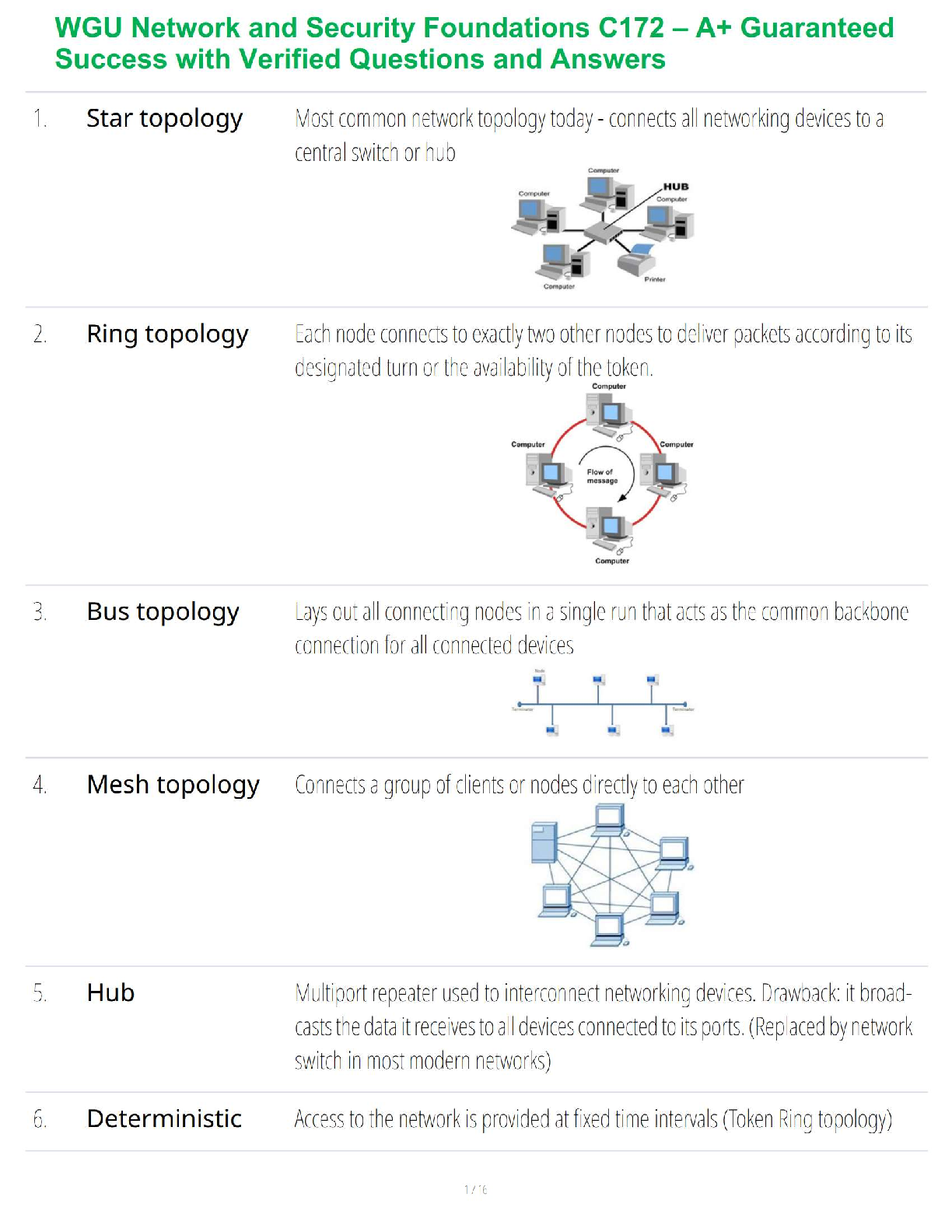
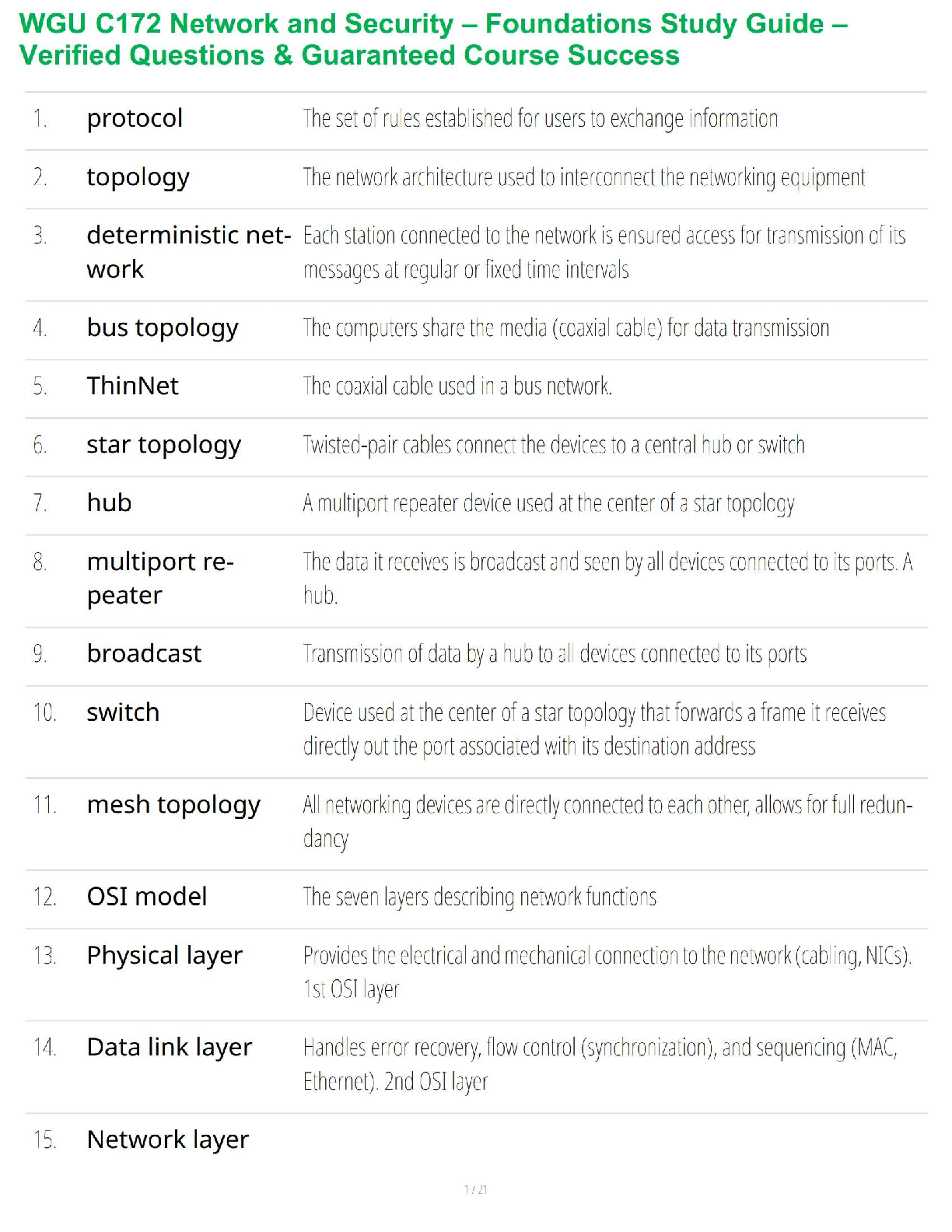
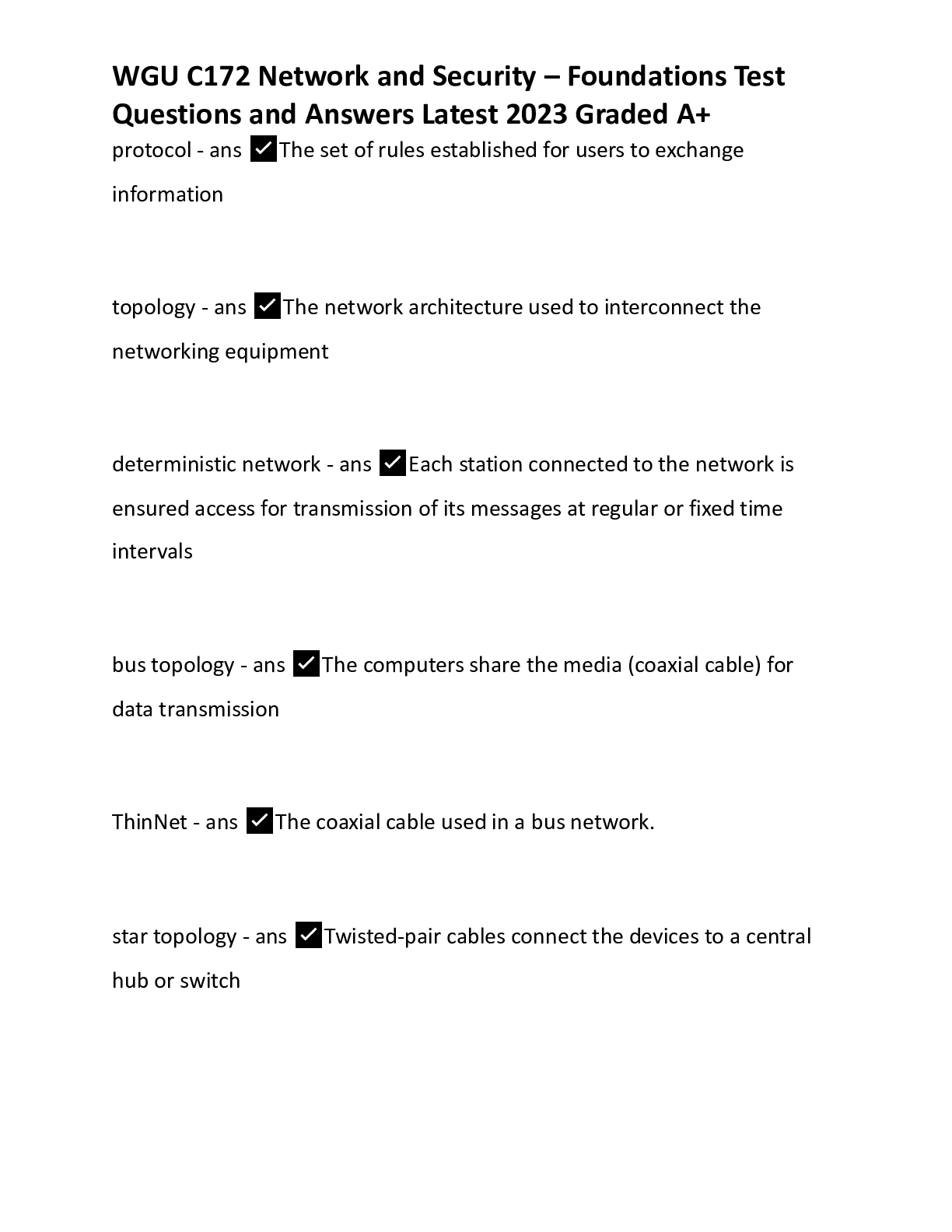
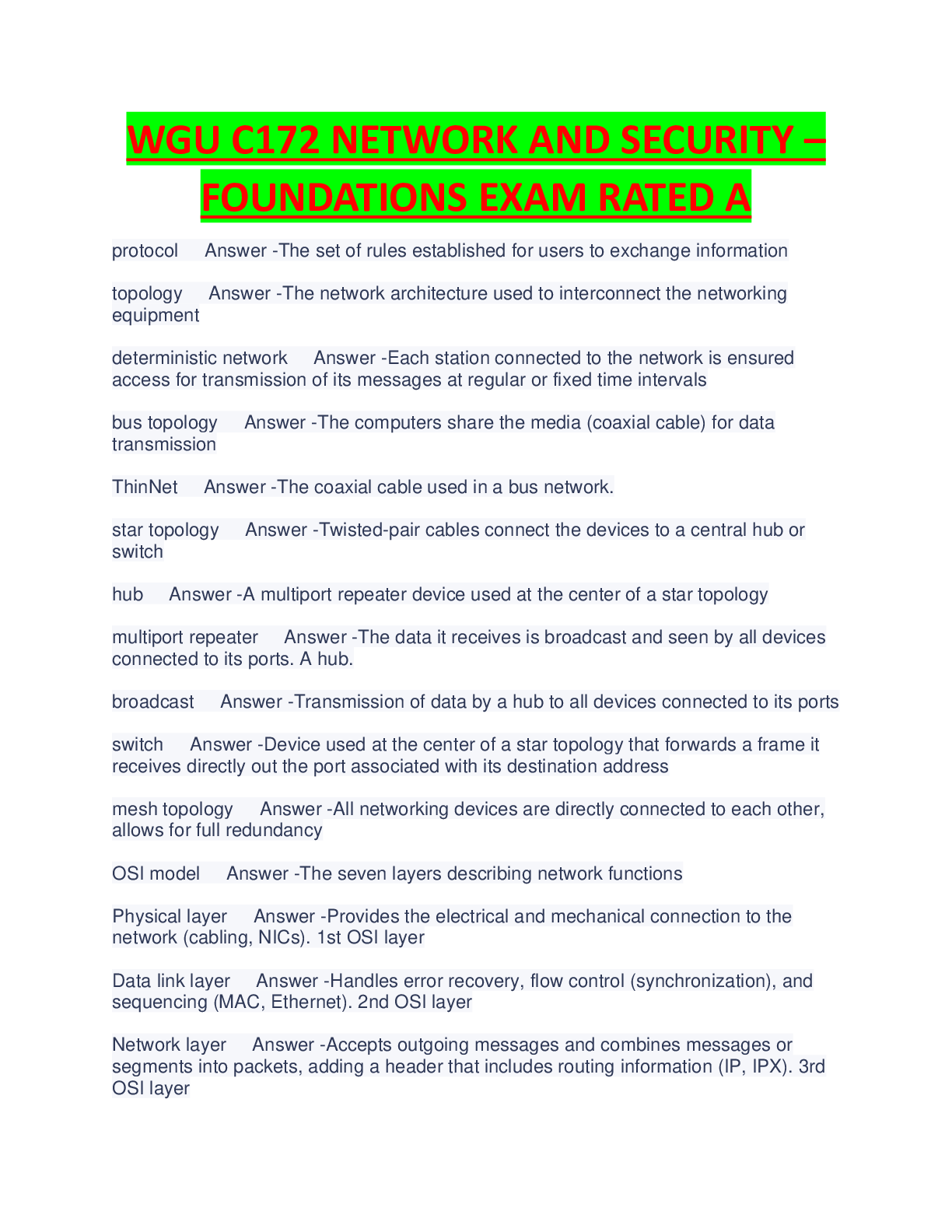
Bus Topology ✔✔The computers share the media (coaxial cable) for data transmission.
Cable Modem ✔✔A modem that can use the high bandwidth of a cable television system to deliver
high-speed data to and from the service provider.
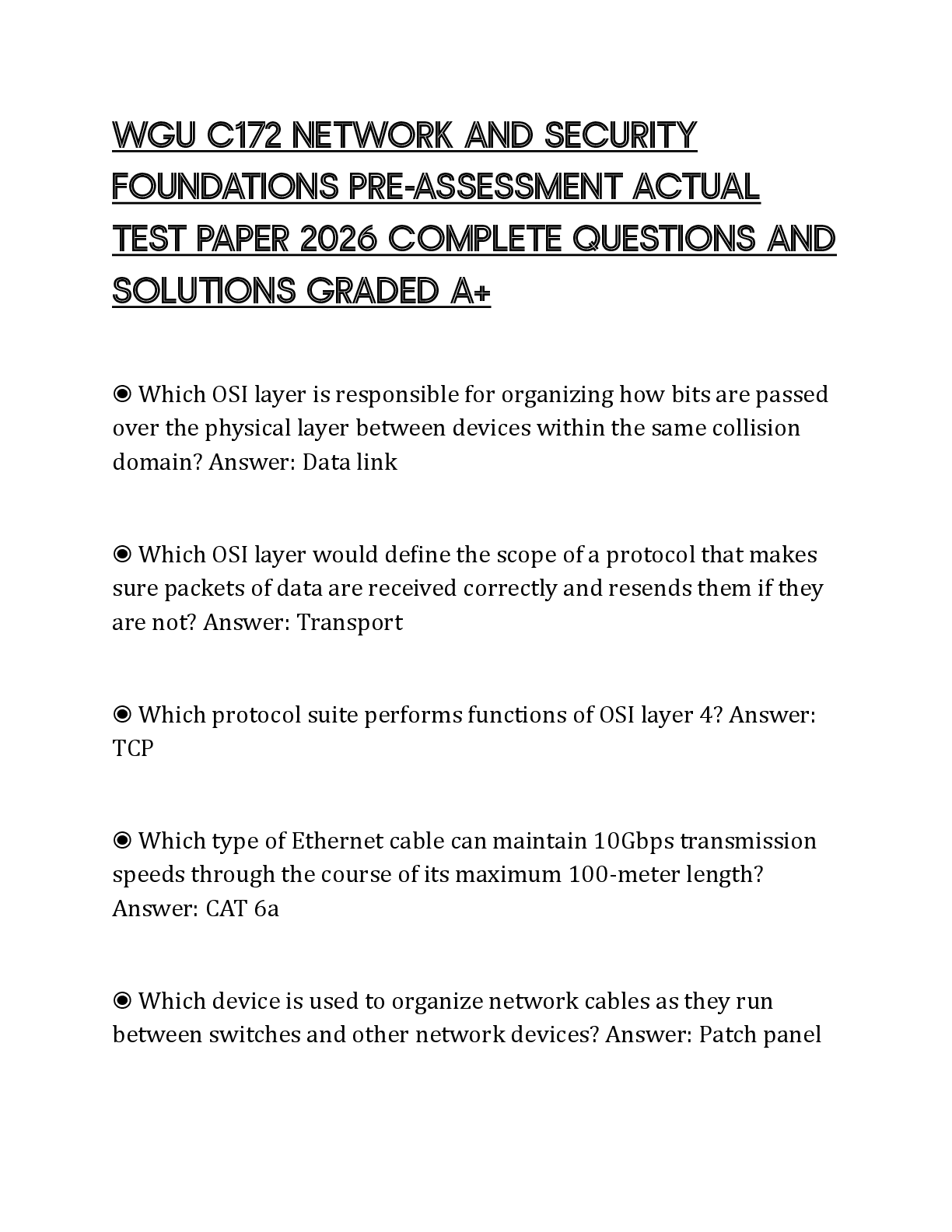
CAT6 (category 6) ✔✔Twisted-pair cables capable of carrying up to 1000Mbps (1 gigabit) of data
up to a length of 100 meters.
Crossover ✔✔Transmit and receive signal pairs are crossed to properly align the transmit signal
on one device with the receive signal on the other device.
CSMA/CD ✔✔Carrier sense multiple access with collision detection is the Ethernet LAN mediaaccess method.
Data Link Layer ✔✔Layer of the OSI reference model that handles error recovery, flow control
(synchronization), and sequencing.
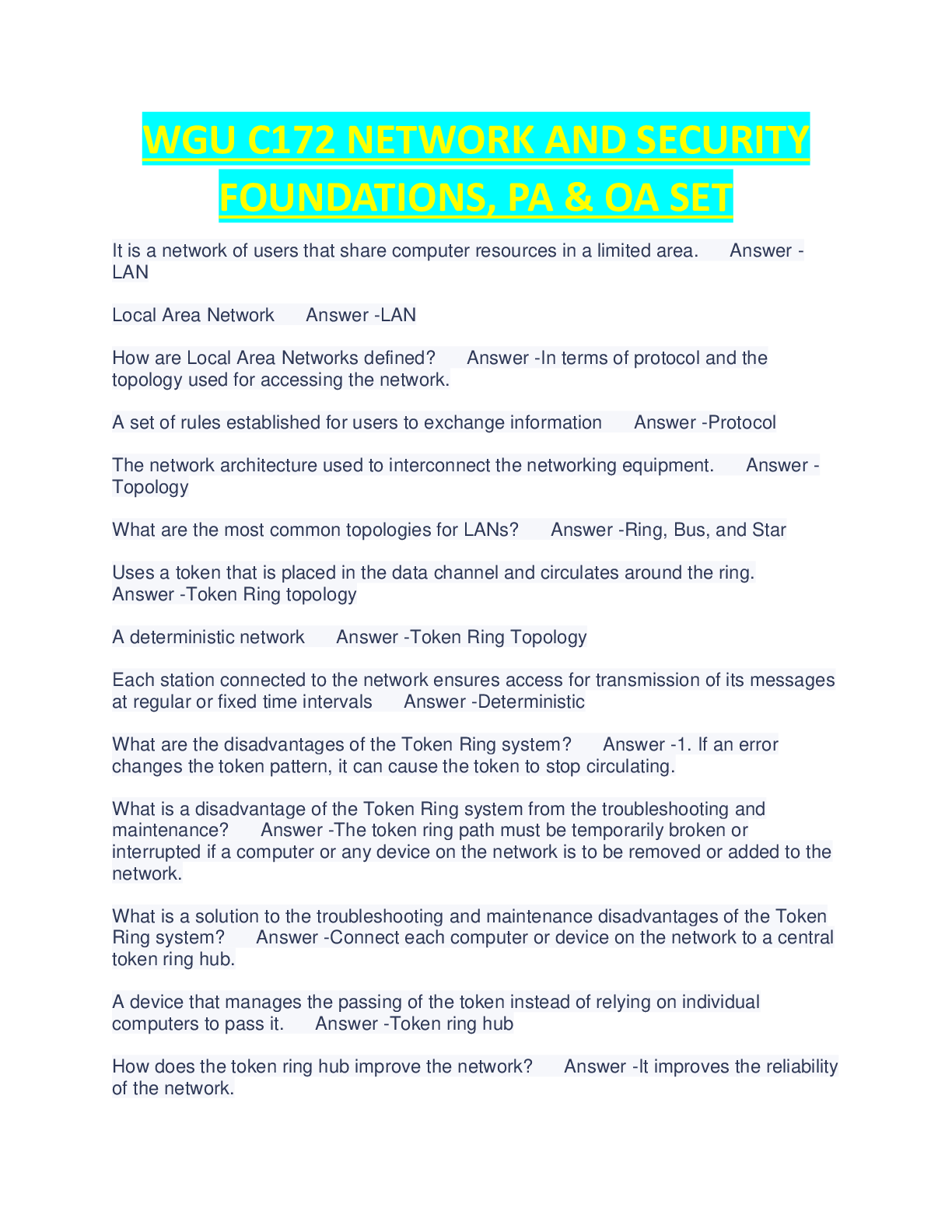
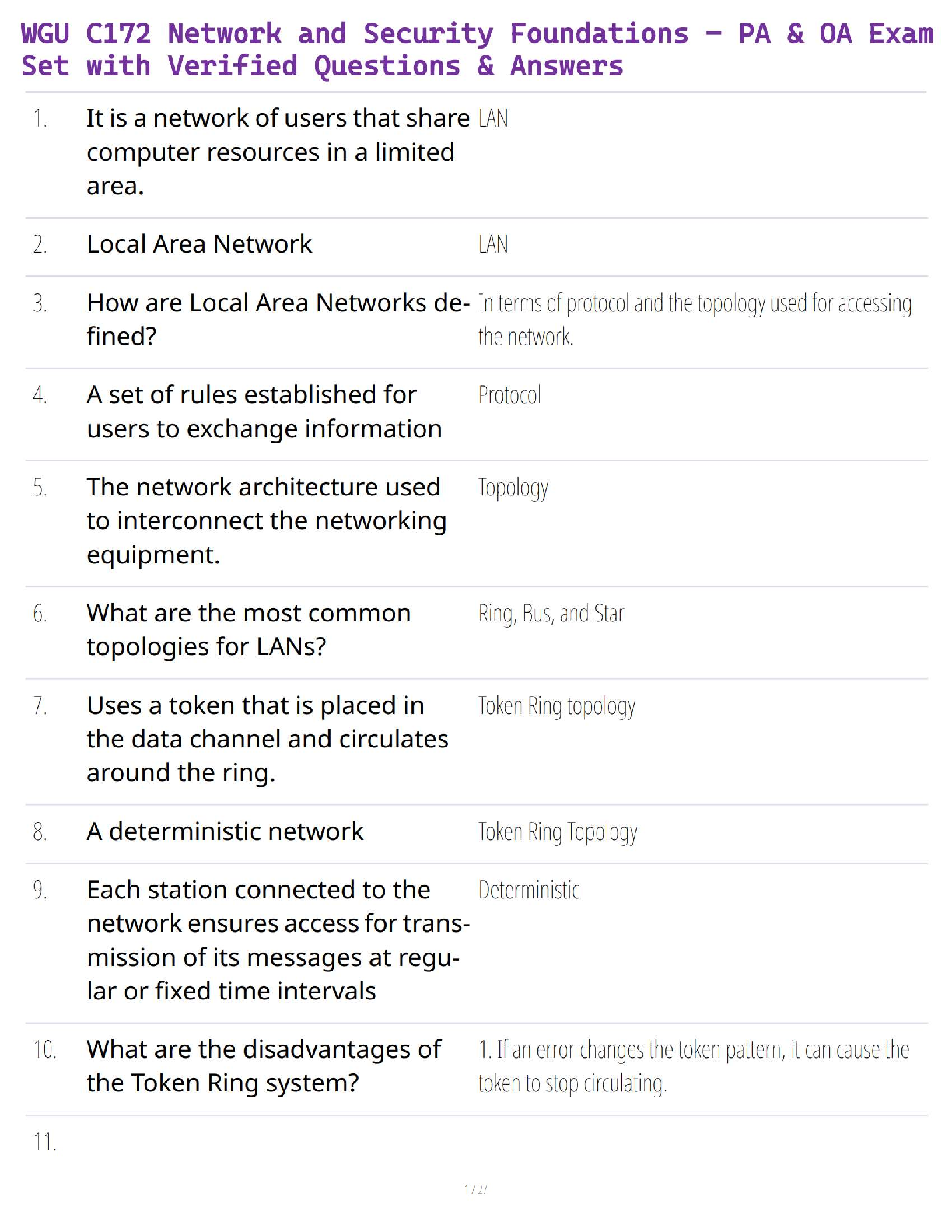
Deterministic ✔✔Access to the network is provided at fixed time intervals.
Ethernet, Physical, Hardware, or Adapter Address ✔✔Other names for the MAC address.
Firewall Protection ✔✔Used to prevent unauthorized access to your network.
Host Address ✔✔Same as host number.
Host Number ✔✔The portion of the IP address that defines the location of the networking device
connected to the network; also called the host address.
Hotspots ✔✔A limited geographic area that provides wireless access for the public.
Hub ✔✔Broadcasts the data it received to all devices connected to its ports.
IANA ✔✔The Internet Assigned Numbers Authority is the agency that assigns IP addresses to
computer networks.
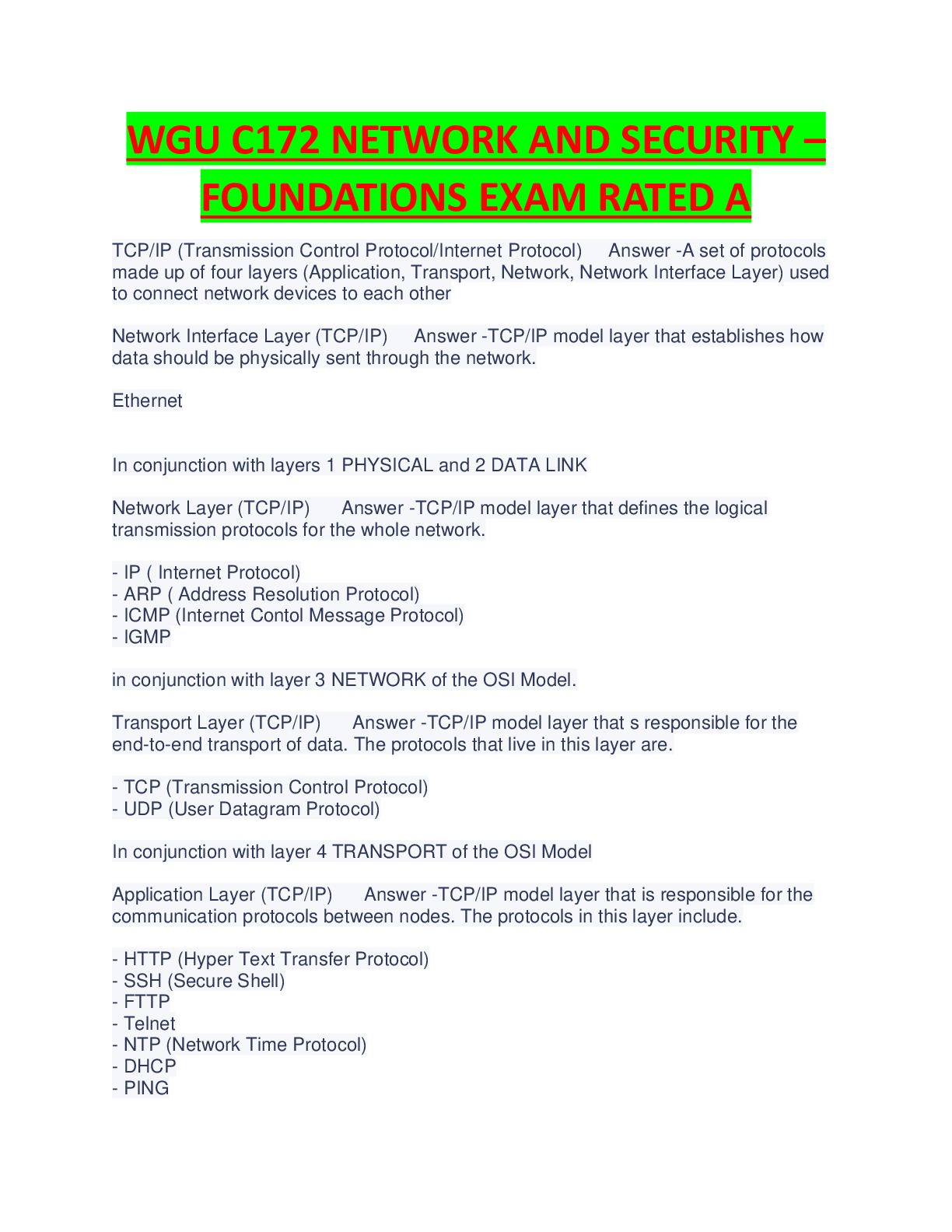
ICMP ✔✔Internet Control Message Protocol.
IEEE ✔✔Institute of Electrical and Electronics Engineers, one of the major standards-setting
bodies for technological development.
Intranet ✔✔An internal network that provides file and resource sharing but is not accessed from
the Internet.
IP Address ✔✔Unique 32-bit address that identifies on which network the computer is located as
well as differentiates the computer from all other devices on the same network.
IP Internetwork ✔✔A network that uses IP addressing for identifying devices connected to the
network.
ipconfig /all ✔✔Enables the MAC address information to be displayed from the command prompt.
ISP ✔✔Internet service provider.
Link Integrity Test ✔✔Protocol used to verify that a communication link between two Ethernet
devices has been established.
Link Light ✔✔Indicates that the transmit and receive pairs are properly aligned.
Link Pulses ✔✔Sent by each of the connected devices via the twisted-pair cables when data is not
being transmitted to indicate that the link is still up.
Local Area Network (LAN) ✔✔Network of users that share computer resources in a limited area.
MAC Address ✔✔A unique 6-byte address assigned by the vendor of the network interface card.
Mbps ✔✔Megabits per second
Mesh Topology ✔✔All networking devices are directly connected to each other.
Multiport Repeater ✔✔Another name for a hub.
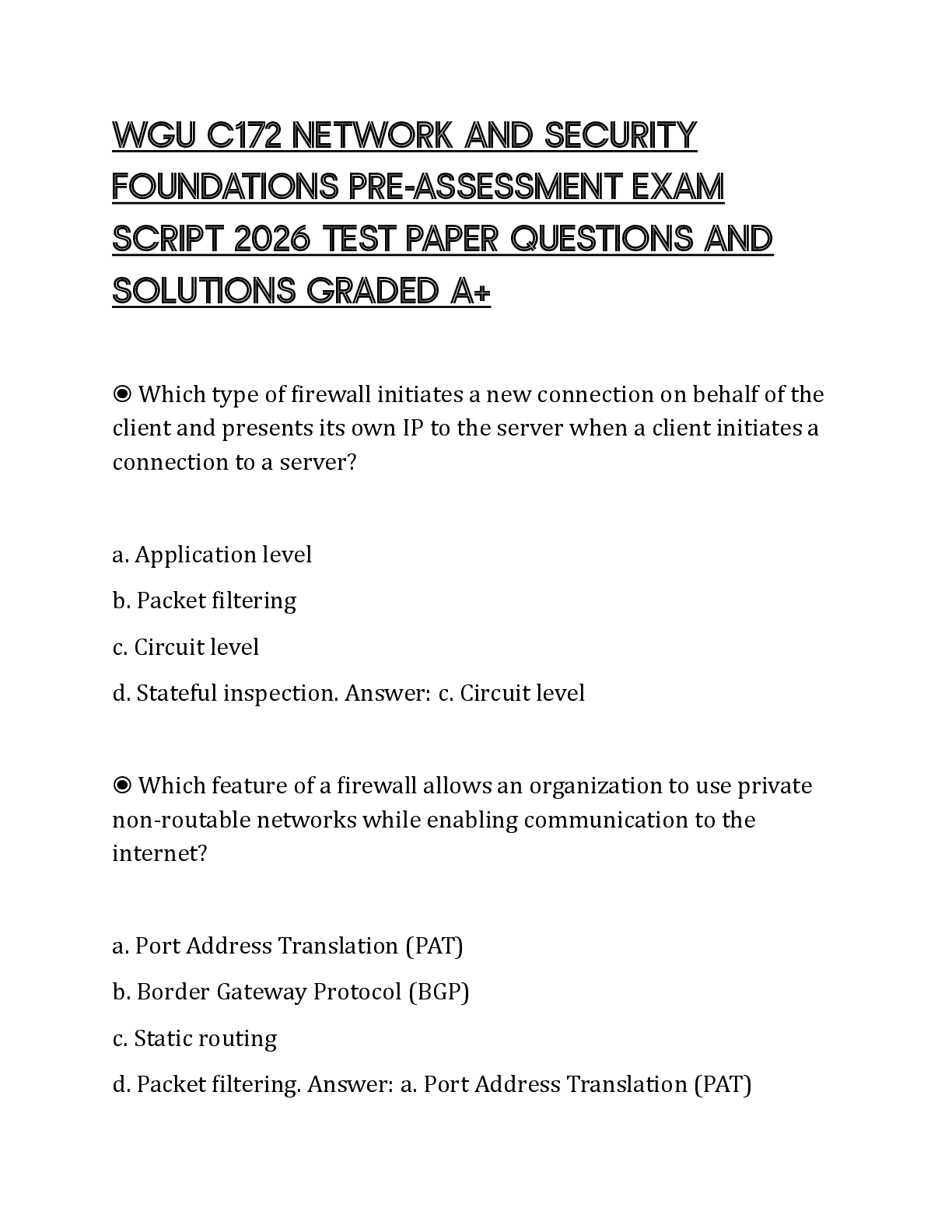
Network Address Translation (NAT) ✔✔Translates the private IP address to a public address for
routing over the Internet.
Network Interface Card (NIC) ✔✔The electronic hardware used to interface the computer to the
network.
Network Layer ✔✔Accepts outgoing messages and combines messages or segments into packets,
adding a header that includes routing information.
Network Number ✔✔The portion of the IP address that defines which network the IP packet is
originating from or being delivered to.
Organizationally Unique Identifier (OUI) ✔✔The first 3-bytes of the MAC address that identifies
the manufacturer of the network hardware.
OSI ✔✔Open system interconnect.
OSI Model ✔✔The seven layers describing network functions.
Overloading ✔✔Where NAT translates the home network's private IP addresses to a single public
IP address.
Packet ✔✔Provides grouping of the information for transmission.
Physical Layer ✔✔Layer of the OSI reference model that provides the electrical and mechanical
connection to the network. Describes the media that interconnects networking devices.
Ping ✔✔Command used to test that a device on the network is reachable.
Port Address Translation (PAT) ✔✔A port number is tracked with the client computer's private
address when translating to a public address.
Ports ✔✔The physical input/output interfaces to the networking hardware.
Presentation Layer ✔✔Layer of the OSI reference model that accepts and structures the messages
for the application.
Private Addresses ✔✔IP addresses set aside for use in private intranets.
Protocol ✔✔Set of rules established for users to exchange information.
Range Extender ✔✔Device that relays the wireless signals from an access point or wireless router
into areas with a weak signal or no signal at all.
RJ-45 ✔✔The 8-pin modular connector used with CAT6/5e/5 cable.
Service Set Identifier (SSID) ✔✔Name that is used to identify your wireless network and is used
by your access point or wireless router to establish an association.
Session Layer ✔✔Layer of the OSI reference model that provides the control functions necessary
to establish, manage, and terminate the connection.
SSID ✔✔Service set identifier.
Star Topology ✔✔The most common networking topology in today's LANs where all networking
devices connect to a central switch or hub.
Stateful Packet Inspection (SPI) ✔✔Type of firewall that inspects incoming data packets to make
sure they correspond to an outgoing r
[Show More]
.png)
.png)

.png)