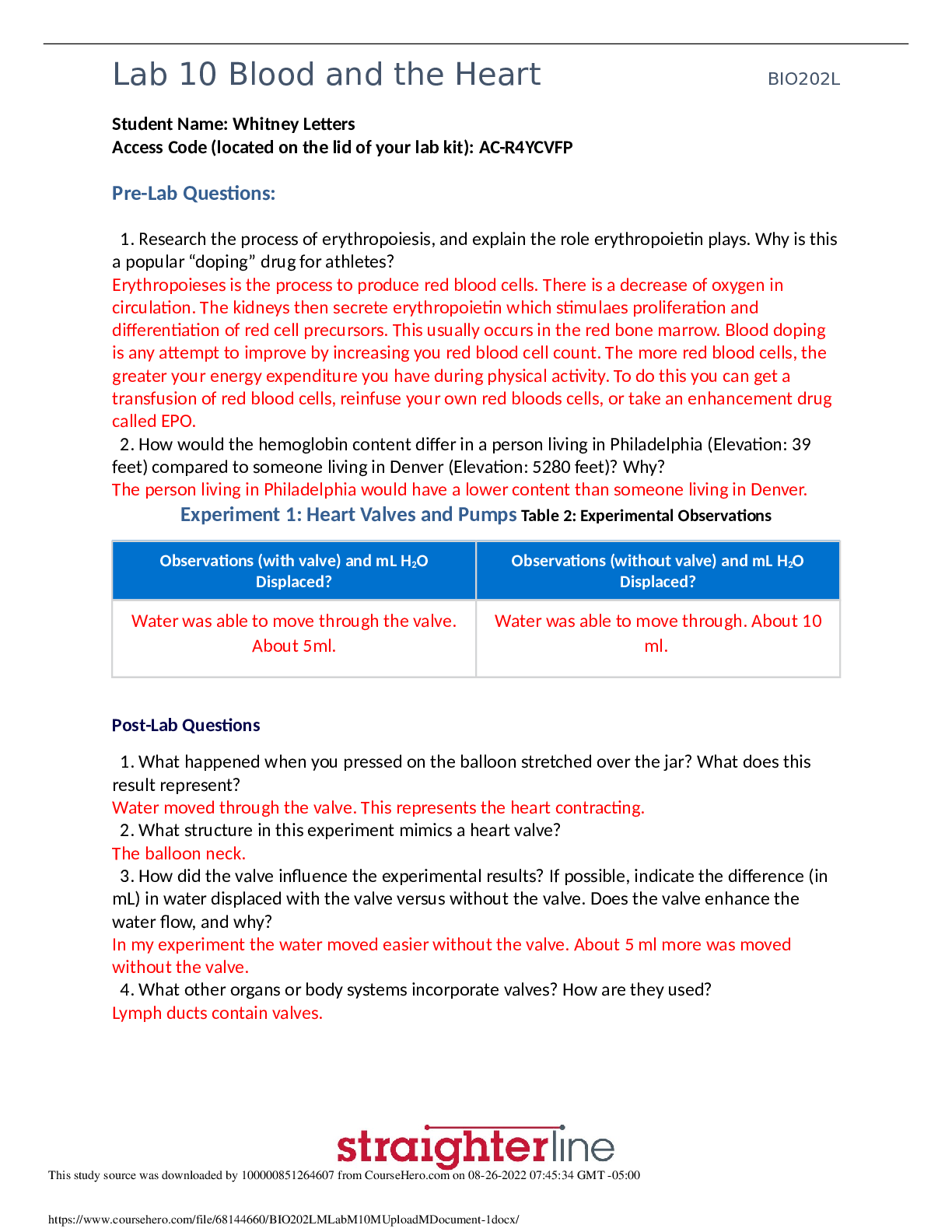
Biology > Lab Experiment > Lab Worksheet DONE | Blood and the Heart | with pre-lab and post-lab questions (All)
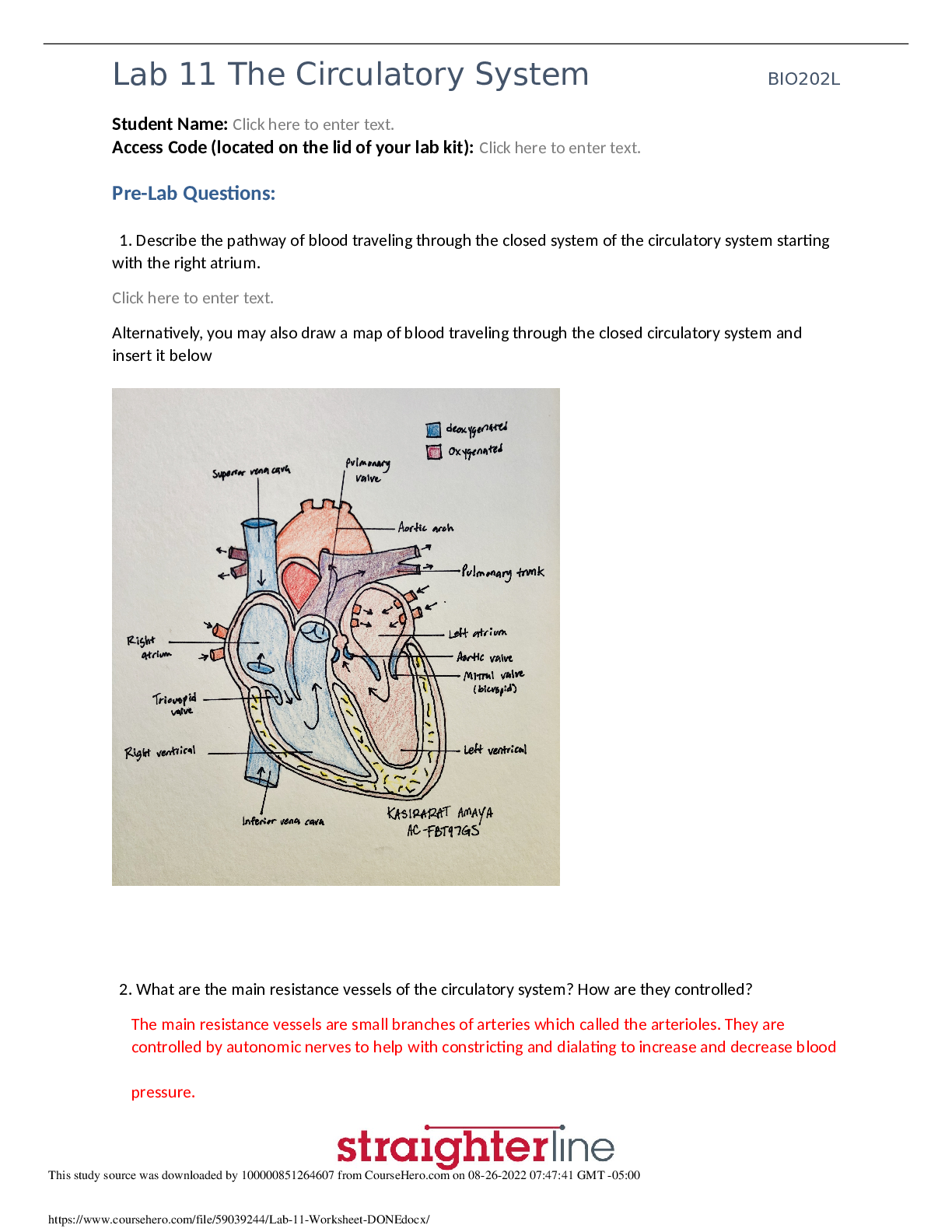
Lab Worksheet DONE | Blood and the Heart | with pre-lab and post-lab questions
Document Content and Description Below
Last updated: 4 years ago
Preview 1 out of 6 pages
Instant download
Buy this Document to get the Full Access Instantly
Provided by Students Who Aced it
We Verify Document Content to Gurantee Accuracy
Reviews( 0 )
Document information
Connected school, study & course
About the document
Uploaded On
Aug 26, 2022
Number of pages
6
Written in
All

Additional information
This document has been written for:
Uploaded
Aug 26, 2022
Downloads
0
Views
265
Topic Tags
Recommended For You
Get more on Lab Experiment »
The Urinary System. PRE-LAB QUESTIONS. Experiment 1: Kidney Fi...

Straighterline_BIOL 202L Lab 14 The Urinary System, Experiment...

portage learning bio 152.. Lab 1 Exam - Requires Respondus Loc...

ACLS PreTest: Pharmacology and Practical Application Questions...
Module 6 Exam - Requires Respondus LockDown Browser + Webcam_...
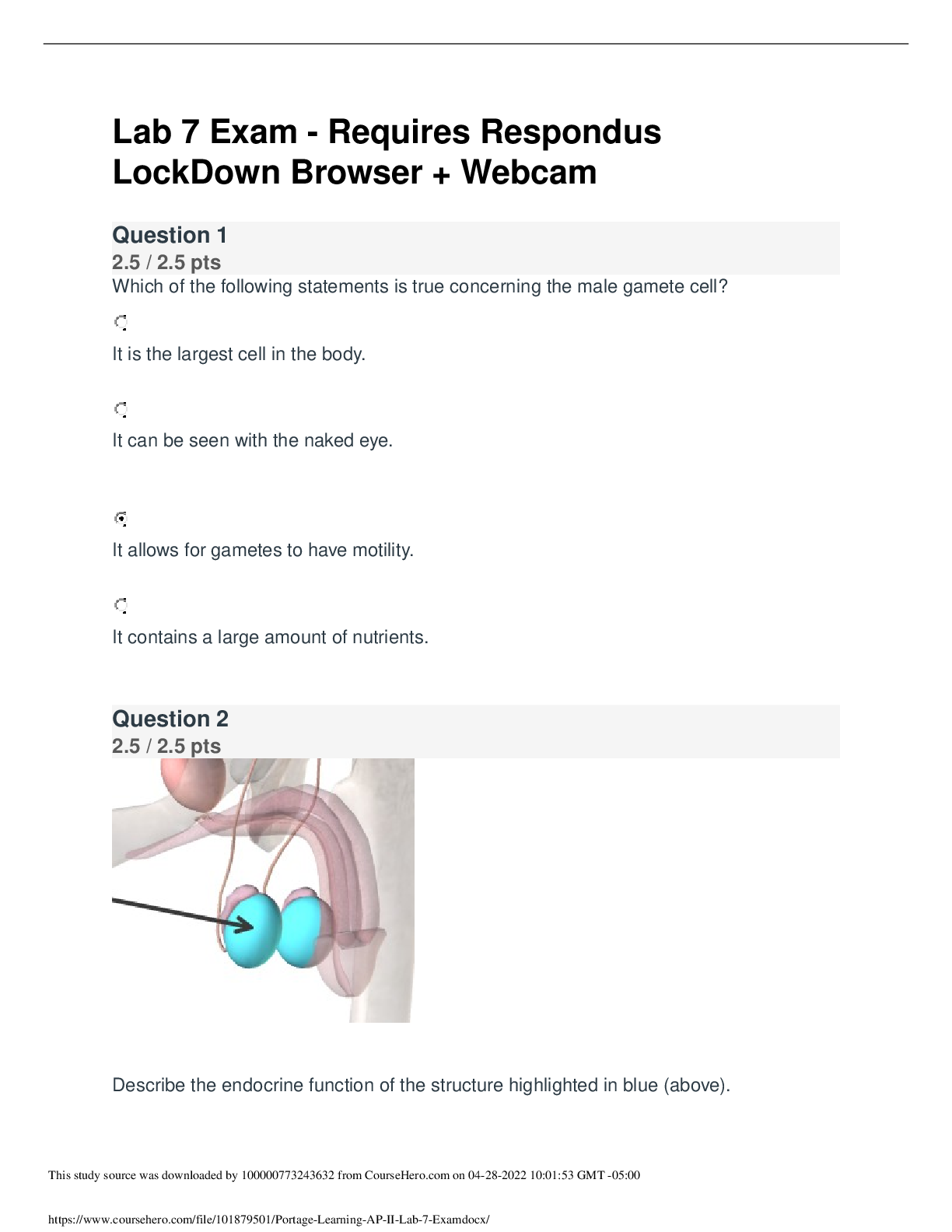
Portage Learning_ AP II Lab 7 Exam.docx. heavily discounted. 1...
PORTAGE LEARNING BIO 152..Lab 6 Exam - Requires Respondus Lock...