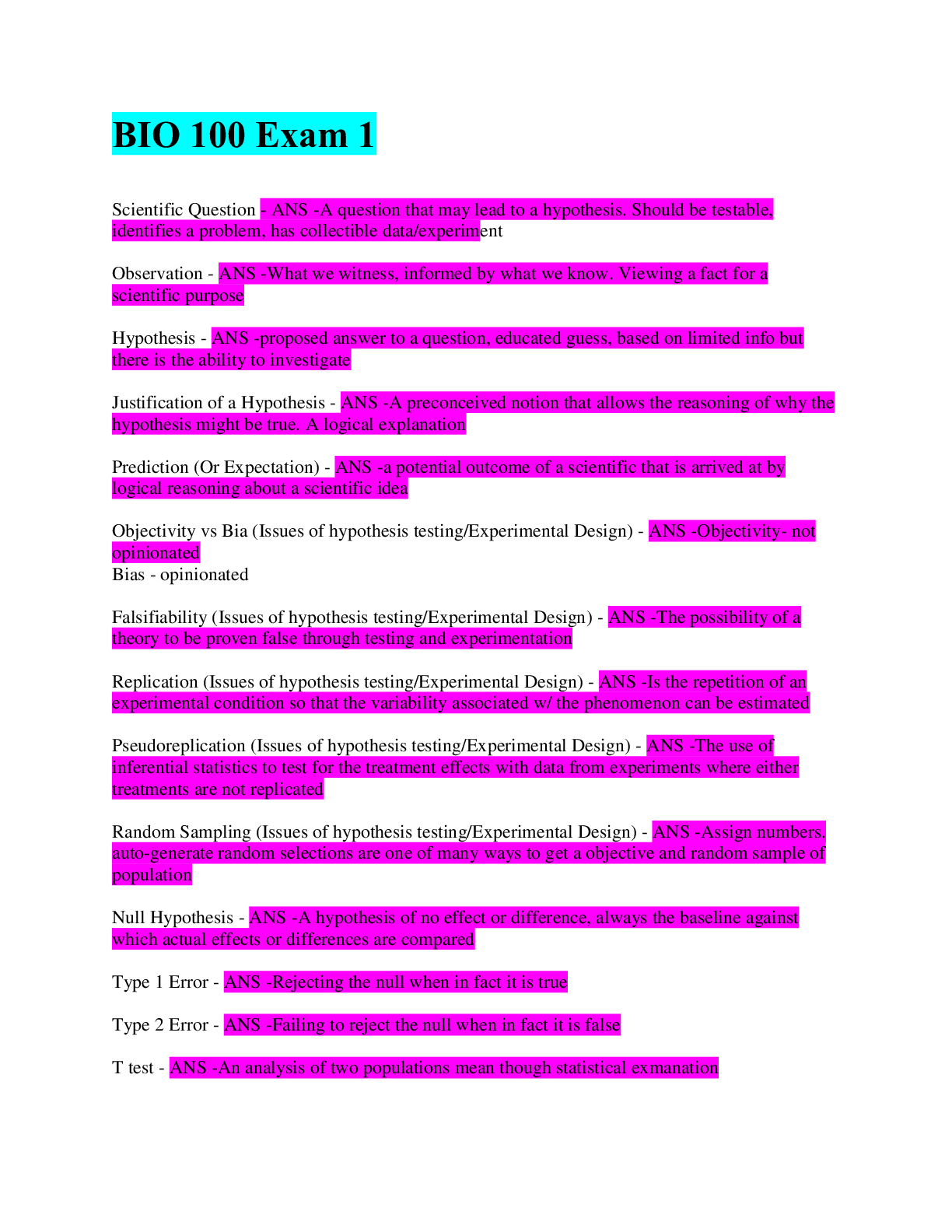
BIO 100 Exam 1 / SET (54) / 100% Accurate Answers
Document Content and Description Below
Scientific Question - ANS -A question that may lead to a hypothesis. Should be testable, identifies a problem, has collectible data/experiment
Observation - ANS -What we witness, informed by what we know. Viewing a fa
...
[Show More]
Last updated: 4 years ago
Preview 1 out of 4 pages
Instant download
Buy this Document to get the Full Access Instantly
Provided by Students Who Aced it
We Verify Document Content to Gurantee Accuracy
Reviews( 0 )
Document information
Connected school, study & course
About the document
Uploaded On
Sep 25, 2022
Number of pages
4
Written in
All

Additional information
This document has been written for:
Uploaded
Sep 25, 2022
Downloads
0
Views
127
Topic Tags
Recommended For You
Get more on EXAM »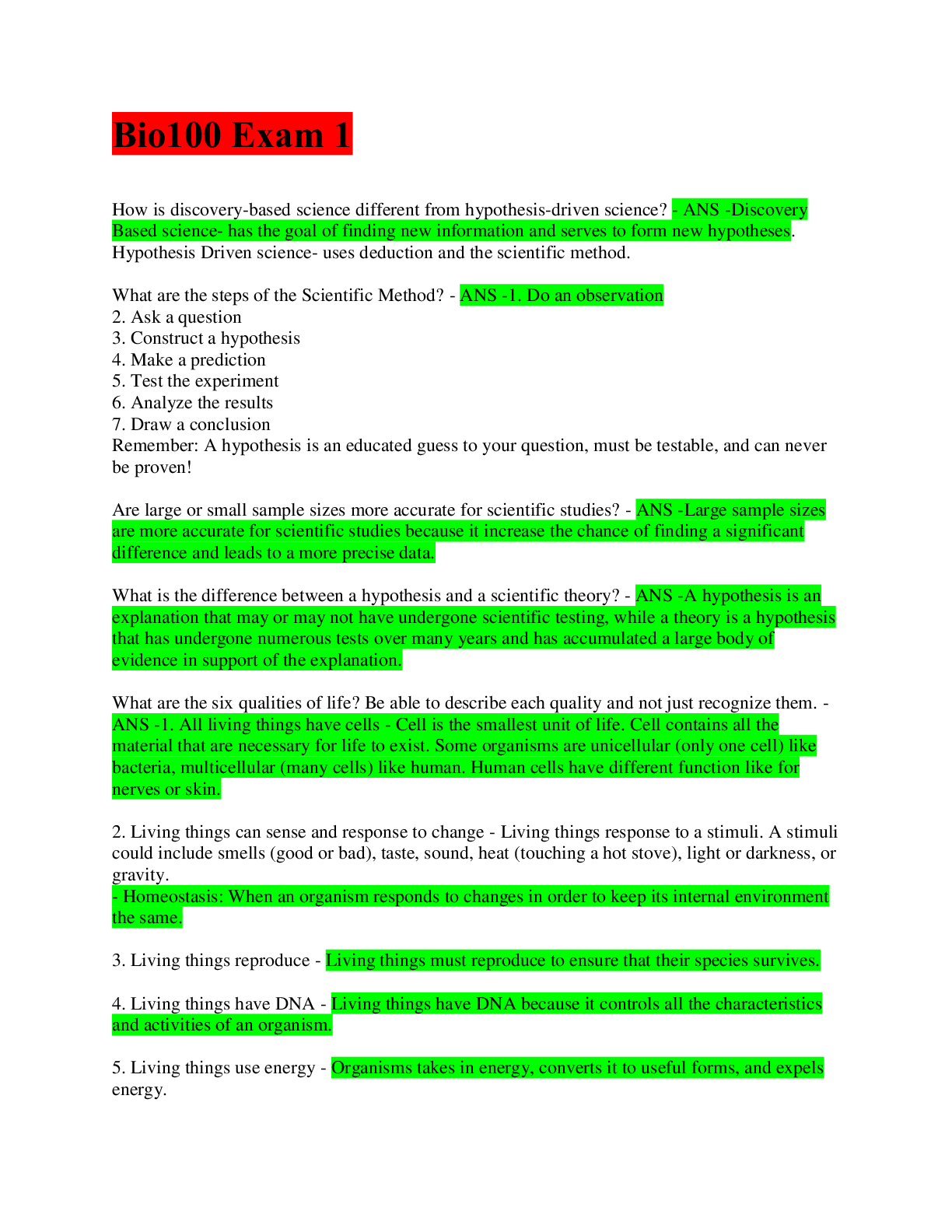

$7
5 Pages
Upland High School BIO BIO 100 AP Biology Chi Square Practi...

$9
12 Pages
Tina Jones Comprehensive Health Aeeseement Capella University...

$12
125 Pages
Bio 1004 revision notes Topic 1: Biomolecules –( Kieran Kirk T...
$19
125 Pages
Bio 1004 revision notes Topic 1: Biomolecules – Kieran Kirk T...

$7.5
205 Pages
BIO 100 2020-2021 HESI EXIT RN EXAM V1-V7 110 OUT OF THE 160 T...

$9
6 Pages
BIO 100 | HUMAN BIOLOGY UNIT 6 MILESTONE | EXAM 2 | Already Gr...
$10
11 Pages
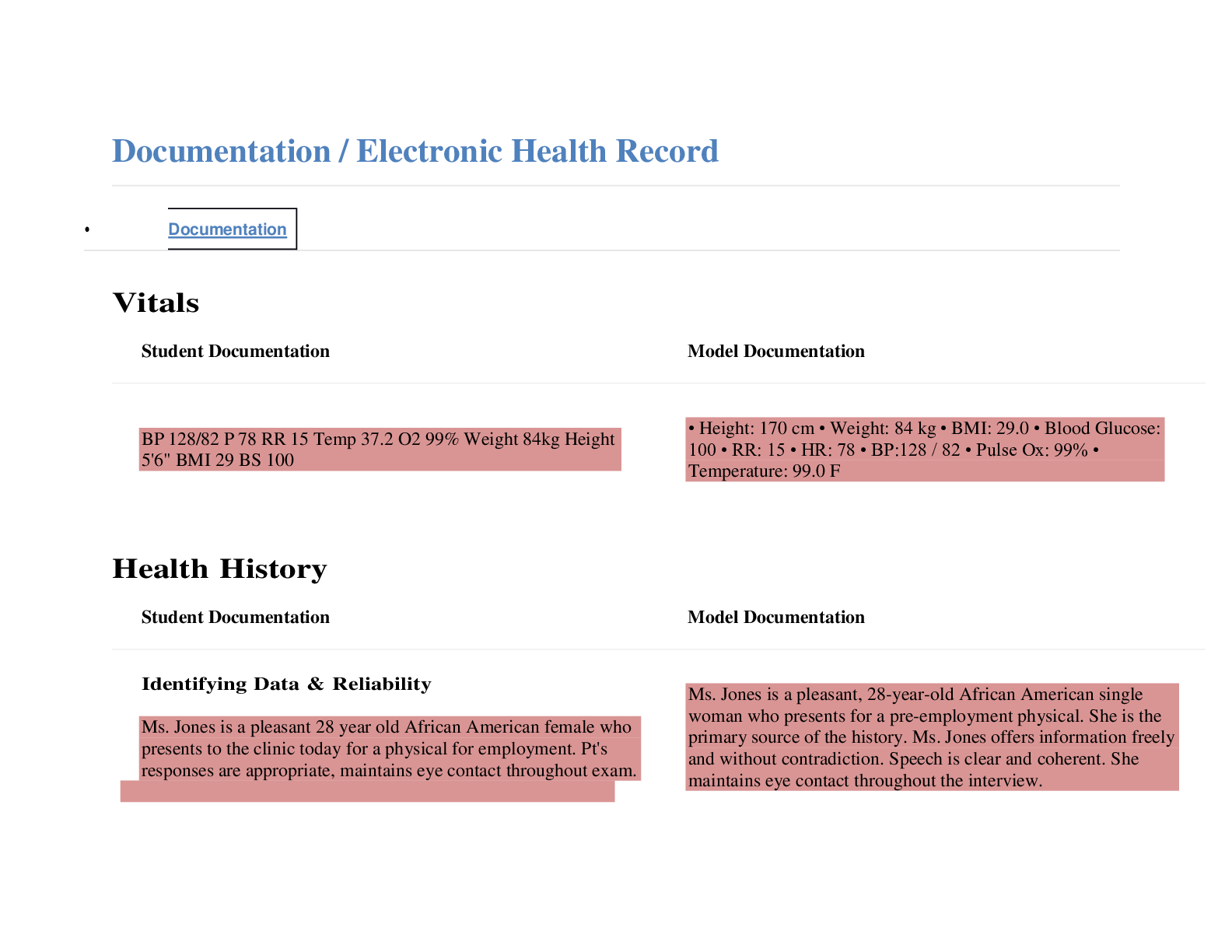
Bio 100 Tina Jones Comprehensive Health Assessment - Capella U...
.png)
$6
7 Pages
Brooklyn College, CUNY - BIO 1001C. Elegans Lab report, Paper
$7.5
16 Pages
BIO 100 Exam 1 Study Guide: Hunter College (CUNY) Biology Note...
$6.5
12 Pages
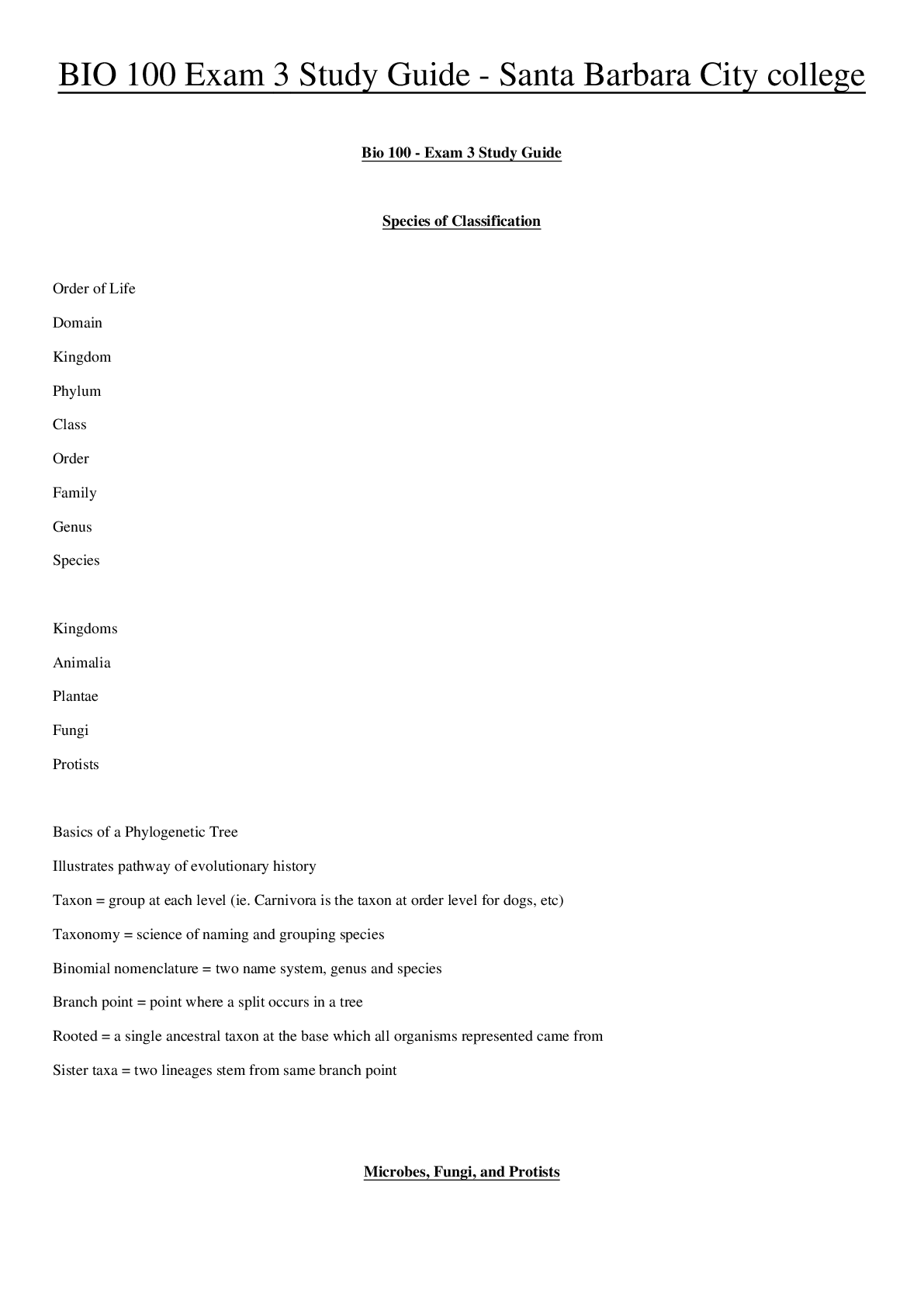
BIO 100 Exam 3 Study Guide - Santa Barbara City college Bio 1...

$8.5
10 Pages
BIO 100 Exam 1 Study Guide - Santa Barbara City college
$10.5
125 Pages
Bio 1004 revision notes Topic 1: Biomolecules /- Kieran Kirk T...
$13
125 Pages
Bio 1004 revision notes Topic 1: Biomolecules /- Kieran Kirk T...
$8
3 Pages
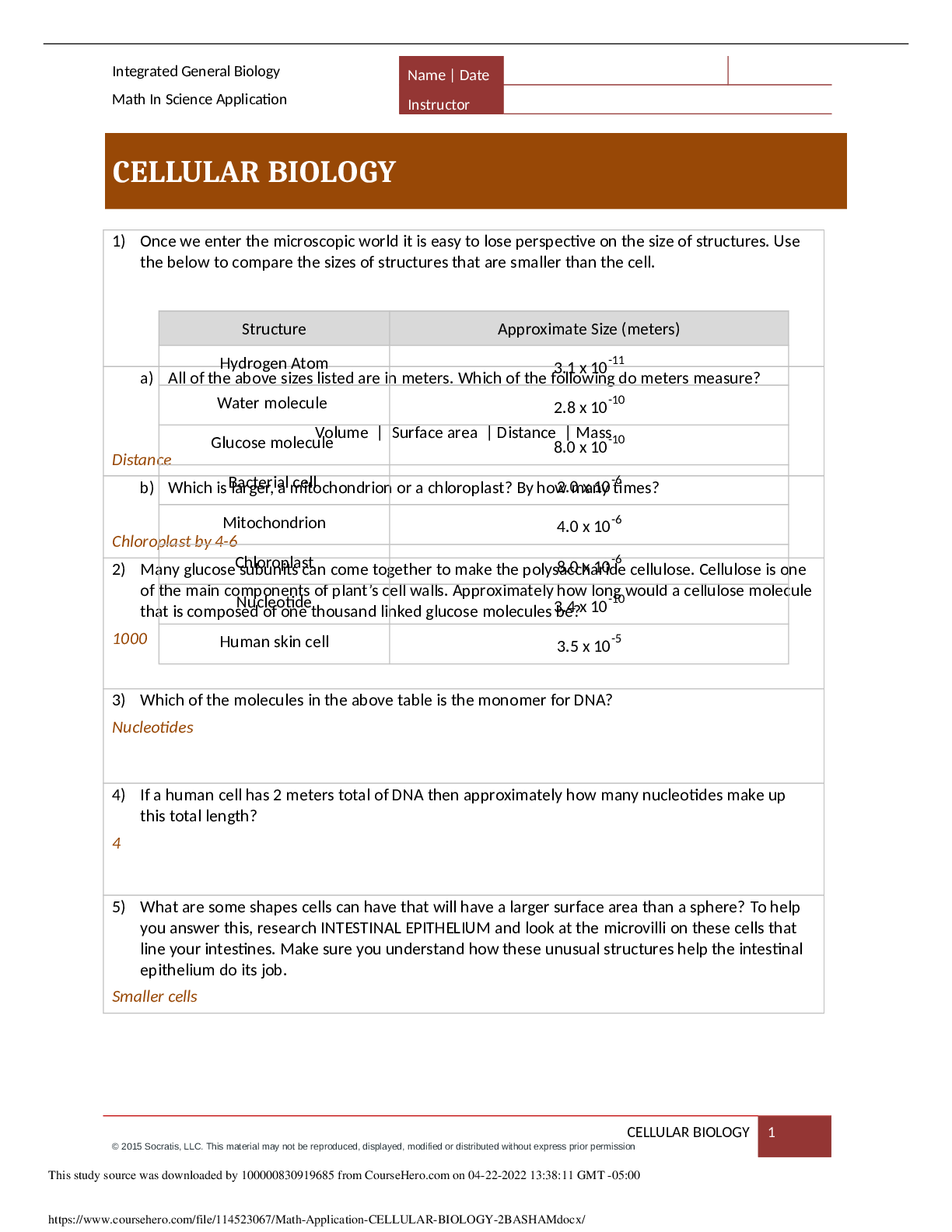
Cincinnati State Technical and Community CollegeBIO 100 Math A...

$16
125 Pages
Bio 1004 revision notes Topic 1: Biomolecules /- Kieran Kirk T...
More related documents below