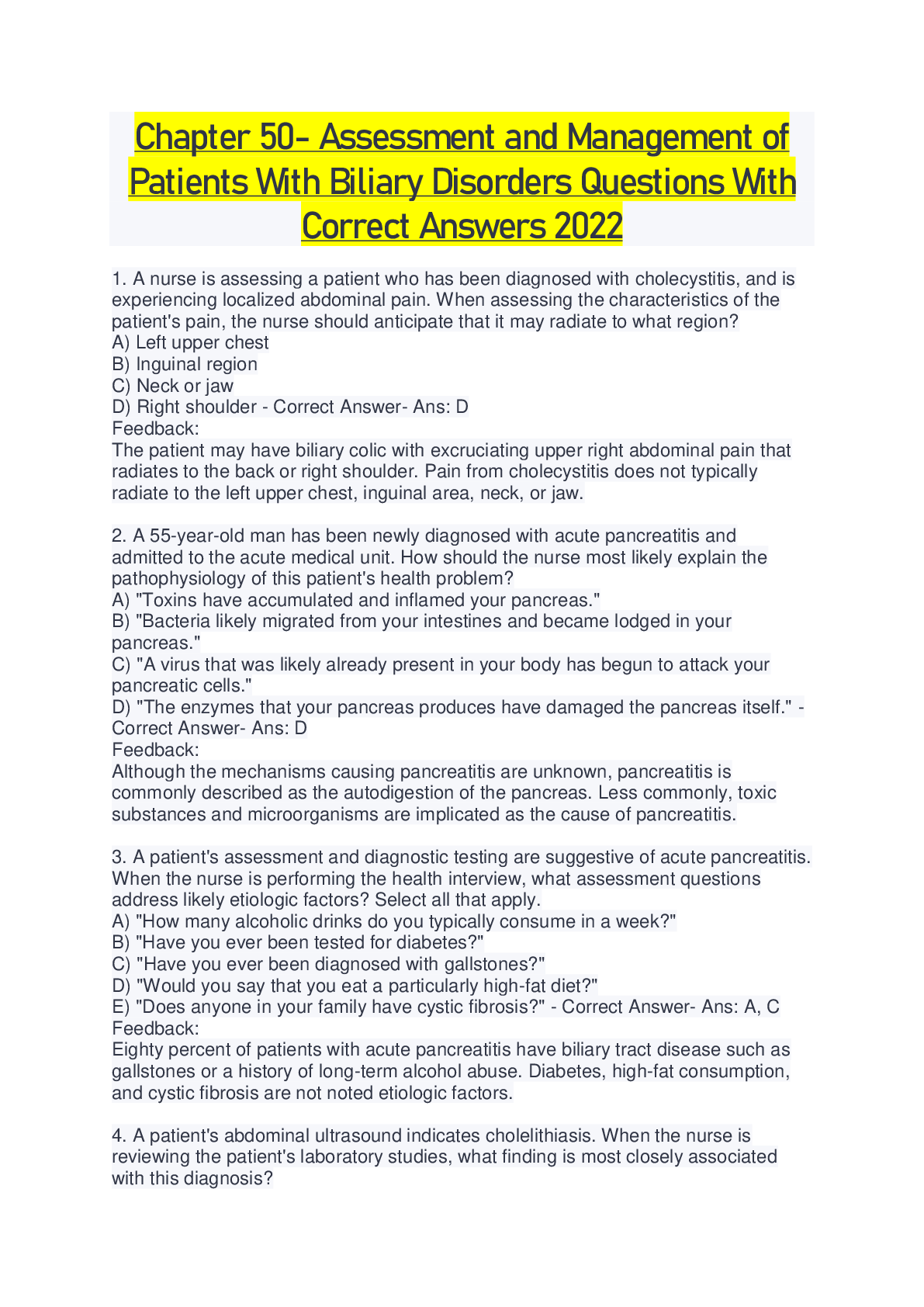
NURSING > QUESTIONS & ANSWERS > MATERNAL NEWBORN NURSING QUESTIONS AND CORRECT ANSWERS 2022 (All)
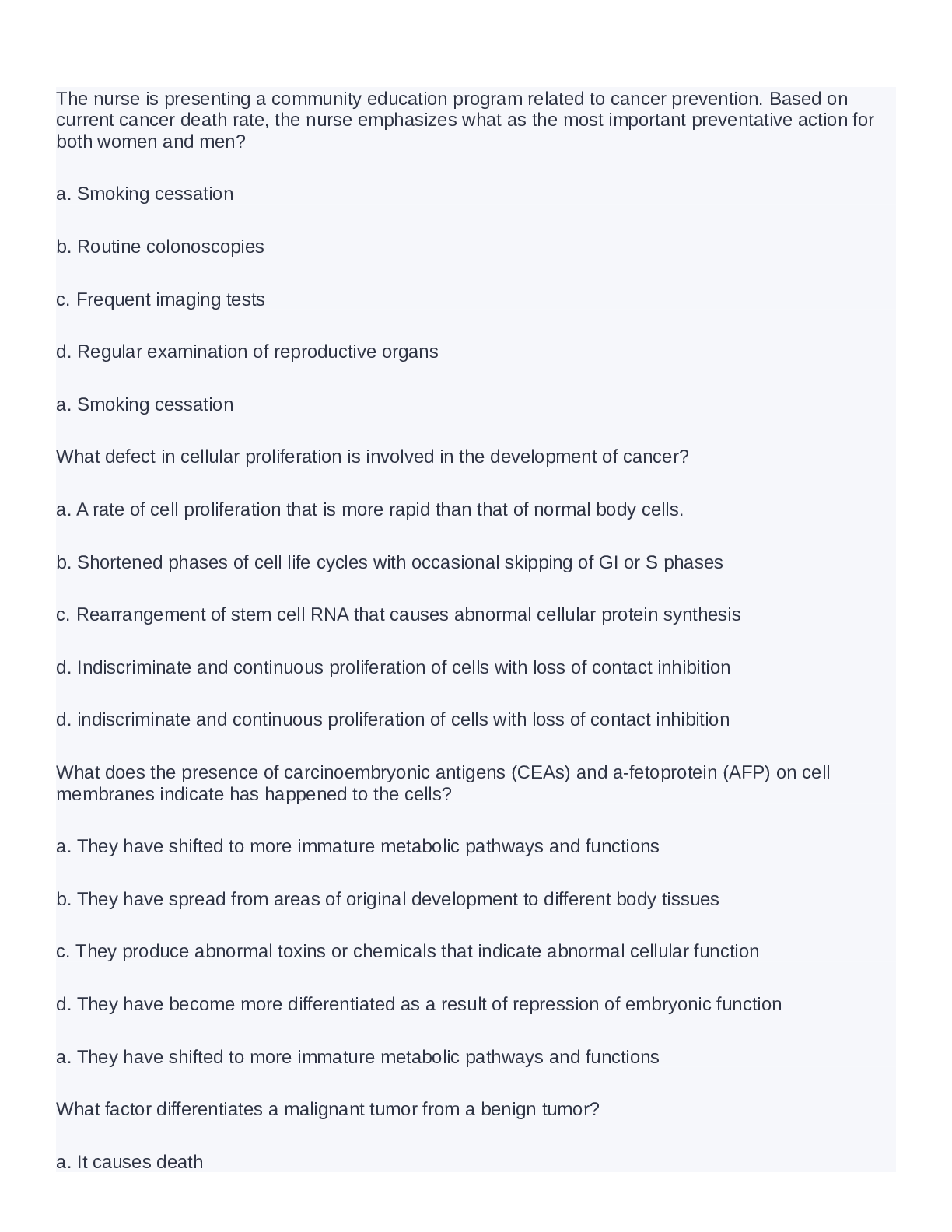
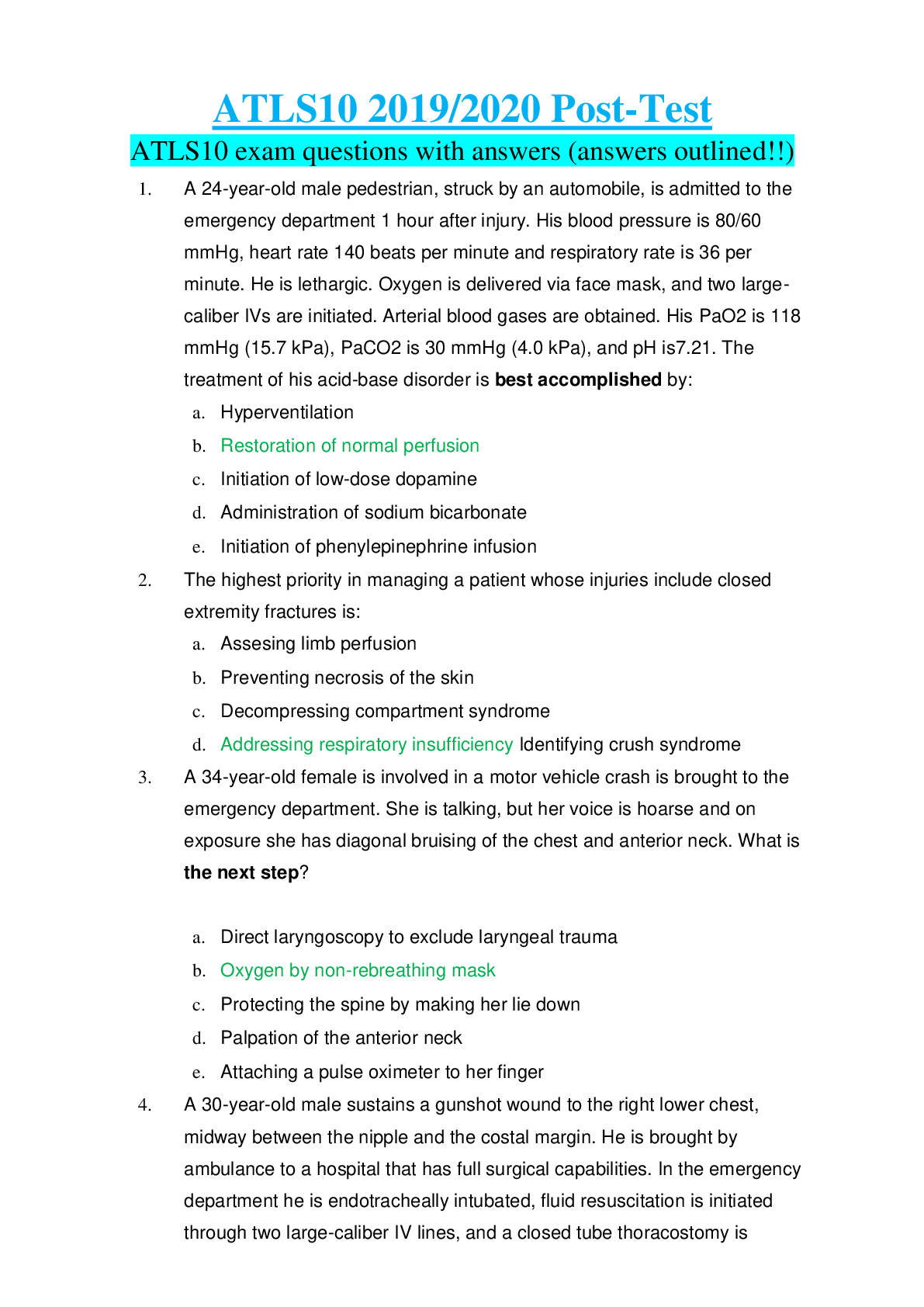
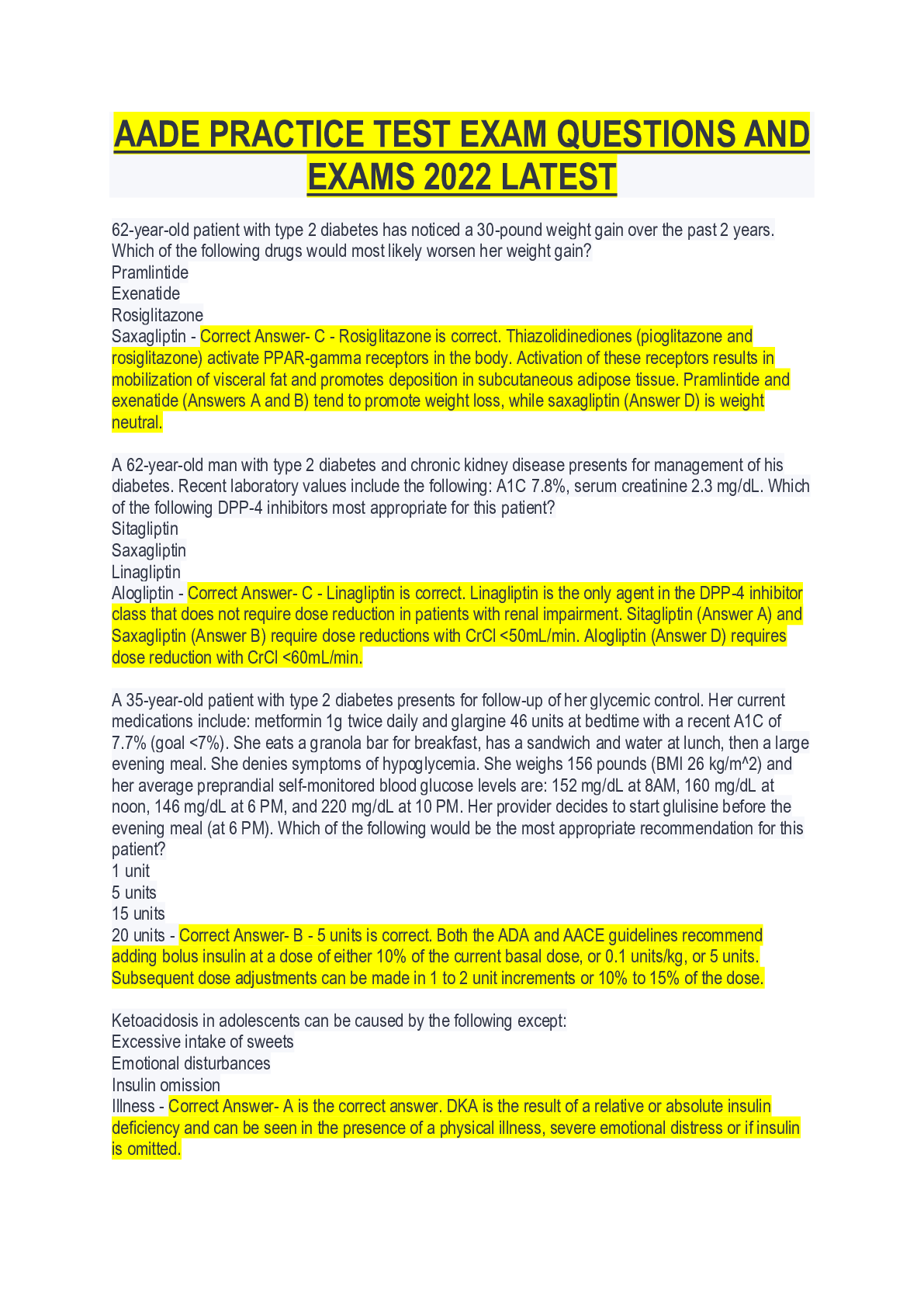
MATERNAL NEWBORN NURSING QUESTIONS AND CORRECT ANSWERS 2022
Document Content and Description Below
Last updated: 4 years ago
Preview 1 out of 7 pages
Instant download

Buy this Document to get the Full Access Instantly
Provided by Students Who Aced it
We Verify Document Content to Gurantee Accuracy
Reviews( 0 )
Document information
Connected school, study & course
About the document
Uploaded On
Oct 12, 2022
Number of pages
7
Written in
All

Additional information
This document has been written for:
Uploaded
Oct 12, 2022
Downloads
0
Views
90
Topic Tags
Recommended For You
Get more on QUESTIONS & ANSWERS »
ATI MATERNAL NEWBORN NURSING QUESTIONS AND ANSWERS WITH LATEST...
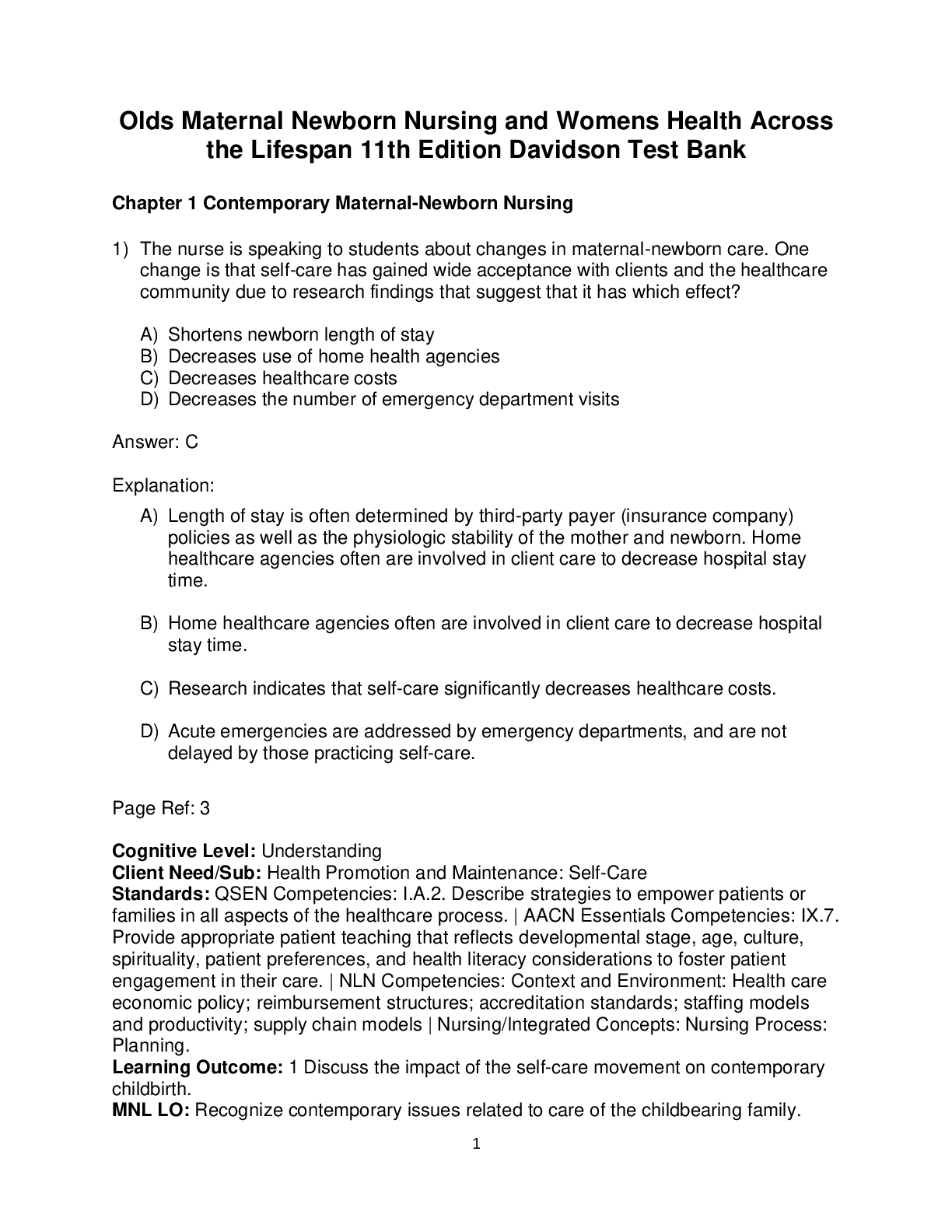
Test Bank for Olds Maternal Newborn Nursing and Womens Health...
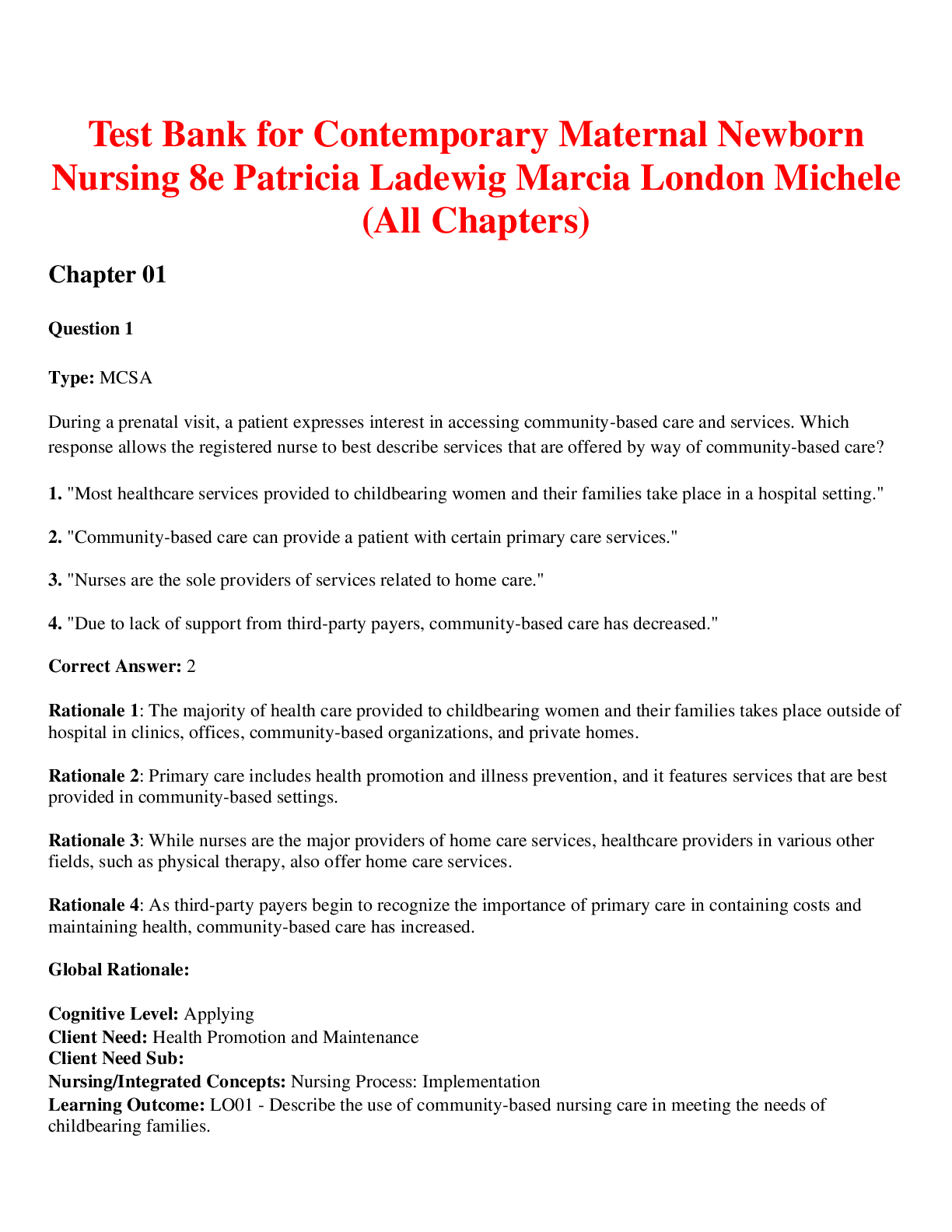
Contemporary Maternal Newborn Nursing, 8e Patricia Ladewig, Ma...
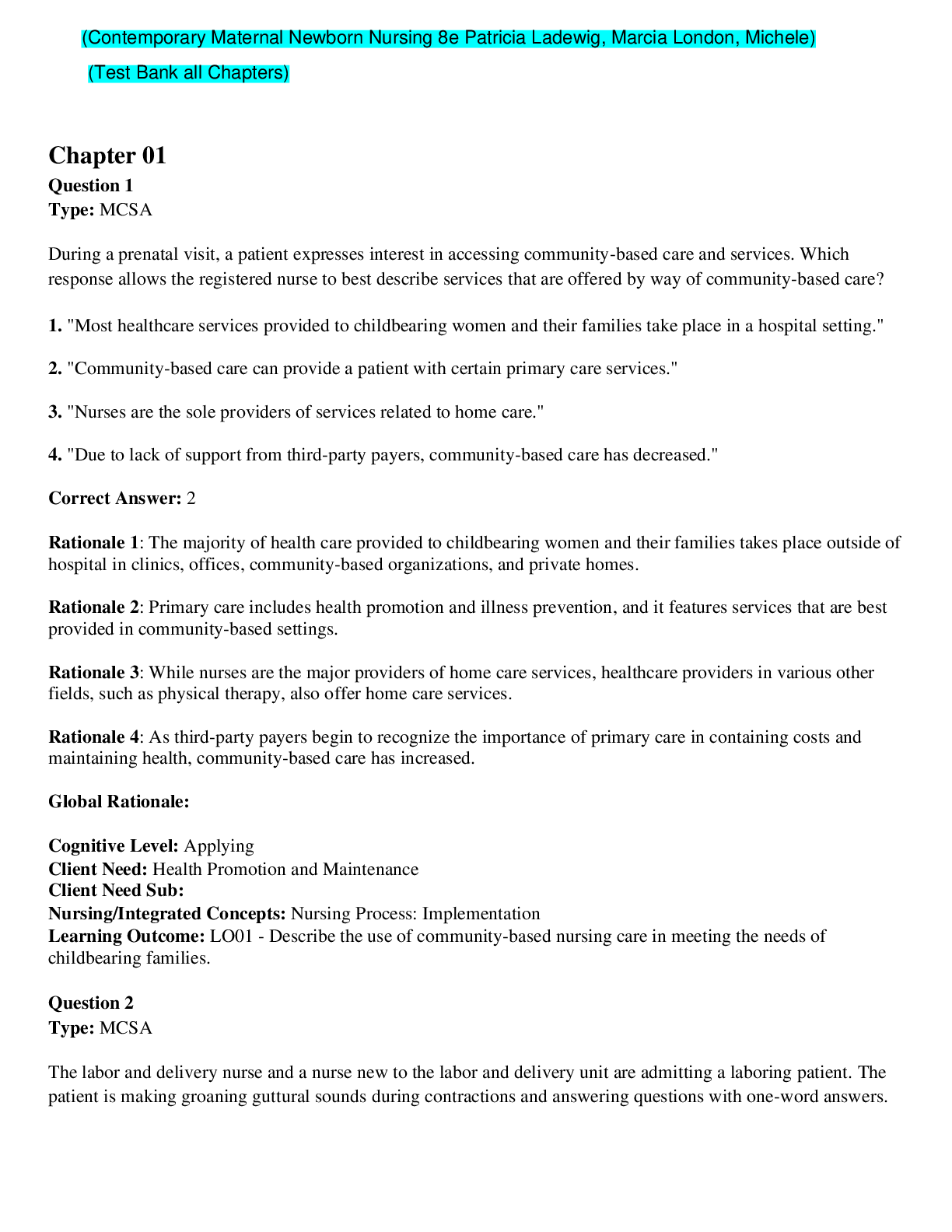
Contemporary Maternal Newborn Nursing 8e Patricia Ladewig, Mar...
PN Maternal Newborn Nursing ATI Proctored Exam Studyguide Ne...
MATERNAL NEWBORN NURSING FINAL EXAM PREPARATION NEWEST 2025/2...
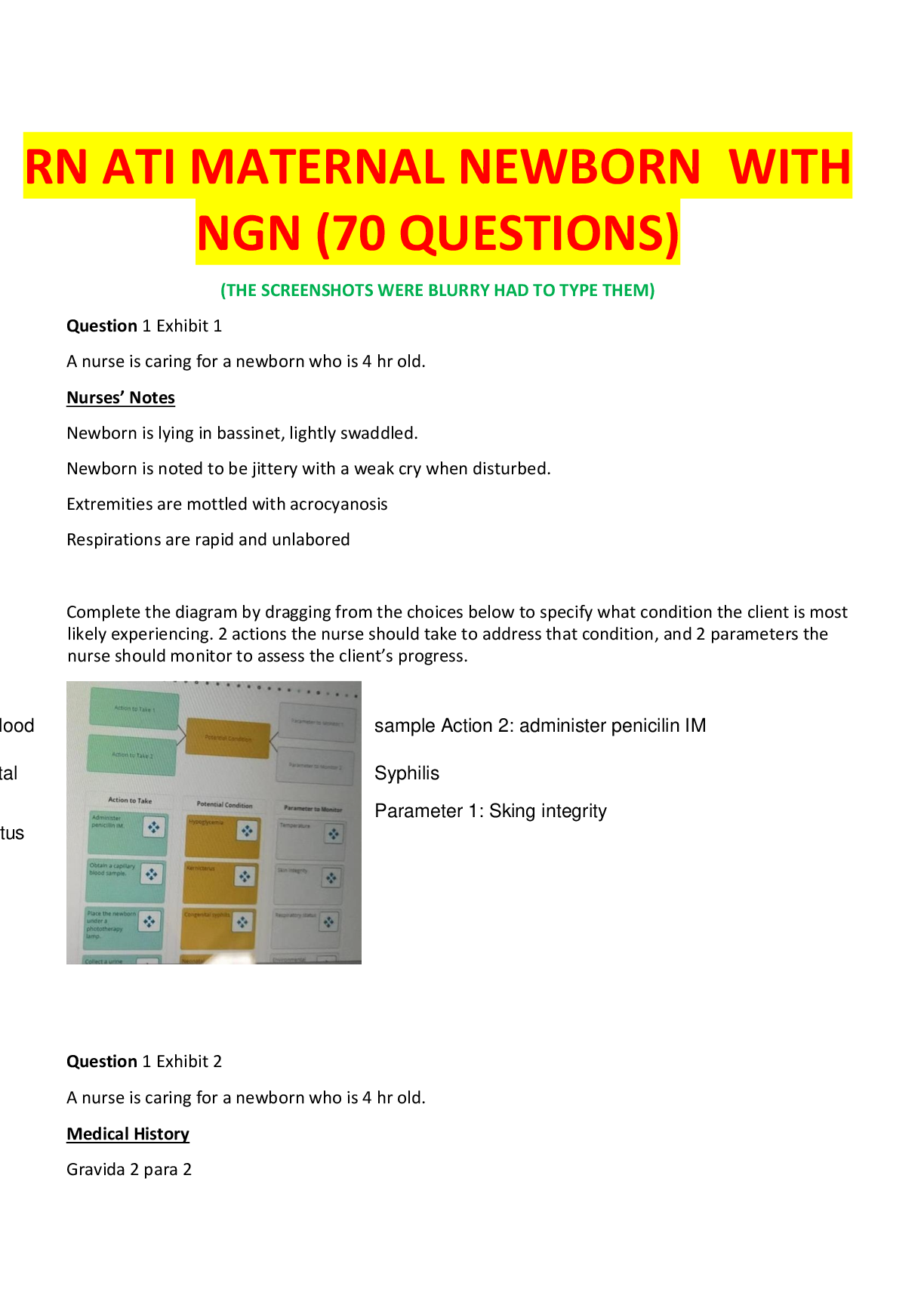
Here is the ATI RN Maternal Newborn Proctored Exam with NGN 20...
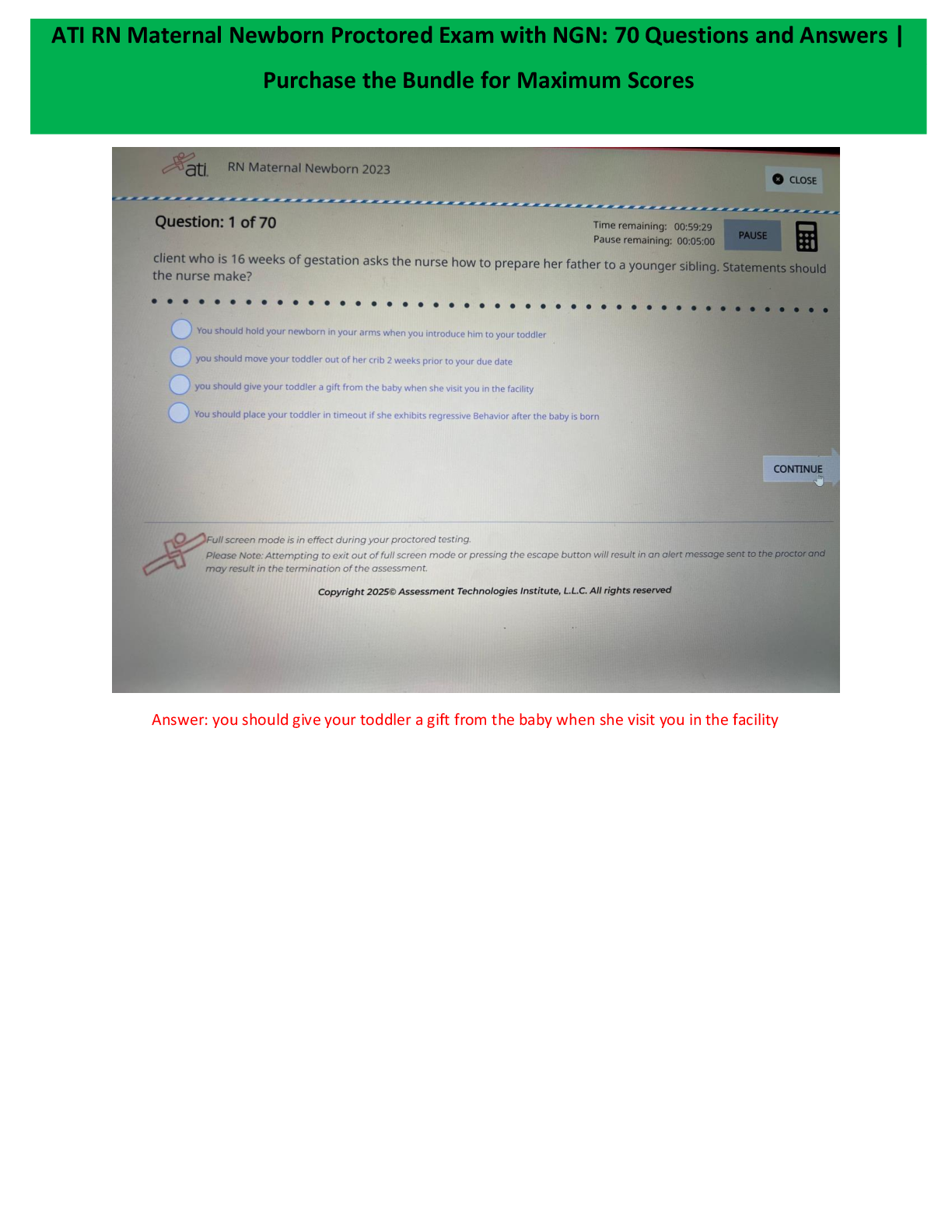
Here is the ATI RN Maternal Newborn Proctored Exam with NGN 20...

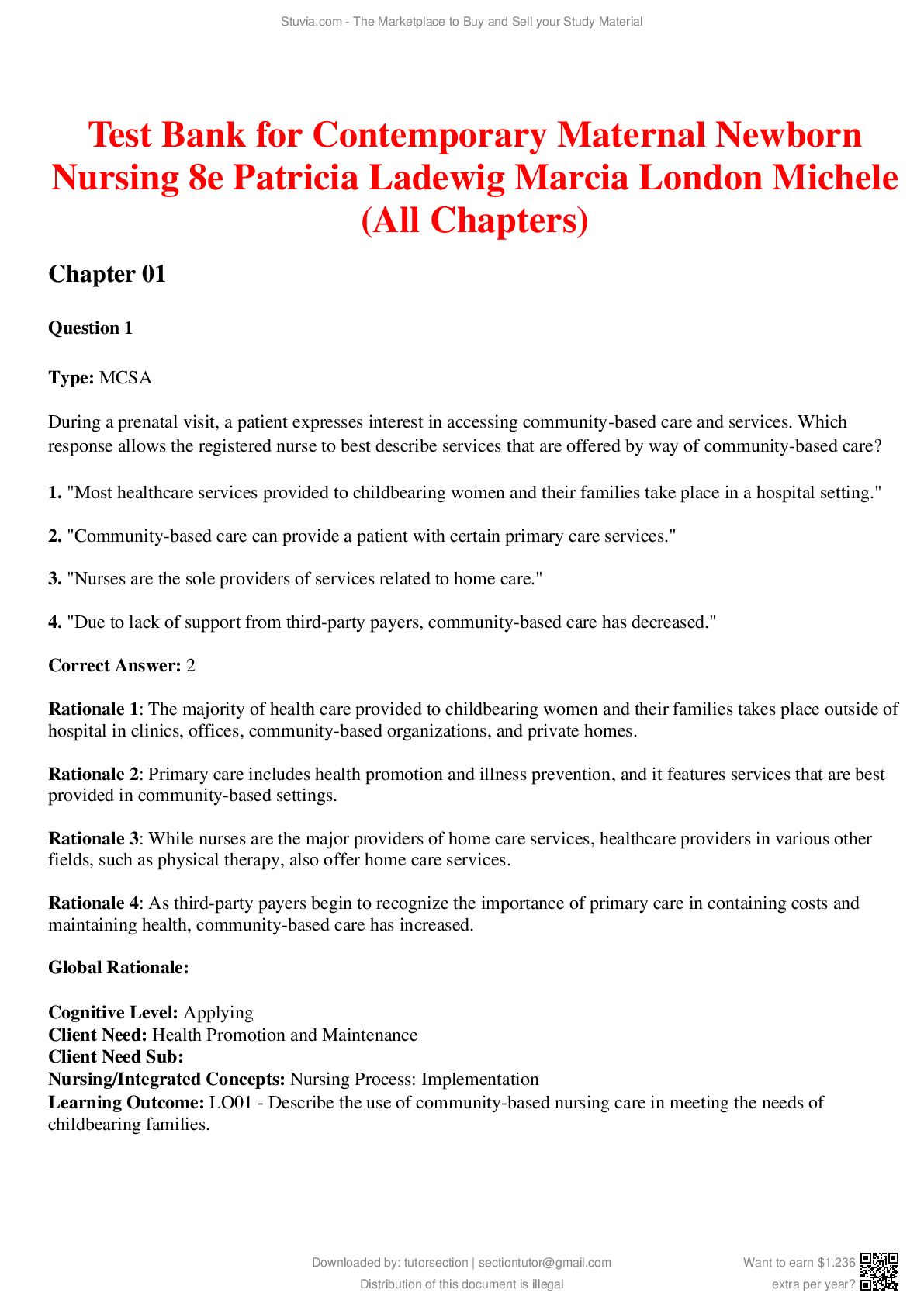
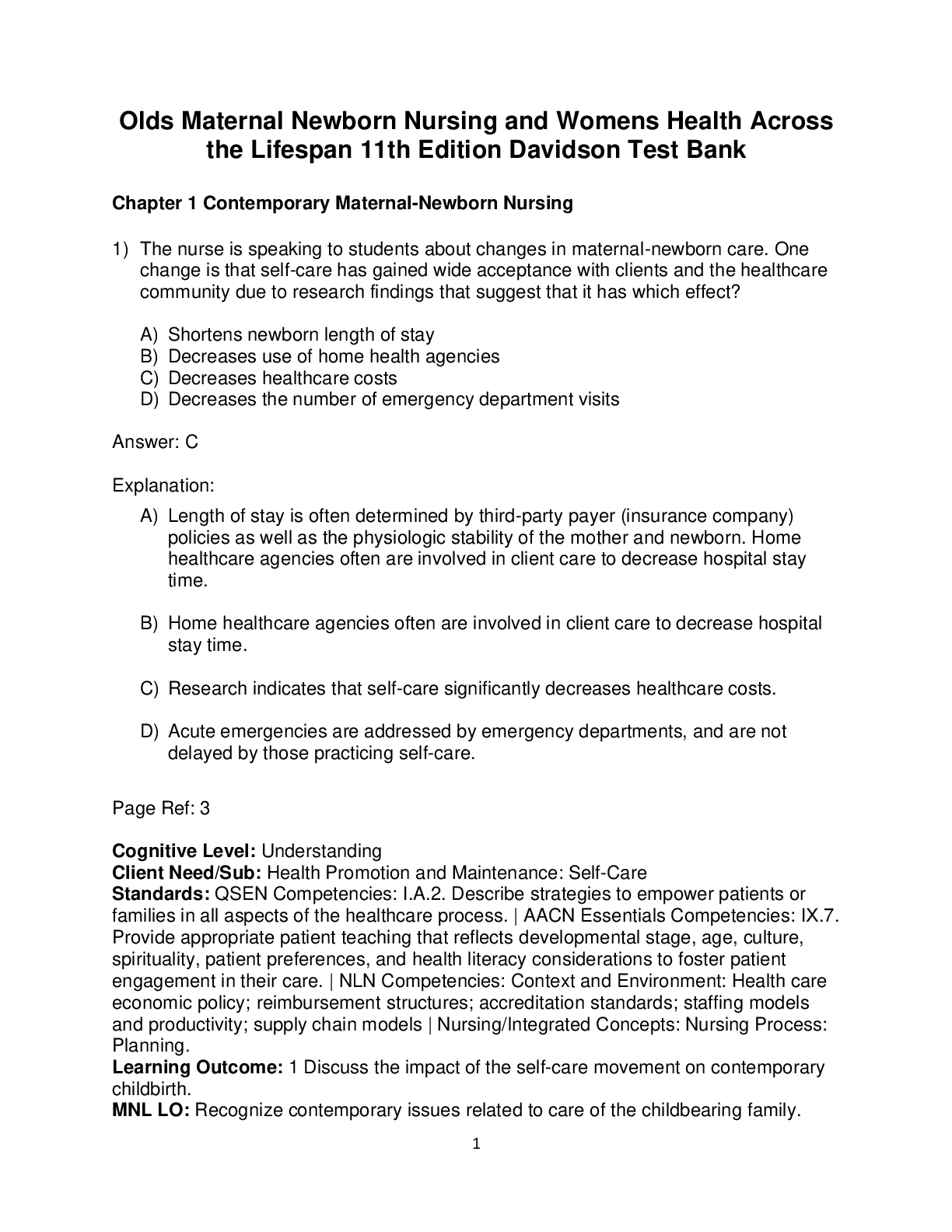
Olds Maternal Newborn Nursing and Womens Health Across the Lif...
Test Bank Olds' Maternal Newborn Nursing Womens Health Across...
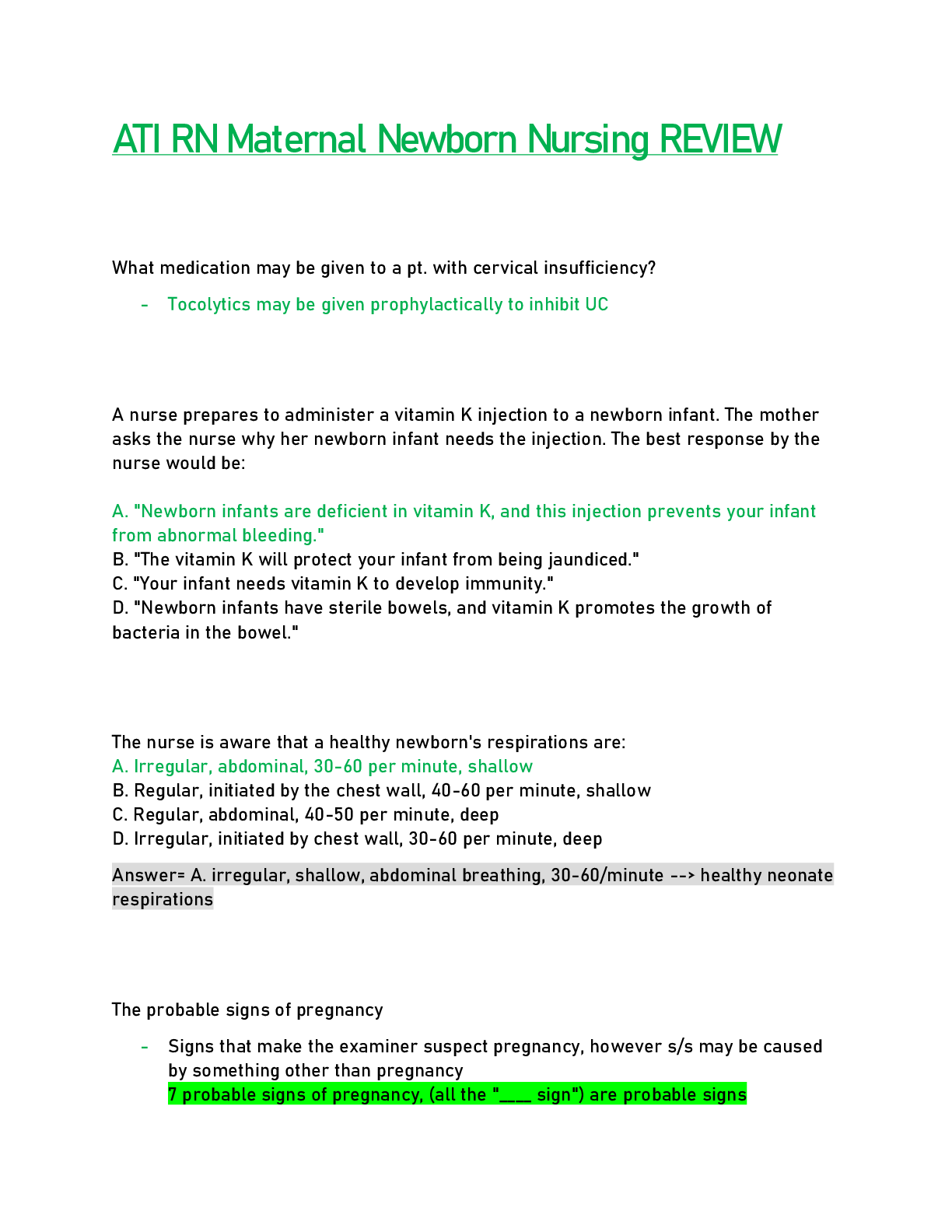
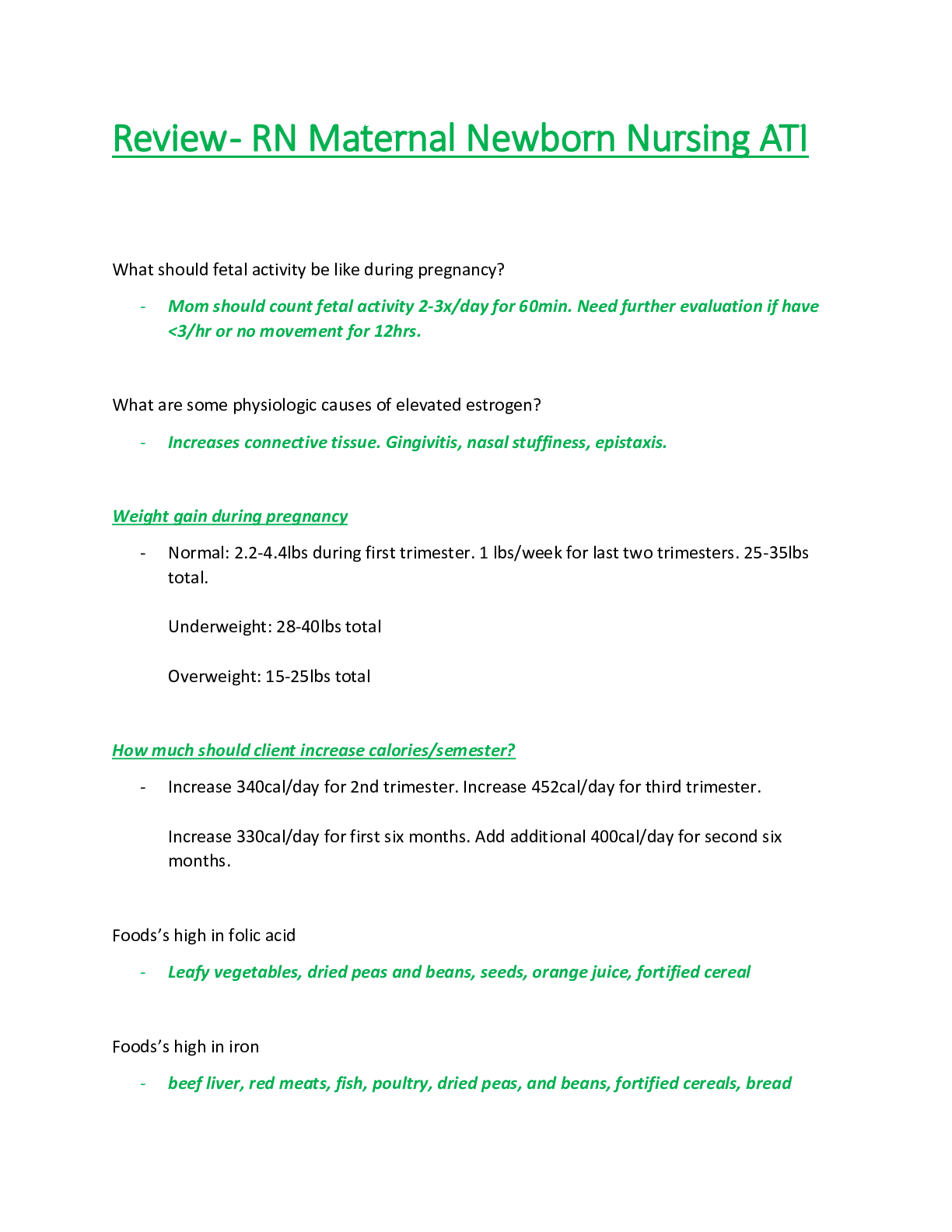
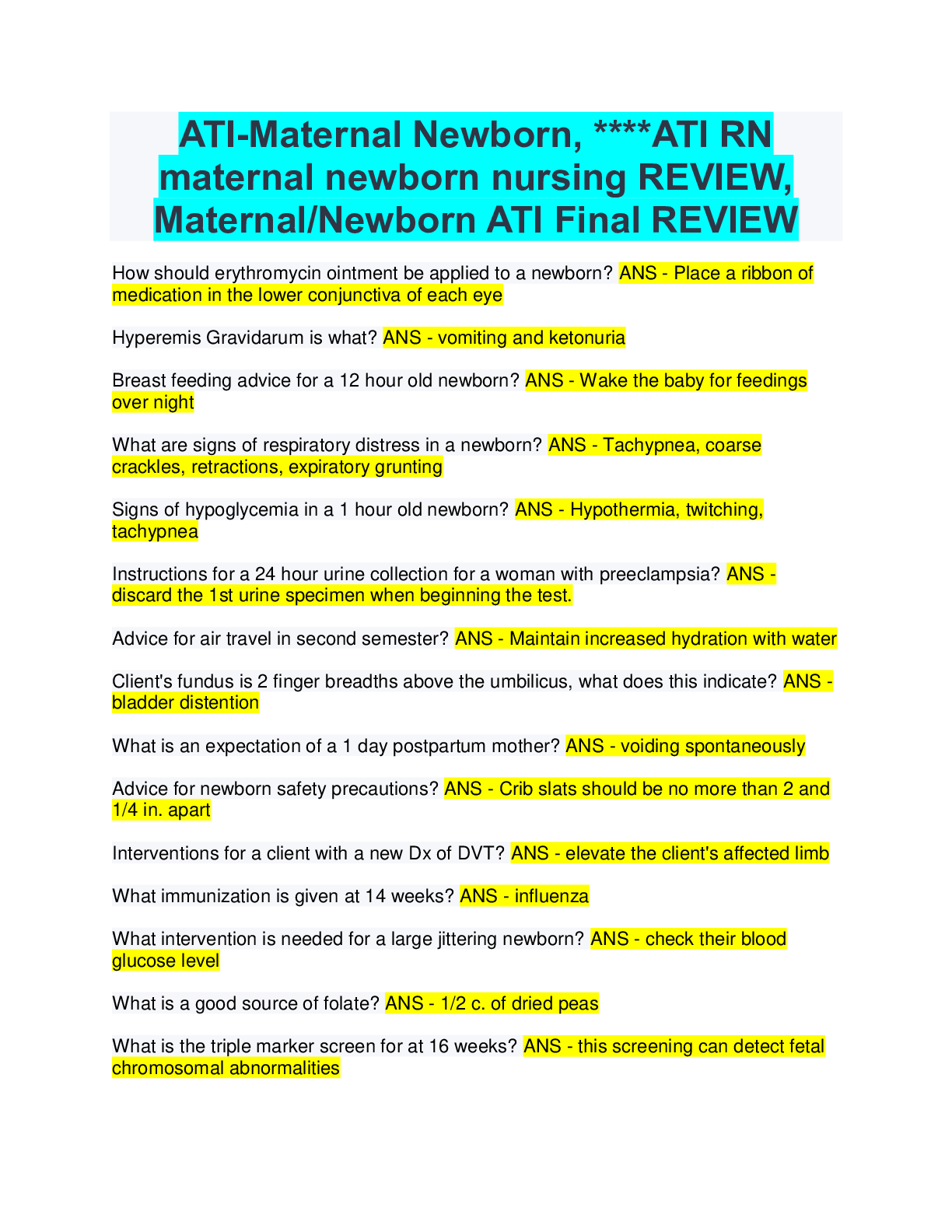
****ATI RN maternal newborn nursing REVIEW, Maternal/Newborn A...