MED-SURGE HESI RN QUESTIONS & ANSWERS
LATEST UPDATE
1. A nurse is preparing to provide hygiene care. Which principle should the
nurse consider when planning hygiene care?
a. Hygiene care is always routine and expecte
...
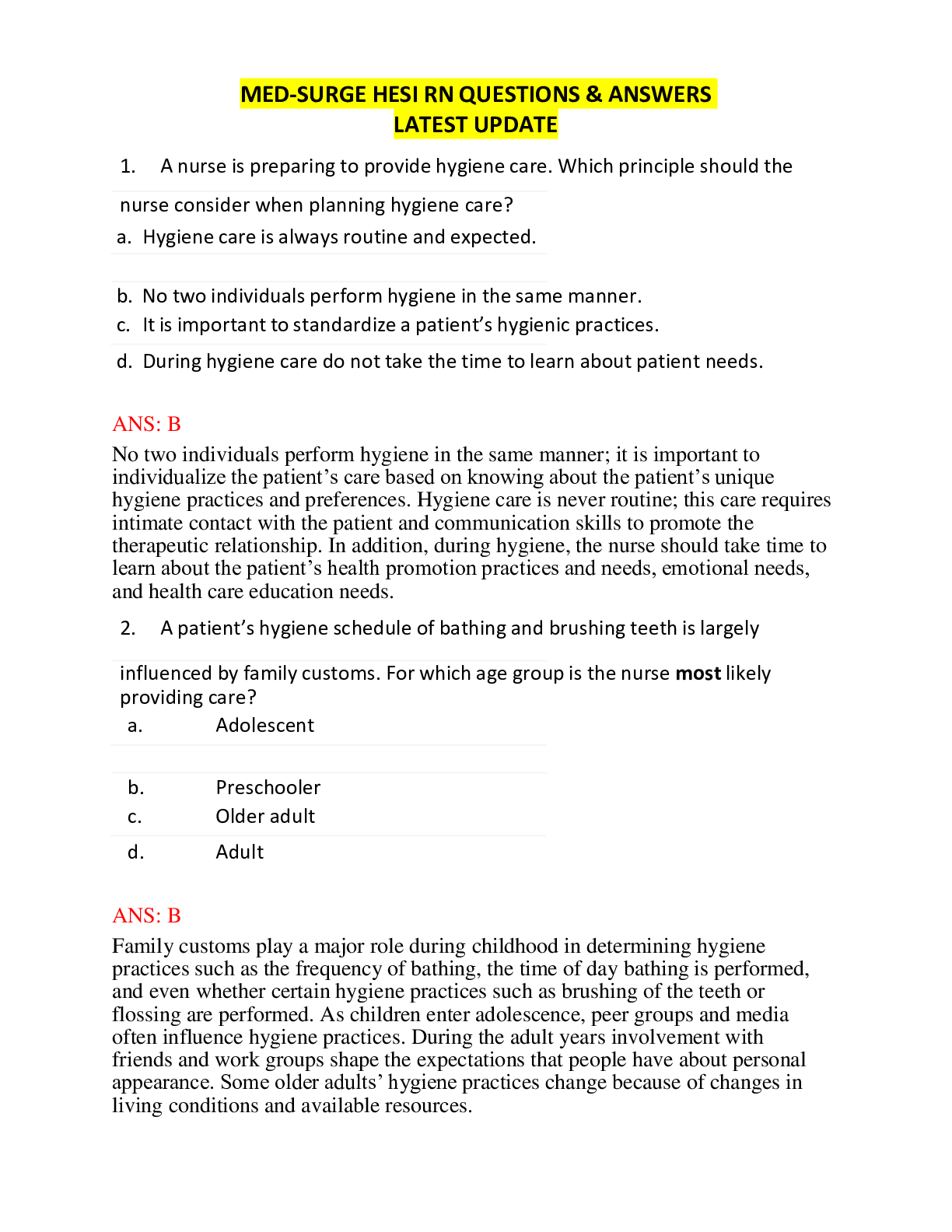
MED-SURGE HESI RN QUESTIONS & ANSWERS
LATEST UPDATE
1. A nurse is preparing to provide hygiene care. Which principle should the
nurse consider when planning hygiene care?
a. Hygiene care is always routine and expected.
b. No two individuals perform hygiene in the same manner.
c. It isimportant to standardize a patient’s hygienic practices.
d. During hygiene care do not take the time to learn about patient needs.
ANS: B
No two individuals perform hygiene in the same manner; it is important to
individualize the patient’s care based on knowing about the patient’s unique
hygiene practices and preferences. Hygiene care is never routine; this care requires
intimate contact with the patient and communication skills to promote the
therapeutic relationship. In addition, during hygiene, the nurse should take time to
learn about the patient’s health promotion practices and needs, emotional needs,
and health care education needs.
2. A patient’s hygiene schedule of bathing and brushing teeth is largely
influenced by family customs. For which age group is the nurse most likely
providing care?
a. Adolescent
b. Preschooler
c. Older adult
d. Adult
ANS: B
Family customs play a major role during childhood in determining hygiene
practices such as the frequency of bathing, the time of day bathing is performed,
and even whether certain hygiene practices such as brushing of the teeth or
flossing are performed. As children enter adolescence, peer groups and media
often influence hygiene practices. During the adult years involvement with
friends and work groups shape the expectations that people have about personal
appearance. Some older adults’ hygiene practices change because of changes in
living conditions and available resources.
3. The patient has been diagnosed with diabetes. When admitted, the patient
is unkempt and is in need of a bath and foot care. When questioned about
hygiene habits, the nurse learns the patient takes a bath once a week and a
sponge bath every other day. To provide ultimate care for this patient, which
principle should the nurse keep in mind?
Patients who appear unkempt place little importance on hygiene
a. practices.
Personal preferences determine hygiene practices and are
b. unchangeable.
c. The patient’s illness may require teaching of new hygiene practices.
d. All cultures value cleanliness with the same degree of importance.
ANS: C
The nurse must assist the patient in developing new hygiene practices when
indicated by an illness or condition. For example, the nurse will need to teach a
patient with diabetes proper foot hygiene. Patients who appear unkempt often need
further assessment regarding their ability to participate in daily hygiene. Patients
with certain types of physical limitations or disabilities often lack the physical
energy and dexterity to perform hygienic care. Culturally, maintaining cleanliness
does not hold the same importance for some ethnic groups as it does for others.
4. The nurse is caring for a patient who refuses to bathe in the morning.
When asked why, the patientsays “I always bathe in the evening.” Which
action by the nurse is best?
Defer the bath until evening and pass on the information to the next
a. shift.
b. Tell the patient that daily morning baths are the “normal” routine.
c. Explain the importance of maintaining morning hygiene practices.
d. Cancel hygiene for the day and attempt again in the morning.
ANS: A
Allow the patient to follow normal hygiene practices; change the bath to
evening. Patients have individual preferences about when to perform hygiene
and grooming care. Knowing the patient’s personal preferences promotes
individualized care for the patient. Hygiene care is never routine. Maintaining
individual personal preferences is important unless new hygiene practices are
indicated by an illness or condition. Cancelling hygiene and trying again is not
an option since the nurse already knows the reason for refusal. Adapting
practices to meet individual needs is required.
5. A nurse is completing an assessment of the patient. Which principle is a
priority?
CONTINUES...
[Show More]

.png)





.png)