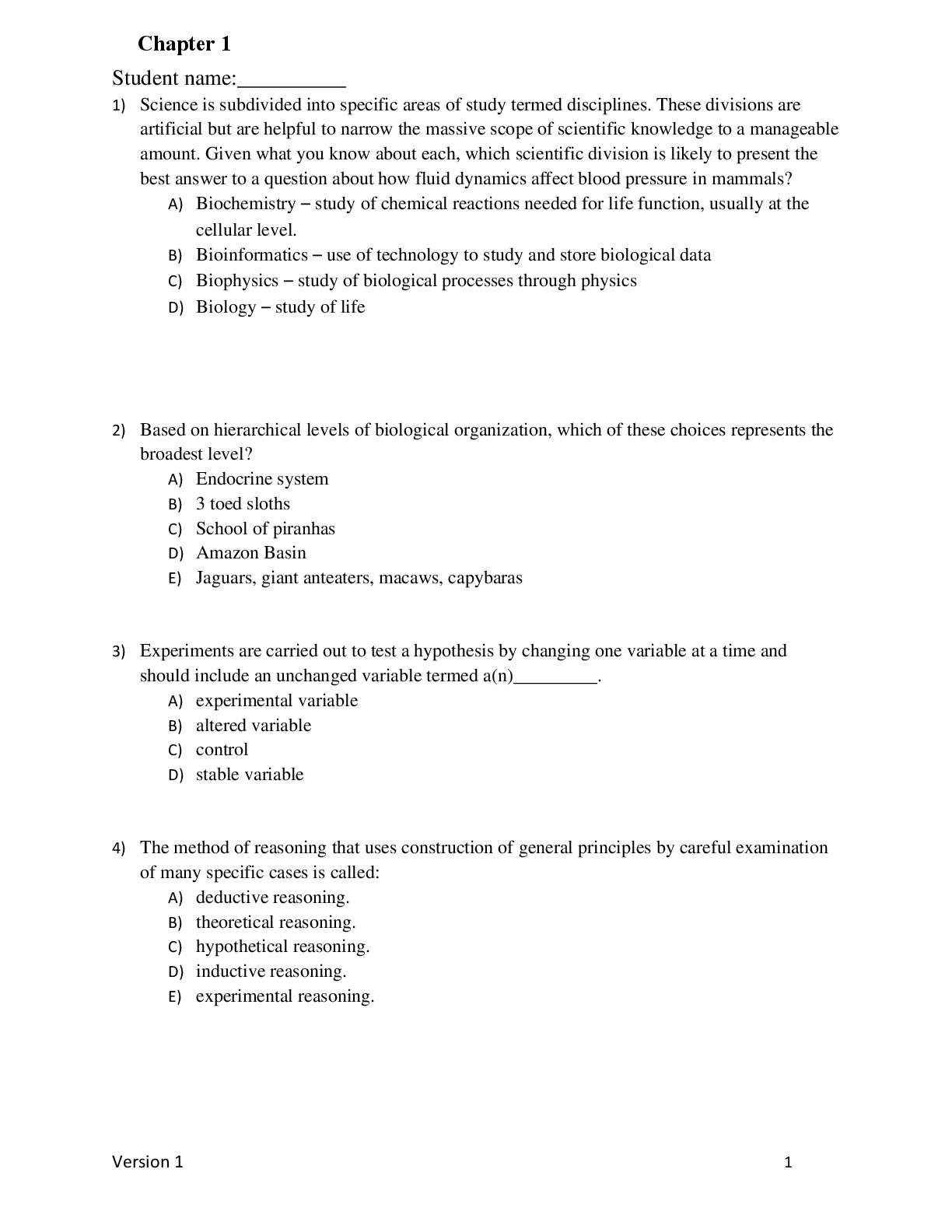
Biology > QUESTIONS & ANSWERS > Biol 114 Spring 2022 Discussion Review questions and answers (All)
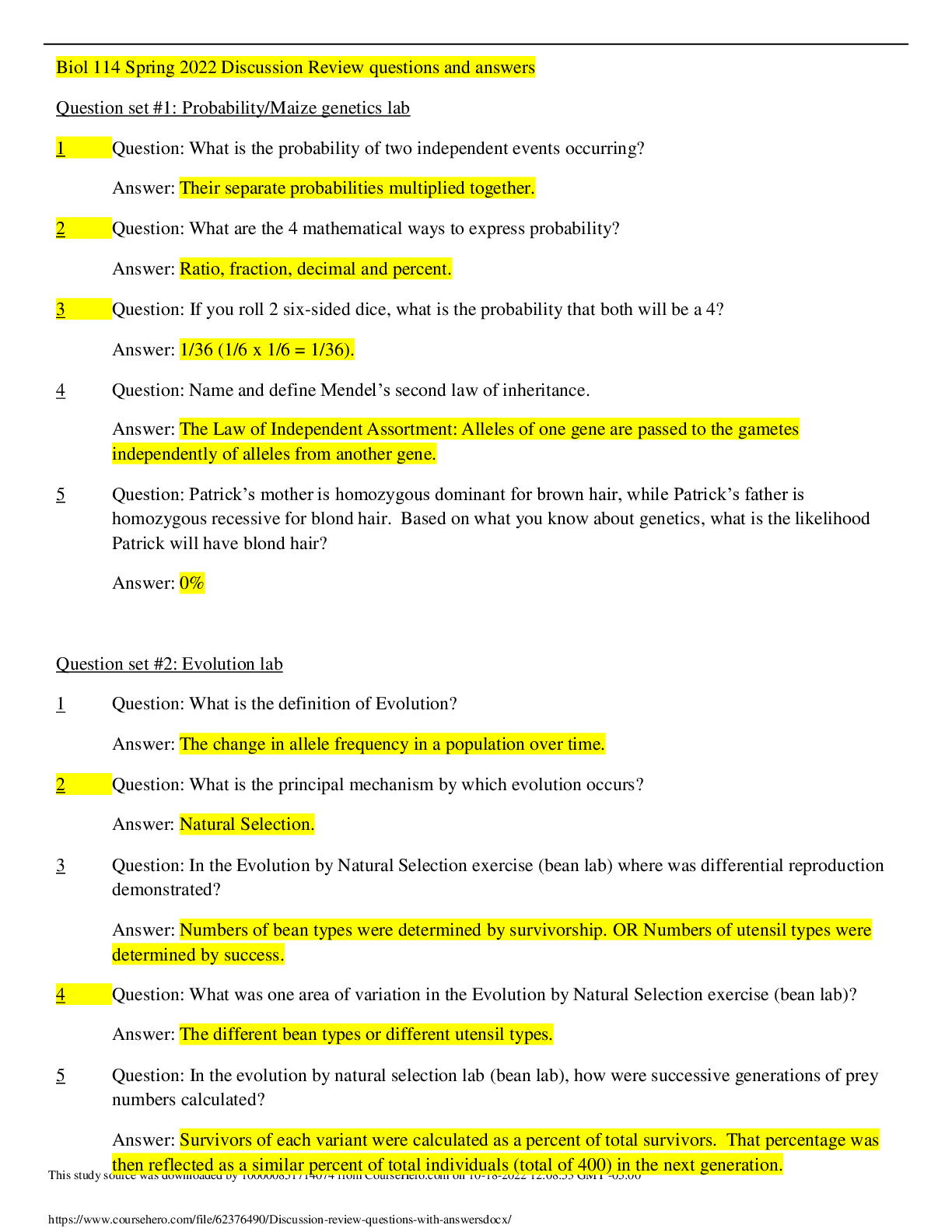
Biol 114 Spring 2022 Discussion Review questions and answers
Document Content and Description Below
Last updated: 4 years ago
Preview 1 out of 4 pages
Instant download
Buy this Document to get the Full Access Instantly
Provided by Students Who Aced it
We Verify Document Content to Gurantee Accuracy
Reviews( 0 )
Document information
Connected school, study & course
About the document
Uploaded On
Oct 18, 2022
Number of pages
4
Written in
All

Additional information
This document has been written for:
Uploaded
Oct 18, 2022
Downloads
0
Views
82
Topic Tags
Recommended For You
Get more on QUESTIONS & ANSWERS »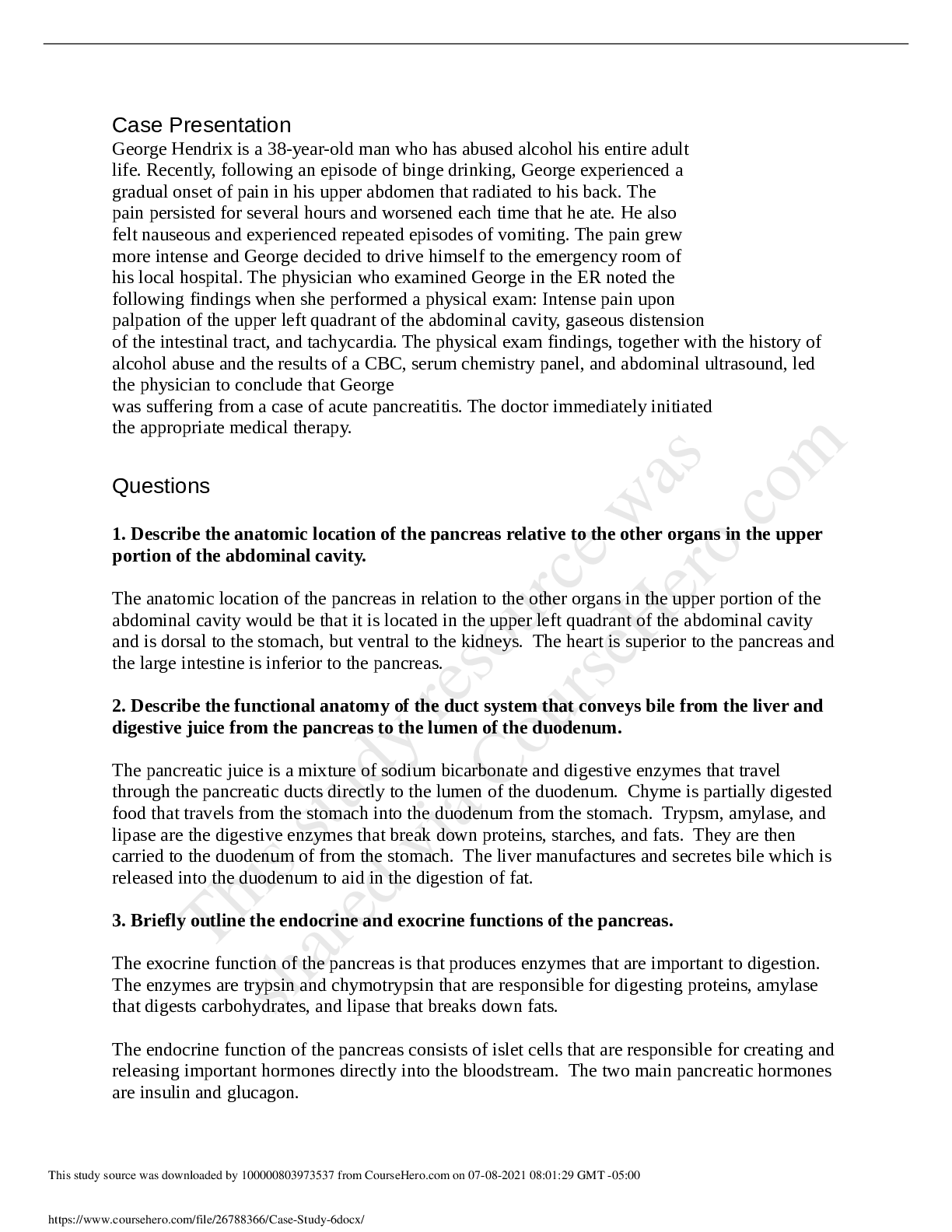
BIOL 1141 Case Study 6 George Hendrix is a 38-year-old man who...

BIOL 1141 Case Study 6 George Hendrix is a 38-year-old man who...
BIOL 1141 Case Study 6 George Hendrix is a 38-year-old man who...

eBook [PDF] General Biology 1st Edition By Mariëlle Hoefnagels

Essentials Of Biology 7th Edition By Michael Windelspecht, Syl...

eBook [PDF] AP Biology 2024 1st Edition By Mark Anestis, Kelce...
Campbell Biology 12th Edition Urry Test Bank Complete All 56...