CCMA EXAM 2 MODULE 5 QUIZ RATED
A
A client with heart failure is receiving furosemide and digoxin at 0900. What assessment findings would
indicate a need to withhold the morning dose of digoxin and furosemide? SELECT
...
CCMA EXAM 2 MODULE 5 QUIZ RATED
A
A client with heart failure is receiving furosemide and digoxin at 0900. What assessment findings would
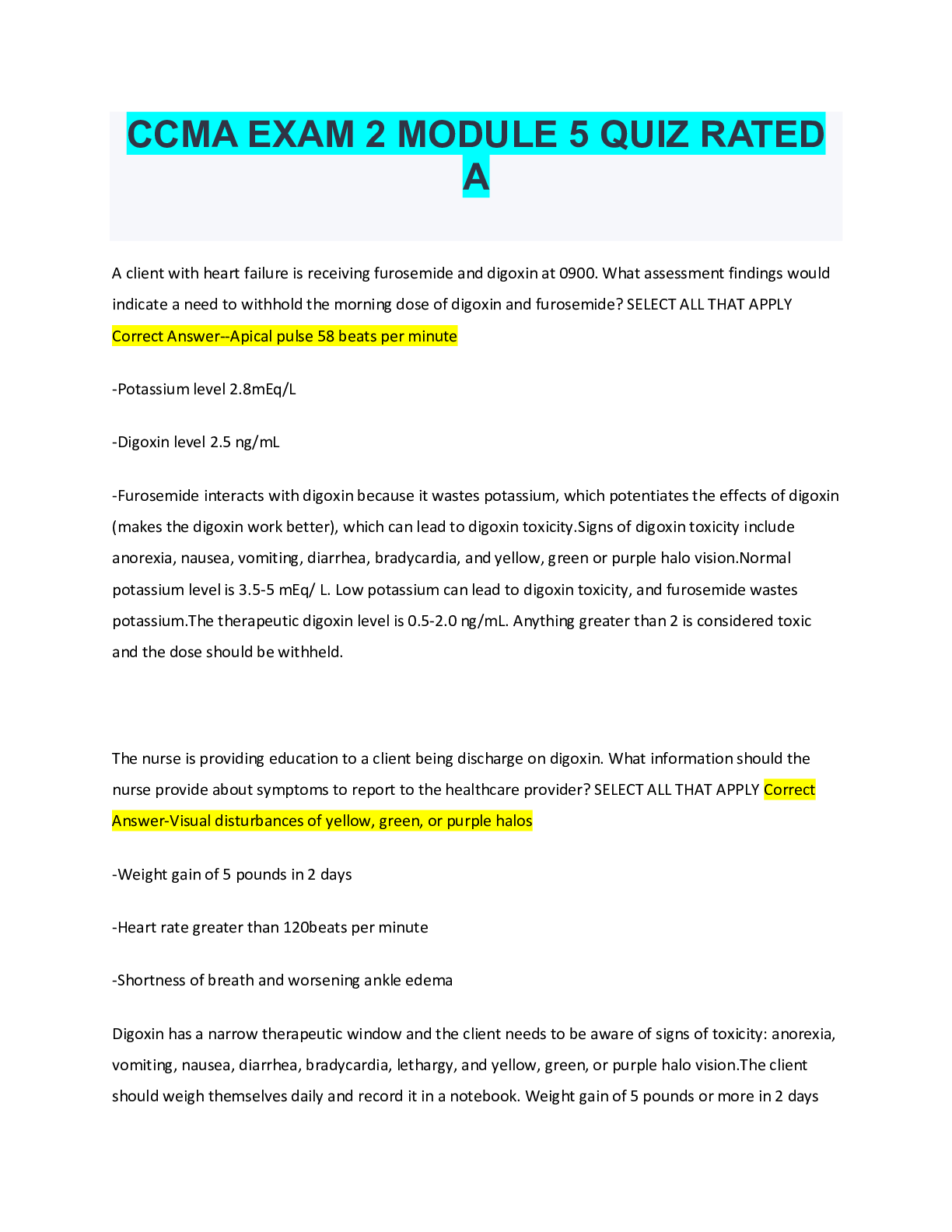
indicate a need to withhold the morning dose of digoxin and furosemide? SELECT ALL THAT APPLY
Correct Answer--Apical pulse 58 beats per minute
-Potassium level 2.8mEq/L
-Digoxin level 2.5 ng/mL
-Furosemide interacts with digoxin because it wastes potassium, which potentiates the effects of digoxin
(makes the digoxin work better), which can lead to digoxin toxicity.Signs of digoxin toxicity include
anorexia, nausea, vomiting, diarrhea, bradycardia, and yellow, green or purple halo vision.Normal
potassium level is 3.5-5 mEq/ L. Low potassium can lead to digoxin toxicity, and furosemide wastes
potassium.The therapeutic digoxin level is 0.5-2.0 ng/mL. Anything greater than 2 is considered toxic
and the dose should be withheld.
The nurse is providing education to a client being discharge on digoxin. What information should the
nurse provide about symptoms to report to the healthcare provider? SELECT ALL THAT APPLY Correct
Answer-Visual disturbances of yellow, green, or purple halos
-Weight gain of 5 pounds in 2 days
-Heart rate greater than 120beats per minute
-Shortness of breath and worsening ankle edema
Digoxin has a narrow therapeutic window and the client needs to be aware of signs of toxicity: anorexia,
vomiting, nausea, diarrhea, bradycardia, lethargy, and yellow, green, or purple halo vision.The client
should weigh themselves daily and record it in a notebook. Weight gain of 5 pounds or more in 2 daysshould be reported the the healthcare provider.While bradycardia is a common sign of toxicity with
digoxin, tachycardia can also be a sign of digoxin toxicity. It can also be a sign that the dose is not
controlling the symptoms of heart failure. Tachycardia should be reported to the healthcare provider so
the etiology of the increased heart rate can be identified.If you watched the video on heart failure, you
are aware that fluid retention is a big part of the disease process. If the client is experiencing shortness
of breath and ankle edema, these are signs of worsening heart failure and should be reported.While the
blood pressure is a little lower than normal, a failing heart will struggle meeting the demands of the
body. A blood pressure of 100/50 is life sustaining and may be the best that a patient with heart failure
can produce.
A nurse is providing education to a client with heart failure. What non-pharmacological interventions
should the nurse include in the information about disease management? SELECT ALL THAT APPLY
Correct Answer--Exercise daily, as possible.
-Stop smoking
-Decrease saturated fat intake
-Limit alcohol intake
Non-pharmacological treatment for heart failure includes: Decreasing sodium to less than 2 grams per
day, mild exercise as the client is able, decreasing saturated fat intake, limit alcohol intake.
The nurse is reviewing the client's medical record before providing discharge instructions. Find the
information below:
Admitting DiagnosisDehydration
Past Medical Diagnosis:Heart Failure, chronic stable angina, hypertensionDischarge Medication Orders:digoxin 0.125 mg PO dailyfurosemide 40 mg PO BID at 0900 and 1700
metoprolol 25 mg PO daily
isosorbide dinitrate 20 mg PO daily
nitroglycerin 0.4 mg SL PRN chest pain. What information should the nurse include in the discharge
instructions? SELECT ALL THAT APPLY Correct Answer--Smoking cessation will help with disease
management
[Show More]

.png)


.png)