Computer Science > QUESTIONS & ANSWERS > CyberRookie CSX Fundamentals – Terms with Complete Elaboration (All)
CyberRookie CSX Fundamentals – Terms with Complete Elaboration
Document Content and Description Below
Last updated: 3 years ago
Preview 1 out of 30 pages
Instant download

Buy this Document to get the Full Access Instantly
Provided by Students Who Aced it
We Verify Document Content to Gurantee Accuracy
Also available in bundle (1)
Click Below to Access Bundle(s)

CyberRookie CSX Fundamentals Exam FULL SOLUTION PACK(ALL CyberRookie CSX Fundamentals Exams AND STUDY QUESTIONS ARE HERE ,ALL ANSWERED CORRECTLY)
CyberRookie CSX Fundamentals - Section 6: Security Implications and adoption of evolving technology CyberRookie CSX Fundamentals - Section 4: Security of Networks, Systems, Applications and Data wi...
By Alphascore 3 years ago
$14
9
Reviews( 0 )
Document information
Connected school, study & course
About the document
Uploaded On
Nov 01, 2022
Number of pages
30
Written in
All

Additional information
This document has been written for:
Uploaded
Nov 01, 2022
Downloads
0
Views
193
Topic Tags
Recommended For You
Get more on QUESTIONS & ANSWERS »
CyberRookie CSX Fundamentals - Section 1 Cybersecurity Introdu...

CyberRookie CSX Fundamentals - Section 5: Incident Response Qu...

CyberRookie CSX Fundamentals - Roles in Cybersecurity Question...

CyberRookie CSX Fundamentals - Quiz 104 questions- WITH COMPLE...

CyberRookie CSX Fundamentals - Section 4: Security of Networks...
CyberRookie CSX Fundamentals - Section 6: Security Implication...

CyberRookie CSX Fundamentals - Section 3: Security Architectur...

CyberRookie CSX Fundamentals - Section 2: Cybersecurity Concep...

CyberRookie CSX Fundamentals - Section 6: Security Implication...
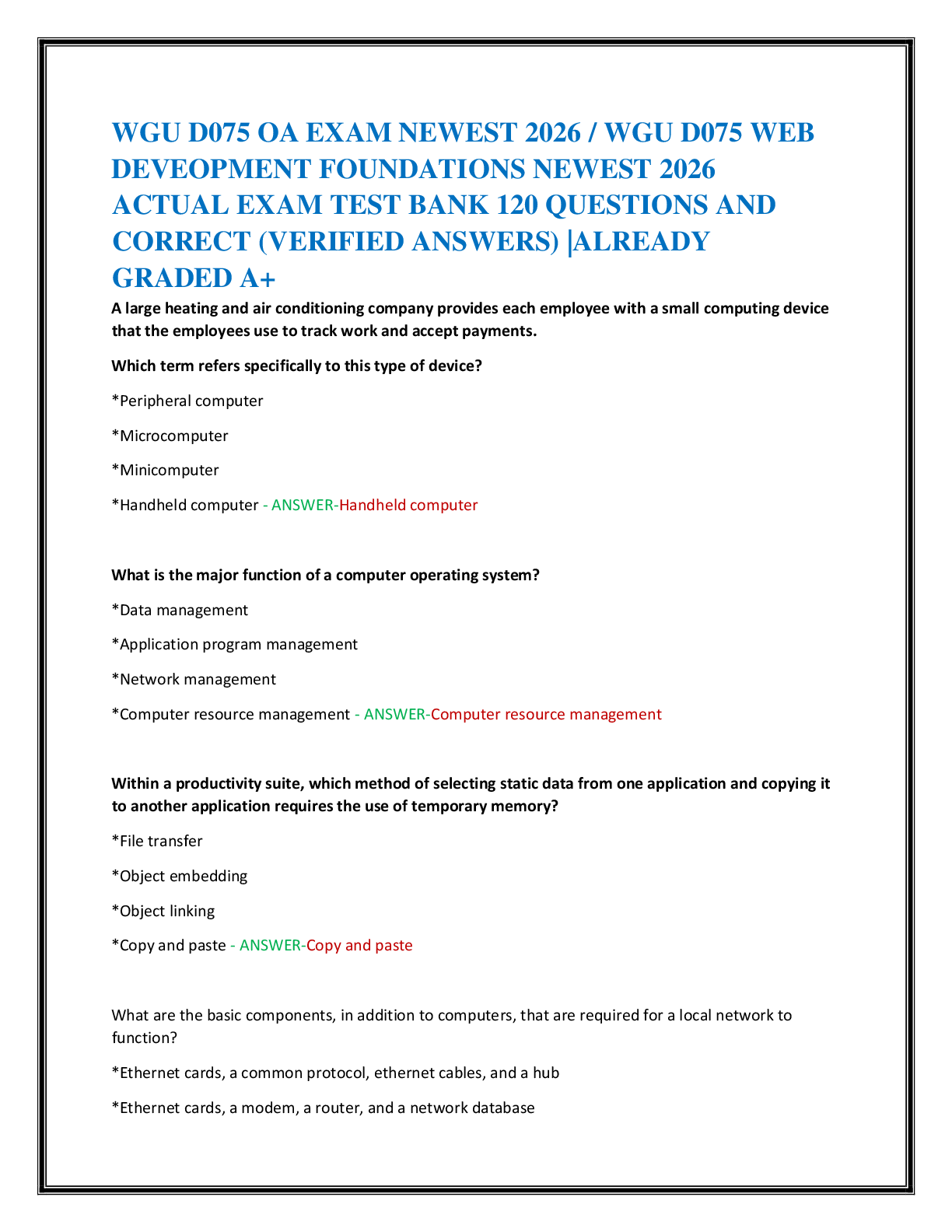

CyberRookie CSX Fundamentals - Section 1: Cybersecurity Introd...
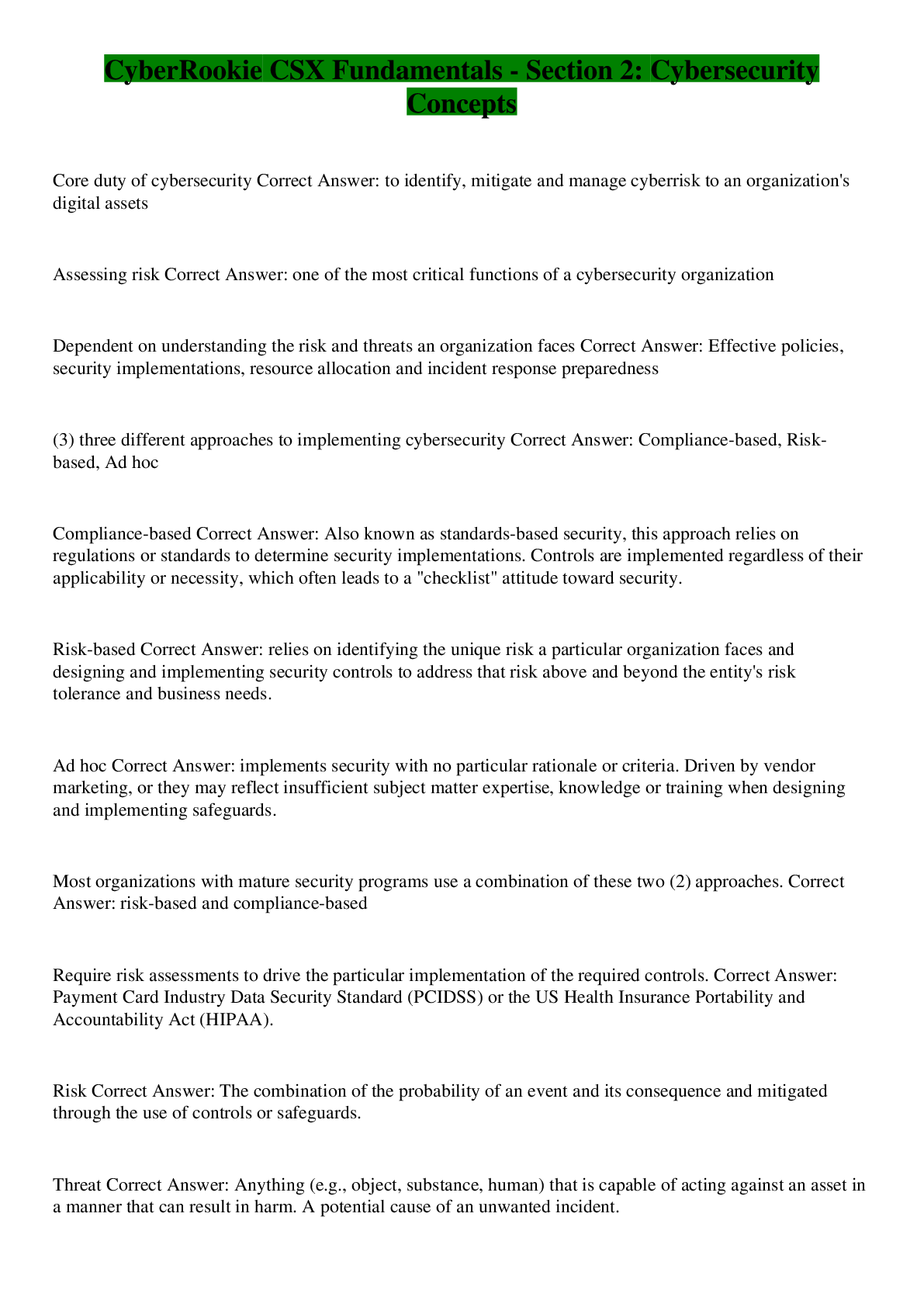
CyberRookie CSX Fundamentals - Section 2: Cybersecurity Concep...
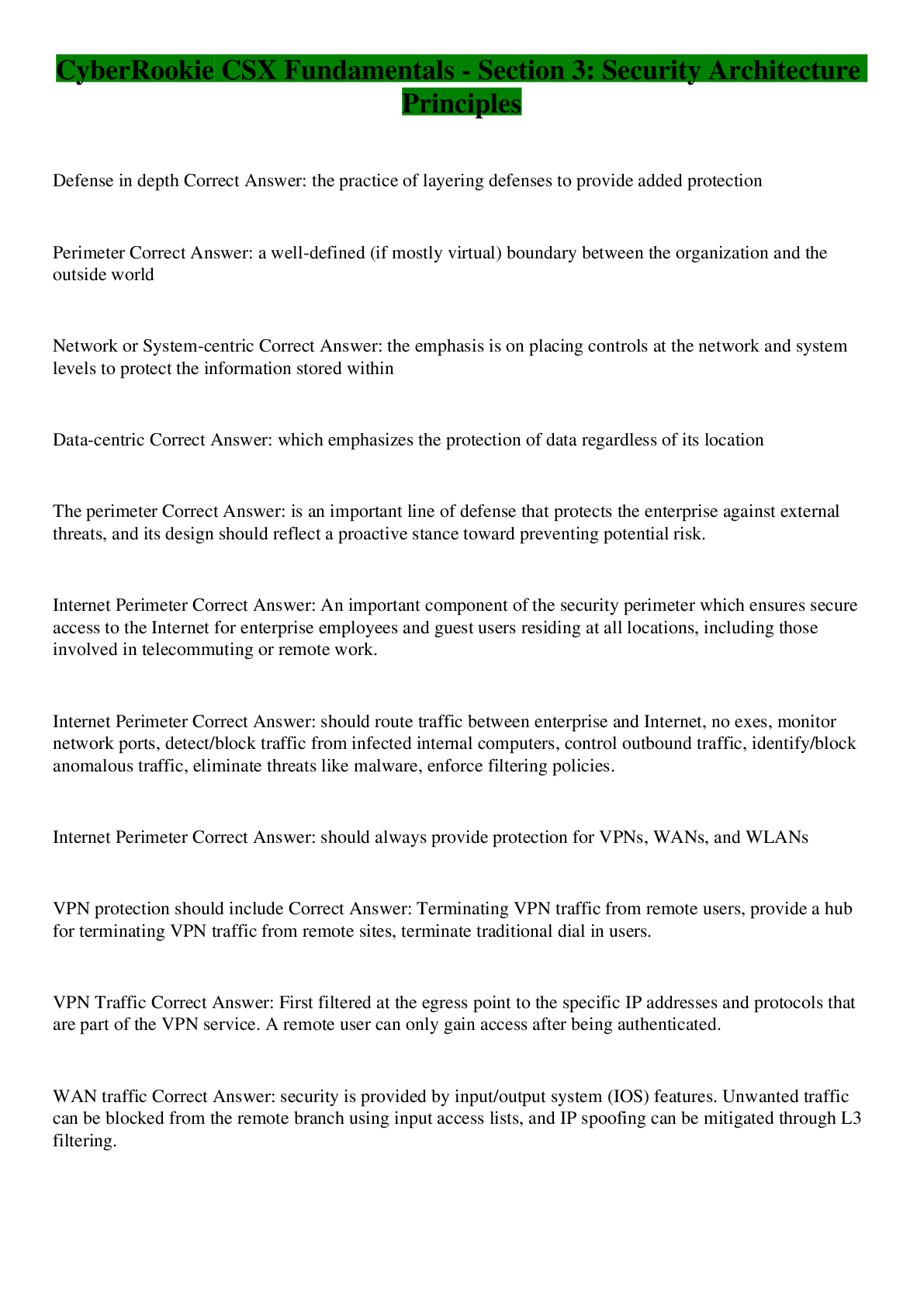
CyberRookie CSX Fundamentals - Section 3: Security Architectur...
CyberRookie CSX Fundamentals - Section 4: Security of Networks...
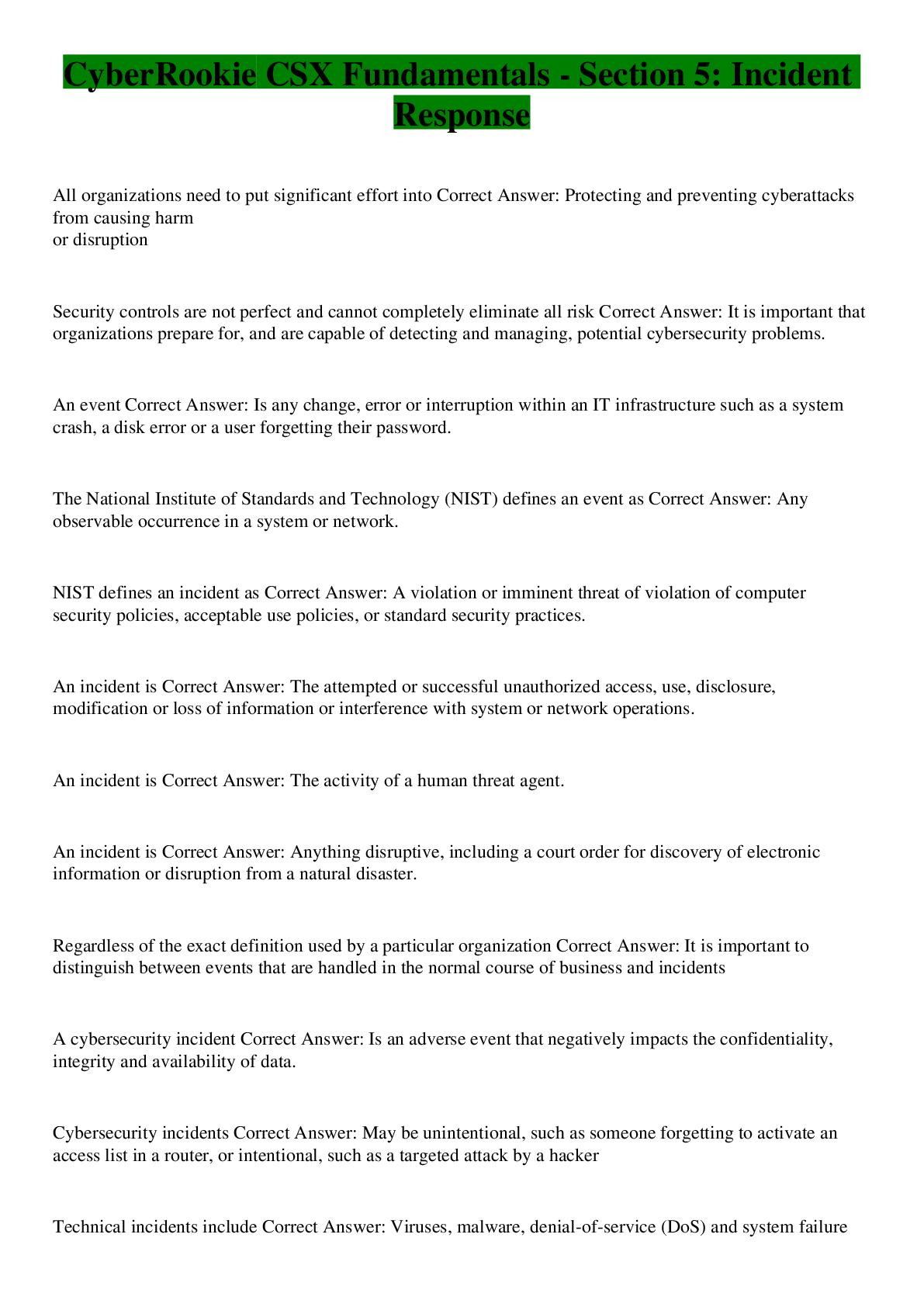

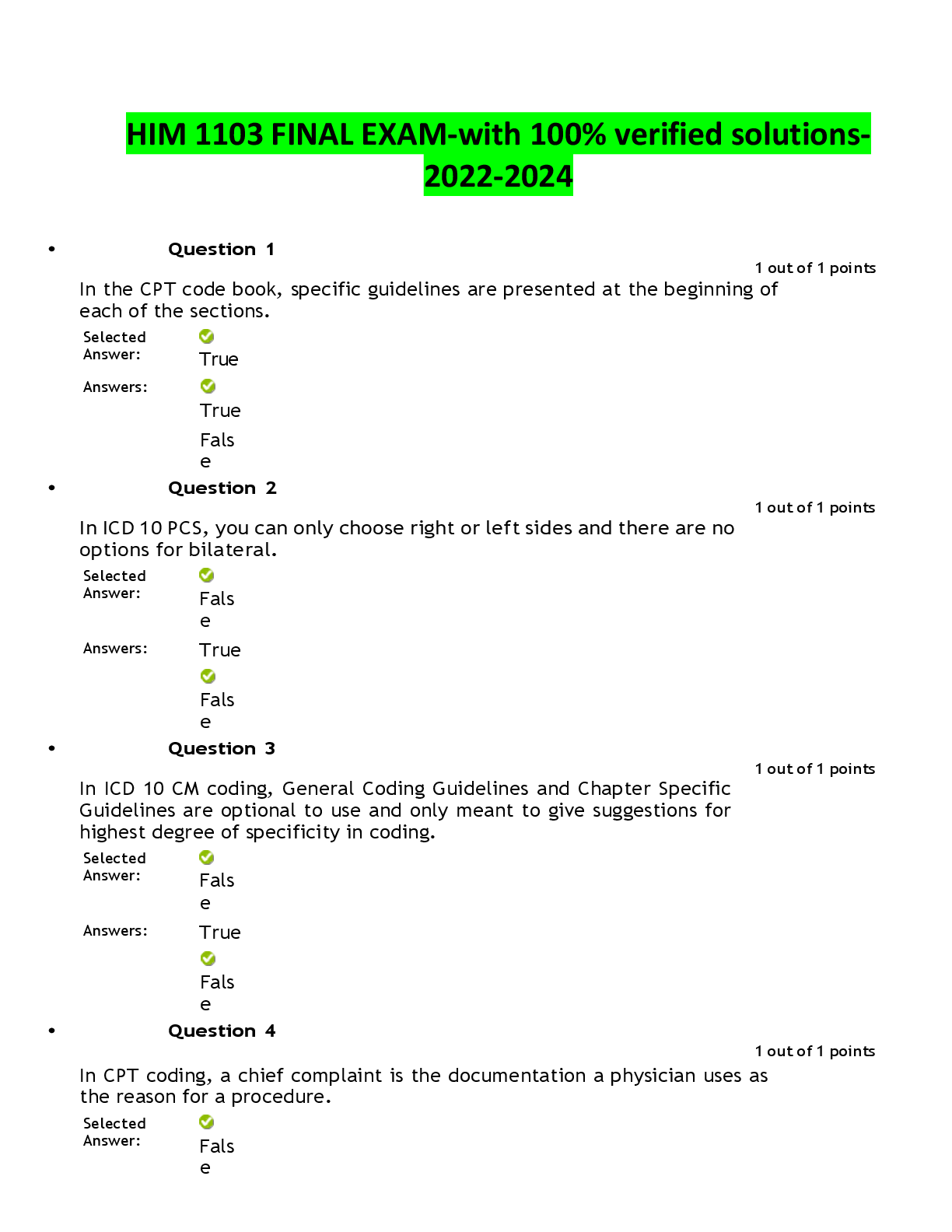
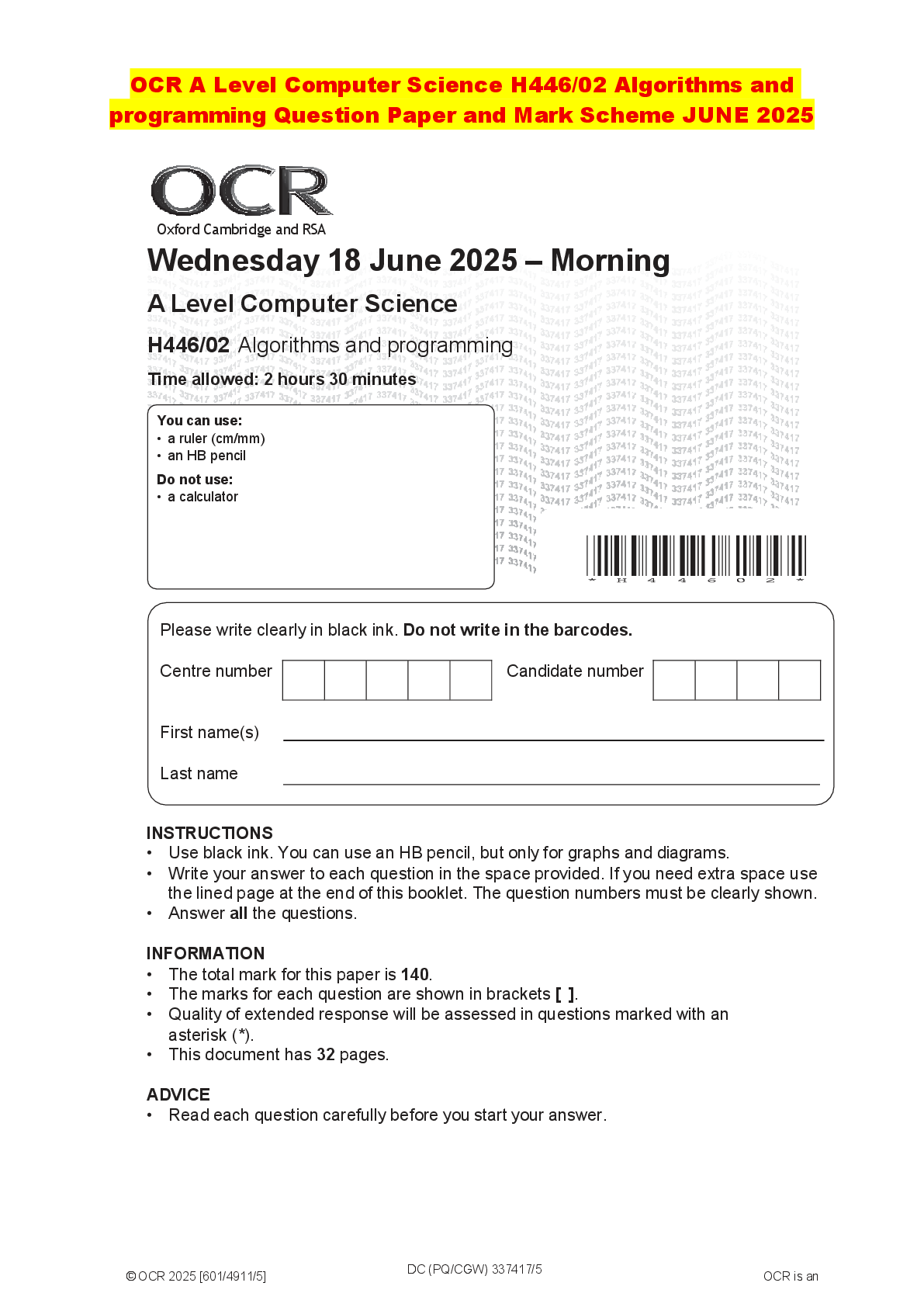

 with Complete Solution.png)
 Career Information with Complete Solution.png)


 for E-6 Career Information_watermark.png)