Nutrition > iHuman Case Studies > C787 WGU Nutrition Review Questions and Answers (All)
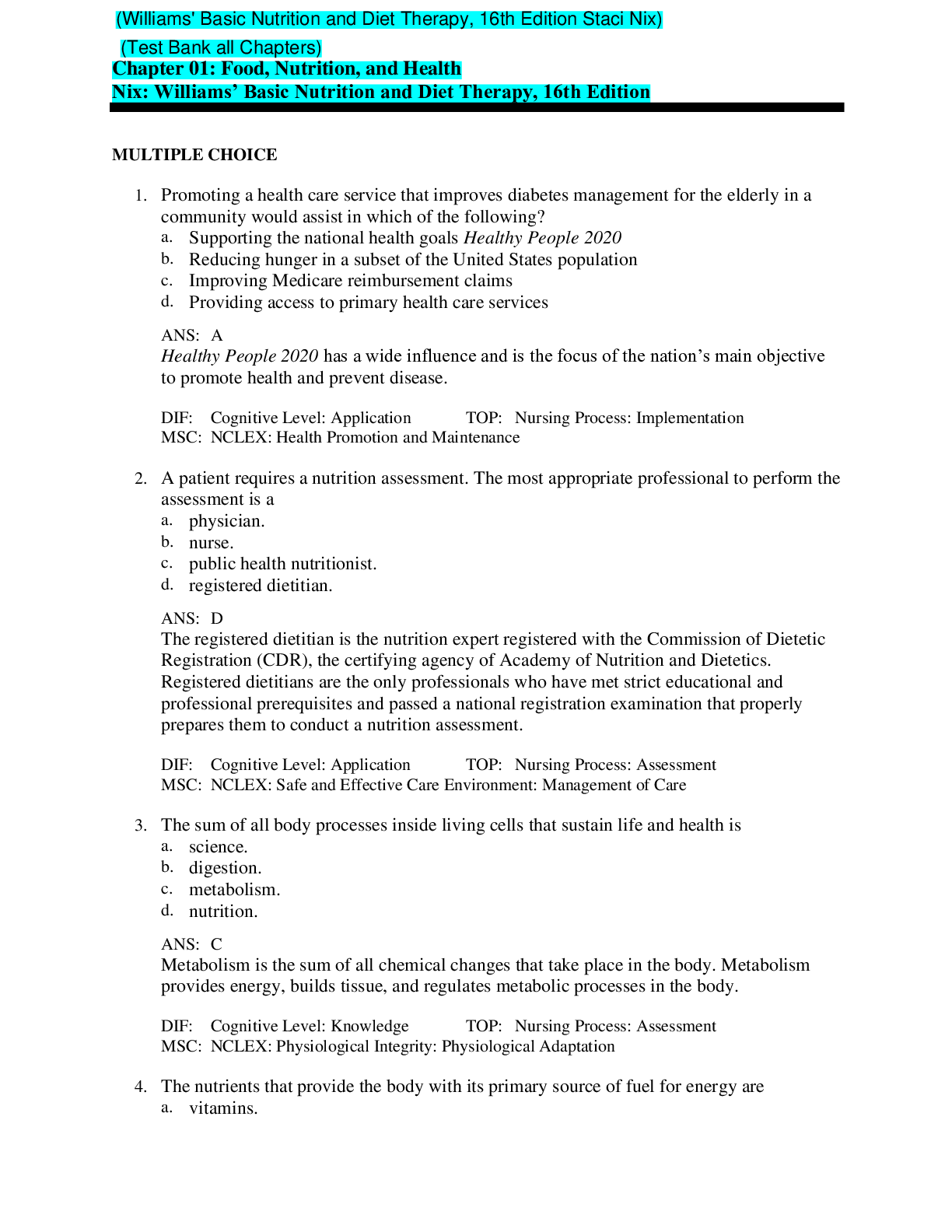
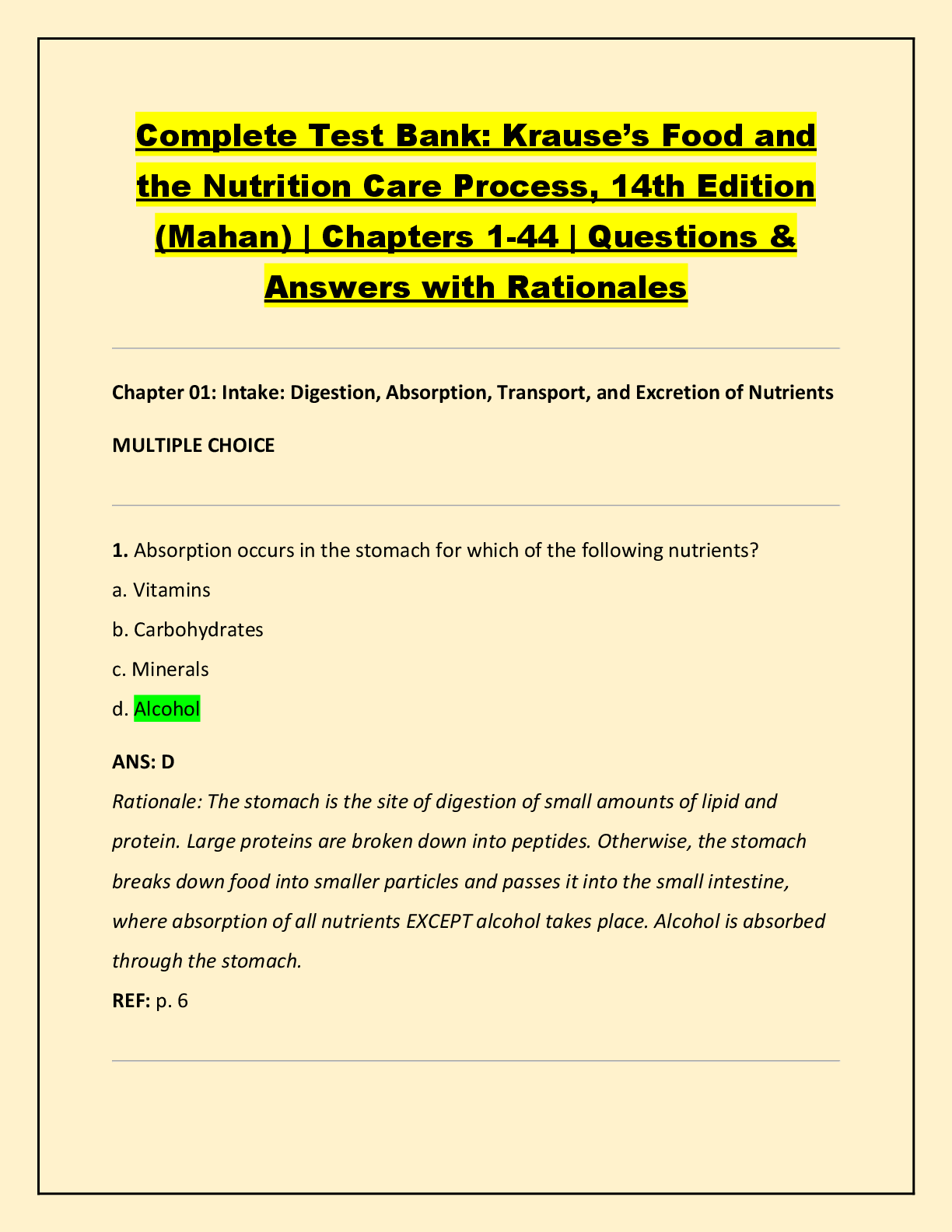
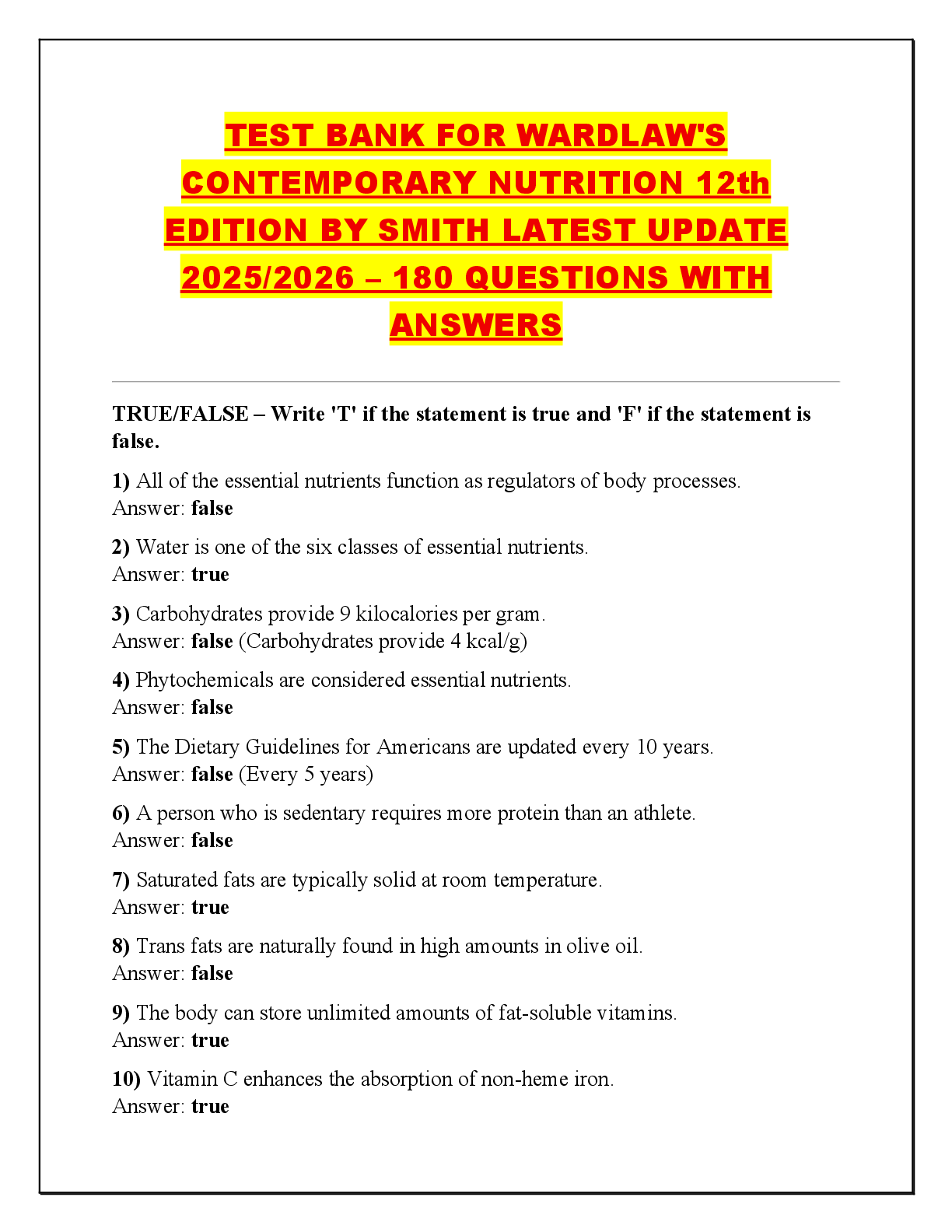
C787 WGU Nutrition Review Questions and Answers
Document Content and Description Below
Last updated: 3 years ago
Preview 1 out of 16 pages
Instant download

Buy this Document to get the Full Access Instantly
Provided by Students Who Aced it
We Verify Document Content to Gurantee Accuracy
Reviews( 0 )
Document information
Connected school, study & course
About the document
Uploaded On
Nov 27, 2022
Number of pages
16
Written in
All

Additional information
This document has been written for:
Uploaded
Nov 27, 2022
Downloads
0
Views
183
Topic Tags
Recommended For You
Get more on iHuman Case Studies »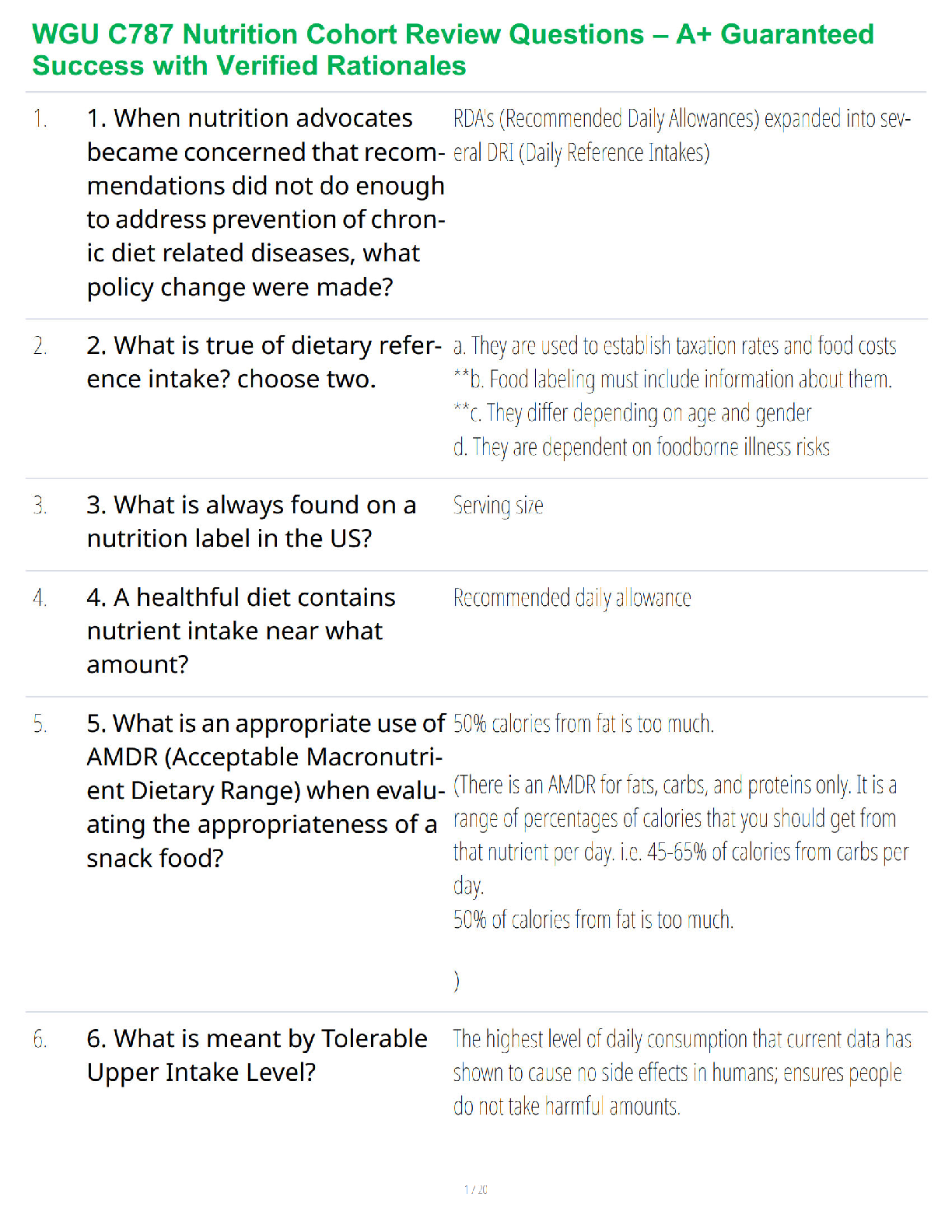
WGU C787 Nutrition Cohort Review Questions – A+ Guaranteed Suc...
.png)
.png)
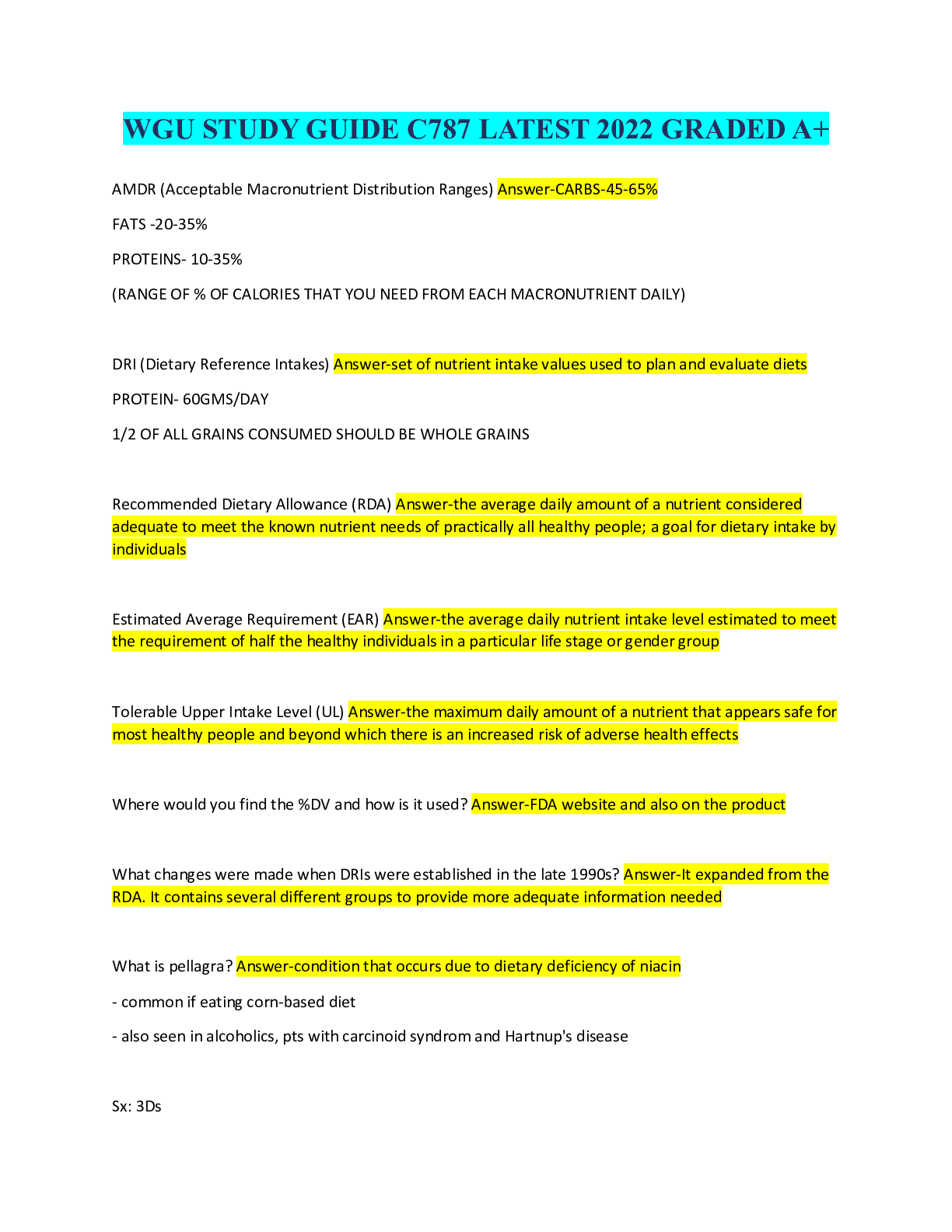
WGU C787 Nutrition Review Questions and Answers plus well summ...
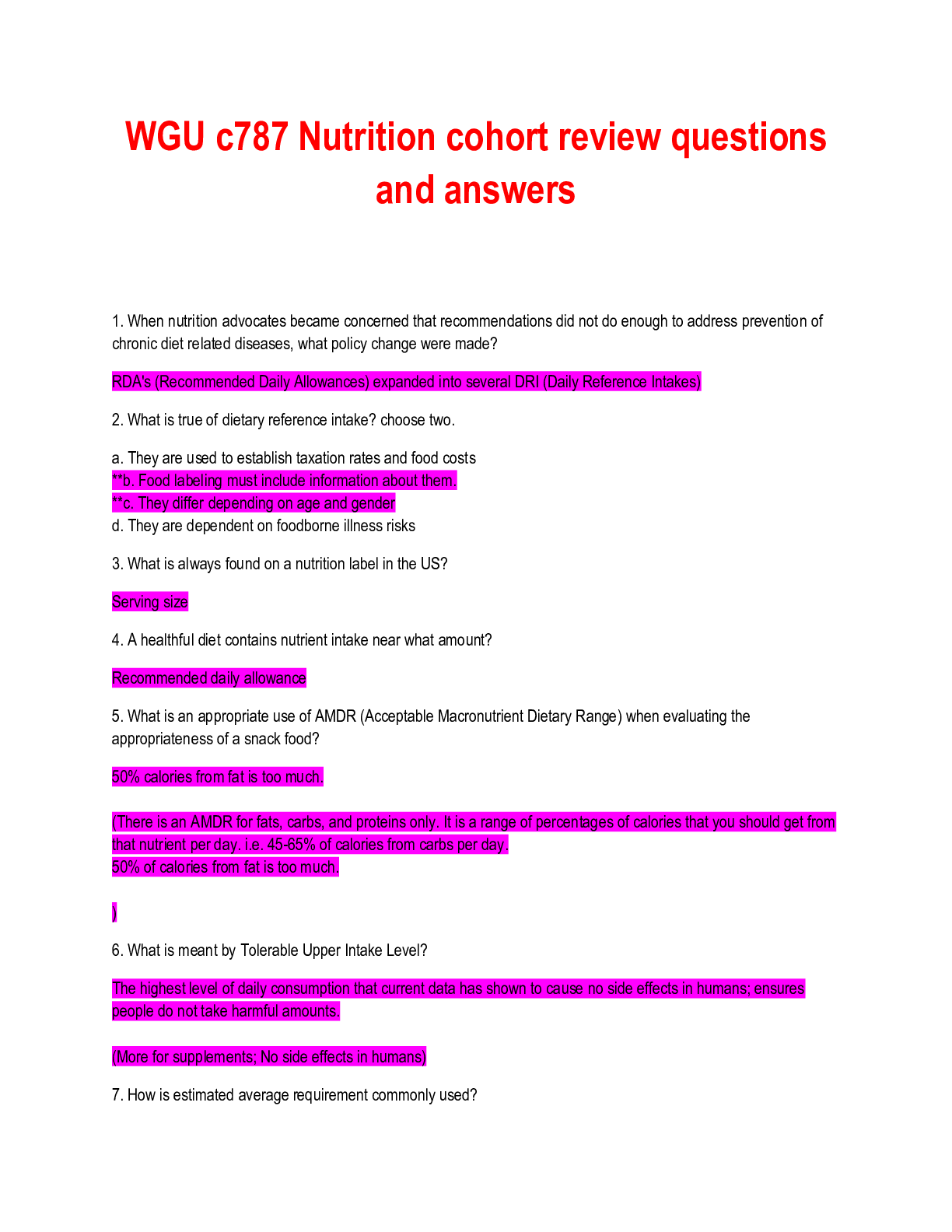

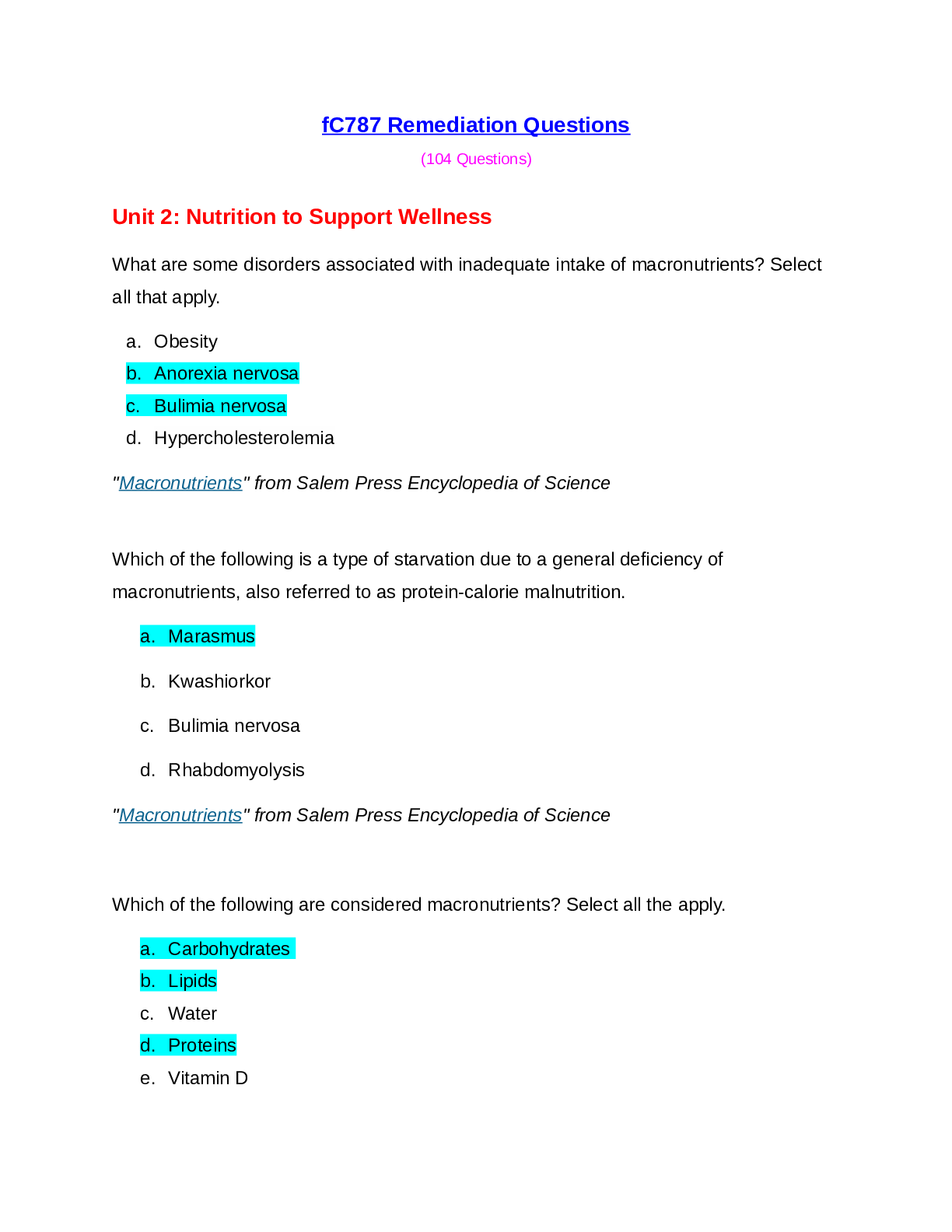

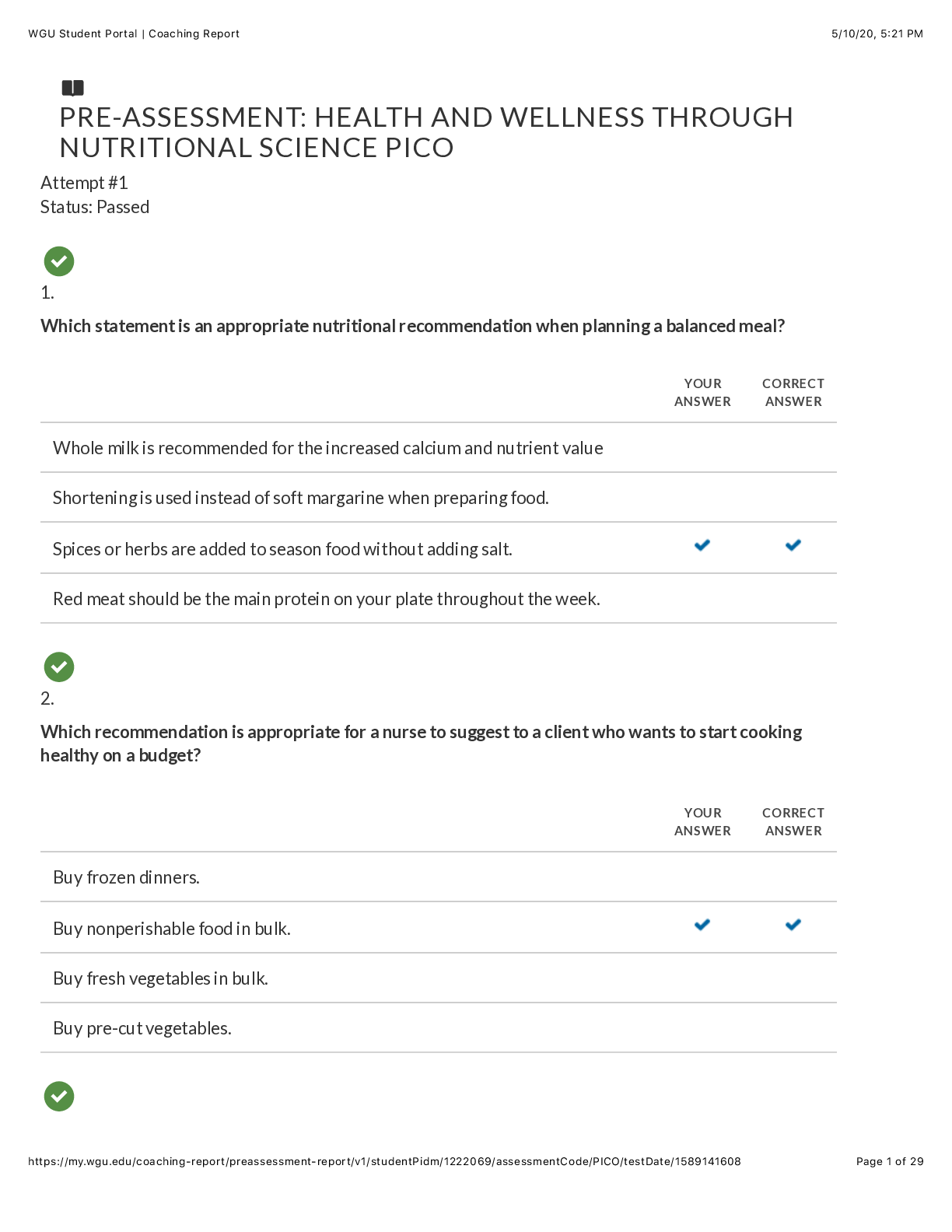
C787 Health and Wellness through Nutritional Science Test WGU...
C787 Health and Wellness through Nutritional Science Test WGU...


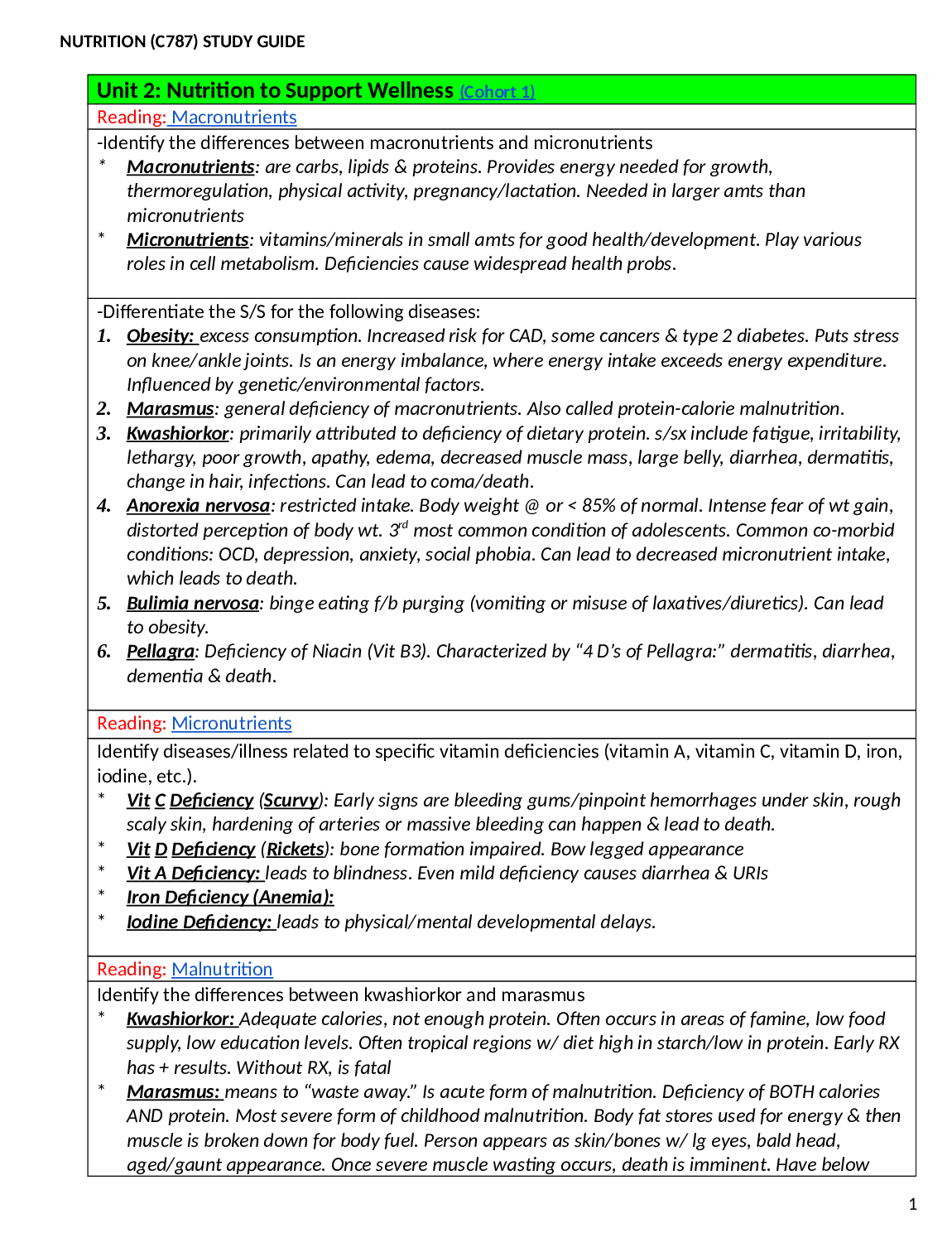
NUTRITION C787 - Study Guide: Health and Nutrition Units 2 and...

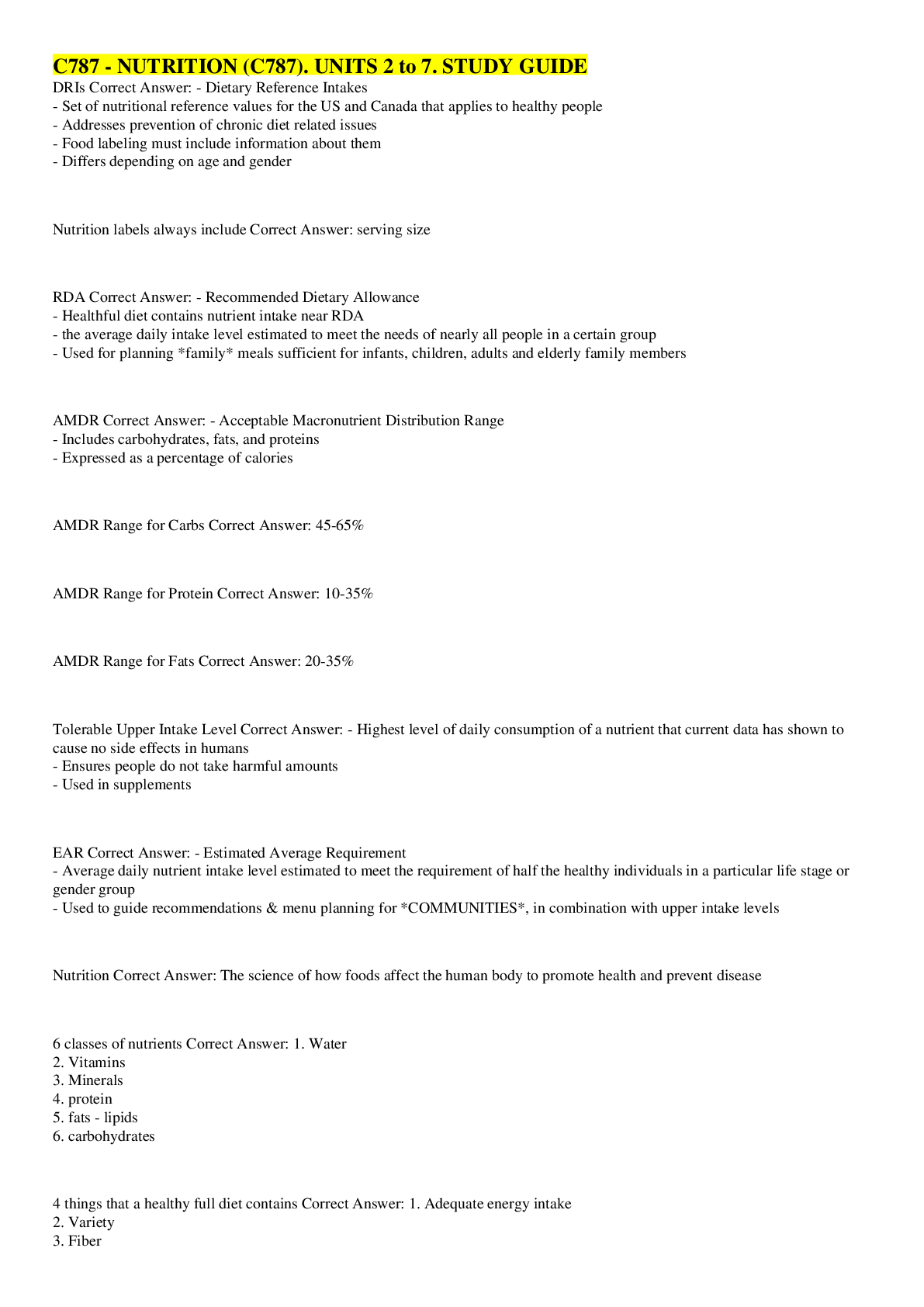
.png)
Nutrition Science and Applications, 3rd Canadian Edition by Lo...
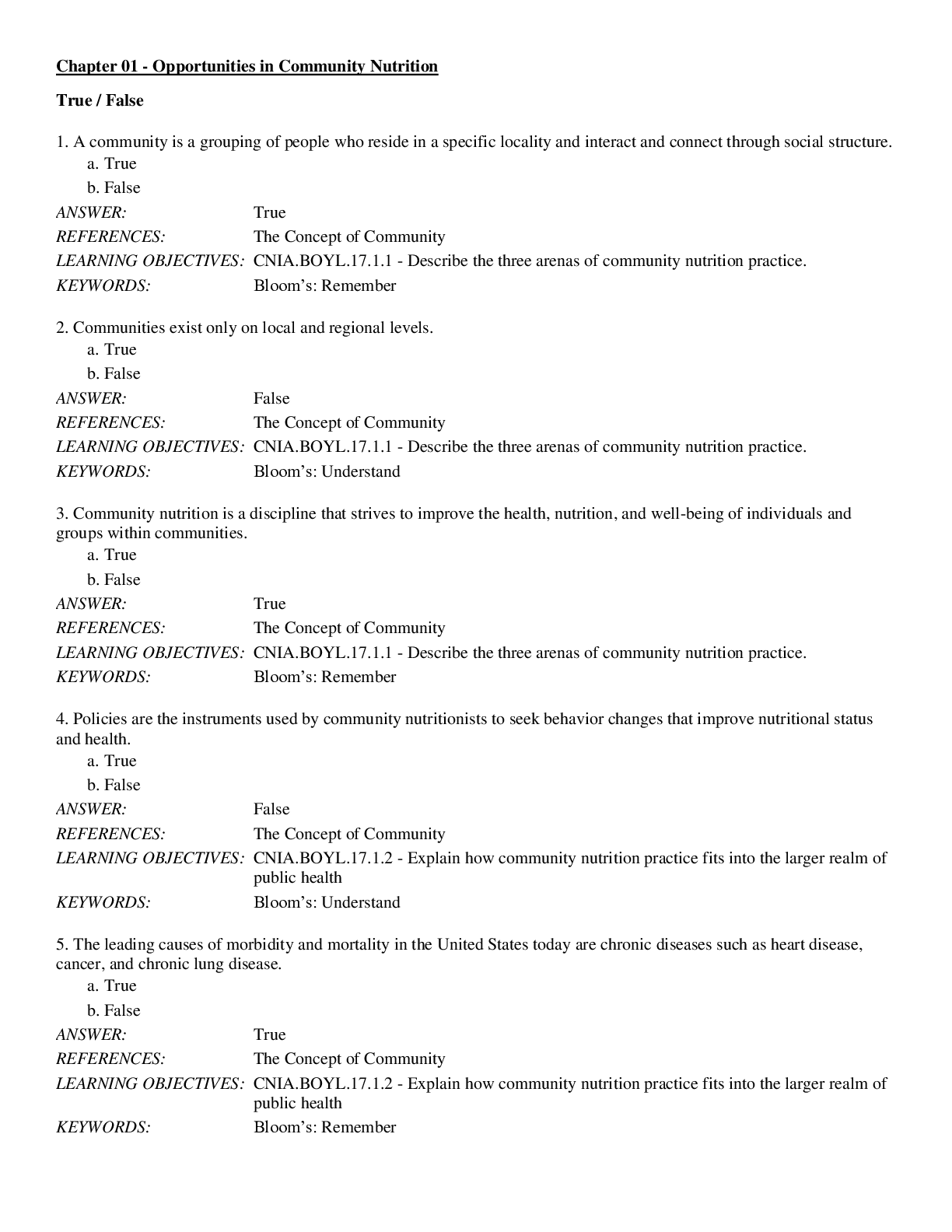
Community Nutrition in Action An Entrepreneurial Approach, 7e...