D. D. is a 66 year-old female suffering from shortness of breath. She smoked 2 packs a day until she quit 2 years ago. She has a history of bronchiolitis, hyperinflated lungs, pulmonary edema, and syncope. Her primary ca
...
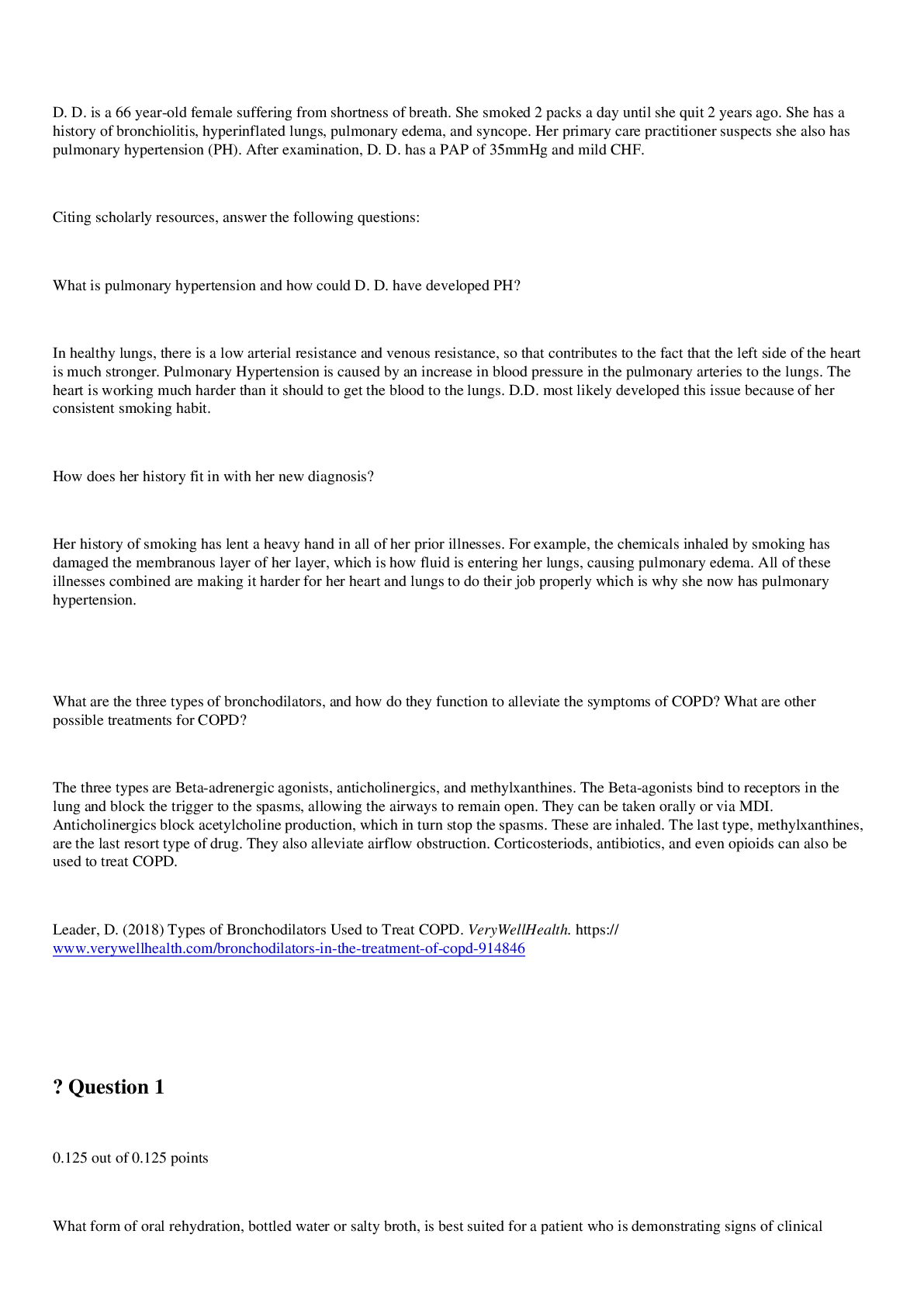
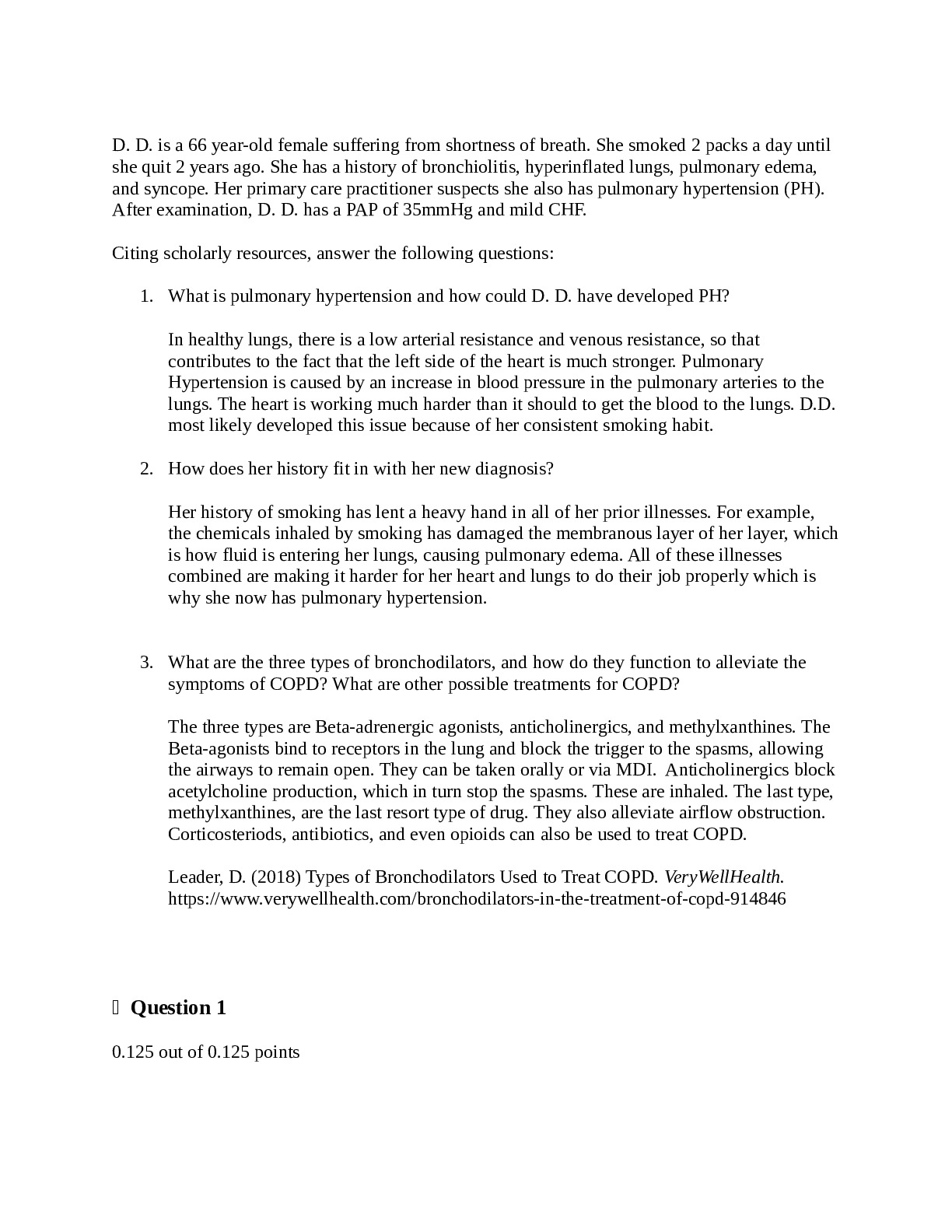
D. D. is a 66 year-old female suffering from shortness of breath. She smoked 2 packs a day until she quit 2 years ago. She has a history of bronchiolitis, hyperinflated lungs, pulmonary edema, and syncope. Her primary care practitioner suspects she also has pulmonary hypertension (PH). After examination, D. D. has a PAP of 35mmHg and mild CHF.
Citing scholarly resources, answer the following questions:
1. What is pulmonary hypertension and how could D. D. have developed PH?
In healthy lungs, there is a low arterial resistance and venous resistance, so that contributes to the fact that the left side of the heart is much stronger. Pulmonary Hypertension is caused by an increase in blood pressure in the pulmonary arteries to the lungs. The heart is working much harder than it should to get the blood to the lungs. D.D. most likely developed this issue because of her consistent smoking habit.
2. How does her history fit in with her new diagnosis?
Her history of smoking has lent a heavy hand in all of her prior illnesses. For example, the chemicals inhaled by smoking has damaged the membranous layer of her layer, which is how fluid is entering her lungs, causing pulmonary edema. All of these illnesses combined are making it harder for her heart and lungs to do their job properly which is why she now has pulmonary hypertension.
3. What are the three types of bronchodilators, and how do they function to alleviate the symptoms of COPD? What are other possible treatments for COPD?
The three types are Beta-adrenergic agonists, anticholinergics, and methylxanthines. The Beta-agonists bind to receptors in the lung and block the trigger to the spasms, allowing the airways to remain open. They can be taken orally or via MDI. Anticholinergics block acetylcholine production, which in turn stop the spasms. These are inhaled. The last type, methylxanthines, are the last resort type of drug. They also alleviate airflow obstruction. Corticosteriods, antibiotics, and even opioids can also be used to treat COPD.
Leader, D. (2018) Types of Bronchodilators Used to Treat COPD. VeryWellHealth. https://www.verywellhealth.com/bronchodilators-in-the-treatment-of-copd-914846
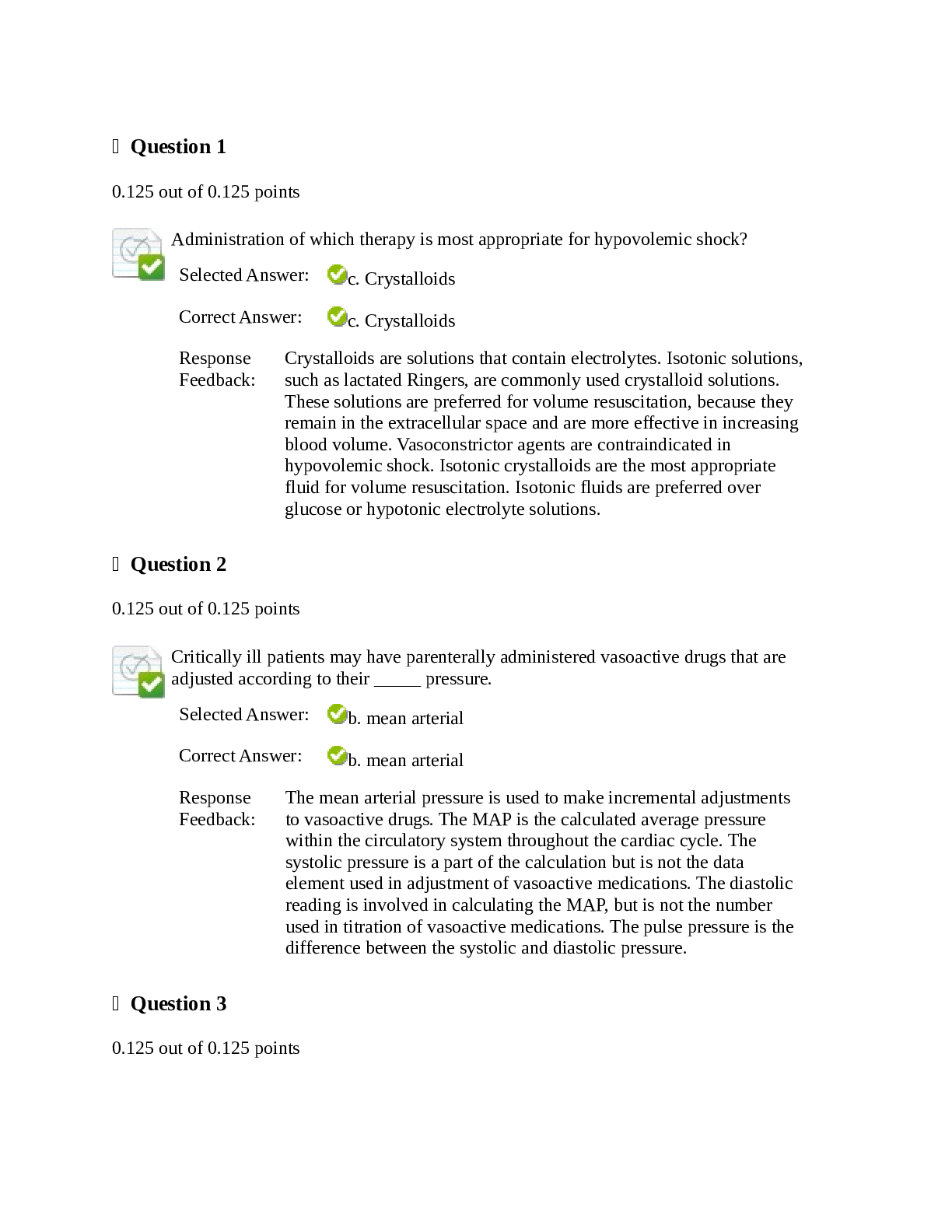
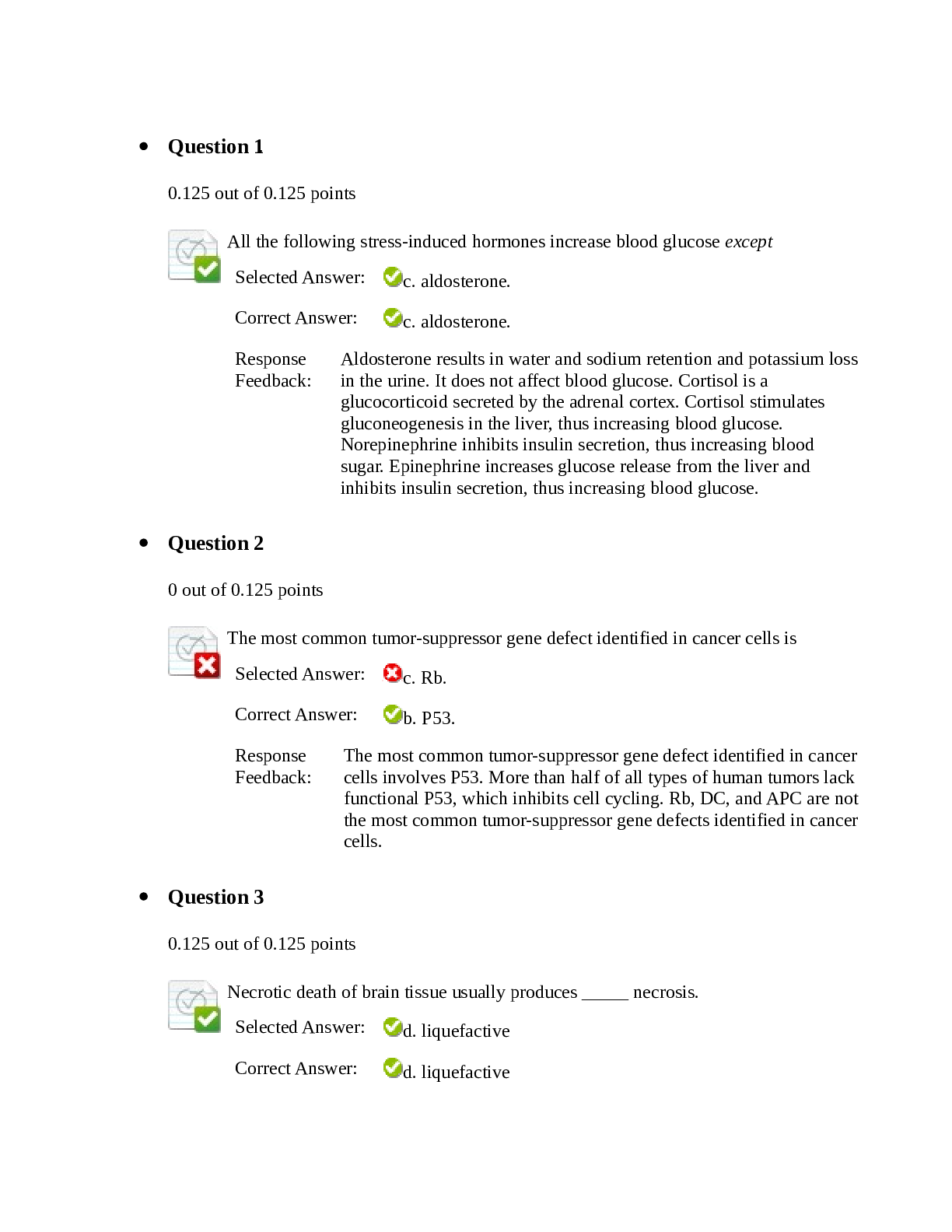
• Question 1
0.125 out of 0.125 points
What form of oral rehydration, bottled water or salty broth, is best suited for a patient who is demonstrating signs of clinical dehydration?
Selected Answer:
Correct Answer:
Response Feedback:
a. Salty soup, because it will provide some sodium to help hold the fluid in his blood vessels and interstitial fluid
a. Salty soup, because it will provide some sodium to help hold the fluid in his blood vessels and interstitial fluid
This man has indicators of clinical dehydration and he needs salt to hold the water in his extracellular compartment. Replacing fluids and electrolytes is more important than meeting his nutritional needs now.
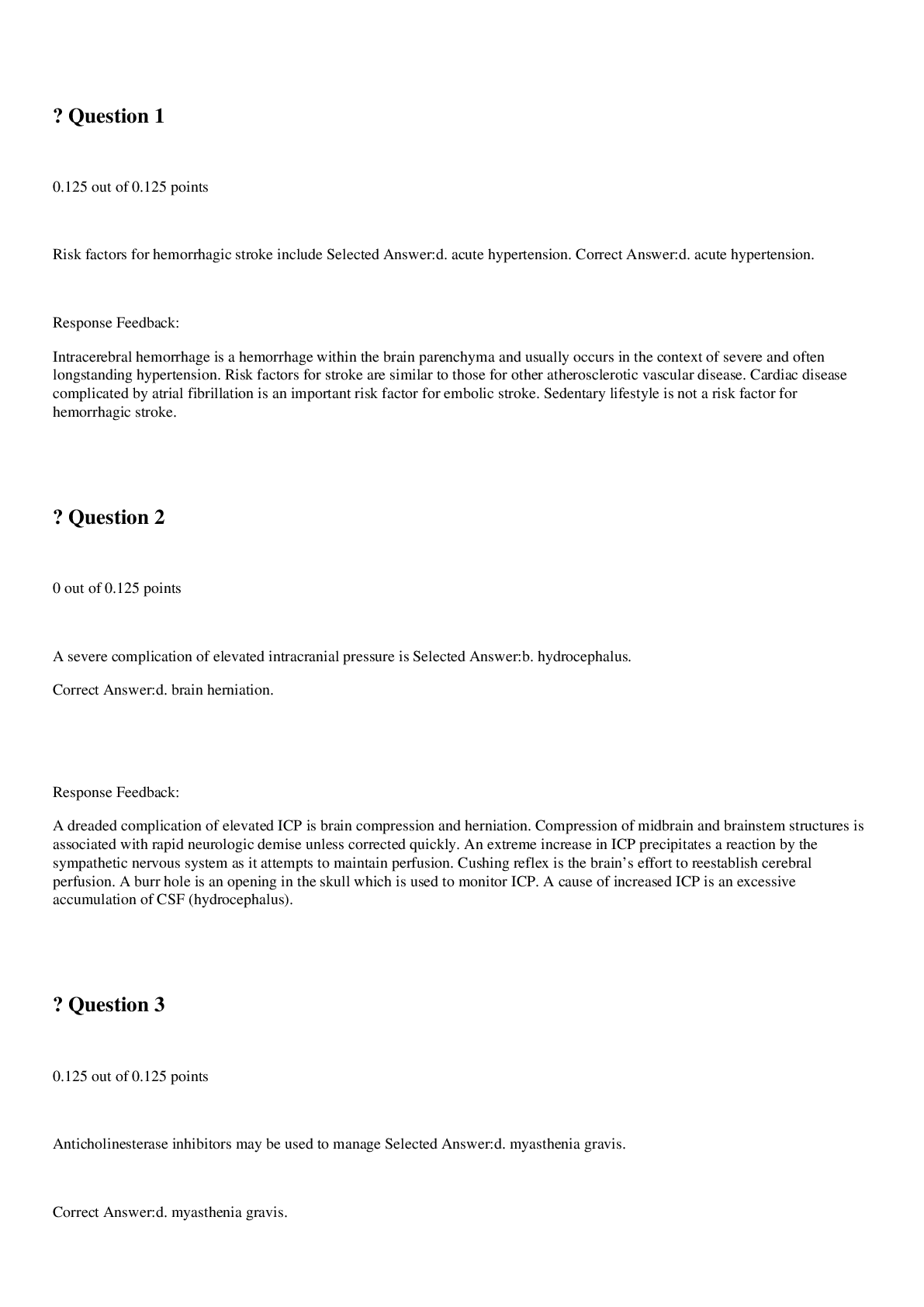
• Question 2
0.125 out of 0.125 points
After evaluation, a child’s asthma is characterized as “extrinsic.” This means that the asthma is
Selected Answer: d. associated with specific allergic triggers. Correct Answer: d. associated with specific allergic triggers.
Response Feedback:
Extrinsic asthma is also referred to as allergic asthma, which is triggered by antigens. The underlying pathogenesis of extrinsic asthma is an allergic in nature. Intrinsic asthma is associated with respiratory infections. Intrinsic asthma is associated with psychological factors.
• Question 3
0 out of 0.125 points
A known cause of hypokalemia is Selected Answer: c. pancreatitis.
Correct Answer: a. insulin overdose.
Response Feedback:
Insulin overdose causes hypokalemia by shifting potassium into cells. Oliguric renal failure decreases electrolyte excretion. Pancreatitis causes fat malabsorption, which binds calcium and magnesium, but not potassium, in the gastrointestinal tract. Hyperparathyroidism
regulates calcium, not potassium.
[Show More]