Paediatrics > QUESTIONS & ANSWERS > AHA PALS Practice exam already passed (All)
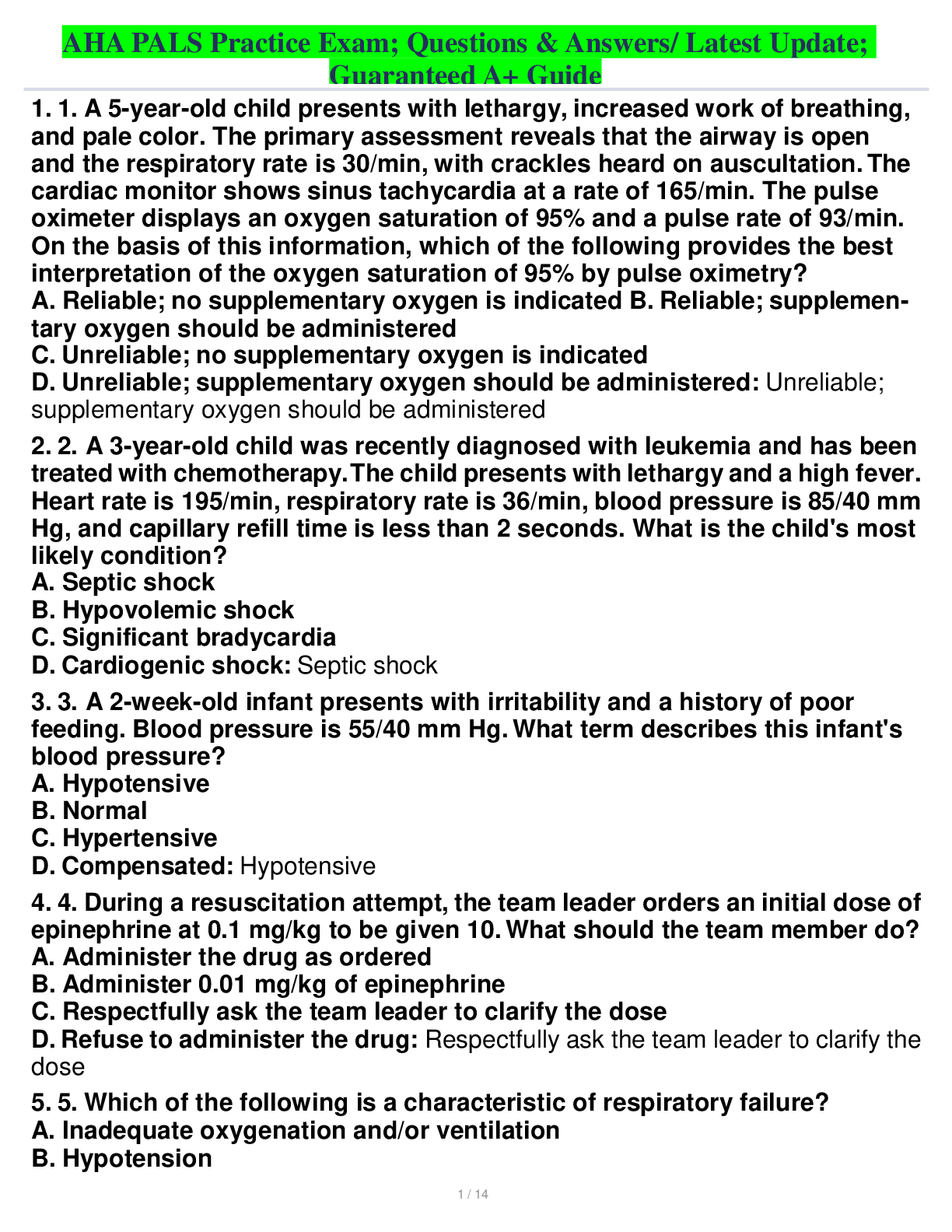
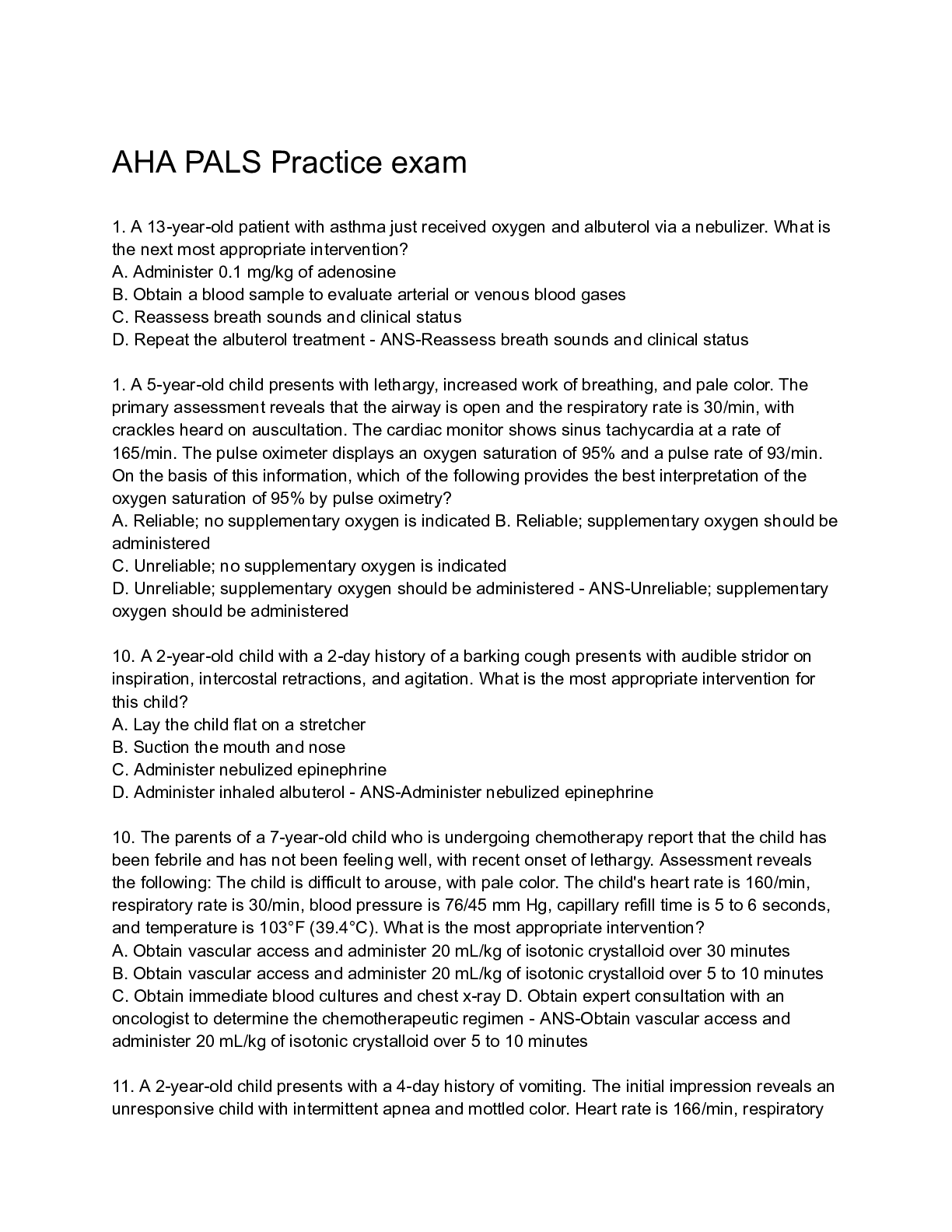
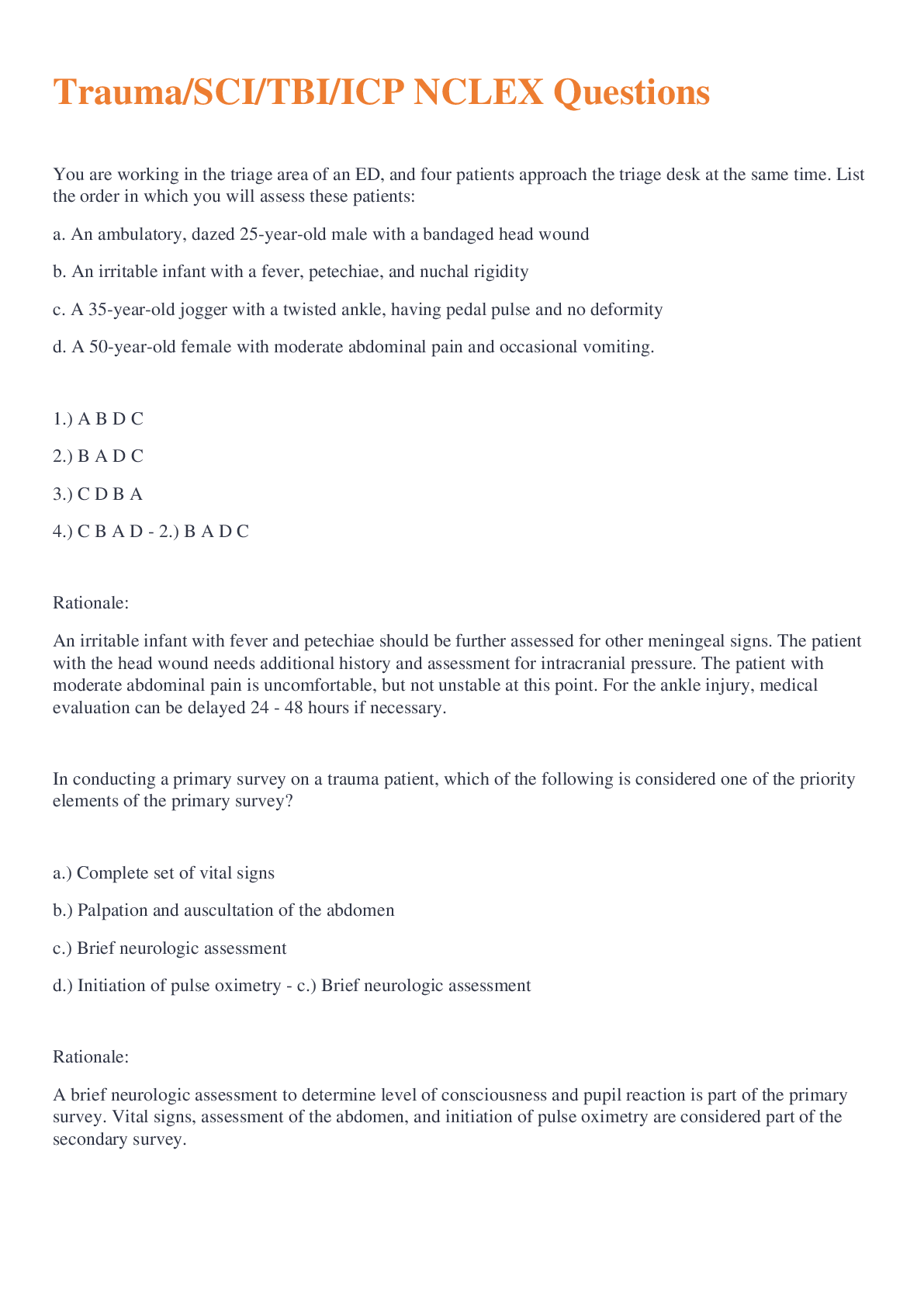
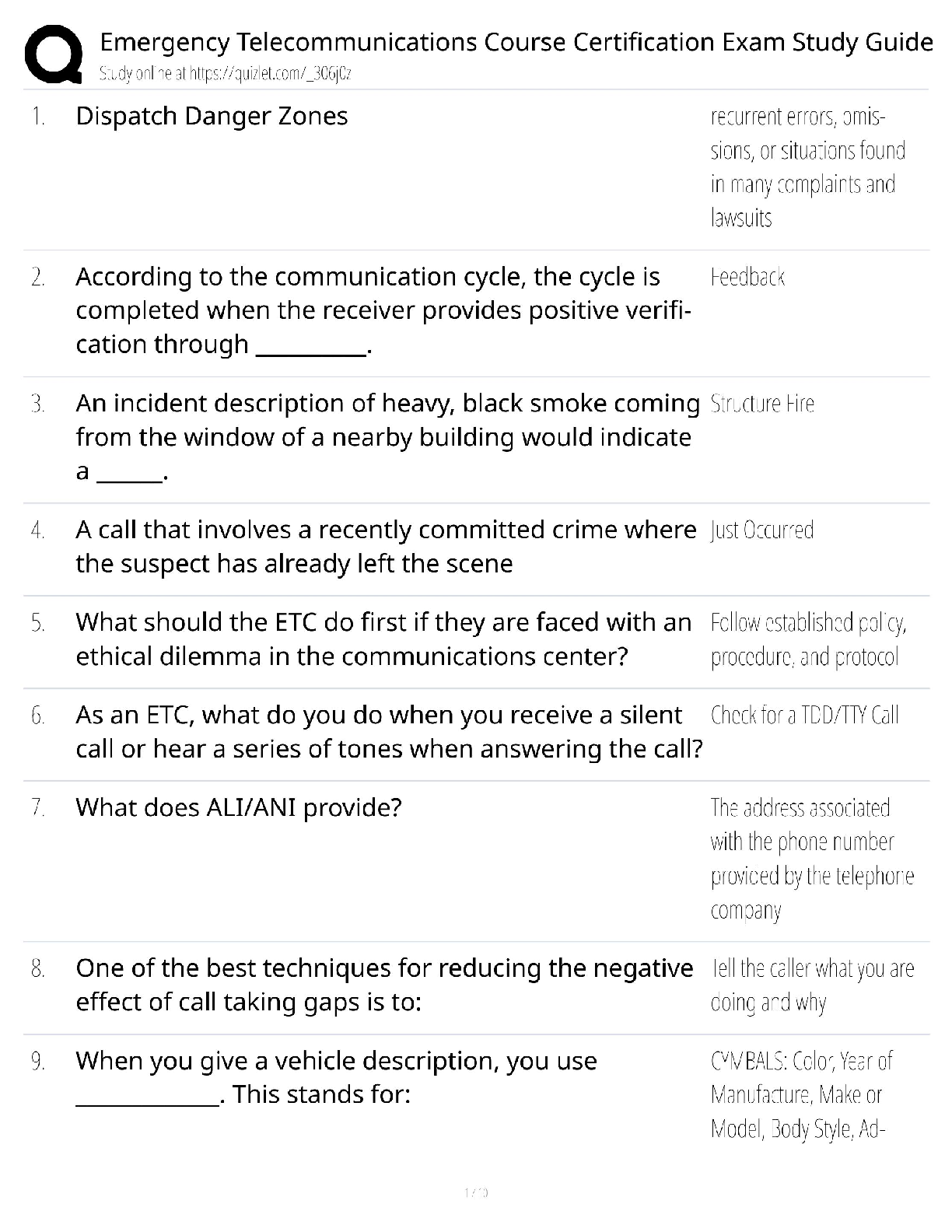
AHA PALS Practice exam already passed 1. A 5-year-old child presents with lethargy, increased work of breathing, and pale color. The primary assessment reveals that the airway is open and the respi ... ratory rate is 30/min, with crackles heard on auscultation. The cardiac monitor shows sinus tachycardia at a rate of 165/min. The pulse oximeter displays an oxygen saturation of 95% and a pulse rate of 93/min. On the basis of this information, which of the following provides the best interpretation of the oxygen saturation of 95% by pulse oximetry? A. Reliable; no supplementary oxygen is indicated B. Reliable; supplementary oxygen should be administered C. Unreliable; no supplementary oxygen is indicated D. Unreliable; supplementary oxygen should be administered ✔✔Unreliable; supplementary oxygen should be administered 2. A 3-year-old child was recently diagnosed with leukemia and has been treated with chemotherapy. The child presents with lethargy and a high fever. Heart rate is 195/min, respiratory rate is 36/min, blood pressure is 85/40 mm Hg, and capillary refill time is less than 2 seconds. What is the child's most likely condition? A. Septic shock B. Hypovolemic shock C. Significant bradycardia D. Cardiogenic shock ✔✔Septic shock 3. A 2-week-old infant presents with irritability and a history of poor feeding. Blood pressure is 55/40 mm Hg. What term describes this infant's blood pressure? A. Hypotensive B. Normal C. Hypertensive D. Compensated ✔✔Hypotensive 4. During a resuscitation attempt, the team leader orders an initial dose of epinephrine at 0.1 mg/kg to be given 10. What should the team member do? A. Administer the drug as ordered B. Administer 0.01 mg/kg of epinephrine C. Respectfully ask the team leader to clarify the dose D. Refuse to administer the drug ✔✔Respectfully ask the team leader to clarify the dose 5. Which of the following is a characteristic of respiratory failure? A. Inadequate oxygenation and/or ventilation B. Hypotension C. An increase in serum pH (alkalosis) D. Abnormal respiratory sounds ✔✔Inadequate oxygenation and/or ventilation 6. Which of the following is most likely to produce a prolonged expiratory phase and wheezing? A. Disordered control of breathing B. Hypovolemic shock C. Lower airway obstruction D. Upper airway obstruction ✔✔Lower airway obstruction 7. A 4-year-old child presents with seizures [Show More]
Last updated: 2 years ago
Preview 1 out of 22 pages
Buy this document to get the full access instantly
Instant Download Access after purchase
Buy NowInstant download
We Accept:
PALS BUNDLED EXAMS QUESTIONS AND ANSWERS ALREADY PASSED
By Nutmegs 2 years ago
$27
25
Can't find what you want? Try our AI powered Search
Connected school, study & course
About the document
Uploaded On
Jan 30, 2023
Number of pages
22
Written in
All
This document has been written for:
Uploaded
Jan 30, 2023
Downloads
0
Views
187
Scholarfriends.com Online Platform by Browsegrades Inc. 651N South Broad St, Middletown DE. United States.
We're available through e-mail, Twitter, Facebook, and live chat.
FAQ
Questions? Leave a message!
Copyright © Scholarfriends · High quality services·