PS 101 Questions and Answers Graded A
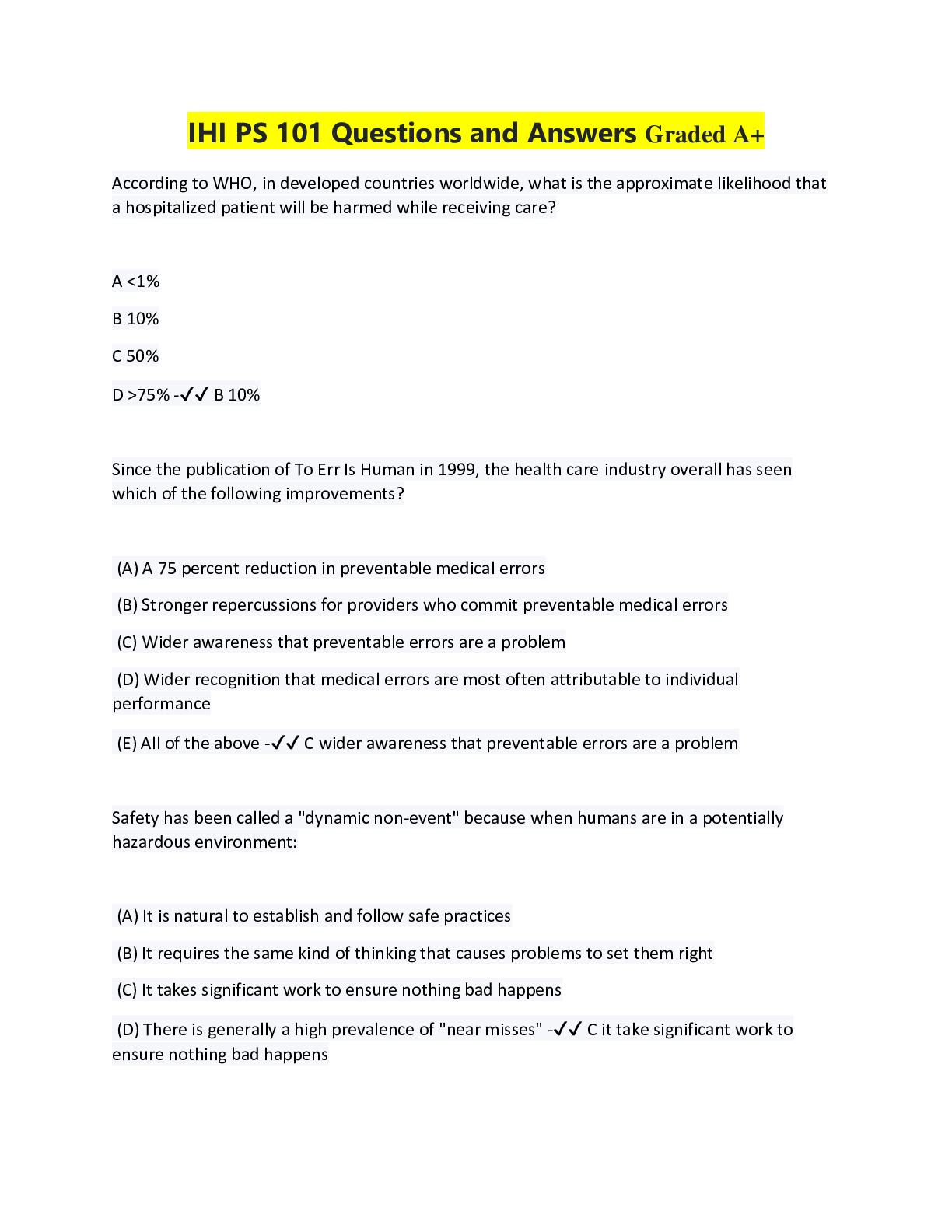
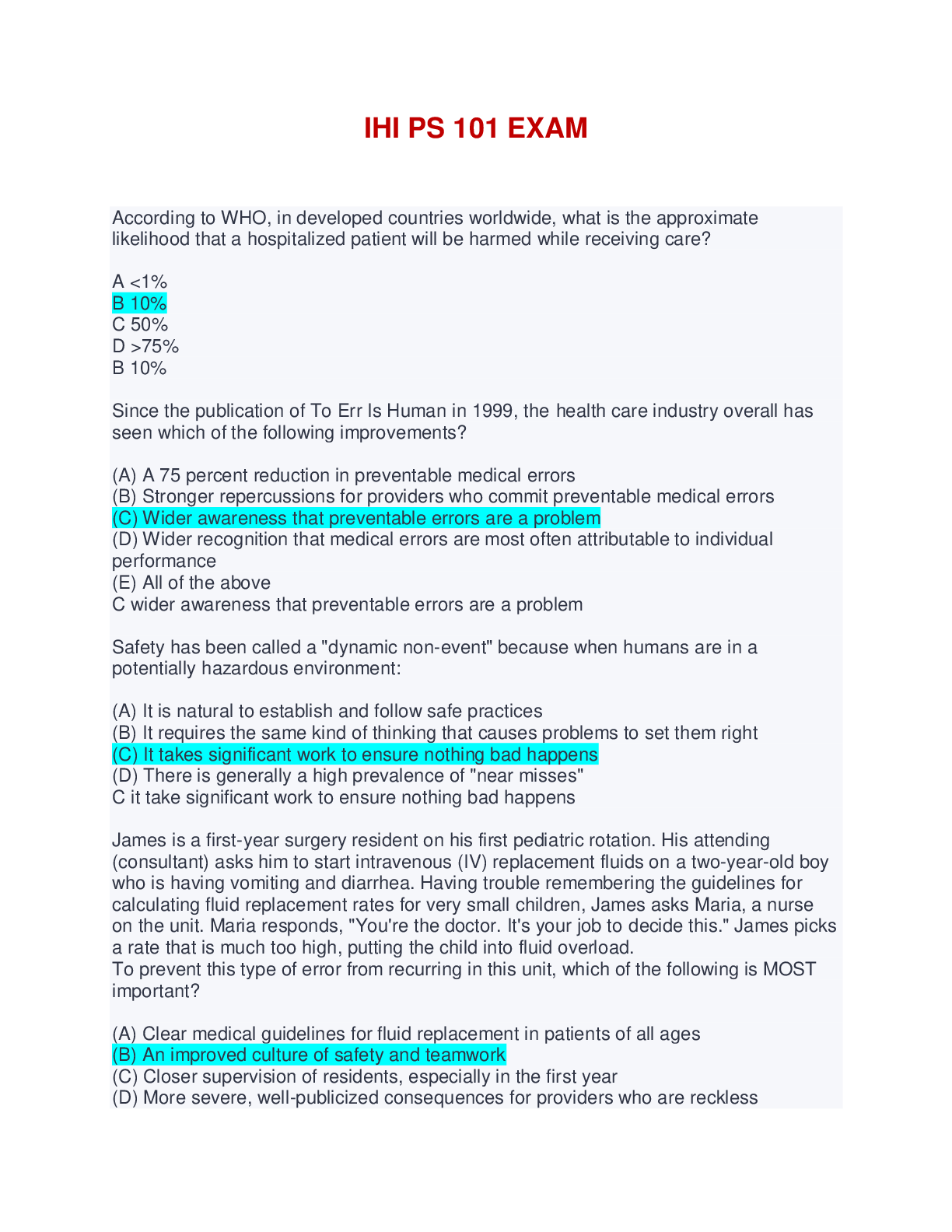
Safety has been called a "dynamic non-event" because when humans are in a potentially hazardous environment: ✔Ans✔ It takes significant work to ensure nothing bad happens
Isador
...
PS 101 Questions and Answers Graded A
Safety has been called a "dynamic non-event" because when humans are in a potentially hazardous environment: ✔Ans✔ It takes significant work to ensure nothing bad happens
Isadora is a first-year surgery resident on her first pediatric rotation. Her attending (consultant) asks her to immediately start intravenous (IV) replacement fluids on a two-year-old girl who is experiencing vomiting and diarrhea. Isadora has recently learned the guidelines for calculating fluid replacement rates for very small children; however, she confuses them and picks a rate that is too high.
To prevent this type of error from recurring in this unit, which of the following is MOST important? ✔Ans✔ A change to the system so that it does not rely so heavily on human memory
"Patient safety" means: ✔Ans✔ Eliminating errors and adverse effects to patients associated with health care
James is a first-year surgery resident on his first pediatric rotation. His attending (supervising physician) asks him to start intravenous (IV) replacement fluids on a two-year-old boy who is having vomiting and diarrhea. Having trouble remembering the guidelines for calculating fluid replacement rates for very small children, James asks Maria, a nurse on the unit. Maria responds, "You're the doctor. It's your job to decide this." James picks a rate that is much too high, putting the child into fluid overload.
Who is likely to be negatively affected by this medical error? ✔Ans✔ All the above
James is a first-year surgery resident on his first pediatric rotation. His attending (supervising physician) asks him to start intravenous (IV) replacement fluids on a two-year-old boy who is having vomiting and diarrhea. Having trouble remembering the guidelines for calculating fluid replacement rates for very small children, James asks Maria, a nurse on the unit. Maria responds, "You're the doctor. It's your job to decide this." James picks a rate that is much too high, putting the child into fluid overload.
To prevent this type of error from recurring in this unit, which of the following is MOST important? ✔Ans✔ Culture of safety fostering better teamwork,
Isadora is a first-year surgery resident on her first pediatric rotation. Her attending (consultant) asks her to immediately start intravenous (IV) replacement fluids on a two-year-old girl who is experiencing vomiting and diarrhea. Isadora has recently learned the guidelines for calculating fluid replacement rates for very small children; however, she confuses them and picks a rate that is too high.
Which of the following reasons that errors often occur in health care most clearly played a role in this scenario? ✔Ans✔ Diagnosing and treating patients is incredibly complex and often performed under time pressure and/or with insufficient information.
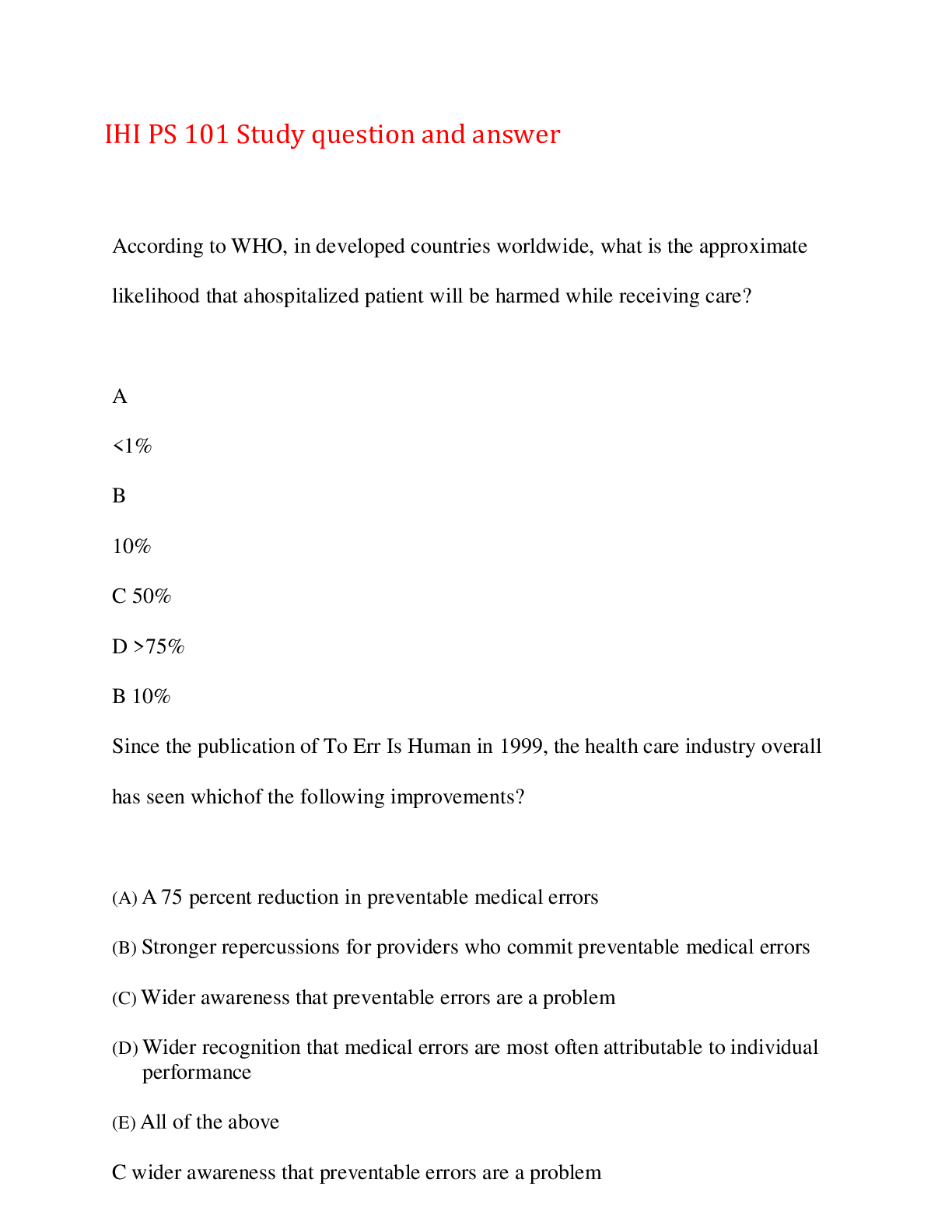
Since the publication of To Err Is Human in 1999, the health care industry overall has seen which of the following improvements? ✔Ans✔ Eliminating errors and adverse effects to patients associated with health care
According to WHO, in developed countries worldwide, what is the approximate likelihood that a hospitalized patient will be harmed while receiving care? ✔Ans✔ 10%
Approximately what percentage of US adults have experienced a medical error in their own or a family member's care at some point in their life? ✔Ans✔ 33%
At the large multi-specialty clinic in which you work, there have been two near misses and one medical error because various clinicians did not follow up on patient results. Different caregivers were involved each time. After the second near miss, the physician involved was asked to leave the clinic.
This appears to be an example of which of the following? ✔Ans✔ Unfair attribution of blame
At the large multi-specialty clinic in which you work, there have been two near misses and one medical error because various clinicians did not follow up on patient results. Different caregivers were involved each time. After the second near miss, the physician involved was asked to leave the clinic. A nurse who realized that his colleagues weren't consistently following up on patient results reported the problem to the clinic leadership right away.
Which response would be most consistent with a culture of safety? ✔Ans✔ Investigating the problem and seeking systems solutions
One hospital CEO insists on including performance data in the hospital's annual report. "We do very well on most measures, except for one or two, but we put those in anyway," she says. "We want to hold ourselves accountable."
Does this practice demonstrate effective or ineffective leadership? ✔Ans✔ Effective leadership: Being transparent, even about poor results, is a mark of a good leader.
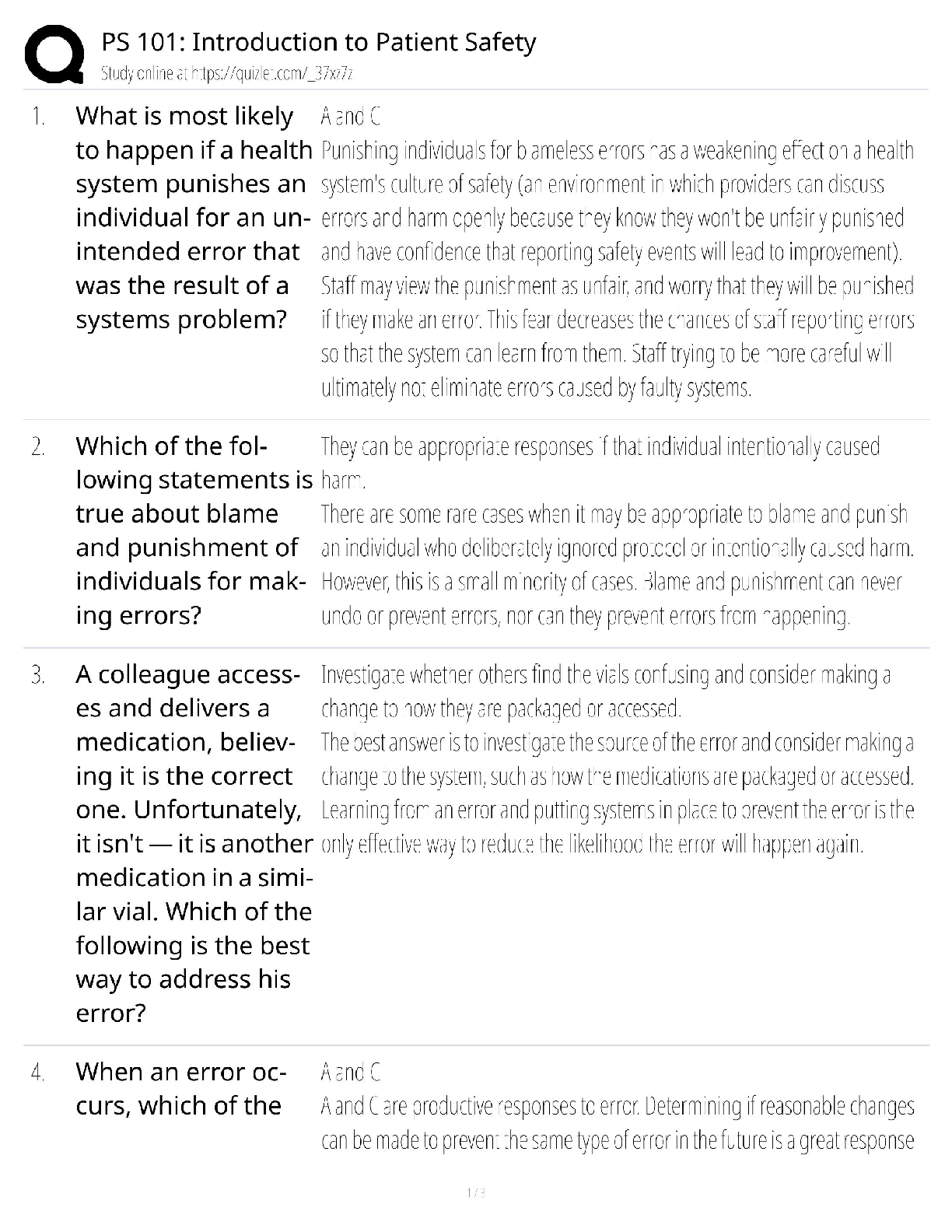
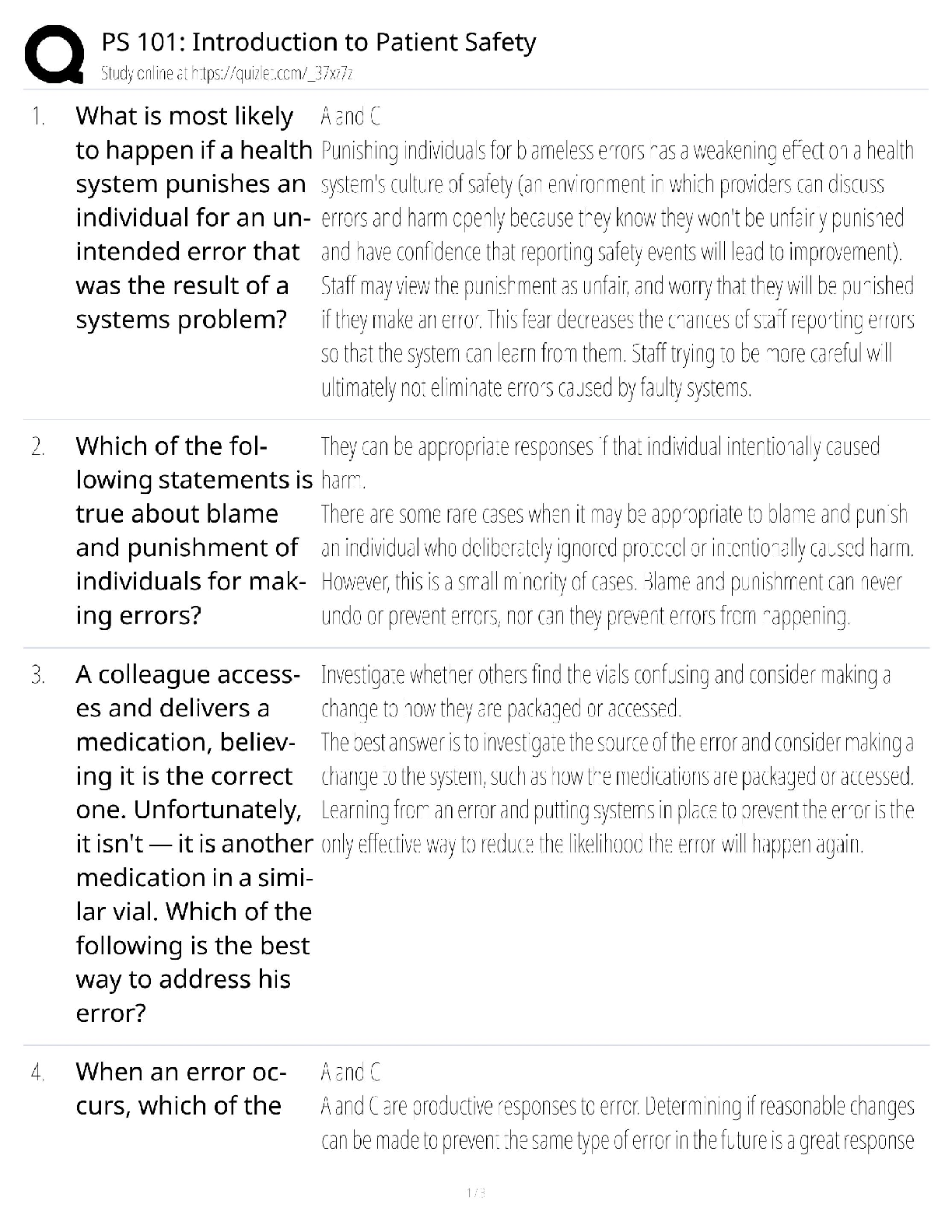
What is most likely to happen if a health system punishes an individual for an unintended error that was the result of a systems problem? ✔Ans✔ Both staff may be less likely to talk openly about and learn from errors and the response will weaken the safety culture
A medical unit in a hospital is in the midst of hiring some new physicians. During an orientation for new employees, a senior leader stands up and says, "We expect that the same rules apply to everyone on the unit, regardless of position."
Which aspect of a culture of safety does this unit seem to value? ✔Ans✔ Accountability
[Show More]

.png)
.png)
.png)
.png)

.png)

.png)



 Answered 2023.png)