NURSING > QUESTIONS & ANSWERS > Lecture 10/chapter 9 Classification, Case Management, and treatment 2023 Update (All)
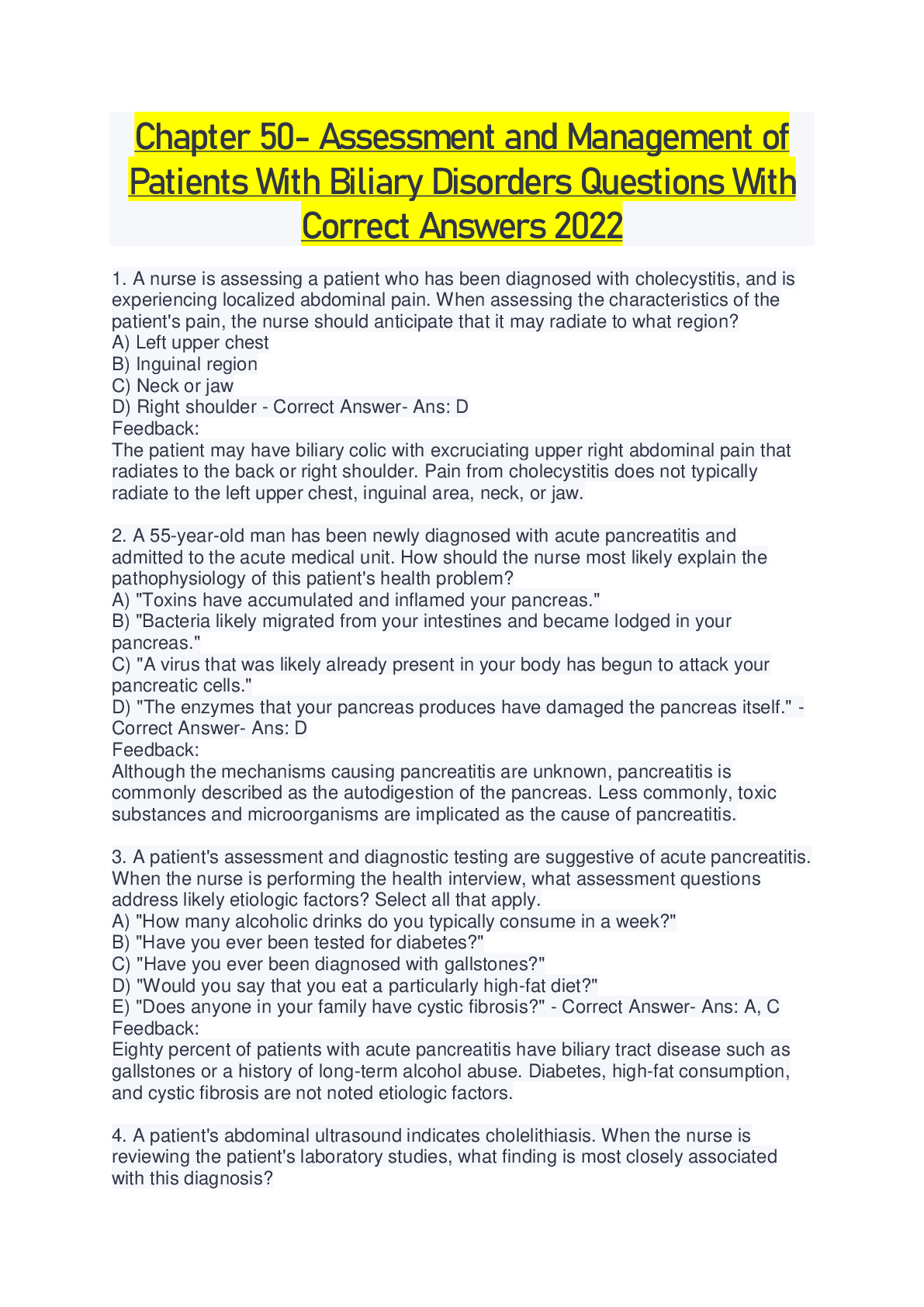
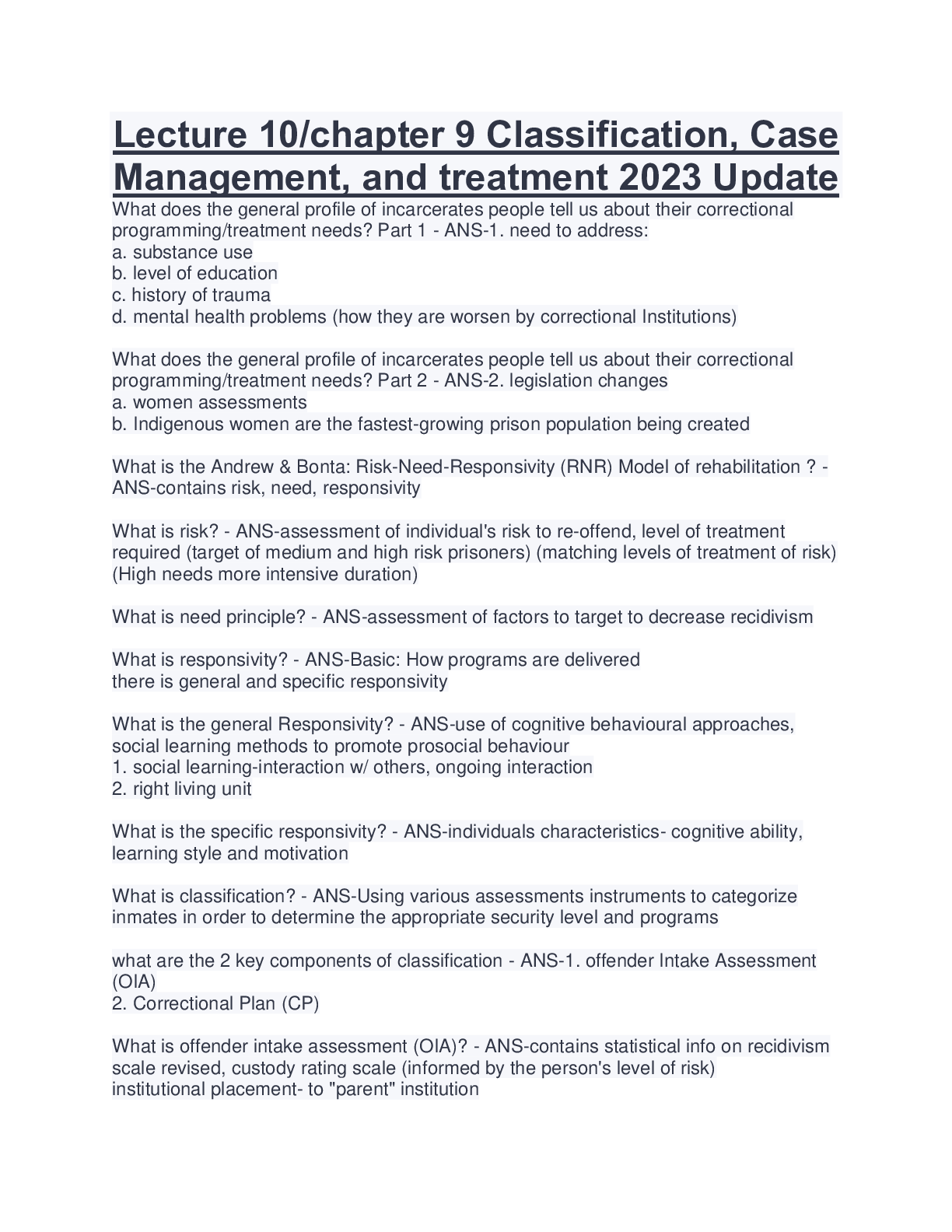
Lecture 10/chapter 9 Classification, Case Management, and treatment 2023 Update
Document Content and Description Below
Last updated: 3 years ago
Preview 1 out of 6 pages
Instant download
Buy this Document to get the Full Access Instantly
Provided by Students Who Aced it
We Verify Document Content to Gurantee Accuracy
Reviews( 0 )
Document information
Connected school, study & course
About the document
Uploaded On
Feb 21, 2023
Number of pages
6
Written in
All

Additional information
This document has been written for:
Uploaded
Feb 21, 2023
Downloads
0
Views
99
Topic Tags
Recommended For You
Get more on QUESTIONS & ANSWERS »

Henry Ford College| Mark Klimek Lecture 10| NCLEX REVIEW | Mat...

Mark Klimek Audio Lectures Lecture 10 Maternal health and newb...
rk Klimek Audio Lectures Lecture 10 Maternal health and newbor...
Lecture 10 Maternal health and newborn health Calculating Due-...
Mark Klimek Audio Lectures Lecture 10 Maternal health and newb...


FINC 4720 Final Exam (Lecture 10 - Risk Based Supervision)/ Do...

Bio 181 Capco ASU Exam 2 (Lecture 10) | Questions with 100% Co...
Test Bank For Community Public Health Nursing Promoting the He...