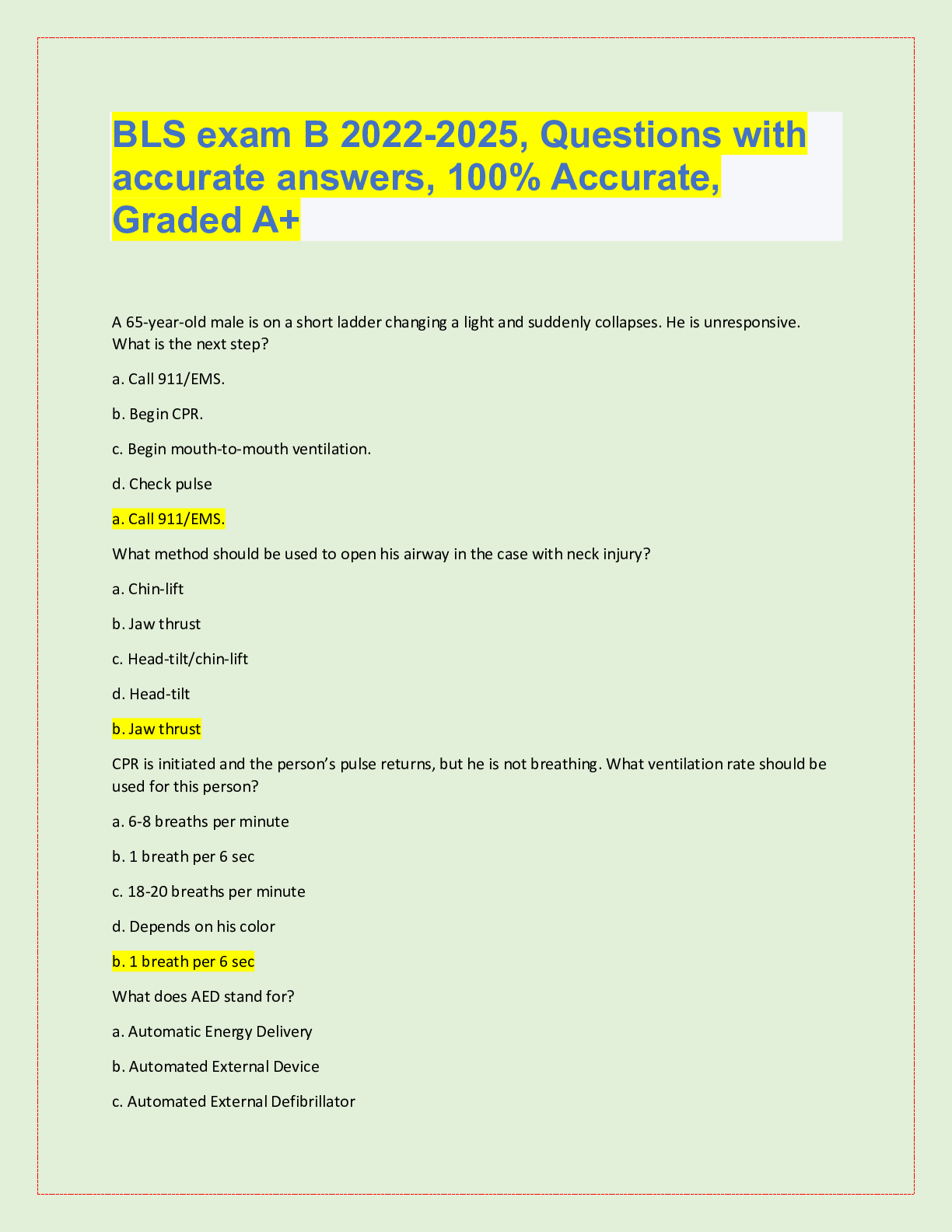
Political Science > QUESTIONS & ANSWERS > WGU C963 - Significant Court Cases, Comprehensive Doc, 100% Accurate, verified. (All)
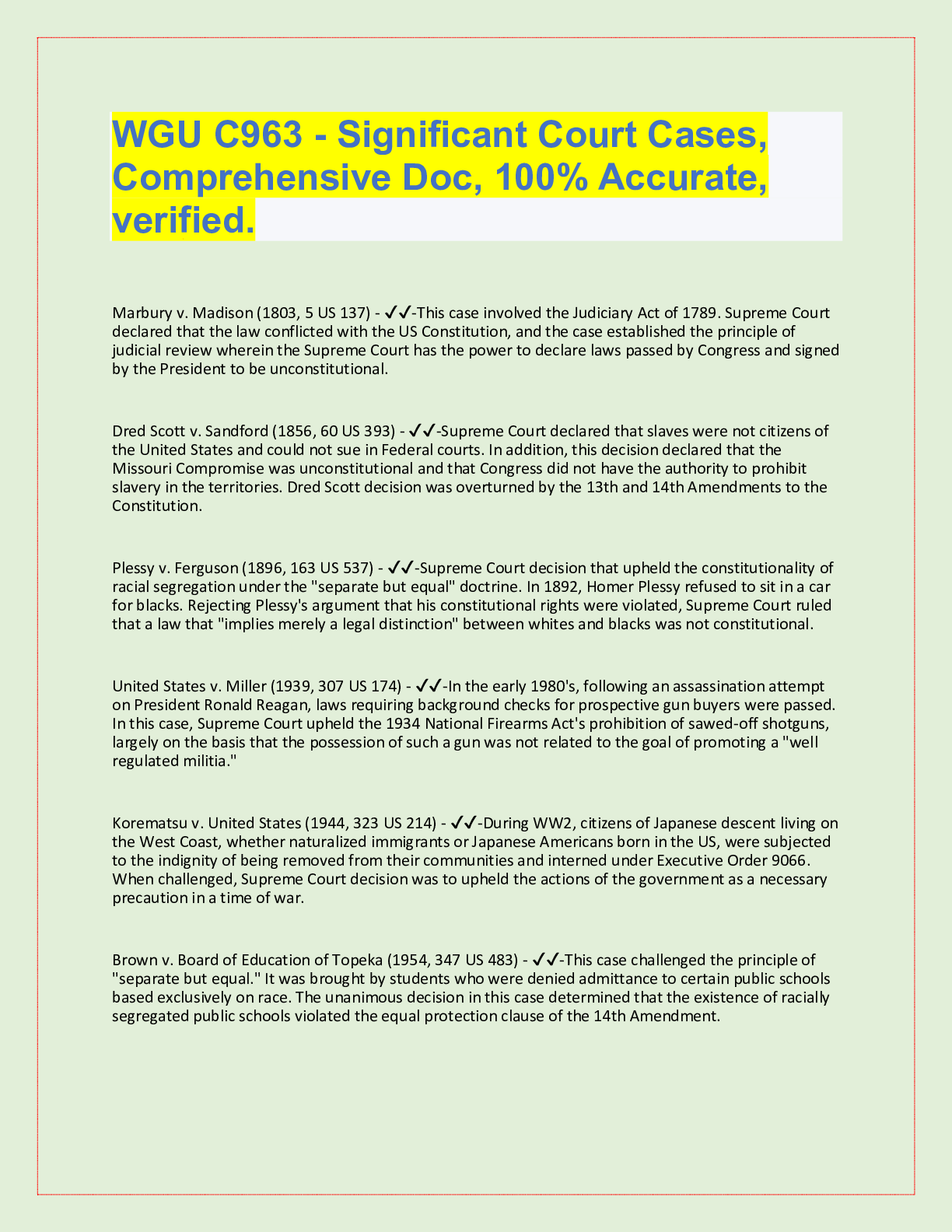
WGU C963 - Significant Court Cases, Comprehensive Doc, 100% Accurate, verified.
Document Content and Description Below
Last updated: 3 years ago
Preview 1 out of 4 pages
Instant download
Buy this Document to get the Full Access Instantly
Provided by Students Who Aced it
We Verify Document Content to Gurantee Accuracy
Also available in bundle (1)
Click Below to Access Bundle(s)

WGU C963 EXAM BUNDLE, VERIFIED, RATED A+
American Politics and the US Constitution –WGU C963. Exam Questions & Answers, ;LATEST VERSIONS Graded A+. Verified
By Topmark 3 years ago
$32
27
Reviews( 0 )
Document information
Connected school, study & course
About the document
Uploaded On
Mar 13, 2023
Number of pages
4
Written in
All

Additional information
This document has been written for:
Uploaded
Mar 13, 2023
Downloads
0
Views
138
Topic Tags
Recommended For You
Get more on QUESTIONS & ANSWERS »
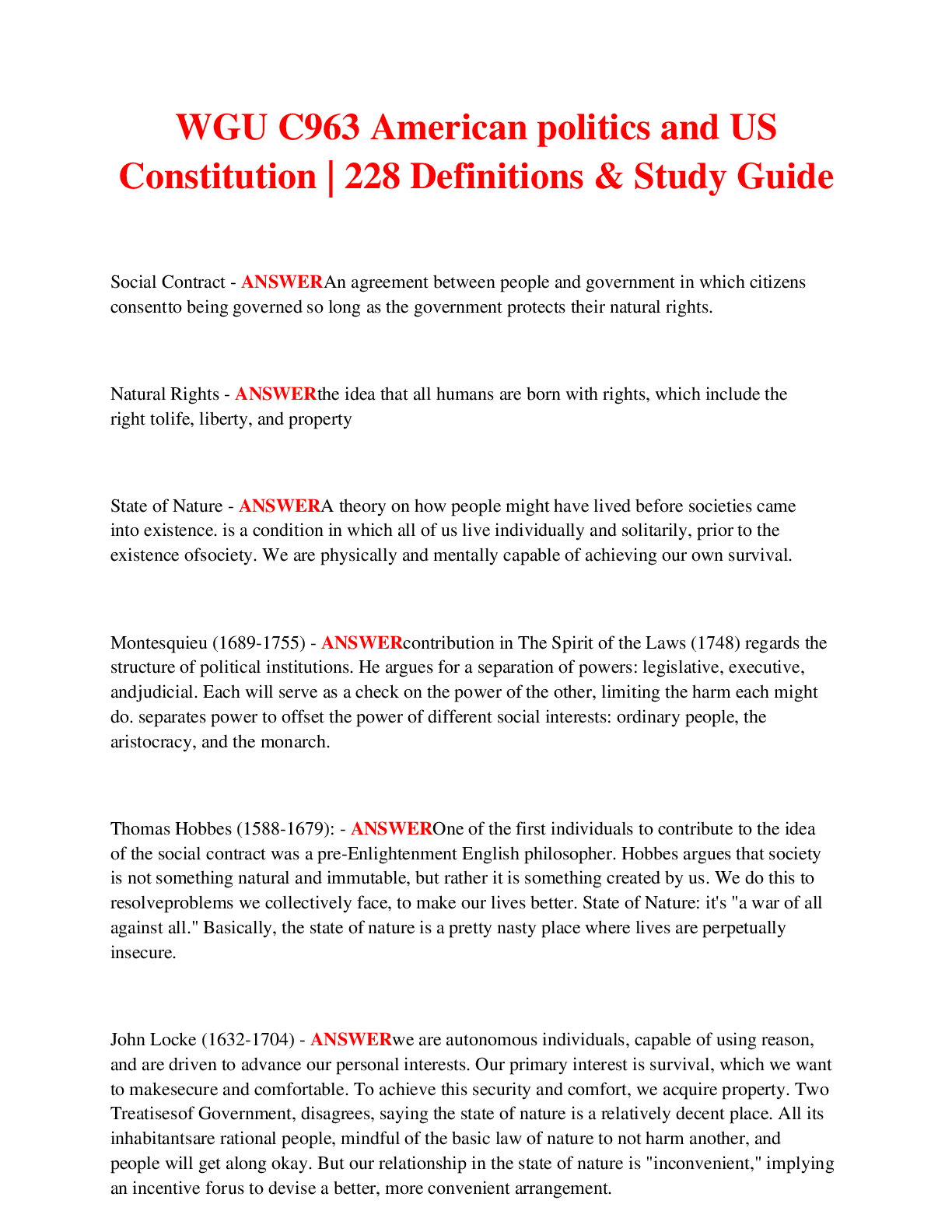
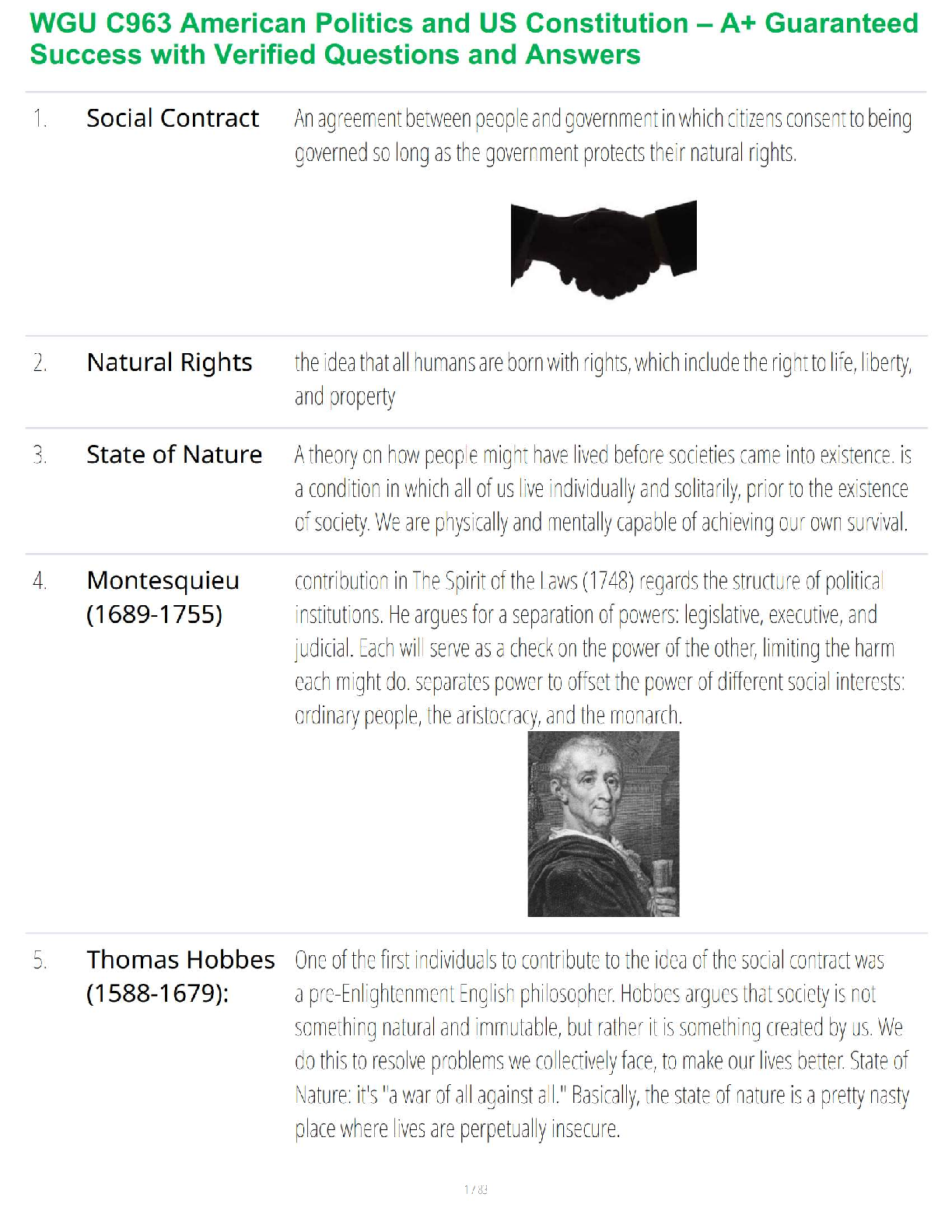
WGU C963 American politics and US Constitution | 228 Definitio...

WGU C963 |125 DEFINITIONS in American Politics and the US Cons...
WGU C963 Constitutional Court Cases | 35 Q&A Defined and Expla...
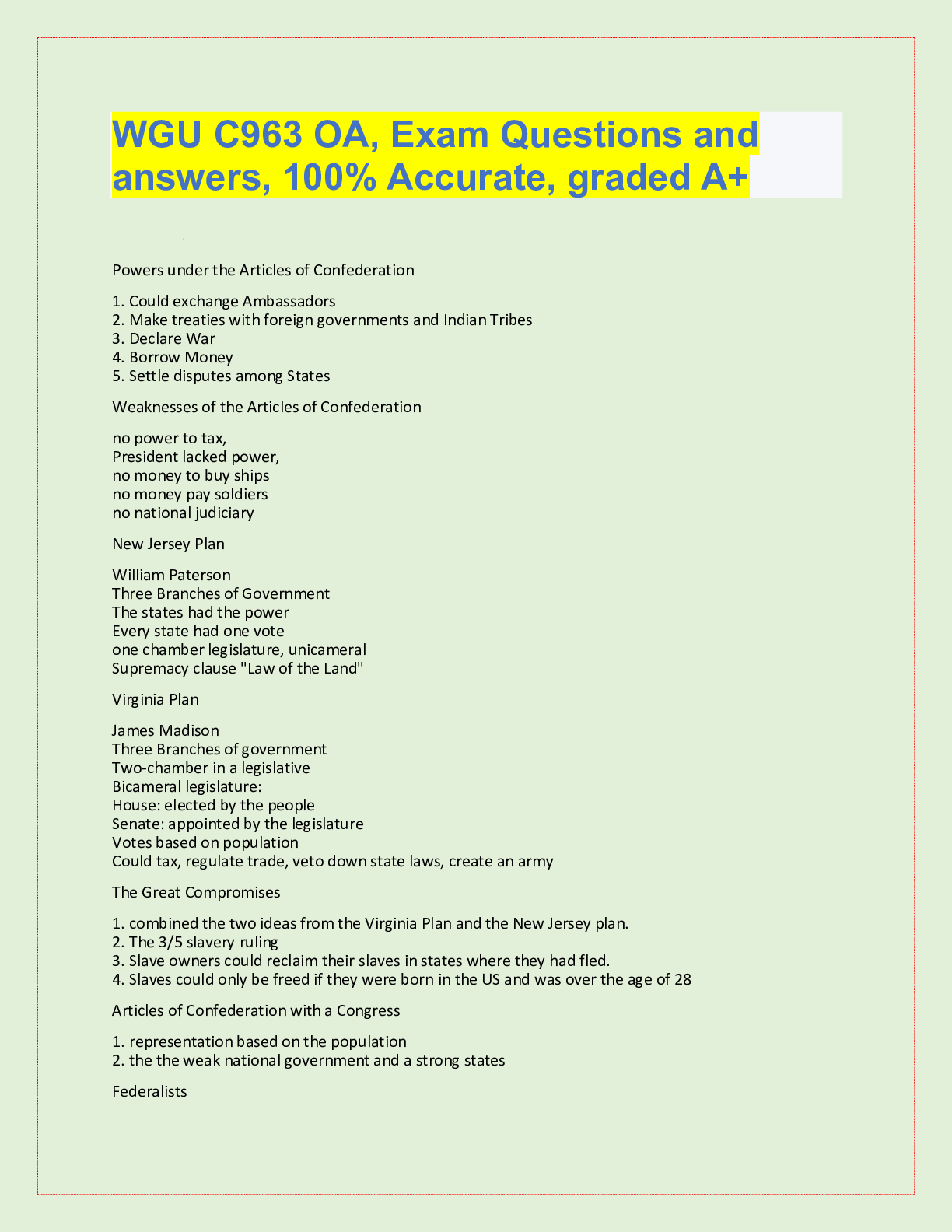
WGU C963 OA | Complete Solutions for your Exam | Latest 2023/2...
WGU C963 Pretest | Actual Questions and Answers 100% Correct

WGU American Politics and the US Constitution - C963 QUESTIONS...
WGU C963 American politics and US Constitution | 100% Correct...


C963 WGU American Politics and the US Constitution | Contains...
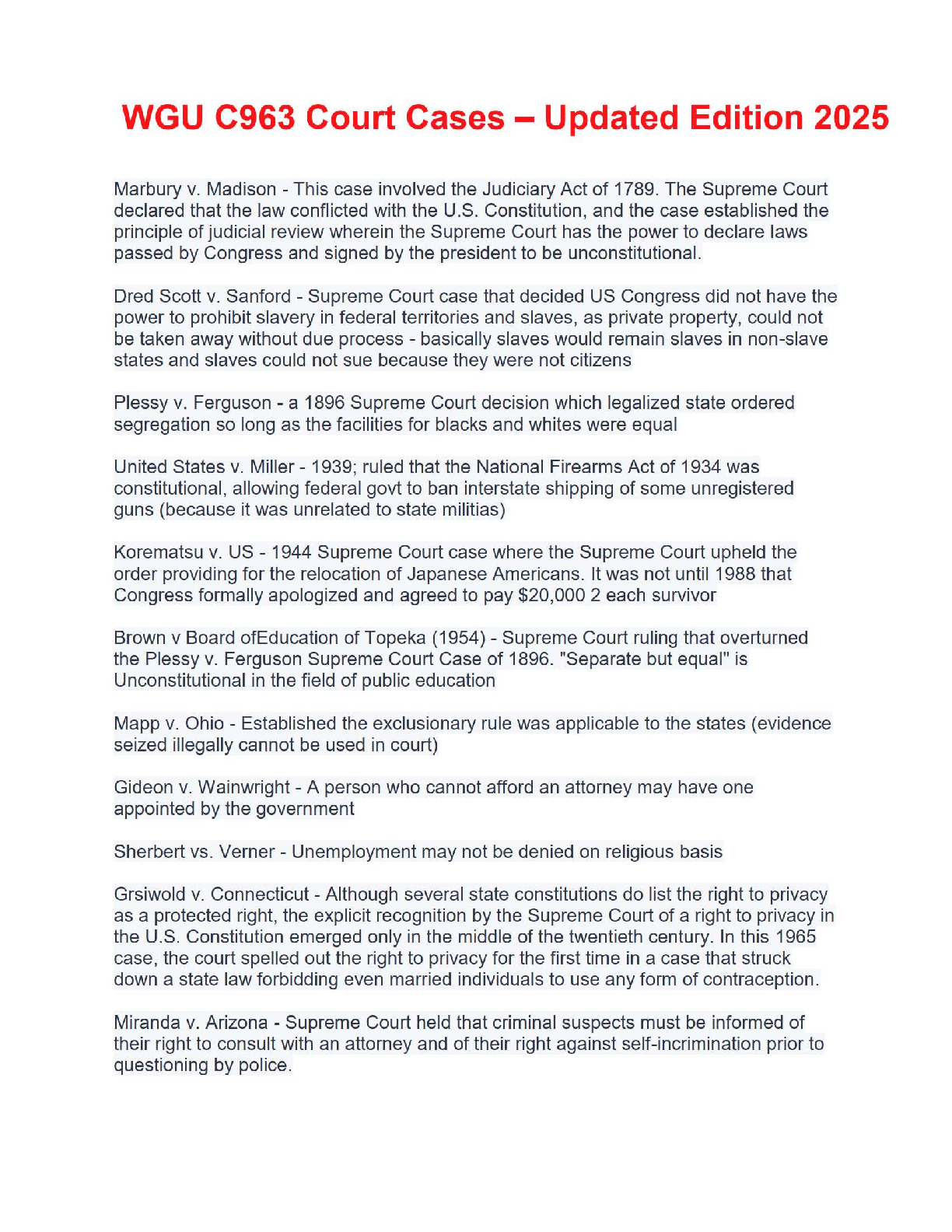
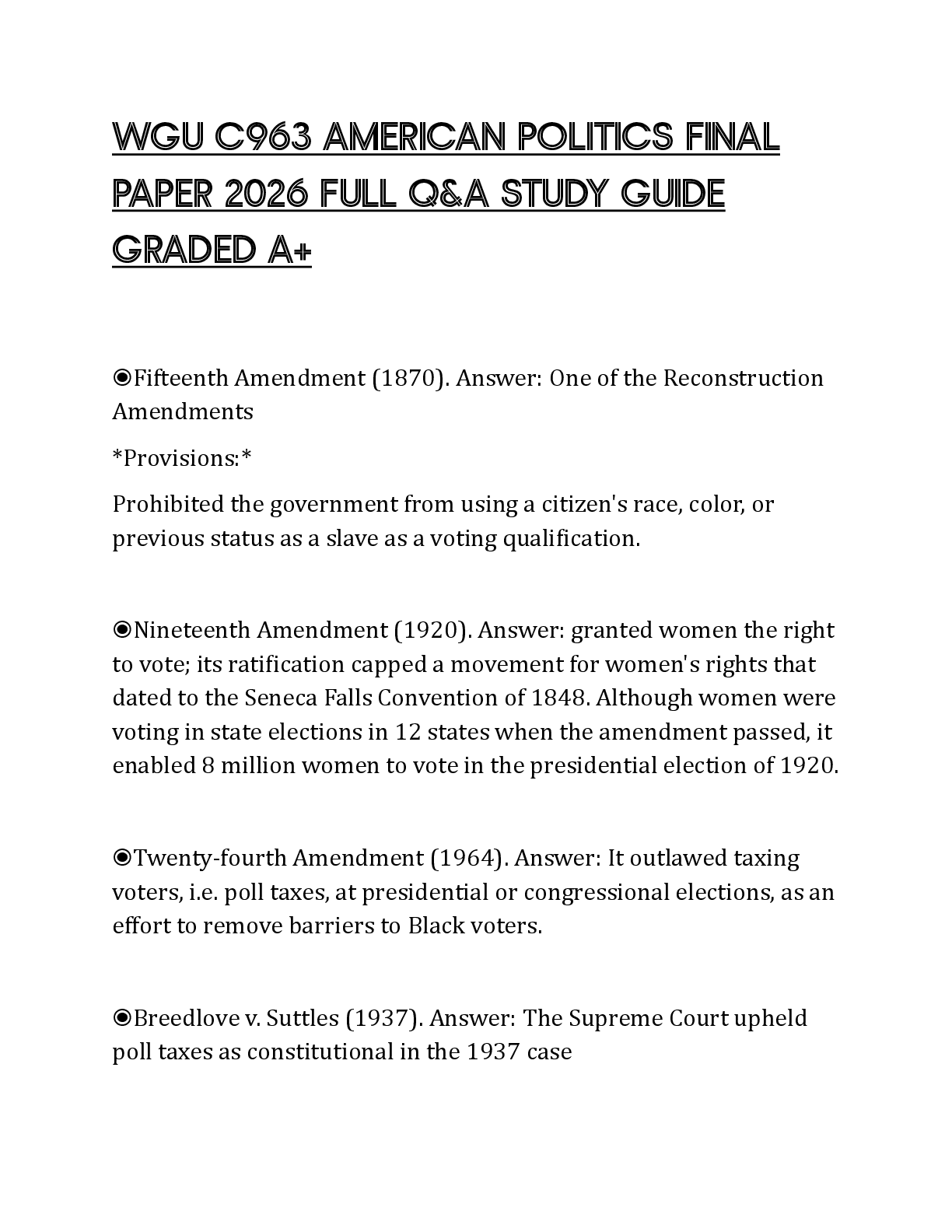
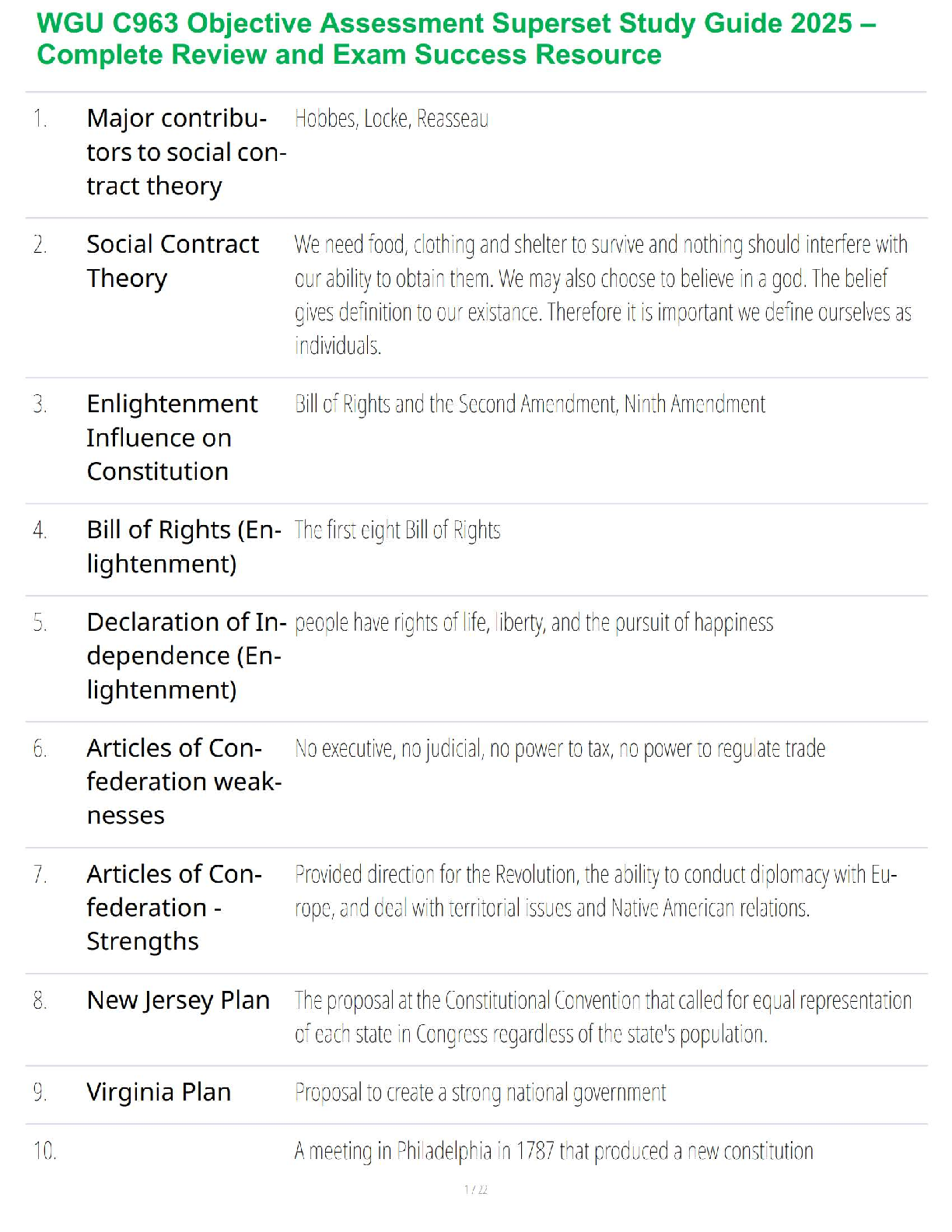
WGU C963 Objective Assessment Superset Study Guide 2025 – Comp...
We The People An introduction to American politics 10th Editio...

Analyzing Politics Rationality, Behavior, and Institutions, 2e...
 5e William Bianco David Canon.png)
American Politics Today (Essentials) 5e William Bianco David C...