WGU C722 Project Management Study
Guide terms, Top Questions and
answers. Verified
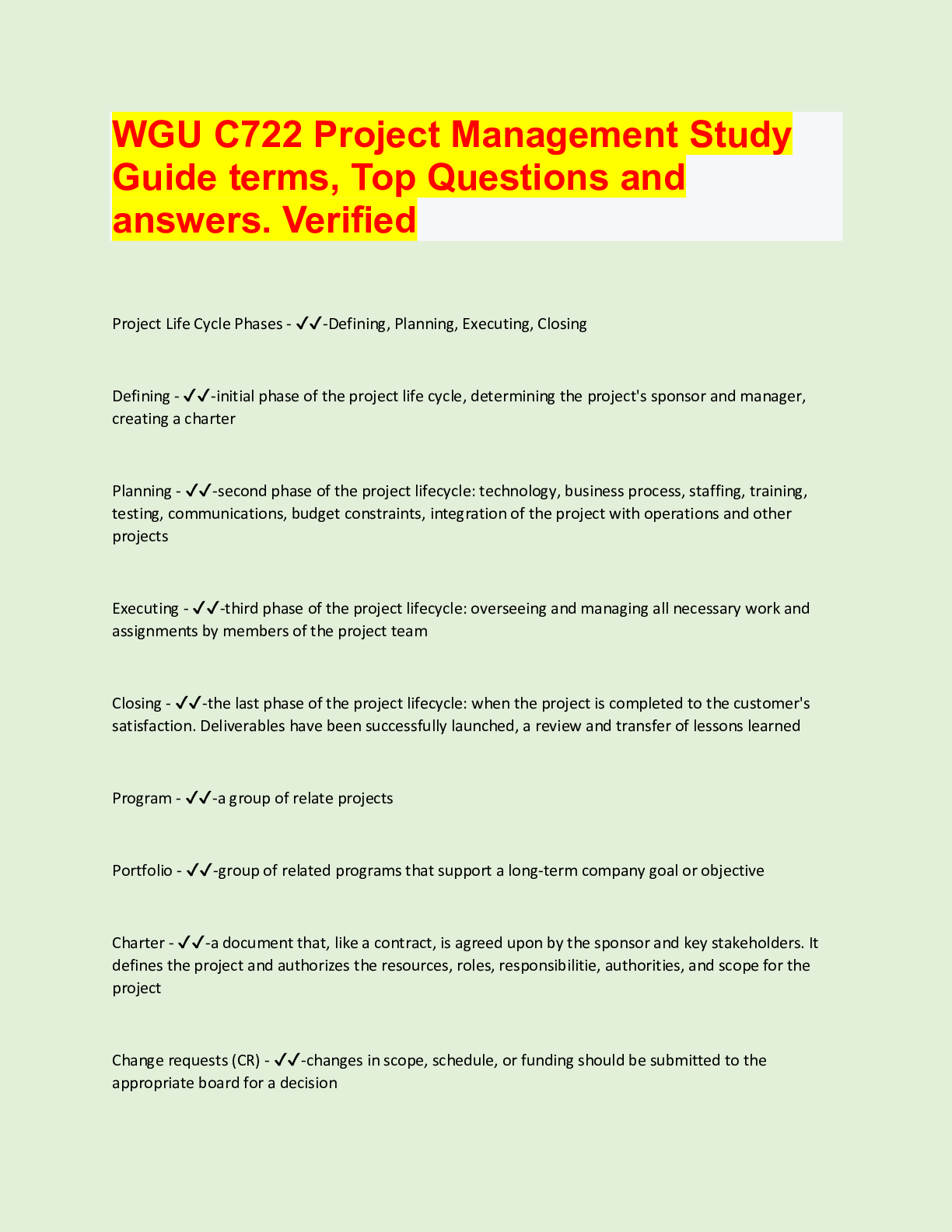
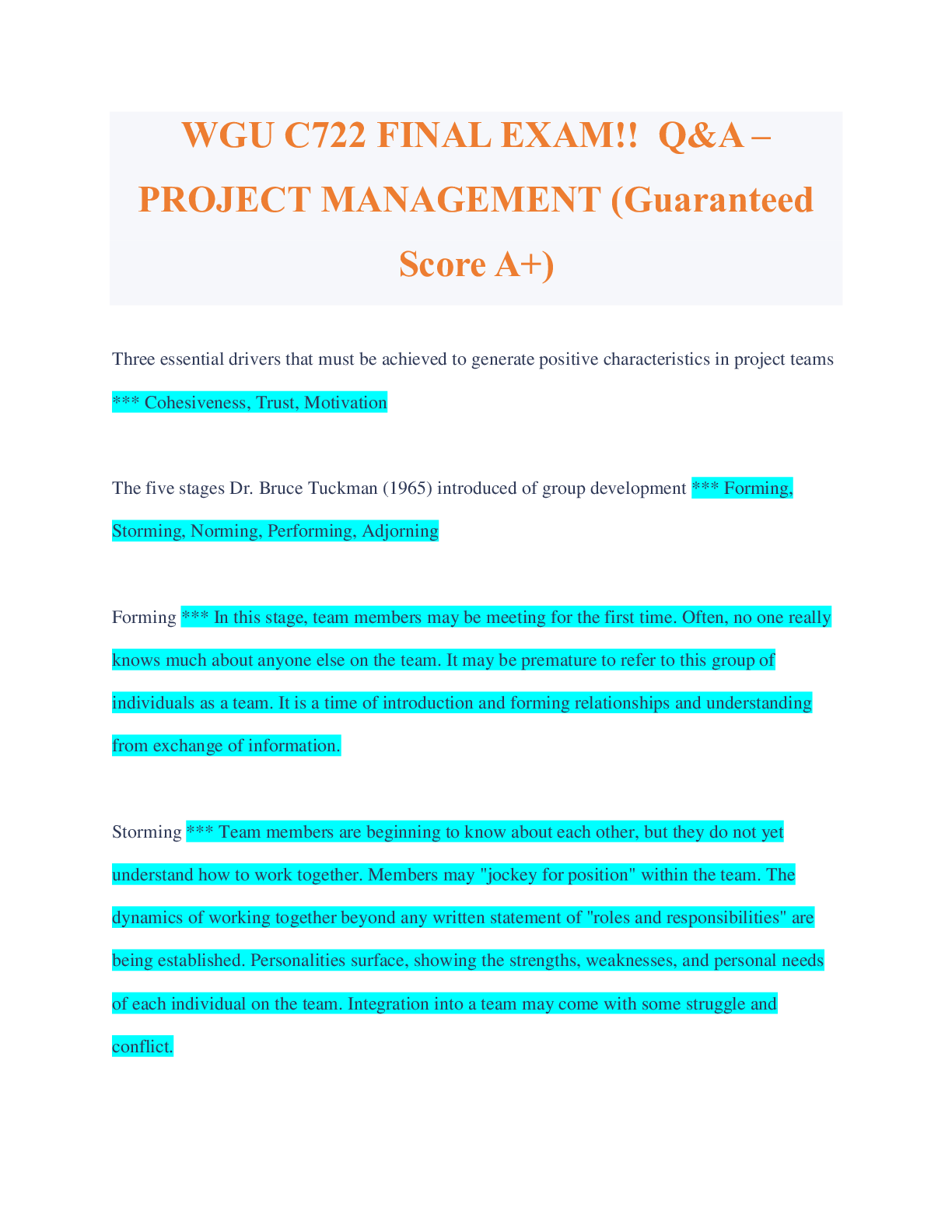
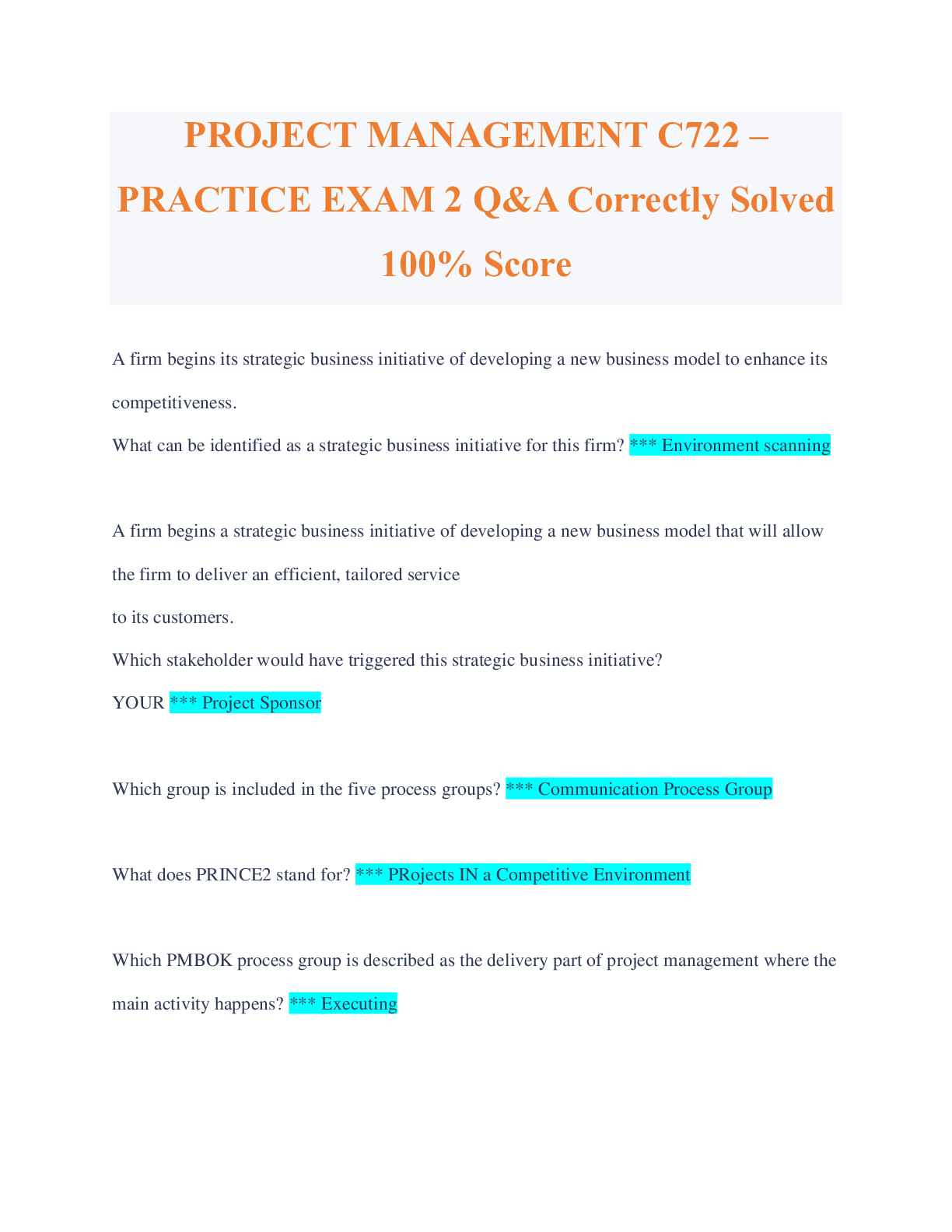
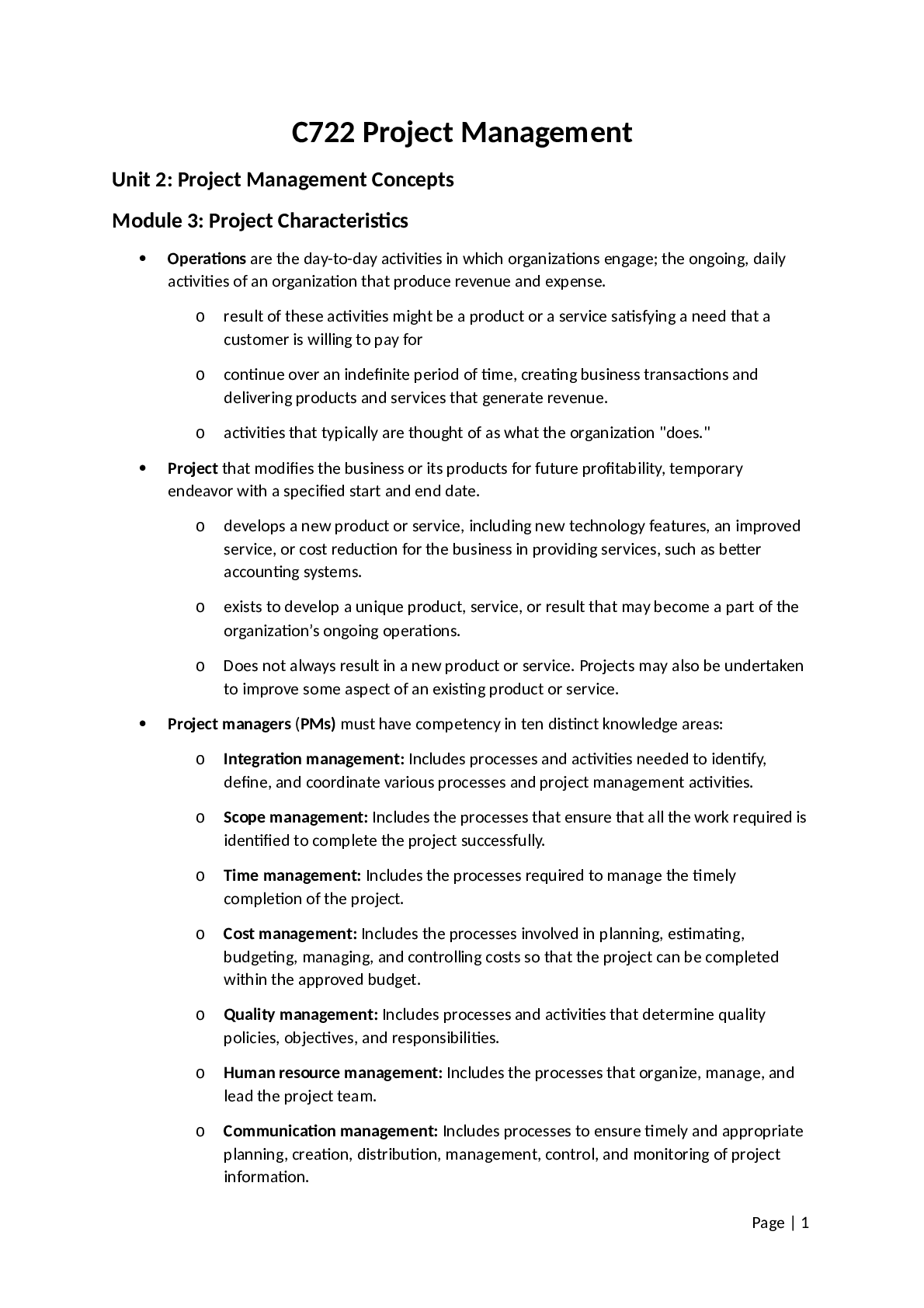
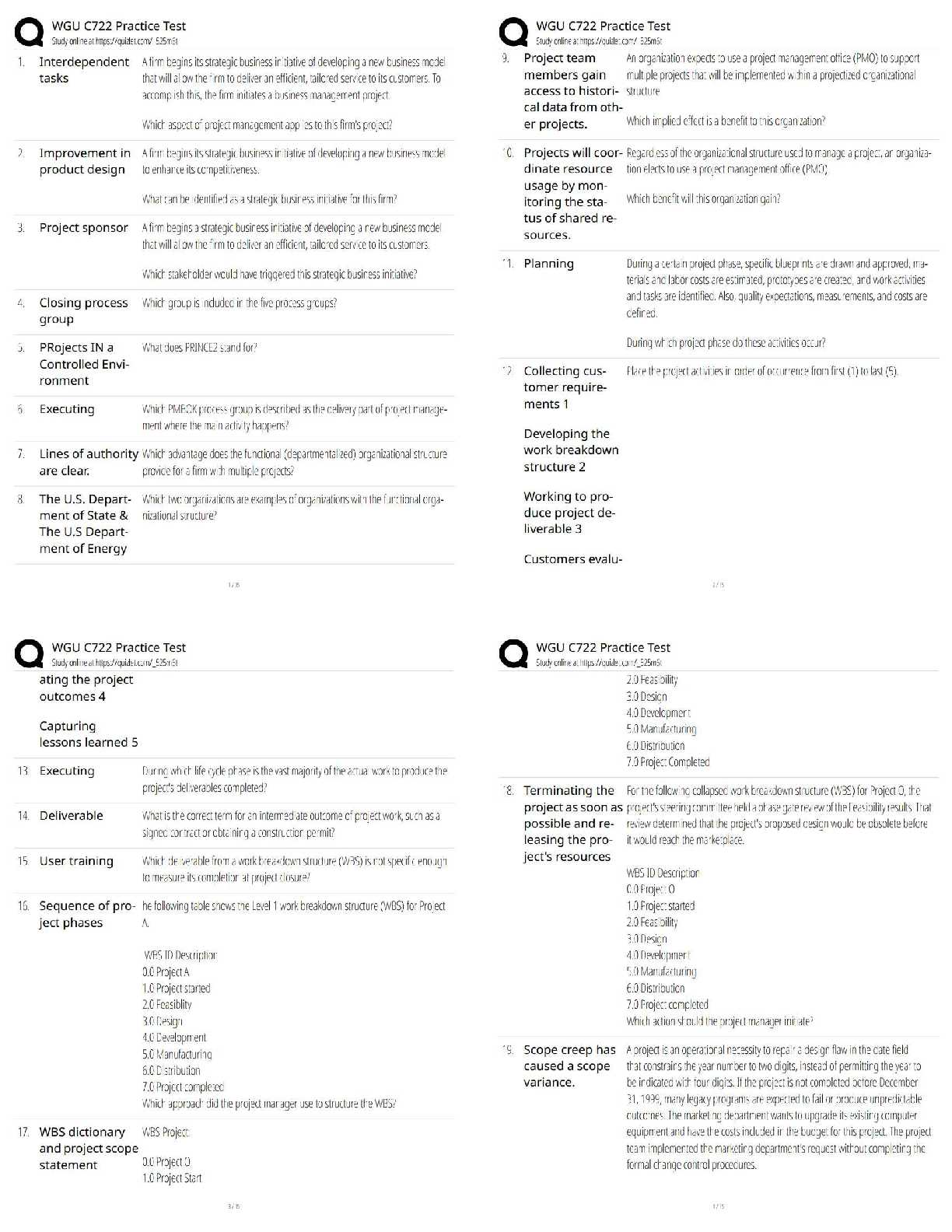
Project Life Cycle Phases - ✔✔-Defining, Planning, Executing, Closing
Defining - ✔✔-initial phase of the project life cycle, determ
...
WGU C722 Project Management Study
Guide terms, Top Questions and
answers. Verified
Project Life Cycle Phases - ✔✔-Defining, Planning, Executing, Closing
Defining - ✔✔-initial phase of the project life cycle, determining the project's sponsor and manager,
creating a charter
Planning - ✔✔-second phase of the project lifecycle: technology, business process, staffing, training,
testing, communications, budget constraints, integration of the project with operations and other
projects
Executing - ✔✔-third phase of the project lifecycle: overseeing and managing all necessary work and
assignments by members of the project team
Closing - ✔✔-the last phase of the project lifecycle: when the project is completed to the customer's
satisfaction. Deliverables have been successfully launched, a review and transfer of lessons learned
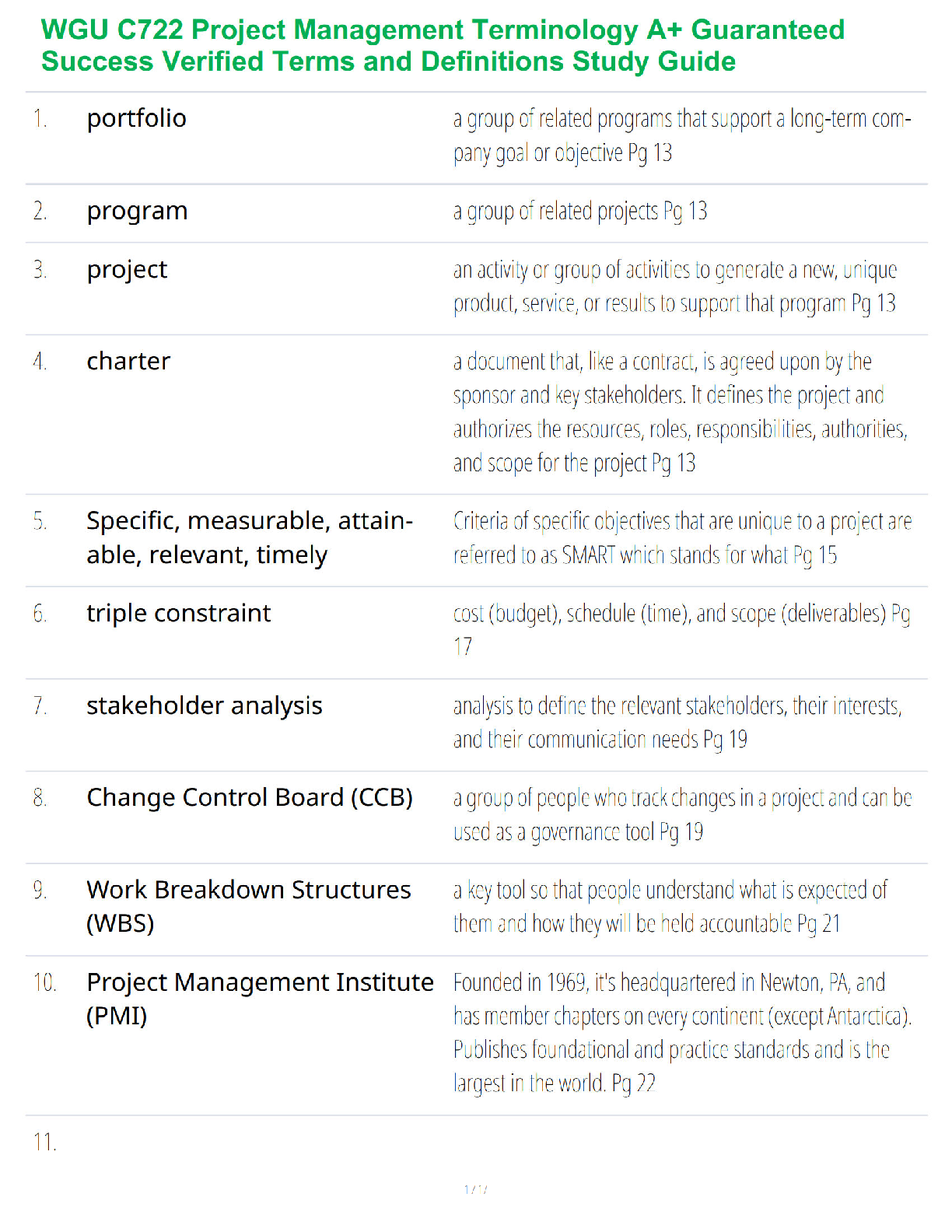
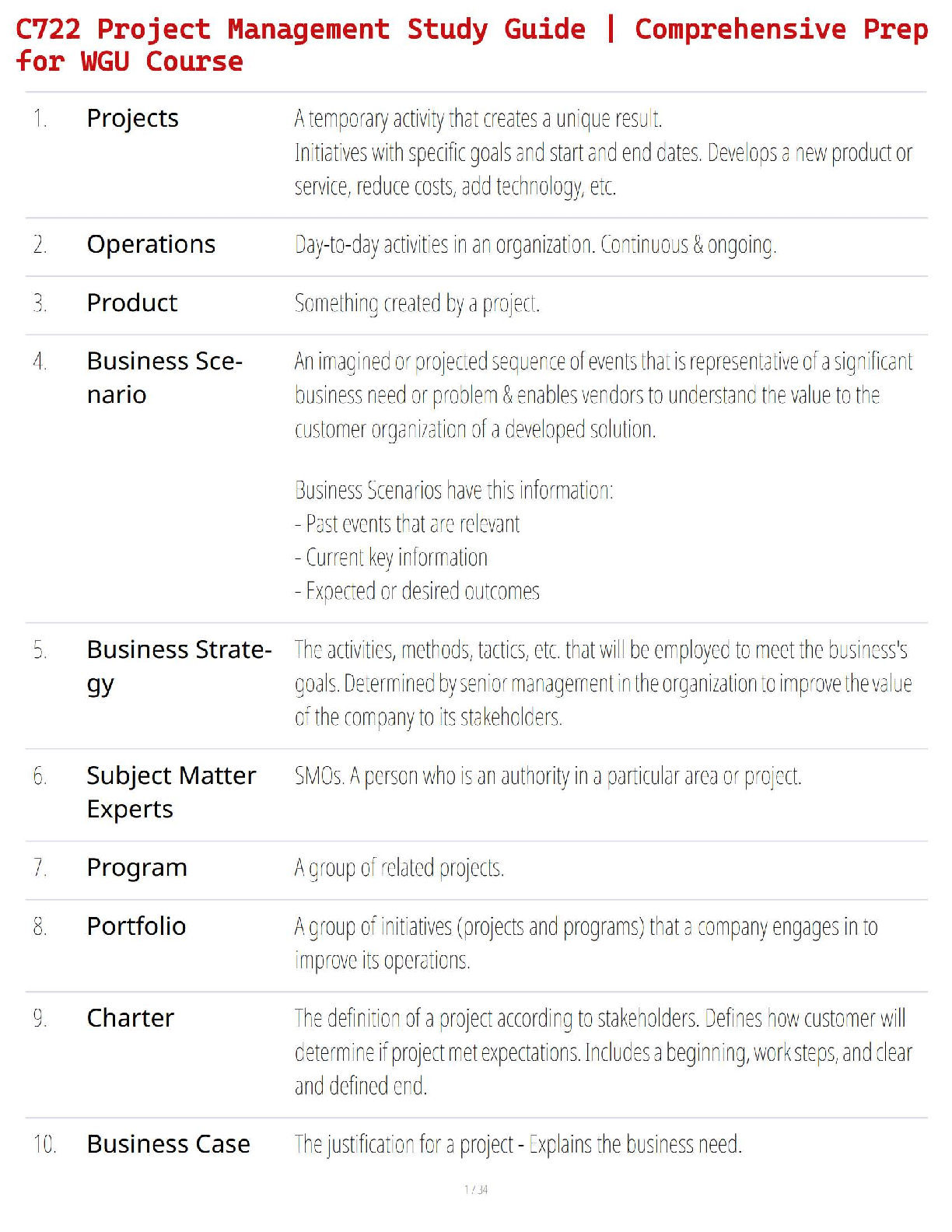
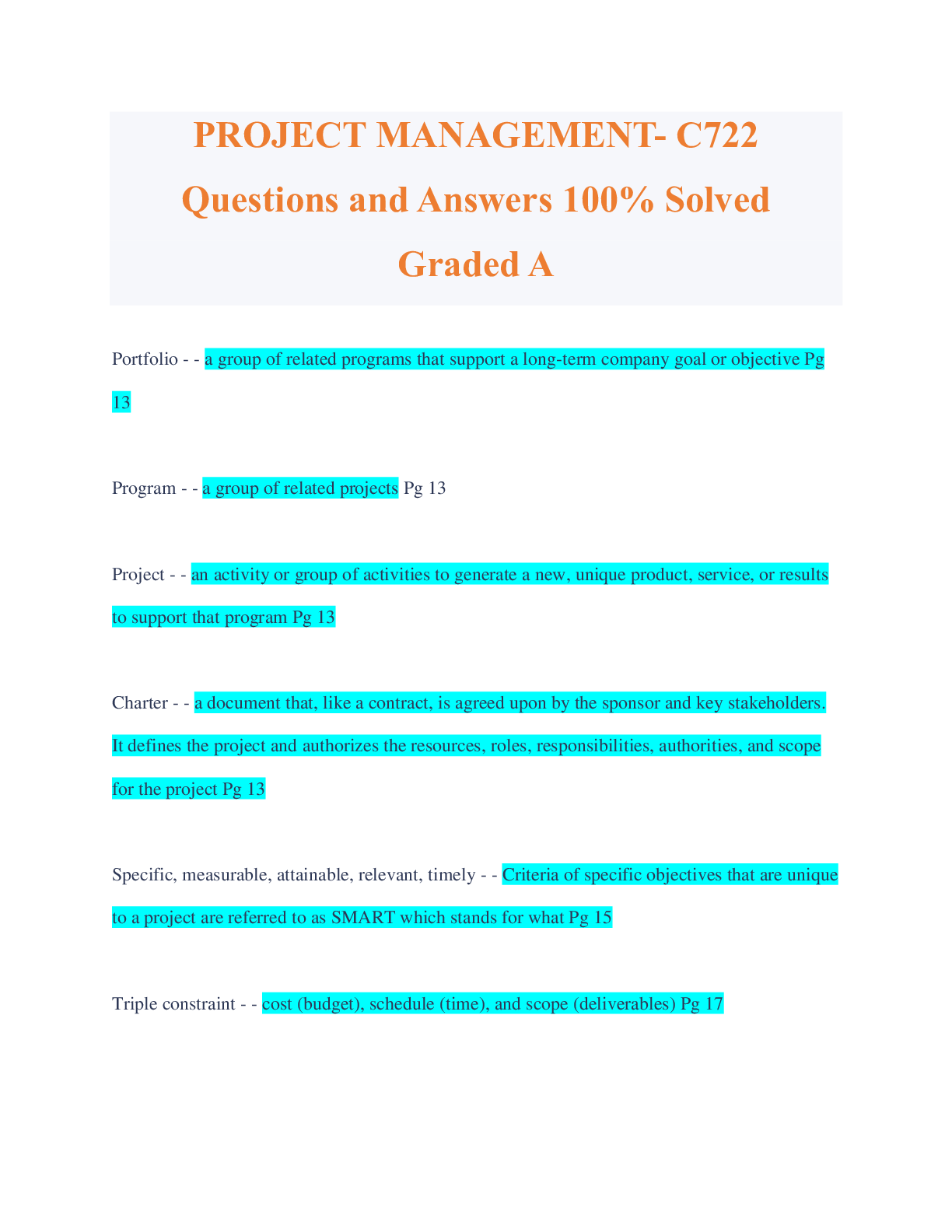
Program - ✔✔-a group of relate projects
Portfolio - ✔✔-group of related programs that support a long-term company goal or objective
Charter - ✔✔-a document that, like a contract, is agreed upon by the sponsor and key stakeholders. It
defines the project and authorizes the resources, roles, responsibilitie, authorities, and scope for the
project
Change requests (CR) - ✔✔-changes in scope, schedule, or funding should be submitted to the
appropriate board for a decision
Change control board (CCB) - ✔✔-ensures that the change doe not negatively impact the project triple
constraints
Project Reports - ✔✔-provide a history and can be very important in understanding the factors behind a
project's successes and failures
Collaboration Tools - ✔✔-a software product to help manage the creating and communication of the
plan and tasks to be performed.
Work Breakdown Structure - ✔✔-ensures everyone undertands what has to be delivered and who is
responsible for doing what and when.
Conflict Management - ✔✔-communicate clearly and often and do it some more; establish expectations,
address conflict immediately, stay focused on the project and goals
PMI - ✔✔-Project Management Institute: publishes 2 types of standards: foundational and practice.
PMBOK - ✔✔-Project manager's book of knowledge: standards define that they are best practices but
may not apply to every project in every company and every industry
PMP/CAPM - ✔✔-certification with the largest number of practitioners registered globally
AXELOS - ✔✔-joint venture between the UK government and a private company: standards and
certifications
PRINCE2 - ✔✔-European certification overseen by AXELOS Ltd
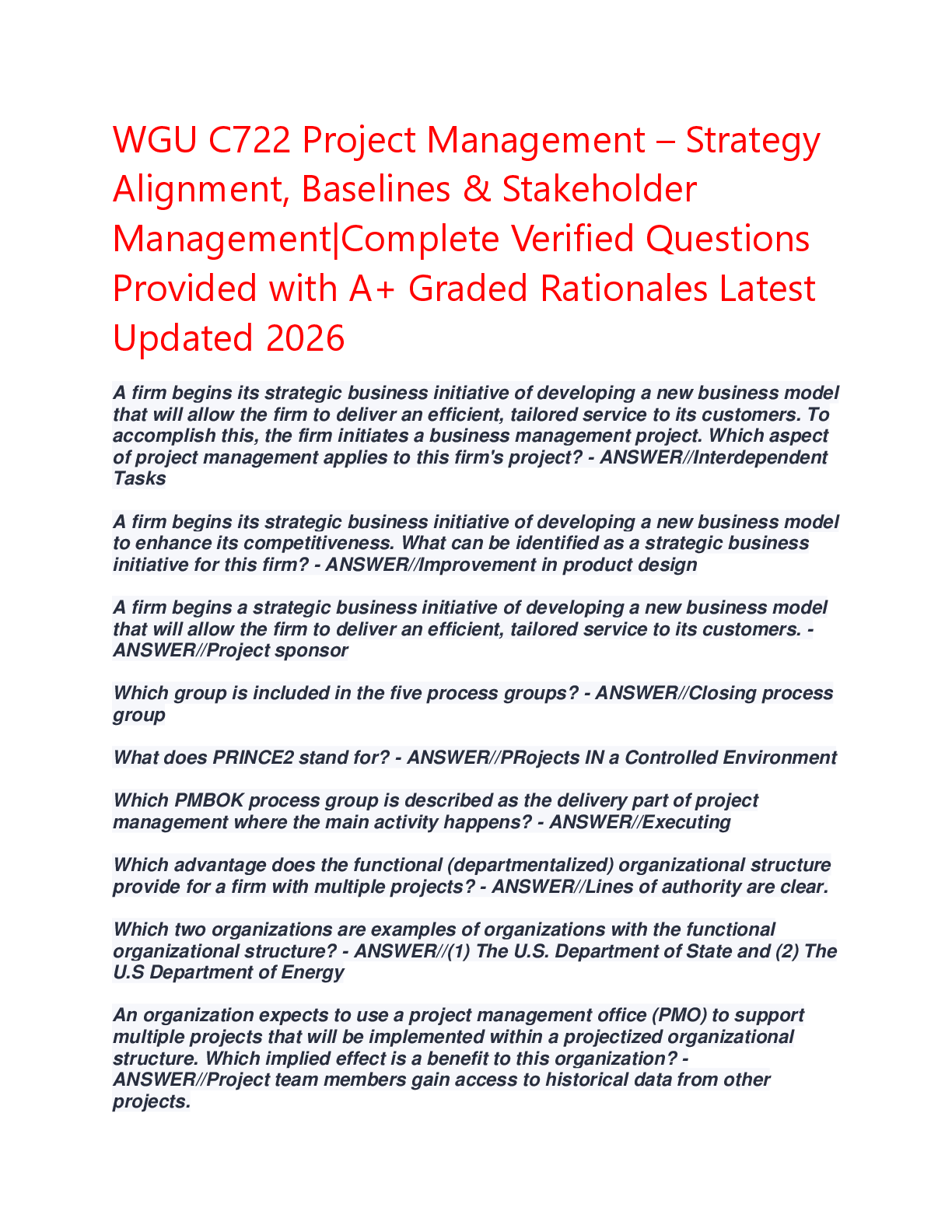
Functional/Departmentalized Org - ✔✔-oldest and most basic form of organization; lines of authority
are clear and well-defined; supervisor-subordinate relationship; hierarchical structure
Matrix Org - ✔✔-organization is less clearly defined lines of reporting; a functional supervisor is assigned
to a specific project and SME reports to the PM while assigned to the project
Projectized Org - ✔✔-PM has fulltime role on a project and total authority on all administrative matters
from resource allocation to budget to schedule to scope trade-offs
PMO - ✔✔-project management office for organizations that execute multiple projects concurrently and
are increasingly complex
- ✔✔-Ad Hoc no formal standards, processes, procedures or resources to constitute a project
management discipline. Standard technologies/reporting technologies are sporadic
Planned (OPM3 Organizational Maturity Levels) - ✔✔-standards, processes, procedures and resources
exist in the org but not an org standard; basic documentation exists; mgmt support is inconsistent
Managed (OPM3 Organizational Maturity Levels) - ✔✔-standards, processes and resources are in place
as org standards; formal documentation exists; management support is consistent; execution is iregular
Integrated (OPM3 Organizational Maturity Levels) - ✔✔-more refined standards, resources,
documentation; mgmt support is consistent, execution is consistent; efficiencies across all projects;
metrics are in place to collect performance data
Sustained (OPM3 Organizational Maturity Levels) - ✔✔-lessons learned and best practices are applied to
continuosly improve existing standards and processes; metrics are collected and applied; org can
evaluate future decisions based on past performance
Numeric Selection Criteria - ✔✔-financial and other quantitative measures to drive decision-making
Scoring Criteria - ✔✔-incorporates flexibility by including several selection criteria in quantitative or
qualitative form, but must be answered using a scale, such as 1 to 10 (weakest to strongest)
Weighted Factor Scoring Model - ✔✔-senior mgmt assigns weight to each criterion, placing emphasis on
selected criteria when calculating the total project score
Time Value of Money - ✔✔-money is worth more to an organization now than in the future; money in
your posession today is worth more than money in the future
Payback Period - ✔✔-the amount of time required to earn back the cost of doing the project, in order to
calculate, you need to know the cost of the project and the amount of revenue the project will generate
in future periods.
Internal Rate of Return - ✔✔-evaluates potential projects as if they were financial investments
Net Present Value - ✔✔-a financial measure of the total future benefit
[Show More]