WGU C722 Unit 2 Project Management
Concepts, Top Exam Questions &
Answers, rated A+
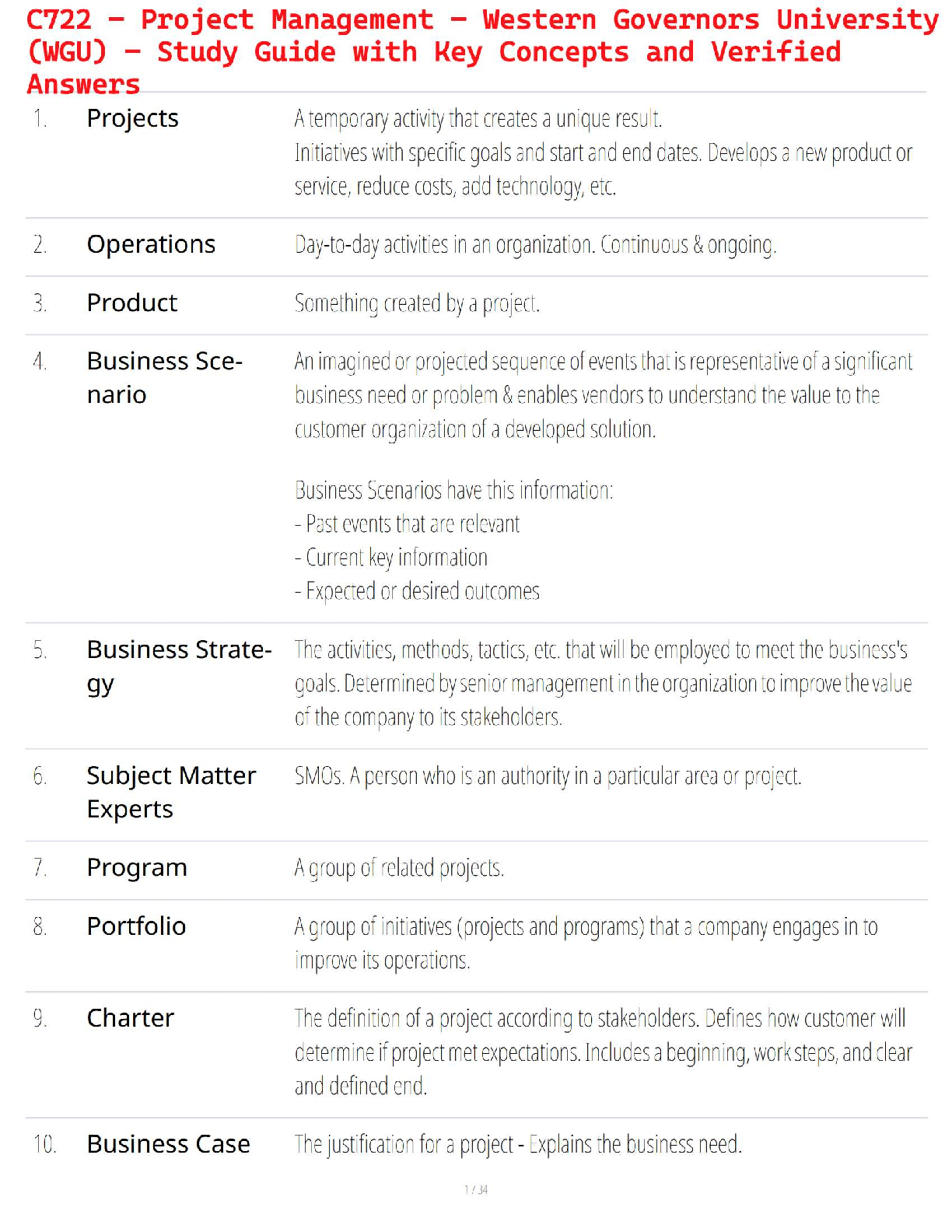
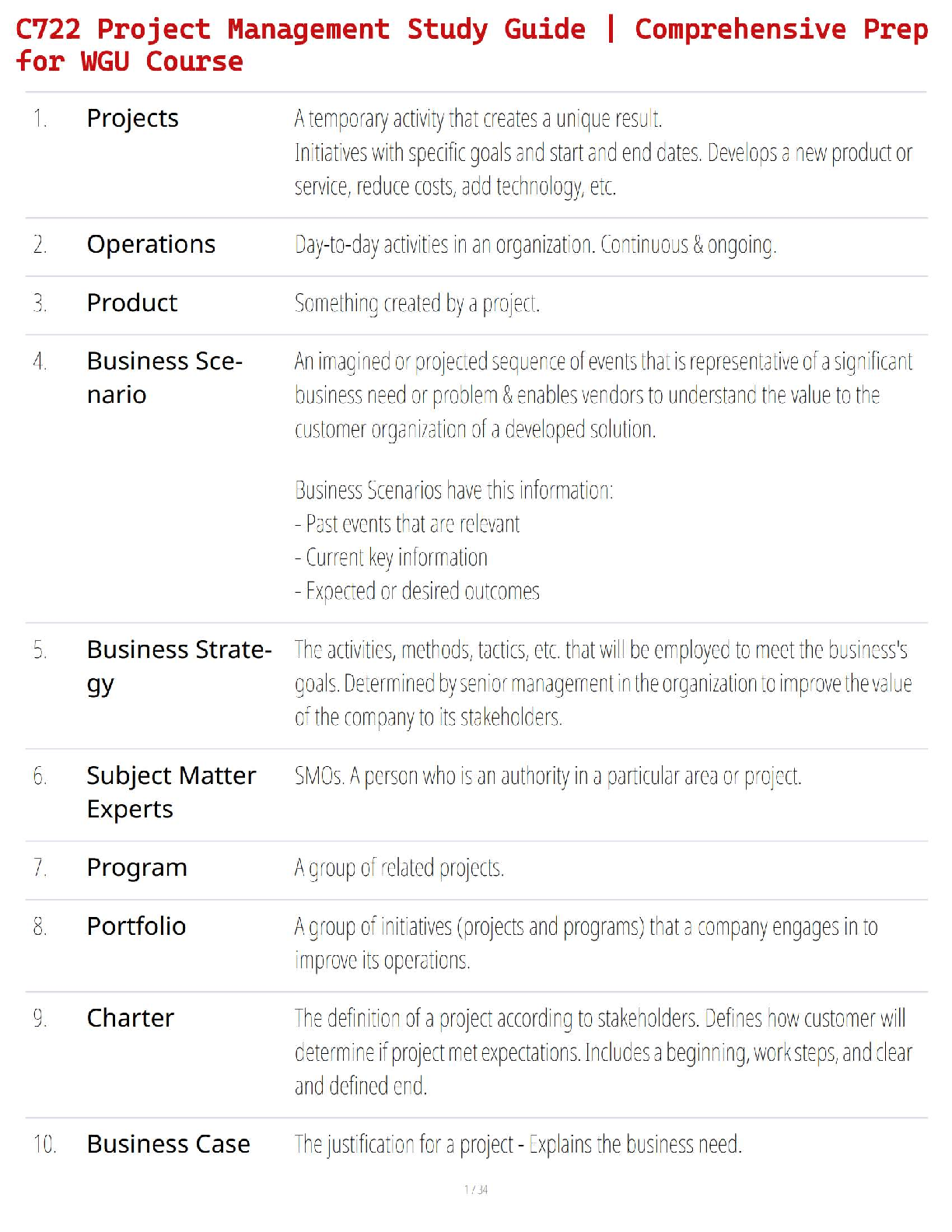
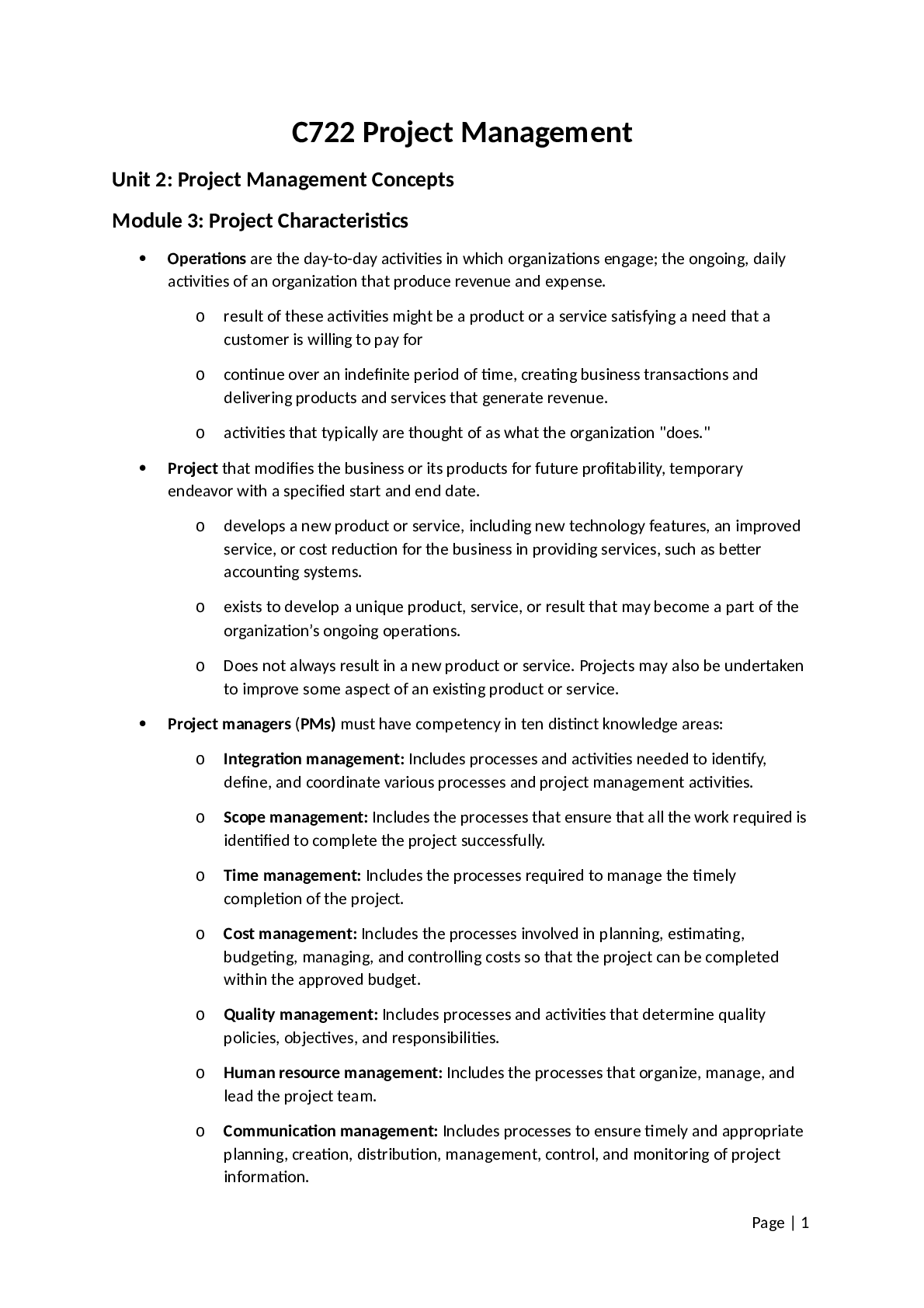
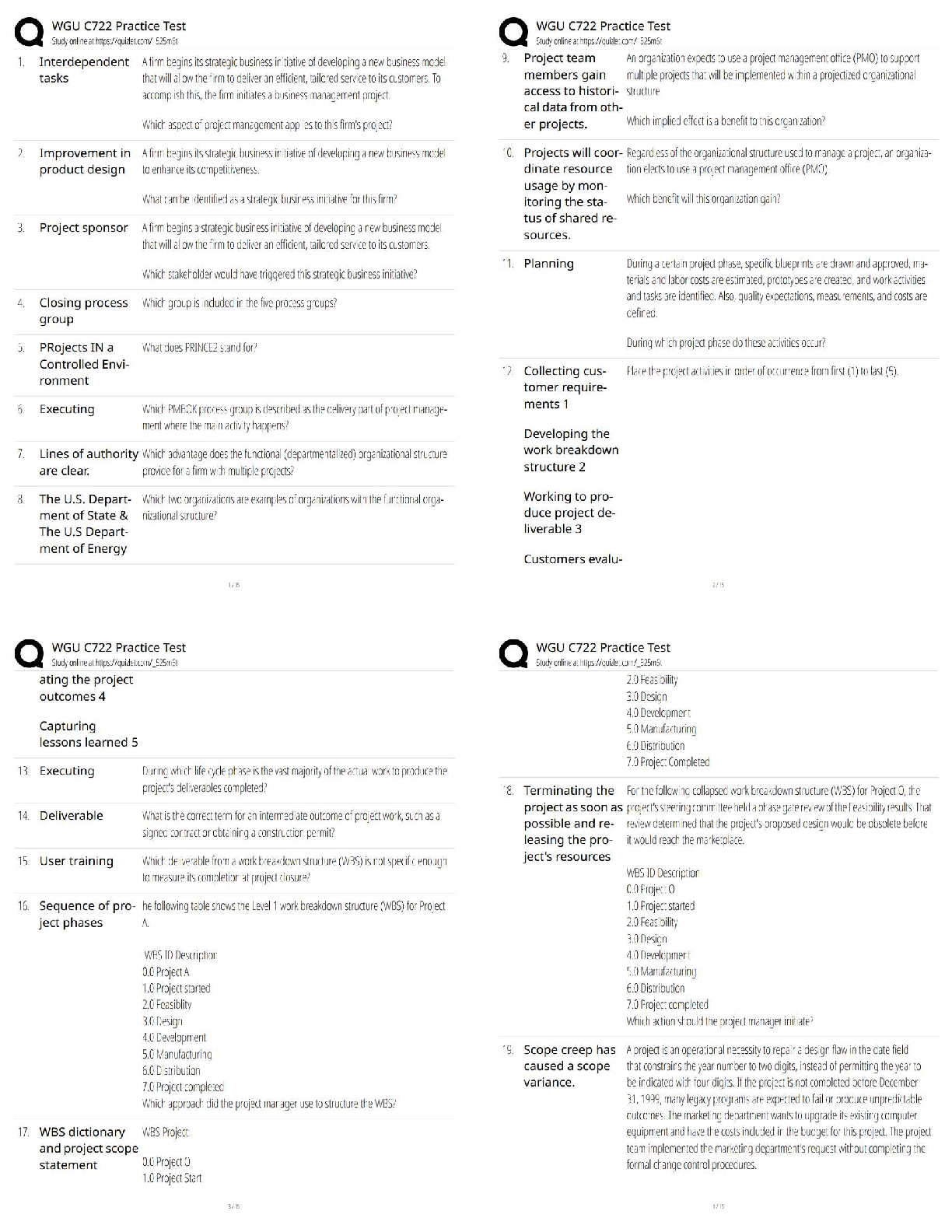
Operations - ____________ are the ongoing, daily activities of an organization that produces revenue
and expense.
project - A __
...
WGU C722 Unit 2 Project Management
Concepts, Top Exam Questions &
Answers, rated A+
Operations - ____________ are the ongoing, daily activities of an organization that produces revenue
and expense.
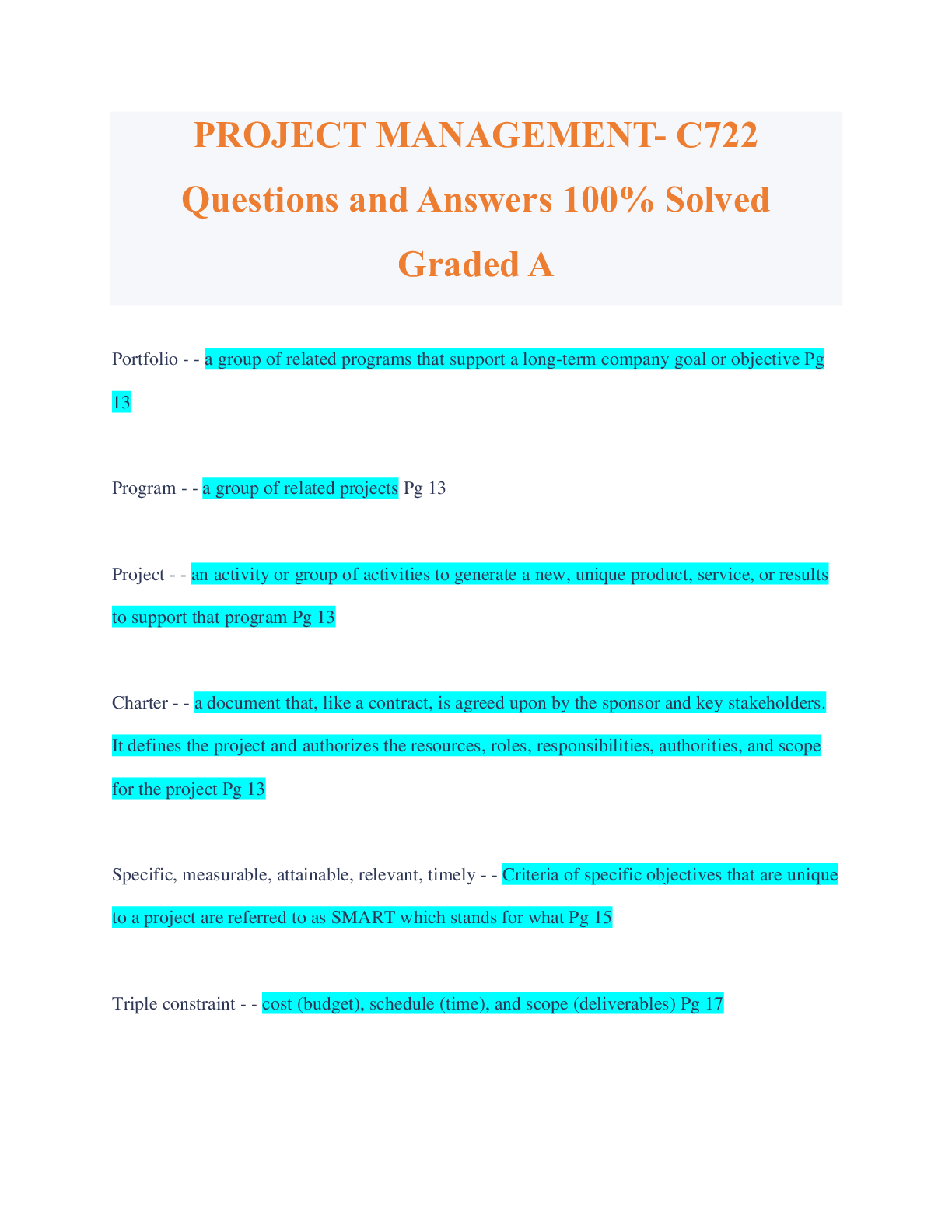
project - A ________ is an activity or group of activities to generate a new, unique product, service, or
results.
portfolio - A _______ is a group of related programs that support a long-term company goal or
objective.
Business strategy - _______ consists of the activities, methods, tactics, etc. that will be employed to
meet the business's goals. These may include:
- increased market share and profitability through entry into a new market segment,
- customer retention by best customer services in the industry,
- compliance with new and revised government requirements, and
- reduced costs by providing best tools and systems to operational personnel.
program - A _______ is a group of related projects.
Project Management - _______ is the application of knowledge, skills, tools and techniques to ensure
the project meets the goals.
Phases of the Project Life Cycle - Defining, Planning, executing and closing are _______.
project defining phase - The idea for the project is formalized into a project proposal and the decision on
whether the project will be selected for implementation is made during the _______.
project planning phase - Detailed planning occurs during the ______.
project executing phase - The bulk of the work to complete the project outcomes occurs during the
________.
project closing phase - The _________ of the project occurs when the project is completed to the
customers' satisfaction.
triple constraint - The ______ includes the cost (budget), schedule (time), and scope (deliverables).
Project Manager (PM) - The __________ is responsible and accountable for managing the project to
maximize its success
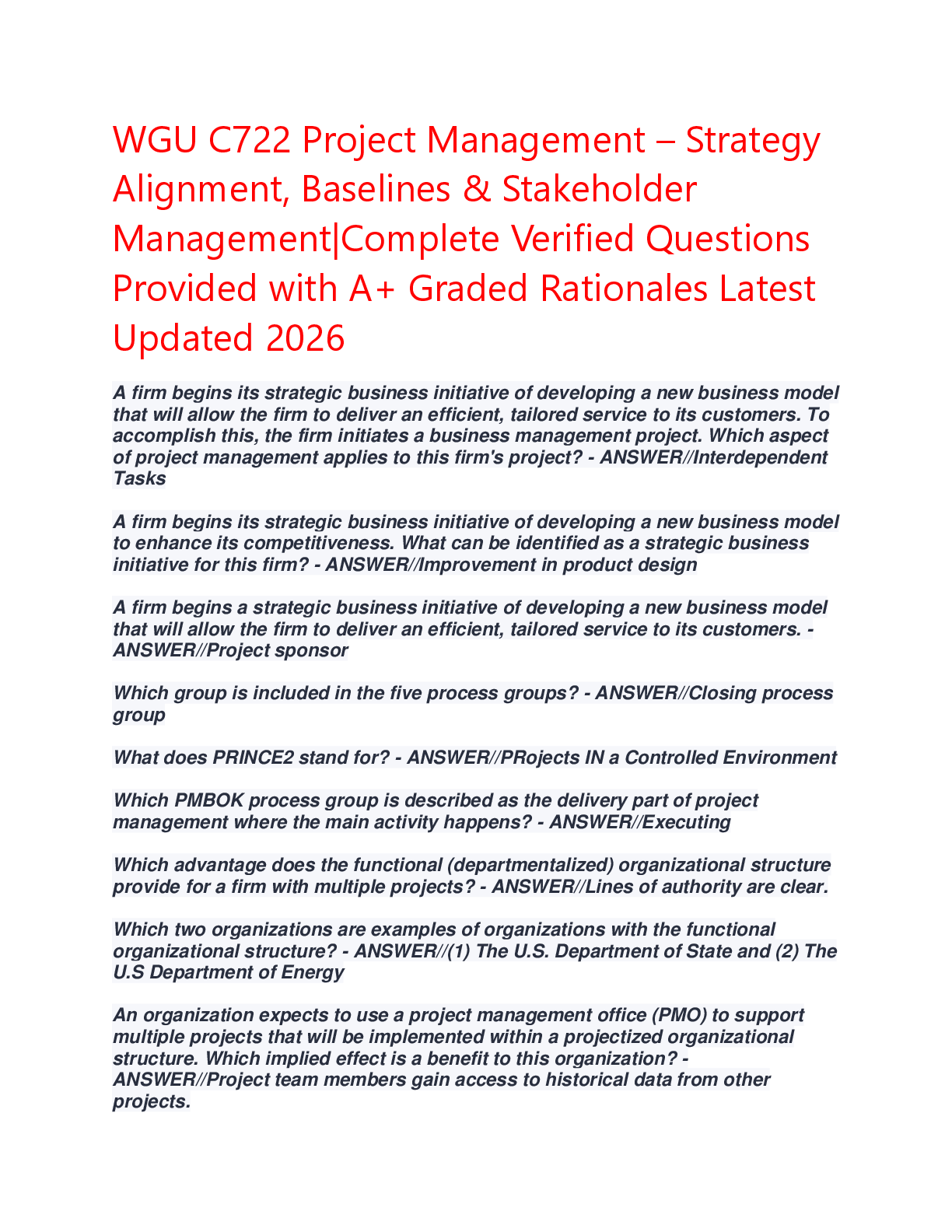
Functional (Departmentalized) - The ___________ is the oldest and most basic form of organization. It is
the type of organization most often represented in corporation shareholder reports
Business scenario - A ______________ represents an important business need or issue and provides an
opportunity for others to create an appropriate, valuable solution
Project objectives - ___________ are typically determined by the project sponsor and are intended to be
very specific in order to appropriately communicate project expectations. SMART
Active listening - __________ is important to understanding what others are saying both verbally and
non-verbally and for effective project management
Stakeholder engagement - ___________ is the process of communicating and interacting with
stakeholders in a way that keeps them interested and focused on their involvement in the project
Team status reports - ___________ are often updated in an online collaboration tool and published
weekly
Work breakdown schedules - _________ ensures that everyone understands what has to be delivered
and who is responsible to do what when.
8 and 80 Rule - The ___________ indicates a project manager should avoid controlling tasks that take
less than eight hours and should not let more than two weeks go by without checking in.
project management maturity model (OPM3) - The _______ consists of the following five levels:
1. Ad Hoc
2. Planned
3. Managed
4. Integrated
5. Sustained
Functional (Departmentalized) - Some of the advantages of a ______________ organization are:
- Lines of authority are clear.
- Departmental work is easily prioritized by identified departmental authority.
- Flexibility in the use of staff.
- Subject matter experts (SME) available to work on multiple projects.
- Knowledge and experience readily shared between functional specialists.
- Technical continuity exists within the organization.
- Professional growth and career paths for the staff are clearly defined.
Functional (Departmentalized) Organization - Disadvantages of a____________ are:
- Utilizing resources across functions can be difficult.
Requests for assistance from other departments not easily prioritized.
- It is inefficient for projects requiring collaboration / cooperation between departments.
- Project customer is not the only focus.
- Organization does not focus on solving project business issues.
- Project does not have a single individual responsible for all aspects of the project..
- Response to customer needs is slow and difficult.
- Project issues are not all given the same level of attention.
- Project is not managed holistically.
Projectized Organization - Advantages of a __________ are:
- Clear lines of authority, the project manager has full authority.
- Once SMEs are assigned, there is less need to
[Show More]