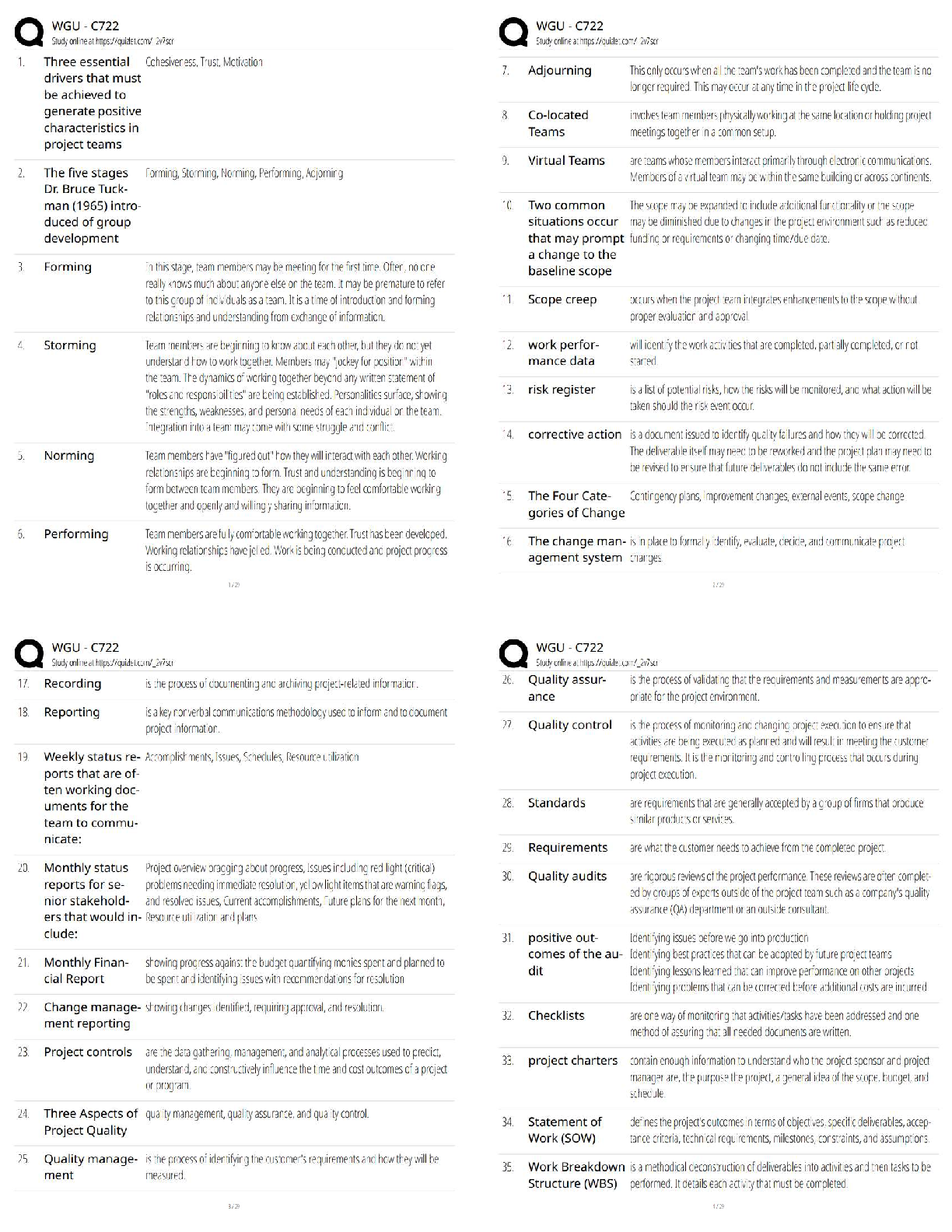
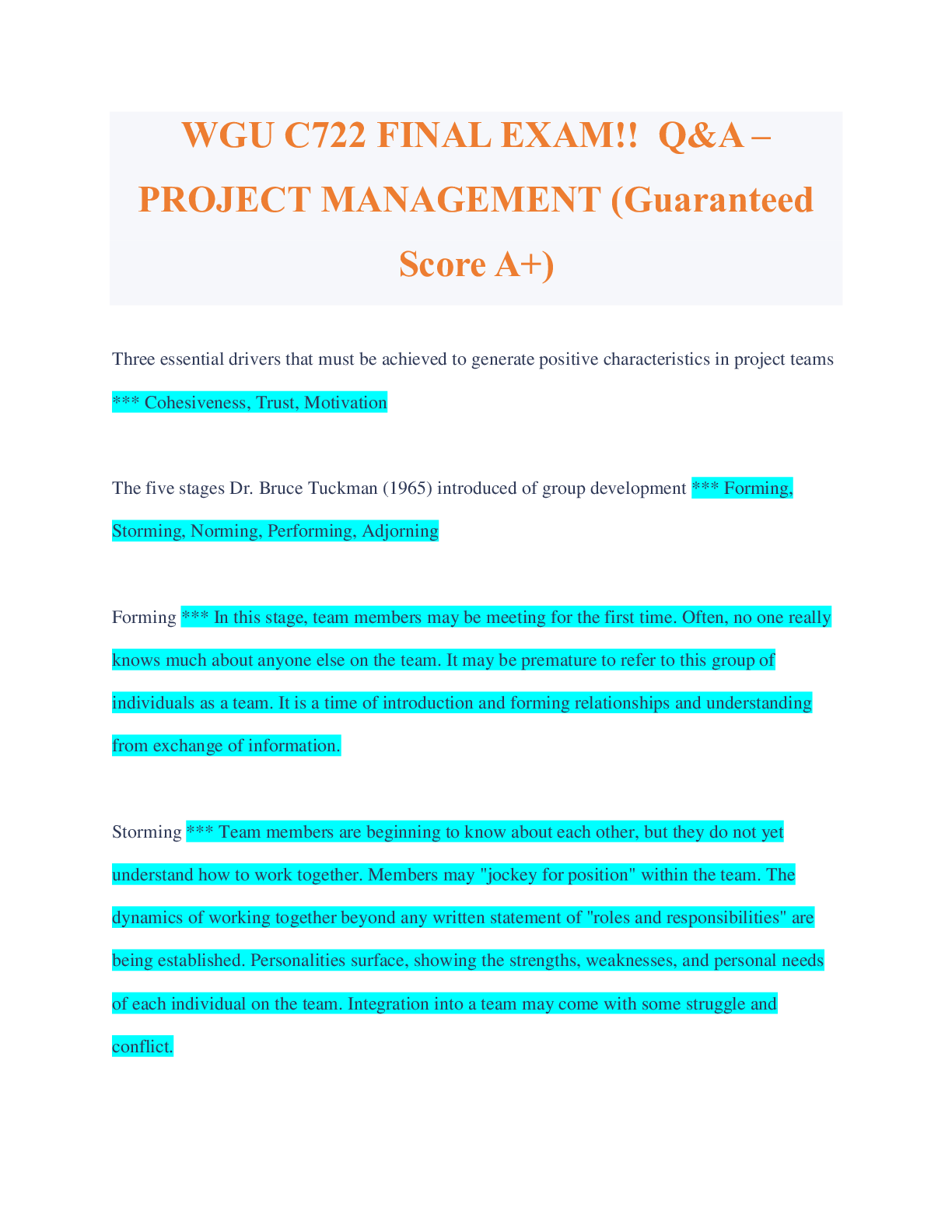
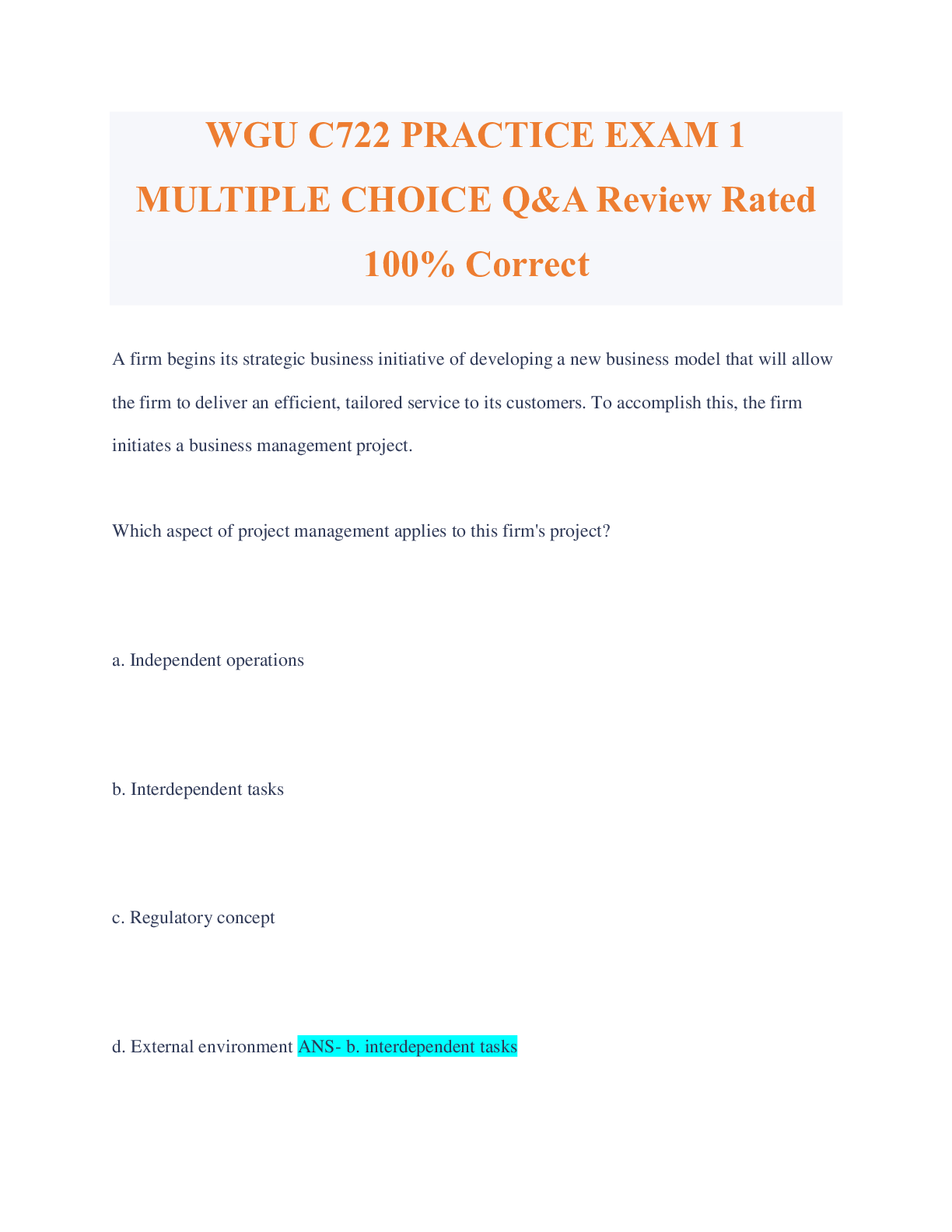
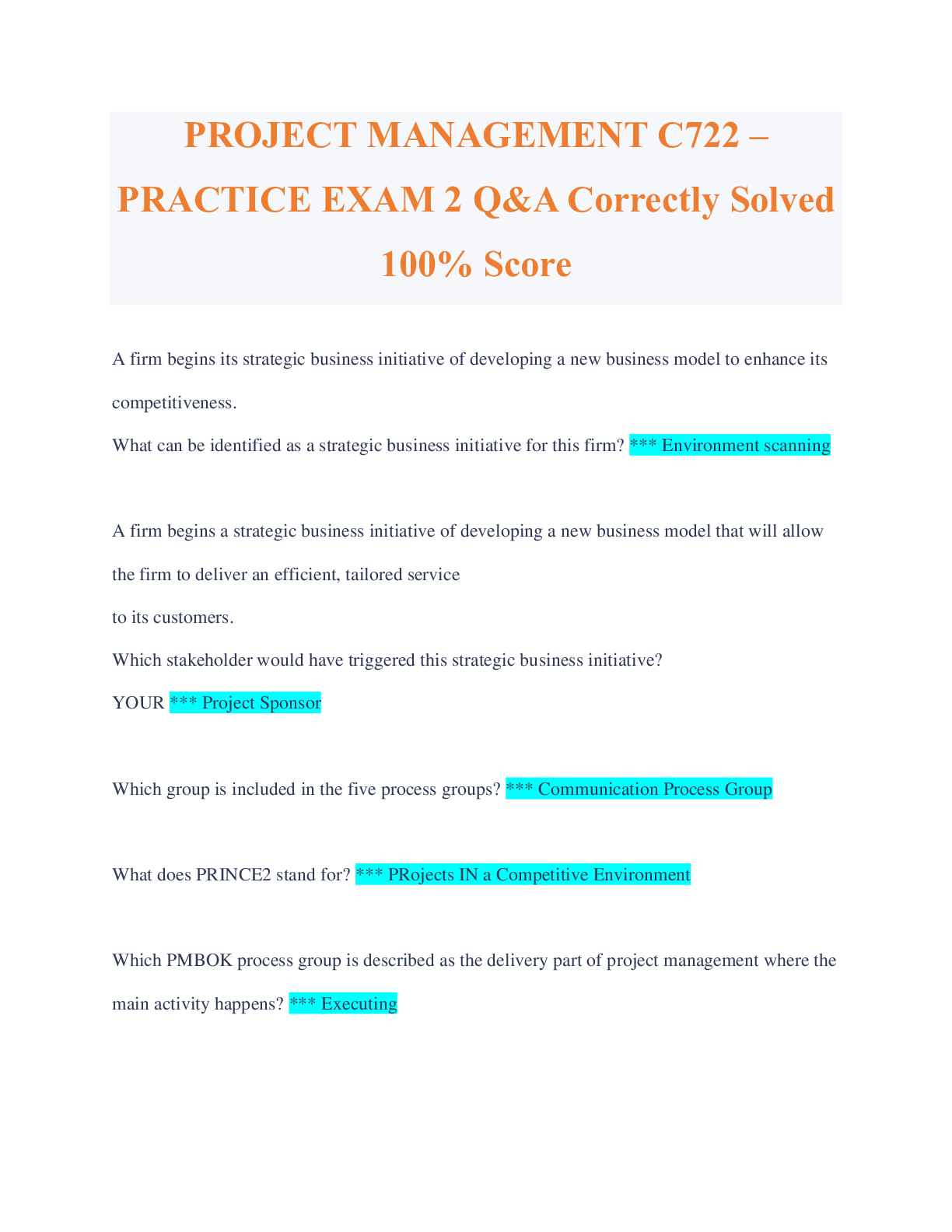
WGU C722 (Pre), Test Questions and
answers, graded A+
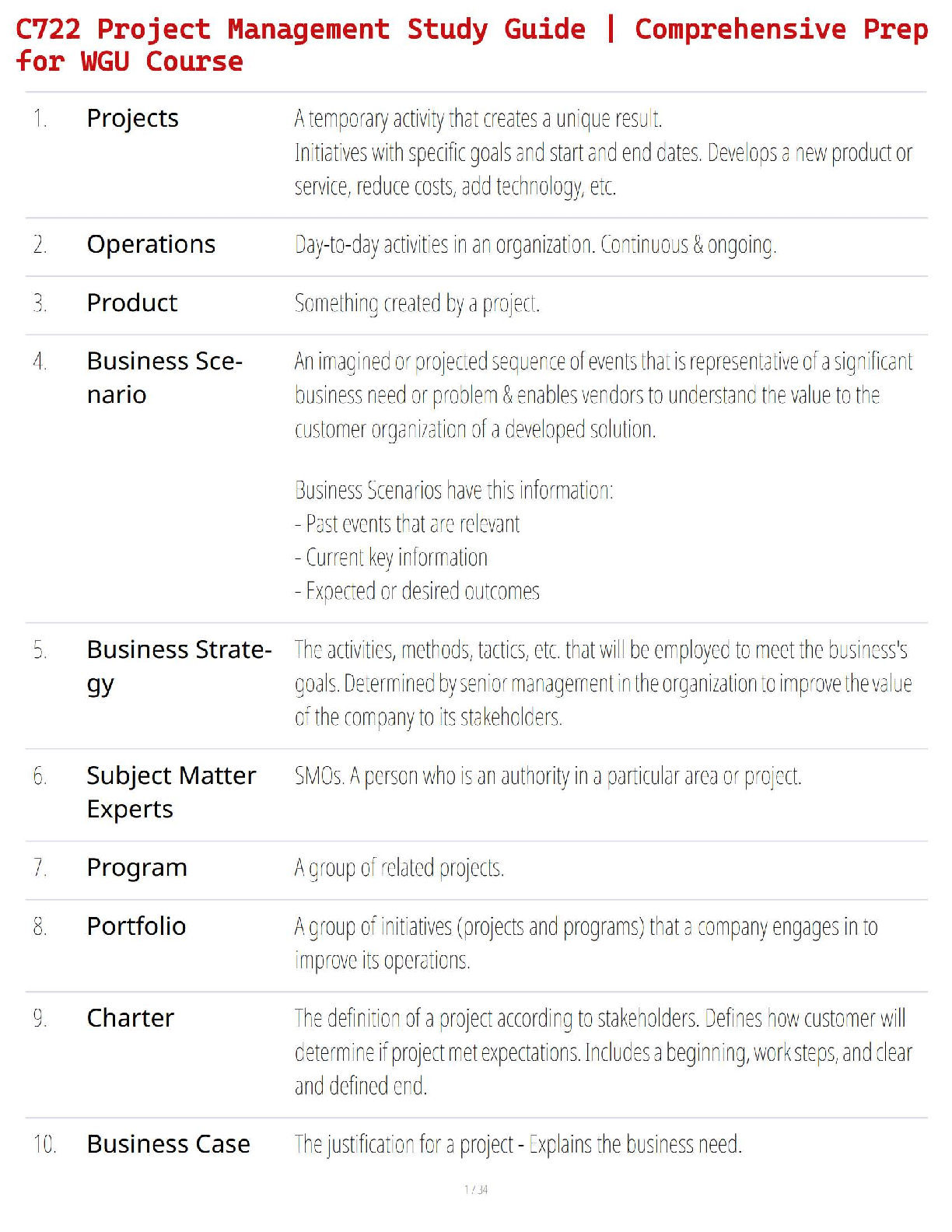
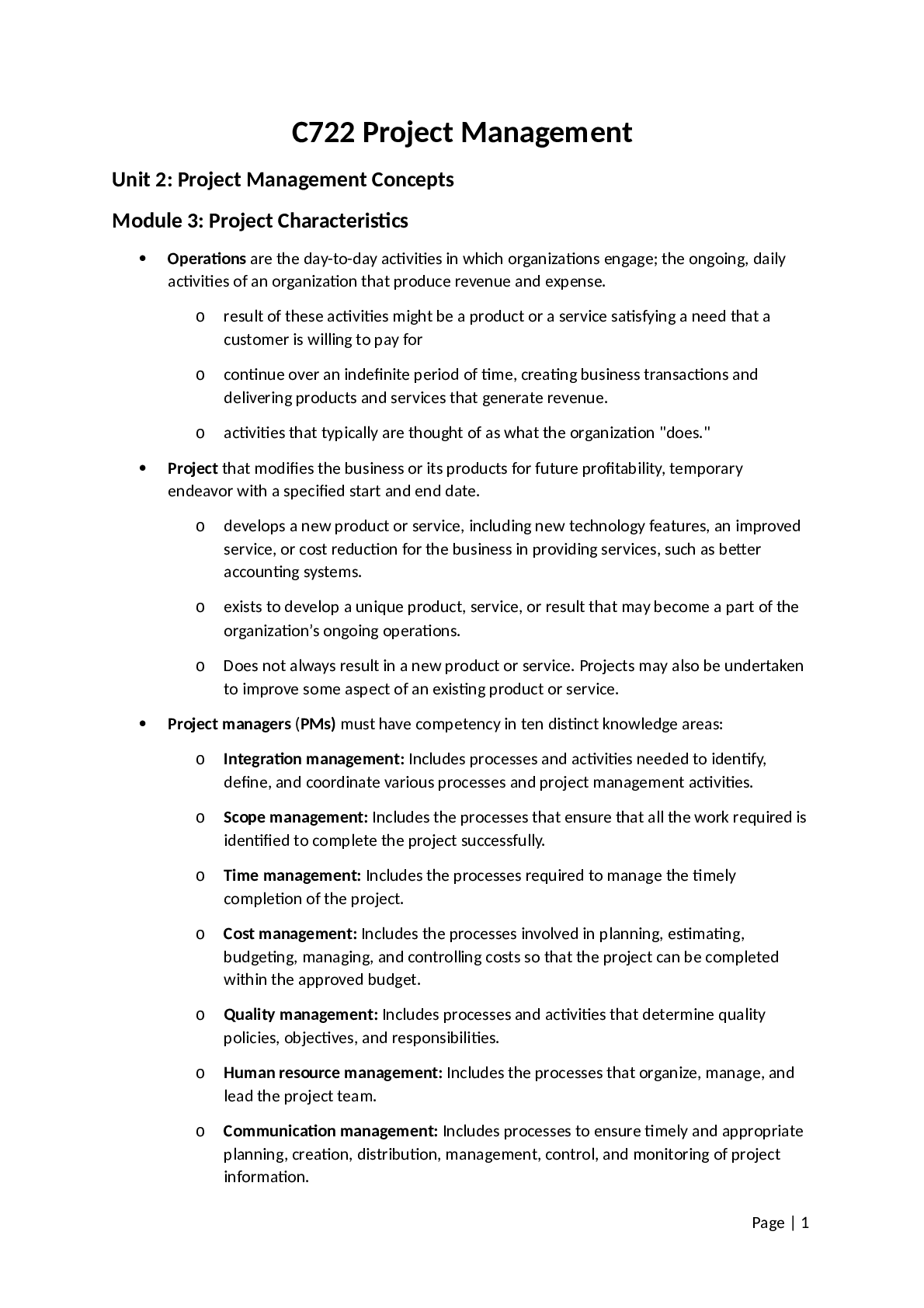
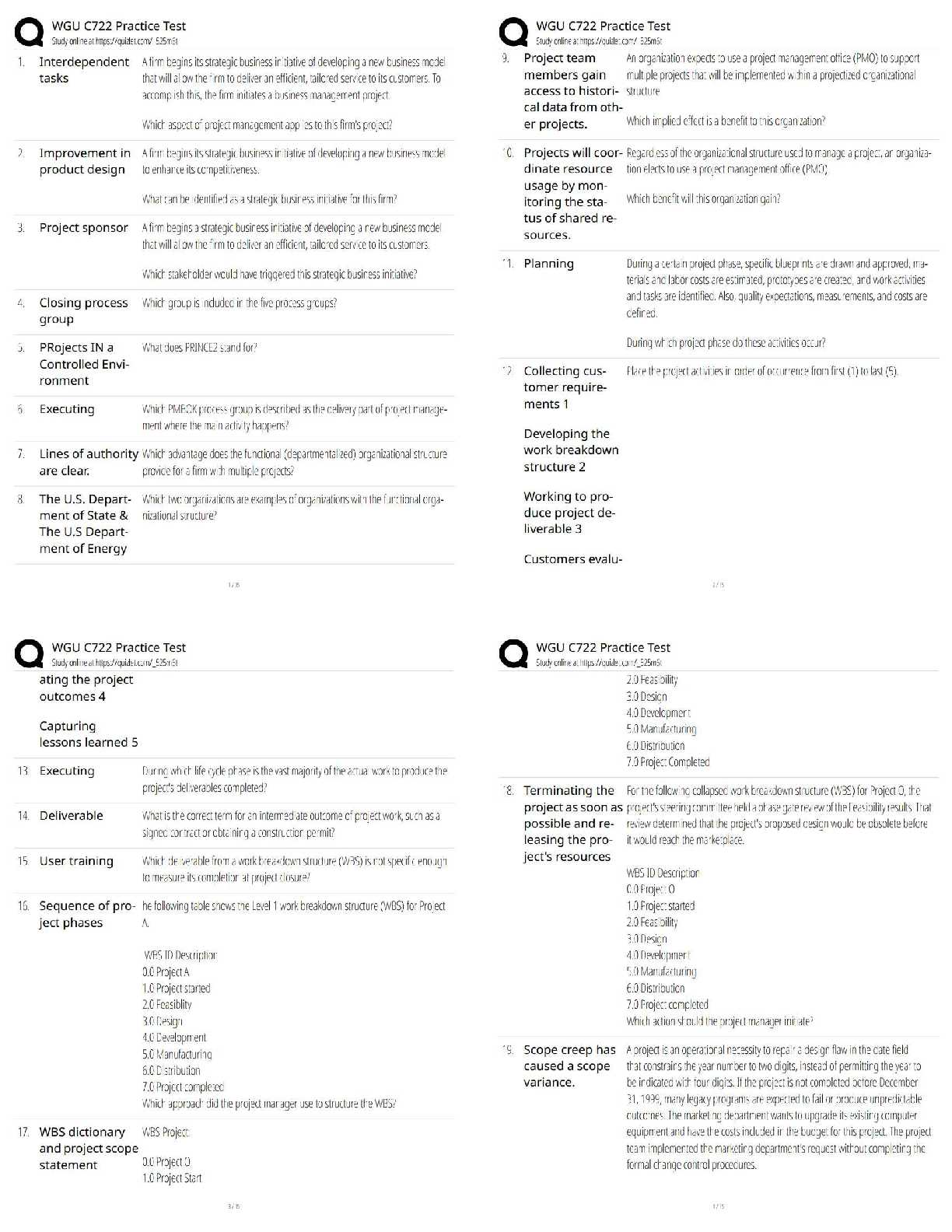
PMBOK 5 Process Groups - ✔✔-Initiating, Planning (Iterative), Executing (Iterative), Monitor & Control
(Iterative) and Closing
Triple constraint - ✔✔-Time, Cost
...
WGU C722 (Pre), Test Questions and
answers, graded A+
PMBOK 5 Process Groups - ✔✔-Initiating, Planning (Iterative), Executing (Iterative), Monitor & Control
(Iterative) and Closing
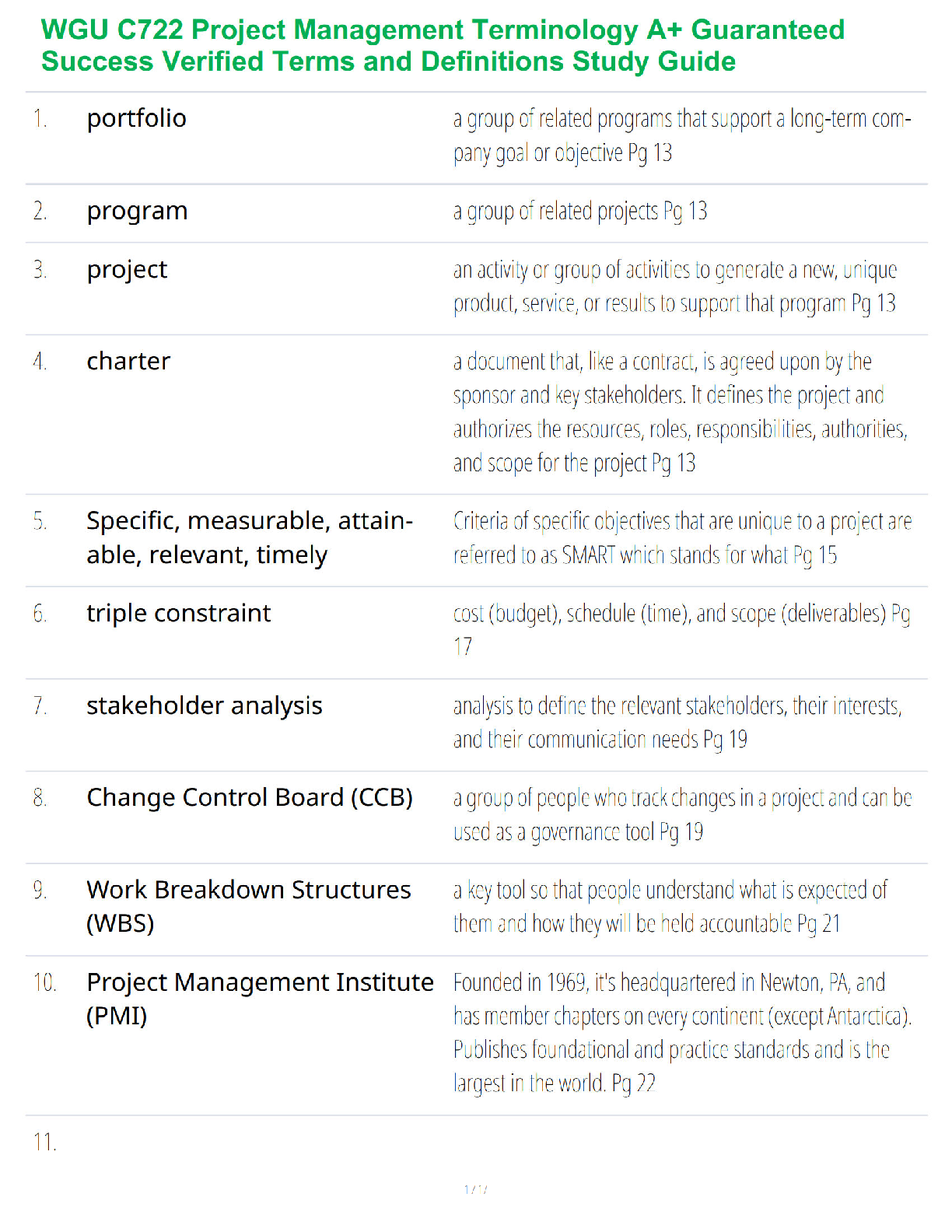
Triple constraint - ✔✔-Time, Cost, and Scope
Organizational Project Management Maturity Model (OPM3) 5 levels (Delaware Department of
Technology and Information) - ✔✔-1) "Adhoc" 2) "Planned" but no org standard 3) "Managed" but
execution is inconsistent 4) "Integrated" is consistent 5) "Sustained" is consistent, can evaluate future
decisions and includes lessons learned
5 levels of project management maturity (Crawford, 2007) - ✔✔-1) Initial 2) Structured standards 3)
Organizational standards 4) Managed Process 5) Optimized process
Initiating (Process #1) - ✔✔-Define the project and determine which projects the organization will
undertake. These activities often occur prior to the selection of the project team or the project manager.
Initiating Activities (Process #1) - ✔✔-Document business need, define project, evaluate proposals,
complete project selection, identify stakeholders, and create project charter
Which activity is preformed during the creating part of the initiating process? - ✔✔-Drafting project
chater
Planning (Process #2 - Iterative) - ✔✔-PM will assemble a team to create the project plan. Additional
team members may be required to gather information from stakeholders, identify the project activities,
estimate costs and time, and document the planning areas
Planning Activities (Process #2 - Iterative) - ✔✔-Document customer needs, estimate resource, scope,
budget, schedule, WBS (Work Breakdown Structure), Network Diagram, activity list, and writing plan for
orgs to execute
Network Diagram - ✔✔-Flow chart of sequenced project activities
Tool for PM to track that important items are addressed when developing and defining project scope? -
✔✔-Network diagram
WBS (Work Breakdown Structure) - ✔✔-Lists the project activities and tasks and begins to identify how
they fit together and where they fit on a calendar
Executing (Process #3 - Iterative) - ✔✔-PM cycles members as needed to create the project outcomes
Executing Activities (Process #3 - Iterative) - ✔✔-Acquire resources, train/coach resources, communicate
/ manage with stakeholders, implement plan, document change requests, assess resource performance,
and recognize / reward performance
Monitor & Control (Process #4 - Iterative) - ✔✔-Assess whether project plan is implemented, outcomes
and deliverables are as expected. Also, to get the project team back on the plan or make adjustments to
the plan in order to achieve the desired outcomes and deliverables
Monitor & Control Activities (Process #4 - Iterative) - ✔✔-Activities are in sync, deliverables met scope,
document scope change, resolve issues, monitor schedule / budget / quality / performance / risk,
determine when replanning is needed
Closing (Process #5) - ✔✔-Specific actions which need to occur in order to ensure that all project
activities are completed
Closing Activities (Process #5) - ✔✔-Pay vendor invoice, reconcile vendor accounts, return excess
material and supplies, return assets to orgs, writing lessons learned, complete project documentation,
deliver to customer, receive sign-off and archive all project documents
Project Life Cycle 4 Phases - ✔✔-Define, Plan, Execute, Close
Define Phase - ✔✔-Idea for the project is formalized into a project proposal and the decision on
whether the project will be selected for implementation is made
Plan Phase - ✔✔-Document information about each activity that will need to be completed in order for
the project to achieve its intended outcomes
Execute Phase - ✔✔-Based on the plans created during the project planning phase, the project team
completes the required work activities in this phase
Closing Phase - ✔✔-Project outcomes are delivered to the customer and/or sponsor and the customer
and/or sponsor evaluates them to determine if they are acceptable - deliverables are ready, the budget
and time requirements are met and quality is achieved, and lessons learned are documented
PM Methods - ✔✔-PERT, CPM, critical chain, waterfall, and PRINCE2
PERT (Project evaluation and review technique) - ✔✔-Developed in 1950 to estimate activity on Navy's
Polaris missile project.
CPM (Critical path method) - ✔✔-Developed by DuPont to help with project in manufacturing. Similar to
PERT but assumes that estimates do not vary and time can be reliably estimated
Critical chain project management (CCPM) - ✔✔-Work each resource is expected to complete is checked
to verify that the resource will be capable and available when needed. Time buffers are built into the
schedule to handle situations when the critical resources fall behind or aren't available
Waterfall - ✔✔-This process flows logically and in a linear fashion, but if any problems are found,
returning the work back to the previous step is very expensive
PRINCE2 - ✔✔-Highly structured project management method which focuses on the specification of the
outputs rather than the coordination of activities
PMBOK - ✔✔-Project Management Body of Knowledge
PMBOK - ✔✔-Entire collection of processes, best practices, terminologies, and guidelines that are
accepted as standards within the project management industry
PRINCE2 - ✔✔-PRojects IN a Controlled Environment
PMBOK Major Planning Areas - ✔✔-Integration, Scope, Risk, Procurement, Communications, HR,
Stakeholder, Quality, Cost, Time, Config, Change, Process Improvement, Requirement
Functional organization - ✔✔-Common type of org structure in which the organization is divided into
smaller groups based on specialized functional areas, su
[Show More]