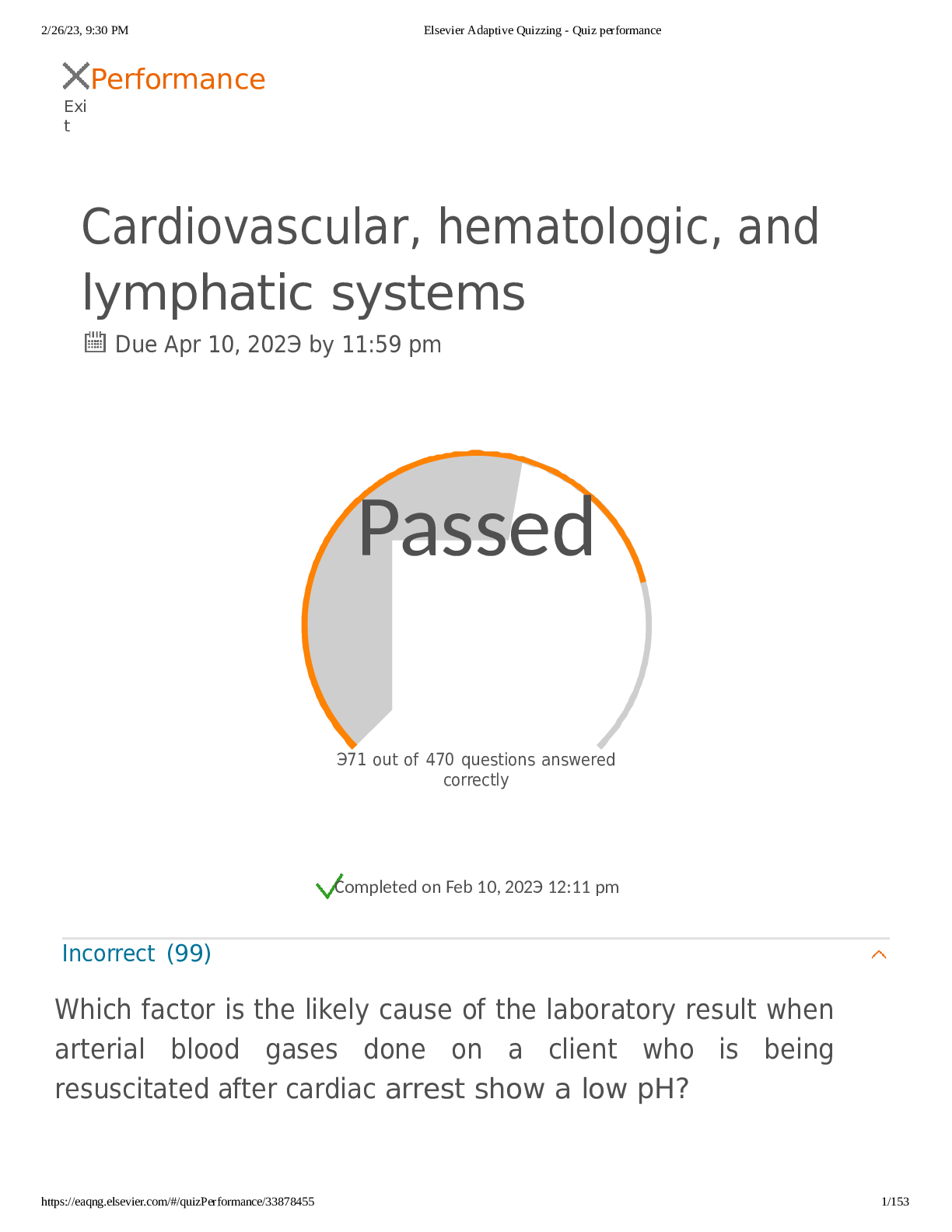
NURSING > QUESTIONS & ANSWERS > Elsevier Adaptive Quizzing - Quiz performance - Cardiovascular, hematologic, and lymphatic systems_ (All)
Elsevier Adaptive Quizzing - Quiz performance - Cardiovascular, hematologic, and lymphatic systems_ Э71 out of 470 questions answered correctly -Rated Passed. Spring 2023
Document Content and Description Below
Last updated: 3 years ago
Preview 1 out of 153 pages
Instant download
Buy this Document to get the Full Access Instantly
Provided by Students Who Aced it
We Verify Document Content to Gurantee Accuracy
Reviews( 0 )
Document information
Connected school, study & course
About the document
Uploaded On
Mar 31, 2023
Number of pages
153
Written in
All

Additional information
This document has been written for:
Uploaded
Mar 31, 2023
Downloads
0
Views
161
Topic Tags
Recommended For You
Get more on QUESTIONS & ANSWERS »
Elsevier Adaptive Quizzing - Quiz performance_Pediatric Growth...
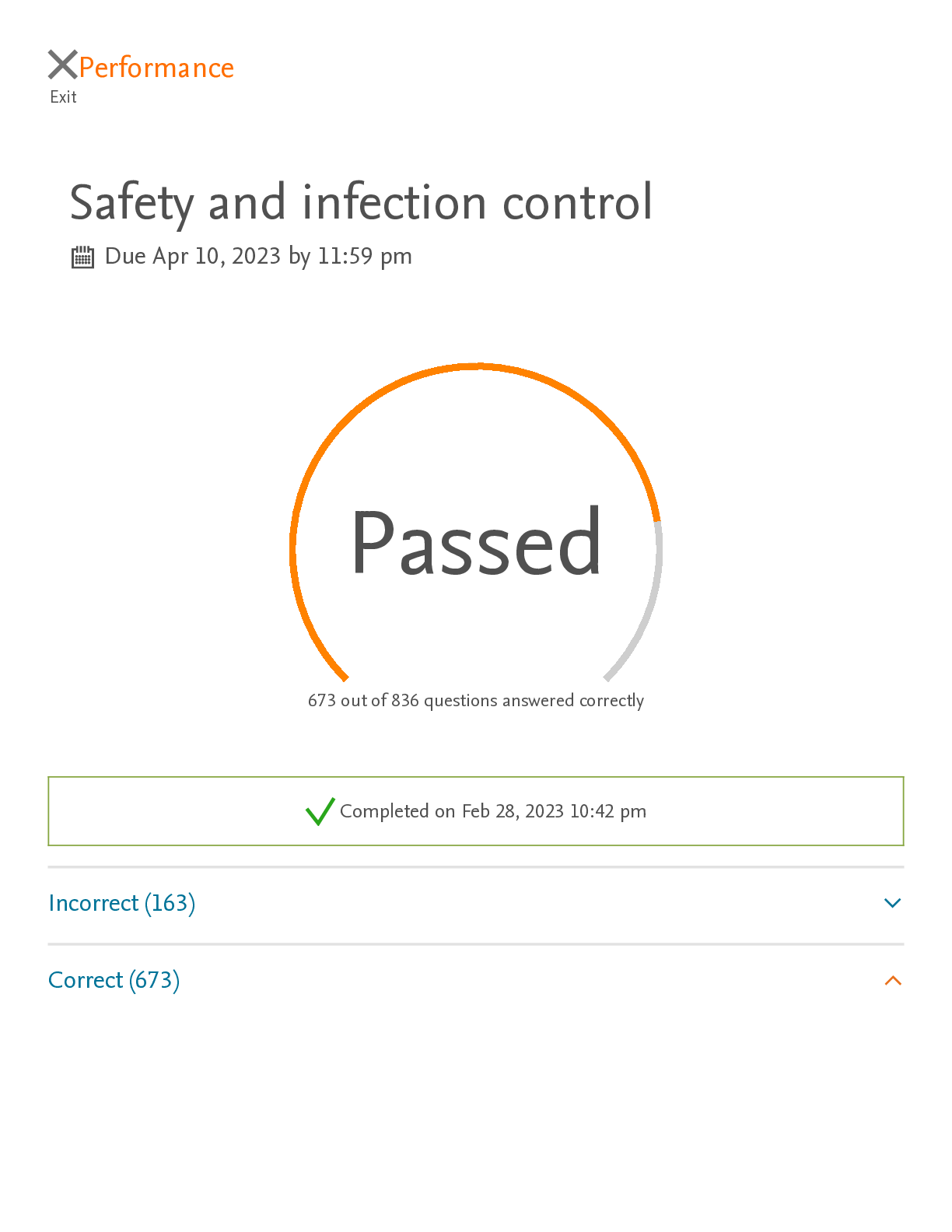
Elsevier Adaptive Quizzing - Quiz performance_Safety and Infec...

Elsevier Adaptive Quizzing - Quiz performance_Pregnancy, Labou...

Elsevier Adaptive Quizzing - Quiz performance (100 out of 100)...
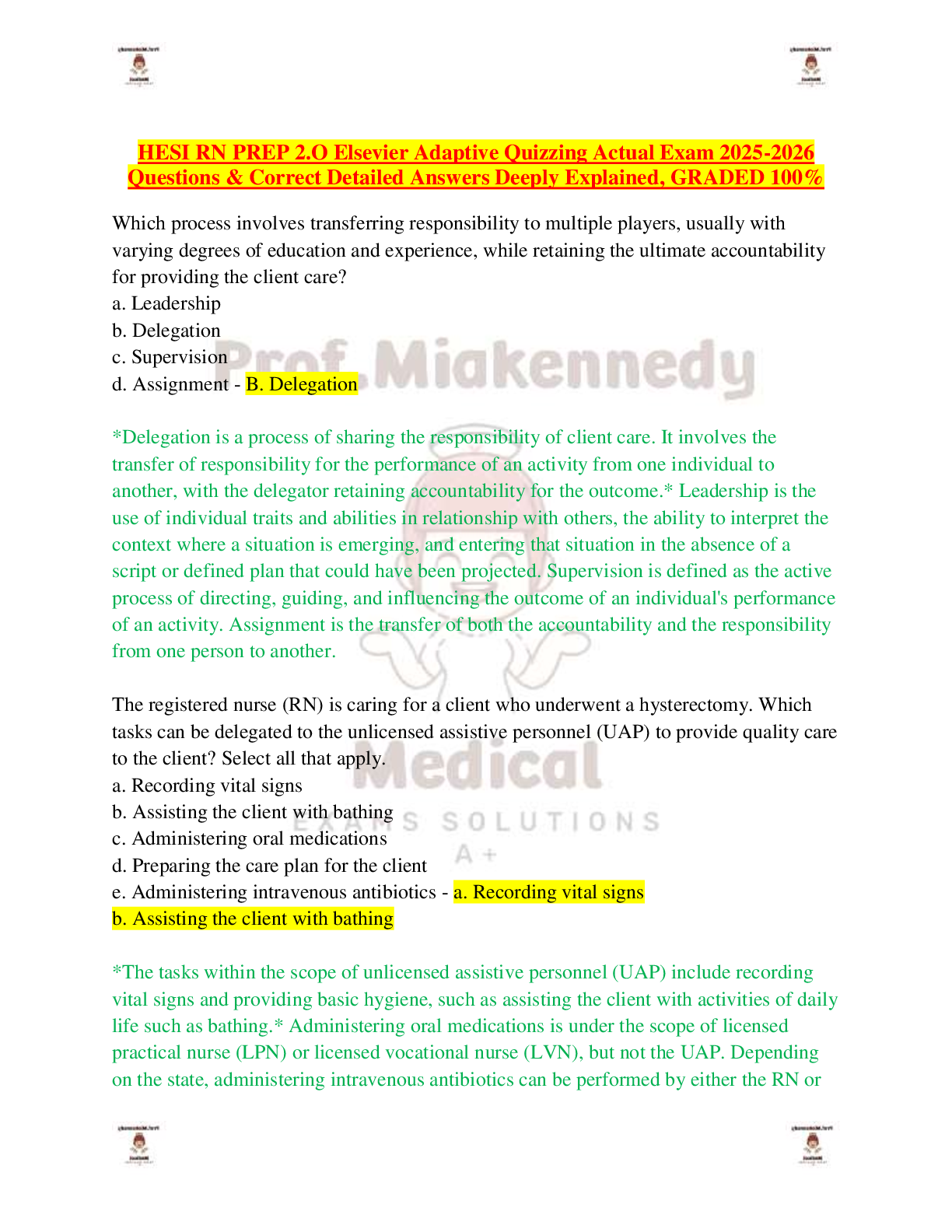
HESI RN PREP 2.O Elsevier Adaptive Quizzing Actual Exam 2025-2...
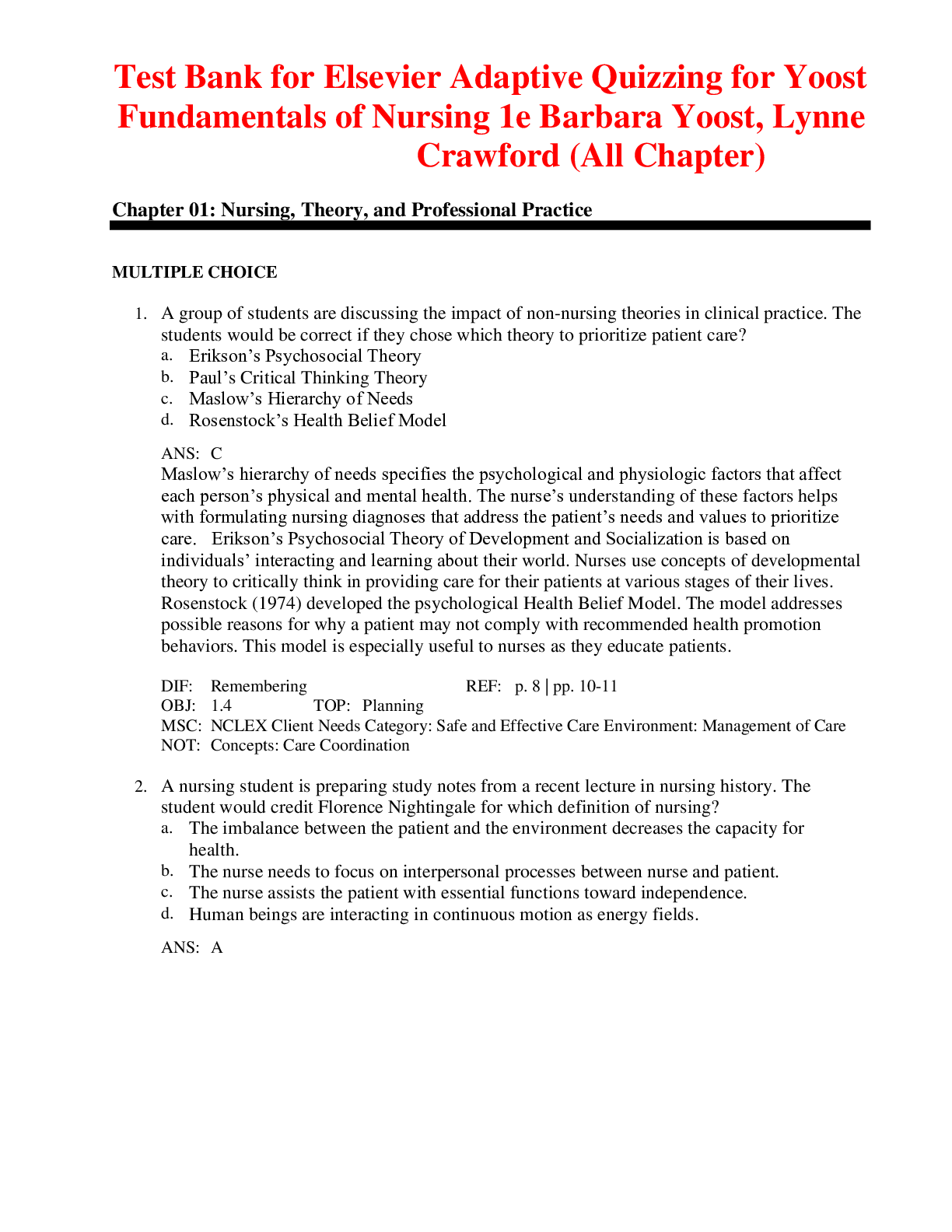
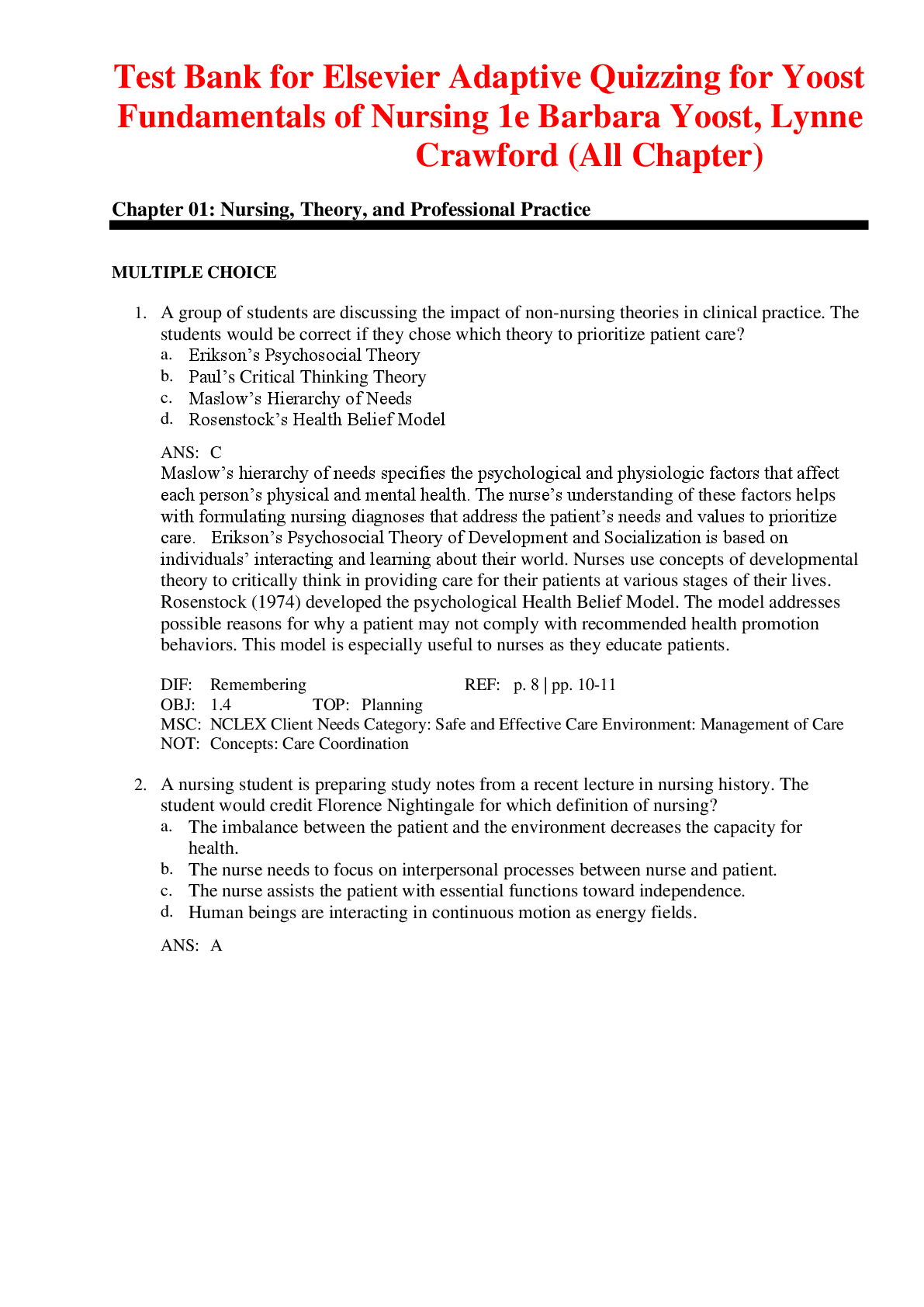
Elsevier Adaptive Quizzing for Yoost Fundamentals of Nursing 1...
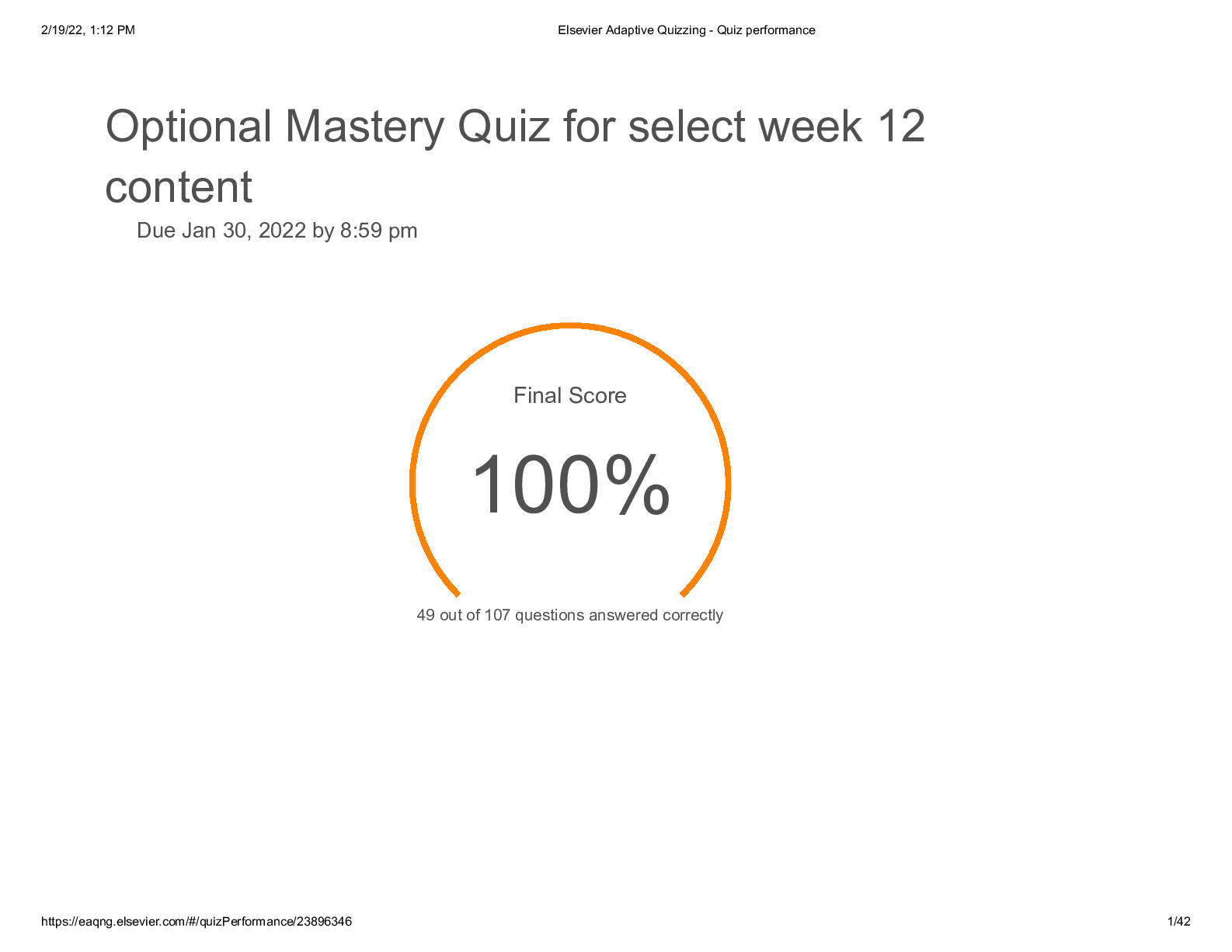
Elsevier Adaptive Quizzing - Quiz performance Optional Mastery...
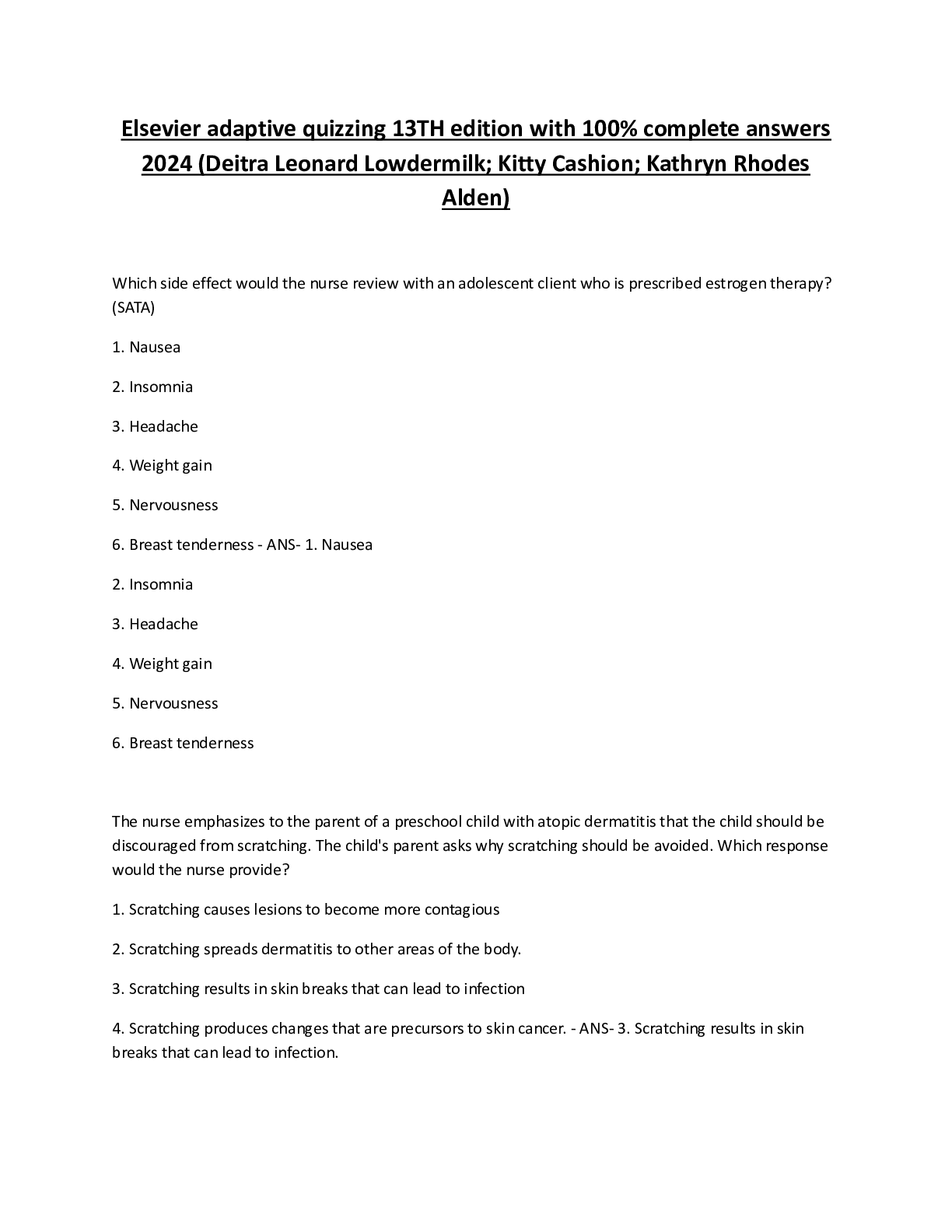
Elsevier adaptive quizzing Test Bank 13TH edition with 100% co...
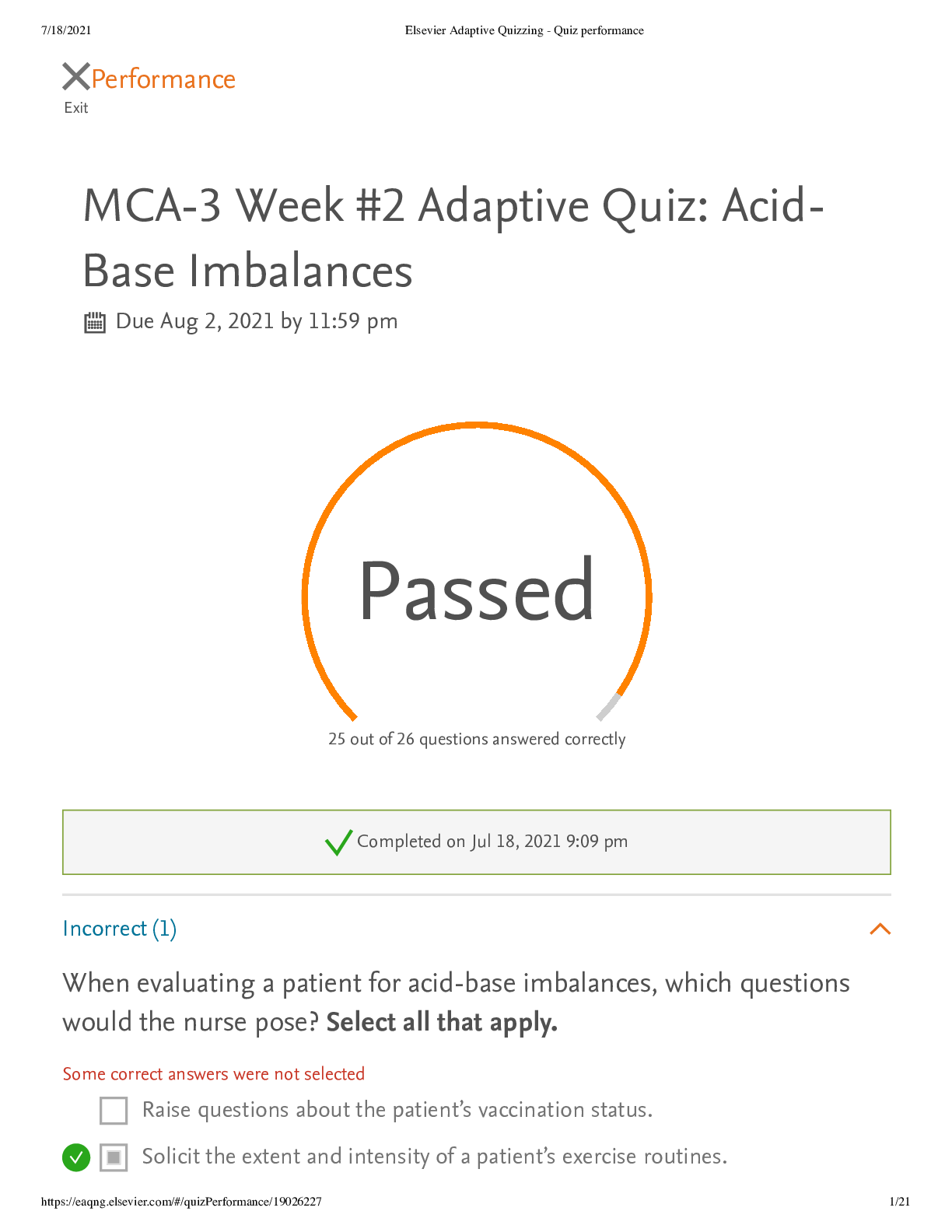
Eolve HESI Elsevier Adaptive Quizzing EAQ Acid Base Imbalances

HESI Elsevier Adaptive Quizzing Valvular Heart Disease and Car...