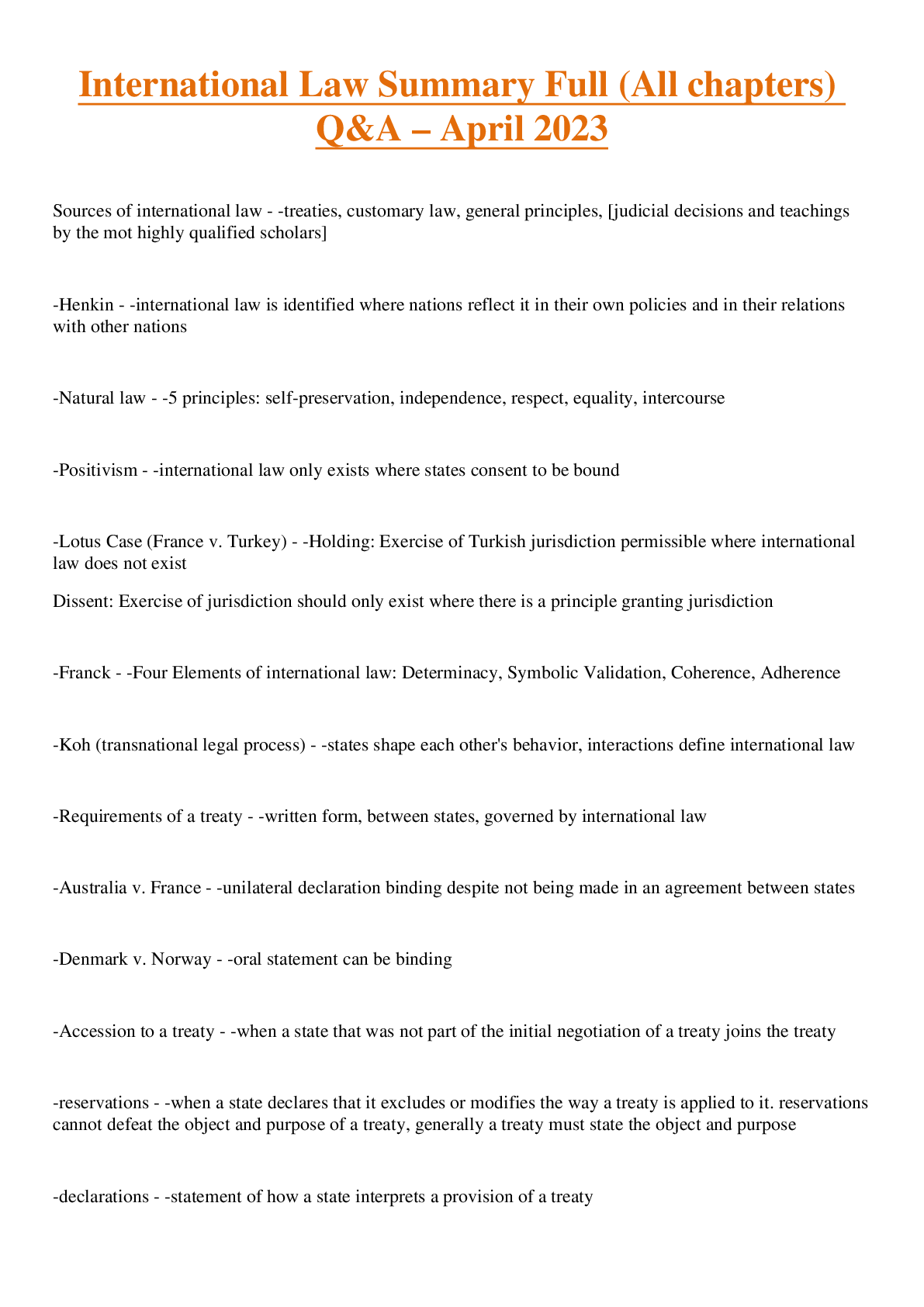
International Law Summary Full (All chapters) Q&A – April 2023
Document Content and Description Below
Sources of international law - -treaties, customary law, general principles, [judicial decisions and teachings by the mot highly qualified scholars]
-Henkin - -international law is identified where nations reflect it
...
[Show More]
Last updated: 3 years ago
Preview 1 out of 8 pages
Instant download
Buy this Document to get the Full Access Instantly
Provided by Students Who Aced it
We Verify Document Content to Gurantee Accuracy
Reviews( 0 )
Document information
Connected school, study & course
About the document
Uploaded On
Apr 04, 2023
Number of pages
8
Written in
All

Additional information
This document has been written for:
Uploaded
Apr 04, 2023
Downloads
0
Views
129
Topic Tags
Related Subjects & Courses
Explore similar study resources and related concepts.
Recommended For You
Get more on EXAM »
$12
24 Pages
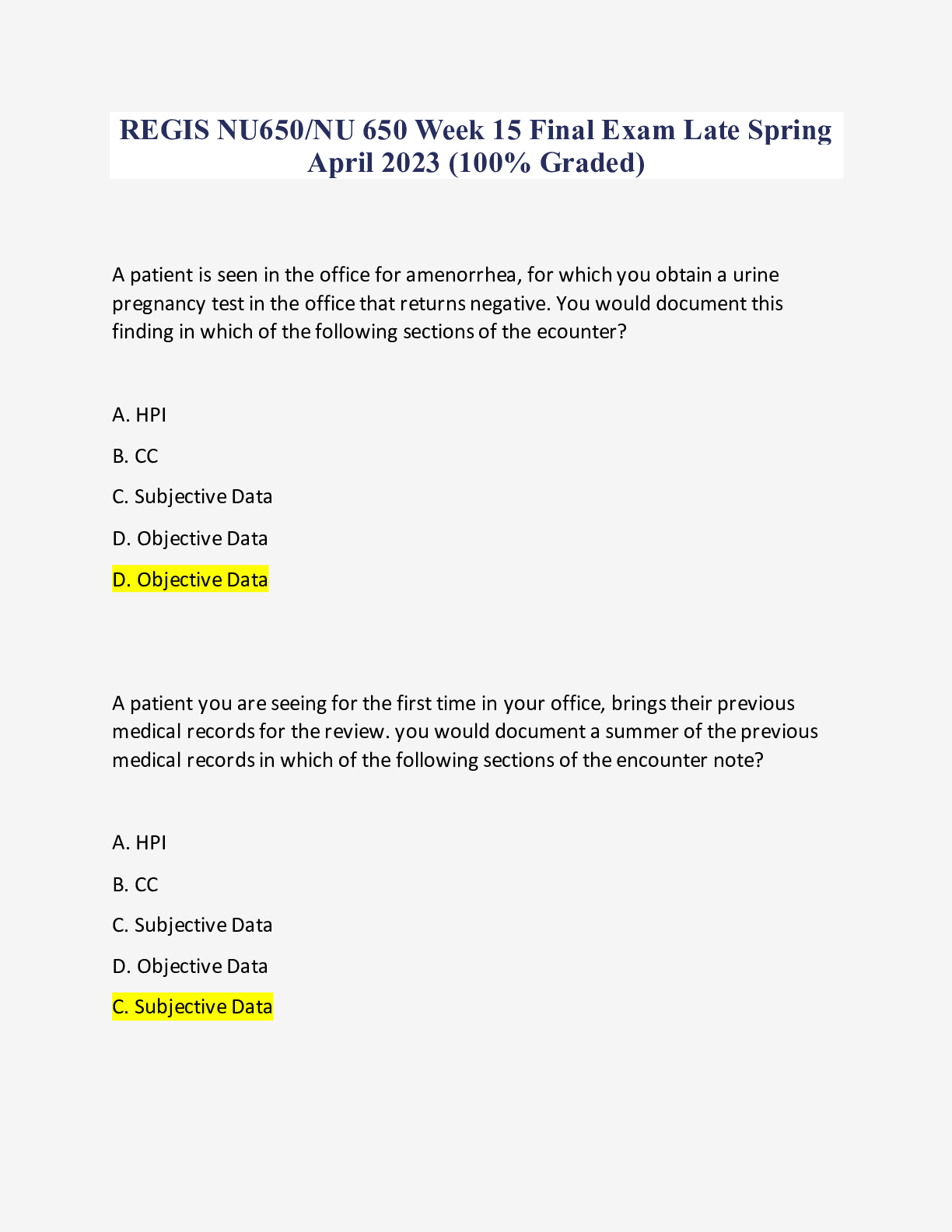
REGIS NU650/NU 650 Week 15 Final Exam Late Spring April 2023 (...
$7
7 Pages
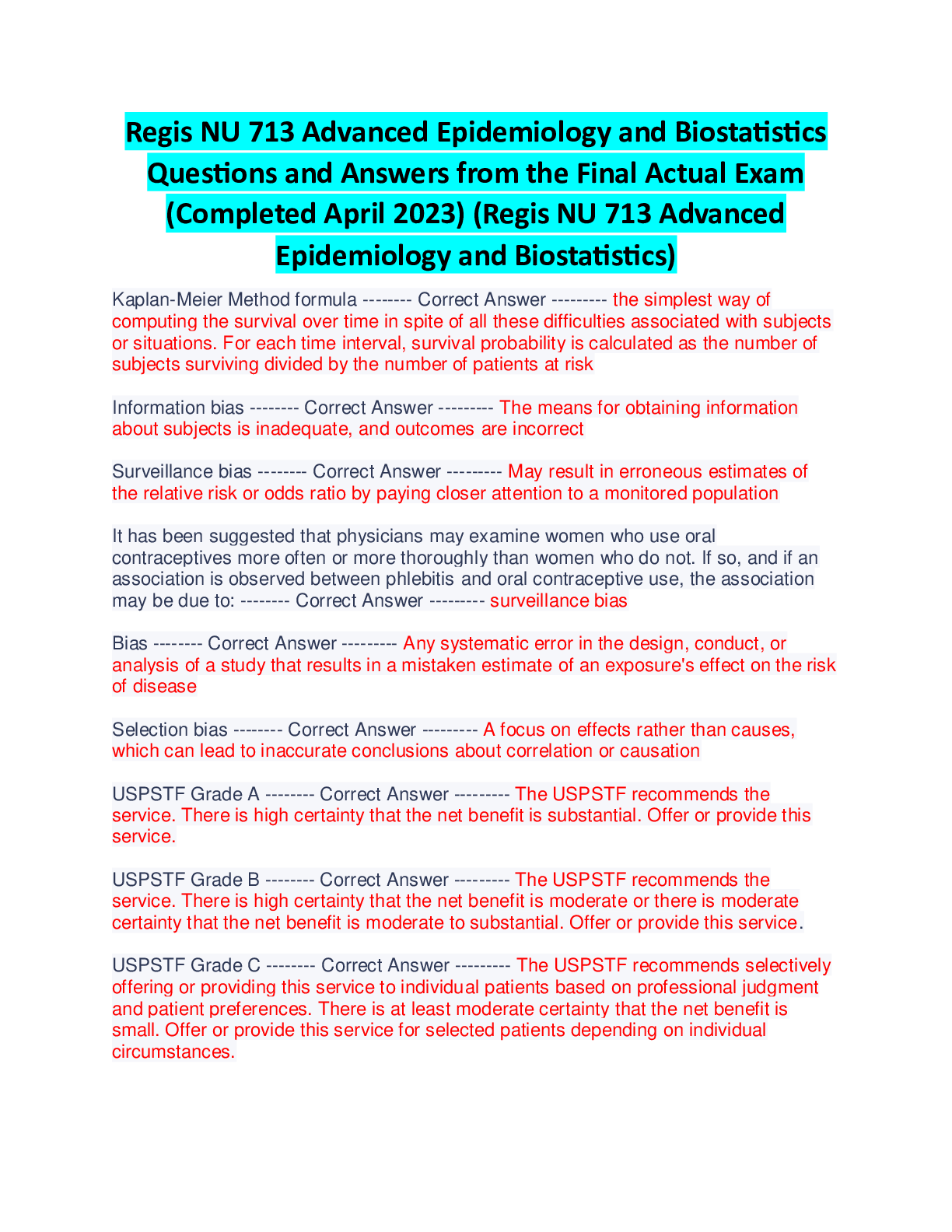
Regis NU 713 Advanced Epidemiology and Biostatistics Questions...
$16
90 Pages
NRNP6645 Psychotherapy Midterm Exam 3LATEST VERSIONS GRADED A...
$21
89 Pages
NRNP 6645 Psychotherapy Midterm Exam 3 LATEST VERSIONS GRADE...
$7
8 Pages
HESI A2 ANATOMY AND PHYSIOLOGY APRIL 2023 FILE QUESTIONS AND A...
$15
90 Pages
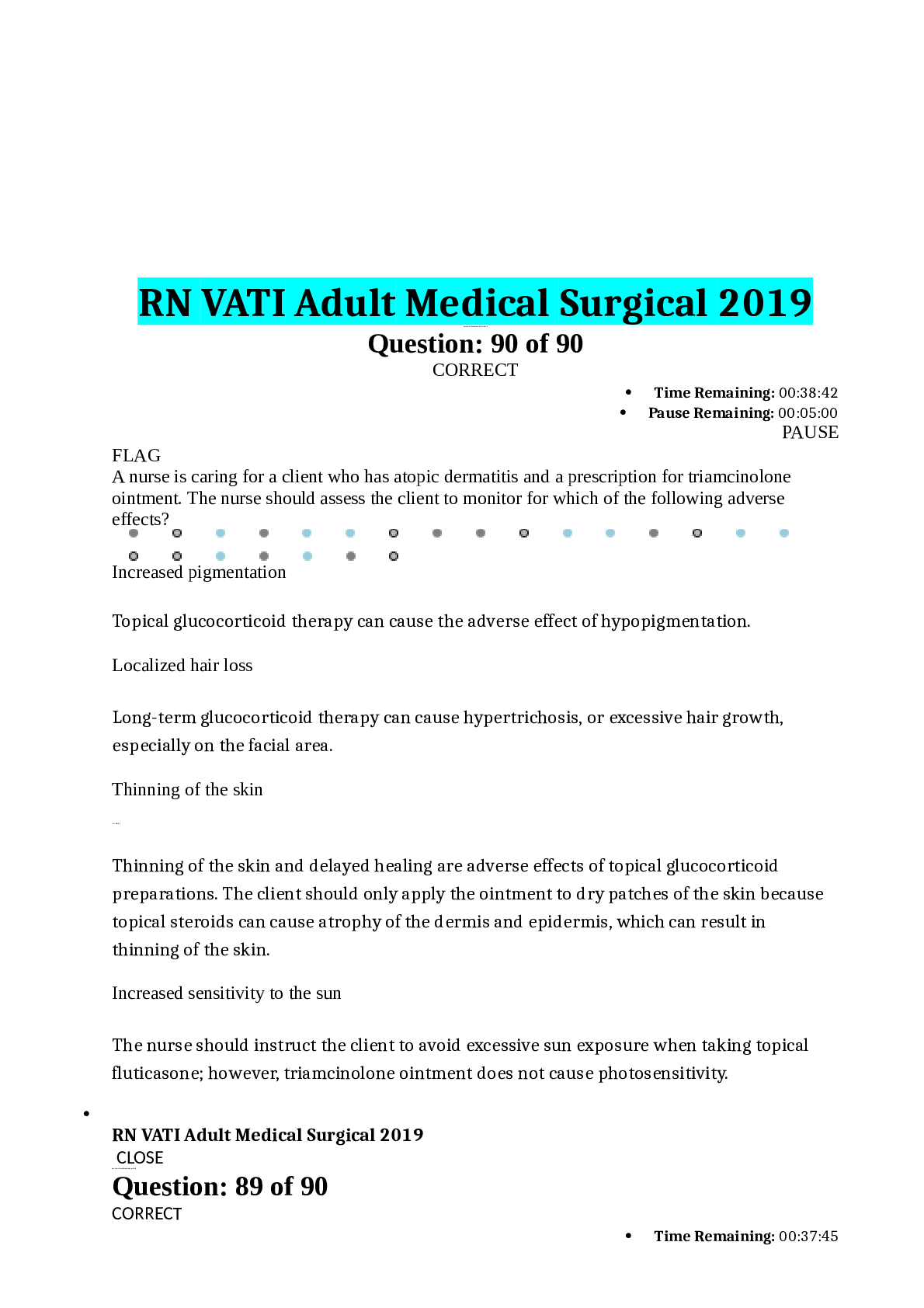
RN 2019 Adult Medical Surgical ATI Proctored Exam FORM A B AND...

$16
28 Pages
MATERNAL NEWBORN PROCTORED RETAKE 2019 GRADED A LATEST VERSION...
$24
47 Pages
ATI RN COMPREHENSIVE PREDICTOR RETAKE GUIDE 2019/LATEST UPD...
$26.5
47 Pages
ATI RN COMPREHENSIVE PREDICTOR RETAKE GUIDE 2019/LATEST UPD...

$24
353 Pages
eBook Lower Your Taxes - BIG TIME! 2023-2024 Edition By Sandy...
More related documents below