History > QUESTIONS & ANSWERS > AP WORLD HISTORY _ Unit 5: International Trade and Foreign Exchange Problem Set #5 (All)
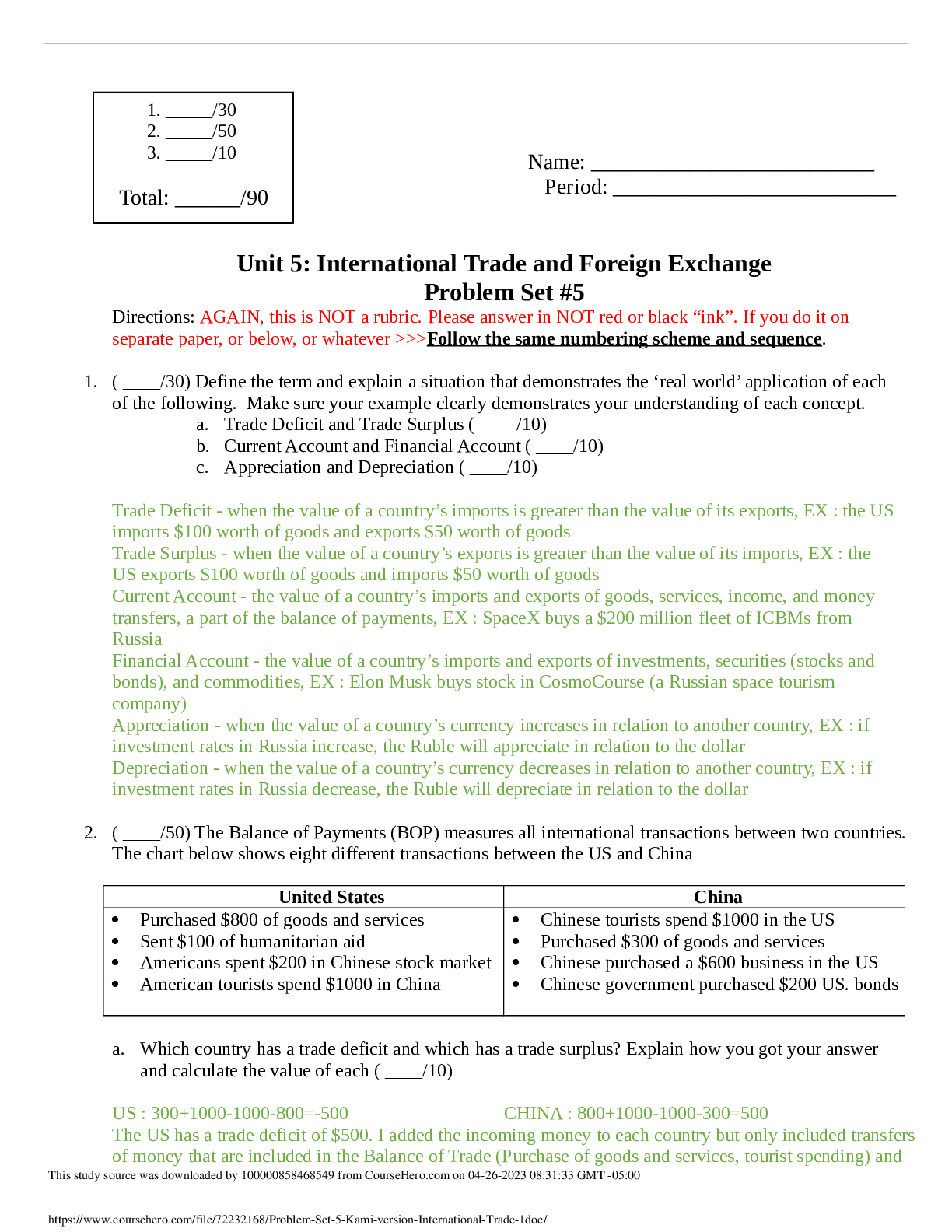
AP WORLD HISTORY _ Unit 5: International Trade and Foreign Exchange Problem Set #5
Document Content and Description Below
Last updated: 3 years ago
Preview 1 out of 3 pages
Instant download
Buy this Document to get the Full Access Instantly
Provided by Students Who Aced it
We Verify Document Content to Gurantee Accuracy
Reviews( 0 )
Document information
Connected school, study & course
About the document
Uploaded On
Apr 30, 2023
Number of pages
3
Written in
All

Additional information
This document has been written for:
Uploaded
Apr 30, 2023
Downloads
0
Views
163
Topic Tags
Recommended For You
Get more on QUESTIONS & ANSWERS »
Ap world history unit 3 Questions review & Answers, 100% Accu...
.png)
AP World History Unit 7 Test Review Questions and Answers Alre...
.png)
AP World History Unit 3 Review Questions and Answers (Graded A...
.png)
.png)
AP World History Unit 5 Multiple Choice Questions and Answers...
.png)
.png)
.png)
AP world history unit 7 test questions and answers already pas...
.png)
AP World History Unit 1 Study Guide Latest 2022 Already Passed
.png)
.png)

.png)
AP World History Unit 8 Cold War and Decolonization Latest 202...
.png)
AP World History Unit 8: Cold War & Decolonization Latest 2022...
.png)
.png)
AP World History Unit 10 Cold War and Decolonization Latest 20...
.png)
.png)
.png)
.png)