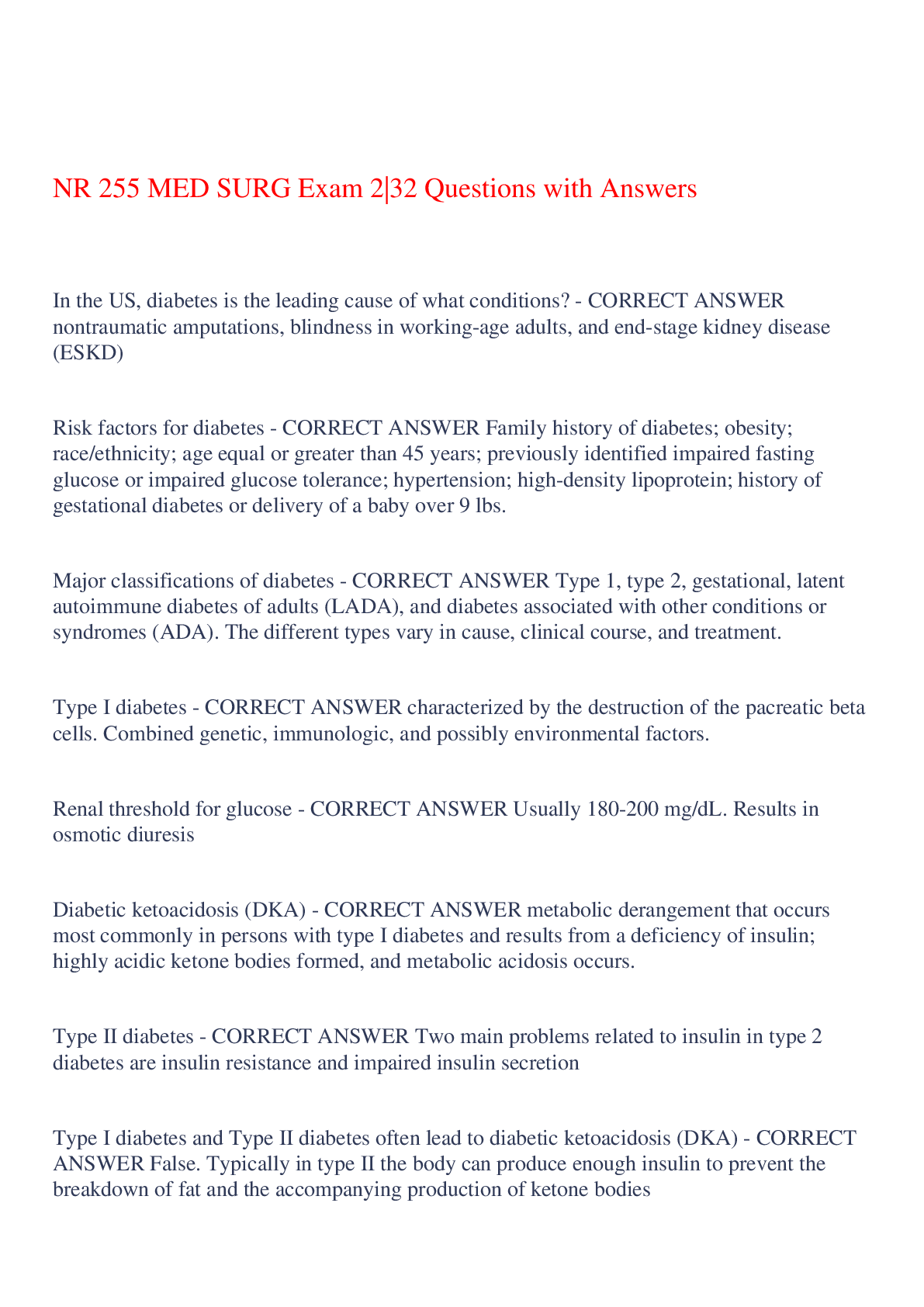
NR 255 MED SURG Exam 2|32 Questions with Answers
In the US, diabetes is the leading cause of what conditions? - CORRECT ANSWER nontraumatic amputations, blindness in working-age adults, and end-stage kidney disease
...
NR 255 MED SURG Exam 2|32 Questions with Answers
In the US, diabetes is the leading cause of what conditions? - CORRECT ANSWER nontraumatic amputations, blindness in working-age adults, and end-stage kidney disease (ESKD)
Risk factors for diabetes - CORRECT ANSWER Family history of diabetes; obesity; race/ethnicity; age equal or greater than 45 years; previously identified impaired fasting glucose or impaired glucose tolerance; hypertension; high-density lipoprotein; history of gestational diabetes or delivery of a baby over 9 lbs.
Major classifications of diabetes - CORRECT ANSWER Type 1, type 2, gestational, latent autoimmune diabetes of adults (LADA), and diabetes associated with other conditions or syndromes (ADA). The different types vary in cause, clinical course, and treatment.
Type I diabetes - CORRECT ANSWER characterized by the destruction of the pacreatic beta cells. Combined genetic, immunologic, and possibly environmental factors.
Renal threshold for glucose - CORRECT ANSWER Usually 180-200 mg/dL. Results in osmotic diuresis
Diabetic ketoacidosis (DKA) - CORRECT ANSWER metabolic derangement that occurs most commonly in persons with type I diabetes and results from a deficiency of insulin; highly acidic ketone bodies formed, and metabolic acidosis occurs.
Type II diabetes - CORRECT ANSWER Two main problems related to insulin in type 2 diabetes are insulin resistance and impaired insulin secretion
Type I diabetes and Type II diabetes often lead to diabetic ketoacidosis (DKA) - CORRECT ANSWER False. Typically in type II the body can produce enough insulin to prevent the breakdown of fat and the accompanying production of ketone bodies
Gestational diabetes - CORRECT ANSWER any degree of glucose intolerance with its onset during pregnancy. Hyperglycemia develops during pregnancy because of the secretion of placental hormones which causes insulin resistance.
Latent autoimmune diabetes of adults (LADA) - CORRECT ANSWER is a subtype of diabetes in which the progression of autoimmune beta cell destruction in the pancreas is slower than in type 1 and type 2 diabetes
Which two tests should be done for women considered to be at high risk or average risk of gestational diabetes? - CORRECT ANSWER oral glucose tolerance test (OGTT) or a glucose challenge test (GCT)
What two measures are best for stopping or slowing the onset of type II diabetes in people with a BMI greater than 24? - CORRECT ANSWER Lifestyle modifications (diet and exercise) and metformin
Classic clinical manifestations of diabetes - CORRECT ANSWER "the three P's". Polyuria, polydipsia, and polyphagia
What assessment and diagnostic tools are used for diabetes? - CORRECT ANSWER Fasting plasma glucose (FPG), random plasma glucose, and glucose level 2 hour after recieving glucose. OGTT and the intravenous glucose tolerance tests are no longer recommended for routine clinical use.
Fasting plasma glucose (FPG) - CORRECT ANSWER blood glucose determination obtained in the laboratory after fasting for at least 8 hours
Criteria for the diagnosis of diabetes - CORRECT ANSWER 1. Symptoms of diabetes plus casual plasma glucose concentration equal to or greater than 200 mg/dL. Casual is defined as any time of day without regard to time since last meal. The classic symptoms of diabetes include polyuria, polydipsia, polyphagia, and unexplained weight loss.
~OR~
2. Fasting plasma glucose greater than or equal to 126 mg/dL. Fasting is defined as no caloric intake for at least 8 hours.
~OR~
3. Two-hour postload glucose equal to or greater than 200 mg/dL during an oral glucose tolerance test. The test should be performed as described by the World Health Organization, using a glucose load containing the equivalent of 75 g anhydrous glucose dissolved in water.
~OR~
4. A1C equal to or greater than 6.5%
Five components of diabetes management - CORRECT ANSWER nutritional therapy, exercise, monitoring, pharmacologic therapy, and education
What condition usually precedes type 2 DM? - CORRECT ANSWER metabolic syndrome
What percentages of macronutrients should be consumed in one's diet? - CORRECT ANSWER carbs: 45%; fats: 20-30%; proteins: 15-20%
People should have how much exercise per week in order to lower their risk for developing DM? - CORRECT ANSWER physical activity at least three times per week
Metabolic syndrome - CORRECT ANSWER a collection of manifestations that predispose an individual to the development of diabetes mellitus including abdominal obesity, insulin resistance, sedentary lifestyle, hypertension, and elevated lipid and triglyceride levels. It also has an associated risk of cardiovascular disease.
Hyperglycemia - CORRECT ANSWER blood glucose levels usually greater than 250mg/dL
Three P's of diabetes - CORRECT ANSWER polydipsia, polyuria, polyphagia
Some other manifestations of diabetes/ hyperglycemia - CORRECT ANSWER acetone/fruity breath odor (due to accumulation of ketones), headache, nausea, vomiting, abdominal pain, inability to concentrate, fatigue, weakness, vision changes, slow healing of wounds, decreased LOC, seizures leading to coma
Diagnostic criteria for diabetes - CORRECT ANSWER Casual blood glucose concentration greater than 200 mg/dL, fasting blood glucose greater than 126 mg/dL, 2-hr glucose greater than 200 mg/dL with oral glucose tolerance test, A1C greater than 6.5%
Rapid-acting insulin - CORRECT ANSWER Insulin lispro, insulin aspart, insulin glulisine. Onset is rapid (10-30 min)
Short-acting insulin - CORRECT ANSWER Regular insulin (administer 30 to 60 min before meals to control postprandial hyperglycemia)
Intermediate-acting insulin - CORRECT ANSWER NPH insulin. Administer for glycemic control between meals and at night. Not administered before meals to control postprandial rise in blood glucose. Can mix with short-acting insulin
Long-acting insulin - CORRECT ANSWER Insulin glargine, insulin determir. Administer once daily
Biguanides - CORRECT ANSWER Metformin. Reduces the production of glucose by the liver. Increases tissue sensitivity to insulin
Diabetic ketoacidosis (DKA) - CORRECT ANSWER an acute, life-threatening condition characterized by uncontrolled hyperglycemia (greater than 300 mg/dL)
Hyperglycemic-hyperosmolar state (HHS) - CORRECT ANSWER sufficient endogenous insulin present to prevent the development of ketosis, but not enough to prevent hyperglycemia.
[Show More]






.png)