PSI FNP Practice Questions and
Answers with Verified Solutions
A 14yo male with bronchitis is being treated with fluids and expectorants. He returns to the
clinic with a fever of 103F, right pleuritic chest pain, and
...
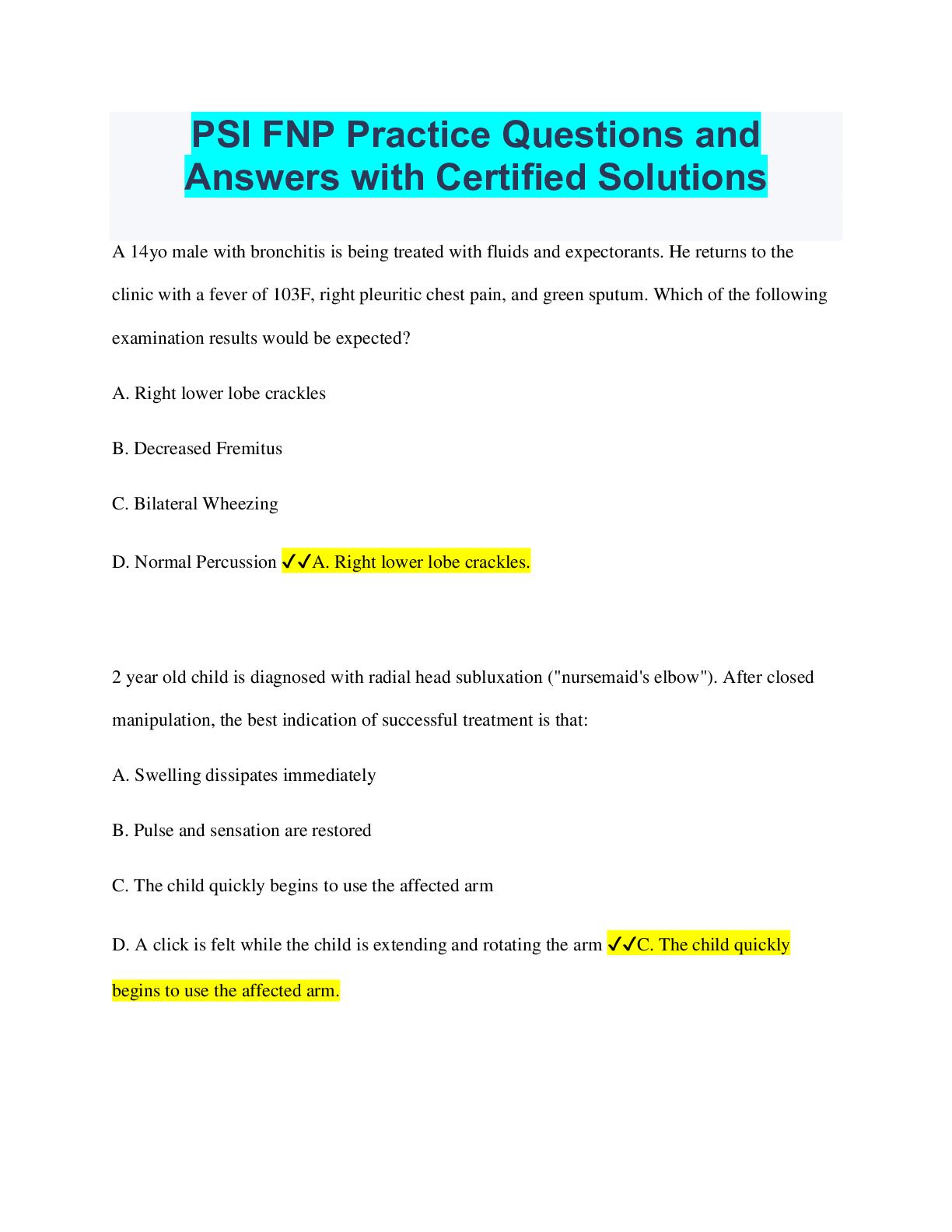
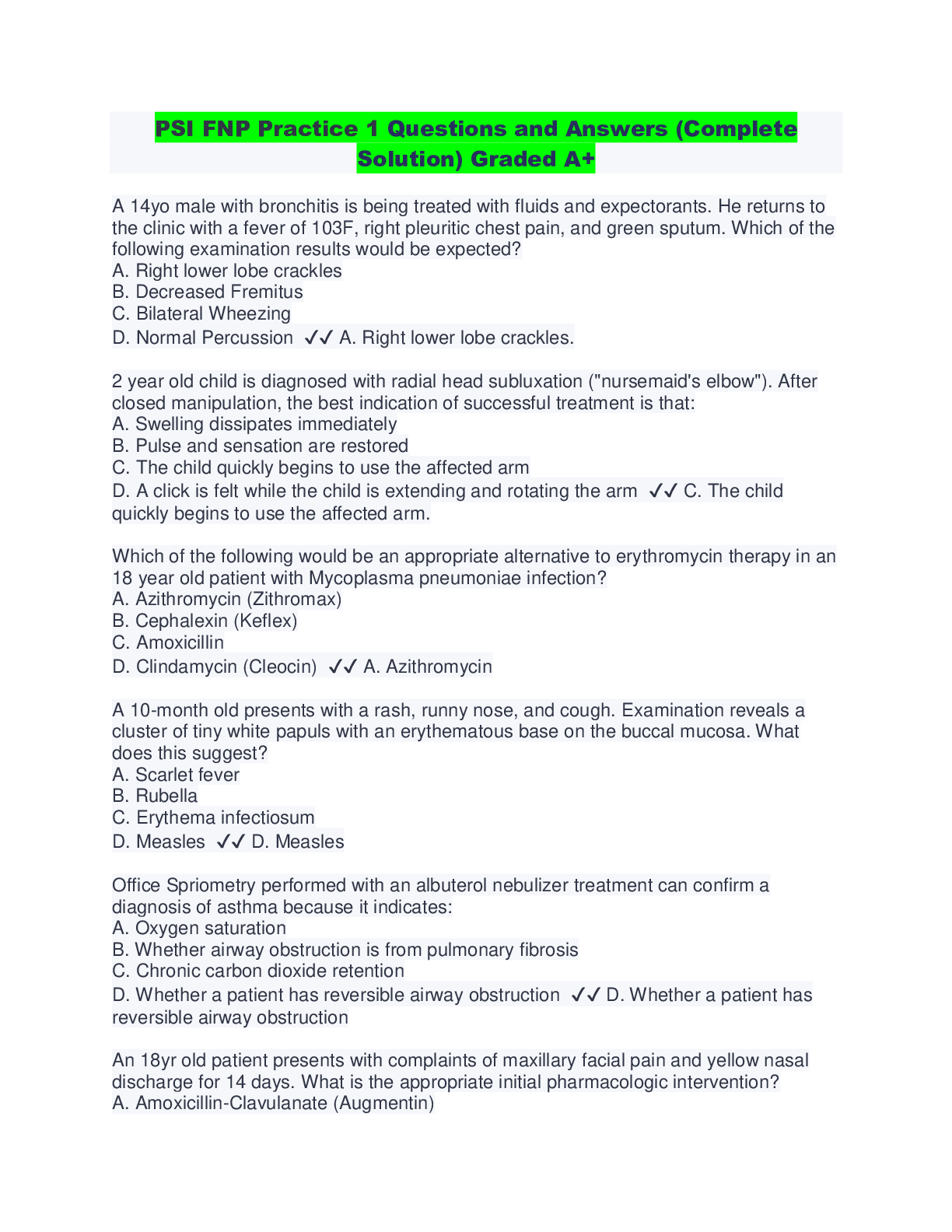
PSI FNP Practice Questions and
Answers with Verified Solutions
A 14yo male with bronchitis is being treated with fluids and expectorants. He returns to the
clinic with a fever of 103F, right pleuritic chest pain, and green sputum. Which of the following
examination results would be expected?
A. Right lower lobe crackles
B. Decreased Fremitus
C. Bilateral Wheezing
D. Normal Percussion ✔✔A. Right lower lobe crackles.
2 year old child is diagnosed with radial head subluxation ("nursemaid's elbow"). After closed
manipulation, the best indication of successful treatment is that:
A. Swelling dissipates immediately
B. Pulse and sensation are restored
C. The child quickly begins to use the affected arm
D. A click is felt while the child is extending and rotating the arm ✔✔C. The child quickly
begins to use the affected arm.
Which of the following would be an appropriate alternative to erythromycin therapy in an 18
year old patient with Mycoplasma pneumoniae infection?
A. Azithromycin (Zithromax)
B. Cephalexin (Keflex)
C. Amoxicillin
D. Clindamycin (Cleocin) ✔✔A. Azithromycin
A 10-month old presents with a rash, runny nose, and cough. Examination reveals a cluster of
tiny white papuls with an erythematous base on the buccal mucosa. What does this suggest?
A. Scarlet fever
B. Rubella
C. Erythema infectiosum
D. Measles ✔✔D. Measles
Office Spriometry performed with an albuterol nebulizer treatment can confirm a diagnosis of
asthma because it indicates:
A. Oxygen saturation
B. Whether airway obstruction is from pulmonary fibrosis
C. Chronic carbon dioxide retention
D. Whether a patient has reversible airway obstruction ✔✔D. Whether a patient has reversible
airway obstruction
An 18yr old patient presents with complaints of maxillary facial pain and yellow nasal discharge
for 14 days. What is the appropriate initial pharmacologic intervention?
A. Amoxicillin-Clavulanate (Augmentin)
B. Ceftriaxone (Rocephin)
C. Levofloxacin (Levaquin)
D. Erythromycin ✔✔A. Amoxicillin-Clavulanate (Augmentin)
Which of the following is the leading cause of cancer-related deaths in the majority of women?
A. cervical Cancer
B. Ovarian Cancer
C. Breat Cancer
D. Lung Cancer ✔✔D. Lung Cancer
A 29-year old male with noncomplicated Chlamidia infection may exhibit:
A. Urticaria
B. No remarkable clinical symptoms
C. A green mucoid penile discharge
D. A penile ulcer ✔✔B. No remarkable clinical symptoms
To assess a patient's ability to think abstractly, a nurse practitioner could ask the patient:
A. The meaning of a common proverb
B. What action the patient would take if their was a fire in the house
C. To count backwards from 100 by 7s
D. To spell a word backward. ✔✔A. The meaning of a common proverb
A common rule to follow when prescribing many medications for the elderly is to:
A. Give most medications in the morning to allow slowed body functions to have time to adjust
to the drug.
B. Start at a lower dose than what is commonly prescribed for adults, and increase the dose
slowly.
C. Perform a creatinine clearance test for baseline data on all person over age 70 before starting
on new medications.
D. Give medication with a full glass of water to promote absorption and limit harm to the
kidneys. ✔✔B. Start at a low dose than what is commonly prescribed for adults, and increase the
dose slowly.
A 72 year old female presents with a medical history unremarkable except for the occasional
headache. She enjoyed emotional health throughout marriage and childrearing, although her
family history is significant for strokes and nervous breakdowns. Since her husband died a year
ago, however, she has been waking every morning at 3am, is reluctant to go out although she has
family member living nearby, and feels a continual urge to sleep. She cannot discuss her late
husband without crying. Differential diagnoses would include:
A. Stroke, depression, and hyperthyroidism
B. Depression, Unresolved grief, and hypothyroidism
C. Migraine, anxiety disorder, and hypertension
D. Dementia, delirium, and pna ✔✔B. Depression, Unresolved grief, and hypothyroidism
The parent of a 13-year old diagnosed with seizure disorder calls to report that the child is
exhibiting symptoms of a cold, but has no fever. The nurse practitioner should advise the parent
that development of fever may:
A. make the seizure medication less effective
B. Lower the seizure threshold
C. Increase the seizure threshold
D. Have no effect on the seizure threshold ✔✔B. Lower the seizure threshold
After a 3-week camping trip, an 11-year old is seen for a target lesion with central clearing,
located in the inguinal area. The patient has had a severe headache, malaise, fatigue, and
generalized musculoskeletal pain for several days. Pharmacologic management of this condition
includes:
A. trimethoprim-sulamethoxazole (Bactrim)
B. Azithromycin (Zithromax)
C. Metronidazole (Flagyl)
D. Doxycycline (Doryx) ✔✔D. Doxycycline
An 88 year old male presents with concerns about memory loss. He feels good, takes an aspirin
daily, and has no chronic diseases. He lives alone, drives his own car, and manages his financial
affairs. To evaluate his memory, which of the following tests should the nurse practitioner
choose?
A. Folstein Mini-Mental State examination
B. Geriatric Depression Scale
C. Minnesota Multiphasic Personality Inventory
Myers-Briggs Test ✔✔A. Folstein Mini-mental state examination
During development of a treatment plan for an 84 year old patient with hypothyroidism, the
nurse practitioner has to keep in mind the worsening of:
A. renal insufficiency
B. Osteoporosis
C. Dementia
D. Anemia ✔✔B. Osteoporosis
A 16 year old female in the first month of taking Ortho-Novum 7/7/7 complains of midcycle
spotting. She hasn't missed any doses and uses no other medication. Which of the following is
appropriate?
A. Modifying use
B. Double dosing for 2 days
C. Changing to Ortho-Novum 1/35
D. Providing reassurance ✔✔D. Providing reassurance
The management of choice for polymyalgia rheumatica includes:
A. whirlpool
B. Prednisone
C. Anelgesics
D. Celebrex ✔✔B. Prednisone
A 50 year old male presents with a chief complaint of malaise. Further questioning reveals that
his primary concern is delayed ejaculation. He is currently taking the following medications:
atenolol (Tenormin), 50 mg daily; paroxetine (Paxil), 20 mg daily; loratadine (Claritin-D), 1
tablet daily; and hydrochlorthoriazide (HCTZ), 25 mg daily. The most likely cause of the
patient's concern would be:
A. loratadine
B. hydrochlorthoriazide (HCTZ)
C. lisinopril (Zestril)
D. paroxetine (Paxil) ✔✔D. Paroxetine (Paxil)
A 3 year old patient presents at an inner-city clinic with fever, cough, malaise, and loss of
appetite. The patient lives with several relatives, including a grandmother who also has a cough.
Which of the following diagnostic tests would be most appropriate for the patient?
A. throat culture
B. sputum culture
C. Mantoux (PPD) skin test
D. Cold agglutinin test ✔✔B. Sputum culture
A 25-year old presents with the chief complaint of decreased mobility and pain of the right
shoulder exacerbated with movement. The patient reports that he participated in extensive house
painting 24 hours prior to the onset of pain. He denies any trauma. Passive ROM is intact. No
redness or ecchymosis is present. What is the next step that should be taken in order to make a
diagnosis?
A. Palpate structures around the shoulder
B. Obtain an MRI to evaluate the shoulder
C. Order an Xray of the shoulder
D. Request an EMG ✔✔A. Palpate the structures around the shoulder
A 17 year old femlae has never had her menses. She is at Tanner stage III of sexual development.
Her physical exam in completely normal, and her weight is appropriate for her age and height.
What is the most likely diagnosis?
A. Ovarian dysgenesis
B. Dysmenorrhea
C. Primary amenorrhea
D. Secondary amenorrhea ✔✔C. Primary amenorrhea
An 18-month old child presents with a bulging, immobile tympanic membrane; T-103F(39.4C).
Assessment also reveals a grade II/VI systolic murmur at the left sternal border. After initiation
of treatment for otitis media, the most appropriate intervention is to:
A. Obtain an EKG
B. Obtain an Echocardiogram
C. Reevaluate the patient in 10 days
D. Refer the patient to a cardiologist ✔✔C. Reevaluate the patient in 10 days
Which of the following is NOT an indication of preeclampsia?
A. visual disturbances
B. Glucosuria
C. Edema of the face and hands
D. Headaches ✔✔B. Glucosuria
Which of the following pharmacotherapeutics would be most important to administer to a patient
who has a corneal abrasion?
A. Olopatadine (Patanol)
B. Cromolyn opthalmic (Crolom)
C. Timolol (Timoptic)
D. Gentamycin Opthalmic (Genoptic) ✔✔D. Gentamycin Opthalmic (Genoptic)
An 88 year old patient presents with right-sided weakness after being unable to rise unassisted
following a fall to the bathroom floor. History includes aphasia and noncompliance with
hypertension medication regimen. What is the most likely diagnosis?
A. Seizure
B. Right-sided Stroke
C. Left-sided stroke
D. Trans ischemic attack ✔✔C. Left-sided Stroke
A nurse pracitioner is evaluating a 40 year old patient suspected of having a pulmonary embolus.
The patient complains of anxiety and cough. A stat chest x-ray is normal. Which of the following
tests should the nurse practitioner perform next?
A. Spirometry
B. MRI
C. Contrast venography
D. Helical CT pulmonary angiography ✔✔D. Helical CT pulmonary angiography
A routine laboratory assessment of a 12 year old patient with a family history of thalassemia and
anemia reveals Tanner II presentation and Hct=355. In addition to a complete blood count
(CBC), the nurse practitioner should order which of the following?
A. serum folic acid
B. Vitamin B12 level
C. Hemoglobin Electrophoresis
D. 24-hour urine creatinine ✔✔C. Hemoglobin electrophoresis
A patient who is 28 weeks pregnant reports a single episode of vaginal bleeding. History
indicates normal prenatal progress to date, and the patient denies pain, vaginal itching, or
discharge. Which of the following is the most appropriate intervention to aid in the diagnosis of
this case?
A. Nitrazine test
B. Non-Stress test
C. Ultrasound
D. Bimanual cervical exam ✔✔C. Ultrasound
The common bacteria responsible for pneumonia in older adults residing in the community is:
A. Staphylococcus aureus
B. Streptococcus pneumoniae
C. Pseudomonas Aeruginosa
D. Moraxelle catarrhalis ✔✔B. Strep Pneumo
A 40 year old male patient presents with a 2 week history of rectal pain and itching. He reports a
past history of constipation, and finding spots of bright red blood on toilet paper several times a
week. Rectal exam reveals a tender, swollen, bluish, ovoid mass. The stool guaiac test is
negative. Which of the following actions should the nurse practitioner take?
A. Prescribe diphenoxylate/atropine( Lomotil)
B. Schedule a colonoscopy to rule out colon cancer
C. Repeat the guaiac test three times and obtain complete blood count
D. Prescribe bulk forming agents and hydrocortisone suppositories. ✔✔D. Prescribe bulk
forming agents and hydrocortisone suppositories.
A 17 year old female is suspected of having polycystic ovary syndrome. In addition to
testosterone, the most appropriate diagnostic tests to order would be:
A. BUN, creatinine, electrolytes, and dehydroepiandrosterone(DHEA)
B. CBC, BUN, creatinine, and estrone
C. Fasting blood sugar (FBS), complete blood count (CBC), BUN, and sex hormone binding
globulin
D. Follicle-stimulating hormone (FSH), Luteinizing hormone (LH), prolactin, and thyroidstimulating hormone (TSH) ✔✔D. FSH, LH, TSH
Which of the following wet-mount results confirms a preliminary diagnosis of bacterial
vaginosis?
A. Squamous epithelial cells with stippling appearance and indistinct borders, no lactobacillus
rods, and many white cells
B. Squamous epithelial cells with clear cytoplasm and distinct borders, many lactobacillus rods,
and occasional WBC
C. Organisms about the size of white blood cells with undulating flagellum, occasional
lactobacillus rods, and many WBC
D. Hyphae and spores, few lactobacillus rods, and occasional WBC ✔✔Squamous epithelial
cells with stippling appearance and indistinct borders, no lactobacillus rods, and many white
cells.
A patient is referred with a diagnosis of diabetes mellitus, hypertension, and coronary artery
disease. The patient is on both insulin and a beta blocker. Assuming that the patient will continue
the beta blocker, it will be important to educate the patient on the recognition of hypoglycemia.
Which symptom would be most indicative of hypoglycemia in this patient?
A. edema
B. Tachycardia
C. Palpitations
D. Sweating ✔✔D. Sweating
A 67-year old with type 2 diabetes mellitus, congestive heart failure, and mild coronary artery
disease is currently taking Digoxin, 0.25mg daily; HCTZ, 25mg daily; Metformin 500mg daily;
glipizide 10mg daily; and Atorvastatin (Lipitor) 20mg HS. Which of the following is an accurate
statement regarding the regimen?
A. The glipizide will increase the risk of potassium depletion.
B. The digoxin will increase the risk of hypoglycemia
C. The HCTZ will predispose the patient to Digoxin toxicity
D. The atorvastatin will worsen the diabetes. ✔✔C. The HCTZ will predispose the patient to
Digoxin toxicity
The initial therapy for a 3 week old infant with uncomplicated symptoms of gastroesophageal
reflux disease includes of the following positions and change in diet?
A. Prone position and rotate formulas in order to find one that causes less reflux
B. Smaller, more frequent feedings while holding infant
C. Semisupine position and offer more ounces of formula less frequently
D. Lateral position and start small amounts of solid food with formula ✔✔Smaller, more
frequent feedings while holding infant.
Which of the following best describes psoriatic lesions in an elderly patient?
A. Shiny, purple, smooth lesions
B. Localized erythematous vesicles
C. Erythematous plagues with central clearing
D. Red, sharply defined plaques with silvery scales ✔✔D. Red, sharply defined plaques with
silvery scales
A 68-yo female presents with a new onset of left-sided throbbing headache. She has noticed
some spots in her visual fields that come and go. She is being treated with an NSAID for
arthritis. Sedimentation rate is elevated, but all other lab values are WNL. The headache is most
likely due to:
A. TIA
B. NSAID induced headache
C. Temporal arteritis
D. Glaucoma ✔✔C. Temporal arteritis
A patient with Type 1 diabetes mellitus who is on NPH and regular insulin split-dosing presents
with complaints of early morning rise in fingerstick blood glucose. A review of an at-home
glucose test reveals increased morning levels. After an increase in the evening insulin dose, the
problem worsens. This is most likely an example of:
A. Insulin resistance
B. Cortisol deficiency
C. the Somogyi effect
D. pawn phenomenon ✔✔C. the Somogyi effect
An 18 yo college student presents for an athletic physical. When asked about current
medications, she mentions that she takes "some hearb" she bought at a health food store for
migrains and menstrual cramps. Which of the following herbal remedies has been commonly
used for these conditions?
A. Ephedra
B. Echinacea
C. Feverfew
D. Ginko Biloba ✔✔C. Feverfew
Which of the following GI changes in associated with normal aging?
A. Decreased production of gastric acid
B. Decreased incidence of gallstones
C. Increased salivation
D. Increased esophageal emptying ✔✔A. Decreased production of gastric acid.
A 32 year old patient reports a 6-month history of intermittant symmetrical swelling of the wrists
and daily morning stiffness lasting 1 hour or more in and around other joints. What is the most
likely diagnosis?
A. Rheumatoid arthritis
B. Osteoarthritis
C. Gouty arthritis
D. Reiter's syndrome ✔✔A. Rheumatoid Arthritis
An 85 year old patient related that on the way to an annual physical exam, the patient suffered a
sudden loss of vision in the right eye characterized by a "bunch of lights" and a feeling that " a
curtain came down" The most likely diagnosis is:
A. Vitreal hemorrhage
B. Optic nerve lesion
C. Central retinal nerve occlusion
D. Retinal Detachment ✔✔D. Retinal detachment
Assessment findings that would support a diagnosis of mitral regurgitation include:
A. atrial fibrillation with summation gallop
B. Loud, high-pitched pansystolic murmur
C. Diastolic murmur with split S1
D. Early diastolic murmur with an S3 wave. ✔✔B. Loud, high-pitched pansystolic murmur
During an employment physical exam of a 21-year old female, bruising around the areola on the
breasts is noted. An appropriate health history for these findings should include all of the
following EXCEPT:
A. Current social relatonships
B. History of present or past traumas
C. Mental health status
D. Socioeconomic status. ✔✔D. Socioeconomic status.
According to the American Diabetes Association, the newest standard for determining the
presence of diabetes mellitus based on fasting plasma sugar level is a vlaue equal to or greater
than:
A. 100 mg/dl
B. 126 mg/dl
C. 140 mg/dl
D. 180 mg/dl ✔✔B. 126 mg/dl
A nurse practitioner orders pulmonary rehabilitation for a 75 yo patient with COPD. Expected
outcomes of this program include all the following EXCEPT:
A. enhanced quality of life
B. Increased lung capacity
C. Decreased in-patient hospitalizations
D. Improved exercise capacity ✔✔B. Increased lung capacity
A 2month old infant is presented for examination and immunizations. History includes an
uncomplicated full-term delivery and hepatitis B virus immunization shortly after birth.
Examination is unremarkable except for a diffusely erythematous (not beet red) macular rash in
the diaper area., sparing the inguinal folds. No satellite lesions are noted . The infant's rash is
most likely caused by.
A. Candida albicans infections.
B. Eczema
C. Seborrheic dermatitis
D. Contact dermatitis ✔✔D. Contact dermatitis
A patient with a diagnosis of diverticulosis presents with localized left lower quadrant
discomfort, a palpable mass, mild leukocytosis, and T=100F (37.8C). The patient does not apear
toxic and can tolerate fluids. An appropriate plan should include:
A. barium enema and nothing by mouth
B. Clear liquids and antibiotics
C. low-fiber diet and referral to gastroenterologist
D. hospital admission for IV antibiotics ✔✔B. Clear liquids and antibiotics.
Which of the following criteria differentiates a TIA from a stroke?
A. focal symptoms
B. Amnesia of incident
C. Slowness of onset
D. Absence of residual symptoms ✔✔D. absence of residual symptoms
A patient with macular degeneration has difficulty seeing objects:
A. from a distance
B. In the center of the visual field
C. At reading distance
D. In the peripheral fields ✔✔B. In the center of the visual fields.
Trigeminal neuralgia manifests itself primarily with:
A. electric-shock-like unilateral facial pain
B. Unilateral facial asymmetry
C. Burning bilateral facial pain
D. jaw pain extending to the neck ✔✔A. Electric-shock-like unilateral facial pain
A 65-yo male presents to a clinic complaining of increasing fatigue, dyspnea on exertion, and
ankle edema during the day. He has a history of mild hypertension, for which he saw his
physician years ago. The physician advised the patient to decrease his salt intake. On physical
exam, the patient is tachycardic, positive for jugular venous distension, and positive for S3, with
a systolic murmur. Chest xray reveals cardiomegaly with vascular redistribution. The nurse
practitioner's diagnosis should be:
A. mycardial infarction
B. pneumonia
C. Heart failure
D. pleural effusion ✔✔C. Heart failure
An 88-yo patients has had a gradual onset of hearing loss in the left ear. Examination shows a
large accumulation of cerumen in the external auditory canal. Assuming there is no neural loss,
the nurse practitioner would expect the Weber test to:
A. lateralize to the left
B. lateralize to the right
C. Be inconclusive
D. Not lateralize ✔✔A. Lateralize to the left.
A 38-yo male experiences a sudden onset of acute abdominal pain radiating to his groin. He is
having difficulty walking and is nauseated. He denies any trauma or previous groin injuries.
Examination reveals diffuse swelling of the left testicle and negative cremasteric reflex. The
most likely diagnosis is:
A. Testicluar cancer
B. Testicular torsion
C. Appendicitis
D. Epididymitis ✔✔B. Testicular Torsion
Research findings have shown that, in order to improve the longevity of a patient who has
COPD, the treatment of choice is:
A. oxygen
B. Anticholinergic drugs
C. Systemic steroids
D. Exercise ✔✔A. Oxygen
A 15 year old patients returns for contraceptive services 2 weeks after a diagnosis of trichomonas
vaginitis and treatment with 2gm of metronidazole (Flagyl). She reports that discharge and
itching are gone, but she is urinating frequently, accompanied with alot of burning. The patient
has not resumed sexual activity and has menstrated since her last visit. Examination reveals mild
suprapubic tenderness, no leukorrhea, and a normal wet mount. Gonococcal culture and
chlamydia tests are negative. Which diagnostic test should be performed immediately?
A. Urine pregnancy test
B. Microscopic exam of urine
C. Herpes simplex virus culture
D. Repeat chlamydia test. ✔✔B. Microscopic exam of urine.
14 year old patient who fell on a outstretched hand complains of proximal forearm pain. X-ray
reveals a positive fat pad sign, and the patient is unable to fully extend the elbow. No definitive
bony changes are seen on xray. The most likely working diagnosis is:
A. upper arm sprain
B. lateral epicondylitis
C. Radial head fracture
D. Olecranon bursitis ✔✔C. Radial head fracture.
Which of the following would be most appropriate to perform in the initial evaluation of a
patient with symptoms of acute prostatitis?
A. Urinalysis and urine culture
B. Scrotal palpation and urine culture
C. Prostate-specific antigen (PSA)
D. Complete blood count with differential (CBC with Diff) ✔✔A. Urinalysis and urine culture
Which of the following is the most serious outcome of Barrett's esophagus?
A. Esophageal adenocarcinoma
B. Biliary atresia
C. Liver hemangioma
D. Esophageal varices ✔✔A. Esophageal adenocarcinoma
A 4-yo girl with a history of recurrent urinary tract infections returns for follow-up after
diagnosis of the most recent infection. During the physical exam, the 4 yo tells the nurse
practitioner that her brother (age 9) lies on top of her and rubs his penis in her pubic area. After
completing the physical exam, the nurse practitioner must:
A. Discuss the child's report with the mother
B. Report suspicion's to the appropriate child protective services agency
C. Refer the case to a physician
D. Suggest psychological counseling. ✔✔B. Report suspicions to the appropriate child protective
services agency.
A 20 yo male presents with a 1 month history of a " bump on my testicle" He reports being
sexually active, frequent episodes of unprotected intercourse with multiple partners. Which
condition should be suspected?
A. Cancer of the testicles
B. Torsion of the testicles
C. Acute epididymitis
D. Gonorrhea ✔✔A. Cancer of the testicles
Which class of antihypertensive agents has been associated with acute renal failure and is
contraindicated in patients with bilateral renal artery stenosis?
A. Calcium channel blockers
B. Thiazide diuretics
C. Potassium-sparing diuretics
D. Angiotensin-converting enzyme (ACE) inhibitors. ✔✔D. ACE inhibitors
A 70 yo male presents with parathesia of the lower extremities. On exam, the patient appears
pale and shows a decreased vibratory sense. Lab tests reveal elevated indirect bilirubin;
Hct=30%; Mean corpuscular volume(MCV)=120 (norm 87-103). The most likely diagnosis is:
A. pernicious anemia
B. Anemia of chronic disease
C. folic acid deficiency
D. Iron deficiency anemia ✔✔A. Pernicious anemia
Which of the following findings is typically a sign of acute appendicitis?
A. Positive Murphy's sign
B. Rebound tenderness at McBurney's point
C. A negative Rovsing's sign
D. Positive Prehn's sign ✔✔Rebound tenderness at McBurney's point
Which of the following signs/symptoms are often associated with headaches due to an
intracranial tumor?
A. Pain worse in supine position; focal neurological signs
B. Hyperreflexia; personality changes
C. Acute onset; increasing pain over hours to days
D. Pupillary constriction; stupor ✔✔A. Pain worse in supine position; focal neurological signs
A 65 yo female presents with shoulder and pelvic girdle pain for the past 6 months. She reports
recent unintentional weight loss. On physical exam, there is pain on ROM, with no weakness
noted. Lab studies show a low hemoglobin and elevated SED rate. Which of the following is the
most likely diagnosis?
A. Polymyositis
B. Osteoarthrits
C. Polymyagia Rheumatica
D. Fibromyalgia ✔✔Polymyalgia Rheumatica
A 39 yo patient was diagnosed with acute bronchitis in the emergency department and treated
with acetaminophen, dextromethorphan, and metaproterenol (Alupent). The patient's history
reveals a smoking habit of 1 pack per day. The patient now presents to a nurse practitioner's
office with a fever of 101.2 and a cough productive of thick, yellow-green, foul-smelling sputum.
The nurse practitioner should encourage smoking cessation and prescribe:
A. theolphylline
B. A PCN antibiotic
C. an inhalable corticosteroid
D. a macrolide antibiotic ✔✔D. A macrolide antibiotic
Which of the following laboratory tests are most widely accepted as indicators of the progression
of HIV infection:
A. WBC count and viral load
B. CD4 count and viral load.
C. CD4 count and Western blot test
D. CD4 count and enzyme-linked immunosorbent assay (ELISA) ✔✔B. CD4 count and viral
load
The best lab test to distinguish iron deficiency anemia from other anemias is:
A. Serum ferritin level
B. Mean corpuscular hemoglobin concentration
C. Mean corpuscular volume
D. Transferrin saturation ✔✔A. Serum ferritin level
The follow-up exam of a 12 month old treated 2 weeks ago for bilateral otitis media reveals a
normal left tympanic membrane and a right tympanic membrane with visible serous fluid levels
and decreased mobility. An appropriate plan should include:
A. Consultation with an audiologist
B. Prescription for an oral decongestant
C. Follow-up evaluation of the ears in 2 months
D. Referral to an ENT specialist for surgical consultation ✔✔C. Follow-up evaluation of the ears
in 2 months.
Which of the following lab test should a nurse practitioner order when the suspected diagnosis is
temporal arteritis?
A. Antinuclear antibody
B. Electrolyte profile
C. Erythrocyte sedimentation rate (ESR)
D. Complete Blood Count (CBC) ✔✔C. Erythrocyte Sedimentation Rate (ESR)
A 47-yo patient presents with complaints of upper abdominal discomfort with nausea and
burning after eating. The patient is not currently taking any medications. The most likely
differential diagnoses would include:
A. colitis and peptic ulcer disease
B. Colitis and small bowel disease
C. Gastritis and Crohn's disease
D. Gastritis and peptic ulcer disease ✔✔D. Gastritis and peptic ulcer disease.
To assess spinal function at the S1 level, which deep tendon reflex should be tested?
A. Patellar
B. Cremasteric
C. Achilles
D. Anal wink ✔✔C. Achilles
A 66- yo patient presents with bilateral otis media with effusion and white patches in the mouth
that do not rub off when wiped with a 4 x 4. The patient should be evaluated for:
A. HIV infection
B. Myelodysplastic syndrome
C. Congenital lymphoproliferative disease
D. non-Hodgkin's lymphoma ✔✔A. HIV infection
A nurse practitioner is suturing a simple laceration on an 11-yo patient. The use of lidocaine with
epinephrine is contraindicated in all of the following areas EXCEPT the:
A. Scalp
B. Nose
C. Fingers
D. Earlobe ✔✔A. Scalp
A common rule to follow when prescribing many medications for the elderly is to: ✔✔Start at a
lower dose than what is commonly prescribed for adults, and increase the dose slowly.
To assess a patient's ability to think abstractly, a nurse practitioner could ask the patient: ✔✔the
meaning of a common proverb
Cremasteric Reflex ✔✔a superficial (i.e., close to the skin's surface) reflex observed in human
males. This reflex is elicited by lightly stroking the superior and medial (inner) part of the thighregardless of the direction of stroke. The normal response is an immediate contraction of the
cremaster muscle that pulls up the ipsilateral testis.
Edema from extravascular fluid retention is visible in conditions like ✔✔heart failure, nephrotic
syndrome and liver failure.
Drugs associated with weight gain include ✔✔Tricyclic antidepressants, insulin and
sulfonulurea, contraceptives, glucocorticoids, progestational steroids, mirtazapine and
paroxetine, gabapentin and valproate and propanolol
Causes of weight loss include ✔✔GI deases; endocrine disorders (diabetes, hyperthyroidism,
adrenal insufficiency); chronic infections, HIV/AIDS; malignancy; chronic cardiac, pulmonary,
or renal failure; depression; and anorexia nervosa or bulimia;
Appendicitis is a common cause of acute abdominal pain. ✔✔Assess for positive McBurney's
point tenderness, Rovsing's sign, the psoas sign, and obturator sign.
Rovsing's sign ✔✔Pain in the RIGHT lower quadrant during LEFT-sided pressure is a positive
Rovsing's sign. Indicates appendicitis
Psoas Sign ✔✔Increased abdominal pain when patient attempts to raise thigh against your hand
or when asking the patient to extend their right leg at the hip. Indicates Appendicits
Oburator Sign ✔✔right hypogastric pain constitiutes a positive obturator sign. Ask patient to flex
right thigh at the hip, with the knee bent, and rotate the leg internally at the hip.
Positive Murphy's sign ✔✔indicates Acute Cholecystitis. Right upper Quadrant
What test is used to assess peripheral arterial disease (PAD)? ✔✔ankle-brachial index.
Heberdens nodes ✔✔Found at the distal interphalangeal joint (DIP). Seen in osteoarthritis.
Finkelstein's Test ✔✔If positive, Indicates de Quervain's tenosynovitis. Grasp the thumb against
the palm and then move the wrist toward the midline in the ulnar deviation
Carpal Tunnel maneuvers ✔✔Tinnel's and Phalen's
Evaluation of a meniscal tear using ✔✔McMurray Sign and a locking on full knee extension
Abduction (Valgus) stress test ✔✔Evaluate for Medial Collateral Ligament (MCL) injury
Adduction (Varus) Stress test ✔✔Evaluate for lateral collateral ligament (LCL) injury
Evaluation of Anterior Cruciate Ligament (ACL) injury ✔✔Anterior Drawer sign and Lachman
test
Evaluating Posterior Cruciate Ligament (PCL) injury ✔✔Posterior drawer sign
Cranial Nerve I ✔✔Smell (1 nose)
Cranial Nerve II ✔✔Vision (2 eyes)
Cranial nerve III, IV, VI ✔✔Eye movement
Cranial Nerve V,VII,X,XII ✔✔Voice and speech
✔✔
Cranial Nerve VIII ✔✔Acoustic (Hearing and balance)
Cranial nerve IX ✔✔Glossopharyngeal- swallowing and rise of the palate, gag reflex
✔✔
Cranial Nerve XI ✔✔Spinal Accessory (upper trapezius)
✔✔
Deep tendon reflex ✔✔Ankle- S1 primarily
Knee- Lumbar 2,3,4
Supinator(brachioradialis)-C5,6
BicepTriceps-C6,7
Stroke risk scale ✔✔CHADS2
C-Congestive heart failure
H-Hypertension
A-Age >75 years
D- Diabetes
S-prior Stroke/TIA
In the majority of children, the first permanent teeth start to erupt at the age of 6 years. Which of
the following are the first permanent teeth to erupt in this time period?
A. First Molars
B. Second Molars
C. Lower or upper incisors
D. Canines ✔✔A. First Molars
All of the following are classified as activities of daily living (ADLs) except:
A. ability to feed self
B. Ability to manage bladder and bowel elimination
C. Personal hygiene and grooming
D. Grocery Shopping ✔✔D. Grocery shopping
You note the following result on a routine urinalysis of a 37-year old primigravida who is at 30
weeks gestation. Leukocyte=trace, nitrite=negative, protein=2+, blood=negative. Her weight has
increased by 5 lbs during the past week. Which of the following is most likely?
A.HELLP syndrome
B. Pregnancy-induced hypertension (pre-eclampsia)
C. Eclampsia of pregnancy
D. Primary hypertension ✔✔B. Pregnancy-induced hypertension (pre-eclampsia). Classic triad
of symptoms of preeclampsia include hypertension, edema (weight gain), and proteinuria.
The mother of a 12 month old infant reports to the nurse practitioner that her child had a high
fever for several days, which spontaneously resolved. After the fever resolved, the child
developed a maculopapular rash. Which of the following is the most likely diagnosis?
A. Fifth Disease (erythema infectiosum)
B. Roseola infantum (exanthema subitum)
C. Varicella
D. Infantile maculopapular rashes ✔✔B. Roseola Infantum (Exanthema subitum)
A 70-year old male patient complains of a bright red-colored spot in his left eye for 2 days. He
denies eye pain, visual changes, or headaches. He has a new onset of cough from a recent viral
upper respiratory infection. The only medicine he is on Bayer aspirin, 1 tablet a day. Which of
the following is most likely?
A. Corneal abrasion
B. Acute bacterial conjunctivitis
C. Acute uveitis
D. Subconjunctival hemorrhage ✔✔D. Subconjunctival hemorrhage. Bright red blood in a
sharply defined area surrounded by normal-appearing conjunctiva indicates subconjunctival
hemorrhage.
A woman is being evaluated by the nurse practitioner for complaints of dyspareunia. A
microscopy slide reveals a large number of atrophic squamous epithelial cells. The vaginal pH is
4.0. There are very few leukocytes and no RBCs are seen on the wet smear. Which of the
following is most likely?
A. Atrophic vaginitis
B. Bacterial Vaginosis
C. Trichomoniasis
D. This is a normal finding. ✔✔A. Atrophic vaginitis. Symptoms of atrophic vaginitis include
painful intercourse, atrophic squamous epithelial cells, and a decrease in pH. Vaginal atrophy is
caused by lack of or imbalance of estrogen. Normal pH of the vagina is 4.0-5.0 (acidic)
The most common type of skin malignancy is:
A. Squamous cell cancer
B. Basal skin cancer
C. Melanoma
D. Dysplastic nevi ✔✔B. Basal skin cancer. It is several times more common that squamous cell
skin cancer according to the NIH.
Koplik's spots are associated with:
A. Poxvirius infections
B. Measles
C. Kawasaki's disease
D. Reye's syndrome ✔✔B. Measles. S/S include fever over 101, coryza, cough, conjunctivitis,
rash, and koplik's spots on buccal mucosa
At what level of prevention would you classify for lung cancer?
A. Primary prevention
B. Secondary prevention
C. Tertiary prevention
D. Primordial prevention ✔✔D. primordial prevention. Screening for lung cancer is not currently
recommended in the general population, but it is secondary prevention.
A test called the visual fields by confrontation is used to evaluate for:
A. Peripheral vision
B. Central vision
C. Visual acuity
D. Accomodation ✔✔A. Peripheral vision
What is the most common cause of Cushing's syndrome? ✔✔Administration of a glucocorticoid
or ACTH.
Iatrogenic Cushing's syndrome is the most common type. Exogenous glucocorticoid
administration produces a Cushing's Syndrome that is reversible by discontinuation of the
medication.
A patient with no significant medical history has vericose veins. She complains of '"aching legs".
The intervention that will provide the greatest relief for her complaint is to: ✔✔Elevate her legs
periodically.
The intervention that will provide the greatest relief for this patient is elevating her legs
periodically. This will facilitate venous return. Use of support stockings will prolong the length
of time she is able to stand in place, but will not provide relief after her legs begin aching.
Support stockings should be applied prior to getting out of bed.
A 25-yo female patient presents for a routine well-women exam. On physical exam, the NP notes
a scant nipple discharge, absence of palpable mass, and absence of lymph node enlargement.
What is the most likely diagnosis? ✔✔Itraductal papilloma.
Intraductal papilloma often presents as a non-tender mass with serous or bloody nipple discharge
located in the ductal system near the areola. Breast cancer, although usually non-tender, may
present with pain. Chest wall syndrome may present in some women as breast pain. Fibrocystic
breast disease often presents with bilateral breast pain.
According to the ANA, the role of the NP who provides primary health care is the: ✔✔Direct
nursing care role.
The NP with a traditional nursing care role is a primary health care provider. Increasing numbers
of nurse practitioners are assuming indirect roles such as educator, administrator, researcher, and
consultant.
An 8-mo male presents with hemarthrosis of both knees and hematuria. The parents give no
history of trauma, but say " he has always bruised easily" The most likely diagnosis is: ✔✔A
type of hemophilia.
Hemophilia is usually diagnosed within the first year of life. It commonly presents with
hemarthrosis, bleeding into soft tissue, hematuria, and prolonged bleeding times.
The nurse practitioner is following a child with juvemile rheumatoid arthritis (JRA) who has
been previously diagnosed and is being managed for the disease by a pediatric rheumatologist.
The mother asks for information about the child's long-term prognosis. The appropriate reply is
that: ✔✔most children with JRA achieve complete remission by adulthood, but its effects might
cause lifelong limitations.
Although the active disease does not continue into adulthood, the contractures, growth
retardation, bone deformities, and visual impairment associated with JRA may lead to lifelong
functional impairments. A comprehensive treatment program involving physical therapy,
occupational therapy, nutrition, education, and regular opthalmologic care can limit residual
functional limitations.
Approximately 70% of the organisms found in canine oral and nasal fluids, and consequently in
fresh dog bite wounds, are: ✔✔Staphylococcus and Pasteurella multocida.
All of these organisms are found in canine oral and nasal fluids, and cultured from fresh dog bite
wounds, but the most common (70%) are Staph and Pasteurella multocida.
Education of women with fibrocystic breast disease should include which of the following
statements? ✔✔Caffeine may trigger breast pain.
Avoidance of all methylxanthines (eg coffee, tea, chocolate) has been shown to reduce breast
pain in women with fibrocystic breast disease. It is usually a benign condition, not a precursor of
malignancy. Mammography is recommended once at age 35 years, at least every 1-2 years after
age 40, and then annually beginning at age 50 years. Oral contraceptives may help reduce
cyclical pain and swelling.
Congenital heart disorders present with symptoms at: ✔✔birth, infancy, or in childhood.
A common misconception is that congenital disorders always present symptomatically at birth.
They can present at various times throughout childhood and are classified as cyanotic or
acyanotic. Cardiac disorders in infants and children may be acquired from rheumatic fever or
kawasaki syndrome.
A 21-yo patient presents with abdominal guarding, rigid abdominal musculature, rebound
tenderness at McBurney's point, and leukocytosis. What is the most likely diagnosis?
✔✔Appendicitis.
McBurney's point is the RLQ abdominal landmark for the appendix. Rigid abdominal
musculature, rebound tenderness, and positive psoas sign (inflamed psoas muscle), indicates
inflammation of the peritoneum. Cholecystitis presents with RUQ pain and positive Murphy's
inspriatory arrest. Ilcerative colitis presents with LLQ pain. Pain associated with pancreatitis is
typically in the epigastric region.
Atenolol (Tenormin) should be avoided in: ✔✔a 43-yo female with asthma.
Atenolol is a beta blocker. It should be avoided in pateints with asthma or other bronchospastic
conditions. These patients often require beta stimulation, not beta blockade. Although atenolol is
a beta 1-selective agent, at higher doses beta 2 receptors (bronchial and vascular) are blocked.
Beta blockers, specifically atenolol, are beneficial post-myocardial infarction because they have
demonstrated a reduction in morbidity and mortality.
All of the following interventions with pediatric patients are appropriate EXCEPT: ✔✔Premedicate the patient prior to all painful interventions.
Pre-medication is not warranted prior to all painful interventions. For example, premedication is
not warranted prior to routine immunizations but it certainly is prior to suturing. Pain
management should be an integral part of patient management.
Infants with veliac disease (gluten eneteropathy) are at risk for multiple complications. The most
urgen complication of this disease is: ✔✔Intususseption or volvulus.
Intuseusseption and volvulus are surgical emergencies. Delay releasing the invaginated or
"telescoped" bowel (intususseption), or releasing the twisted bowel (volvulus) may result in
tissue death and gangrene, perforation, peritonitis, and/or sepsis, and fatality. There is also a high
rate of intususseption and volvulus among infants with cistic fibrosis.
Which activities are NOT characteristic of preschool children? ✔✔Always follow rules during
playground games.
Since preschoolers are just beginning to learn moral behaviors, they often cheat to win. While
most preschoolers toilet independently, accidents occasionally occur and bed-wetting is not
unusual. The use of a security item such as a blanket is common.
A 38-yo pregnant patient at 18 weeks gestation, complains of feeling light-headed when
standing. Which of the following is an appropriate response by the NP? ✔✔Blood pressure
normally decreases during pregnancy and can cause this symptom.
Blood pressure normally decreases during pregnancy, reaching the lowest point during the
second or third trimesters and rising there after. Patient education to rise slowly from sitting or
lying is important. Low blood glucose may be the etiology, but an oral glucose tolerance test at
this point is not indicated. A fasting blood glucose could be ordered, however, an
electrocardiogram is not indicated.
An 80 year old Caucasian female has heart failure. What symptom is an early indicator of
failure? ✔✔Weight gain.
Early signs of heart failure include weight gain (the most sensitive indicator), S3 gallop, dyspnea
on exertion, peripheral edema. Moderate signs include nocturnal cough, tachycardia. Late signs
include ascities, frothy sputum, and hypotension.
A 6 yo had an acute onset of fever, pharyngitis, and headache 2 days ago. Today, he presents
with cervical lymphadenopathy and sandpaper textured rash everywhere except on his face. A
rapid streptococcal antigen test is positive. The remainder of the assessment in unremarkable.
What is the most likely diagnosis and the most appropriate action? ✔✔Scarlet fever; treat with
antibiotics.
This disease is due to infection with Group A Beta-hemolytic streptococcus. The rash is thought
to be due to a systemic reaction to the toxin produced by the microorganism. The rash fades with
pressure and ultimately desquamates. A deep, nonblanching rash on the flexor surfaces of the
skin is referred to as pastia lines.
A patient has been diagnosed with hypothyroidism and thyroid hormone replacement therapy is
prescribed. When should the nurse practitioner check the patient's TSH? ✔✔6 weeks.
The half-life of levothyroxine, the treatment of choice for thyroid replacement, is 7 days. The
earliest that meaningful changes will be observed is at 4-6 weeks. Therefore, the NP should wait
a minimum of 4-6 weeks before checking the patient's TSH.
A 15 yo malue has a history of cryptorchidism which was surgically repaired. Because of this
information, it is essential for the nurse practitioner to teach him about: ✔✔testicular selfexamination.
Cryptorchidism, even with surgical repair, is associated with increased risk for testicular cancer.
The treatment of choice for chronic bacterial prostatitis (CBP) is: ✔✔a flouroquinolone twice
daily for 3 weeks to 4 months.
The treatment of chice is a flouroquinolone twice daily for 3 weeks to 4 months. The cure rate
with Bactrim-DS is only about 30-40%.
A 25 yo female has a history of frequent candidal vaginal infections in the past year. She is in a
monogamous sexual relationship and uses and IUD for contraception. Of the following, which is
the most likely underlying conidition predisposing her to recurring candidal vaginitis?
✔✔Diabetes.
A common underlying cause of frequent infections is diabetes mellitus. Pregnancy increases the
incidence of candidiasis, but is unlikely a factor with this patient.
Which of the following is NOT a characteristic of the S3 heart sound? ✔✔The sound is highpitched and occurs just prior to the S1 heart sound.
The S3 heart sound is low-pitched and occurs just after the S2 heart sound. It is produced by
rapid ventricular filling and is best auscultated in the mitral area. It is a common finding with
right-sided heart failure, rapid growth, and the last trimester of pregnancy.
Following the finding of prostate gland abnormalities on DRE, the NP orders the appropriate
labs. Whem preparing to review lab reports with the patient, the nurse practitioner knows all of
the following are true EXCEPT: ✔✔normal PSA is 10ng/ml or less.
Normal PSA is 4ng/ml or less. PSA levels greater the 4 and less than 10 are associated with
BPH. A 10 or greater PSA level suggests prostate cancer. Positive serum acid phosphatase is
associated with malignancy of the prostate gland with bone metasasis.
A 66 yo female presents to your clinic. She states that yesterday evening she had chest pain for
20-30 minutes. Which finding most strongly correlates with myocardial infarction? ✔✔Elevated
Troponin I levels
An elevated creatinine kinase (CK) is not diagnostic of a myocardial infarction (MI). CK may be
elevated from an IM injection, surgery, ot any type of extensive skeletal muscle trauma or
prolonged, strenuous physical exertion. ST segment depression on EKG usually indicates an
ischemic myocardium, but, not necessarily, one post-MI. Elevated ST seghments reflect
mycardial damage. MB bands are specific for myocardial smooth muscle. If these are elevated,
the patient MAY HAVE had a very recent MI. The most accurate marker of cardiac damage,
because it is more specific and sensitive than CK MB, is a troponin measurement.
What is a secondary cause of hyperlipidemia? ✔✔hypothyroidism
Hypothyroidism is a common secondary cause of hyperlipidemia. In the evaluation of a patient
with hyperlipidemia, a TSH should always be checked and corrected before attempting treatment
for hyperlipidemia. Other possible causes of seconday hyperlipidemia include pregnancy,
excessive weight gain, excessive alcohol intake, insulin resistance or deficiency, obstructive liver
disease, and uremia. Some medications can produce secondary hypothyroidism too: thiazide
diuretics, some beta-blockers, oral contraceptives, and corticosteroids.
A 35-yo male presents with a complaint of low pelvic pain, dysuria, hesitancy, urgency, and
reduced for of stream. The nurse practitioner suspects acute bacterial prostatitis. The NP would
appropriately collect all of the following specimens EXCEPT a: sterile in-and-out catheter urine
specimen. ✔✔A sterile in-and-out catheter specimen would identify only organisms in the
bladder and would not differentiate between bladder, kidney, or prostate site infection. The
sequence for obtaining specimens when prostat infection is suspected is: 1. voided urethral urine,
2. Voided mid-stream bladder urine, and 3. voided post-prostate massage urine.
A 24 yo female taking an oral contraceptive has missed her last 2 pills. What should the nurse
practitioner advise her to do to minimize her risk of pregnancy? ✔✔Double today's dose and
tomorrow's dose and use a barrier method for the rest of the month.
If 2 mills are missed on consecutive days, the next 2 days' doseages should be doubled and a
barrier method recommended for the remainder of the cycle.
A 50yo, non-smoker, with no co-morbidity presents to the clinica and is diagnosed with pna. His
vital signs are normal except for temperature of 101.6 degrees. A sputum specimen is collected
and sent for culture and sensitivity. What action should the nurse practitioner take today?
✔✔Start Clarithromycin (Biaxin) 500mg 2 times a day for 10 to 14 days.
Most treatment guidelines for outpatient pna in non-smokers without co-morbidity and 60 years
of age or younger, recommend erythromycin or another macrolide like Biaxin. Pcn s indicated
for patient swith pneumococcal pna and ciprofloxacin is recommended for Legionella species.
A 38 year old patient is being treated the by the NP for heavy vaginal bleeding secondary to
multiple uterine leiomyomas. Her uterus is greater than 12 weeks gestational size, her hematocrit
is 28%, and she has not responded to hormonal therapy. Which of the following would be the
most appropriate intervention at this time? ✔✔Obtain a gynecological consultation
Gynecological consultation is recommended for a patient with a uterus greater that 12 weeks
gestational size, significant anemia (hct <30),. o a normal endometrial biopsy with failure to
respond to hormonal therapy.
What maternal situation is considered an absolute contraindication to breastfeeding? ✔✔Early
HIV detection
There are few absolute contraindications to breastfeeding. HIV infection and IV drug abuse are 2
contraindications.
A 21 yo college student presents to the sudent health center with copious, markedly purulent
discharge from her left eye. The nurse practitioner should suspect: ✔✔gonococcal conjunctivitis.
A purulent and copious discharge should alert the nurse practitioner to the likely possibility of
gonococcal or chlamydial conjunctivitis. Noth require systemic anitbiotic treatment and
immediate referral to an opthalmologist for evaluation.
Babies should begin oral iron supplementation: ✔✔4-6 months of age.
Generally, full term infants who are breadt-fed have sufficient stores of iron to last through the
first 4-6 months of life. Earlier supplementation may be m=necessary for premature infants,
infants who are breastyfed exclusively beyond the first 6 months of age, and infants who begin
drinking cow's milk prior to 1 year of age.
Which item is NOT implicated in erectile dysfunction (ED)? ✔✔Urinary tract infection (UTI)
Many systemic disease like diabetes, hypo/hyperthyroidism, Cushing's syndrome can result in
ED> Many medications can cause ED, particularly the antihypertensives (Vasotec) and the
antidepressants (Paxil). Other activities like heavy smoking, drug abuse, and alcoholism can also
lead to ED.
Expected spriometry readings when the patient has chronic emphysema include: ✔✔Increased
total lung capacity (TLC).
Residual volume is increased, Volume Capacity is decreased, FEV-1 in decreased, and total lung
capacity is increased with emphysema. RV, VC, and FEV-1 spirometry readings are the same
whether COPD is due to chronic emphysema or chronic bronchitis, however, TLC is normal or
only slightly increased with chronic bronchitis.
Physical exam findings consistent with emphysema include all of the following EXCEPT:
✔✔pallor and cyanosis of the mucosa and nailbeds.
Pallor and cyanosis is typical of chronic bronchitis (type B COPD, the "blue boater"_.
Emphysema (Type A COPD, the "pink puffer") is not associated with pallor or cyanosis.
Increased AP dianeter produces a "barrel chest". The normal chest is elliptical whereas the barrel
chest is round. The muscles of the thorax appear thin and wasted while the accessory muscles of
respiration are hypertrophied. Breath sounds are minished and cough is weak and ineffective.
Which laboratory test is useful in the diagnosis of spontaneous abortion? ✔✔Serial quantitative
beta-huma chorionic gonadotropin levels.
Serial quantitative beta-human chorionic gonadotropin levels are the most useful for diagnosing
spontaneous abortion. The levels progressively decline.
The most acceoted recommendation regarding skin cancer prevention is: ✔✔avoidance of
excessive sun exposure.
Avoidance of excessive sun exposure is the most accepted recommendation for prevention of
skin cancer. All the other items are recommended by particular groups, but are not as widely
accepted. Clinicians should remain alert for suspicious lesions in fair-skinned men and women
>65 years, those with atypical moles, those with > 50 moles. These groups have a substantially
increased risk for melanoma.
What prophylaxis medication is recommended for the patient under 35 years of age with a
positive ppd? ✔✔isoniazid (INH)
The CDC recommends administration of isoniazid to persons under 35 years of age with a
positive PPD. The goal of this treatment is to prevent progression from latent infection to active
infection. The other medications are used to treat active TB, but not for prophylaxis.
The diagnosis of Meniere's disease is based on: ✔✔The exclusion of other pathologies.
Most cases of Meniere's disease are idiopathic and the diagnosis is based on the exclusion of
other pathologies. Central vertigo is present with many vestibular problems. Low frequency
hearing loss is more commonly associated with Meniere's disease. MRI is helpful to rule out
acoustic neurome, but not to diagnose Meniere's disease.
The reason beta-adrenergic blockers should be avoided in patients with diabetes is because they
may: ✔✔Mask symptoms of hypoglycemia.
Beta blockers may mask the peripheral signs of hypoglycemia like jitteriness and tachycardia.
However, beta blockers will not mask diaphoresis. Therefore diabetics on betablockers should be
taught to look for this specific symptom as a possible indication of hypoglycemia.
An adult female patient is seeking information about her ideal weight. She is 5 feet 7 inches tall.
Using the "height-weight formula" what is her ideal body weight? ✔✔135 lbs
The height-weight formula is a quick method of determining ideal weight. Females allow 100 lbs
for the first 5 feet of height plus 5 lbs for each additional inch. Males allow 106 lbs for the first 5
feet plus 6 lbs for each additional inch. This method can only be used as an estimate because it
does not account for body composition or age.
The nurs practitioner is caring for a 19 year old female college student with iron deficiency
anemia secondary to heavy menstrual bleeding. An appropriate INITIAL treatment for this
patient is: ✔✔Oral ferrous sulfate.
With iron deficiency anemia, iron stores of the body must be replenished as well as the
underlying cause corrected. A daily iron supplement is used initially. The most common form is
ferrous sulfate. Intramuscular iron dextran is usually not needed, but may be required in the
presence of a malabsorption disorder, inflammatory bowel disease, intolerance to oral iron, or
blood loss too great to be compensated by oral iron.
A male patient with chronic atrial fibrillation takes a generic brand of Coumadin (warfarin). He
should report all of these to his health care provider EXCEPT: ✔✔one missed dose of warfarin.
This patient takes warfarin for prevention of emboli secondary to chronic atrial fibrillation.
According to the NHLBI and ACCP, warfarin is the standard of care when anticoagulation is
required for this condition. Warfarin is a drug with a narrow therapeutic index. This means that
fluctuation in its level (increased or decreased) can potentiall cause big changes in its therapeutic
effect. Consequently, warfarin levels are checked frequently to maintain therapeutic levels. If
changes such as medication substitutions occur, warfarin levels should be checked in 3-7 days.
Levels should be checked minimally every 4-6 weeks once regulation has occurred. While it is
important NOT to omit doses of warfarin, this is the least important of all the choices because the
effect of warfarin lasts beyond 24 hours.
Which of the following medication or medication class that does NOT have dizziness or vertigo
as potential adverse side effects? ✔✔Meclizine (Antivert)
Dizziness is associated with a sensation of body movement when there is no body movement
occurring. (The person is spinning and the room is not). Vertigo is the sensation that the person
is still and the room is spinning. There is no associated muscle weakeness or visual disturbance
with either of these conditions. The most common causes are related to drug ingestion,
hypotension, inner or middle ear pathology, and positional vertigo. Dizziness is an adverse
reaction associated with certain antibiotics (gentomycin and strptomycin) and high-dose
salicylates. Vertigo is associated with certain inner ear pathology such as labyrinthitis and
Meniere's disease. Meclizine is a long-acting antihistamine which is used to treat chronic vertigo.
A PPD is considered positive at 5 millimeters or more for which population? ✔✔Confirmed or
suspected HIV infection, injecting drug users, close contacts of a TB case, persons with a chest
X-ray suggestive of TB
A PPD greater than or equal to 10 mm is considered positive for injecting drug users known to
be HIV negative, occupants of long-term care facilities, age less than 4 years, groups with a high
prevalance for TB, the medically underserved, and healthcare workers. A PPD is considered
positive at 15mm or more in those with no known risk factors.
Considering mortality statistics for the adolescent age group. education targeted toward this
group should first focus on: ✔✔alcohol abuse.
Alcohol is the most commonly used psychoactive substance in the United States today. It has
been used by about 90% of adolescents by 16 years of age. Motor vehicle accidents related to
driving under the influence of alcohol are the leading cause of death in the 15-24 year old age
group.
A patient with moderate persistent asthma will probably be most effectively managed with daily:
✔✔inhaled steroids and long acting bronchodilators.
A patient with moderate persistent asthma has symptoms daily. He is best managed with daily
medications of inhaled corticosteroids and long acting bronchdilators. Oral leukotriene blockers
may be added to this regimen.
A child has just scalded her index finger with hot water at home. The mother calls the NP within
5 minutes of the injury. All of the following are appropiate instructions for the mother regarding
the care of the patient with a 2nd degree burn EXCEPT: ✔✔Applying butter, cooking oil, or
lanolin for pain relief.
Flushing first or second degree burn with cool water is appropriate to prevent further thermal
injury and to provide pain relief. Oil should NEVER be applied to a burn injury. Consider
consultation for burns in patients who are under 10 years of age and over 50 years of age.
Physician referral is recommended for all 3rd degree burns, for 2nd and 3rd degree burns
involving more than 10% of the body surface area, any deep thickness burns involving more than
2% of the body surface area, and burns involving the face.
[Show More]






![Preview of [eBook] [PDF] Clinical Nursing Calculations 3rd Edition By Susan Sienkiewicz, Sandra Meg](https://browseimages.nyc3.digitaloceanspaces.com/paper-images/2025/Jul/04/4jF14r9I2025-07-04-05-586867ec3011731.png)