NURS_2392_MDC_2_Final_Exam_VERSION_2_CORRECTLY ANSWERED
Document Content and Description Below
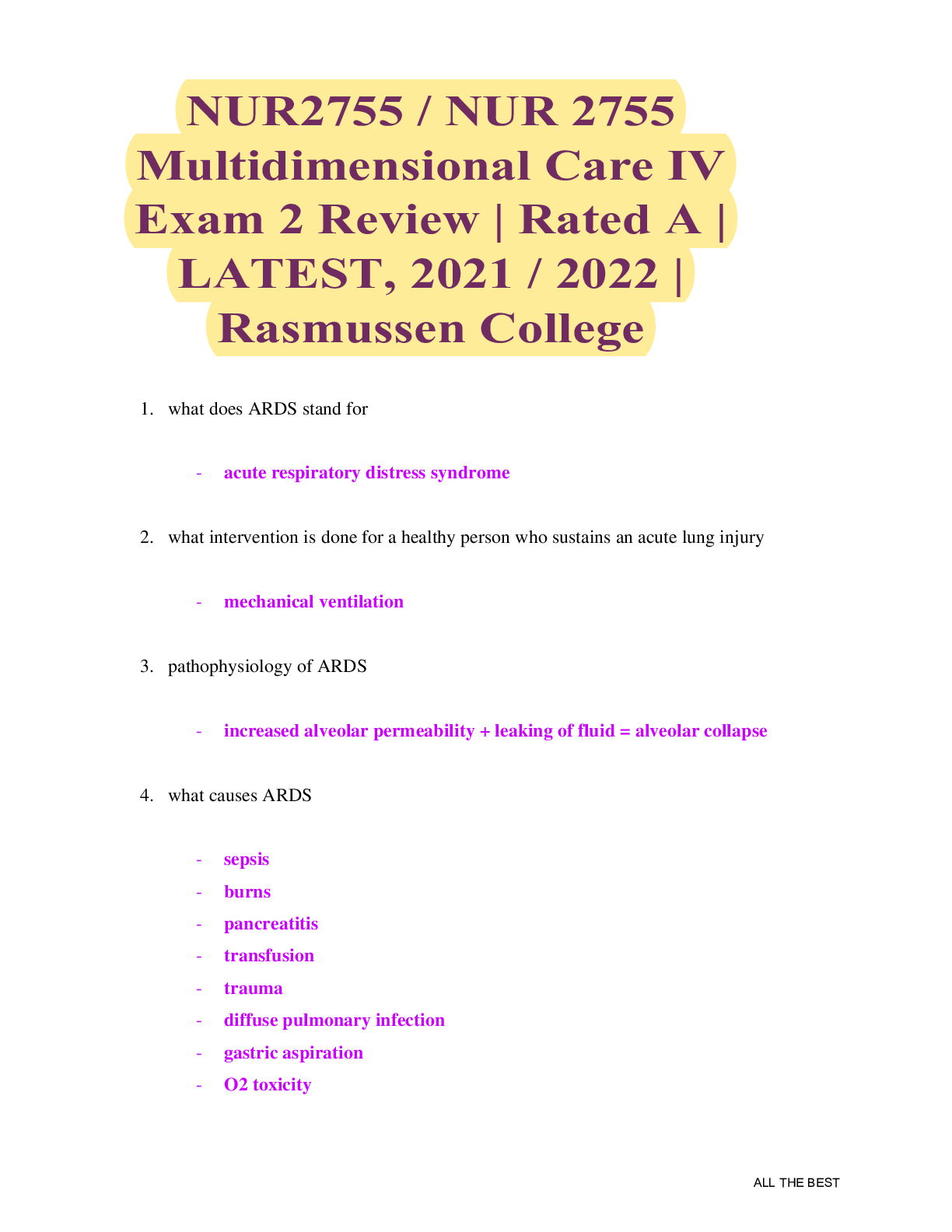
1. NG tube nursing considerations and interventions
- Assess for N/V increased abdominal distention, placement of tube.
at least every four hours, check NG tube for proper placement and tube patency and
output
monit
...
[Show More]
Last updated: 2 years ago
Preview 1 out of 6 pages
Instant download
Buy this Document to get the Full Access Instantly
Provided by Students Who Aced it
We Verify Document Content to Gurantee Accuracy
Reviews( 0 )
Document information
Connected school, study & course
About the document
Uploaded On
Sep 12, 2023
Number of pages
6
Written in
All

Additional information
This document has been written for:
Uploaded
Sep 12, 2023
Downloads
0
Views
267
Topic Tags
Related Subjects & Courses
Explore similar study resources and related concepts.
Recommended For You
Get more on EXAM »
$6
4 Pages
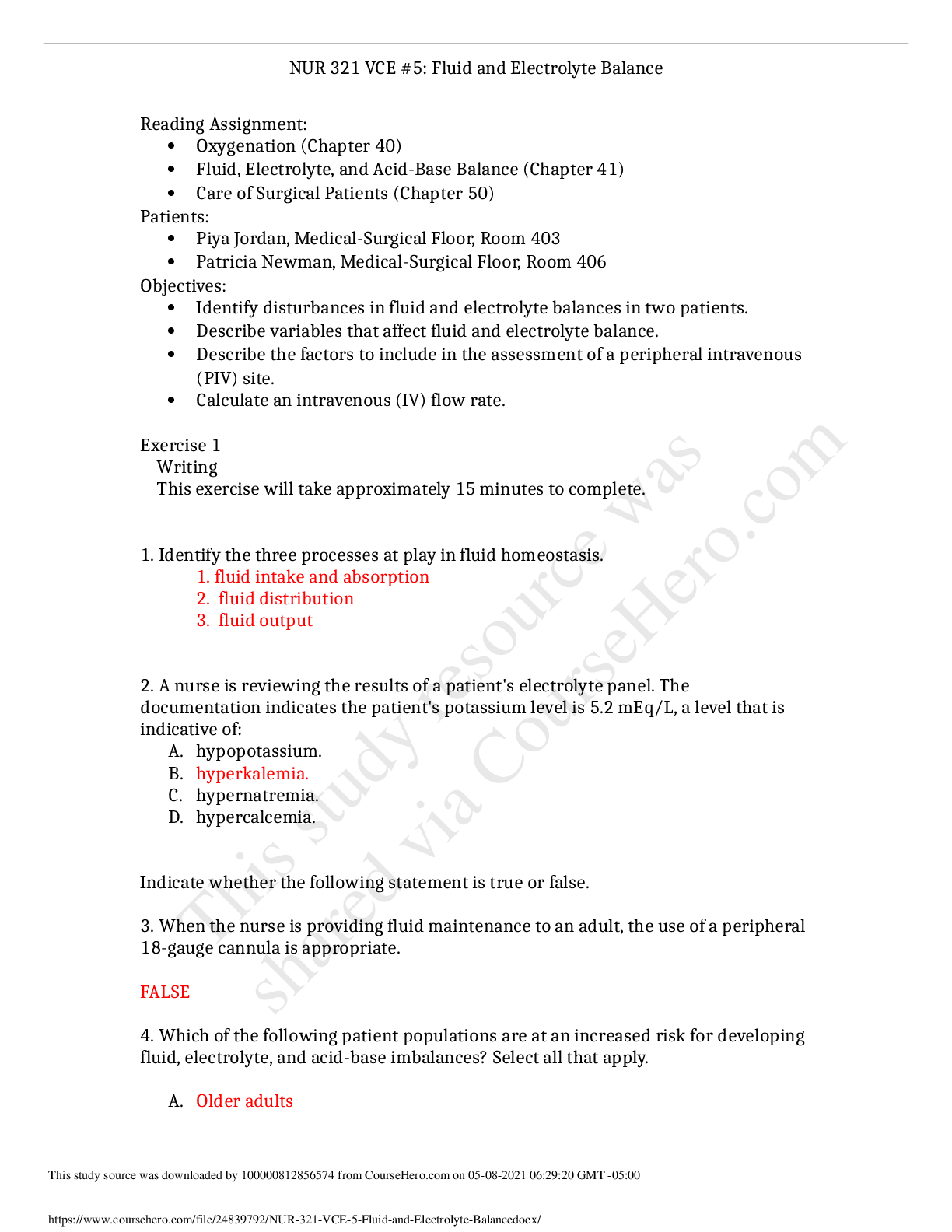
NUR 321 VCE #5 Fluid and Electrolyte Balance QUESTIONS AND ANS...

$8
6 Pages
NUR 321 VCE # 1 Lesson 3- Critical Thinking in Nursing Practic...

$9
7 Pages
NUR 321 VCE #2 Lesson 19- Wound Care QUESTIONS AND ANSWERS GRA...

$22.5
307 Pages
TEST BANK for Davis Advantage for Psychiatric Mental Health Nu...

$17
588 Pages
Test Bank For Fundamentals of Nursing 11th Edition Potter Perr...
$16
496 Pages
TEST BANK for Essentials of Psychiatric Mental Health Nursing:...

$29
88 Pages
Tina Jones Shadow Health Experience Overview Health History N...
$15
51 Pages
HESI A2- Contains VOCABULARY, GRAMMAR, MATHEMATICS, BIOLOGY, C...
More related documents below