NSG 3023 CHAPTER 37 QUIZ | VERIFIED SOLUTION
Document Content and Description Below
NSG 3023 CHAPTER 37 QUIZ
Chapter 37: Skin Integrity and Wound Care
Potter: Essentials for Nursing Practice, 8th Edition
MULTIPLE CHOICE
1. An elderly patient is admitted to the hospital for a bowel obstruction. The p
...
[Show More]
Last updated: 3 years ago
Preview 1 out of 12 pages
Instant download

Buy this Document to get the Full Access Instantly
Provided by Students Who Aced it
We Verify Document Content to Gurantee Accuracy
Reviews( 0 )
Document information
Connected school, study & course
About the document
Uploaded On
Feb 24, 2021
Number of pages
12
Written in
All

Additional information
This document has been written for:
Uploaded
Feb 24, 2021
Downloads
0
Views
68
Topic Tags
Related Subjects & Courses
Explore similar study resources and related concepts.
Recommended For You
Get more on EXAM »


$12.5
4 Pages
NR 566 Exam Preparation: Week 5 Chapter 37: HIV | TOP SCORE |...
$12
23 Pages
Chapter 37: Coordinating Care for Patients with Spinal Cord Di...

$10
15 Pages
Chapter 37 Structure and Function of the Renal and Urologic Sy...
$12
15 Pages
Chapter 37 Structure and Function of the Renal and Urologic Sy...


$5
13 Pages
Primary Care Art and Science of Advanced Practice Nursing - Te...
$5
13 Pages
Primary Care Art and Science of Advanced Practice Nursing - Te...
$5
26 Pages
Chapter 37 Nursing Care of Patients with Disorders of the Urin...
.png)
$16
72 Pages
Chapter 37: The Experience of Loss,Death, and Grief Potter e...

$6
5 Pages
NURS 6501 / NURS6501: Advanced Pathophysiology - Chapter 37 St...
.png)

$14
75 Pages
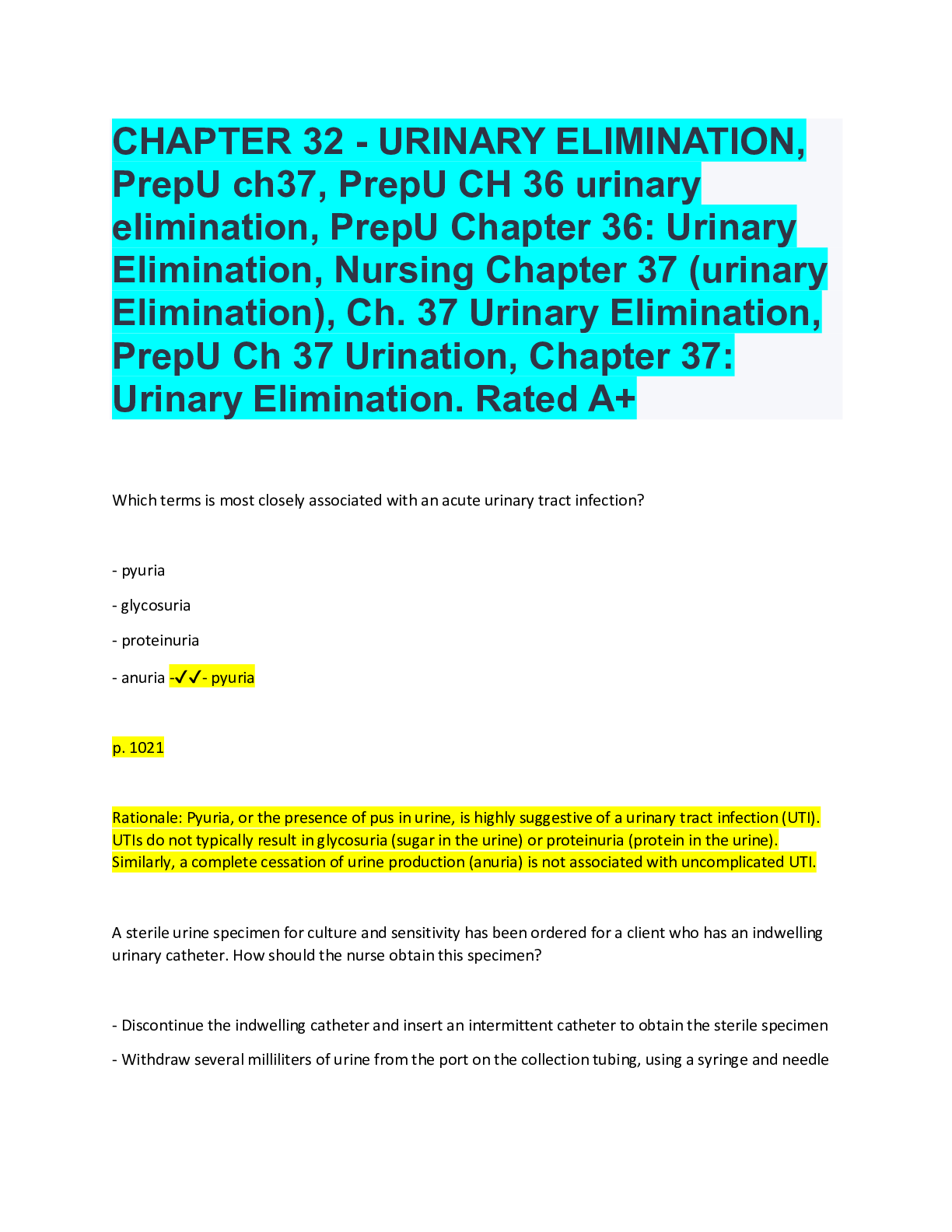
CHAPTER 32 - URINARY ELIMINATION, PrepU ch37, PrepU CH 36 urin...
More related documents below