COM 312 Exam 1 Comm, Conflict & Negotiation 45 Questions with Verified Answers
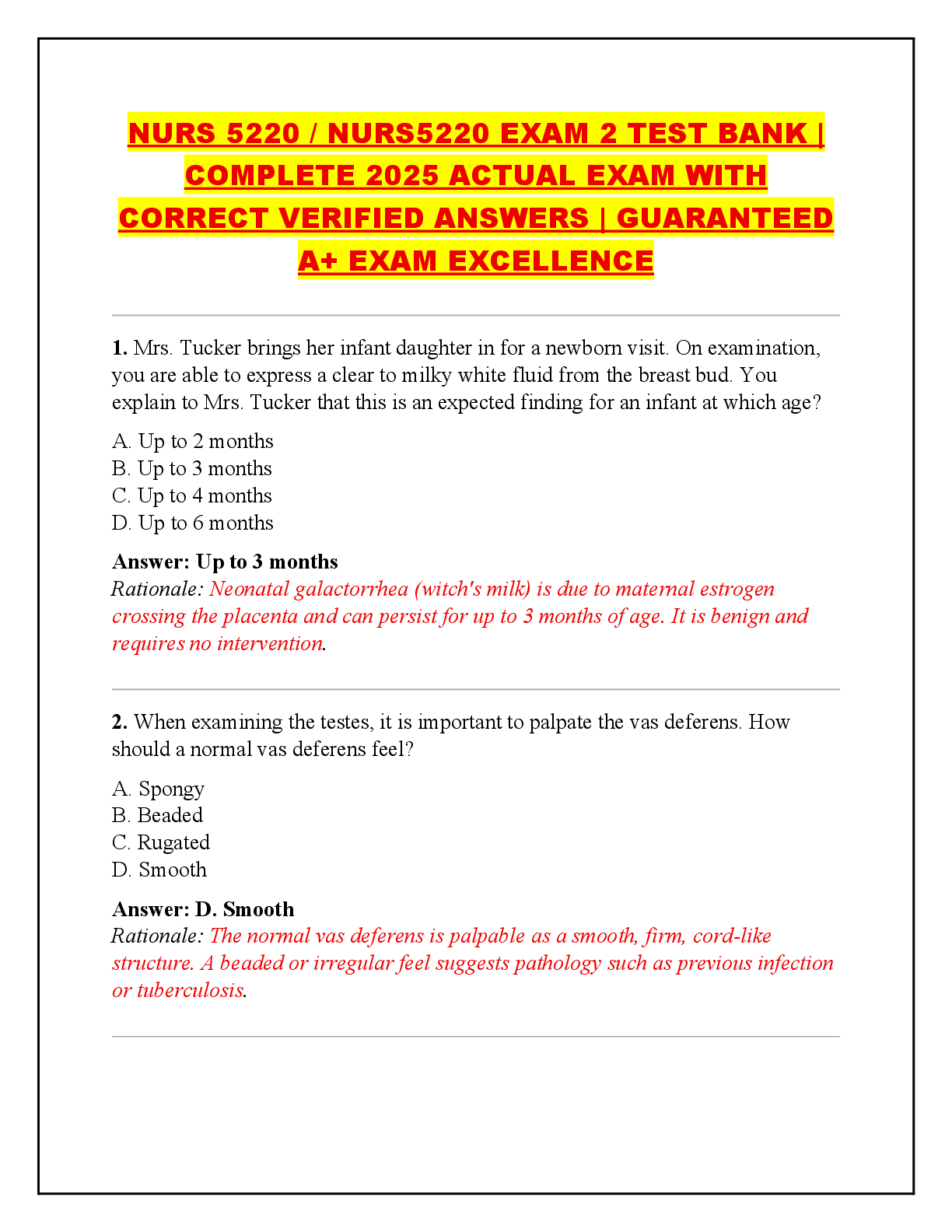
Which alternate solution for Integrative Negotiation involves inventing new options that meet all their respective needs - CORRECT ANSWER
...
COM 312 Exam 1 Comm, Conflict & Negotiation 45 Questions with Verified Answers
Which alternate solution for Integrative Negotiation involves inventing new options that meet all their respective needs - CORRECT ANSWER Finding a bridge solution
Which is the value or figure that you do not want to pay more than in a negotiation - CORRECT ANSWER Bottom Line
When a negotiator says: "Gee that offer was much lower than I expected; perhaps i've misconstructed the value here and should reconsider my goals and tactics" is an example of which cognitive bias in negotiations: - CORRECT ANSWER Anchoring and Adjustment
In which of the following examples is the communication model listed in the correct order? - CORRECT ANSWER sender encoded the message, message is transmitted, receiver decodes the message, receiver provides feedback to the sender
A snowball tactic is when a negotiator pretends that an issue of little or no importance to them is quite important. - CORRECT ANSWER False
Reactive devaluation is the process of minimizing the magnitude of a concession because the other party made the concession - CORRECT ANSWER True
Which of the following is not one of the four biases that threaten e-mail negotiations - CORRECT ANSWER Impasse in e-mail negotiation bias
According to your book, a competitive bargaining situation is also called - CORRECT ANSWER Distributive Bargaining Situation
Talk little, listen a lot is one of Korda's recommendations for Avoiding Traps from Professional Negotiators. - CORRECT ANSWER True
Single issue negotiations are more difficult than multiple issue negotiations. - CORRECT ANSWER True
According to Korda, if the buyer claims that they cannot commit more than a given sum to this purchase, it may be a purely tactical approach rather than a genuine cost reason, particularly if they asked for a preliminary quote 'for information purposes only.' - CORRECT ANSWER True
What are the most dominant contributors to breakdowns and failures in negotiation? - CORRECT ANSWER failures and distortions in perception, cognition, and communication
Research suggests that making the first offer is a negotiation is advantageous to the party making the offer - CORRECT ANSWER True
What type of frame is a predisposition towards satisfying a broader set of interest or needs in negotiations? - CORRECT ANSWER Aspiration
Gradual, delayed concession are perceived as less valuable than immediate concessions - CORRECT ANSWER False
Negative emotions may lead parties to escalate the conflict - CORRECT ANSWER True
Voting is NOT recommended by your book as a way to close discussion, as the "losers" will be less committed than the "winners" to the implementation of the negotiated outcome. - CORRECT ANSWER True
Encoding can be defined as: - CORRECT ANSWER the process by which messages are put into symbolic form
When the negotiating parties find more than one issue in conflict and have different priorities for these issues, this is an example of: - CORRECT ANSWER Logroll
Distributive Bargaining - CORRECT ANSWER Zero-sum. Win-Lose situation. The goals of one party
are in direct conflict to
the goals of another party. Limited resources (money). Complete disregard for the others' needs.
Integrative Negotation - CORRECT ANSWER Non-zero-sum. Win-Win situation. Focuses on commonalities instead of differences, addresses the needs of each party, and information and ideas are shared.
Distributive Bargaining Situation - CORRECT ANSWER 1. Starting points (initial offers)
2. Target points (What the party wants to acquire)
3. Resistance points (The point at which it is more advantageous to walk)
4. Alternative outcomes (More attractive other options)
Distributive - CORRECT ANSWER Type of negotiation used when parties have no relation. (No interdependence)
Integrative - CORRECT ANSWER Type of negotiation used when parties are interdependent and want to make each other happy.
Dual Concern Model - CORRECT ANSWER Yielding Problem Solving
Compromising
Inaction Contending
(concern for others vertical, concern for self horizontal)
Alternatives - CORRECT ANSWER -give negotiator power to walk away from negotiation
- if attractive, negotiators can set goals higher and make fewer concessions
BATNA - CORRECT ANSWER Best Alternatives To a Negotiation Agreement: Knowing your alternatives before going into a negotiation, otherwise, you won't make a good argument.
Dilemmas in Mutual Adjustment - CORRECT ANSWER 1. Honesty (How much of the truth do you share with the other party)
2. Trust (How much of what the other party shares with you can you believe)
Characteristics of a Negotiation Situation - CORRECT ANSWER - 2 or more parties
- conflict of needs and desires
- negotiate because parties think they can get a better deal
- expect a give and take process
-parties search for an agreement
-successful includes management of tangibles and resolution of intangibles
Mutual Adjustment - CORRECT ANSWER -continues throughout negotiation as both parties influence each other
- key causes of changes that occur
-understand how people will adjust = effective
Commitments - CORRECT ANSWER Making these in a distributive negotiation reduces the flexibility of the other party and keeps you looking stronger.
Strategies for closing the deal - CORRECT ANSWER 1. Provide alternatives
2. Assume the close
3. Split the difference
4. Exploding offers (You have '24 hours' to respond)
5. Deal sweeteners
Hardball Tactics - CORRECT ANSWER Used to pressure negotiators to do things they would not otherwise do.
- good cop/bad cop
- lowball/highball
- bogey
- the nibble
- chicken
- intimidation
- aggressive behavior
- snow job
Good cop/Bad Cop - CORRECT ANSWER One negotiator being good while the other is bad
Lowball/Highball - CORRECT ANSWER Starting off with an extremely high or low opening offer they know they will never achieve. This will cause the other party to reevaluate their opening offer.
Bogey - CORRECT ANSWER Negotiators pretending this is a topic of little or no importance
The Nibble - CORRECT ANSWER Negotiators ask for a small concession to go along with an item not previously discussed.
Chicken - CORRECT ANSWER Negotiators using a large bluff of a threatened action to force the other party to "chicken out"
Intimidation - CORRECT ANSWER Intimidating the other party to agree
Aggressive Behavior - CORRECT ANSWER Using aggressive behavior to get the other party to agree
Snow Job - CORRECT ANSWER Tactic used when negotiators overwhelm the other party with so much information, they have trouble determining what is important, causing them to become distracted.
Key steps in Integrative Negotiation - CORRECT ANSWER 1. Identify the problem
2. Understand the problem fully (identify needs of both sides)
3. Generate alternative solutions
4. Evaluate and select among alternatives
Characteristics of Integrative Negotiation - CORRECT ANSWER - common goal
- faith in abilities
- belief in validity of positions
- motivation to work together
- trust
- communcation
Common Goal - CORRECT ANSWER A goal that is being shared equally among one another.
Joint Goal - CORRECT ANSWER A goal that comprises of a collective effort to combine differing individual goals together.
[Show More]