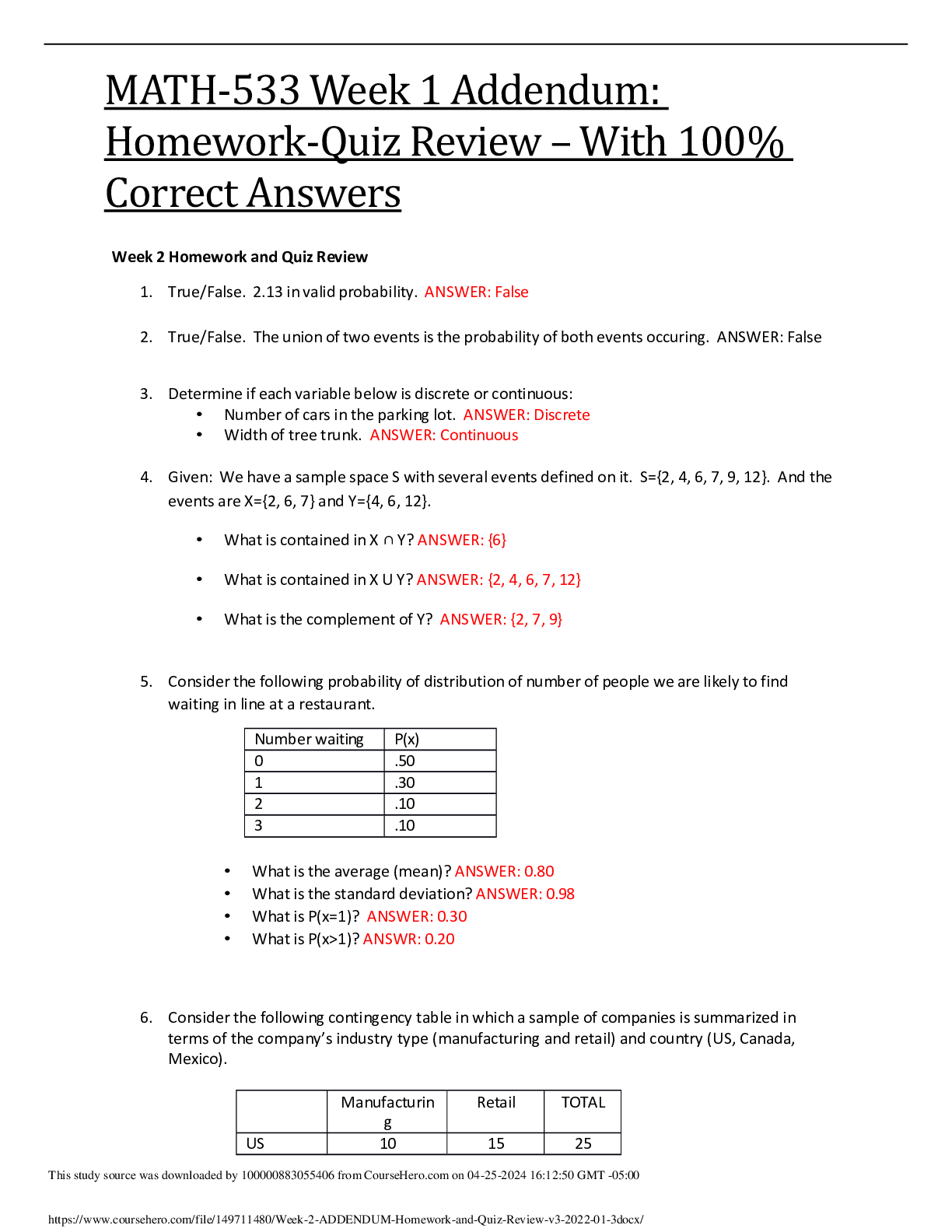
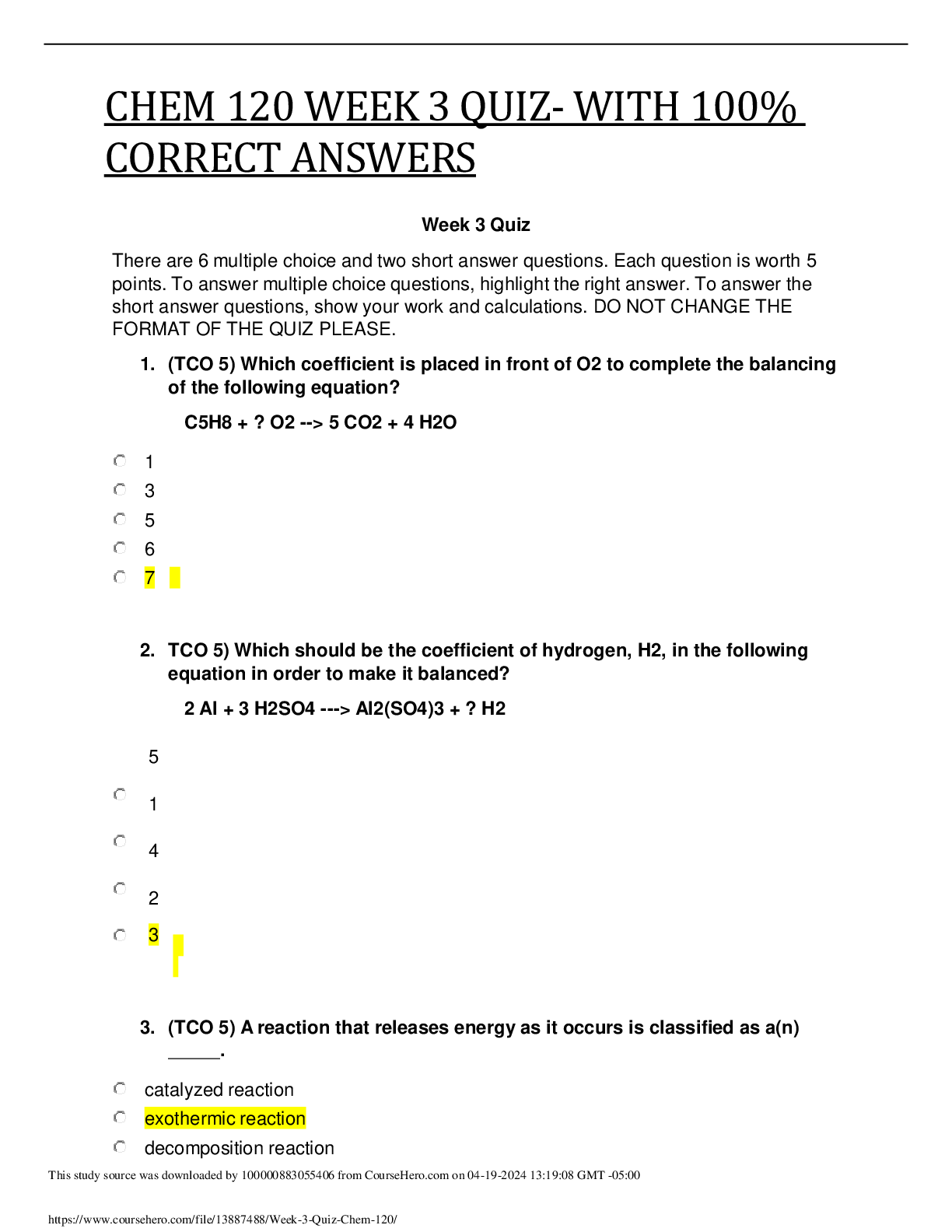
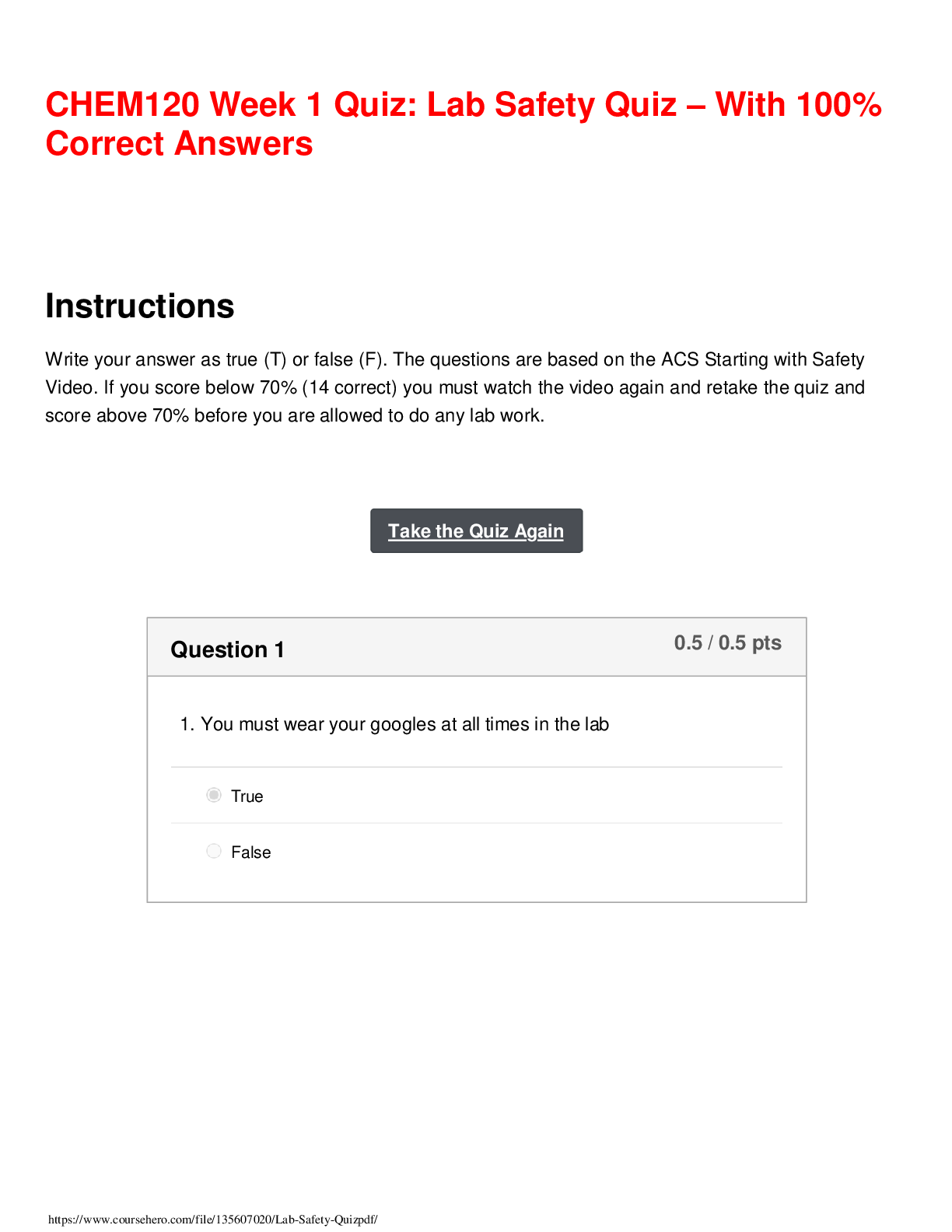
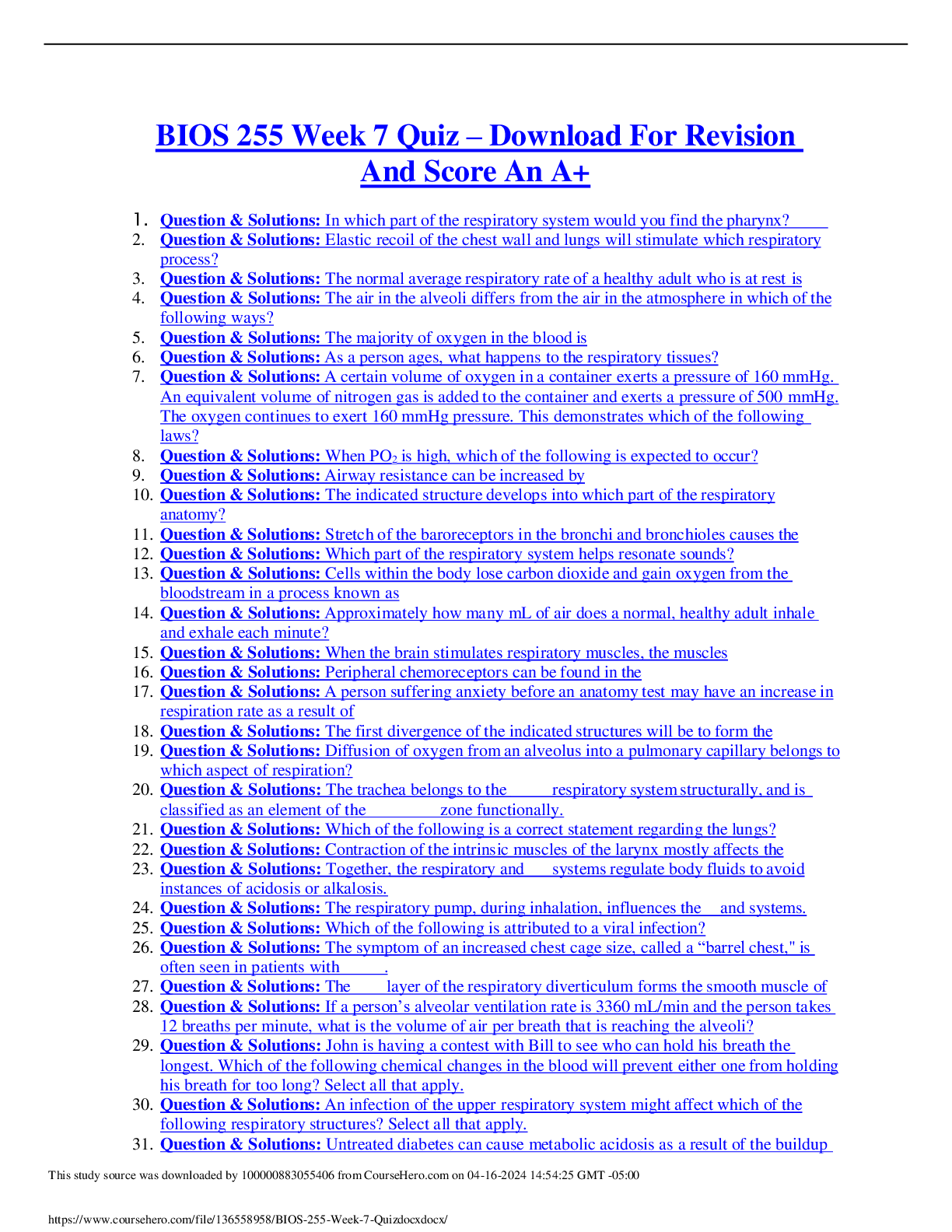
General Science > Quiz > SCI 228 Week 3 Quiz (Version 3) – Graded An A+ ( 100% Correct Answers) (All)
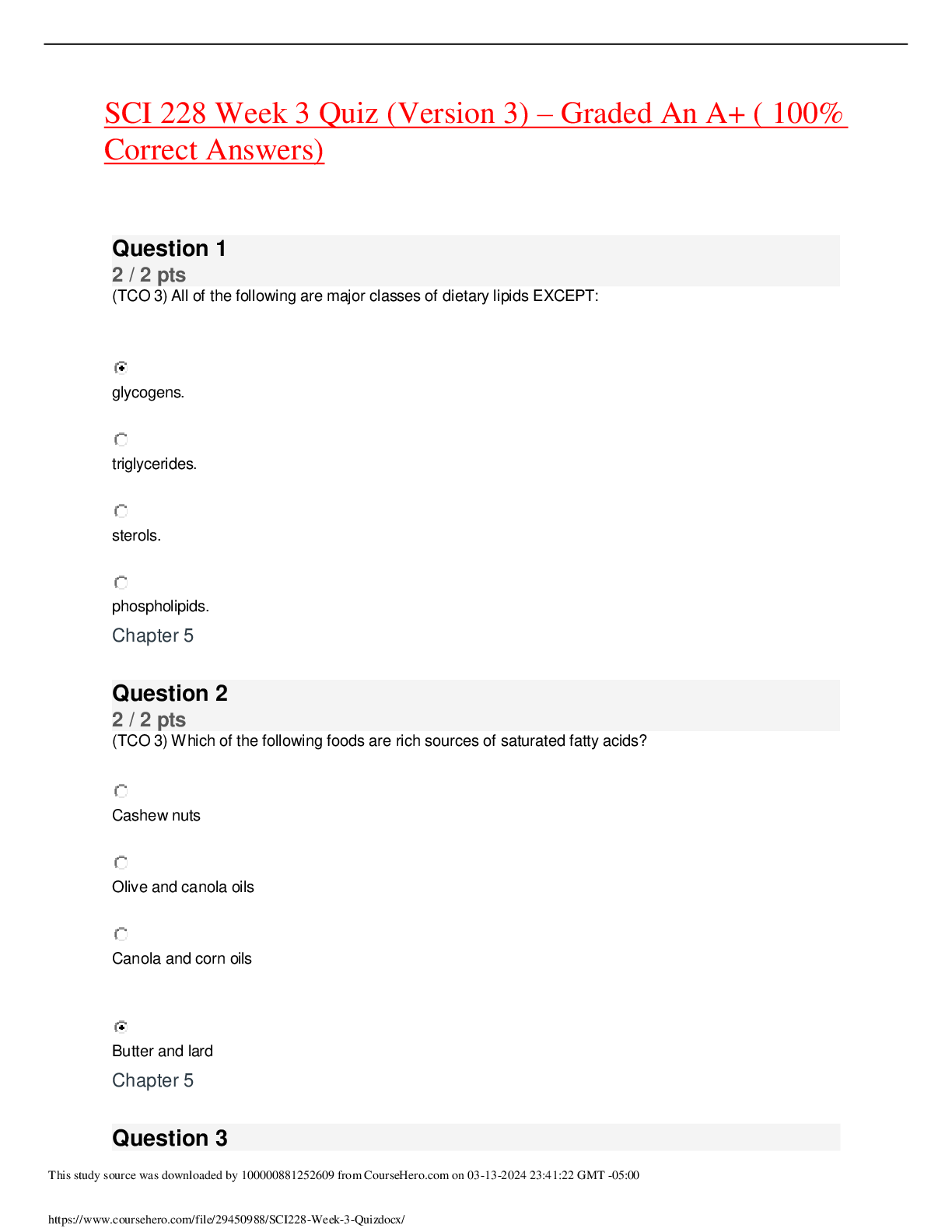
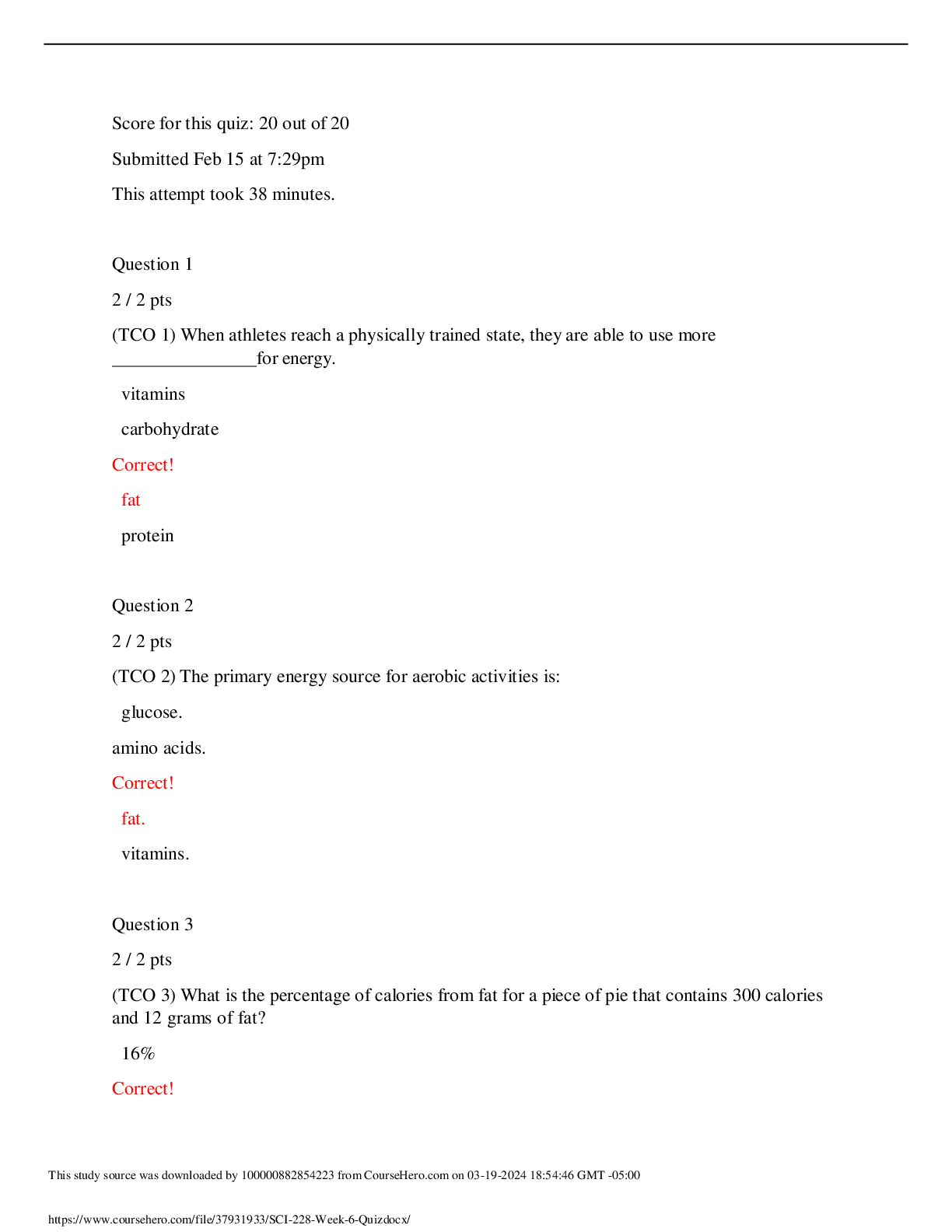
SCI 228 Week 3 Quiz (Version 3) – Graded An A+ ( 100% Correct Answers)
Document Content and Description Below
Last updated: 2 years ago
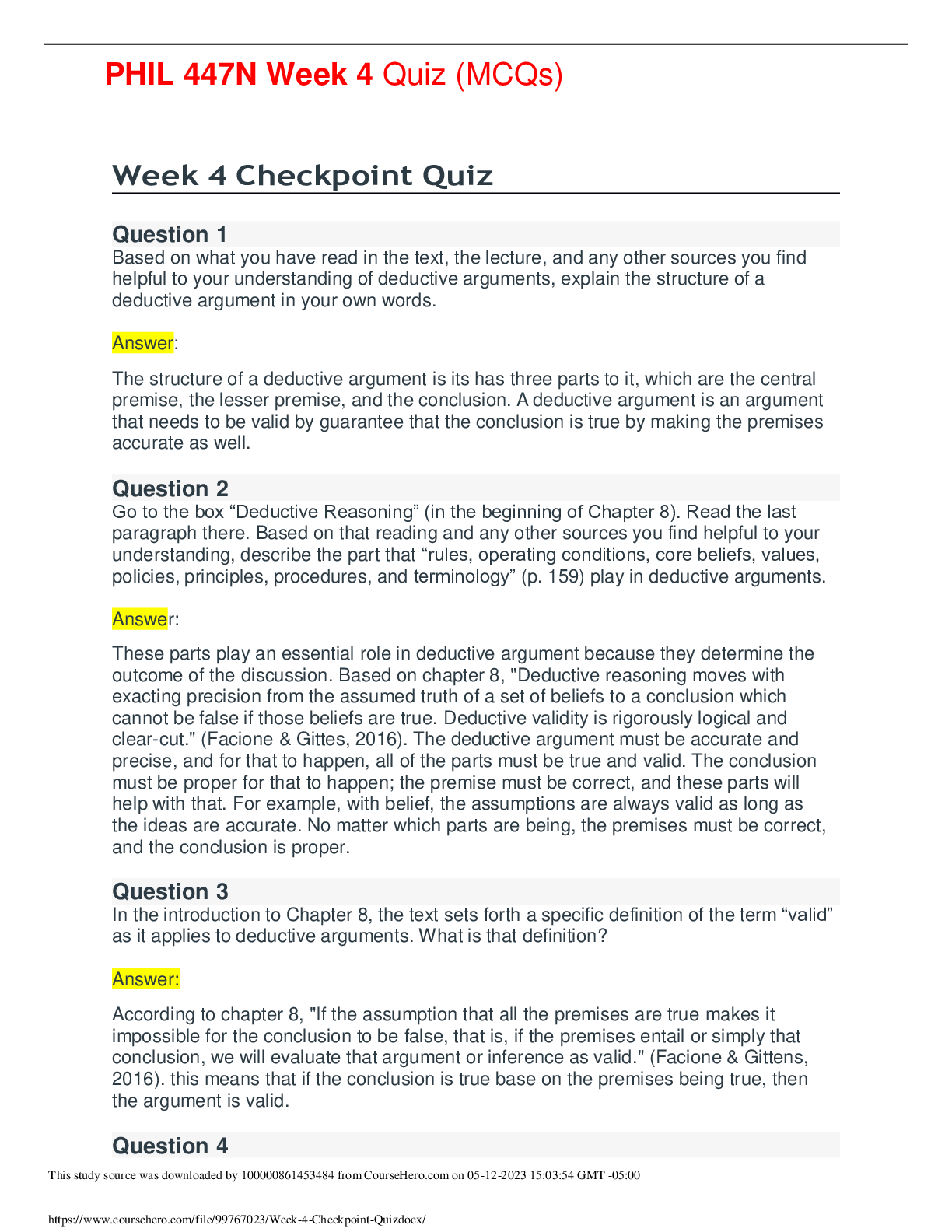
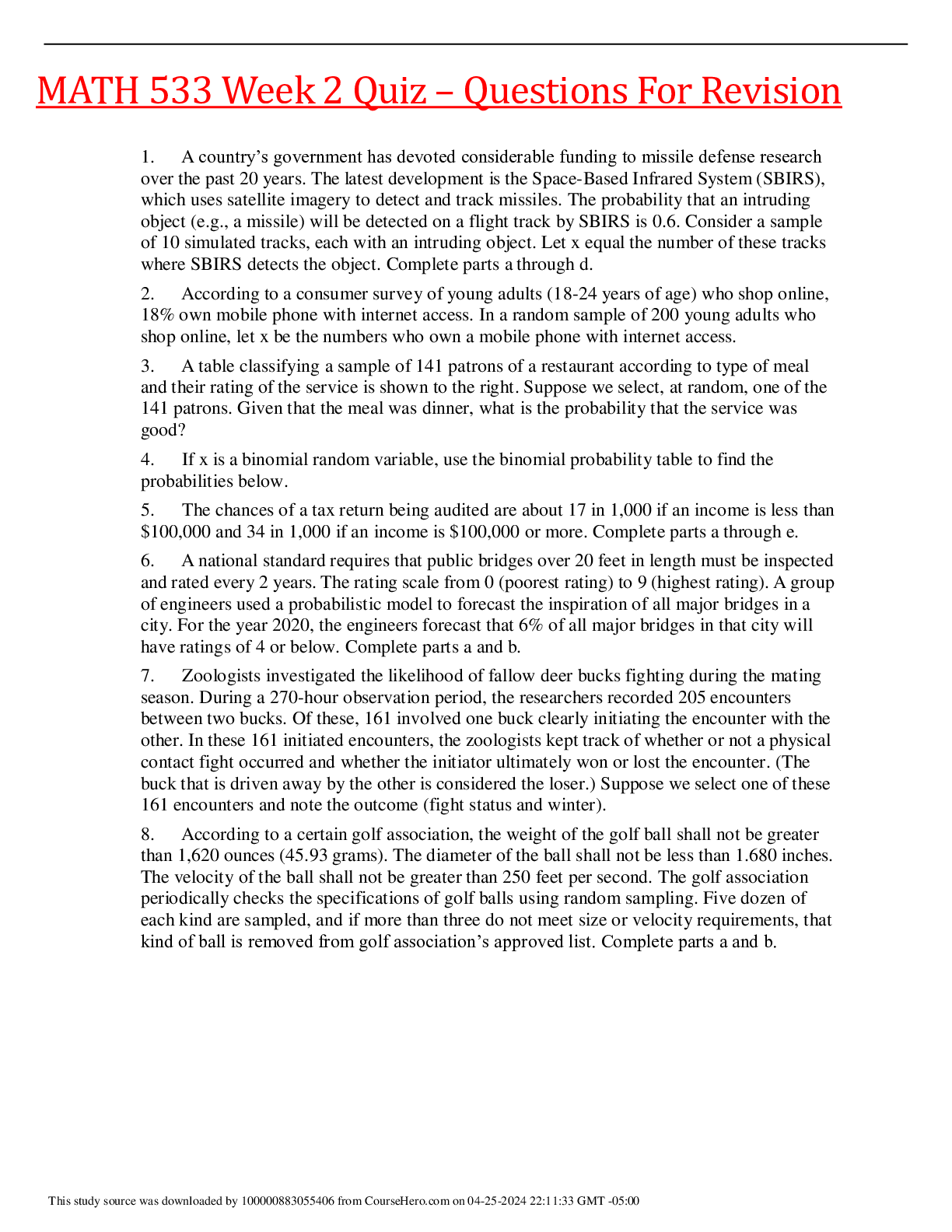
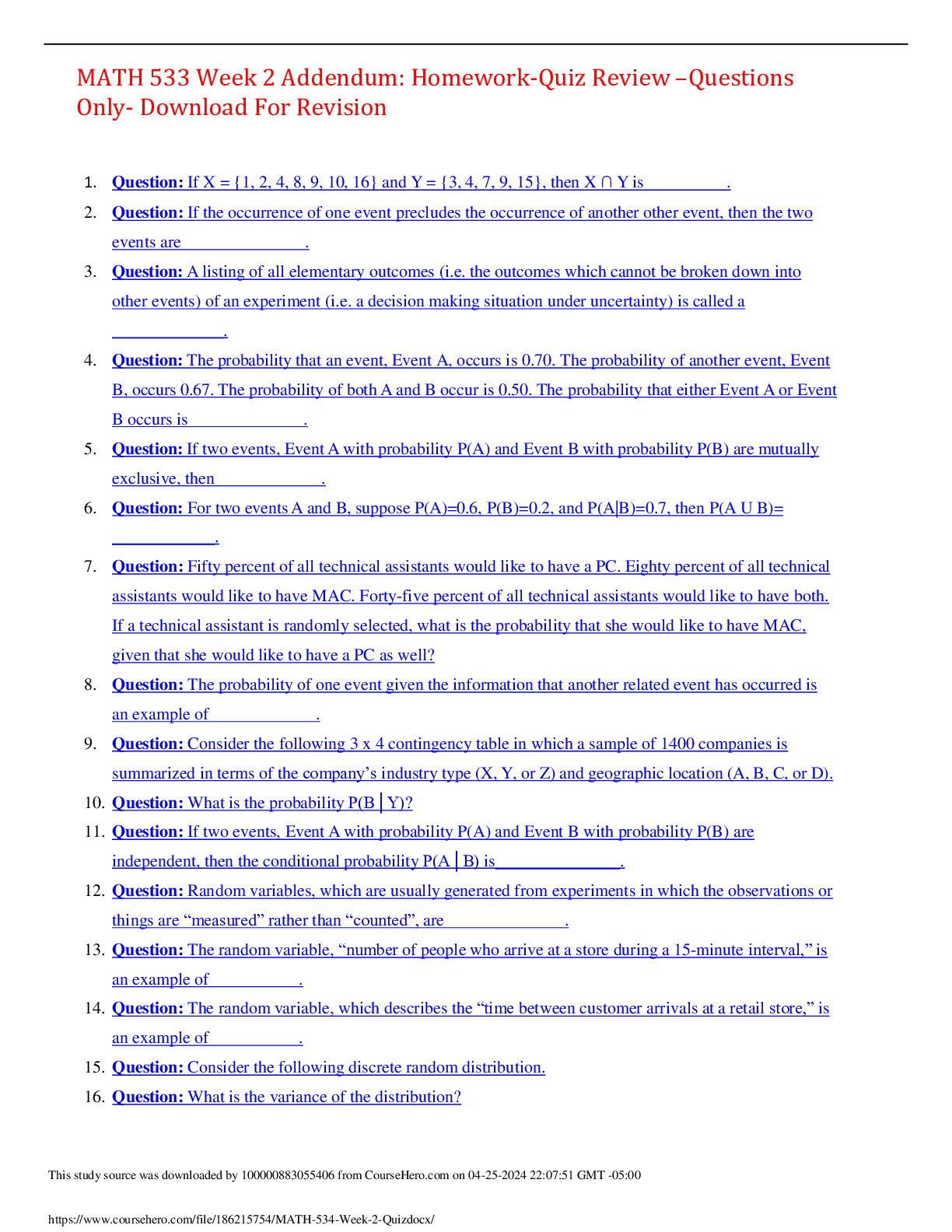
Preview 1 out of 5 pages
Instant download
Buy this Document to get the Full Access Instantly
Provided by Students Who Aced it
We Verify Document Content to Gurantee Accuracy
Reviews( 0 )
Document information
Connected school, study & course
About the document
Uploaded On
Mar 14, 2024
Number of pages
5
Written in
All

Additional information
This document has been written for:
Uploaded
Mar 14, 2024
Downloads
0
Views
124
Topic Tags
Recommended For You
Get more on Quiz »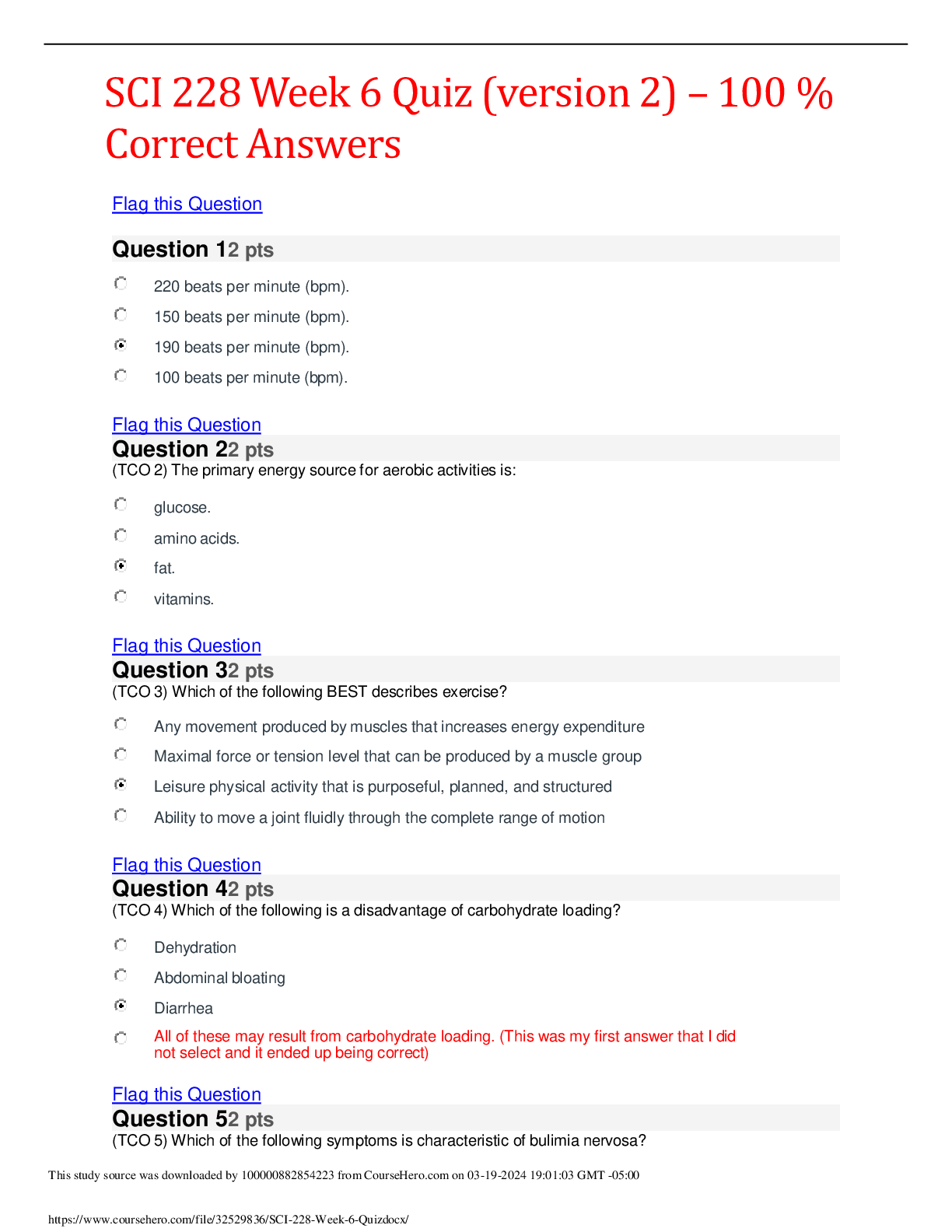

SCI 228 Week 7 Quiz: Nutrition, Health, and Wellness with Lab...

SCI 228 Week 7 Quiz: Nutrition, Health, and Wellness with Lab...

St. Johns University - SCI 228 Week 8 Final Exam (Latest Guide...

SCI 228 Nutrition, Health, And Wellness with Lab, Week 5 DIGIT...
DeVry University, ChicagoSCI 228SCI 228 61343 Nutri, Health an...
.png)


SCI-228 Week 6 Discussion: What Is A Healthy Body Weight
SCI 228 Final_September_2017 Graded A - DeVry University
Solutions Manual for Digital Fundamentals 11th Edition By Thom...

Integrated Science 7th Edition By Bill Tillery, Eldon Enger, F...

Integrated Science 7th Edition By Bill Tillery, Eldon Enger, F...
Test Bank for Genetics Essentials, Concepts and Connections, 5...
TEST BANK ESSENTIAL GENETICS: A GENOMIC PERSPECTIVE 4TH EDITIO...