NR 507 Final Examinations Study Guide
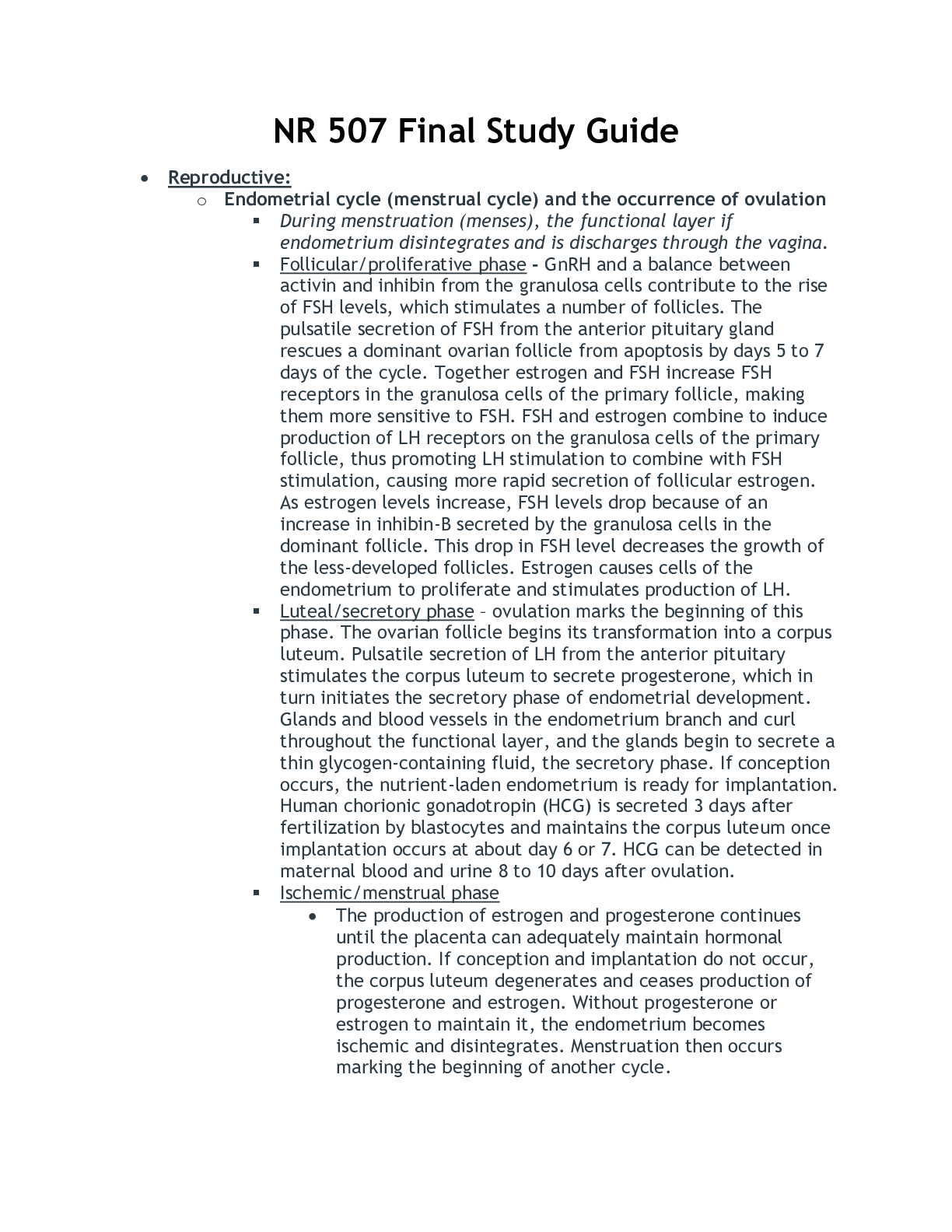
NR 507 Final Study Guide
Reproductive:
o Endometrial cycle (menstrual cycle) and the occurrence of ovulation
During menstruation (menses), the functional layer if
endometriu
...
NR 507 Final Examinations Study Guide
NR 507 Final Study Guide
Reproductive:
o Endometrial cycle (menstrual cycle) and the occurrence of ovulation
During menstruation (menses), the functional layer if
endometrium disintegrates and is discharges through the vagina.
Follicular/proliferative phase - GnRH and a balance between
activin and inhibin from the granulosa cells contribute to the rise
of FSH levels, which stimulates a number of follicles. The
pulsatile secretion of FSH from the anterior pituitary gland
rescues a dominant ovarian follicle from apoptosis by days 5 to 7
days of the cycle. Together estrogen and FSH increase FSH
receptors in the granulosa cells of the primary follicle, making
them more sensitive to FSH. FSH and estrogen combine to induce
production of LH receptors on the granulosa cells of the primary
follicle, thus promoting LH stimulation to combine with FSH
stimulation, causing more rapid secretion of follicular estrogen.
As estrogen levels increase, FSH levels drop because of an
increase in inhibin-B secreted by the granulosa cells in the
dominant follicle. This drop in FSH level decreases the growth of
the less-developed follicles. Estrogen causes cells of the
endometrium to proliferate and stimulates production of LH.
Luteal/secretory phase – ovulation marks the beginning of this
phase. The ovarian follicle begins its transformation into a corpus
luteum. Pulsatile secretion of LH from the anterior pituitary
stimulates the corpus luteum to secrete progesterone, which in
turn initiates the secretory phase of endometrial development.
Glands and blood vessels in the endometrium branch and curl
throughout the functional layer, and the glands begin to secrete a
thin glycogen-containing fluid, the secretory phase. If conception
occurs, the nutrient-laden endometrium is ready for implantation.
Human chorionic gonadotropin (HCG) is secreted 3 days after
fertilization by blastocytes and maintains the corpus luteum once
implantation occurs at about day 6 or 7. HCG can be detected in
maternal blood and urine 8 to 10 days after ovulation.
Ischemic/menstrual phase
The production of estrogen and progesterone continues
until the placenta can adequately maintain hormonal
production. If conception and implantation do not occur,
the corpus luteum degenerates and ceases production of
progesterone and estrogen. Without progesterone or
estrogen to maintain it, the endometrium becomes
ischemic and disintegrates. Menstruation then occurs
marking the beginning of another cycle. Ovulatory cycles appear to have a minimum length of 24 to 26.5
days: the primary ovarian follicle requires 10 to 12.5 days to
develop, and the luteal phase appears relatively fixed at 14 days
(+/- 3 days). Menstrual blood flow usually lasts 3-7 days, but it
may last as long as 8 days or stop after 1 to 2 days and still be
considered within normal limits.
Ovulation – the release of an ovum from a mature follicle and
marks the beginning of the luteal/secretory phase.
o Uterine prolapse
Descent of the cervix or entire uterus into the vaginal canal.
In severe cases, the uterus falls completely through the vagina
and protrudes from the introitus.
Symptoms of other pelvic floor disorders also may be present.
Urinary: sensation of incomplete emptying of the bladder,
urinary incontinence, urinary frequency/urgency, bladder
“splinting” to accomplish voiding
Bowel: constipation or feeling of rectal fullness or
blockage, difficult defecation, stool or flatus incontinence
Urgency: manual “splinting” of posterior vaginal wall to
accomplish defecation
Pain & Bulging: vaginal, bladder, rectum; pelvic pressure,
bulging, pain, lower back pain
Sexual: dyspareunia, decreased sensation, lubrication,
arousal
Tx:
Kegel exercises
Estrogen to improve tone and vascularity of fascial support
Pessary
Weight loss
Avoidance of constipation
o Polycystic ovarian syndrome
Most common cause of anovulation and ovulatory dysfunction in
women.
Defined as having at least two of the following three features:
irregular ovulation, elevated levels of androgens (testosterone),
and the appearance of polycystic ovaries on ultrasound.
Polycystic ovaries do not have to be present to diagnose PCOS,
and conversely their presence alone does not establish the
diagnosis.
Initial identification of genes involved in steroid biosynthesis,
androgen biosynthesis, and insulin receptors within the ovary
indicates genetic involvement.
A hyperandrogenic state is a cardinal feature in the pathogenesis
of PCOS. However, glucose intolerance/insulin resistance and
hyperinsulinemia often run parallel to and markedly aggravate the
hyperandrogenic state, thus contributing to the severity of signs
and symptoms of PCOS.
Excessive androgens affect follicular growth, and insulin affects
follicular decline by suppressing apoptosis and enabling follicles to
persist.
Weight gain tends to aggravate symptoms, whereas weight loss
may ameliorate some of the endocrine and metabolic events and
thus decrease symptoms.
Women with PCOS tend to have increased leptin levels. Leptin
influences the hypothalamic pulsatility of GnRH and consequent
interaction along the entire HPO axis.
In PCOS there is dysfunction in ovarian follicle development.
Inappropriate gonadotropin secretion triggers the beginning of a
vicious cycle that perpetuates anovulation.
Typically, levels of FSH are low or below normal and LH levels and
LH bioactivity are elevated. An increased frequency of GnRH
pulses appears to cause increased frequency of LH pulses.
Persistent LH elevation causes a increase in the levels of
androgens. Androgens are converted to estrogen in peripheral
tissues, and increased testosterone levels cause a significant
reduction in SHBG, which in turn causes increased levels of free
estradiol.
Elevated estrogen levels trigger a positive-feedback response in
LH and a negative-feedback response in FSH.
The accumulation of follicular tissue is various stages of
development allows an increased and relatively constant
production of steroids in response to gonadotropin stimulation.
Thus PCOS is characterized by excessive production of both
androgen and estrogen.
In turn, persistent anovulation causes enlarged polycystic ovaries
characterized by a smooth, pearly white capsule. This
characteristic appearance is caused by an increase of surface area
and increased volume of up to 2.8 times, doubling of growing and
atretic follicles, thickening of the tunica by 50%, increasing
cortical stromal thickening by one-third and a fivefold increase in
subcortical stroma, and escalating hyperplasia.
Manifestations:
Usually appear within 2 years of puberty but may present
after a variable period of normal menstrual function and
possibly pregnancy.
Symptoms are related to anovulation, hyperandrogenism,
and insulin resistance and include dysfunctional bleeding or
amenorrhea, hirsutism, acne, acanthosis nigricans, and
infertility. Eval & Treatment:
Diagnosis is based on evidence of androgen excess, chronic
anovulation, and sonographic evidence of polycystic ovaries
with at least 2 of the 3 criteria present.
Tests for impaired glucose tolerance are recommended.
Evidence of hyperandrogenism must be present before
PCOS is diagnosed in an adolescent female.
Goals of tx: reversing signs and symptoms of androgen
excess, instituting cyclin menstruation, restoring fertility,
and ameliorating any associated metabolic or endocrine, or
both, disturbances.
First line: combined oral contraceptives for management of
symptoms and to establish regular menses.
For those women with PCOS who are overweight or obese,
lifestyle modifications including regular exercise and
weight loss, also are considered first-line treatment.
o Testicular cancer and conditions that increase risk
Highly treatable, usually curable cancer that most often develops
in young and middle-aged men
90% of testicular cancers are germ cell tumors arising from the
male gametes.
In addition, testicular tumors can arise from specialized calls of
the gonadal stroma. These tumors, which are named for their
cellular origins are Leydig cell, Sertoli cell, granulosa cell, and
theca cell tumors and constitute less than 10% of all testicular
cancer.
Risk factors: history of cryptorchidism, abnormal testicular
development, human immunodeficiency virus (HIV) and AIDS,
Klinefelter syndrome, and history of testicular cancer.
Manifestations:
Painless testicular enlargement is usually the first sign.
Enlargement is usually gradual and may be accompanied by
a sensation of testicular heaviness or dull ache in the lower
abdomen.
Lumbar pain may be present and usually is caused by
retroperitoneal node metastasis.
Signs of metastasis to the lungs: cough, dyspnea,
hemoptysis
Supraclavicular node involvement: dysphagia, neck swelling
Metastasis to CNS: alterations in vision, mental status,
papilledema, and seizures
o Symptoms that require evaluation for breast cancer
The first sign of breast cancer is usually a painless lump. Lumps
caused by breast tumors do not have any classic characteristics.
Chest pain (lung metastasis) Dilated blood vessels
Dimpling of the skin
Edema
Edema of the arm
Hemorrhage
Local pain
Nipple/areolar eczema
Nipple discharge in nonlactating woman
Nipple retraction
Pitting of the skin (peaud’orange)
Reddened skin, local tenderness, and warmth
Skin retraction
Ulceration
o Signs of premenstrual dysphoric disorder
>/= 5 symptoms below: occur in most cycles during the week
before menses onset, improve within a few days after menses
onset, and diminish in the week postmenses
Marked affective lability
Marked irritability or anger or increased interpersonal
conflicts
Marked anxiety, tension
Decreased interest
Difficulty concentrating
Easy fatigability, low energy
Increase or decrease in sleep
Feelings of being overwhelmed
Physical symptoms: breast tenderness, muscle or joint
aches, “bloating” or weight gain
o Dysfunctional uterine bleeding (Abnormal uterine bleeding)
Bleeding that is abnormal in duration, volume, frequency, or
regularity and has been present for the majority of the previous 6
months.
May be acute or chronic and is classified by PALM-COEIN system:
Polp
Adenomyosis
Leiomyoma
Malignancy
Hyperplasia
Coagulopathy
Ovulatory dysfunction
Endometrial
Iatrogenic
Not-yet classified
In premenstrual or menopausal women, any bleeding is considered
abnormal. Therefore bleeding more frequently than every 21 daysor less frequently than every 35 days, is considered to be
abnormal. Menstrual bleeding for longer than 7 days also is
considered abnormal.
AUB is the leading reason for hysterectomy.
Perimenopausal women are most commonly affected.
The majority of AUB is due to lack of ovulation. Normal, regular
periods are the result of complex interplay between the
hypothalamus, pituitary, ovary, and the uterine endometrium.
Disruptions in this system can affect the amount and structure of
the uterine endometrium, causing it to shed irregularly or heavily.
If a follicle forms but never releases the ovum, the follicle may
continue to produce estrogen, encouraging endometrial
proliferation beyond the normal 14-day time window. In addition,
the lack of progesterone causes the thickened endometrium to be
unable to shed in a predictable fashion without excessive blood
loss. Women who fail to ovulate experience irregularities in their
menstrual bleeding related to the lack of progesterone and, in
some cases, an excess of estrogen.
Without ovulation, menstrual flow may become irregular,
excessive, or both, resulting from the large quantity of tissue
available for bleeding and the random breakdown of tissue that
results in exposure of vascular channels. In the absence of
adequate progesterone levels, usual endometrial control
mechanisms are missing, such as vasoconstrictive rhythmicity,
tight coiling of spiral vessels, and orderly collapse, and stasis does
not occur.
AUB also can result from defects of the corpus luteum, resulting
in progesterone deficiencies, or from abnormalities of the uterus
or cervix, such as endometrial polyps, uterine fibroids, or even
uterine or cervical cancers.
Coagulation defects also can cause heavy and abnormal uterine
bleeding and should be suspected in younger women with a
history of extensive bruising or bleeding during dental procedures.
Iatrogenic AUB can be caused by intrauterine devices or longacting contraceptive implants or medications, such as
anticoagulants, steroids, digitalis, phenytoin, or hypothalamic
depressants.
Manifestations:
Unpredictable and variable bleeding
Increased menstrual flow and the passage of large clots,
leading to excessive blood loss
Pain, decreased productivity, and sexual dysfunction
Eval & Tx:
1st step in assessing AUB is determining the cause of the
bleeding. Treatment goals include preventing or controlling abnormal
bleeding, identifying underlying disease, and inducing
regular menstrual cycles.
NSAIDs, such as ibuprofen and naproxen, are often 1st-line
treatment for excessive menstrual bleeding because they
reduce prostaglandin synthesis within the endometrial
tissues, which causes vasoconstriction and decreased
menstrual blood loss. NSAIDs can reduce menstrual
bleeding significantly with minimal side effects. For the
best effect, they should be taken in the few days preceding
the beginning of the menstrual period and be continued
through the days of heaviest bleeding. NSAIDs are not as
effective in controlling menstrual blood loss as hormonal
therapies.
Young women and those of childbearing age with abnormal
bleeding are often treated with hormonal therapies to
override the HPG axis and mimic normal menstrual
bleeding or suppress it entirely. Common treatments
include oral contraceptive pills that contain both estrogen
and progesterone, long-term treatment with
medroxyprogesterone and the levonorgestrel intrauterine
device.
Women who do not wish to have future pregnancies can opt
for treatments that permanently suppress their uterine
lining. These treatments include ablation, where the lining
is burned to prevent future proliferation of the endometrial
cells, and complete removal of the uterus in hysterectomy.
If a woman is menopausal, and has not had a menstrual
period for more than 1 year, all vaginal bleeding should be
investigated to rule out uterine and other cancers.
Women with coagulation disorders may have excessive
menstrual bleeding because they have a predisposition to
bleeding or because they are taking anticoagulant
medications to overcome a genetic predisposition to
excessive clotting. To control their menstrual bleeding,
these women can opt for cycle suppression.
o Pathophysiology of prostate cancer
One of the most common forms of cancer occurring in the male.
Prostatic cancer occurs in older men, is slow growing, and is not
highly invasive.
Individuals experiencing this cancer typically have high levels of
prostatic-specific antigen in their blood.
Most occur in the periphery of the prostate.
o HPV and the development of cervical cancer
Cervical cancer is almost exclusively caused by cervical human
papillomavirus (HPV) infection. Infection with high-risk types ofHPV is a necessary precursor to development of cervical dysplasia,
otherwise known as the precancerous cell changes that lead to
invasive cancer.
Precancerous dysplasia, also called cervical intraepithelial
carcinoma (CIN) and cervical carcinoma in situ (CIS), is a more
advanced form of these cell changes. Importantly, cervical
dysplasia can be detected noninvasively through examination of
the cervical cells. If dysplasia is detected early, treatment is
available to prevent invasive cancer.
High-risk HPV may persist and cause abnormal cellular changes
that can become cancerous. Most HPV infections are cleared by
the immune system; the vast majority of infections do not cause
cervical cancer. For this reason, screening for cervical cancer
before age 21 is not recommended.
Women with multiple sexual partners are more likely to be
exposed to high-risk HPV, but women with only one lifetime
sexual partner also can become infected. Smoking has been shown
to increase the risks of persistent infection and later development
of cervical cancer; in addition, women who have many children,
have a long history of oral contraceptive use, and are
immunocompromised also are at higher risk of cervical cancer.
Women who use vaginal douches also seem to be at increased risk
of HPV infection.
HIV infection greatly increases the risk that women infected with
HPV will develop cervical cancer, and women with HIV should be
screened for cervical cancer more frequently more women
without HIV. In addition, high-risk HPV is found more frequently in
women who are coinfected with chlamydia or gonorrhea,
suggesting that those infectious processes may support the
persistence of HPV in those women.
There are two main cell types: squamous epithelium cells and
columnal epithelial cells. The line where the two cell types meet,
known as the transformation zone, is very vulnerable to the
oncogenic effects of HPV, and this is where carcinoma in situ is
most likely to develop.
Because metaplastic cells are at increased risk of incorporating
foreign or abnormal genetic material, neoplastic changes are most
common in the transformation zone.
In girls and young women, a large portion of their cervix is
covered with columnar epithelium, a condition known as
squamous metaplasia. Therefore the younger a woman is when
she contacts HPV, the more sensitive cervical cells are exposed.
Manifestations:
Asymptomatic
PAP test necessary for early detection
If symptoms exist: vaginal bleeding or abnormal discharge.o Vaginal bleeding may occur after intercourse or
between menstrual periods.
o Vaginal discharge is a less common presenting
symptom and may be serosanguineous or yellowish
with a foul odor.
Eval & Tx:
For women aged 30-65, HPV testing is now recommended
at the same time as the Pap test because it is noninvasive
and identifies women at later risk for cellular abnormalities
leading to cancer; indeed, HPV is often detectable for
more than a decade before any noticed cellular changes.
For women aged 21-29, HPV testing is only indicated if a
PAP test is abnormal, which is known as reflex HPV testing.
Cervical cytologic exam is most accurate if cells are
obtained from both the endocervix and ectocervix, which
involves placing the collection device into the cervical os.
When dysplasia is detected, further testing is indicated for
diagnosis.
Endocrine:
o Body’s process for adapting to high hormone levels
Negative feedback is the most common and occurs when a
changing chemical, neural, or endocrine response decreases the
subsequent synthesis and secretion of a hormone.
High concentrations of hormone decrease the number or affinity
of receptors called downregulation.
o Cushing’s Syndrome
Clinical manifestations resulting from chronic exposure to excess
endogenous cortisol and is more common to women.
Whatever the cause, 2 observations apply: (1) they do not have
diurnal or circadian secretion patterns of ACTH and cortisol, and
(2) they do not increase ACTH and cortisol secretion in response
to a stressor.
In individuals with ACTH-dependent hypercortisolism, secretion of
both cortisol and adrenal androgens is increased, and
corticotropin-releasing hormone (CRH) secretion is inhibited.
Elevated cortisol levels suppress CRH and ACTH secretion from the
hypothalamus and anterior pituitary, respectively, which leads to
low levels of ACTH. Low levels of ACTH cause atrophy of the
remaining normal portions of the adrenal cortex, which over time
will alter the cortisol-secreting activity of normal cells. When the
secretion of cortisol by the tumor exceeds normal cortisol levels,
symptoms of hypercortisolism develop.
Manifestations:
Weight gain is the most common feature and results from
the accumulation of adipose tissue in the truck, facial, and
cervical areas. These characteristic patterns of fatdeposition have been described as “truncal (central)
obesity,” “moon face,” and “buffalo hump”
Polyuria is a manifestation of hyperglycemia and resultant
glycosuria.
Muscle wasting leads to muscle weakness and is especially
obvious in the muscles of the extremities, with thinning of
the limbs.
In bone, loss of protein matrix and increases in bone
resorption lead to osteoporosis and can result in pathologic
fractures, vertebral compression fractures, bone and back
pain, kyphosis, and reduced height.
Hypercalciuria may result in renal stones.
With elevated cortisol levels, vascular sensitivity to
catecholamines is increased significantly, leading to
vasoconstriction and hypertension.
Metabolic syndrome with abdominal obesity, hypertension,
glucose intolerance, and dyslipidemias is a common
complication.
Chronically elevated cortisol levels also cause suppression
of the immune system, increased susceptibility to
infections, and poor wound healing.
Females may experience symptoms of increased adrenal
androgen levels, increased hair growth (facial hair), acne,
and oligomenorrhea.
Infertility is common among women.
Eval & Treatment:
Tests: urine and serum cortisol and serum ACTH
concentration
Treatment is specific for the cause of
hypercorticoadrenalism and includes medication, radiation,
and surgery.
o Causes of hypoparathyroidism
Most commonly is caused by damage to or removal of the
parathyroid glands during thyroid surgery and occurs because of
the anatomic proximity of the parathyroid glands to the thyroid.
Also associated with genetic syndromes including familial
hypoparathyroidism and DiGeorge syndrome (velocardiofacial
syndrome), and an idiopathic or autoimmune form of the disease.
Hypomagnesemia also can cause a decrease in PTH secretion and
function.
There is an inherited condition associated with hypocalcemia with
normal to elevated levels of PTH called
pseudohypoparathyroidism.
o Lab results that point to primary hypothyroidism
Increased levels of TSH Decreased levels of total T3 and total and free T4
o Pathophysiology of thyroid storm
Thyrotoxic crisis (thyroid storm) is a rare but dangerous worsening
of the thyrotoxic state, in which death can occur within 48 hours
without treatment.
The condition may develop spontaneously, but it usually occurs in
individuals who have undiagnosed or partially treated severe
hyperthyroidism and who are subjected to excessive stress from
other causes.
These causes may include infection, pulmonary or cardiovascular
disorders, trauma, burns, seizures, surgery (thyroid), obstetric
complications, emotional distress, or dialysis.
The symptoms of thyroid crisis are caused by the sudden release
and increased action of thyroxine (T4) and tri-iodothyronine (T3)
exceeding metabolic demands.
o Signs of thyrotoxicosis
Enlarged thyroid gland (goiter)
Oligomenorrhea or amenorrhea/erectile dysfunction and
decreased libido
Weight loss
Increased peristalsis leading to less formed and more frequent
stools
Nausea, vomiting
Anorexia
Abdominal pain
Excessive sweating, flushing, and warm skin
Heat intolerance
Fine, soft, straight hair
Temporary hair loss
Nails that grow away from the nail beds
Palmar erythema
Exophthalmos
Tachycardia
Supraventricular dysrhythmias
Restlessness
Short attention span
Compulsive movement
Fatigue
Tremor
Insomnia
Increased appetite
Emotional lability
Dyspnea
Neurological:
o Dermatomes Specific areas of cutaneous (skin) innervation at these spinal cord
segments
The dermatomes of various spinal nerves are distributed in a fairly
regular pattern, although adjacent regions between dermatomes
can be innervated by more than one spinal nerve.
o Substance release at the synapse
The narrow gap that separates the presynaptic neuron from the
postsynaptic cell
o Spondylolysis
A structure defect (degeneration, fracture, or developmental
defect) in the pars interarticularis of the vertebral arch (the
joining of the vertebral body to the posterior structures).
The lumbar spine at L5 is affected most often.
Mechanical pressure may cause an anterior displacement of the
deficient vertebra (spondylolisthesis). This defect occurs in the
portion of the lamina between the superior and inferior articular
facets called the pars interarticularis.
Heredity plays a significant role, and spondylolysis is associated
with an increased incidence of other congenital spinal defects.
As a result of torsional and rotation stress, “microfractures” occur
at the affected site and eventually cause dissolution of the pars
interarticularis.
Symptoms include lower back and lower limb pain.
o Location of the motor and sensory areas of the brain
Precentral gyrus - strip of frontal cortex just in front of the
central sulcus, that is crucial for motor control.
Postcentral gyrus – strip of parietal cortex, just behind the
central sulcus, that receives somatosensory information from the
entire body.
o Pathophysiology of cerebral infarction
Results when an area of the brain loses its blood supply because
of vascular occlusion.
Causes include (1) abrupt vascular occlusion (embolus or
thrombi), (2) gradual vessel occlusion (atheroma), and (3) vessels
that are stenosed but not completely occluded.
Cerebral thrombi and cerebral emboli most commonly produce
occlusion, but atherosclerosis and hypotension are the dominant
underlying processes.
Cerebral infarctions are ischemic or hemorrhagic. In ischemic
infarcts, the affected area becomes pale and softens 6-12 hours
after the occlusion (white infarct).
Necrosis, swelling around the insult, and mushy disintegration
appear by 48 to 72 hours after infarction.
There is infiltration of macrophages and phagocytosis of necrotic
tissue. The necrosis resolves by about the second week,
ultimately leaving a cavity surrounded by glial scarring. In hemorrhagic infarcts, bleeding occurs into the infarcted area
through leaking vessels when the embolic fragments resolve and
reperfusion begins to occur. Hemorrhagic transformation of
ischemic infarct (red infarct) may be exacerbated by thrombolytic
therapy.
Unfortunately, reperfusion can compromise recovery by
accelerating the sequence of metabolically damaging events,
including oxidative stress (reperfusion injury).
o Excitotoxins
Toxins that overstimulate glutamate release and cause neuron
suicide. Excessive activation (kalinic acid, oxidopamine)
o Agnosia
A defect of pattern recognition – a failure to recognize the form
and nature of objects.
Can be tactile, visual, or auditory, but only one sense is generally
affected.
May be minimal as a finger (failure to identify by name the fingers
of one’s hand) or more extensive such as color agosia.
Agnosia is produced by dysfunction in the primary sensory area or
in the interpretive areas of the cerebral cortex (temporo-occipital
area)
Although agnosia moat commonly is associated with
cerebrovascular accidents, it may arise from any pathologic
process that injures these specific areas of the brain.
Table 17.9 pg 518 Types of Agnosia
o Accumulation of blood in a subarachnoid hemorrhage
Subarachnoid hemorrhage – the escape of blood from a defective
or injured vasculature into the subarachnoid space.
When a vessel is leaking, blood oozes into the subarachnoid
space. When a vessel tears, blood under pressure is pumped into
the subarachnoid space. The blood increases the intracranial
volume, is extremely irritating to the meningeal and other neural
tissues, and produces an inflammatory reaction.
Additionally, the blood coats nerve roots, clogs arachnoid
granulations and clogs foramina within the ventricular system.
ICP immediately increases to almost diastolic levels.
o Most common cause of meningitis
Bacterial: Neisseria meningitis, streptococcus pneumoniae,
haemophilus influenzae
Genitourinary:
o Diet and the prevention of prostate cancer
Epidemiologic studies have found total fat intake, animal and
saturated fat, red meat, and dairy products are associated with
an increase in prostate cancer risk. Calorie- dense or excessive carbohydrate intake and obesity,
independent of dietary fat intake, may increase the risk of
developing prostate cancer.
Dietary fat may increase androgens, increase oxidative stress, and
increase reactive oxygen species.
Cooking meat at high temperatures produces heterocyclic amines
and aromatic hydrocarbons that are carcinogenic.
Vitamin E has long been considered a candidate for prostate
cancer.
Vitamin D may play an important role in prostate cancer
prevention.
Tomatoes or tomato products ingested daily seem to reduce
prostate cancer risk.
Vegetables including broccoli, cabbage, cauliflower, brussel
sprouts, Chinese cabbage, and turnips may be protective against
prostate cancer.
Green tea consumption has been associated with a reduced
incidence of several cancers including prostate cancer.
o Impact of Benign Prostatic Hypertrophy (BPH) on the urinary system
Enlargement of the prostate gland
Current causative theories of BPH focus on levels and ratios of
endocrine factors such as androgens, estrogens, gonadotropins,
and prolactin and changes in the balance between
autocrine/paracrine growth-stimulatory and growth-inhibitory
factors.
Aging and circulating androgens are associated with BPH and
enlargement.
BPH begins in the periurethral glands, which are the inner glands
or layers of the prostate. The prostate enlarges as nodules form
and grow (nodular hyperplasia) and glandular cells enlarge
(hypertrophy). The development of BPH occurs over a prolonged
period, and changes within the urinary tract are slow and
insidious.
As nodular hyperplasia and cellular hypertrophy progress, tissue
that surround the prostatic urethra usually compress it, but do not
always cause bladder outflow obstruction. These symptoms are
sometimes called the spectrum of lower urinary tract symptoms.
Symptoms include the urge to urinate often, a delay in starting
urination, and decreased force of urinary stream.
As the obstruction progresses, often over several years, the
bladder cannot empty all the urine and the increasing volume
leads to long-term urine retention.
The volume of urine retained may be great enough to produce
uncontrolled “overflow incontinence” with any increase in
intraabdominal pressure. At this stage the force of the urinarystream is significantly reduced and much more time is required to
initiate and complete voiding.
Hematuria, bladder or kidney infection, bladder calculi, acute
urinary retention (hydroureter), hydronephrosis, and renal
insufficiency are common complications.
Some men initially have signs of uremia and renal failure.
On digital exam, the prostate is a soft and firm enlargement with
a smooth mucosal surface.
Genetics:
o The role of DNA in genetics
DNA contains the genetic information, the programming for our
cells.
Genetic basis of life = “the blueprint of life”
o Transcription
RNA is synthesized using DNA as the template via the process of
transcription.
Only small portions of DNA are transcribed at a time to make RNA.
Each transcribed segment of DNA corresponds to one of the 1000’s
of chromosomes.
Several 100-1000 DNA comprise a gene
Which genes are transcribed and when is based on which proteins
the cells needs at any given time.
Some proteins are in “high demand” in our cells so those genes
are transcribed continually; other proteins may be needed very
rarely so those genes are not transcribed frequently.
o Effects of genetic mutations
Mutations can occur either spontaneously or as a result of
exposure to external mutagens such as radiation, chemicals, and
even certain infectious agents (viruses).
A base pair substitution is the simplest type of mutation, it
represents the simplest typo.
Frame shift mutations are a little bit more complex and more
serious.
Every cell of our body is “hit” once every 10 seconds by a
potential mutagen.
Junk/Spacer DNA is part of controlling, regulating, and protecting
our DNA. If it gets zapped or hit, it’s not so critical because its
not part of the DNA coding.
Things that prevent mutation:
Compartmentalization of DNA within the nucleus (any
potential mutagen has to get through the cell membrane,
through the cytoplasm, actually into the nucleus to do
damage.)
Presence of natural antioxidant molecules that help
inactivate potential mutagens (help neutralize or
deactivate some of these mutagenic substances.) Presence of repair enzymes within nucleus that are able to
correct mistakes on DNA.
Failure of homologous chromosome pairs to separate during
meiosis is called nondisjunction and also results in the
abnormalities of chromosome number.
Aneuploidy – somatic cells that do not contain the
appropriate number of chromosomes.
o Trisomy
Result of aneuploidy of autosomal chromosomes
An aneuploid cell containing three copies of one chromosome is
said to be trisomic.
Can occur for any chromosome at conception, but the only forms
seen with an appreciable frequency in live births are trisomies of
the 13th, 18th, or 21st chromosome.
Fetuses with most other chromosomal trisomies do not survive to
term.
Trisomy 16 is the most commonly known trisomy among
abortuses, but it is not seen in live birth.
Partial trisomy, in which only an extra portion of a chromosome is
present in each cell, also can occur. The consequences are not as
severe as those of complete trisomies.
Trisomies can occur in only some cells in the body.
Individuals affected are said to be chromosomal mosaics, meaning
that the body has two or more different cell lines each of which
has a different karyotype.
Mosaics are usually formed by early mitotic nondisjunction
occurring in one embryonic cell but not in other.
o Down Syndrome
Trisomy 21
Result of aneuploidy of autosomal chromosomes
Most well-known example of aneuploidy in an autosome is
trisomy of the 21st chromosome
The facial appearance is distinctive, with a low nasal bridge,
epicanthal folds, protruding tongue, and flat, low-set ears.
Poor muscle tone (hypotonia) and short stature are both
characteristic.
Congenital heart defects affect about 1/3 to ½ of live-born
children with Down syndrome; a reduced ability to fight
respiratory tract infections and an increased susceptibility to
leukemia also contribute to reduced survival.
The risk of having a child with Down syndrome increases greatly
with maternal age.
This dramatic increase in risk is a consequence of the age of
maternal egg cells, which are held in an arrested state of
prophase I from the time they are formed in the female embryo
until they are shed in ovulation. Thus, an egg cell formed by a 45-year-old woman is itself 45 years old. This long suspended state
may allow for the accumulation of errors leading to
nondisjunction.
o Klinefelter syndrome
Result of aneuploidy of sex chromosomes
Individuals with at least 2 X chromosomes and a Y chromosome in
each cell (47, XXY karyotype)
Because of the presence of a Y chromosome, these individuals
have a male appearance, but they are usually sterile, and about
half develop female-like breasts (gynecomastia).
The tests are small, body hair is sparse, the voice is often
somewhat high pitched, stature is elevated, and a moderate
degree of mental impairment may be present.
Individuals with the 48, XXXY and 49, XXXXY karyotypes also are
considered to have Klinefelter syndrome, and the degree of
physical and mental impairment increases with each additional X
chromosome.
Regardless of the number of X chromosomes, these individuals
have a male appearance. The presence of a single Y-chromosome,
which causes the undifferentiated gonads to become testes,
always produces a male.
Mosaicism is sometimes seen in Klinefelter syndrome and results
in less severe disease; the most prevalent combination is XXY and
XY cells.
Individuals with 47, XYY tend to be taller than average and they
have a 10-15 point reduction in average IQ. This condition, which
causes few serious physical problems, achieved notoriety when it
was found that its incidence was significantly elevated in prison
populations.
o Diseases that have multifactorial traits
Diabetes, dementia, cardiovascular conditions, cancer
o Multifactorial inheritance
Most diseases (including diabetes, dementia, cardiovascular
conditions, cancer) have a genetic component and are classified
as multi-factorial: mutations occur at multiple (polygenic)
chromosomal sites that have a cumulative effect to cause disease.
o Duchenne muscular dystrophy
Progressive weakness associated with large calf muscles, said to
be pseudohypertropic, because they consisted of fat and
connective tissue rather than muscle.
DMD is the most common of the muscular dystrophies.
Primarily occurs in boys because of an X-linked inheritance
Caused by deletion of one or more exons of the DMD gene on the
X chromosome or, more rarely, by a nonsense mutation resulting
in premature termination of translation. DMD is the largest gene in the human genome and encodes
dystrophin, a large, membrane-stabilizing protein.
Dystrophin is present in normal muscle cells and absent in DMD.
Milder mutations with residual dystrophin expression result in
Becker muscular dystrophy, a milder syndrome.
Marked elevations of CK levels (100-1000 times or more) are easily
identified in children suspected to have DMD and are an important
diagnostic screen.
As muscle degenerates, there is an increased endomysial
connective tissue and fat; loss of striations; and concomitant
hyaline, granular, and fatty degeneration of fibers.
Disorganization of tendinous insertions is associated with fat
accumulation in these areas. Although fibers regenerate in the
younger child, regeneration is not able to keep up with muscle
cell death, resulting in progressive weakness.
Manifestations:
Identified in children at approximately 3-4 years of age,
when the parents first notice gait abnormalities, including
toe walking, difficulty getting up from the ground, and
frequent falls
Muscular weakness begins in the pelvic girdle, causing a
“waddling” gait.
The method of rising from the floor by “climbing up the
legs” (Gower sign) is characteristic and is caused by
weakness of the lumbar and gluteal muscles.
Within 3-5 years, muscles of the shoulder girdle become
involved.
Progressive weakness results in loss of ambulation between
12-15 years. Subsequent progression includes slowly
progressive respiratory insufficiency, cardiomyopathy, and
orthopedic complications including scoliosis.
Treatment with oral corticosteroids early in disease has
become the standard of care and has dramatically
improved outcomes.
Complications such as compromised pulmonary function
and kyphoscoliosis are delayed.
Cognitive dysfunction is a common and often overlooked
aspect of DMD.
As the condition progresses, constipation and incontinence
of urine and stool may develop, possibly because of smooth
muscle involvement.
Genetic counseling is recommended for all families who have
children with DMD.
Children with DMD require a multidisciplinary approach to care,
including attention to heart and breathing problems, weightloss/gain, constipation, rehabilitative/developmental problems,
psychosocial needs, neurologic issues, and orthopedic problems.
Maintaining function in unaffected muscle groups for as long as
possible is the primary goal of treatment.
o Neurofibromatosis
Neurofibromatosis type 1 – most prevalent type
Causes multiple cutaneous neurofibromas; cutaneous
macular lesions (café-au-lait spots and freckles); and less
commonly, bone and soft tissue tumors.
Inactivation of the NF1 gene results in loss of function of
neurofibromin in schwann cells and promotes
tumorigenesis.
Diagnosis:
o 6 or more safe-au-lait macules greater than 5 mm in
greatest diameter in prepubertal individuals and
greater than 15mm in greatest diameter in
postpubertal individuals.
o Multiple axillary or inguinal freckles
o One plexiform neurofibroma or two or more
neurofibromas of any type
o Optic glioma
o Two or more Lisch nodules
o A distinctive osseous lesion such as sphenoid
dysplasia or thinning of the cortex of long bones with
or without pseudoarthrosis.
o A first degree relative with NF1
Neurofibromatosis type 2 – rare
The NF2 gene product is neurofibromin 2, a tumorsuppressor protein.
Mutations promote development of central nervous system
tumors, particularly schwannomas, although other tumor
types can occur.
Benign bilateral schwannomas of the vestibular nerves
present with hearing loss progressing to deafness,
dizziness, and balance problems, tinnitus, and facial nerve
paralysis. Other symptoms may include loss of balance and
dizziness.
Schwannomas also may develop in other cranial, spinal,
and peripheral nerves, and cutaneous signs are less
prominent. Intracranial meningiomas can involve the optic
nerve with loss of visual acuity and cataracts or can be
intraspinal with formation of ependymomas.
Diagnosis:
o Bilateral masses of the 8th cranial nerve seen with
appropriate imaging
o First degree relative with NF2o 2 of the following: neurofibroma, meningioma,
glioma, schwannoma, juvenile posterior subcapsular
lenticular opacity
Diagnosis is based on clinical manifestations and neuroimaging
studies.
Musculoskeletal:
o Ions that initiate muscle contraction
Acetylcholine – neurotransmitter that enables learning and
memory and also triggers muscle contraction; a chemical released
at the end of nerve cells
Tropomycin – a protein of muscle that forms a complex with
troponin regulating the interaction of actin and myosin in muscle
contraction
Myocin and actin – contractile and motor proteins
o Growth of long bones in children
Long bones are longer than they are wide and consist of a narrow
tubular midportion (diaphysis) that merges into a broader neck
(metaphysis) and a broad end (epiphysis).
Epiphysis – bone ends
Metaphysis – region between diaphysis and epiphysis
Diaphysis – center portion of the thick compact bone (shaft of the
long bone)
The two phases of the long bone often have varying activity
rates. The more active of 2 has more power to remodel deformity
but also can be more sensitive to injury. The architecture of the
physis also dictates its sensitivity to injury.
o Bones belonging to the appendicular skeleton
Consists of 126 bones that make up the:
Upper and lower extremities
The shoulder girdle (pectoral girdle)
Pelvic girdle (os coxae)
Contributes about 14% of the weight of the adult body
Immunity/Inflammation:
o How vaccines are formed
Development of a successful vaccine depends on many factors.
These include characterizing the desired protective immune
response (antibody, T cell), identifying the appropriate antigen to
induce that response (immune responses against some antigens on
an infectious agent are ineffective or even increase the risk for
infection), determining the most effective route of administration
(injected, oral, inhaled), optimizing the number and the timing of
vaccine doses to induce protective immunity in a large proportion
of the at-risk population, and deciding the most effective, yet
safe, form in which to administer the vaccine.
o Populations at risk for getting systemic fungal infections and parasitic
infectionso Systemic manifestations of infection
Fever
o Mechanisms responsible for the increase in antimicrobial resistance
worldwide
o Functions of normal flora in the body
Respiratory flora: streptococcus pneumoniae, haemophilus
influenzae, staph aureus, klebsiella
Gut flora: the billions of normal bacteria present in the large
intestine to protect against infection and help maintain the
immune system.
Skin flora: gram + cocci (staph/propio) gram – rods (enteric
bacilli)
o Desensitization therapy
To allergens can be achieved to some individuals.
Minute quantities of the allergen are injected in increasing doses
over a prolonged period. The procedure may reduce the severity
of the allergic reaction in the treated individual and works best
for routine respiratory tract allergens and biting insect allergies.
However, this form of therapy is associated with a risk of systemic
anaphylaxis, which can be severe and life threatening.
Food allergies have been very difficult to suppress, but some
promising trials are underway to evaluate desensitization by oral
or sublingual administration of increasing amounts of allergen.
The mechanisms by which desensitization occurs may be several,
one of which is the production of large amounts of so-called
blocking antibodies, usually circulating IgG. A blocking antibody
presumably competes in the tissues or in the circulation for
binding with antigenic determinants on the allergen so that the
allergen is “neutralized” and is unable to bind with IgE on mast
cells.
o Cells involved in “left shift” in the WBC count differential
Neutrophils
o Forms of immunity
Innate
The immunity we are born with
Present before exposure and effective from birth
Responds to a broad range of pathogens
Nonspecific, immediate, localized protection mediated by
barrier systems, phagocytic WBCs, chemical components
Adaptive/Acquired
Provides specific slower-acting, systemic protection
mediated by specialized WBCs = lymphocytes, chemical
components
Vaccination
Passive An individual does not produce his/her own antibodies but
rather receives them directly from another source, such as
mother to infant through breast milk
Active
A form of acquired immunity in which the body produces its
own antibodies against disease-causing antigens involving
T-cells and B-cells.
o Major histocompatibility class I antigens
o Inflammatory chemicals blocked by anti-inflammatory drugs
Prostaglandins – a group of bioactive, hormone-like chemicals
derived from fatty acids that have a wide variety of biological
effects including roles in inflammation, platelet aggregation,
vascular smooth muscle dilation and constriction, cell growth,
protection of from acid in the stomach, and many more. Intensify
histamine and kinin effect.
Histamine – chemical stored in mast cells that triggers dilation
and increased permeability of capillaries.
Kinin system – functions to activate and assist inflammatory cells.
Primary kinin is bradykinin. Causes dilation of blood vessels, pain,
smooth muscle contraction, vascular permeability, and leukocyte
chemotaxis.
o Characteristics of acute phase reactant C-reactive protein
An acute phase reactant C-reactive protein mostly synthesized in
the liver and in an indirect measure of atherosclerotic plaquerelated inflammation and plaqure progression.
Risk factors for high CRP: smoking, obesity, diabetes
Dermatology:
o Process by which a deep pressure ulcer heals
Deep injuries develop closer to the bone as a result of tissue
distortion and vascular occlusion from pressure that is
perpendicular to the tissue (over the heels, trochanter, and
ischia).
Bacteria colonize the dead tissue, and infection is usually
localized and self-limiting. Proteolytic enzymes from bacteria and
macrophages dissolve necrotic tissues and cause a foul-smelling
discharge that resembles, but is not, pus.
The necrotic tissue initiates an inflammatory response with
potential pain, fever, and leukocytosis. If the ulceration is large,
toxicity and pain lead to a host of possible complications,
including loss of appetite, debility, local/systemic infections, and
renal insufficiency.
o Complications of the development of contractures during wound
healing
Excessive wound contraction may result in a deformity or
contracture. Burn wounds are especially susceptible to the development of
contractures.
Internal contractures may occur as well and are common in
cirrhosis of the liver. Internally, scar tissue that becomes
contracted constricts blood flow that may contribute to the
development of portal hypertension and esophageal varices.
Duodenal strictures caused by dysfunctional healing of an ulcer
and esophageal strictures caused by chemical burns are other
types of internal contraction deformity.
Acid/Base:
o Causes of respiratory alkalosis
Hyperventilation
Extreme anxiety/panic/pain
Altitude change
Hypermetabolic states (fever, sepsis, hyperthyroidism)
o Molecules that act as buffers in the blood
H+ or OH-
The carbonic acid-bicarbonate buffer system is the most
important plasma buffering system to remove excess body acids
(H+) or bases (OH-)
Cardiovascular:
o Most common cardiac valve disease in women
Mitral valve stenosis occurs mostly in women: 70%
o When myocardial ischemia may be reversible
o Symptoms of stable angina
Transient substernal chest discomfort ranging from a sensation of
heaviness or pressure to moderately severe pain.
Described as sensation by clenching fist over the left sternal
border
Discomfort may be mistaken for indigestion
Pain is caused by the buildup lactic acid or abnormal stretching of
the ischemic myocardium that irritates myocardial nerve fibers
Pain may radiate to the neck, lower jaw, left arm, and left
shoulder or occasionally to the back or down the right arm.
Pallor, diaphoresis, and dyspnea may be associated with the pain.
Pain is relieved by rest and nitrates.
o Orthostatic hypotension
Refers to a decrease in systolic BP of at least 20 mmHg or a
decrease in diastolic BP of at least 10 mmHg within 3 minutes of
moving to a standing position.
Primary/neurogenic: result of neurologic disorders that affect
autonomic function
Secondary: acute and associated with (1) altered body chemistry
(2) drug action (3) prolonged immobility caused by illness (4)
starvation (5) physical exhaustion (6) any condition that produces
volume depletion (massive diuresis, potassium or sodiumdepletion) (7) any condition that results in venous pooling
(pregnancy, extensive varicosities of the lower extremities)
Compensatory changes during standing normally increase
sympathetic activity mediated through stretch receptors in the
carotid sinus and the aortic arch. This reflex response to shifts in
volume caused by postural changes leads to a prompt increase in
heart rate and constriction of the systemic arterioles, which
maintains stable blood pressure.
Often accompanied by dizziness, blurring or loss of vision and
syncope or fainting
To assess hypotensive episode frequency, severity, and
correlation with symptoms, 24-hour blood pressure monitoring is
recommended.
Treatment for secondary OH is focused on correcting the
underlying disorder.
o Isolated systolic hypertension
A condition most commonly seen in the older adult in which the
systolic blood pressure is greater than 140 mmHg and the diastolic
pressure is within normal limits <90 mmHg
o Results of sustained controlled hypertension
o The relationship of insulin resistance on the development of primary
hypertension
Insulin resistance is associated with endothelial injury and affects
renal function, causing renal salt and water retention.
Insulin resistance is associated with overactivity of the SNS and
the RAAS. It is interesting to note that in many individuals with
diabetes treated with drugs that increase insulin sensitivity, blood
pressure often declines, even in the absence of antihypertensive
drugs.
The interaction between obesity, hypertension, insulin resistance,
and the lipid disorders in the metabolic syndrome result in a high
risk of cardiovascular disease.
o Defects in the normal secretion of natriuretic hormones and the
impact on renal system
Affect sodium
o Effects of increased sympathetic nervous system activity due to
primary hypertension
Increased SNS activity causes increased HR and systemic
vasoconstriction, thus raising the blood pressure.
Efferent sympathetic outflow stimulates renin release, increases
tubular sodium reabsorption, and reduces renal blood flow.
Additional mechanisms of SNS-induced hypertension include
structural changes in blood vessels, insulin resistance, increased
renin angiotensin levels, and procoagulant effects.
o Complications of unstable plaque in the coronary arteries Unstable plaques are prone to ulceration or rupture even if there
has been no significant impairment of coronary blood flow before
the event.
When this ulceration or rupture occurs, underlying tissues of the
vessel wall are exposed, resulting in platelet adhesion and
thrombus formation.
Thrombus formation can suddenly cut off blood supply to the
heart muscle, resulting in acute myocardial ischemia, and if the
vessel obstruction cannot be reversed rapidly, ischemia will
progress to infarction.
o Forms of dyslipidemia associated with the development of the fatty
streak in atherosclerosis
Inflammation and oxidized LDL cause endothelial cells to express
adhesion molecules that bind monocytes and other inflammatory
and immune cells. Monocytes penetrate the vessel wall becoming
macrophages.
Several types of receptors on these macrophages enable detection
and engulfment of the oxidized LDL. These lipid-laden
macrophages are now called foam cells, and when they
accumulate in significant amounts, they form a lesion called a
fatty streak and numerous inflammatory cytokines are released as
well as enzymes that further injure the vessel.
Growth factors are also released which stimulate smooth muscle
cell proliferation in the affected vessel. These smooth muscle
cells produce collagen and migrate over the fatty streak forming a
fibrous plaque.
The fibrous plaque may calcify, protrude into the vessel lumen,
and obstruct blood flow to distal tissues, especially during
exercise, which may cause symptoms (angina or intermittent
claudication)
o Events that initiate the process of atherosclerosis
Atherosclerosis begins with injury to the endothelial cells that line
artery walls.
There are many possible causes of endothelial injury such as
aging, smoking, hypertension, and diabetes.
The risk factors for atherosclerosis are discussed in more detail in
the following section on coronary artery disease. Injured
endothelial cells become inflamed and cannot make normal
amounts of antithrombic and vasodilating cytokines.
The adventitia also plays an important role through production of
reaction oxygen species and activation of endothelial
inflammation.
o Signs and symptoms of increased left atrial and pulmonary venous
pressures in left sided heart failure
Result of pulmonary vascular congestion and inadequate perfusion
of the systemic circulation Individuals experience dyspnea, orthopnea, cough of frothy
sputum, fatigue, decreased urine output, and edema.
Physical exam often reveals pulmonary edema (cyanosis,
inspiratory crackles, pleural effusions), hypotension or
hypertension, an S3 gallop, and evidence of underlying CAD or
hypertension.
o Differences between left and right sided heart failure
Left:
Inability of the left ventricle to provide adequate blood
flow into systemic circulation
Causes: systemic hypertension, LV MI, LV hypertrophy,
aortic SLV or bicuspid valve damage, secondary to right HF
Symptoms: pulmonary edema, dyspnea
Right:
Inability of the right ventricle to provide adequate blood
flow into pulmonary circulation
Causes: pulmonary disease, RV MI, RV hypertrophy,
pulmonary SLV or tricuspid valve damage, secondary to left
HF.
Symptoms: JVD, hepatosplenomegaly, peripheral edema
o Infective endocarditis
General term used to describe infection and inflammation of the
endocardium, especially the cardiac valve.
Patho:
(1) trauma, congenital heart disease, valvular heart
disease, and the presence of prosthetic valves are the most
common risk factors for endocardial damage that leads to
IE.
(2) blood-borne microorganism adherence to the damaged
endocardial surface
(3) formation of infective endocardial vegetations
The classic findings are fever, new or changed cardiac murmur,
and petechial lesions of the skin, conjunctiva, and oral mucosa.
Characteristic physical findings include Osler nodes (painful
erythematous nodules on the pads of the fingers and toes) and
Janeway lesions.
Other manifestations include weight loss, back pain, night sweats,
and heart failure.
CBS, splenic, renal, pulmonary, peripheral, arterial, coronary, and
ocular emboli may lead to a wide variety of signs and symptoms.
Peripheral vascular disease:
o Pathophysiology of deep vein thrombosis
DVT is a blood clot that remains attached to a vessel wall, usually
in a single side of a lower extremity. Accumulation of clotting factors and platelets leads to thrombus
formation in the vein, often near a venous valve.
Inflammation around the thrombus promotes further platelet
aggregation, and the thrombus grows proximally.
Most thrombi eventually dissolve without treatment, but
untreated DVT is associated with a high risk of
thromboembolization of a part of the clot from the leg traveling
to the lung resulting in pulmonary embolism.
o Virchow’s triad
(1) injury to the blood vessel endothelium (trauma, venipuncture,
IV meds)
(2) abnormalities of blood flow (immobility, obesity, prolonged
leg dependency, age, CHF)
(3) hypercoagulability of the blood (inherited disorders, smoking,
malignancy, liver disease, pregnancy, oral contraceptives,
hormone replacement, hyperhomocysteinemia, antiphospholipid
syndrome)
Hematology:
o Physiological response to hypoxia in anemia
Tissue vasodilation and vasoconstriction in the lungs
Weakness, fatigue, dyspnea on exertion, rarely angina,
pallor/cyanosis of the skin, mucous membranes, nail bed,
jaundice due to increased bilirubin in hemolytic anemias, damage
to the myocardium, liver, and kidney
o Populations at the highest risk for developing folate deficiency
anemia
Alcoholics and individuals with chronic malnourishment
Pregnant and lactating women
o Causes of iron deficiency anemia
Inadequate dietary intake, chronic or occult bleeding
(hemorrhage, colitis, cirrhosis, GI ulcers, esophageal lesions, or
menorrhagia), decreased ability to utilized iron for heme
synthesis (transferrin deficiencies, mitochondrial defects)
o Expected lab test results found in long standing iron deficiency
anemia
Decreased hemoglobin and hematocrit
Lower than normal serum iron, ferritin, and transferring
saturation levels.
o Sickle Cell Anemia
Caused by inherited autosomal recessive genetic disorder
(inheritance of two abnormal genes, one from each parent)
Single amino acid change on beta-chain -> elongated hemoglobin
molecules
Oxidative stress, anxiety, fever, cold, dehydration
Decrease oxygen binding to hemoglobin and increases
sickling tendencies Causes the distortion of RBCs
RBCs rupture after 10-15 days in circulation
Occlude blood vessels and spleen
High risk for CVA and splenic damage
o Causes of aplastic anemia
Chemical or radiation exposure (SE of cancer treatment)
Viral-induced (hepatitis, Epstein-Barr, CMV)
Tumors (multiple myeloma)
Antibiotics & other RX (PCN, chloramphenicol, phenytoin,
diuretics, antidiabetic, and sulfa)
Congenital defects (Fanconi’s anemia)
o Underlying pathophysiologic mechanisms leading to autoimmune
hemolytic anemia
The lysis of blood cells
Caused by infection, transfusion reaction, hemolytic disease of
the newborn (Rh incompatibility), autoimmune reaction, druginduced.
Premature destruction of RBC due to enzymes/toxins produced by
infectious agent, mediated by own immune system, or the effects
of certain chemicals/drugs.
o Secondary polycythemia
More common type
Physiological response resulting from increased erythropoietin
secretion in response to chronic hypoxia.
This hypoxia is noted in individuals that live at higher altitudes
(greater than 10,000 feet), smokers with increased levels of
carbon monoxide, and individuals with COPD or CHF, or both.
Abnormal types of hemoglobin (hemoglobin San Diego or
hemoglobin Chesapeake), which have a greater affinity for
oxygen, also can cause secondary polycythemia, as does secretion
of erythropoietin by certain tumors (renal cell carcinoma,
hepatoma, and cerebral hemangioblastoma.
o Anemia of chronic renal failure
Anemia associated with CRF may result from variety of
simultaneous mechanisms.
Damage to the kidney affects the secretion of erythropoietin, a
necessary hormone for production of erythrocytes in the bone
marrow, thus resulting in diminished bone marrow erythropoiesis.
Uremic toxins (uric acid, sulfates, phosphates) that increase in
the blood secondarily to renal failure may suppress bone marrow
function and damage erythrocytes, which undergo eryptosis.
Platelet function also may be defective in these individuals, which
results in chronic bleeding and loss of erythrocytes.
Fluid and Electrolytes:
o Conditions that result in pure water deficit (hypertonic volume
depletion) Hypernatremia
o Osmoreceptors that stimulate thirst and the release of ADH
The increase osmolality of the plasma stimulates hypothalamic
osmoreceptors. In addition to causing thirst and water drinking,
the stimulated osmoreceptors signal the posterior pituitary to
release ADH. The action of ADH is to increase the permeability of
distal renal tubular cells to water, increasing water absorption
and promoting the restoration of plasma volume and blood
pressure.
o Causes of hypernatremia
Hypovolemic hypernatremia
Use of loop diuretics, osmotic diuresis (from hyperglycemia
related to uncontrolled diabetes mellitus or use of
mannitol), GI losses, or failure of the kidneys to
concentrate urine.
Euvolemic hypernatremia
Inadequate water intake; excessive sweating, fever from
hyperventilation and increased water loss from lungs,
burns, vomiting, diarrhea, and central or nephrogenic
diabetes insipidus.
Infants with severe diarrhea are vulnerable and have
increased risk because they cannot communicate thirst.
Hypervolemic hypernatremia
Infusion of hypertonic saline solution (because sodium
replacement for treatment of salt depletion can occur with
renal impairment, heart failure, or GI losses or
oversecretion of ACTH or aldosterone (cushing syndrome,
adrenal hyperplasia), and near-salt water drowning.
o Effects of increased aldosterone
High blood pressure
Low potassium levels
Abnormal increase in blood volume
Primary adrenal insufficiency
o Dependent edema
Accumulates in gravity dependent areas of the body, might
appear in the feet and legs when standing and in the sacral areas
and buttocks when supine.
4 most common mechanisms:
Increased capillary hydrostatic pressure
Decreased capillary oncotic pressure
Increased capillary permeability
Lymphatic obstruction
Can occur from heart failure, renal failure, cirrhosis of the liver,
hemorrhage, serous drainage from wounds or burns, crushing
injuries, allergic reactions, infection, tumor
o Definition of isotonic Describes a solution whose solute concentration is equal to the
solute concentration inside the cell
o Principle of capillary oncotic pressure
Osmotically attracts water from the interstitial space back into
the capillary
o Types of fluid compartments in the body
Intracellular – fluid within cells; 40% body weight
Extracellular – fluid outside cells; 20% body weight
Intravascular – blood plasma (<5%)
Interstitial – fluid between cells and outside of blood
vessels (<15%)
Other fluids – lymph, synovial, CSF, intestinal, sweat,
urine, intraocular, and body cavity fluids
Pulmonary:
o Most effective measure to prevent pulmonary embolus from
developing in patients
Bed exercises, frequent position changes, early ambulation, and
pneumatic calf compression
o When the practitioner will note tactile fremitus
In lung tissue disease – COPD, obstruction, pneumothorax, pleural
effusion asthma, pneumonia
o Cause of acute airway obstruction in the patient with chronic
bronchitis
The thick mucus and hypertrophied bronchial smooth muscle
narrow the airways and lead to obstruction, particularly during
expiration when the airways are constricted. Obstruction also
leads to ventilation-perfusion mismatch with hypoxemia.
o Types of pneumothorax
Primary/Spontaneous – occurs unexpectedly in health individuals
between 20-40 years and is caused by the spontaneous rupture of
blebs (blister-like formations) on the visceral pleura.
Secondary/Traumatic – caused by chest trauma such as a rib
fracture, stab, or bullet wounds, or a surgical procedure that
tears the pleura; rupture of a bleb or bulla (larger vessel) as
occurs in COPD; or mechanical ventilation, particularly if it
includes positive end-expiratory pressure (PEEP)
Iatrogenic – caused by a transthoracic needle aspiration
Open/Communicating – air pressure into the pleural space equals
barometric pressure because air that is drawn into the pleural
space during inspiration (through the damaged chest wall and
parietal pleura or through the lungs and damaged visceral pleura)
is forced back out during expiration.
Tension – the site of pleural rupture acts as a one-way valve,
permitting air to enter on inspiration but preventing its escape by
closing during expiration. May be complicated with hypoxemia, tracheal deviation
away from the affected lung, and hypotension
o Results of the loss of alph-1-antitrypsin in emphysema
Inhibits the action of many proteolytic enzymes; therefore
individuals who have deficiency increase their likelihood of
developing emphysema because proteolysis in lung tissues is not
inhibited.
o The result of loss of surfactant in ARDS
Surfactant is inactivated and its production by type II alveolar
cells is impaired as alveoli and respiratory bronchioles fill with
fluid or collapse.
The intraalveolar hemorrhagic exudate becomes a cellular
granulation tissue appearing as hyaline membranes and there is
progressive hypoxemia.
The lungs become less complaint, the work of breathing
increases, ventilation of alveoli decreases, hypercapnia develops.
o Characteristics of Cheyne-Stokes respirations
Alternating periods of deep and shallow breathing
Apnea lasting 15 to 60 seconds is followed by ventilations that
increase in volume until a peak is reaches, after which ventilation
(tidal volume) decreases again to apnea.
Result from any condition that slows the blood flow to the
brainstem, which in turn slows impulses sending information to
the respiratory centers of the brainstem.
Neurologic impairment above the brainstem is also a contributing
factor.
Shock:
o Causes of hypovolemic shock
Loss of whole blood (hemorrhage)
Plasma (burns)
Interstitial fluid (diaphoresis, diabetes mellitus, diabetes
insipidus, emesis, or diuresis)
All in large amounts
o How the body maintains glucose levels during shock
Glucose uptake can be prevented by the presence of vasoactive
toxins, endotoxins, histamine, and kinins.
Cells shift to glycogenolysis, gluconeogenesis, and lipolysis to
generate fuel for survival.
Except for the liver, kidneys, and muscles, the body’s cells have
extremely limited stores of glycogen.
[Show More]


.png)
.png)






![Preview of NR667 Complete Question Bank with Correct Answers: Final Exam Study Guide [2026 Updated]](https://browseimages.nyc3.digitaloceanspaces.com/paper-images/2026/02/25/AULA53fD2026-02-25-02-58699ee3d811bc7.png)