MN 556 RN COMPREHENSIVE
PREDICTOR NURSING [2020/2021]
STUDY GUIDE
What can be delegated to Assistive personnel (AP)?
- ADLs - bathing - grooming - dressing - ambulating - feeding (w/o swallow
precautions) - position
...
MN 556 RN COMPREHENSIVE
PREDICTOR NURSING [2020/2021]
STUDY GUIDE
What can be delegated to Assistive personnel (AP)?
- ADLs - bathing - grooming - dressing - ambulating - feeding (w/o swallow
precautions) - positioning - bed making - specimen collection - I&O - VS (stable
clients
A nurse on a med surg unit has recieved change of shift report and will care for 4
clients. Which of the following clients needs will the nurse assign to an AP?
A. Feeding a client who was admitted 24 hours ago with aspiration pneumonia
B. Reinforcing teaching with a client who is learning to walk with a quad cane
C. Reapplying a condom catheter for a client who has urinary incontinence
D. Applying a sterile dressing to a pressure ulcer
C
A nurse is delegating the ambulation of a client who had knee arthroplasty 5 days
ago to an AP. Which of the following info should the nurse share with the AP?
Select all:
A. the roommate is up independently
B. The client ambulates with his slippers on over his antiembolic stockings
C. The client uses a front wheeled walker when ambulating
D. The client had pain meds 30 minutes ago
E. The client is allergic to codeine
F. the client ate 50 % of his breakfast this morning
B C D
An RN is making assignments for client care to an LPN at the beginning of the
shift. Which of the following assignments should the LPN question?
A. Assisting a client who is 24 hr postop to use an incentive spirometer
B. Collecting a clean catch urine specimen from a client who was admitted on the
previous shiftC. providing nasopharyngeal suctioning for a client who has pneumonia
D. Replacing the cartridge and tubing on a PCA pump
D
A nurse is preparing an inservice program about delegation. Which of the
following elements should she identify when presenting the 5 rights of delegation.
Select all:
A. Right client
B. Right supervision/evaluation
C. Right direction/communication
D. Right time
E. Right circumstances
B C E
A nurse manager of a med surg unit is assigning care responsibilities for the
oncoming shift. A client is waiting transfer back to the unit from the PACU
following thoracic surgery. To which staff member should the nurse assign the
client?
A. Charge nurse
B. RN
C. LVN
D. AP
B
What is the study of conduct and character?
Ethics
What are the values and beliefs that guide behavior and decision making?
Morals
What is the right to make ones own personal decisions, even tho those decisions
might not be in the persons best interest
Autonomy
What are positive actions to help othersBeneficience
What is an agreement to keep promises
Fidelity
What is fairness in care delivery and use of resources
Justice
What is avoidance of harm or injury
Non-maleficence
A nurse is caring for a client who decides not to have surgery despite significant
blockages in his coronary arteries. The nurse understands that this clients choice is
an example of what principles?
A. Fidelity
B. Autonomy
C. Justice
D. Nonmalificience
B
A nurse offers pain meds to a client who is postop prior to ambulation. The nurse
understands that this aspect of care delivery is an example of which of the
following ethical principles?
A. Fidelity
B. Autonomy
C. Justice
D. Beneficience
D
A nurse is instructing a group of nursing students about the responsibilities
involved with organ donation and procurement. When the nurse explains that all
clients waiting for a kidney transplant have to meet the same qualifications, the
students should understand that this aspect of care delivery is an example of which
ethical principle
A. Fidelity
B. Autonomy
C. Justice
D. NonmaleficenceC
A nurse questions a med prescription as too extreme and light of the clients
advanced age and unstable status. The nurse understands that this action is an
example of which ethical principle
A. Fidelity
B. Autonomy
C. Justice
D. Nonmalificence
D
Which of the following situations can be identified as an ethical dilemma?
A. A nurse on a med surg unit demonstrates signs of chemical impairment
B. A nurse over hears another nurse telling an older adult client that if he doesnt
stay in bed she will restrain him
C. A family has conflicting feelings about the initiation of enteral tube feedings of
their father who is terminally ill
D. A client who is terminally ill hesitates to name her spouse on her durable power
of attorney form
C
Most managers can be categorized as
authoritative, democratic, and laissez faire
makes decisions of the group
motivates by coercion
communication occurs down the chain of command
Work output by the staff is usually high-good for crisis situations and bureaucratic
settings
Authoritative
includes the group when decisions are made
Motivates by supporting star achievements
Communication occurs up and down the chain of command
Work output by staff is usually of good quality-good when cooperation and
collaboration is necessary
Democraticmakes very few decisions and does little planning
motivation is largely the responsibility of individuals staff members
Communication occurs up and down the chain of command and between group
members
Work output is low unless an informal leader evolves from the group
*the use of any of these styles may be appropriate depending on the situation
Laissez faire
The nurse should consider the hierarchy of human needs when prioritizing
interventions, which are?
- Physiological needs first (oxygen, shelter, food)
- Safety & security needs (physical safety)
- Love and belonging
- Self esteem
- Self actualization
The ABC framework identifies, in order, the three basic needs for sustaining life
Airway
Breathing
Circulation
Nurses must follow what code of standards in delegating and assigning tasks
ANA codes of standards
What values would a nurse possess to be a client advocate?
- caring
- autonomy
- respect
- empowerment
What do the nurse need to keep in mind about the client when being their
advocate?
Client's religion & culture
When should planning discharge process begin?
a. at time of admission
b. 2 days after client is admittedc. whenever the nurse has the time to do planning
d. when the physician has the discharge order
A
What is an interdisciplinary team?
A group of health care professionals from different disciplines
Fill in the blank:
1. _______ is used by interdisciplinary team to make health care decisions about
clients with multiple problems. 2. ________, which may take place at team
meetings, allows the achievement of results that the participants would be
incapable of accomplishing if working alone.
1 & 2 = collaboration
What is the nurse's contribution to an interdisciplinary team?
- knowledge of nursing care & its management
- a holistic understanding of the client, her/his healthcare needs & healthcare
systems.
A four-month-old infant is admitted to the pediatric intensive care unit
with a temperature of 105°F (40.5 °C). The infant is irritable, and the nurse
observes nuchal rigidity. Which assessment finding would indicate an
increase in intracranial pressure?
1. Positive Babinski.
2. High-pitched cry.
3. Bulging posterior fontanelle.
4. Pinpoint pupils.
2
A client is receiving total parenteral nutrition (TPN). To determine the
client's tolerance of this treatment, the nurse should assess for which of the
following?
1. A significant increase in pulse rate.
2. A decrease in diastolic blood pressure.
3. Temperature in excess of 98.6°F (37°C).
4. Urine output of at least 30 cc per hour.
4The client is exhibiting symptoms of myxedema. The nursing
assessment should reveal
1. increased pulse rate.
2. decreased temperature.
3. fine tremors.
4. increased radioactive iodine uptake level.
2
A nonstress test is scheduled for a client at 34-weeks gestation who
developed hypertension, periorbital edema, and proteinuria. Which of the
following nursing actions should be included in the care plan in order to
BEST prepare the client for the diagnostic test?
1. Start an intravenous line for an oxytocin infusion.
2. Obtain a signed consent prior to the procedure.
3. Instruct client to push a button when she feels fetal movement.
4. Attach a spiral electrode to the fetal head.
3
Which of the following nursing interventions is MOST important for a
45-year-old woman with rheumatoid arthritis?
1. Provide support to flexed joints with pillows and pads.
2. Position her on her abdomen several times a day.
3. Massage the inflamed joints with creams and oils.
4. Assist her with heat application and ROM exercises.
4
The nurse is caring for a young adult admitted to the hospital with a
severe head injury. The nurse should position the patient
1. with his neck in a midline position and the head of the bed elevated 30°.
2. side-lying with his head extended and the bed flat.
3. in high Fowler's position with his head maintained in a neutral position.
4. in semi-Fowler's position with his head turned to the side.
1
The nurse is teaching a 40-year-old man diagnosed with a lower motor
neuron disorder to perform intermittent self-catheterization at home. The
nurse should instruct the client to1. use a new sterile catheter each time he performs a catheterization.
2. perform the Valsalva maneuver(holding breath and bearing down) before doing
the catheterization.
3. perform the catheterization procedure every 8 hours.
4. limit his fluid intake to reduce the number of times a catheterization is needed.
2
A client is being discharged with sublingual nitroglycerin (Nitrostat).
The client should be cautioned by the nurse to
1. take the medication five minutes after the pain has started.
2. stop taking the medication if a stinging sensation is absent.
3. take the medication on an empty stomach.
4. avoid abrupt changes in posture.
4
A 38-year-old woman is returned to her room after a subtotal
thyroidectomy for treatment of hyperthyroidism. Which of the following, if
found by the nurse at the patient's bedside, is nonessential?
1. Potassium chloride for IV administration.
2. Calcium gluconate for IV administration.
3. Tracheostomy set-up.
4. Suction equipment.
1
A nurse recognizes that an initial positive outcome of treatment for a
victim of sexual abuse by one parent would be that the client
1. acknowledges willing participation in an incestuous relationship.
2. reestablishes a trusting relationship with his/her other parent.
3. verbalizes that s/he is not responsible for the sexual abuse.
4. describes feelings of anxiety when speaking about sexual abuse.
3
An adolescent client is ordered to take tetracycline HCL (Achromycin)
250 mg PO bid. Which of the following instructions should be given to this
client by the nurse?
1. "Take the medication on a full stomach, or with a glass of milk."
2. "Wear sunscreen and a hat when outdoors."3. "Continue taking the medication until you feel better."
4. "Avoid the use of soaps or detergents for two weeks."
2
After a client develops left-sided hemiparesis from a cerebral vascular
accident (CVA), there is a decrease in muscle tone. Which of the following
nursing diagnoses would be a priority to include in his care plan?
1. Alteration in mobility related to paralysis.
2. Alteration in skin integrity related to decrease in tissue oxygenation.
3. Alteration in skin integrity related to immobility.
4. Alteration in communication related to decrease in thought processes
2
A client has a history of oliguria, hypertension, and peripheral edema.
Current lab values are: BUN -25, K+ -4.0 mEq/L. Which nutrient should be
restricted in the client's diet?
1. Protein.
2. Fats.
3. Carbohydrates.
4. Magnesium.
1
An extremely agitated client is receiving haloperidol (Haldol) IM every
30 minutes while in the psychiatric emergency room. The MOST important
nursing intervention is to
1. monitor vital signs, especially blood pressure, every 30 minutes.
2. remain at the client's side to provide reassurance.
3. tell the client the name of the medication and its effects.
4. monitor the anticholinergic effects of the medication.
1
The nurse is caring for clients in the skilled nursing facility. Which of the
following clients require the nurse's IMMEDIATE attention?
1. A client admitted for a cerebral vascular accident (CVA) whose prescription for
warfarin (Coumadin) expired two days ago.
2. A client in pain who was receiving morphine in an acute care institution and was
transferred with a prescription for acetaminophen with codeine.3. A client who has dysuria and foul-smelling, cloudy, dark amber urine.
4. An immunosuppressed client who has not received an influenza immunization.
1
The nurse is observing care given to a client experiencing severe to
panic levels of anxiety. The nurse would intervene in which of the following
situations?
1. The staff maintains a calm manner when interacting with the client.
2. The staff attends to client's physical needs as necessary.
3. The staff helps the client identify thoughts or feelings that occurred prior to the
onset of the anxiety.
4. The staff assesses the client's need for medication or seclusion if other
interventions have failed to reduce anxiety.
3
A 69-year-old client is undergoing his second exchange of intermittent
peritoneal dialysis (IPD). Which of the following would require an
intervention by the nurse?
1. The client complains of pain during the inflow of the dialysate.
2. The client complains of constipation.
3. The dialysate outflow is cloudy.
4. There is blood-tinged fluid around the intra-abdominal catheter.
3
The clinic nurse is performing diet teaching with a 67-year-old client
with acute gout. The nurse should teach the client to limit his intake of
1. red meat and shellfish.
2. cottage cheese and ice cream.
3. fruit juices and milk.
4. fresh fruits and uncooked vegetables.
1
A client is scheduled for a left lower lobectomy. The physician has
ordered diazepam (Valium) 2 mg IM for anxiety. The nurse would determine
that the medication is appropriate if the client displays which of the
following symptoms?
1. Agitation and decreased level of consciousness.2. Lethargy and decreased respiratory rate.
3. Restlessness and increased heart rate.
4. Hostility and increased blood pressure.
3
A 59-year-old woman with bipolar disorder is receiving haloperidol
(Haldol) 2 mg PO tid. She tells the nurse, "Milk is coming out of my
breasts." Which of the following responses by the nurse is BEST?
1. "You are seeing things that aren't real."
2. "Why don't we go make some fudge."
3. "You are experiencing a side effect of Haldol."
4. "I'll contact your physician to change your medication."
3
The physician orders ranitidine hydrochloride (Zantac) 150 mg PO qd for
a client. The nurse should advise the client the BEST time to take this
medication is
1. before breakfast.
2. with dinner.
3. with food.
4. at hs.
4
. If a client develops cor pulmonale (right-sided heart failure), the nurse
would expect to observe
1. increasing respiratory difficulty seen with exertion.
2. cough productive of a large amount of thick, yellow mucus.
3. peripheral edema and anorexia.
4. twitching of extremities.
3
The nurse is performing triage on a group of clients in the emergency
department. Which of the following clients should the nurse see FIRST?
1. A 12-year-old oozing blood from a laceration of the left thumb due to cut on a
rusty metal can.
2. A 19-year-old with a fever of 103.8°F (39.8°C) who is able to identify her sister
but not the placeand time.
3. A 49-year-old with a compound fracture of the right leg who is complaining of
severe pain.
4. A 65-year-old with a flushed face, dry mucous membranes, and a blood sugar of
470 mg/dL.
2
The nurse in the outpatient clinic teaches a client with a sprained right
ankle to walk with a cane. What behavior, if demonstrated by the client,
would indicate that teaching was effective?
1. The client advances the cane 18 inches in front of her foot with each step.
2. The client holds the cane in her left hand.
3. The client advances her right leg, then her left leg, and then the cane.
4. The client holds the cane with her elbow flexed 60°.
2
A client returns to his room following a myelogram. The nursing care
plan should include which of the following?
1. Encourage oral fluid intake.
2. Maintain the prone position for 12 hours.
3. Encourage the client to ambulate after the procedure.
4. Evaluate the client's distal pulses on the affected side.
1
The nurse is caring for a patient following an appendectomy. The patient
takes a deep breath, coughs, and then winces in pain. Which of the
following statements, if made by the nurse to the patient, is BEST?
1. "Take three deep breaths, hold your incision, and then cough."
2. "That was good. Do that again and soon it won't hurt as much."
3. "It won't hurt as much if you hold your incision when you cough."
4. "Take another deep breath, hold it, and then cough deeply
1
A young woman is transferred to a psychiatric crisis unit with a
diagnosis of a dissociative disorder. The nurse knows which of the following
comments by the client is MOST indicative of this disorder?
1. "I keep having recurring nightmares."2. "I have a headache and my stomach has bothered me for a week."
3. "I always check the door locks three times before I leave home."
4. "I don't know who I am and I don't know where I live."
4
A 23-year-old man is admitted with a subdural hematoma and cerebral
edema after a motorcycle accident. Which of the following symptoms should
the nurse expect to see INITIALLY?
1. Unequal and dilated pupils.
2. Decerebrate posturing.
3. Grand mal seizures.
4. Decreased level of consciousness.
4
. The nursing team includes two RNs, one LPN/LVN, and one nursing
assistant. The nurse should consider the assignments appropriate if the
nursing assistant is assigned to care for
1. a client with Alzheimer's requiring assistance with feeding.
2. a client with osteoporosis complaining of burning on urination.
3. a client with scleroderma receiving a tube feeding.
4. a client with cancer who has Cheyne-Stokes respirations.
1
An elderly client is returned to her room after an open reduction and
internal fixation of the left femoral head after a fracture. It is MOST
important for the nursing care plan to include that the client
1. eat a high-protein, low-residue diet.
2. lie on her unoperated side.
3. exercise her arms and legs.
4. cough and deep breathe.
4
Which of the following is a correctly stated nursing diagnosis for a client
with abruptio placentae?
1. Infection related to obstetrical trauma.
2. Potential for fetal injury related to abruptio placentae.3. Potential alteration in tissue perfusion related to depletion of fibrinogen.
4. Fluid volume deficit related to bleeding.
4
An 8-year-old client is returned to the recovery room after a
bronchoscopy. The nurse should position the client
1. in semi-Fowler's position.
2. prone, with the head turned to the side.
3. with the head of the bed elevated 45° and the neck extended.
4. supine, with the head in the midline position.
1
Which of the following assessment findings would indicate to the nurse
the need for more sedation in a client who is withdrawing from alcohol
dependence?
1. Steadily increasing vital signs.
2. Mild tremors and irritability.
3. Decreased respirations and disorientation.
4. Stomach distress and inability to sleep.
1
The home care nurse is instructing a client recently diagnosed with
tuberculosis. It is MOST important for the nurse to include which of the
following as a part of the teaching plan?
1. During the first two weeks of treatment, the client should cover his mouth and
nose when he coughs or sneezes.
2. It is necessary for the client to wear a mask at all times to prevent transmission
of
the disease.
3. The family should support the client to help reduce feeling of low self-esteem
and
isolation.
4. The client will be required to take prescribed medication for a duration of 6-9
months.
4The nurse's INITIAL priority when managing a physically assaultive
client is to
1. restrict the client to the room.
2. place the client under one-to-one supervision.
3. restore the client's self-control and prevent further loss of control.
4. clear the immediate area of other clients to prevent harm.
3
A client with newly diagnosed type I diabetes mellitus is being seen by
the home health nurse. The physician orders include: 1,200-calorie ADA
diet, 15 units of NPH insulin before breakfast, and check blood sugar qid.
When the nurse visits the client at 5 PM, the nurse observes the man
performing a blood sugar analysis. The result is 50 mg/dL. The nurse would
expect the client to be
1. confused with cold, clammy skin and a pulse of 110.
2. lethargic with hot, dry skin and rapid, deep respirations.
3. alert and cooperative with a BP of 130/80 and respirations of 12.
4. short of breath, with distended neck veins and a bounding pulse of 96.
1
The nurse is supervising the staff providing care for an 18-month-old
hospitalized with hepatitis A. The nurse determines that the staff's care is
appropriate if which of the following is observed?
1. The child is placed in a private room.
2. The staff removes a toy from the child's bed and takes it to the nurse's station.
3. The staff offers the child french fries and a vanilla milkshake for a midafternoon
snack.
4. The staff uses standard precautions.
1
When using restraints for an agitated/aggressive patient, which of the
following statements should NOT influence the nurse's actions during this
intervention?
1. The restraints/seclusion policies set forth by the institution.
2. The patient's competence.
3. The patient's voluntary/involuntary status.
4. The patient's nursing care plan.3
The nurse is caring for an 80-year-old client with Parkinson's disease.
Which of the following nursing goals is MOST realistic and appropriate in
planning care for this client?
1. Return the client to usual activities of daily living.
2. Maintain optimal function within the client's limitations.
3. Prepare the client for a peaceful and dignified death.
4. Arrest progression of the disease process in the client.
2
A client with a peptic ulcer had a partial gastrectomy and vagotomy
(Billroth I). In planning the discharge teaching, the client should be
cautioned by the nurse about which of the following?
1. Sit up for at least 30 minutes after eating.
2. Avoid fluids between meals.
3. Increase the intake of high-carbohydrate foods.
4. Avoid eating large meals that are high in simple sugars and liquids.
4
A nurse is caring for a 37-year-old woman with metastatic ovarian
cancer admitted for nausea and vomiting. The physician orders total
parenteral nutrition (TPN), a nutritional consult, and diet recall. Which of
the following is the BEST indication that the patient's nutritional status has
improved after 4 days?
1. The patient eats most of the food served to her.
2. The patient has gained 1 pound since admission.
3. The patient's albumin level is 4.0mg/dL.
4. The patient's hemoglobin is 8.5g/dL.
3
A 23-year-old woman at 32-weeks gestation is seen in the outpatient
clinic. Which of the following findings, if assessed by the nurse, would
indicate a possible complication?
1. The client's urine test is positive for glucose and acetone.
2. The client has 1+ pedal edema in both feet at the end of the day.
3. The client complains of an increase in vaginal discharge.
4. The client says she feels pressure against her diaphragm when the baby moves.1
After abdominal surgery, a client has a nasogastric tube attached to low
suctioning. The client becomes nauseated, and the nurse observes a
decrease in the flow of gastric secretions. Which of the following nursing
interventions would be MOST appropriate?
1. Irrigate the nasogastric tube with distilled water.
2. Aspirate the gastric contents with a syringe.
3. Administer an antiemetic medicine.
4. Insert a new nasogastric tube.
2
After sustaining a closed head injury and numerous lacerations and
abrasions to the face and neck, a five-year-old child is admitted to the
emergency room. The client is unconscious and has minimal response to
noxious stimuli. Which of the following assessments, if observed by the
nurse three hours after admission, should be reported to the physician?
1. The client has slight edema of the eyelids.
2. There is clear fluid draining from the client's right ear.
3. There is some bleeding from the child's lacerations.
4. The client withdraws in response to painful stimuli.
2
The nurse is caring for a manic client in the seclusion room, and it is
time for lunch. It is MOST appropriate for the nurse to take which of the
following actions?
1. Take the client to the dining room with 1:1 supervision.
2. Inform the client he may go to the dining room when he controls his behavior.
3. Hold the meal until the client is able to come out of seclusion.
4. Serve the meal to the client in the seclusion room.
4
A client is given morphine 6 mg IV push for postoperative pain.
Following administration of this drug, the nurse observes the following:
pulse 68, respirations 8, BP 100/68, client sleeping quietly. Which of the
following nursing actions is MOST appropriate?
1. Allow the client to sleep undisturbed.
2. Administer oxygen via facemask or nasal prongs.3. Administer naloxone (Narcan).
4. Place epinephrine 1:1,000 at the bedside.
3
What type of infectious diseases are required to be reported to the health
department?
- severe cases of Staphylococcus aureus infections including methicillin-resistant
Staphylococcus aureus (MRSA)
What is the process of taking a telephone order from a provider?
Patient name, drug, dose, route, frequency
read back for accuracy
A nurse is caring for a client who has tuberculosis. Which of the following actions
should the nurse take? SATA
a) Place the client in a negative pressure room
b) wear gloves when assisting the client with oral care
c) limit each visitor to 2 hr increments
d) wear a surgical mask when providing care
e) Use antimicrobial sanitizer for hand hygiene
A B E
A charge nurse is discussing the responsibility of nurses carig for clients who have
C. difficile. Which of the following information should the nurse include in the
teaching?
a) Assign the client to a room with a negative air-flow system
b) Use alcohol-based hand sanitizer when leaving the clients room
c) clean contaminated surfaces in the clients room with a phenol solution
d) have family members wear a gown and gloves when visiting
D
A nurse is caring for a client receiving IV fluids. During a routine check, the nurse
determines that the client has developed phlebitis and removes the IV catheter.Which of the following actions should the nurse take next?
a) place a warm compress over the IV site
b) record the findings in the client's chart
c) notify the client's primary care provider
d) prepare to insert a new IV catheter
A
A nurse is caring for a client who has dementia. Which of the following
interventions should the nurse take to minimize the risk for injury for this client?
a) use a bed exit alarm system
b) raise 4 side rails while client is in bed
c) apply one soft wrist restraint
d) dim the lights in the client's room
A
A nurse is implementing a plan of care for a client who is at risk for falls. Which of
the following is an appropriate nursing action?
a) implement a regular toileting schedule
b) encourage the client to wear athletic socks when ambulating
c) place all 4 bed rails in the upright position
c) require a family member to remain at the bedside
A
Which of the following techniques should the nurse use when performing
nasotracheal suctioning for a client?
a) insert the suction catheter while the client is swallowing
b) apply intermittent suction when withdrawing the catheter
c) place the catheter in a location that is clean and dry for later use
d) hold the suction catheter with the clean, non-dominant hand
B
A nurse is caring for a client following an acute myocardial infarction. The client is
concerned that providing self-care will be difficult due to extreme fatigue. Whichof the following strategies should the nurse implement to promote the client's
independence?
a) request an occupational therapy consult to determine the need for assistive
devices
b) assign assistive personnel to perform self-care tasks for client
c) instruct the client to focus on gradually resuming self-care tasks
d) ask the client if a family member is available to assist with his care
C
A nurse is reviewing the medical records of a client who has a pressure ulcer.
Which of the following is an expected finding?
a) serum albumin level of 3 g/dL
b) HDL level of 90 mg/dL
c) Norton scale score of 18
d) Braden scale score of 20
A
A nurse is caring for a client who needs a 24-hr urine collection initiated. Which of
the following client statements indicates an understanding of the procedure?
a) "I had a bowel movement, but I was able to save the urine"
b) "I have a specimen in the bathroom from about 30 minutes ago"
c) "I flushed what I urinated at 7 am and have saved the rest since"
d) "I drink a lot, so I will fill up the bottle and complete the test quickly"
C
A nurse is caring for a client who has an NG tube that is to be irrigated every 8 hr.
Which of the following should be used to irrigate the tube in order to maintain
fluid and electrolyte balance?
a) tap water
b) sterile water
c) 0.9% sodium chloride
d) 0.45% sodium chloride
CA nurse is reinforcing teaching regarding the use of a cane to a client who has leftleg weakness. Which of the following should the nurse include in the teaching?
a) use the cane on the weak side of the body
b) advance the cane and the atrong leg simultaneously
c) maintain two points of support on the floor
d) advance the cane 30 to 45 cm (12-18 in) with each step
C
Which of the following should indicate to a nurse the need to suction a client's
tracheostomy?
a) irritability
b) hypotension
c) flushing
d) bradycardia
A
A nurse is caring for a client who has a prescription for wound irrigation. Which of
the following actions should the nurse take?
a) wear sterile gloves when removing the old dressing
b) warm the irrigation solution to 40.5C (105F)
c) cleanse the wound from the center outwards
d) use a 20 mL syringe to irrigate the wound
C
A nurse is providing teaching about a clear liquid diet. Which of the following
should the nurse instruct the client to avoid?
a) lemon-lime sports drinks
b) ginger ale
c) black coffee
d) orange sherbet
DA nurse is caring for a client who is having difficulty voiding following the
removal in an indwelling urinary catheter. Which of the following interventions
should the nurse take?
a) assess for bladder distention after 6 hr
b) encourage the client to use a bed pan in the supine position
c) restrict the clients intake of oral fluids
d) pour warm water over the clients perineum
D
When caring for the client diagnosed with delirium, which condition is the most
important for the nurse to investigate?
1. Cancer of any kind.
2. Impaired hearing.
3. Prescription drug intoxication.
4. Heart failure.
3
Which of the following is essential when caring for a client who is experiencing
delirium?
1. Controlling behavioral symptoms with low-dose psychotropics.
2. Identifying the underlying causative condition or illness. 3. Manipulating the
environment to increase orientation.
4. Decreasing or discontinuing all previously prescribed medications.
2
Which of the following is a realistic short-term goal to be accomplished in 2 to 3
days for a client with delirium?
1. Explain the experience of having delirium.
2. Resume a normal sleep-wake cycle.
3. Regain orientation to time and place.
4. Establish normal bowel and bladder function.
3
A client diagnosed with dementia wanders the halls of the locked nursing unit
during the day. To ensure the client's safety while walking in the halls, the nurse
should do which of the following?1. Administer PRN haloperidol (Haldol) to decrease the need to walk.
2. Assess the client's gait for steadiness.
3. Restrain the client in a geriatric chair.
4. Administer PRN lorazepam (Ativan) to provide sedation.
2
During a home visit to an elderly client with mild dementia, the client's daughter
reports that she has one major problem with her mother. She says, "She sleeps
most of the day and is up most of the night. I can't get a decent night's sleep
anymore." Which suggestions should the nurse make to the daughter? Select all
that apply.
1. Ask the client's physician for a strong sleep medicine. 2. Establish a set routine
for rising, hygiene, meals, short rest periods, and bedtime.
3. Engage the client in simple, brief exercises or a short walk when she gets
drowsy during the day.
4. Promote relaxation before bedtime with a warm bath or relaxing music.
5. Have the daughter encourage the use of caffeinated beverages during the day to
keep her mother awake.
2 3 4
The physician orders risperidone (Risperdal) for a client with Alzheimer's disease.
The nurse anticipates administering this medication to help decrease which of the
following behaviors?
1. Sleep disturbances.
2. Concomitant depression.
3. Agitation and assaultiveness.
4. Confusion and withdrawal.
3
The nurse is making a home visit with a client diagnosed with Alzheimer's disease.
The client recently started on lorazepam (Ativan) due to increased anxiety. The
nurse is cautioning the family about the use of lorazepam (Ativan). The nurse
should instruct the family to report which of the following significant side effects
to the health care provider?
1. Paradoxical excitement.2. Headache.
3. Slowing of reflexes.
4. Fatigue.
1
When providing family education for those who have a relative with Alzheimer's
disease about minimizing stress, which of the following suggestions is most
relevant?
1. Allow the client to go to bed four to five times during the day.
2. Test the cognitive functioning of the client several times a day.
3. Provide reality orientation even if the memory loss is severe.
4. Maintain consistency in environment, routine, and caregivers
4
What are some ways to identify a patient before giving a medication?
The Joint Commission requires 2 client identifiers be used when administering
medications.
- clients name
- assigned identification number
- telephone number
- birth date or other personal-specific identifiers. Bar code scanners may be used to
identify clients
What are some things to teach about home safety with elderly patients?
- Removing items that could cause the client to trip, such as throw rugs and loose
carpets
- Placing electrical cords and extension cords that against a wall behind furniture
- Making sure that steps and sidewalks are in good repair
- Placing grab bars near the toilet and in the tub or shower and installing a stool
riser
- Using a non-skid mat in the tub or shower
- Placing a shower chair in the shower
- Ensuring that lighting is adequate both inside and outside of the home
A nurse is providing discharge instructions to a client who has a prescription for
the use of oxygen in
his home. Which of the following should the nurse teach the client about usingoxygen safely in his
home? (Select all that apply.)
A. Family members who smoke must be at least 10 ft from the client when oxygen
is in use.
B. Nail polish should not be used near a client who is receiving oxygen.
C. A "No Smoking" sign should be placed on the front door.
D. Cotton bedding and clothing should be replaced with items made from wool.
E. A fire extinguisher should be readily available in the home.
B C E
A nurse is providing home safety instructions to a group of older adult clients.
Match the safety risk
with the appropriate instruction.
____ Passive smoking
____ Carbon monoxide poisoning
____ Food poisoning
A. Have water heaters inspected on an annual
basis.
B. Cook all meat at an appropriate temperature.
C. Avoid enclosed areas with others who may be
smoking.
C A B
When performing nasotracheal suctioning what technique should be used?
Sterile asepsis bc the trachea is considered sterile and prevents infections
A nurse educator is presenting a module on basic first aid for newly licensed home
health nurses. The nurse educator evaluates the teaching as effective when the
newly licensed nurse states the client who has heat stroke will have which of the
following?
A. Hypotension
B. BradycardiaC. Clammy skin
D. Bradypnea
A
What do you do when a client has a seizure
- lower to bed/floor
- protect head, move nearby furniture, provide privacy, - - put on side with head
flexed slightly forward, and loosen clothing to prevent injury
-in event of seizure, stay with client and call for help
-admin meds as ordered
-note duration of seizure and sequence and type of movement
seclusion and restraints
-must be ordered
-should be ordered for the shortest duration necessary and only if less restrictive
measures are not sufficient
-a client may voluntarily request temp seclusion
-restraints can be physical or chemical
-if used, frequency of client assessments in regards to food, fluid, comfort, and
safety should be performed and documented every 15-30 min
What position is good to use for a patient who is at high risk for a pressure ulcer
30 degree lateral position is recommended for clients at risk for pressure ulcers
health promotion (injury prevention-suffocation): infant (birth-1 yr)
-avoid plastic bags
-keep balloons out of reach
-ensure crib mattress fits snugly
-ensure crib slats are no more than 6 cm (2.4 in) apart
-remove crib mobiles and gyms by 4-5 months
-do not use pillows in crib
-place infant on back for sleep
-keep toys with small parts out of reach
-remove drawstrings from jackets and other clothing
hypotension is classified with a reading below normal;systolic < 90 mm Hg; can be a result of fluid depletion, heart failure, or
vasodilation
What temperature should pork be cooked at
160 degrees
What is the safest way to thaw out frozen foods
In the refrigerator
What are the precautions for vancomycin resistant enterococcus
Standard precautions including hand washing and gloving should be followed
What does a newborns poop look like
If your baby is exclusively breastfed, her poop will be yellow or slightly green and
have a mushy or creamy consistency
What is appropriate for an adolescent in the hospital?
Puzzles and books
What is the proper nutrition during pregnancy
- Folic acid is important for pregnancy, as it can help to prevent birth defects
known as neural tube defects, including spina bifida
- green leafy vegetables and brown rice
What should be avoided during pregnancy
Do not take vitamin A supplements, or any supplements containing vitamin A
(retinol), as too much could harm your baby
What is the most appropriate method for contraception for an adolescent
IUD or implant
If a patient has anorexia nervosa and works out constantly
Allow them to workout and continue their regimen
What medications can be taken to help with smoking cessation
Bupropion hydrochloride is a medicine for depression, but it also helps people quit
smoking. Brand names include Zyban®, Wellbutrin®, Wellbutrin SR® andWellbutrin XL® but this medication is also available as a generic. Varenicline
(chantix)
What are the five stages of grief
denial
anger
bargaining
depression
acceptance
discrete and applies the letting go of an object or person before the loss as in the
case of terminal illness
individuals have the opportunity to greet before the actual loss
anticipatory grief
involves difficult progression through the expected stages of the grieving process
grief work is prolonged and manifestations more severe
client may develop suicidal ideation, intense feelings of guilt and lowered selfesteem
somatic complaints persist for an extended period of time
dysfunctional grief
Signs for meningococcemia
Vomiting, febrile, petechial rash
(unstable)
Levothyroxine effects
Used to restore client's metabolic rate
* Toxic effects = heat intolerance, Tachycardia, Weight loss, Hypertension
Multiple Sclerosis Patient
Mitoxantrone SE's Mitoxantrone IV every 3 months (chemo drug)
* Report Sore Throat
(greatest risk for client is severe infection due to myelosuppression from
mitoxantrone)
* Vomiting = causes dehydration* Hair Loss = emotional distress
* Amenorrhea = emotional distress
Malnourished COPD patients
(1) Limit liquid intake at meal times
(2) Consume foods w/ protein (like eggs)
(3) Maintain an upright position (High Fowler's position) to promote ventilation
(4) Use milk instead of water when making soup
Which grief process is it when Client exhibits increased anxiety + may project
anger toward self + others
"I don't deserve to die, this isn't fair"
Anger stage
Which Grief Process when Client acknowledges the impending loss while
remaining hopeful
"If I could just make it through this, I'd never smoke again"
Bargaining Stage
How should you respond when client wants to discontinue dialysis
"What has changed to make you decide this?"
= Seek clarification from client to establish mutual understanding while staying
therapeutic
What should the nurse do when one member of a support group expresses anger
repeatedly?
Focus more on the group members who have a positive outlook
(Speak to group member privately to uncover source of anger)
What immunizations are CONTRAINDICATED for pregnant women + which
SHOULD be given?
Contraindicated = Herpes Zoster + Varicella + MMR (measles, mumps, rubella)
Should give = TDaP (Tetanus, Diphtheria, Pertussis)
Long term effects of NSAIDS (Ibuprofen)
Gastric Ulcerations, perforations, hemorrhage, hypertensionAlcohol Use Manifestations of Withdrawal
Body burns 0.5 oz of alcohol per hour
* Withdrawal appears within 4-12 hours
* Irritability + Tremors + Anxiety
* Nausea + Vomiting + HA
* Diaphoresis
* Sleep Disturbances
* TACHYCARDIA + HTN
Use Benzodiazepines = tx
Diazepam (Valium), lorazepam (Ativan), and chlordiazepoxide (Librium)
When does Discharge planning begin?
At Admission
Case Management nursing involves:
*Decreasing cost by improving client outcomes
* Providing education to optimize health participation
* Advocating for services + client's rights
What is bipolar disorder?
Bipolar disorder is a mood disorder with recurrent episodes of depression and
mania.
What comorbidities may be observed with a patient who is bipolar?
Substance use disorder (experiences more rapid cycling), anxiety disorders, eating
disorders, ADHD.
What therapy will be useful for patients with bipolar?
Electroconvulsive therapy for the patient who is suicidal or rapid cycling who HAS
taken Lithium and has proven ineffective. Used to subdue manic behavior.
What kind of medications are indicated for abstinence maintenance of alcohol?
Disulfiram (Antabuse), Naltrexone (Vivitrol), Acamprosate (Campral)
Teaching points for naltrexone (Vivitrol)?Take with meals to supress GI distress. Monthly IM injections should be suggested
for patients who have difficulty to adhering to the medication regimen.
A nurse is caring for a client who underwent a subtotal gastrectomy. To manage
dumping syndrome, the nurse should advise the client to:
a) restrict fluid intake to 1 qt (1,000 ml)/day.
b) drink liquids only between meals.
c) don't drink liquids 2 hours before meals.
d) drink liquids only with meals.
B
A patient who has undergone colostomy surgery is experiencing constipation.
Which of the following interventions should a nurse consider for such a patient?
a) Instruct the patient to keep a record of food intake
b) Instruct the patient to avoid prune or apple juice
c) Suggest fluid intake of at least 2 L per day
d) Assist the patient regarding the correct diet or to minimize food intake
C
A client is admitted with a diagnosis of acute appendicitis. When assessing the
abdomen, the nurse would expect to find rebound tenderness at which location?
a) Left lower quadrant
b) Left upper quadrant
c) Right upper quadrant
d) Right lower quadrant
D
Which outcome indicates effective client teaching to prevent constipation?
a) The client reports engaging in a regular exercise regimen.
b) The client limits water intake to three glasses per day.
c) The client verbalizes consumption of low-fiber foods.
d) The client maintains a sedentary lifestyle.
A
Patients diagnosed with esophageal varices are at risk for hemorrhagic shock.
Which of the following is a sign of potential hypovolemia?
a) Hypotension
b) Bradycardiac) Warm moist skin
d) Polyuria
A
The nurse is assessing a client with a bleeding gastric ulcer. When examining the
client's stool, which of the following characteristics would the nurse be most likely
to find?
a) Green color and texture
b) Black and tarry appearance
c) Clay-like quality
d) Bright red blood in stool
B
After teaching a group of students about the various organs of the upper
gastrointestinal tract and possible disorders, the instructor determines that the
teaching was successful when the students identify which of the following
structures as possibly being affected?
a) Large intestine
b) Ileum
c) Stomach
d) Liver
C
A nurse is caring for a client with active upper GI bleeding. What is the
appropriate diet for this client during the first 24 hours after admission?
a) Skim milk
b) Nothing by mouth
c) Regular diet
d) Clear liquids
B
Bladder retraining for the treatment of urge incontinence:
• Use timed voidings to increase intervals between voidings/decrease voiding
frequency.
• Perform pelvic floor (Kegel) exercises.
• Perform relaxation techniques.
• Offer undergarments while the client is retraining.• Teach the client not to ignore the urge to void.
• Provide positive reinforcement as client maintains continence.
• Eliminate or decrease caffeine drinks.
• Take diuretics in the morning.
what are normal creatinine levels?
what are normal BUN levels?
0.8-1.4 mg/dL
8-25 mg/dL
What are total serum protein values (normals)
6-8 g/dL
Describe pre-albumin
this is the best tool for evaluating nutrition. it has a half-life of 2 days which is
much shorter than albumin so it is much more accurate. (albumin's half-life is 2-3
weeks)
what is normal pre-albumin values?
what are normal serum levels of magnesium ?
what is a normal potassium serum level?
17-40 mg/dL
1.5-2.5 mEq/L (less than 1.5 is considered hypomagnesemia)
3.5-5.0 mEq/L (less than 3.5 is considered hypokalemia)
what are good sources of folic acid?
Excellent sources of folate include romaine lettuce, spinach, asparagus, turnip
greens, mustard greens, calf's liver, parsley, collard greens, broccoli, cauliflower,
beets, chicken liver and lentils.
Sources of potassium
beans, spinach, potatoes, dried apricots, acorn squash, yogurt, salmon, avocados,
mushrooms and bananas
what is important about the diet of someone taking ACE inhibitors?can result in high potassium levels. Limit potassium intake (beans, spinach,
potatoes, dried apricots, acorn squash, yogurt, salmon, avocados, mushrooms and
bananas)
Taking Coumadin. Which foods should the client limit?
Foods containing Vitamin K. Dark leafy greens (spinach), brussel sprouts,
broccoli, asparagus, cabbage, pickels, prunes
what is a normal hematocrit level in a female?
What are normal Hgb values (female)?
what are normal values for WBCs?
37-48% (male is 42-52%)
12-16 g/dL (male 13-17)
4500-11,000 / uL
what foods should you avoid if you have diverticulitis?
avoid hard-to-digest foods such as nuts, corn, popcorn, and seeds, for fear that
these foods would get stuck in the diverticula and lead to inflammation. (Eat foods
high in fiber)
When taking MAOI's, limit your consumption of
thyramine--it can cause elevated BP. This is found in "aged" products such as aged
cheeses (swiss), cured meats (pepperoni/salomi), sauerkraut, soy sauce...Examples
of MAOI's are: Isocarboxazid (Marplan), Phenelzine (Nardil), Selogilive, Emsam,
Eldepryl, Zelapar...
At what age does bone loss begin with osteoporotis
what are normal Calcium levels?
at age 35 (women)
8.6-10 mg/dL
A positive Chvosteks sign is found in a patient. The nurse would anticipate IV
administration of
calcium gluconate (because hypocalcemia causes Chvostek's sign)
What are the S/S of lithium toxicity?
(depakote for bipolar disorder)fine hand tremors, mild GI upset, slurred speech and muscle weakness
a nurse is obtaining a medication history from a client who is to start a new
prescription for warfarin ( Coumadin) . which of the following over the counter
medication should the nurse instruct the client to avoid
Aspirin
a nurse responsible for a client receiving a antihypertensive medication is to
teach the client to change position slowly to avoid dizziness or fainting
a client should receive a dose of flumazenil ( romazicon) to treat symptoms of
benzodiazepine overdose
a nurse is reinforcing teaching to a client who is prescribed diazepam tor anxiety of
the following statement indicated the client understand the teaching
I will tell my doctor before I stop taking the medication
a nurse is reinforcing teaching to a client who is starting amitriptyline ( Elavil) for
treatment of depression which of the following should the nurse include
1. change position slowly to minimize dizziness
2. chewing sugarless gum to prevent dry mouth
a client who is start taking lithium carbonate month ago tell the nurse she has just
begun taking multiply daily doses of ibuprofen ( motrin) for tension headache.
should the client avoid ibuprofen. why or why not ?
what , if any is the appropriate action for the nurse to take NSAIDS such as
ibuprofen increase the renal reabsorption of lithium carbonate , possibly leading to
lithium carbonate toxicity . therefor this client would avoid NSAIDS . the nurse
should notify the provider of client headache and ibuprofen us
a client has prescription for valproic ( Depakote) which of the following laboratory
value should the nurse anticipate monitor for the client taking this medication
thrombocytes, amylase count and liver function test
alcohol withdrawal
heroin withdrawal
nicotine withdrawalalcohol abstinence
opioid over dose
chlordiazeproxide( Librium)
methadone( dolophine)
bupropion ( wellbutrin)
disulfiram ( antabuse)
naloxone (narcan)
a client who has parkinson's disease is prescribed levodopa/carbidopa ( sinemet)
and pramipexole ( Mirapex) for which of the following should the nurse monitor
this client
orthostatic hypotension
a nurse is preparing to care for a client in the surgical unit who will be receiving
lorazapam ( ativan IV) . for what adverse effect should the nurse monitor this client
the nurse should monitor the client respiratory depression
a client has a new prescription for spironilactone ( aldactone ) which of the
following laboratory value should the nurse recognized as a reason to withhold the
morning dose of the medication and notify the provider
serum potassium 5.2
a nurse is caring for a client who prescribed daily dose of both digoxin ( llanoxin )
and furosemide ( Lasix) . the client potassium level 3.2 mEq/L for which of the
following medication interaction is the client at risk
Toxic level of digoxin
a nurse is reinforcing a teaching on a client who has a prescription for verapamil (
calan) which of the following statement by the client indicated need further
teaching
i should decrease the amount of calcium in my diet while taking the medication
A nurse is caring for an older adult client who ahs a new prescription for digoxin
and takes multiple other medications. Concurrent use of which of the following
medications places the client at risk for digoxin toxicity?
* Verapamil (Calan)Adverse effect of Verapamil
Avoid grapefruit juice
Interaction of diuretics and ACE inhibitors
excessive reduction in blood pressure and symptomatic hypotension or
hyperkalemia
What can prevent MI, stroke, or death in high-risk patients
Ramipril
What to monitor for when taking enoxaparin (lovenox)
Hyperkalemia
Cases of headache, hemorrhagic anemia, eosinophilia, alopecia, hepatocellular and
cholestatic liver injury reported
What are the therapeutic effects of protamine
Antidote to severe heparin overdose + Reversal of heparin administered during
procedures
How to prevent adverse effects of oxycodone
can cause respiratory depression.
What is the nursing intervention and/or client education ? Monitor vital signs.
› Stop opioids for respiratory rate less than 12/min, and notify the provider.
› Have naloxone and resuscitation equipment available.
› Avoid use of opioids with CNS depressant medications (barbiturates,
benzodiazepines, consumption of alcohol).
opioid agonists can cause Constipation
What is the nursing intervention and/or client education ?
Advise the client to increase fluid/fiber intake and physical activity.
› Administer a stimulant laxative such as bisacodyl (Dulcolax) to counteract
decreased bowel motility, or a stool softener such as docusate sodium (Colace)
to prevent constipation.Adverse effects of ferrous sulfate
constipation;
upset stomach;
black or dark-colored stools; or.
temporary staining of the teeth.
Baclofen (Lioresal) therapeutic outcome:
Decrease the frequency and severity of muscle spasms (MS).
What is the difference between respiratory acidosis and respiratory alkalosis?
Acidosis refers to an excess of acid in the blood that causes the pH to fall below
7.35, and alkalosis refers to an excess of base in the blood that causes the pH to
rise above 7.45.
Bowel elimination how to get a specimen collection
Collect stool specimens for serial fecal occult blood (guaiac) testing 3 times from 3
different defecations. Stool samples should come from fresh stools that are not
contaminated with water or urine.
Identifying manifestations of transient ischemic attacks
symptoms r/t afffected area. Rapid onset of weakness, numbness, aphasia, visual
field cuts. 1-2 clusters before stroke.
Musculoskeletal congenital disorders
Monitor skin for breakdown areas and prevent pressure sores.
The nurse caring for a child in Buck's skin traction will keep the:
Child pulled up in bed
Where should the cath bag be placed when urinary catheterization
Make sure the catheter bag/system is at a level below the client's bladder to avoid
reflux.
What are the signs and symptoms of fluid volume deficit
loss of total body Na. Causes include vomiting, excessive sweating, diarrhea,
burns, diuretic use, and kidney failure. Clinical features include diminished skin
turgor, dry mucous membranes, tachycardia, and orthostatic hypotension.What is the nursing action for dehiscence
Cover with a sterile towel moistened with sterile saline; Have patient flex knees
slightly and put in Fowler's .
Which of these instructions should a nurse include in the teaching plan for a client
who had removal of a cataract in the left eye?
a. "Forcefully cough and take deep breaths every two hours to keep your airway
clear."
b. "Perform the prescribed eye exercises each day to strengthen your eye muscles."
c. "Rinse your eyes with saline each morning to prevent postoperative infection."
d. "Take the prescribed stool softener to avoid increasing intraocular pressure."
d. "Take the prescribed stool softener to avoid increasing intraocular pressure."
A client vomits during a continuous nasogastric tube feeding. A nurse should stop
the feeding and take which of these actions?
a. Suction the nasogastric tube.
b. Flush the tube with 30 mL of sterile water.
c. Remove the nasogastric tube.
d. Check the residual volume.
d. Check the residual volume.
Which of these actions best demonstrates cultural sensitivity by a nurse?
a. The nurse talks in a slow-paced speech.
b. The nurse asks clients about their beliefs and practices toward pregnancy.
c. The nurse uses charts and diagrams when teaching pregnant clients.
d. The nurse can speak several different languages.
b. The nurse asks clients about their beliefs and practices toward pregnancy.
Which of these manifestations should a nurse expect to observe in a 3-month-old
infant who is diagnosed with dehydration?
a. Hyperreflexia.
b. Tachycardia.
c. Bradypnea.
d. Agitation.
b. Tachycardia.When assessing a client's risk of developing nosocomial infection, a nurse plans to
determine potential entry portals, which include:
a. the urinary meatus.
b. vomitus.
c. contaminated water.
d. sexual intercourse.
a. the urinary meatus.
A client who is on the inpatient psychiatric unit has a history of violence. Which of
these actions should a nurse take if the client is agitated?
a. Encourage the client to verbalize feelings.
b. Lock the client in a secluded room.
c. Ask the other clients to give feedback regarding the client's behavior.
d. Ignore the client's inappropriate behavior.
a. Encourage the client to verbalize feelings.
Which of these measures should a nurse include when planning care for a schoolaged child during a sickle cell crisis episode?
a. Monitoring for signs of bleeding.
b. Providing pain relief.
c. Administering cool sponge baths to reduce fevers.
d. Offering a high calorie diet.
b. Providing pain relief.
Which of these instructions should a nurse include in the plan of care for a 32-
week gestation client who had an amniocentesis today?
a. "Drink at least six glasses of fluids during the next six hours after the test."
b. "Call the clinic if you experience any abdominal cramps."
c. "Don't be concerned if you have some vaginal spotting in the next 12 hours."
d. "When you get home, stay on bed-rest for the next 48 hours."
b. "Call the clinic if you experience any abdominal cramps."
An adolescent has a nursing diagnosis of fatigue related to inadequate intake of
iron-rich foods. Selection of which of these lunches by the client indicates a correct
understanding of foods high in iron content?
a. Peanut butter and jam sandwich.
b. Chicken nuggets with rice.c. Tuna salad sandwich.
d. Beefburger with cheese.
d. Beefburger with cheese.
A client has been admitted with acute pancreatitis. Which of these laboratory test
results supports this diagnosis?
a. Elevated serum potassium level.
b. Elevated serum amylase level.
c. Elevated serum sodium level.
d. Elevated serum creatinine level.
b. Elevated serum amylase level.
Which of these manifestations, if assessed in a client who is two-hours
postoperative after abdominal surgery, should a nurse report immediately?
a. Vomiting and a pulse rate of 106/minute.
b. Respiratory rate of 12/minute and urine dribbling.
c. Blood pressure of 100/60 mm Hg and wound discomfort.
d. Urine output of 100 mL/hr and flushed skin.
a. Vomiting and a pulse rate of 106/minute.
Which of these observations of a student nurse's behavior while interacting with a
client who is crying indicates a correct understanding of therapeutic
communication?
a. The student maintains continuous eye contact with the client.
b. The student places one arm around the client's shoulder?
c. The student sits quietly next to the client.
d. The student leaves the room to provide privacy for the client.
c. The student sits quietly next to the client.
Which of these actions should a nurse take initially if a client who is diagnosed
with diabetes mellitus develops tremors and ataxia?
a. Measure the client's blood sugar level.
b. Administer a concentrated form glucose to the client.
c. Administer a prn dose of insulin.
d. Measure the client's urine for ketones.
a. Measure the client's blood sugar level.An elderly client is at increased risk of developing drug toxicity to prescribed
medications due to declining hepatic and renal functioning. Which of these
strategies should a nurse plan to decrease this risk?
a. Increasing the time interval between medication doses.
b. Limiting the client's oral fluid intake.
c. Administering the medications with meals.
d. Encouraging the client to void every three to four hours.
a. Increasing the time interval between medication doses.
A client has persistent paranoid delusions that the food on the unit is poisoned.
Which of these measures should a nurse include in the client's care plan?
a. Explaining that staff does not poison clients.
b. Focusing on how the hospital staff helps clients.
c. Allowing the client to eat food from sealed containers.
d. Telling the client that not eating the food that is served will result in privilege
restrictions.
c. Allowing the client to eat food from sealed containers.
Thrombophlebitis is a complication that may result due to surgery. Which of these
actions should a nurse take in the operating room to prevent this complication from
occurring?
a. Gatch the knee of the bed.
b. Administer anticoagulants preoperatively.
c. Apply sequential compression devices.
d. Maintain the legs in a dependent position.
c. Apply sequential compression devices.
When discussing weigh gain during pregnancy, a nurse should recommend that the
total weight gain for a pregnant client who is at ideal body weight for her height is:
a. at least 15 pounds.
b. 15 to 20 pounds.
c. 25 to 35 pounds.
d. at least 45 pounds.
c. 25 to 35 pounds.
Which of these manifestations, if reported by a client who is 10-weeks-pregnant,
supports the diagnosis of ruptured tubal pregnancy.a. Sharp unilateral abdominal pain.
b. Uncontrollable vomiting.
c. Marked abdominal distention.
d. Profuse vaginal bleeding.
a. Sharp unilateral abdominal pain.
Which of these assignments, if made by a nurse to a nursing assistant, indicates
that the nurse needs additional instructions regarding the principles of delegation?
a. "Please bathe the client in room 12, and then bring the client to the dining room
for breakfast by 9 A.M."
b. "Please bathe the client in room 10, administer a back rub, and then evaluate if
the back rub eased the client's discomfort."
c. "Please measure the intake and output for the client's in rooms 8. 9. and 10, and
record each on the intake/output sheets by 2 P.M."
d. "Please toilet the clients in rooms 11, 12, and 13 mid-morning and after lunch."
b. "Please bathe the client in room 10, administer a back rub, and then evaluate if
the back rub eased the client's discomfort."
A client has the following order for regular insulin (Humulin R) on a sliding scale:
Blood sugar 150-180 mg: Give 2 units regular insulin
Blood sugar 181-200 mg: Give 4 units regular insulin
Blood sugar 201-220 mg: Give 6 units of regular insulin
Blood sugar above 220 mg: Call MD
At 11 A.M., a nurse obtains a finger stick glucose of 198 mg. The only syringe is a
three milliliter one. Regular insulin is available as 100 units per milliliter. How
many milliliters should the nurse administer?
a. 0.04
b. 0.4
c. 4
d. 40
a. 0.04
Which of these nursing diagnosis is the priority for a client who is one-hour
postoperative after extensive abdominal surgery?
a. Risk for impaired physical mobility.
b. Risk for deficient fluid volume.c. Risk for ineffective airway clearance.
d. Risk for infection.
c. Risk for ineffective airway clearance.
A nurse should recognize that which of these occupations increases a person's risk
of developing hepatitis B?
a. Sanitation worker.
b. Nursery school teacher.
c. Hemodialysis nurse.
d. Fish market sales person.
c. Hemodialysis nurse.
Which of these assessments is the priority for a client who sustained second-degree
burns of the face and neck?
a. Respiratory status.
b. Renal function.
c. Level of pain.
d. Signs of infection.
a. Respiratory status.
A nurse should place a child who is two hours post-tonsillectomy and
adenoidectomy in which of these positions?
a. Supine, flat.
b. Orthopneic.
c. Trendelenberg.
d. Side-lying.
d. Side-lying.
Which of these instructions should a nurse include in the discharge teaching for a
client who has diabetes mellitus?
a. "Soak your feet in hot water once a day."
b. "Cut your toenails in an oval shape weekly."
c. "Avoid using any soap on your feet."
d. "Apply lotion to your feet each day."
d. "Apply lotion to your feet each day."A nurse inadvertently administers an incorrect medication to a client. Which of
these actions should the nurse take first?
a. Assess the client.
b. Notify the physician.
c. Contact the nurse manager.
d. Complete an incident report.
a. Assess the client.
An elderly client who is receiving a blood transfusion develops a rapid bounding
pulse and an elevated blood pressure. Which of these actions should a nurse take?
a. Add a 5% dextrose solution to the line.
b. Raise the head of the bed.
c. Stop the transfusion.
d. Measure the client's temperature.
c. Stop the transfusion.
When caring for a client who has hepatitis B, a nurse should wear:
a. gloves when administering oral medications to the client.
b. a gown when changing the client's position.
c. gloves when removing the intravenous cannula.
d. a gown when emptying the client's used bath water.
c. gloves when removing the intravenous cannula.
Which of these outcome criteria is appropriate for a client who has a nursing
diagnosis of ineffective airway clearance?
a. Absence of wheezing throughout the lung fields.
b. Clear lung sounds on auscultation.
c. Pulse oximetry level of 80%.
d. Frequent coughing throughout the day.
b. Clear lung sounds on auscultation.
A doctor prescribes liquid oral iron medication for a 4-year-old child. Which of
these questions should a nurse ask the child's mother to determine if the medication
is being administered correctly?
a. "Are you using a straw to administer the medicine?"
b. "Has your child been urinating more frequently?"c. "Have you increased your child's milk intake each day?"
d. "Is there a change in the color of your child's skin?"
a. "Are you using a straw to administer the medicine?"
Which of these assessment findings, if present in a 4-month-old infant who has
severe diarrhea, should a nurse recognize as suggestive that the infant is
dehydrated?
a. Bulging anterior fontanel.
b. Pulse rate of 120/minute.
c. Decreased urine output.
d. Cyanosis of the mucus membrane.
c. Decreased urine output.
Which of these instructions should be included in the teaching plan for the parents
of a 10-month-old infant who is admitted to the hospital for failure to thrive?
a. Advise the mother to make sure the infant drinks the entire bottle at each
feeding.
b. Encourage the mother to feed the infant slowly in a quiet environment.
c. Teach the mother to position the infant on the abdomen following feedings.
d. Instruct the mother to play actively with the infant during bottle feedings.
b. Encourage the mother to feed the infant slowly in a quiet environment.
When a newborn is 48 hours old, a nurse notes that the child is jaundiced. The
nurse should recognize which of these conditions as a probable cause of the
newborn's jaundice?
a. Dehydration.
b. Liver immaturity.
c. ABO incompatibility.
d. Gallbladder immaturity.
b. Liver immaturity.
Which of these items should a nurse removed from the food tray of a client who is
on a sodium-restricted diet?
a. Packet of a salt substitute.
b. Grapefruit juice.
c. Container of jelly.
d. Ketchup.d. Ketchup.
Which of these statements, if made by a client who had a total hip replacement,
would indicate a correct understanding of the postoperative instructions?
a. "I will stoop carefully to pick up items from the floor."
b. "I will use a raised toilet seat in the bathroom."
c. "I will bend forward when tying my shoes."
d. "I will put my leg through the full range of motion each day."
b. "I will use a raised toilet seat in the bathroom."
Which of these measures should a nurse include when planning care for an 88-
year-old client who is admitted to the hospital with pneumonia?
a. Restricting visitors to the client's immediate family members.
b. Limiting the client care activities to no more than five minutes each.
c. Allowing the client to perform self-care as tolerated.
d. Providing the client with a non-stimulating environment.
c. Allowing the client to perform self-care as tolerated.
A client, who is newly diagnosed with cancer says to anurse, "I suppose I need to
complete all unfinished business as soon as possible." Which of these responses is
appropriate?
a. "Yes, you should do this immediately.
b. "Don't you think you should stay focused on your treatment for now?
c. "Exactly what things are you talking about?"
d. "It sounds like you are concerned with your diagnosis."
d. "It sounds like you are concerned with your diagnosis."
Which of these interventions should plan for a child who is receiving chelation
therapy for lead poisoning?
a. Keeping an accurate record of intake and output.
b. Instituting measures to prevent skeletal fractures.
c. Maintaining isolation precautions.
d. Maintaining strict bed rest.
a. Keeping an accurate record of intake and output.
A nurse obtains these vital signs on an adult client. Which finding should the nurse
follow-up first?
a. Heart rate, 60/minute and regular.b. Respiration, 30/minute and deep.
c. Temperature, 97.1 °F (36.2 °C)
d. Blood pressure, 136/86 mm Hg
b. Respiration, 30/minute and deep.
When determining the duration of a uterine contraction, a nurse should measure the
contraction from the:
a. beginning of one contraction to the end of that contraction.
b. end of one contraction to the beginning of the next contraction.
c. beginning of one contraction to the beginning of the next contraction.
d. strongest point of one contraction to the strongest point of the next contraction.
a. beginning of one contraction to the end of that contraction.
A nurse should recognize which of these signs is a probably sign of pregnancy?
a. Frequency of urination.
b. Positive pregnancy test.
c. Nausea in the morning.
d. Abdominal distention.
b. Positive pregnancy test.
All of these clients are on bed rest. Which one is the most at risk to develop skin
breakdown?
a. An 82-year-old client who bathes once a week.
b. An 83-year-old client who applies powder after drying the skin.
c. An 84-year-old client who has been NPO for four days.
d. An 85-year-old client who has coronary artery disease.
c. An 84-year-old client who has been NPO for four days.
A client diagnosed with type 1 diabetes mellitus has a glycosylated hemoglobin
A1c of 4.2%. A nurse should interpret this to mean that the client has:
a. had a period of sustained hyperglycemia.
b. been non-compliant with home management.
c. been in relatively good diabetic control.
d. eaten a high carbohydrate snack just prior to testing.
c. been in relatively good diabetic control.A nurse is caring for a client with burns and in reverse isolation. Which measures
should the nurse include?
a. Wearing disposable gloves when chaging the dressings.
b. Having the client wear goggles when staff is in the room.
c. Wearing a gown, mask, and gloves when providing care to the client.
d. Disposing of the client's soiled laundry in a red bag.
c. Wearing a gown, mask, and gloves when providing care to the client.
A physician has ordered 100 mg of Amoxicillin po for a child. The available liquid
amoxicillin is 250 mg/5 mL. How many milliliters should a nurse administer?
a. 1.0
b. 1.5.
c. 2.0
d. 2.5
c. 2.0
A nurse charts on all assigned clients at 2:00 P.M. The nurse then remembers
something that happened at 9:00 A.M. to a client who was not charted. Which of
these actions should the nurse take?
a. Include the 9:00 A.M. scenario in the shift report.
b. Enter the scenario after the original 2:00 P.M. charting and mark it as a "late
entry".
c. Put the information in the margin and indicate the accurate time placement by
drawing an arrow.
d. Draw a line through the previous charting with "error" and then re-record
everything, including the new information.
b. Enter the scenario after the original 2:00 P.M. charting and mark it as a "late
entry".
While giving a bath to a client, a nurse notices that the client's back appear
reddened. Which of these interpretations and additional assessments should the
nurse make?
a. The client's skin is sensitive to touch; lightly rub the client's chest area.
b. The client has decreased circulation; palpate the peripheral pulses.
c. The client is showing signs of pressure; press on the skin and observe for a
return of color.
d. The client is allergic to the soap; check the extremities for discoloration.c. The client is showing signs of pressure; press on the skin and observe for a
return of color.
A newborn is placed under fluorescent light as part of the treatment for physiologic
jaundice. During the duration of the newborn's treatment, a nurse should:
a. cover the newborn's closed eyes with patches.
b. measure the newborn's pulse and respirations every two hours.
c. keep the newborn under the light at all times, even during the feedings.
d. notify the physician if the newborns stools become greenish yellow.
a. cover the newborn's closed eyes with patches.
Which of these symptoms should a nurse expect to assess in a client who develops
hypoglycemia?
a. Fruity breath odor.
b. Polyuria.
c. Diaphoresis.
d. Flushed skin.
c. Diaphoresis.
A client is eight hours postoperative after a transurethral resection of the prostate
(TURP). Which of these observations, if noted by a nurse, indicates a
complication?
a. Hourly urine output of 90 mL.
b. Reports of bladder spasms.
c. BP 92/60 mm Hg, pulse rate 118/minute.
d. Pink-tinged urine output.
c. BP 92/60 mm Hg, pulse rate 118/minute.
A nurse should assess a child who has diabetes mellitus (type 1) for symptoms of
hyperglycemia, which include:
a. flushed skin and thirst.
b. irritability and hunger.
c. sweating and jitteriness.
d. lethargy and tremors.
a. flushed skin and thirst.
Which of these laboratory test results should a nurse monitor for a client who is
receiving intravenous heparin therapy at a rate of 1,500 units per hour for thetreatment of an acute pulmonary embolism?
a. Partial thromboplastin time.
b. Clot retraction time.
c. Platelet levels.
d. Bleeding time.
a. Partial thromboplastin time.
Which of these techniques should a nurse use to assess for correct placement of a
nasogastric tube prior to administering a feeding?
a. Aspirate 10 mL contents and measure the pH.
b. Slowly inject 50 mL of saline and observe for resistance.
c. Inject 20 mL of water and listen for gurgling sounds.
d. Observe for bubbles after submerging the end of the tube in a cup of water.
a. Aspirate 10 mL contents and measure the pH.
A client has shortness of breath when lying down and usually assumes an upright
or sitting position in order to breathe more comfortably. A nurse should document
this observation as:
a. dyspnea.
b. bradypnea.
c. orthopnea.
d. apnea.
c. orthopnea.
Which of these instructions should a nurse give to a client when collecting a
sputum specimen?
a. "Take a deep breath, then cough and spit into this container."
b. "Gargle with antiseptic mouthwash before you spit into this container.
c. "Spit whatever sputum you have in your mouth into this container."
d. "Drink some fluids to loosen your secretions and the spit into this container."
a. "Take a deep breath, then cough and spit into this container."
A client who is receiving radiation therapy has a nursing diagnosis of imbalanced
nutrition: less than body requirements related to diminished taste perception and
nausea. Which of these additional nursing diagnoses should a nurse consider for
the client?
a. Risk for aspiration.b. Ineffective protection.
c. Risk for deficient fluid volume.
d. Altered tissue perfusion.
c. Risk for deficient fluid volume.
Which of these menus, if chosen by a parent of a child who has celiac disease,
would indicate to a nurse that the parent understands the teaching about a glutenfree diet?
a. Broiled steak, baked potato, and spinach.
b. Pork chop, egg noodles, and green peas.
c. Fried chicken, white roll, and mixed vegetables.
d. Baked macaroni with cheddar cheese and corn.
a. Broiled steak, baked potato, and spinach.
Which of these statements, if made by a nurse, is non-therapeutic because it
disregards a client's feelings and concerns?
a. "You appear anxious and tense."
b. "Everything will be okay."
c. "I notice you're biting your nails."
d. "I'm not sure I understand what you're saying."
b. "Everything will be okay."
A client tells a nurse, "I am so scared about the interview tomorrow. I just know I
will say the wrong thing and not get the job." Which of these responses, if made by
the nurse, will create a communication barrier?
a. "Would you like to practice the interview?"
b. "Have you thought about some possible questions that may be asked in the
interview?"
c. "Tell me more about your concerns."
d. "You need to relax, and everything will be fine."
d. "You need to relax, and everything will be fine."
A young healthy adult, who has been exercising in hot weather, has fatigue, loss of
appetite, and lightheadedness. Which of these assessments should a nurse make?
a. Determine the client's preferred diet.
b. Measure the client's body temperature.c. Auscultate the lungs.
d. Ascertain the client's typical sleep pattern.
b. Measure the client's body temperature.
Which of these nursing measures is the priority for a child who has hemophilia and
who sustains a leg injury?
a. Ensuring adequate hydration for the child.
b. Soaking the child's injured leg in warm water.
c. Administering the missing factor VIII to the child.
d. Transfusing one unit of whole blood to the child.
c. Administering the missing factor VIII to the child.
Which of these outcomes should a nurse focus on for a client who had a
bronchoscopy two hours ago?
a. Preventing hemorrhage.
b. Preventing pneumonia.
c. Preventing aspiration.
d. Preventing dehydration.
c. Preventing aspiration.
A client who had a coronary artery bypass graft four days ago suddenly develops
sinus tachycardia and reports shortness of breath and dizziness. Which of these
interpretations and actions should a nurse take?
a. This is an expected occurrence following bypass surgery; continue to monitor
the client.
b. This indicates normalization of the blood pressure; hold all anti-hypertensive
medications.
c. This may be an early sign of heart failure; notify the physician.
d. This indicates hypoxia; administer oxygen at 5/L per minute.
c. This may be an early sign of heart failure; notify the physician.
Which of these lunch selections, if made by a client who has congestive heart
failure, should a nurse recognize as indicative of a need for additional instructions?
a. Cottage cheese with fresh fruit salad, whole wheat bread, and herbal tea.
b. Baked chicken with brown rice, mixed green salad, and iced coffee.
c. Egg salad sandwich with mayonnaise, pickles, and seltzer water.
d. Beef tenderloin, carrots, mashed potatoes, and a baked apple.c. Egg salad sandwich with mayonnaise, pickles, and seltzer water.
Which of the statements if made by a client who is take furosemide (Lasix),
supports a nursing diagnosis of knowledge deficit?
a. "This medication will increase the amount and frequency of my urination."
b. "This medication must be taken, even on days when I fell well."
c. "I will need to add more salt to my diet because this medication will increase its
excretion."
d. "I should change my position slowly to avoid dizziness related to this
medication."
c. "I will need to add more salt to my diet because this medication will increase its
excretion."
Which of these statements, if made by a client who has chronic obstructive
pulmonary disease, indicates improvement?
a. "I hope to attend my grandson's graduation next month."
b. "I can now walk one more block than I could last month."
c. "I take several quick breaths when I begin to cough."
d. "I do my breathing exercises in the evening after I eat dinner."
b. "I can now walk one more block than I could last month."
An 8-month-old infant is admitted to the hospital because of failure to thrive.
Which of these actions should a nurse plan?
a. Limit the parents' interactions with the infant.
b. Consistently assign the care of the infant to the same staff.
c. Rotate assignments so that all staff can evaluate the infant.
d. Limit the infant's activity until the cause of the problem is identified.
b. Consistently assign the care of the infant to the same staff.
Which of these actions should a nurse include to enhance the effectiveness of client
teaching sessions?
a. Include all content in one session so as not to overwhelm the client.
b. Initially demonstrate and explain the procedure to the client.
c. Avoid repetition of content.
d. Include all clients on the unit in the sessions.
b. Initially demonstrate and explain the procedure to the client.Which of these laboratory test results is more important for a nurse to assess for a
client who reports chest pain?
a. WBC count.
b. PTT level.
c. Troponin level.
d. Hemoglobin.
c. Troponin level.
A nurse should explain to a primigravida that urine tests will be done at each
prenatal visit throughout the pregnancy to measure:
a. specific gravity and pregnancy hormones.
b. culture and white blood cell count.
c. glucose and protein.
d. bacteria and red blood cell count.
c. glucose and protein.
Which of these manifestations should a nurse expect to observe in a client who is
diagnosed with paranoid schizophrenia?
a. Regression.
b. Suspiciousness.
c. Catatonia.
d. Hyperactivity.
b. Suspiciousness.
Which of these measures should an emergency room nurse include when speaking
with a family experiencing the loss of an infant from Sudden Infant Death
Syndrome (SIDS)?
a. Explaining to the parents how SIDS could have been predicted.
b. Discouraging the parents from viewing the infant's body.
c. Encouraging the parents to take the opportunity to say goodbye.
d. Interviewing the parents in-depth about the circumstances of the infants death.
c. Encouraging the parents to take the opportunity to say goodbye.
Which of these assessments is the priority for a client who is admitted with
recurrent depression?
a. Previous episodes of depression.
b. Compliance with prescribed medications.c. Presence of a suicide plan.
d. Problems with communication.
c. Presence of a suicide plan.
Which of these changes in the assessment data of a child who has congestive heart
failure should a nurse recognize as indicative of a therapeutic response to
prescribed medication therapy?
a. Increased weight.
b. Increased urine output.
c. Increased respiratory rate.
d. Increased heart size.
b. Increased urine output.
Which of these assignments, if delegated to unlicensed assistive personnel (UAP)
by a nurse, is appropriate?
a. The UAP is assigned to measure a client's intake and output.
b. The UAP is assigned to assess a client's lung sounds.
c. The UAP is assigned to teach a client about diet restrictions.
d. The UAP is assigned to change a client's postoperative wound dressing.
a. The UAP is assigned to measure a client's intake and output.
A client who has a history of asthma develops an acute asthma attack. Which of
these questions should a nurse ask when assessing the etiology of this attack?
a. "Have you eaten any new foods recently?"
b. "How many hours did you sleep last night?"
c. "Are you exercising every day?"
d. "Have you reduced your fluid intake recently?"
a. "Have you eaten any new foods recently?"
Which of these foods should a nurse suggest that a client who is diagnosed with
iron-deficiency anemia choose for dinner?
a. Cooked dry beans, green leafy vegetables, and dried fruits.
b. Raw cabbage, tomato juice, and cantaloupe.
c. Fresh fish, peanut butter, and oatmeal.
d. Cheddar cheese, enriched bread, and yellow vegetables.
a. Cooked dry beans, green leafy vegetables, and dried fruits.A nurse in a prenatal clinic performs Leopold's maneuvers on a client who is 8-
months-pregnant primarily to:
a. turn the fetus in the uterus.
b. ease the fetus into the true pelvis.
c. assessment of the location of the placenta.
d. determine the fetal presentation.
d. determine the fetal presentation.
A child is brought to the clinical for serum lead screening because of ingestion of
lead-based paint. Which of these manifestations, if present in the child, would
indicate early signs of lead toxicity?
a. Convulsive seizures.
b. Behavior changes.
c. Bleeding tendencies.
d. Low-grade fever.
b. Behavior changes.
Which of these recommendations should a nurse make when teaching a client who
is to start taking oral prednisone (Deltasone)?
a. "Take this medicine at bedtime, on an empty stomach."
b. "Take this medicine with a hot beverage in the evening."
c. "Take this medicine in the morning, one hour before breakfast."
d. "Take this medicine in the morning with food or milk."
d. "Take this medicine in the morning with food or milk."
Which of these actions should a nurse take prior to initiating prescribed antibiotic
therapy for a client who has a urinary tract infection?
a. Measure the body temperature.
b. Cleanse the perineum.
c. Weigh the client.
d. Obtain a urine culture specimen.
d. Obtain a urine culture specimen.
When caring for a client who is receiving oxygen therapy via nasal cannula, a
nurse should instruct the client:
a. to inhale through the mouth.
b. to breathe through the nose.c. to hold the catheter when coughing.
d. to take quick, shallow breaths.
b. to breathe through the nose.
Each of these clients has impaired mobility related to knee surgery. Which client
should a nurse assess first?
a. A 20-year-old who has a sports-related injury.
b. A 37-year-old who reports limited mobility.
c. A 59-year-old who has a history of hypertension.
d. A 70-year-old who has bilateral cataracts.
c. A 59-year-old who has a history of hypertension.
The mother of a 2-month-old tells a nurse that the baby is consuming six ounces of
plain commercial formula seven times a day, plus one ounce of cereal in the
morning and at bedtime. Based on this information, the nurse should conclude that
the baby's diet is:
a. too high in calories.
b. too high in iron content.
c. deficient in calcium.
d. insufficient for the baby's age and weight.
c. A 59-year-old who has a history of hypertension.
A nurse plans to assess a client's recent memory. Which of these questions should
the nurse include?
a. "Who is your closest friend?"
b. "What was the name of the school you attended?"
c. "What day were you admitted to the unit?"
d. "What did you have for breakfast?"
d. "What did you have for breakfast?"
A client who has a breast tumor says to a nurse, "I am so anxious. Why did I have
to get sick now?" Which of these responses, if made by the nurse, is therapeutic?
a. "You will need to find someone to talk over your fears on a regular basis."
b. "What do you think is making you feel so anxious now?"
c. "Are you aware that there are newer, more effective treatments for breast
cancer?"
d. "Tell me more about your concerns."d. "Tell me more about your concerns."
Which of these actions, if taken by a nurse who is transferring a client from the bed
to the chair, is correct?
a. The bed is raised to a comfortable working height for the nurse.
b. The wheelchair is placed perpendicular to the bed.
c. The nurse stands behind the client during the transfer.
d. The nurse supports the client in an upright standing position for a few moments.
d. The nurse supports the client in an upright standing position for a few moments.
A nurse should assist a pregnant client who is in the first trimester to achieve the
developmental task of this stage of pregnancy, which is:
a. accepting the fact that she is pregnant.
b. accepting the fact that the fetus is a separate being.
c. accepting that she will soon deliver the child.
d. accepting that her body image has changed.
a. accepting the fact that she is pregnant.
When interacting with a client who is paranoid, a nurse should:
a. use touch to place the client at ease.
b. maintain a caring facial expression.
c. stand close to the client.
d. maintain a professional attitude towards the client.
d. maintain a professional attitude towards the client.
Which of these tasks is appropriate for a nurse to delegate to a nursing assistant in
an acute care unit?
a. Feeding a client who was admitted with a stroke yesterday.
b. Ambulating a client who was admitted with a myocardial infarction yesterday.
c. Measure the blood pressure of a client who was admitted with an asthma attack
yesterday.
d. Suctioning the tracheostomy that was performed on a client yesterday.
c. Measure the blood pressure of a client who was admitted with an asthma attack
yesterday.
Which of these techniques should a nurse plan to use with a client who is
delusional?a. Explore the delusion so the client will know it is false.
b. Explain clearly why the client's belief is incorrect.
c. Focus on reality-based topics.
d. Avoid speaking with the client when he/she is delusional.
c. Focus on reality-based topics.
Which of the following manifestations should a nurse recognize as suggestive of
right-sided heart failure?
a. Cool extremities and frothy sputum.
b. Jugular vein distention and pedal edema.
c. Orthopnea and frequent cough at night.
d. Weight loss and lower calf pains.
b. Jugular vein distention and pedal edema.
Which of these statements, if made by a nursing student prior to a sterile dressing
change, is correct?
a. "I understand that if objects touch other objects on the sterile field they are
considered contaminated."
b. "I understand that sterile objects that are below my waist are considered
contaminated."
c. "I understand that all objects in the sterile field must be dry."
d. "I understand that contaminated objects can be used if rinsed with an
antimicrobial solution."
b. "I understand that sterile objects that are below my waist are considered
contaminated."
A nurse reviews a client's prenatal record and notes that the client's last menstrual
period (LMP) was on September 18th. Using the Naegele's rule, the nurse should
calculate that the client's expected date of delivery (EDD) will be:
a. May 11th.
b. May 25th.
c. June 11th.
d. June 25th.
d. June 25th.
Which of these instructions should a nurse give to a client who has venous
insufficiency regarding the use of elastic stockings (TEDs)?a. "Bunch the TEDs up and pull them on like socks."
b. "Lower the TEDs to your ankles if your legs ache."
c. "Keep the TEDs on at all times."
d. "Put the TEDs on before you get up in the morning."
d. "Put the TEDs on before you get up in the morning."
A nurse assesses a client who is scheduled for a total abdominal hysterectomy at
10:00 A.M. WHich of the factors should the nurse recognize as most likely to
influence the outcome of the surgery?
a. The client has voided two times since 5:00 A.M.
b. The client is not able to demonstrate leg exercises because of osteoarthritis.
c. The client takes one acetylsalicylic acid (baby Aspirin) daily.
d. The client reports mouth dryness.
c. The client takes one acetysalicylic acid (baby Aspirin) daily.
A client's urine output is 500 mL in 24 hours. Which of these actions should a
nurse take?
a. Report the findings to the physician.
b. Obtain an order for a diuretic.
c. Encourage the client to limit fluid intake.
d. Record the finding and continue to monitor the client.
a. Report the findings to the physician.
A nurse should question an order for a potassium chloride intravenous infusion for
which of these clients?
a. A client who has hypoxia.
b. A client who is obese.
c. A client who has anuria.
d. A client who is congested.
c. A client who has anuria.
A 22-year-old college student has a heart rate that is 48/minute and regular during
a routine physical examination. Which of these questions should a nurse consider
when analyzing this heart rate?
a. Is this student an athlete?
b. Does this student smoke?c. How much alcohol does this student drink?
d. Is this student feeling anxious?
a. Is this student an athlete?
Which of the following clients should a nurse recognize is most likely to develop
diabetic ketoacidosis?
a. A 23-year-old who has type 1 diabetes mellitus and is being treated for a tooth
abscess.
b. A 31-year-old gestational diabetic who has occasional bout of nausea.
c. A 55-year-old who has type 2 diabetes mellitus and is adjusting well to the
lifestyle changes.
d. A 72-year-old who has type 2 diabetes mellitus and is managed with diet and
exercise.
a. A 23-year-old who has type 1 diabetes mellitus and is being treated for a tooth
abscess.
Which of these postoperative complications in the first hour after surgery requires
immediate intervention?
a. Serous draining on the dressing.
b. Swelling of an extremity under a cast.
c. Vomiting.
d. Dehiscence of a wound.
d. Dehiscence of a wound.
Which of these assessments should a nurse make of a client who had a knee
replacement this morning?
a. Pain.
b. Signs of infection.
c. Bowel movement frequency.
d. Range of motion.
a. Pain.
Which of these actions should a nurse take prior to assisting an elderly client to
shave his face?
a. Have the client sign a consent form.
b. Determine what medications the client takes.c. Soften the client's skin by applying lotion.
d. Cleanse the face with a bactericidal solution.
b. Determine what medications the client takes.
Which of these factors should a nurse consider when delegating tasks to unlicensed
assistive personnel (UAP)?
a. The UAP's relationship with clients.
b. The UAP's willingness to perform tasks.
c. The UAP's previous experiences on the unit.
d. The UAP's duration of employment on the unit.
c. The UAP's previous experiences on the unit.
Which of these nursing diagnoses is the priority for a young adult client who has
first-degree burns of the legs and smoke inhalation from a fire in the home?
a. Pain.
b. Risk for infection.
c. Impaired gas exchange.
d. Body image disturbance.
c. Impaired gas exchange.
A child who has cystic fibrosis is receiving pancrelipase (Pancrease MT) with
meals and snacks. To determine if the desired effects of the Pancrease are
achieved, a nurse should consider which of these questions?
a. Is the child's blood sugar level within normal limits?
b. Has the child's appetite improved with the medications?
c. Are the child's stools of normal consistency?
d. Does the child report increased belching and flatus?
c. Are the child's stools of normal consistency?
When assessing a group of children, a nurse should recognize which child is at
increased risk of developing acute glomerulonephritis?
a. A 3-year-old who has multiple urinary tract anomalies.
b. A 4-year-old who had a streptococcal infection a week ago.
c. A 5-year-old who has recurrent enuresis at night.
d. A 6-year-old who had chicken pox infection two weeks ago.
b. A 4-year-old who had a streptococcal infection a week ago.A client says to a nurse, "I am Alexander the Great. I am a world leader and must
return to my kingdom. I am not taking any medications. I do not want anyone to
come near me. I need to protect myself if they do." Which of these problems
should the nurse focus on first?
a. Risk for violence.
b. Delusions of grandeur.
c. Disturbed personal identity.
d. Risk for noncompliance.
a. Risk for violence.
When a client who has a diagnosis of depression is taking a monoamine oxidase
(MAO) inhibitor, which of these dieatry instructions should a nurse give to the
client?
a. "Increase your intake of foods that are high in vitamin C, such as oranges."
b. "Avoid foods that contain tyramine, such as aged cheeses."
c. "Increase your intake of foods high in tryptophan, such as fish."
d. "Restrict foods high in sodium, such as canned soups."
b. "Avoid foods that contain tyramine, such as aged cheeses."
Which of these strategies should a nurse plan for a client who is manic and has lost
30 pounds?
a. Nutritious finger foods.
b. Low-protein diets.
c. Limiting fluids in between meals.
d. Daily weights.
a. Nutritious finger foods.
A 15-year-old child who has type I diabetes mellitus receives an injection of
regular insulin 5 units and isophane (NPH) insulin 15 units subcutaneously at 7:00
A.M. before eating breakfast. At 10:30 A.M., the child tells the school nurse, "I am
sweating and feel weak." Which of these actions should the nurse take first?
a. Measure the blood sugar.
b. Determine what the child ate for breakfast.
c. Give a simple carbohydrate.
d. Contact the physician.
a. Measure the blood sugar.A client who has a head injury is drowsy and lethargic, and has clear nasal
discharge. Which of these actions should a nurse take?
a. Obtain a specimen of the drainage for culture and sensitivity.
b. Test the drainage for glucose.
c. Cover the nares with sterile gauze.
d. Cleanse the nostrils with sterile saline solution.
b. Test the drainage for glucose.
Which of these actions, if taken by a nursing assistant, should a nurse recognize as
increasing the client's risk of developing a nosocomial infection?
a. Wearing non-sterile gloves while emptying the Foley drainage bag.
b. Taping a paper bag to the side rail for tissue disposal.
c. Placing the Foley catheter drainage bag on the bed while transferring the client.
d. Using the same cuff to measure the blood pressures of all the clients on the unit.
c. Placing the Foley catheter drainage bag on the bed while transferring the client.
A nurse is preparing a client for a vaginal examination. Which of these statements
should the nurse make?
a. "Go into the bathroom and empty your bladder."
b. "Cleanse your perineal area with betadine solution."
c. "Hold your breath while the speculum remains in place."
d. "Push down as the doctor inserts the speculum."
a. "Go into the bathroom and empty your bladder."
A licensed practical nurse (LPN) is assigned to care for all of these clients. Which
client should the nurse assess first?
a. A 25-year-old client who is terminally ill with metastatic testicular cancer.
b. A 37-year-old client who has second-degree burns on both feet.
c. A 49-year-old client who has an acute myocardial infarction related to cocaine
ingestion.
d. A 68-year-old client who is bed bound related to severe Parkinson's disease.
c. A 49-year-old client who has an acute myocardial infarction related to cocaine
ingestion.
Which of these preventative measures should a nurse manager in a long-term care
facility plan to institute to decrease clients' risks for falls?
a. Monitoring clients frequently for evidence of activity intolerance.b. Placing all client personal items in the bedside drawers.
c. Raising the side rails for all clients who have memory impairment.
d. Maintaining all client beds in the highest position.
a. Monitoring clients frequently for evidence of activity intolerance.
Which of these assessment findings, if present in a primigravida, indicates that the
client is experiencing true labor?
a. The pains are felt in the lower abdomen, back, and groin.
b. The Braxton-Hicks contractions have become stronger and more frequent.
c. There is an increased amount of white mucus discharge.
d. There is a progressive increase in effacement and cervical dilatation.
d. There is a progressive increase in effacement and cervical dilatation.
A client is admitted for opiate detoxification for the fifth time. Which of these
statements, if made by a staff member, indicates a biased view of the client?
a. "I feel so frustrated when clients are re-admitted."
b. "Addicts relapse because they don't try hard enough."
c. "I think this client needs to consider long-term placement after detoxification."
d. "The team really needs to discuss this client's treatment plan."
b. "Addicts relapse because they don't try hard enough."
Which of these women, each of whom is in labor, should a nurse recognize as in
need of immediate attention?
a. A woman who is having contractions every 6 to 8 minutes of mild to moderate
intensity.
b. A woman who is receiving oxytocin augmentation and who has contractions
lasting 60 to 70 seconds.
c. A woman who is in the active phase of labor and who insists she needs to use the
bedpan to have a bowel movement.
d. A woman whose uterine contractions frequency is every two to give minutes.
c. A woman who is in the active phase of labor and who insists she needs to use the
bedpan to have a bowel movement.
A nurse has received a report on these assigned clients. Which client should the
nurse follow-up first?
a. A client, admitted with acute diverticulitis, who has a white blood cell count
(WBC) of 10,000 mm3.b. A client, admitted with acute pancreatitis, who has a fasting serum glucose of
130 mg/dL today, and had a reading of 160 mg/dL yesterday.
c. A client, admitted with hepatitis, who has jaundice and tea-colored urine.
d. A client who is currently receiving cancer chemotherapy and who has a white
blood cell count of 500 mm3 today.
d. A client who is currently receiving cancer chemotherapy and who has a white
blood cell count of 500 mm3 today.
Which of these statements, if made by a client who is taking a diuretic, should a
nurse recognize as indicative of the need for additional instructions?
a. "I take all of my medications at bedtime so I don't forget them."
b. "I eat one or two bananas every day."
c. "I weigh myself every day in the morning."
d. "I will call my doctor if I have muscle weakness."
a. "I take all of my medications at bedtime so I don't forget them."
A nurse is monitoring a client who had a cystoscopy six hours ago. The nurse
should inform the physician of which these manifestations?
a. The client has pink-tinged urine.
b. The client reports burning on urination.
c. The client's white blood cell count is 15,000 mm3.
d. The client appears drowsy.
c. The client's white blood cell count is 15,000 mm3.
Which of these actions should a nurse perform prior to a client's scheduled
hemodialysis?
a. Administer prophylactic antibiotics.
b. Weigh the client.
c. Give the client normal saline solution to drink.
d. Measure the urine specific gravity.
b. Weigh the client.
Which of these behaviors, if taken by a staff nurse on a psychiatric unit, indicates a
correct understanding of therapeutic techniques?
a. A nurse smiles when speaking with clients who are manic.
b. A nurse uses touch to communicate concern with a depressed client.
c. A nurse sets consistent limits with manipulative clients.d. A nurse shares own anxiety reduction techniques with a client who has panic
attacks.
c. A nurse sets consistent limits with manipulative clients.
A client has been in bed for the past three days. Which of these measures should a
nurse include before assisting the client out of bed?
a. Having the client drink a glass of water.
b. Raising the head of the bed.
c. Flexing the client's knees.
d. Assessing the lung sounds.
b. Raising the head of the bed.
A client who has insulin-dependent diabetes mellitus asks a nurse, "What should I
do when I feel nervous, sweaty, and hungry?" The nurse should give the client
which of these instructions?
a. "Lie down and rest."
b. "Eat a carbohydrate snack."
c. "Take your prn dose of insulin."
d. "Add a slice of bread to your next meal."
b. "Eat a carbohydrate snack."
Which of these tasks should a licensed practical nurse (LPN) delegate to a nursing
assistant?
a. Checking the 11 A.M. blood sugar for a client who has ketoacidosis.
b. Measuring the pulse oximetry level for a client who has status asthmaticus.
c. AMbulating a client who had a hip replacement three days ago.
d. Changing the dressing for a client who had wound debridement last week.
c. AMbulating a client who had a hip replacement three days ago.
A 36-week-pregnant woman awakens to find she is having profuse, red vaginal
bleeding. A nurse should prepare the woman to have an immediate sonogram to
determine the:
a. location of the placenta.
b. uterine response to labor.
c. the fetus's current weight.
d. condition of the uterine vascular bed.
a. location of the placenta.A nurse is planning to interview a client who speaks limited English. Which of
these strategies should the nurse include?
a. Smile frequently during the interview interview to reduce the client's anxiety.
b. Observe the client for indicators of confusion or not understanding questions.
c. Maintain constant eye contact throughout the interview.
d. Keep the interview short to decrease the client's fatigue.
b. Observe the client for indicators of confusion or not understanding questions.
A nurse takes the weight of a normal 2-year-old child who comes in to the
pediatric clinic for a well-child visit. If the child weighted 7 lbs, 2 oz. at birth, how
much should the nurse expect the child to weight at this visit?
a. 14 lbs, 2 oz.
b. 18 lbs, 6 oz.
c. 28 lbs, 8 oz.
d. 45 lbs, 10 oz.
c. 28 lbs, 8 oz.
A nurse has been discussing the nutritional needs of children with a group of
parents in a clinic. Which of these statements, if made by the parent of a 2-year-old
child, should the nurse follow up?
a. "I give my child slices of cheese as an afternoon snack."
b. "I give my child a cup of skim milk as an afternoon snack."
c. "I give my child some popcorn as an afternoon snack."
d. "I give my child some yogurt as an afternoon snack."
c. "I give my child some popcorn as an afternoon snack."
Which of these client care situations has the greatest potential for presenting an
ethical dilemma for a nurse?
a. Participating in pregnancy termination procedures.
b. Counseling a client who is terminally ill with AIDS.
c. Discussing contraception options with adolescents.
d. Caring for a client who is from a different culture than the nurse.
a. Participating in pregnancy termination procedures.
Which assessment information should a nurse obtain first when a pregnant woman
and her husband arrive at the Labor and Delivery Unit?
a. Whether the couple attended birthing classes.b. The frequency and intensity of labor contractions.
c. The number of previous pregnancies and outcomes.
d. The amount and time of the client's last food intake.
b. The frequency and intensity of labor contractions.
A client who has Parkinson's disease has been identified as being at risk for falls.
Which of these actions by a nurse is most likely to reduce the client's risk of
falling?
a. Monitor the client's blood pressure after ambulation.
b. Ensure the client wears socks when ambulating.
c. Encourage frequent weight-bearing exercise.
d. Assign an assistant to remain with the client when ambulating.
d. Assign an assistant to remain with the client when ambulating.
A nurse determines that the therapeutic effectiveness of magnesium sulfate
(MgSO4) for client who has preeclampsia is achieved when there is increased:
a. urinary output.
b. blood pressure.
c. respiratory rate.
d. uterine movement.
a. urinary output.
Which of these assessments is the initial priority of a client who is one-hour
postoperative after an exploratory laparotomy?
a. The appearance of the client's surgical incision.
b. The client's level consciousness.
c. The adequacy of the client's respiratory function.
d. The client's fluid and electrolyte status.
c. The adequacy of the client's respiratory function.
Which of these client reports should a nurse recognize as suggestive of
hypothyroidism?
a. "My hands shake whenever I reach for anything."
b. "I feel cold and tired all the time."
c. "I sweat whenever I walk more than one block."
d. "My head aches each evening."
b. "I feel cold and tired all the time."A nurse is monitoring a client who is taking acetylsalicylic acid (Aspirin) 975 mg
daily for adverse effects, which include:
a. loss of joint mobility.
b. increased serum calcium levels.
c. increasing heart failure.
d. occult blood in the stools.
d. occult blood in the stools.
Which of these rationales explains the purpose of nasogastric tube with suction for
a client who had abdominal surgery?
a. Prevention of gastric decompression.
b. Removal of secretions from the stomach.
c. Provision of postoperative nutrition.
d. Promotion of abdominal distention.
b. Removal of secretions from the stomach.
A 75-year-old client who is newly admitted to a long-term care facility has all
these nursing diagnoses. Which one is the priority?
a. Risk of injury.
b. Anxiety.
c. Sleep pattern disturbance.
d. Chronic.
a. Risk of injury.
A 12-month-old child is playing with the father. Which of these behaviors
indicates that the child is demonstrating object permanence?
a. The child transfers a toy to the other hand when given another one.
b. The child returns a block to the same spot on the table.
c. The child looks for a toy that the father has hidden under the table.
d. The child recognizes that a ball of clay is the same when flattened out.
c. The child looks for a toy that the father has hidden under the table.
A nurse should recognize that a client's selection of which of these foods
demonstrates a correct understanding of a high-fiber diet for colon cancer
prevention?
a. Corn muffin.
b. Bran flakes.c. Raising muffin.
d. Green salad.
b. Bran flakes.
Which of these discharge instructions should a nurse include for a client who has a
ruptured tympanic membrane that occurred during a fall?
a. "No showers or washing of the hair for the next month."
b. "Avoid yawning or holding your head down."
c. "Do not allow any water to enter the ear until healing is confirmed by direct
visualization."
d. "Avoid swallowing and coughing until your ear has healed."
c. "Do not allow any water to enter the ear until healing is confirmed by direct
visualization."
Which of these nursing measures is appropriate for a client who has recurrent renal
calculi?
a. Weighing the client daily before breakfast.
b. Measuring the blood pressure every four hours.
c. Encouraging a daily intake of three liters of fluids.
d. Testing the urine for protein each shift.
c. Encouraging a daily intake of three liters of fluids.
When auscultating the lungs of a woman who is admitted for severe pregnancyinduced hypertension, a nurse notes the presence of crackles and moist
respirations. These assessment findings most likely indicate which of these
complications?
a. A convulsion is imminent.
b. Pulmonary edema has developed.
c. Bilateral lobar pneumonia is present.
d. Respiratory failure is evident.
b. Pulmonary edema has developed.
A licensed practical nurse (LPN) is assigned to care for all of these clients. Which
client should the nurse assess first?
a. A client who is eight-hours postoperative after a hip replacement.
b. A client who is drowsy after falling out a third story window.c. A client who is four hours post-colonoscopy and polyp removal.
d. A client who is dysphasic after a transient ischemic attack.
b. A client who is drowsy after falling out a third story window.
Which of these clients is at the highest risk of developing osteoporosis?
a. An obese African-American adolescent who does not exercise.
b. A pregnant Asian client who is a vegetarian.
c. A middle-aged Native-American male who is quadriplegic.
d. A thin, elderly Caucasian female who lives alone.
d. A thin, elderly Caucasian female who lives alone.
A nurse is obtaining the health history of a client who is admitted for surgical
repair of an inguinal hernia. Which of these factors should the nurse recognize as
having the greatest impact on the outcome of the surgery?
a. The client takes several acetylsalicylic acid (Aspirin) tablets daily for knee pain.
b. The client drinks one glass of beer every evening with dinner.
c. The client had a knee replacement six months prior to this admission.
d. The client is allergic to all penicillin-type antibiotics.
a. The client takes several acetylsalicylic acid (Aspirin) tablets daily for knee pain.
A nurse should recognize that a client who has chronic obstructive pulmonary
disease (COPD), needs additional instructions if the client makes which of these
statements?
a. "I will try to take slow, deep breaths when I feel short of breath."
b. "I will use the albuterol (Proventil) nebulizer before I eat.
c. "I will drink most of my fluids between meals."
d. "I will turn up the oxygen flow rate if I have difficulty breathing."
d. "I will turn up the oxygen flow rate if I have difficulty breathing."
A woman is treated in the emergency room for a broken arm and multiple facial
bruises caused by her spouse. Which of these statements, if made by a nurse, is
therapeutic?
a. "You should leave this relationship now or you will be sorry."
b. "Are you aware that women who remain in abusive relationships eventually are
killed?"
c. "This type of abuse typically recurs after a period of remorse by the abuser."
d. "Can you think of what you did to cause this abuse?"c. "This type of abuse typically recurs after a period of remorse by the abuser."
Which is a presumptive sign of pregnancy?
A) More frequent urination
B) Goodell sign (cervix)
C) Chadwick sign
D) Fetal movement palpable
Subject: Maternity
More frequent urination.
List the presumptive signs of pregnancy?
Subject: Maternity
1. Missed menstrual period.
2. Breast change: nipples tingle, fuller, darker.
3. More frequent urination.
4. Morning sickness.
5. Skin change: chloasma, linea nigra, striae.
What does 'Presumptive Signs' of pregnancy mean?
Subject: Maternity
What the mother first notices when she may be pregnant.
What does 'Probable Signs' of pregnancy mean?
Subject: Maternity
What an objective examiner first notices.
List the probable signs of pregnancy.
Subject: Maternity
1. Uterus is enlarged. Hegar sign.
2. Goodell sign (cervix)
3. Chadwick sign (vagina)4. Von Fernwald sign
5. Lab tests: pregnancy test (home test)
6. Braxton-Hicks contractions
7. Ballottement
Which is a probable sign of pregnancy?
A) Darkened areolas
B) Fetal movement felt at 20 weeks
C) Von Fernwald sign
D) Hearing FHT (Fetal Heart Tones)
Subject: Maternity
Von Fernwald sign
What does 'Positive Signs' of pregnancy mean?
Subject: Maternity
An examiner is 100% positive that the woman is pregnant through examination.
List all the positive signs of pregnancy.
Subject: Maternity
1. Can feel fetal parts through palpitation.
2. Electronic Doptone scope (audible at 8-11 weeks)
3. Sonogram (at 12 weeks)
4. Fetoscope or Leff stethoscope
5. Ultrasonographic (echographic)
6. Fetal movement palpable after 20 weeks
Which is a positive sign of pregnancy?
A) Home pregnancy test is positive.
B) Chloasma
C) The examiner can feel fetal parts through palpitation.
D) Frequent urination.
Subject: MaternityThe examiner can feel fetal parts through palpitation.
What is Nagele's rule and how do you use it to determine the due date of birth?
Subject: Maternity
Nagele's rule is a standard way of calculating the due date of a pregnancy (EDC).
The process is adding 9 months and 7 days to the first day of the last menstrual
period (LMP).
Calculate Nagele's rule for the first day of LMP of March 2, 2015.
Subject: Maternity
December 9, 2015
Calculate Nagele's rule for the first day of LMP of July 12, 2012.
Subject: Maternity
April 19, 2013
Calculate Nagele's rule for the first day of LMP of April 1, 2013.
Subject: Maternity
January 8, 2014
Determine Gravidity and Parity:
A woman is pregnant for the 3rd time. She had one son born at 42 weeks gestation,
another son at 40 weeks gestation.
...
What does 'gravida' mean in GTPAL?
Gravida indicates the number of times the woman has been pregnant, regardless of
whether these pregnancies were carried to term.
What is 'parity' mean in GP?
Parity, or "para" indicates the number of >20-week births (including viable and
non-viable; i.e., stillbirths). Pregnancies consisting of multiples, such as twins or
triplets, count as one birth.What does 'abortus' mean in GTPAL?
Abortus is the number of pregnancies that were lost for any reason, including
induced abortions or miscarriages. The abortus term is sometimes dropped when
no pregnancies have been lost. Stillbirths are not included.
What does 'living' mean in GTPAL?
How many children are living.
What does 'term' mean in GTPAL?
Term means how many were giving birth after 37 weeks.
What are the appropriate episode findings for a client with bipolar experiencing
mania?
Inappropriate affect
Inappropriate dress
Inability to sleep or eat
Becomes angry quickly
Pressured speech
Presecutory delusion
What are the appropriate episode findings for a client with bipolar experiencing
depression?
Inability to make decisions
Lack of energy
Lack of self-confidence
Describe isolation in mental health.
A child who was physically abused by her uncle, but shows no emotion when
speaking about him.
Describe identification in mental health.
A client, admitted, with epilepsy, and now wants to become a nurse.
Describe conversion in mental health.
A college freshman who is having difficulty organizing her workload and develops
irritable bowel syndrome.
Describe displacement in mental health.A client who is angry with a physician, but yells at the RN.
Describe regression in mental health.
A 3-year old hospitalized for leukemia only wants to be fed with a bottle while
being held by his mother.
Describe intellectualization in mental health.
A wife who talks about the love of her family, but doesn't demonstrate love
towards them.
Describe projection in mental health.
A client yells at the nurse saying she is fearful and withdrawn and should not be a
nurse.
Describe rationalization in mental health.
A client who is being treated for drug abuse says she can't stop because "her
husband verbally abuses her and she takes the drugs to get through the painful
experience."
Describe suppression in mental health.
An adolescent who was involved in a drunk driving accident in which his best
friend died, says he doesn't remember drinking and driving, even though he gave a
report of the incident to the police.
Describe reaction formation in mental health.
A client is angry about all aspects of care, but acts nice to all health care personnel.
Describe sublimation in mental health.
A father who lost his son after binge drinking joins organizations to educate others
about alcohol on college campuses.
Re-educative therapy
Involves learning new ways of perceiving and behaving.
Self-control therapy
Uses combination of cognitive and behavioral approaches to dealing with.
Gestalt therapyEmphasis is on "here and now".
Aversion therapy
Negative reinforcement is used.
Cognitive therapy
Active, directive, time limited, structured approach.
Supportive therapy
Reinforcement of client's existing coping mechanisms.
Reconstructive
Emotional/cognitive restructuring takes place.
Desensitization therapy
Repeated exposure to stimulus which gradually reduces intense reaction.
Behavior therapy
Belief is that most behaviors are learned.
Transactional analysis
Goal is that individuals in group will communicate from proper ego
states/responses of others.
What is the key finding for Rubeola?
Koplik spots.
What is the key finding for Rubella?
Petechial spots on soft palate.
What is the key finding for Roseola?
Rose-pink macules that blanche on pressure.What is the key finding for Mumps?
Parotid gland swelling.
What is the key finding for Varicella?
Vesicles.
What is the key finding for Pertussis?
Paroxysmal coughing episodes.
What is the key finding for Diptheria?
Gray membrane on tonsils/pharnyx.
What is the key finding for Poliomyelitis?
Stiffness progressing to flaccid paralysis.What is the key finding for Scarlet fever?
Strawberry tongue.
What is the key finding for fifth disease?
Slapped face rash appearance.
What is the key finding for mononucleosis?
Hepatosplenomegaly.
What is the key finding for Rocky Mountain Spotted Fever?
Maculopapular rash on ankles/wrists.
What is the function of the pituitary gland?It's the master gland. Controls everything.
What is the function of the Adrenal gland?
Sodium/electrolyte balance/SNS response.
What is the function of the thyroid gland
Basal metabolic rate/growth rate.
What is the function of the parathyroid gland?
Calcium/phosphorus metabolism.
What is the function of the pancreas?
Carbohydrate/fat/protein metabolism.
What is the function of the ovaries?
Progesterone/estrogen production.
What is the function of the testes?
Development secondary sex characteristics.
What types of airborne diseases require a negative pressure room and N-95 fitted
masks?
Rubeola, Vericella and Tuberculosis
What types of diseases require droplet precautions?
Streptococcal pharyngitis or pneumonia, haemophilus influenza type B, scarlet
fever, pertussis, mumps, meningococcal meningitis.
Where do you place droplet precautions clients?
Best is in a private room or can be placed in a room with others that have the same
condition.
What type of diseases are placed in contact precautions?
Enteric diseases caused by micro organisms, wound infection, herpes simplex,
scabies, multidrug resistant organisms.
Caradioversion should be initially set to?
50-100 joulesWhat is cardiac output?
heart rate x stroke volume
What is a kosher diet?
no shellfish but yes fish with fins and scales; no pork; no mixing meat with milk,
ever
woman is post pelvic surgery and asks why she has a foley catheter inserted, what
is your response?
it avoids stress on the incision site/bladder
crutches on what side when rising? when walking?
unaffected side when rising; affected side when walking;
Arms at what degrees when hands on crutch rails while standing?
30 degrees
What walking gate for stairs? (crutches)
3 point
Normal stoma findings
moist shiny/pink; mild soap and water, then dry gently and completely, apply paste
if used, apply barrier pastes to creases
Cholecystitis diet
no cheese! low fat, low cholesterol (<200), if AST & lipase, any type of bilirubin,
WBC, amylase, LDH, are elevate = bad
expect what during latent phase of labor?
(0-3, 5-30, 30-45) 0-3 cm, contractions mild and moderate, 5-30 min apart/30-45
seconds
contractions 3 minutes apart = what phase of labor?
active
variable decelerations = what? intervention?cord compression! prep for emergency c-section or inducing labor. also can change
position, d/c oxytocin, o2 8-10L/min per mask, perform/assist with vaginal exam,
assist with amnioinfusion if ordered
Which of the following is the initial nursing action for the nurse to take when late
decelerations appear on the fetal monitor?
a - reposition the client in to left-lateral position
b - apply a fetal scalp electrode
c - increase the iv fluid rate
d - perform a vaginal exam to assess dilation
a - reposition the client in to left-lateral positioning
best pain management for 8-10 post open cholecystectomy; demerol,
hydromorphine, fentanyl, morphine
DEMEROL NOT morphine or others; morphine can cause biliary spasms
fontanels close when?
posterior 2-3 months; anterior 12-18 months
do you report chlamydia, do you need consent, etc?
mandated reporting to CDC, without verbal or written consent
Empty JP drain when? clean how?
before half full, or every 8-12 hrs, NOT 24 hours. Clean with soap and water, NOT
antimicrobials or Dakin's etc.
If JP drainage has doubled in last two hours, possible cause?
hemorrhage. Access, stat CBC, notify physician
What do bananas, avocado and spinach have in common? If patient on what med,
these are good foods?
high K+, so good for hypokalemic patients; if patients on thiazide diuretics (Diuril,
enduron), may be HYPOKalemic, so give these!
MAOI's/Nardil, avoid what?
Cheese!
Cheese is not good with what? Cheese is good for what and why?nardil/maoi! good for hyponatremia because high in sodium, high in protein
is drainage at pin sites ok with bucks traction?
drainage ok, note the type/color/odor/amount; leave crust as a barrier, pin care
3x/day
phenytoin, SMZ-TMP, command hallucinations = what?
phenytoin toxicity!
If patient has command hallucinations, withold med?
yes!
methergine risk? what does it do?
treats postpartum hemorrhage by inducing uterine contractions; reducing
hemorrhage; HYPERTENSION is a risk, so check bp prior to administration,
watch for n/v, headache
high pressure alarm, do what?
assess for kinkds, client bitingg, excess secretions (suction), pulmonary edema, etc.
Notify provider
Low pressure alarm do what?
assess for leaks, displacement, if can't find anything wrong, MANUALLY
ventilate & call respiratory stat, do NOT leave alone
2 years of age, presentation of arms longer than torso, or round & soft abdomen
round & soft abdomen, NOT arms longer than torso
3 years of age normals; immunization?
2-3kg/yr, 2.5-3 in/yr, picky eaters, initiative vs guilt, imaginary friends, ride
tricycle, jump off bottom step, stand on one foot for a few seconds, DTaP, IPV,
MMR, varicella, influenza
first thing to do with a newborn; take temperature, weight, dry...
DRY
terminally ill patient only wants family, not friends with them. Type of grief?
anticipatory, not dysfunctional, normal or disenfranchiseda client involved in a motor vehicle crash presents to the emergency department
with severe internal bleeding. The client is severely hypotensive & unresponsive.
The nurse anticipates that which IV solution will most likely be prescribed to
increase intravascular volume, replace immediate blood loss volume & increase
BP? (5% dextrose in LR, 0.33 NaCl, 0.225% NaCl, 0.45 NaCl)
5% dextrose in LR
Give what for hypovolemic shock ?
5% dextrose in LR
Client's family asks you to pray with them. Response?
refer to spiritual services
After a blood transfusion, will you look at hub, hct, BP or HR for changes?
hgb!!! 1-2 pt increase per unit of blood
can you give an antibiotic in a TPN infusion line? what can you add to a TPN
infusion line?
NO! Nothing!
change a TPN infusion line every 24 hours or how often?
yes! every 24 hours
can clients family change dressing daily? tie tubing to neck?
no, every 8 hours? yes, square knot with 1-2 finger width
TPN, slow down infusion before endingg, d/c until new bag ready?
no, dont d/c or change rate, don't change flow rate!
hip arthroplasty, what to watch out for?
peripheral pulses! cool & weak, 1+ peripheral pulses, sign to call provider
mom engorged, don't do what?
dont self express milk; ice packs, support bra all ok
Rifampin, isoniazid, phenytoin, what's up?INH/Isoniazid increases phenytoin toxicity, meaning ataxia and hallucinations may
present; decrease phenytoin dosage; hepatotoxicity possible with rifampin
Palpate fontanels by 2-3 years?
No! bulging fontanels could mean increased ICP, meiningitis
first priority for DKA patients?
establish venous access, before anything
DKA patient drops glucose from 450-250; do what? measure glucose, temp, what
and how often?
measure glucose & potassium hourly, provide IV glucose at 250 to prevent
hypoglycemia
patient has l1-l2 paralysis, lives with spouse, bathroom & bedroom on 2nd floor.
Needs PT, respite, speech therapy and what?
needs occupational and physical therapy, but social services is number one for help
with home adapation
highest risk to patient is bed tray left in room, tray table at end of bed, restraints
tied to bed rails?
restraints tied to bed rails, this is inappropriate
infant has scaly spots, erythemic papillae, and something on lips. Report which to
physician/
lips
a woman comes in to you and says she is on contraception and wants to get
pregnant. waht is she at risk for?
if IUD, then ectopic pregnancy.
infant has substernal heaves, expect what?
o2, suction, survanta for surfactant, vent support
aPTT normal level
25-35
platelets normal150-400
aPTT 30 and platelets 200, what's wrong?
nothing
can you delegate an LPN to check NG tube placement? can they provide first
feeding after CVA?
yes, according to book; not clear; but assume no beause high risk scenario
ventricular tachycardia/vtach=what ECG
widened QRS
what can a 3 month old eat? carrots, grapes, graham crackers or popcorn
graham crackers
dehydration = what v/s
low bp, high hr, metabolic acidosis (low ph, high bicarb), postural hypotension,
h&h, BUN, elevated
glucose reaches 250 on insulin, give what? isotonic, hypotonic, hypertonic,
dextrose?
dextrose to prevent hypoglycemia
bend at waist to pick up, or tuck pelvis and flex abs?
flex & tuck, never bend at waist!
give patient cooling blanket when febrile, what is sign of adverse reaction?
shivering
can digoxin toxicity occur with 3.2 potassium?
yes
130/86 BP, severe headache, what would you report in preterm labor to provider?
severe headache; hypertensive crisis
s/s of magnesium toxicity? 2 main interventions
urine output <30, rr <12, no deep patellar tendon reflexes, decreased LOC, cardiac
dysrhythmia, immmmmmediately d/c, give calcium glucanatetuna good for what? bad for what?
high in protein and potassium; so watch out
if anemic, increase or decrease milk and give iron or no?
decrease milk as it interferes with iron absorption, and they need iron; give iron!
report what after a craniotomy?
aphasia, because this means increased ICP r/t increased bleeding, which is the
highest risk. keep HOB at 30
prednisone 10 months ok? watch for what?
long term not recommended, never change dosage, watch for osteoporosis, avoid
large crowds due to increased risk for infection;
nurse is educating on losing one pound a week; how many calories?
500 calories/day
bad sign with a mother with newborn?
disapproval
diet for glomerulonephritis?
low sodium, water restriction
pediatric patient dehydrated, after initial oral rehydration, give water, juice or
ginger ale?
none!
postoperative are for a client following a colon resection for colorectal cancer
includes which of the following? SATA;
1: report to the provider that the stoma is red in color and has serosanguineous
discharge
2: monitor and treat pain & evaluate pain-relief measures
3: start a full liquid diet upon return to medical unit
4: provide wound care using surgical aseptic technique
5: advise the client to use stool softners to prevent straining
2, 4, 5
naegeles rule-3+7
boggy uterus, do what?
massage the fundus
vertebrae related to paralysis
below or above l1-l2 = paralysis
priority infection for amniotomy
fever/infection
patient has stairs, has had a stroke, and has trouble communicating - priority
therapy?
speech / ABCs
best to orient what? what not?
follow nurse, not skills checklist
what can grant informed consent?
parent of minor, spouse or closest relative granted power of attorney, court-ordered
rep, legal guardian
impaired nurse, do what?
report to charge nurse
med error is what trait? (fidelity, veracity, beneficence?)
veracity
patient up & walking, pain 8, need what type of pain management?
PCA pump, prn morphine
singulair
prevent exercise-induced bronchospasm, and for long-term use; take ONCE
DAILY AT BED TIME
take peak gentamicin (amino glycoside) when? trough?
30 min after giving IM, or 30 min after IV has finished; trough immediately before
giving next doselithium levels
0.4-1
s/s of early lithium toxicity
slurred speech, nvd, thirst, polyuria, muscle weakness
whats up with central lines and pushing meds with resistance ?
dont do it! may be dislodging a thrombosis
if you run out of TPN, do what?
hang dextrose
have client do what with anthrax?
strip down
asthma & beta blockers
don't give lol's/beta blockers to asthma patient's
ace-inhibitors?
dry cough
how does dopamine work, by vasodilating or increasing cardiac output?
increasing cardiac output
thorazine
hold if shuffling
fentanyl patch changing time
72 hours, 48 if intolerant
long term effect of corticosteroids
losing hair on legs
chronic emphysema ABG?
RESP, acid (low ph, low co2)
increase PAWP means what? reference?4-12, increased means left sided heart failure
a patient is experiencing umbilical cord prolapse - intervention?
put hand up vagina and hold it there
GERD s/s
atypical chest pain, SOB
reglan
extrapyramidal side effects (twitching, facial spasms, give anthihistamine to help)
iron deficiency anemia lab results
hgb <12, hct <33
ateriovenous fistula fact
dont measure bp on this side
with oxygen toxicity, will you see hypo or hyperventilation?
hypoventilation and bradypnea
explain irrigating with solution
hold 1 inch above
wound has dehisced, do what?
put saline soaked sterile gauze over
what is histrionic personality disorder?
flirty & seductive
expected findings of schizo?
memory deficit, difficulty concentrating, disordered thinking, poor problem
solving and decision-making
what test for breast cancer vs ovarian cancer?
HER2 (her 2 boobs) gene = breast AFTER biopsy but BRCA1 (bra) is for
detecting breast cancer w/o biopsy..
ca-125 (clit area) for ovarian cancerappropriate post-op care for diabetes/
vitamin c
flush a central line with how many mL?
10! 3 if peripheral
what does abnormal pap smear indicate?
cervical cancer
what to tell woman if trying to get pregnant
after stops, may take awhile
treatment for chlamydia, both mom & baby? timing for baby?
zithromax, amoxicillin and erthromycin for both mom & baby;
immmmmmmediately following delivery
decontamination for radiation?
soap and water & disposable towels
insulin, rotate sites or no?
do not rotate site
valproic acid
liver failure, jaundice
first thing for implementing staff changes?
investigate staffing issues with task force
no consent from ed to do surgery, do what?
get official interpreter
heavy lochia, boggy fundus, do what
give oxytocin
autism ati
lack of responsiveness
frequent variable decelsturn on left side first
post EGD, what to watch for?
cool/clammy skin, sign of perforation
cytoxan for neuroblastomas in toddlers
hydrate liberally
risk for diabetes inspidus
monitor for polyuria
postpartum, immediate action?
boggy uterus, massage fundus
cushings disease, 2 things
moon face and increased cortisol
memory loss
ICP
equation for calculating a pulse pressure
sbp - dbp = pp
when should a trough level be scheduled for a once daily dosing of gentamycin?
1 hr prior to next dose
when should a peak level be drawn for divided doses of gentamycin?
30 m after admin of med or infusion has finished
when should a trough level be drawn for divided doses of gentamycin?
right before next dose
s/s dehydration
hyperthermia, tachycardia, thready pulse, hypoTN, orthostatic hypotension,
decreased CVP, tachypnea, dizziness, cool/clammy skin, diaphoresis, sunken
eyeballs
s/s overhydrationtachycardia, bounding pulse, HTN, tachypnea, increased CVP, confusion, muscle
weakness, wt gain, ascites, dyspnea, crackles
s/s hyponatremia
hypothermia, tachycardia, rapid thready pulse, hypoTN, ortho hypo, headache,
confusion, decreased DTR's, hyperactive bowel sounds
s/s hypernatremia
hyperthermia, tachycardia, rapid thready pulse, ortho hypo, restlessness,
irritability, muscle twitching, reduced to absent DTR's, hyperactive bowel sounds
s/s hypokalemia
hyperthermia, weak irregular pulse, hypotn, resp distress, muscle cramping, pvc's,
bradycardia, decreased mobility
s/s hyperkalemia
slow/irregular pulse, hypotn, restlessness, irritability, weakness with ascending
flaccid paralysis, n/v/d, hyperactive bowel sounds
complications following hypophysectomy (removal of pituitary gland)
monitor for bleeding and nasal drainage for possible csf leak, assess neurological
condition every hour for first 24 h and every 4h after;
nursing intervention for preventing delays in healing
encourage fluid intake of 2-3L; increase protein, keep serum albumin levels above
3.5
meds for sinus tachy
amiodarone, adenosine, verapamil, synchronized cardioversion
s/s hyperglycemia
bg >250; thirst, frequency in urination, hunger, warm/dry/flushed skin, weakness,
malaise, rapid/weak pulse, hypotension, deep rapid respirations
complications of pericarditis
cardiac tamponade (hypotension, muffled heart sounds, JVD, pardoxical pulse)
pericarditis commoly follows arespiratory infection
s/s of pericarditis
chest pressure/pain, FRICTION RUB, SOB, pain relieved when sitting and leaning
forward
fasting blood glucose
post pone admin of antidiabetic med until after levels are drawns, ensure patient
has fasted for 8 hours prior to blood drawn
oral glucose tolerance test
fasting blood glucose level drawn at start then pt consumes a specified amount of
glucose; blood glucose levels drawn every 30 m for 2 hrs, instruct client to
consume balanced diet for 3d prior then fast 10-12 hr
glycosylate hemoglobin
best indicator for average blood glucose level for the past 120d, normal range is 4-
6%, diabetic range is 6.5-8%
evaluating proper placement of NG tube
aspirate to collect gastric contents & test pH (4 or less), x-ray, injecting air into
tube to listen over abdomen is NOT an acceptable practice
IV urography
used to detect obstruction; assess for a parenchymall mass, and assess size of
kidney
before an IV urography procedure the nurse should check if patient is
allergic to iodine & check creatinine levels b/c dye can cause renal failure
complications of chest tube insertion
air leaks - monitor the water seal chamber for continuous bubbling (air leak);
tension pneumothorax - sucking chest wounds, prolonged clamping of the tubing,
kinks in the tubing, or obstructing can cause this
pt teaching for external radiation therapygently wash skin over the irradiated area w/ mild soap/water, DONT remove
radiation tattoos, DONT apply powders or lotions, wear soft clothing over
irradiated area, avoid tight clothing, DON'T expose area to sun or heat
how infectious mono is spread
saliva
incubation period for infectious mono
4-6 weeks
s/s of infections mono
fever, sore throat, swollen lymph glands, increased WBC, atypical lymphocytes,
splenomegaly, enlarged liver
transmission precautions for infectious mono
standard contact
complications of infections mono
ruptured spleen
nursing interventions for patient who has HSV-2
monitor fetal well being, fetal consequences include miscarriage, preterm labor,
and intrauterine growth restriction, obtain cultures, possible c-section of lesions
present during labor
early s/s of cold stress in infants
axillary temp <97.7, increase rr, increased hr, mottled skin
late s/s of cold stress in infants
apneic episodes, bradycardia, acrocyanosis, decreased activity
indications for use of cardioversion
atrial dysrhythmia, SVT, ventricular tachycardia w/ pulse, tx of choice for pt who
are symptomatic
s/s of hypoglycemia
shakiness, diaphoresis, anxiety, nervousness, chills, nausea, headache, weakness,
confusiontx for hypoglycemia
4 oz or 2 oz grape juice or 8 oz milk, recheck bg in 15 min if still low (<70) give
15 g more carbs, recheck in 15 min, if w/n normal limits eat 1g protein (peanut
butter, cheese)
nursing interventions for increased ICP
keep HOB at 30, avoid extreme flextion, extension or rotation of the head &
maintain in midline neutral position; keep body aligned to avoid hip
flextion/extentio, minimize endotracheal suctioning; instruct pt to avoid coughing
or blowing nose
s/s of bacterial vaginosis
vaginal odor, discharge, dysuria
nursing interventions for boggy uterus
massage the fundus then administer oxytocin
what acid base imalance w/ a pt with chronic emphysema most likely have
respiratory acidosis; compensatory metaboli alkalosis
calcium
8.5-10
chloride
95-105
glucose
70-110
potassium
3.5-5
na
135-145
BUN
12-20creatinine
0.7-14
specific gravity
1.015-1.030
hgb
12-18
hct
40
wbc
5000-10000
rbc
4-6
uric acid
3.5-7.5
Cranial nerve XI
(hot spot) shoulder
Proper lifting technique
(picture) bending at knees
24 month old
walk up steps
Food label
greatest weight listed first
IV technique
advance catheter
Refeeding syndrome60%
Low fat diet
canola oil instead of vegetable oil
Prior to amniocentesis
empty bladder
Radiation implant
limit visitors to 30 minutes
Levothyroxine
take on empty stomach, in am; increases tsh
Metformin contraindication
kidney disease, severe infection, shock, hypoxic conditions
Mastectomy
lay of affected side to promote drainage, support arm on pillow, HOB 30
Circumcision
use petroleum jelly with every diaper change
Check for NG tube placement in the jejunum
X-ray
Colostomy care
cut the bag
Seizure precautions
saline lock IV
Ethical medical error
veracity
Early decelerations
head compressionsMagnesium sulfate interventions
(select all) calcium gluconate, stop infusion, UO less than 30, RR less than 12,
decreased reflexes
Thoracentesis causes pneumothorax expected finding
not friction rub; tracheal deviation
AP's talking in cafeteria
tell them to stop talking
Safety for parkinson's
clear area
Warfarin
vitamin k for toxicity; INR 2-3; PT 11-12.5
Contraindication of MMR
blood transfusion
Diabetic foot care
(select all) change shoes frequently, wash feet with soap and water
Sprains
avoid warm compress
Expected finding of small pox
rash in mouth
16 weeks pregnant
alpha protein
Psych med
lip smacking
Where to start IV first
(picture) hand
PRBC need further teachingstart IV on other arm
Delegate to AP
CPR compressions
Delegate to LPN
sterile dressing
Postural drainage
give albuterol, trendelenberg; 1 hour before meals or 2 hours after
Dumping syndrome
high protein and fat; avoid milk, sweets, and sugar; small, frequent meals
DASH diet
increase fruit, vegetables, and low fat dairy; k, mg, ca
Baby with reflux
small, frequent meals, thicken formula with rice cereal, HOB 30
Cleft palate repair
periodic restraints
Nephrotic syndrome
vitamin K
Pernicious anemia
schilling's test
Peritoneal dialysis
report cloudy; monitor glucose; warm solution before
Gastric surgery
eat 3 meals
Gastrectomy
small, frequent meals; vitamin B12, D, iron, and folateStatin
grapefruit
Preventing uric acid stones
yogurt
RSV
have own stethoscope in room
Change of shift report
orthostatic hypotension by nurses station
Confused patient
raise 1 side rail
Hypoglycemia
cool and clammy skin
Hyperglycemia
thirst
Glycosylated blood test
HbA1C
Priority for patient in seclusion
document
Buddhist patient
vegetarian
Positive TB
hard raised bump
Heart murmur sound
blowing or swishing
Dehydrationoliguria
NST
...
PAD
pain/cramping when walking, calf muscle atrophy, shiny cool extremities; elevate
legs
Cast with white extremity
compartment syndrome
Alcohol withdrawal expected finding
n&v, tachycardia, diaphoresis, tremors, seizures
Varicella
scabs okay
Hyperthermia
not blanket or ice
Purpose of ice
decrease inflammation
Sexual assault
assess anxiety
THA
avoid flexion greater than 90
Beta blocker teaching
don't stop abruptly; avoid in asthma; take with food
Combination contraceptives
increase BP
Myelosuppression
flu shotGlucocorticoid
increase dose in DM; take with meals; avoid NSAIDs; Addison's crisis if stopped
abruptly
Extreme focus
mild anxiety
Good diet
30% carbs
Family concern
what has the doctor told you
Adolescent
1300 mg of calcium
Lyme disease
report to health department
Organize workload
goals for the day
Intervene
pacing around wife
Renal failure
decrease protein, K, Na, increase carbs, strict I&O
Preeclampsia
proteinuria
Urine frequency in pregnancy
urine sensitivity test
Lice
can live for 48 hours on surfaces
Chest tube complicationsbubbling in water seal
Elderly abuse
ask privately
Informed consent
signed willingly
Sibling bonding
offer gift each time sibling gets one
TURP complication
hematuria
African american over Caucasian
heart disease
Sickle cell priority
hydration
Sickle cell complication
SOB
Respite care
give caretaker break
Acarbuse
take with first bite of each meal
Hallucination
I understand you are scared
Fire extinguisher
PASS
Advanced directive
don't need a lawyerBreastfeeding and hepatitis c
as long as you don't have cracked nipples
ICP
keep HOB midline
Long term use of proton pump inhibitors
osteoporosis
Diabetes insipidus
polyuria
Difficulty voiding
warm water
ACE inhibitors
cough
What do you hear when you palpate abdomen
resonance
Negotiation strategy
understand both sides
Dying patient wants to be alone
depression or dysfunctional
Wife progressing quickly
can you tell me more
Pregnant non-pharmacological pain management
aromatherapy, breathing techniques, imagery, music, use of focal points, subdued
lighting
Hypnosis purpose
alter perception of pain
Complication of conscious sedation with RR 6stop infusion or give something
Major depression, OCD
give fluoxetine
What causes constipation
iron
Patient can't sleep
don't drink caffeine before bed
Collecting urine culture on baby
straight cath
Electrolytes
Na - 136-145
K - 3.5-5
Ca - 9-10.5
Mg - 1.3-2.1
P - 3-4.5
Cl - 98-106
Hypervolemia
bounding, JVD, edema, confusion, increase everything
Anorexia
prealbumin 10
Dehydration improving baby
flat fontanelle
Unsaturated fat
coconut oil
Priority
abdominal pain and went away
Opioid agonistnaloxone (Narcan)
COPD
increase calories and protein
Needle disposal at home
coffee container on top shelf
Give RhoGAM in second pregnancy
protect future pregnancy
Swallow problem
refer to speech therapist
Nutrition for heart failure
Decrease Na, increase fluids, increase fiber; increase K with diuretic
Adverse affects of dogoxin
Bleeding gums, bloody urine and stools, arrhythmias, petichiae
NG nutrition
Increase K
Methotrexate adverse affect
High blood pressure
Most common cause of hyperthyroidism
Grave's Disease
S/S of thyroid storm
hyperthermia, HTN, delirium, vomiting, abdominal pain, hyperglycemia,
tachydysrhythmias
Antidote for Valium intoxication
Flumazenil (Romazicon)
Valium, monitor for what?
decreased respirationsAppropriate actions for bacterial meningitis
droplet precautions, decrease environmental stimuli, maintain best rest w/ HOB at
30, seizure precautions, replace fluid and electrolytes
position crutches on affected or unaffected side when sitting or rising from chair?
unaffected side 2-3 finger widths
Crutches no weight bearing
Tripod position weight on UNAFFECTED side.
advance both crutches and affected extremity
move unaffected forward (beyond crutches)
advance both crutches then affected extremety
continue sequence (steps equal length)
Crutches with weight bearing move crutches forward about 1 step length move
AFFECTED leg forward level with crutches move unaffected leg forward continue
sequence (steps equal length)
Intervention for sprain
(PRINCE) Protect, Rest, Ice, NSAIDs, Compress, Elevate
Airborne Precautions
Used to protect against droplet infections smaller than 5 mcg (measles, varicella,
pulmonary or laryngeal tuberculosis). Airborne precautions require:
- A private room
- Masks/ respiratory protection devices for caregivers and visitors
-Negative pressure airflow exchange in the room of at least six exchanges per hour.
Droplet Precautions
Protect against droplets larger than 5 mcg (streptococcal pharyngitis or pneumonia,
scarlet fever, rubella, pertussis, mumps, mycoplasma, pneumonia, meingococcal
pneumonia/sepsis, pneumonic plague). Droplet precautions require:
- A private room or a room with other clients with the same infectious disease
-Masks
Contact Precautions
MRS WEE) Multidrug resistant organism, respiratory infection, skin infection
(varicella, diphteria, shingle, impetigo, scabies), wound infection, enteric infection
(c-diff), eye infectionProtect visitors and caregivers against direct client/ environmental contact
infections(respiratory syncytial virus, shigella, enteric diseases caused by microorganisms, wound infections, herpes simplex, scabies, multi-resistant organisms).
Contact precautions require:
- A private room or a room with other clients with the same infection
- Gloves and gowns worn by the caregivers and visitors.
- Disposal fo infectious dressing material into a single, nonporous bag without
touching the outside of the bag.
use of restraints
provider must rewrite order every 24h, Toileting and ROM exercises and
assessment of neurovascular and neurosensory status q2h, tie to bed frame (loose
knots that are easily removed)
Care for Pt who has clostridium difficile
contact precautions, encourage increased fluid intake, antiemetics, antimicrobial
therapy
clinical manifestations of smallpox
high fever, fatigue, sever headache, rash (starts centrally and spreads outward) that
turns to pus-filled lesions, vomiting, delirium, excessive bleeding
sealed radiation implant
pt in private room, nurse should wear dosimeter film badge, visitors limited to 30m
visits and maintain distance of 6ft, visitors who are pregnant or under 16yrs. should
not contact Pt, lead container in room, instruct pt to call nurse for assistance with
elimination
Latent phase of labor
1st part of the 1st stage of labor, lasts 4-6h, cervix 0-3cm, contractions irregular,
mild to mod frequency 5-30m and duration of 30-45s, some dilation and
effacement, pt talkative and eager
Use slow/ deep breathing
Periodic FHR ChangesVariable Cord Compression Move client
Early Head Compression Identify progress
Acceleration Other (Okay) No action needed
Late Placental Insufficiency Execute action fast
equation for calculating due date
1st day of last period + 1yr - 3 months + 7d = due date
grains per day
6 oz whole grains (cereals , rice, pasta) 1 oz = one slice of bread, 1 cup cereal 1/2
cup cooked pasta
veggies per day
2.5 cups (raw, cooked, or juice) broccoli, carrots dry beans and peas, corn,
potatoes, tomatoes
fruits per day
2 cups (1 small banana, orange, 1/4 cup dried apricots)
milk per day
3 cups (2% milk, yogurt, cheese)
protein per day
5.5oz (one small chicken breast 3 oz, one egg 1 oz, 1/4 cup dried cooked beans 1oz
nutrients for healthy nervous system
B complex vitamins (thiamine, niacin, B6 & B12, Ca, and Na
Oils
6 tsp (canola, corn, olive, nuts, olives and some fish)
Lab Results of an MI
elevated troponin, CK-mb enzymes, elevated LDH
daily % calories from protein
10%
daily % calories from carbs45-65%
daily % calories from fat
20-35%
expected physiological changes of aging
decreased EVERYTHING (skin turgor, wt, chest wall movement, senses, ht, subQ
fat)
measures to prevent injury with osteoporosis
Ca supplementation, adequate amounts of protein, mag, vit. K, Vit D, wt-bearing
exercises, remove throw rugs, provide adequate lighting, clear walkways, mark
thresholds, doorways and steps
African American women are at increased risk for what?
cervical cancer
African Americans are at increased risk for what?
heart disease and stroke
What populations are at greater risk for diabetes?
American Indians, Alaskan natives, African Americans & Hispanics
Discharge teaching on breast engorgement
Nonlactating Clients: avoid nipple stimulation & apply cold compresses 15m on
and 45m off, cabbage leaves placed inside bra, pain meds, supportive bra.
Lactating Clients: manually express some milk, frequent feeding or pumping,
warm shower, beast massage, supportive bra, maternal meds after feed to avoid
cross-over to breast milk.
to lose 1 lb of body fat per week, an adult must have an energy deficit of ____
cals/day
500 or 3,500 cal/wk
Positive symptoms of schizophrenia
hallucinations, delusions, alterations in speech, bizarre behaviorNegative symptoms of schizophrenia
flat, blunt affect; algoia (poverty of thought/speech); avolition (lack of motivation);
anhedonia (lack of pleasure/joy); anergia (lack of energy)
Nursing interventions for domestic partner abuse
help Pt develop a safety plan, identify behaviors and situations that might trigger
violence and provide information regarding safe places to live; encourage
participation in support groups
Nursing interventions for Pt who is manic
decrease stimulation, frequent rest periods, observe for escalating behavior,
provide outlets for physical activity, provide portable nutritious food, use a calm,
matter-of-fact approach, give concise explanations
Nursing interventions for alcohol withdrawal syndrome
self-assess ones own feelings regarding abuses; use open-ended questions,
close/one-on-one observation; low-stimulation enviro, encourage attendance of
self-help groups
Nursing interventions for Pt with PTSD
provide safety and comfort, remain w/ Pt through episode, give reassurance,
group/family therapy is best, assist client to eval. coping mechanisms that work,
assist Pt in determining triggers
Nursing interventions for dementia
reinforce reality, orientation to Person Place Time, encourage reminiscence about
happy times, talk about familiar things, minimize need for decision making and
abstract thinking to avoid frustration
Ileostomy Care
apply skin barriers to stoma, empty bag when it is 1/3 full, assess for fluid and
electrolyte imbalances
Normal post-op output for an ileostomy is what?
1 L/day; may be bile colored and liquid; normal to see small amounts of blood
Stoma appearance should normally lookpink or red and moist/red and beefy
Steps in performing closed intermittent irrigation
clamp catheter w/ injection port and extension tubing, cleanse port
slowly inject syringe w/ irrigant into catheter
remove syringe and unclamp
allow irrigant to drain into drainage bag
Benefits of applying ice to extremity
decreases inflammation, bleeding, fever, swelling, muscle spasms and pain
Kosher foods
animals which chew cud and have split hooves (cattle, sheep, goats, & deer),
seafood with fins and scales, NO PORK (hotdogs, sausage, gelatin), and no meats
mixed with milk
Nutritional needs for Hepatic Encephalopathy
high carb, high cal,
low to mod fat, and low to mod protein;
small, frequent meals;
supplement w/ vitamins (B complex), folic acid, and iron
Nursing intrvetions for Pt receiving TPN
monitor serum and urine glucose,
monitor for "cracking" of solution,
use sterile technique when changing central line,
bag and tubing should be changed q24h
TPN fluid overload is evidenced by what?
weight gain > 1kg/day and edema
Interventions for chronic renal failure
diet high in carbs and mod. fat,
control protein intake,
restrict Na, K, Ph, and Mg
Sleep promotionbedtime routine, min number of times pt is awakened, assist w/ personal hygiene or
back rub, exercise 2hr before bed, limit fluids 2-4hr before bed
Intermittent tube feedings
HOB @ 45 degrees feed and 1hr after feeding,
admin. solution at room temp,
formula is administered q4-6h in equal portions of 200-300mL over a 30m-60m
time frame
Flush 30mL every 4 hours
Bariatric surgeries Dietary planning
limited to liquids or pureed foods for first 6wks, meal size shouldn't exceed 1c, vit
& min supplements
Foods that can cause odor for ostomy
fish, eggs, asparagus, garlic, beans, and dark green leafy veggies
Foods that can cause gas for ostomy pt
dark green leafy veggies, beer, carbonated beverages, dairy products, and corn
What type of diet should a client who has dysphasia be on?
Pureed or mechanical soft diet
Contraindications for the use of Isosorbide Mononitrate (IMDUR)
For Angina
Headache hypersensitivity to nitrates, traumatic head injury b/c med can increase
ICP, use cautiously in Pt taking Hypotension: antiHTN meds or have renal or liver
dysfucntion
If Pt develops reflex tachycardia from taking Imdur give what?
metoprolol (Lopressor)
Atorvastatin (lipitor) purpose
decrease manufacture of LDL and VLDL and increase HDLs; promotes
vasodilation, decreased plaque site inflammation, and decreased risk of
thromboembolism
S/E of Atorvastatin (Lipitor)Hepatotoxicity (liver fxn tests after 12wks then q6m); myopathy (obtain baseline
CK levels); peripheral neuropathy (notify provider)
Teaching for Atorvastatin (Lipitor)
don't take with grapefruit juice, take in evening
S/E of Metoclopramide (Reglan)
For Heartburn (antiematic)
EPS (bradykinesia, tremor, rigidy)
(notify Ph, admin benadryl), hypotension, sedation, anticholinergic effects
Doxazosin (Cardura)
For HTN and BPH
venous & arterial dilation, smooth muscle relaxation of prostatic capsule and
bladder neck
Teaching and S/E of Alpha Blockers
Doxazosin (Cardura) or Prazosin (Minipress)
1st dose orthostatic hypotension (syncope, dizzy or faint)
take 1st dose at night and monitor BP 2hr after 1st dose, avoid activities requiring
mental alertness for first 12-24h, instruct pt to change position slowly, take with
food
Clozapine (Clozaril) Chlorpromazine
(Neg and Pos s/s Schizophrenia)
S/E What to do?
neg and pos s/s of schizophrenia, relief of psychotic symptoms
DRINK FLUIDS AVOID SUNLIGHT
New onset diabetes/loss of glucose control (report s/s of increased thirst, urination,
appetite), wt gain, hypercholesterolemia, orthostatic hypotension, anticholinergic
effects, symptoms of agitation, dizziness, sedation, and sleep disruption, mild EPS
such as tremor, risk for dyslipidemia, risk for fatal agranulocytosis (baseline &
wkly monitor of WBC, notify of S/S of infection) Stop med for signs of
neuroleptic malignant syndromeTherapeutic effect of Levothyroxine (Synthroid)
For Hypothyroidism: decreased TSH 0.3-3.0, normal T4 levels, absence of
hypothyroidism symptoms (depression, wt gain, bradycardia, anorexia, cold
intolerance, dry skin, menorrhagia); takes several wks to notice a therapeutic effect
Long-term adverse effects of Haloperidol (Haldol)
Tardive dyskinesia (involuntary movements of tongue and face, lip smacking,
involuntary movments of arms, legs, and trunk)
Effectiveness of Allopurinal (Zyloprim) is evidenced by
Improvement in pain caused by gout attack (decreased joint swelling, redness),
decreased number of gout attacks, decreased uric acid levels
Leukotrien Modifiers
Montelukast (Singulair)
suppress inflammation, bronchoconstriction, airway edema, and mucus production
long-term therapy for asthma and to prevent exercise-induced bronchospasm
Take once daily at bedtime
Assessment of DI
Decreased urine specific gravity and osmolality
Hypernatremia
Hypokalemia
Increased urinary output
Dehydration, weight loss and dry skin
Desmopressin (DDAVP)
For Diabetes Insipidus
promote absorption of water within the kidneys; cause vasoconstriction; tx of
diabetes insipidus
Effectiveness of DDAVP is evidenced by: reduction in the large volumes of urine
output associated with diabetes insipidus to normal levels
Contraindications to MMR Immunizationpregnancy, allergy to gelatin and neomycin, hx of thrombocytopenia,
immunosuppression, recent blood transfusion; common cold NOT a
contraindication
Administration of Enoxaparin (Lovenox)
Anticoagulant
subq q12h for 2-8d; use 20-22G needle to draw up; 25-26G needle to admin;
admin in abdomen at least 2" away from umbilicus; apply pressure for 1-2m after
injection; DON'T RUB
Teaching about iron supplements
take with orange juice on empty stomach; may cause constipation, N/V/D, can turn
stool a dark green/black color
Furosemide (Lasix)
Purposes of Use
block reabsorption of Na and chloride and prevent reabsorption of water; cause
extensive diuresis
Used for: pulmonary edema caused by HF, emergent need for rapid mobilization of
fluid
S/E of Furosemide (Lasix)
dehydration, hypoNa, hypoCl, hypoTN, hypoK
OTOTOXICITY
Teaching on Lasix
avoid admin late in day, report significant wt loss, lightheadedness, dizziness, GI
distress, and general weakness, observe for signs of low Mg levels such as muscle
twitching and tremors
Sedative/ Hypnotic Medications
Eszopiclone (Lunesta) Temazepam (Restoril)
Zolpidem tartrate (Ambien)
Use cautiously with mental depression avoid with alcohol and medications with
CNS depression
S/E Dry mouth, decreased libido, respiratory depressionOpioids (relief and sedation)
Duragesic, Dilaudud, Morphine, Demerol, Codeine, oxycodone
Opioid antagonist nalaxone (Narcan)
used for respiratory depression
Ace Inhibitors (end in "pril")
Used for: HTN, HF, MI, diabetic neuropathy
Monitor potassium levels K+
persistent non-productive cough
SSRI (Duloxetine, Fluoxetine, Escitalopram, Fluvoxamine, Paroxetine, Sertraline)
Teaching
Avoid alcohol, do not discontinue abruptly, monitor for agitation, confusion and
halluciations within the first 72 hours. S/E Weight gain, sexual dysfunction,
fatigue, drowsiness
May cause serotonin syndrome (2-72 hrs after start of treatment): tremors,
agitation, confusion, anxiety and hallucinations
When should admin RhoGAM
when mom is Rh-negative and had Rh-positive infant; admin w/n 28 weeks (3rd
trimeter) and 72h after birth
Spontaneous abortion, amneoscentesis
Does does Magnesium Sulfate do?
relaxes smooth muscle of the uterus and inhibits uterine activity by suppressing
contractions
What are s/s of Mag sulfate toxicity?
What is the antidote for Mag Sulfate?
loss of Deep Tendon Reflexes, urinary output < 30ml/hr, resp depression,
pulmonary edema, and/or chest pain
Calcium Gluconate to fix!What are the contraindications for Mag sulfate?
active vagninal bleeding, dilation of cervix is > 6cm, chorioamnionitis, > 34 wks
gestation, acute fetal distress, severe pregnancy induced HTN or eclampsia
Indications to withhold Propranolol (inderal)
Beta Blocker
bradycardia, SOB, edema, fatigue, AV block, Pt has asthma
ANGINA Containdications for vasodilators
Nitros
CLIENTS WITH A HEAD INJURY
Hypotensive risk with antihypertensive meds
Erectile dysfunction meds (life threatening hypotension)
Uses for methadone (Dolophine)
relief of mod to severe pain; sedation; reduction of bowel motility
Equation for calculating pulse pressure
systolic - diastolic = pulse pressure
120-80=40
When should a trough level be scheduled for a once daily dosing of Gentamycin?
1hr prior to next dose
When should a peak level be drawn for divided doses of Gentamycin?
30m after admin of med or infusion has finished
When should a trough level be drawn for divided doses of Gentamycin?
right before next dose
S/S of dehydration
hyperthermia, tachycardia, thready pulse, hypoTN, orthostatic hypotension,
decreased CVP, tachypnea, dizziness, cool clammy skin, diaphoresis, sunken
eyeballs
S/S for overhydrationtachycardia, bounding pulse, HTN, tachypnea, increased CVP, confusion, muscle
weakness, wt gain, ascites, dyspnea, crackles
S/S of hyponatremia
hypothermia, tachycardia, rapid thready pulse, hypoTN, ortho hypo, headache,
confusion, decreased DTRs, hyperactive bowel sounds
S/S of hypernatremia
hyperthermia, tachycardia, rapid thready pulse, ortho hypo, restlessness,
irritability, muscle twitching, reduced to absent DTRs, hyperactive bowel sounds
S/S of hypokalemia
hyperthermia, weak irregular pusle, hypoTN, resp. distress, muscle cramping,
hypoactive DTRs, PVCs, bradycardia, decreased motility
S/S of hyperkalemia
slow, irregular pulse; hypoTN, restlessness, irritability, weakness with ascending
flaccid paralysis, N/V/D, hyperactive bowel sounds
S/S of hypocalcemia
muscle twitches/tetany, hyperactive DTRs, positive Chvostek's sign (tapping on the
facial nerve triggering facial twitching), positive Trousseau's sign (hand/finger
spasms with sustained blood pressure cuff inflation), seizures
S/S of hypomagnesaemia
hyperactive DTRs, muscle tetany, positive Chvostek's and Trousseau's signs,
hypoactive bowel sounds, paralytic ileus
Complications following a hypophysectomy (removal of pituitary gland)
monitor for bleeding and nasal drainage for possible CSF leak (assess drainage for
glucose or halo sign); assess neurological condition every hour for first 24h and
every 4h after
Nursing Interventions for preventing delays in healing
encourage an intake of 2-3L of fluid/d, increase protein, keep serum albumin levels
above 3.5
Meds for Sinus Tachycardiaamiodarone, adenosine, and verapmil;
synchronized cardioversion
S/S of hyperglycemia
BG > 250, thirst, freq. urination, hunger; warm, dry flushed skin; weakness;
malaise; rapid, weak pulse; hypoTN, deep rapid respirations
Complication of pericarditis
cardiac tamponade (hypoTN, muffled heart sounds, JVD, paradoxical pulse)
Pericarditis commonly follows a
respiratory infection
S/S of pericarditis
chest pressure/pain, friction rub, SOB, pain relieved when sitting and leaning
forward
Fasting blood glucose
post pone admin of antidiabetic med until after levels are drawn; ensure pt has
fasted for 8hr prior to blood draw
Oral glucose tolerance test
fasting blood glucose level drawn at start then pt consumes a specified amount of
glucose. Blood glucose levels drawn every 30m for 2hrs; instruct client to consume
balanced diet for 3d prior then fast 10-12hr
Glycosylate hemoglobin (HgA1c)
best indicator for average blood glucose level for the past 120d; normal range is 4-
6%, diabetic range is 6.5-8%
Evaluating proper placement of NG tube
aspirate to collect gastric contents and test pH (4 or less) before feeding. Hold if
residual is >100 mL,
X-Ray
Injecting air into tube to listen over abdomen is NOT an acceptable practice
IV Urography Procedureused to detect obstruction, assess for a parenchymal mass, and assess size of
kidney
Before procedure check allergy to iodine and check creatinine levels because dye
can cause renal failure.
Complications of chest tube insertion
air leaks - monitor the water seal chamber for continuous bubbling (air leak);
tension pneumothorax - sucking chest wounds, prolonged clamping of the tubing,
kinks in the tubing, or obstruction may cause this
Tidaling in water seal chamber is normal!
Pt teaching for external radiation therapy
gently wash skin over the irradiated area w/ mild soap and water, DON'T remove
radiation tattoos, DON'T apply powders or lotions, wear soft clothing over
irradiated area, avoid tight clothing, DON'T expose area to sun or heat
Infectious Mononucleosis
Spread? saliva
Transmission Precautions? Standard Contact
Incubation Time? 4-6 Weeks
S/S: fever, soar throat, swollen lymph glands, increased WBC, atypical
lymphocytes, splenomegaly, enlarged liver
Complication: ruptured spleen
Nursing Interventions for Pt who has HSV-2
monitor fetal well-being, fetal consequences include miscarriage, preterm labor,
and intrauterine growth restriction, obtain cultures, possible c section if lesions
present during labor
Early S/S of cold stress in infant
auxiliary temp < 97.7, increased resp. rate, increased HR, mottled skin
Late S/S of cold stress in infantapneic periods, bradycardia, acrocyanosis, decreased activity
Indications for use of cardioversion
Atrial dysrhythmias, SVT, vent. tachy w/ pusle & tx of choice for pt who are
symptomatic
S/S of Hypoglycemia
shakiness, diaphoresis, anxiety, nervousness, chills, nausea, headache, weakness,
confusion
Tx for Hypoglycemia
4oz OJ or 2 oz grape juice or 8 oz milk
recheck BG in 15m
if still low (<70) give 15g more carbs
recheck BG in 15m, if w/n norm limits eat 1g protein (peanut butter, cheese)
Nursing Interventions for increased ICP
Keep HOB at 30 degrees, avoid extreme flexion, extension, or rotation of the head
and maintain in midline neutral position; keep body aligned avoid hip
flextion/extension; minimize endotracheal or oral suctioning; instruct pt to avoid
coughing or blowing nose
S/S of Bacterial Vaginosis
vaginal odor, discharge, dysuria
Nursing Interventions for Boggy Uterus Postpartum
massage first then administer oxytocin
what acid-base imbalances w/ a pt with chronic emphysema most likely have?
resp. acidosis and compensatory metabolic alkalosis
Respiratory Syncytial Virus Transmission Precautions
Contact Precautions
PPE: Gloves, Gown (mask and goggles as needed)
Private Room
Gloves and gown by visitors
Disposal of infectious dressing material into nonporous bag
Dedicated equipment to room or disinfectDroplet Precautions
PPE: Mask when 3 feet of the client
Private room
Keep door closed
In Baby: Maintain normal body temperature
Care at Birth
Vital signs should be checked on admission/birth and every 30 min x 2, every 1 hr
x 2, and then
every 8 hr.
Weight should be checked daily at the same time, using the same scale.
Inspect the newborn's umbilical cord. Observe for any bleeding from the cord, and
ensure that the
cord is clamped securely to prevent hemorrhage.
In the first 6 to 8 hr of life as body systems stabilize and pass through periods of
adjustment,
observe for periods of reactivity.
First period of reactivity - The newborn is alert, exhibits exploring activity, makes
sucking sounds,
and has a rapid heart rate and respiratory rate. Heart rate may be as high as 160 to
180/min, but
will stabilize at a baseline of 100 to 120/min during a period that lasts 15 to 30 min
after birth.
Period of relative inactivity - The newborn will become quiet and begin to rest and
sleep.
The heart rate and respirations will decrease, and this period will last from 30 min
to 2 hr
after birth.
Second period of reactivity - The newborn reawakens, becomes responsive again,
and often gags
and chokes on mucus that has accumulated in his mouth. This period usually
occurs 2 to 8 hr
after birth and may last 10 min to several hours.
Intervening to Promote BondingFacilitate the bonding process by placing the infant skin-to-skin in the en face
position with the
client immediately after birth.
Promote rooming-in as a quiet and private environment that enhances the family
bonding process.
Promote early initiation of breastfeeding, and encourage the client to recognize
infant readiness
cues. Offer assistance as needed.
Teaching the client about infant care facilitates bonding as the client's confidence
improves.
Encourage the parents to bond with their infant through cuddling, bathing, feeding,
diapering,
and inspection.
Provide frequent praise, support, and reassurance to the client as she moves toward
independence
in caring for her infant and adjusting to her maternal role.
Encourage the client/parents to express their feelings, fears, and anxieties about
caring for
their infant
Combination Oral Contraceptives Contradictions
1. Are smokers and over the age of 35.
2. Have a history of thrombophlebitis and cardiovascular events.
3. Have a family history or risk factors for breast cancer.
4. Are experiencing abnormal vaginal bleeding.
5. Use cautiously in clients who have hypertension, diabetes mellitus, gall bladder
disease, uterine
leiomyoma, seizures, and migraine headaches
Left Sided Heart Failure
Dyspnea, orthopnea (shortness of breath while lying down), nocturnal dyspnea
Fatigue
Displaced apical pulse (hypertrophy)
S3 heart sound (gallop)
Pulmonary congestion (dyspnea, cough, bibasilar crackles)
Frothy sputum (can be blood-tinged)Altered mental status
Manifestations of organ failure, such as oliguria (decrease in urine output
Right Sided Heart Failure
Jugular vein distention
Ascending dependent edema (legs, ankles, sacrum)
Abdominal distention, ascites
Fatigue, weakness
Nausea and anorexia
Polyuria at rest (nocturnal)
Liver enlargement (hepatomegaly) and tenderness
Weight gain
Cardiomyopathy (leading to heart failure)
Compartment Syndrome
1. Compartment syndrome (ACS) is assessed by using the five P's (pain, paralysis,
paresthesia, pallor, and pulselessness).
2. Increased pain unrelieved with elevation or by pain medication.
3. Intense pain when passively moved.
4. Paresthesia or numbness, burning, and tingling are early signs.
5. Paralysis, motor weakness, or inability to move the extremity indicate major
nerve damage and
are late signs.
6. Color of tissue is pale (pallor), and nail beds are cyanotic.
7. Pulselessness is a late sign of compartment syndrome.
8. Palpated muscles are hard and swollen from edema.
9. If untreated, tissue necrosis can result. Neuromuscular damage occurs within 4
to 6 hr.
Surgical treatment is a fasciotomy.
Vitamin to prevent neural defects
Folate is a B-vitamin found in spinach and leafy green vegetables, dried beans,
liver, and citrus fruits. In
vitamin supplements and fortified foods such as breakfast cereal, it is usually found
in the form "folic acid."
Disposing of insulin syringes at homeCoffee container on a high shelf
Status Epilepticus Meds
Lorazepam (Ativan) Drug of choice
Diazepam (Valium)
Phenytoin (Dilantin) (IV Slowly)
Fosphenytoin (Cerebyx)
Brachytherapy (Radiation)
Radiation source is within the client who emits radiation and is a hazard to those
around for a period of time.
Varicella/ Chickenpox
Direct contact and airborne precautions. 2-3 week incubation. Contagious until all
lesions have scabbed. Pregnant women should not be in contact.
Amount of calcium needed daily
1,000-1,200 mg a day. 600 mg at a time.
Refeeding Syndrome
Potassium, magnesium, and phosphate move intracellularly during enteral
nutrition, electrolyte disturbances can result. Patients who are severely
malnourished are at high risk for refeeding syndrome and require careful
management of fluid and electrolytes when tube-fed. For patients who are severely
ill or malnourished, provide feedings at 50% of estimated requirements and
increase gradually over 24 to 48 hours if careful monitoring does not suggest
clinical or biochemical abnormalities. Circulatory collapse that occurs when a
client's completely compromised cardiac system is overwhelmed by a replenished
vascular system after normal fluid intake resumes.
Anorexia Abnormal Lab Values
1. Hypokalemia
2. Serum Albumin less than 3.5 (malnutrition)
3. Anemia and leukopenia with lymphocytosis
4. Possible impaired liver function, shown by increased enzyme levels
5. Possible elevated cholesterol
6. Abnormal thyroid function tests.7. Elevated carotene levels, which cause skin to appear yellow.
8. Decreased bone density
9. Abnormal blood glucose level
10. ECG changes
Cranial nerve XI (Spinal accessory)
Function of the nerve: Motor - Turning head, shrugging shoulders
System: Head and neck
Mother's Tests at 12 weeks
Ultrasound
chorionic villi sampling
NT Down Syndrome
Amniocentesis
Performed at 14-16 weeks
assess fetal lung maturity and well being
Rh-negative mothers get Rhogam
Complications are bleeding, contractions, signs and symptoms of infection
peripherally inserted central catheter (PICC)
catheter used for long-term intravenous access and inserted in the basilic or
cephalic vein just above or below the antecubital space with the tip of the catheter
resting in the superior vena cava
Needs an informed consent
How to access a venous access port (port a cath)
don a mask-use surgical asepsis- don sterile glove
-prime access cap, extension tubing and non coring needle with pre filled NS
syringe
-cleanse the site with chlorahexadine for 30 seconds
-immoblize the device with non dominant hand forming a U with index and thumb
-insert non-coring, non-barbed (Huber) needle with dominant hand in a 90 degree
angle
Most facilities' policies allow access to the implanted port with the same needle for
7 days.
Does Port need flushing?-open ended= require heparin flushing
-valved= does not require heparin
Vancomycin Precautions
Causes: Ototoxicity and nephrotoxicity
Monitor creatinine and BUN
Peak and Trough Levels
Therapeutic Range 20-40 mcg/dL
Infusion reactions (rash, flushing, tachycardia, hypotension)
Thrombophlebitis
DON'T TAKE WITH LOOP DIURETICS (OTOTOXICITY)
Who Cannot Give Consent
kids less than 18
intoxicated- blood alcohol level of .08
client with a dose of morphine
a nurse is caring for a client with a hx of agression, the client is playing cards and
throws them at other patients- what should you do
ask the client how he is feeling (therapeutic cmcn)
not take the cards away (this will increase aggression)
explaining unit rules will not help either
Cocaine/Amphetamines
Dilated pupils, tachycardia, elevated BP, impaired judgement, grandiosity,
paranoia with delusions
Opiates (Heroin, fentanyl)
Constricted pupils, decreased respirations, decreased BP, initial euphoria followed
by dysphoria
Dialysis Teaching
Pt needs to report: muscle cramps, headache, nausea, or dizziness (hypotension)
Total Gastrectomy
is total removal of the stomach; long term complication include dumping
syndrome- undigested food rapidly enters the duodenum or jejunum usually 5-30minutes after eating, epigastric pain with cramping, loud hyperactive bowel
sounds- managed primarily with smaller and more frequent meals- no liquids with
meals- increase in protein and fats- reduce carbs; Anemia may also be problem
after gastric surgery due to decreased iron absorption; intrinsic factor is also lost so
B12 cant be absorbed; folic acid deficiency, poor absorption of nutrients
Gastrectomy Medications Needed
Vitamin B12 is absorbed in the stomach and must be supplemented with regular
injections by patients who underwent a total gastrectomy. Absorption may be
impaired in those who still have part of their stomach, so it is necessary to have
B12 levels checked periodically. Supplementation with folate, iron, and calcium
may also be necessary to correct deficiencies caused by the surgery.
Purpose of Telemetry
Detects the ability of cardiac cells to generate a spontaneous and repetitive
electrical impulse through the heart muscle
Gestational Hypertension
20 weeks of pregnancy
Seizure Precautions
Rescue equipment at bedside
Establish IV Site
Position seizing pt to ground, stay with them
Protect Head
If in bed, pad side-rails
Side lie with head flexed and slightly forward
Loosen restrictive clothing
Document time, behavior, aura, etc.
Report seizure to the provider
In Case of Fire
Rescue Pull
Alarm Aim
Contain Squeeze
Extinguish Sweep
Bacterial Meningitis sign of ICPNuchal Ridgidy, Kernig's Sign
Sign of ICP: Memory Loss
To Promote Wound Healing
Protein and Vit A
Digoxin Toxicity
Diarrhea, Nausea and Muscle Weakness 0.8-2.0
Theophyline Toxicity
Hypotension, Albuminuria, Tachycardia and Anorexia 10-20
Valporic Acid for Seizure Control
Hepatotoxic, report jaundice
Warfarin
Do not take with acetaminophen report dark stools
Signs of Peritonitis
Rigid, Board Like Abdomen
Absent Bowel Sounds
Fever
High WBCs
Rheumatoid Arthritis
Use cold to edematous joints
Suctioning Airway
Use surgical asepsis
No more than three consecutive times
When resistance is met, retract 1-2cm
Dumping Syndrome
No liquids or carbs!
Right CVAMinimizes problems
Short attention span
Impaired judgement and time
Impulsive
Left CVA
Impaired speech and comprehension
Slow and depressed
HGB
12-18
Hit
37%-52%
gtt
Volume/time * gtt = gtt 1 min
100ml/20min * 10gtt 50 gtt 1 min
If given hours multiply by 60
Fontella Closing on Newborn (Anterior and Posterior)
Anterior: 12-18 months
Posterior: 1-2 months
Best time to perform bladder scan.
Immediate after void
Cholecystitis (inflammation of gallbladder) Diet
-Increase fruits, vegetables, whole grains.
Ex: Melon
-Avoid greasy/fatty foods
Moro Reflex (one of many reflexes present at birth)
-Startled (arms out sideways, palms up, thumb flexed).
Ex: strike surface next to newborn.Position for suppository or enema administration.
-Sim's/left lateral/Rt. knee to chest
Varicella contraindication
Corticosteroids
DTAP contraindication
Hx of inconsolable crying
Newborn Car Seat Safety
Snug harness across axillary. Not across abdomen or neck.
Ileostomy what pt expect on appearance.
-Initial drainage: dark green, odorless.
-Some initial bleeding normal
-Pink or red stoma color normal
-Initial swelling; decreases 2-3 weeks later
Ileostomy care and education
*-Empty pouch: 1/3 to 1/2 full.
-Clean pouch 1-2 times daily.
-Pouch change every 4-6 weeks.
-Wafer size 1/8 to 1/4 larger than stoma
-Avoid high fiber foods to prevent blockage.
Delirium (occurs quickly)
Simple orientation and low stimuli environment
Hep B contraindication
Baker's yeast
MMR contraindication
-Pregnancy, recent blood transfusion....
Anorexia Nervosa
Electrolytes increasing: Sodium, Potassium, Chloride, BUN, Liver function,
Cholesterol.Bulimia Therapeutic Nursing Care
offer small and frequent meals
89% oxygen postoperative: what to do...
Change oxygen to another finger
Non-Rebreather Mask
Ensure two "flaps" open during exhalation/close during inhalation.
Venturi Mask
Ensure reservoir bag 2/3 full during inspiration and expiration.
Thoracentesis position
sitting position, arms raised and resting overbed table.
Chlorpromazine (med for psychoses)
-Adverse Effects and given treatment
-Severe Spasms/Tremors
Tx: benzotropine (Cogentin), diphenhydramine (Benadryl).
Contraction Stress Test (CST).
Description, Purpose, normal range.
-Brush palm across nipple for 2-3min to release natural oxytocin that produce
contractions.
-Determine how fetus will tolerate stress of labor.
-3 contractions, 10 min period, duration 40-60 secs.
What is most likely to happen during variable deceleration?
Cord compression
What is most likely to happen during early deceleration?
Fetal Head Compression
Cystic Fibrosis (Respiratory Disorder)
-Diagnostic Test
-Possible Medication Administration-DNA mutant gene identification.
-Open capsule sprinkle on food (Enzyme: Pancrease).
Levothyroxine (Synthroid)
-What is it?
-What patients should use this medication with caution?
-Best way to take?
-Thyroid hormone; treats hypothyroidism.
-Cardiac pts; aggrevates tachy and anxiety
-Take in the morning, on empty stomach
Levothyroxine (Synthroid)
-Signs of Toxicity
*Cardiac: anxiety, chest pain, tachy, htn.
Buck's Traction
-Goal
-Following conservative measurements
-Skin integrity/Neuro
-Immobilization
-Follow RX orders: type of traction, weights, whether it can be removed.
-Reposition every 2 hrs, provide pin care, neuro checks
Amputation
-Patient education
Apply prosthetic before ambulating.
Ferrous Sulfate (Feosol)
-Purpose
-Reporting symptoms
-Administration
-How to monitor effectiveness
-Treats iron deficiency
-GI distress: nausea, constipation, heartburn.
-Take on empty stomach, drink with straw and rinse to prevent staining.
- Increase Hgb of 2g/dL, Hct
Orientation PhaseIntroduce, Discuss confidentiality, Set goals
Working Phase
Problem Solve
Terminal Phase
Evaluation (evaluate goals, experience, feelings)
Chadwick's Sign
Purplish vulva during pregnancy
Patient is having a hysterectomy and states, "I can possibly plan a pregnancy".
What needs to be reinforced?
Outcome
Vaginal Flush Complications
Preterm Labor: Ruptured membranes, signs of infection
Sucralfate for PUD
coats stomach to prevent formation of ulcer and aids with healing existing ulcers
17 year old having an emergency surgery. What type of consent is best to
intervene?
Verbal
Insulins not to mix
garglarine and determis
Malfunctioning IV machine
mark as defected and get new one
What is the best recommendation for a newly diagnosed diabetic 2 patients that
lives independently?
Refer to support group
Circumcision post op care: cleaning
-Change diaper every 4 hrs.
-Clean penis with each change.-Apply petroleum jelly for at least 24 hrs after circumcision (prevent adhering).
-Fan fold diaper (prevent pressure).
-Avoid wrapping penis (impairs circulation)
-Washing: trickle warm water over penis.
-Do not clean yellowish mucus that appears by day 2.
-Do not use moistened towelettes.
-Healing: a couple of weeks.
TB precautions and care
-private room/negative pressure
-N95 masks
-pt wear mask when transported out of room or in any public place.
-Medications: may be taking up to 4 meds at a time; up to 6-12 months
-Test exposed family members
-Sputum culture every 2-3 weeks; 3 negatives results in noninfectious.
Vaginal discharge during early pregnancy
Leukorrhea
MRSA Contact Precautions
-keep distance within 3 ft of client
-Private room or share with someone with similar infection (wound infection,
herpes simplex)
-double bag dressing gauze.
-PPE: Gloves and Gowns.
Metformin most common side effect
Renal (kidney) failure
Drawing up Insulin? Regular vs. NPH
First Regular (clear), then NPH (cloudy)
Interaction between SSRI (e.g. fluoxetine) and St. John's Worts
Hypertension and Increased HR; may be life-threatening.
Diabetic Foot Care-Nailcare: Podiatrist, cut nail straight across.
-Wear Clean Cotton Socks/Closed Shoes
-Do not soak feet or wear ointments
Used Opioid overdose
Naloxone (Narcan)
Contraindication During Alcohol Withdrawal
Delirium, accompanied by hallucinations.
Patient education for Amniocentesis.
-Position: supine or rolled towel under right hip
-Continue breathing normally when inserting needle
-Rest 30 mins after procedure.
-Increase fluids for next 24 hrs.
Indications of Fluid Volume Depletion (Hypovolemia)
-Thready pulse/Hypotensive
-Tachy
-Increased Respiration
-Cool, Clammy, Diaphoretic
-Decreased Urine Output
-Thirst
Type Stomas: Appearance
-Single
-Loop
-Divided
-Double-Barrel
-Single (one stoma); brought through onto anterior abd wall.
-Loop (two openings); proximal (active) and distal (inactive).
-Divided (two separate stomas); proximal (digestive) and distal (secretes mucus).
-Double-Barrel (distal and proximal sutured together are both brought up onto abd
wall).
Documentation for Ostomy Care (Stool)Amount
Consistency
Color
Priority for Panic Disorder
Breathing Technique
Education on meds for Kidney Disease
1.Digoxin (Lanoxin)
2.Sodium plystyrene (Kayexalate)
3.Epoetin alfa (Epogen)
4.Ferrous sulfate (Feosol)
5.Aluminum hydroxide gel (Amphojel)
6.Furosemide (Lasix)
1. Take within 2 hrs of meal, monitor signs of toxicity, apical pulse for 1 min.
2. Monitor hypokalemia, restrict sodium intake.
3. blood twice a week, monitor HTN.
4. administer following dialysis with stool softner, take with food.
5. avoid pts with GI disorders, take 2 hrs before or after Digoxin.
6. Monitor I&O, bp, weight. Report thirst, cough.
Newborn Water and Room Temp
Water: 120F or lower
Room: 97.9-99 F
Bathing Newborn technique
Bathe from cleanest to dirtiest
-Eyes
-Face
-Head
-Chest
-Arms-Legs
-Groin (last)
Newborn reflex shown on day 1
hear voice
Immunization is recommended for postexposure protection
Hep A (fecal route)
Arthroplasty pt education
-How to avoid contractures, dislocations; prevent DVT's.
-Non-pharmalogical treatment
-Do not bend at waist.
-Use abductor pillow in between legs.
-Perform Continuous Passive Motion
-Ice pack
COPD
-conservative measurements
-Rapid relief med
-High Fowler position
-Increase fluids to liquify mucous
-Albuterol
Dementia Living Coordination
Home health Agency>Assisted Living>Nursing Home
Need for Sterile Gloves
Inserting Catheter
Discomforts During Pregnancy
-Nausea
-Fatigue
-Backache
-Constipation
-Varicose Veins
-Hemoroids-Heartburn
-Nasal stuffiness
-Dyspnea
-Leg Cramps
-Edema lower extremities
Acute Mania Interventions
-Decrease stimuli and one to one observation if necessary.
Bulimia Plan of Care when meal planning
closely monitor the client during and after meals to prevent purging
Reinforcing Teaching About Oppositional Defiant Disorder
Set clear limits on unacceptable behaviors and be consistent. Reward system for
acceptable behavior.
Osteoarthritis
Alternate: Heat Therapy for Pain and Cold Therapy for Inflammation
-Use assistive devices (raised toilet to help not straining)
What to do before bolus feeding or administration of medication
Check for residuals (60 mL syringe)
What to do when pt complains of cramping during tube feeding?
Decrease infusion rate
Ideal location for drainage bag of catheters
Hang on bedframe below level of the bladder.
Ventilator Alarms
-Low Pressure
-High Pressure
-Low: disconnection
-High: suction for possible secretions, kinks.
Glasgow Coma Scale (head injuries)
(eyes, verbal, motor)highest number 15, good.
lowest number 3, severe.
Pressure Ulcer Strategies
-Reposition time (bed/chair)
-Incontinent Pt.
-Bed every 2hr, chair every hour.
-Apply barrier cream and moisture absorbing pad.
Immunization: booster every 10 years
DTP
HPV vaccination doses
3 doses
How to measure Fundal Height
top of symphysis pubis to top of fundus
How to calculate due date: LMP 8/2/15
-subtract 8-3=5
-add 7 + 2= 9
May 9, 2016
Contraindicated Immunizations During Pregnancy
-Varicella
-Zoster
-MMR
True Labor vs False Labor Abdominal Discomfort
true: low back and abdominal
false: abd and groin
Types of Decelerations: <120 fhr
-early
-late
-variable-early: head compression
-late: uteroplacental insufficiency
-variable: cord compression
Nursing Interventions during late or variable deceleration
left lateral position, oxygen, c-section
Normal Fetal HR
120-160
Nursing Care for Boggy Uterus
Ask pt to void; if still boggy massage top of fundus with fingers and reassess every
15 mins.
Nursing Care for Engorgement
Apply moist heat for 5 min before breastfeeding.
Ice compresses after feeding to reduce discomfort and swelling.
Nursing Care for Mastitis
Continue breastfeeding and take antibiotics as prescribed.
Narcotic antidote
Naloxone (narcan)
What is wrong with the script?
gentamicin 50 mg po every 4 hours #30
Drug name: Gentamicin (capital G)
Anemia lab
RBC 4.20-4.87
BUN/Creatinine normal values
(for kidney function)
7-20/0.8-1.4
WBC normal values
(for infection)
4,000-10,000Sodium
136-144
Potassium
3.5-5.5
Chloride
96-106
Be ready to administer ____ for Magnesium sulfate toxicity
Calcium gluconate
Sign of mag sulfate toxicity (4)
1. Absent deep tendon reflexes
2.Resp rate < 12
3. Urine output < 30
4.Mag levels above 8
Understanding Rh.
Administration of antibody and time.
Mother Rh negative.
Fetus Rh positive.
Rhogam at 28 weeks, then 72 hrs after birth.
Stroke eating precautions
-check gag reflex
-thickened fluids/puree
-Sit upright/flexed neck forward
Dehydration S&S (hypovolemia)
-pulse; weak and thready. hypotension
-tachy
-confused
-decreased urine output
-skin and mucous membranes dry
Urine Specificity increasedUrine Specific Normal Values and Significance
Decreased hypervolemia.
Increased hypovolemia.
1.001-1.029
JVD. What side of heart?
Right
Adverse effect of ACE inhibitor (pril's)
ACE inhibitors, such as captopril, increase potassium levels (hyperkalemia)
Buddhism diet
-some are vegetarians
-may avoid alochol and tobacco
-may fast on holy days
-chanting is common
-brain death is not considered a a requirement for death
christianity
-some avoid alcohol, tobacco, caffeine
-fast during lent
hinduism
-some are vegetarians
-do not prolong life
-want to lie on floor while dying
-thread is placed around neck/wrist
-pours water into mouth
-bathes body
-cremated
islam
-avoid alcohol and pork
-fast during ramadan
-faces mecca
-confesses sins during dying-white cloth washes body
-prayer is said
jehovah's witness
-no blood
-avoid foods having or prepared with blood
judiasm
-kosher diet-cannot have dairy and meat in the same meal and veggies and meat
have to be cooked in different parts of the kitchen
mormonism
-avoid alcohol, tobacco and caffeine
conflict resolution strategies
-open communication amont staff is needed
-de-escalate the situation with open communication and problem-solving strategies
-use "I" statements
-listen carefully to what other people are saying, try to understand their perspective
-move conflict that is escalating to private location
-share ground rules
steps of problem solving
-ID problem
-discuss possible solutions
-analyze ID solutions
-select solution
-implement solution
-evaluate
scabies
-itchy, especially at night
-rash, especially between fingers
-thin, pencil mark lines on skin
-most common head, neck, shoulders, palms, soles (young kids)
-older kids- most common on hands, wrists, genitals, ab
Pediculosis capitis- head lice-intense itching
-small, red bumps on the scalp
-nits (white specks) on the hair shaft
newborn assessment
-expected head circumference (32-36 cm)
-expected chest circumference (30-33 cm)
-length 18-22 in
for clients who are hearing imparied
-sit and face client
-avoid covering mouth while speaking
-encourage use of hearing devices
-speak slowly and clearly
-do not shout
-try lowering vocal pitch before increasing volume
-use brief sentences with simple words
-write down what clients do not understand
-minimize background noise
-ask for sign language interpreter if needed
use of three way indwelling catheter
continuous bladder irrigation
prostate issues
gentamicin
otoxicity (tinnitus, HA, hearing loss, nausea, dizziness, vertigo)
nephrotoxicity
hypersensitivity- rash, pruritus
dietary prevention nephrolithiasis
-avoid oxalates- rhubarb, spinach, beets
-avoid excessive intake of protein, sodium and calcium
monitor for these in Levodopa
-NV, drowsiness
-dyskinesias (head bobbing, tics, grimacing, tremors)- decrease dose-orthostatic hypotension
-CV effects- tachycardia, palpitations, irregular heartbeat
-psychosis
-discoloration of sweat and urine- normal
-activation of malignant melanoma
ileal conduit
-continuous drainage into external pouch
-monitor peristomal skin for redness, excoriation or infection
-teach them how to care for the drains and their insertion site during the 3-6 weeks
before removal
-clean the insertion sites gently with water and then apply dry sterile dressing
-intially catheterize stoma= emtpy pouch every 2-3 hours and irrigate pouch in the
morning and evening
-later they can cath every 4 hours while away or more often if they sense fullness
-clean reusable catheter tip with warm soap and water, rinse it thoroughly and can
use it for up to a month
ventriculoperitoneal shunt post op for infant with hydrocephalus report what to
provider
irritability when being held
early detection of men's prostate cancer
annual measurement of prostate specific antigen (PSA) should be performed for
men over 50
method to evaluate nurse's time management skills
maintain regular notes about the nurse's time management skills
after receiving report assess who first?
post op client with abdominal distention and no bowel sounds because of paralytic
ileus
nurses documents dressing change that was not performed what should charge
nurse do first?
gather more info about staff nurse's actions
ASSESSSSSassessing newborn immediate intervention
grunting, tachypnea, nasal flaring
proper steps of crutches while climbing stairs
1) stand in tripod position
2) place body weight on crutches
3) place unaffected e.g. on stair
4) move affected leg and crutches up to the stair
antisocial personality disorder
lack of remorse
thrombocytopenia instruct nurse to avoid what
nose blowing
estradiol monitor and report what to provider
headaches, hypertension
client with depression which if most important finding to report to an
interdisciplinary conference
the client's appetite has diminished over the last week
12 yr old bacterial meningitis which finding indicates client is experiencing
increased intracranial pressure (ICP)
Memory Loss
nurse assisting with thoracentesis for a client who has pleurisy nurse should plan to
do what
instruct the client to avoid deep breathing during procedure
appropriate action for client who will need physical therapy
involve client in selection of pt provider
nursing action for a client who is receiving continuous passive motion (CPM)
following a total knee arthroplasty
turn off the CPM mating during meal timeurine output 15 ml/hr what additional assessment data is indicative of fluid volume
deficit
orthostatic hypotension! inc bun, tachy,
nurse difficulty staffing weekend shifts. which actions should nurse manager take
first to successfully implement staffing changes
form a staff task force to investigate current staffing issues
mental client becoming increasingly loud and belligerent nurse action
use calm and clear statements to set limits
teaching for peripheral artery disease
apply lubricating lotion to the feet to pre even cracting of the skin.
don't elevate feet above heart
esophagogastroduodenoscopy (EGD) findings to report
cool, clammy skin
digoxin toxicity
nausea!!! diarrhea
failure to thrive
develop a structured routine
epinephrine adverse effects
report of chest pain!
client to see first?
older client who is confused and attempting to pull on IV
valproic acid (Depakote) which side effects should nurse monitor and report?
Jaundice!! pulmonary edema
crohns disease decrease what in diet?
fiber
18 hr post op client following cesarean birth, highest priority findingunilateral tenderness of the left lower extremity
fractured ankle ice applied every 20 min report what finding to provider?
cyanosis of nail beds
appropriate action for early decelerations
continue observing the fetal heart rate
active labor receiving oxytocin. fur shows variability with accelerations. nursing
action?
document and continue to monitor
community mental health clinic which group is appropriate for nurse to lead?
medication education group
risk for osteoporosis
sedentary lifestyle
15 min immediate postpartum period requires immediate action by nurse?
bobby uterus
who should receive rhogam
an o- woman following spontaneous abortion
first trimester routine prenatal exam when checking if fetal heart can be detected
nurse should
place scope midline just above the symphysis pubis and apply firm pressure
appropriate action for intravenous pyelogram for next day
administer laxative, npo, econurage fluids
Pacreatitis
-- Upper left quadrant pain (abdominal pain)
Priority Finding: Absent bowel sounds (indicative of paralytic ileus.
Expected findings:
(H) amylase + (H) Lipase
Liver enzymes elevatedGlucose may be elevated - (L) insulin
N/V, jaundice, (H) WBC
Hepatitis A
Contaminated Food
Lab values
(Per ATI)
BUN: 10-20
Cr: 0.6-1.2
Creatinine Clearance: 80-139
Na: 135-145
K: 3.5-5
Ca: 9-11
Cl: 98-106
Mg: 1.3-2.1
Albumin: 3.5-5 (slow changes in protein)
Prealbumin: 23-43 (better indication of malnutrition - for acute changes in
protein)
Urine Specific Gravity: 1.010-1.025
Fasting Glucose: <110
Oral glucose tolerance test: <140
HbA1c: <5%; pre-diabetes: 5.7-6.4%; DM: >6.5%
ICP: 10-15 mm Hg
pH: 7.35-7.45
O2: 95-100%
PaCO2: 35-45 mm Hg
HCO3: 22-26
CO: 4-7 L/min
D-dimer: 0.43-2.33 mcg/mL (elevated = clot formation occurred--> pulmonary
embolism occurred)
CK-MB: 0% (30-170 units/L); elevated 4-6 hrs; lasts 3 days
Troponin I: <0.03 ng/L; elevated @ 3hrs; lasts 7-10 days
Troponin T: <0.2 ng/L; elevated @3-5hrs; lasts 14-21 days
Cholesterol: <200 mg/L
HDL: 35-80 (female): 35-65 (male) -- High Desirable
LDL: >130 mg/dL -- Low Desirable (up to 70% of total cholesterol)Triglycerides: 40-160 (males); 35-135 (females); 55-220 (older adults) --
Evaluates Atherosclerosis
RBC: 4.2-5.4 (female); 4.7-6.1 (male)
WBC: 5,000-10,000
Platelets: 150,000-400,000
Hgb: 12-16 (females); 14-18 (males)
Hct: 37-47 (females); 42-52 (males) (3x Hgb)
PT: 11-12.5 -- See clotting & vit. K
aPTT: 30-40 seconds -- Monitor for Heparin; increased if DIC, liver disease
INR: 2-3 on warfarin (checked with PT)
Magnesium Sulfate
Adverse effects:
Respiratory paralysis (serious)
Depressed or absent reflexes
Hypotension
Depressed cardiac function
Prednisone inhaler
Wait 20-30 seconds between puffs
Exhale with pursed lips
Rinse mouth afterwards (to decrease chance of infection)
hold breath for 10 seconds
Detached Retina
"feels like a curtain is pulled over my eye"
Hypothyroidism
Causes constipation (due to decreased metabolism)
Hyperthyroidism
Increase nutritional intake with meals. (due to increased metabolism using up
protein, lipid, and carbohydrate stores)
Priority finding: Increased BP
Chest Tubes
Keep collection chamber below lungsWeight applied to skin traction
should be 5-10 lbs max to prevent skin injury
Ileostomy bag
"Apply skin barrier" to protect skin from enzyme & bile salts
Non-tunneled percutaneous central venous catheter
Place client in trendelenburg position to provide easier access to vessels &
decrease risk of air embolus
Newly diagnosed Heart Failure patient
Try to walk at least 3 times a week for exercise
Arterial lines
Need pressure bag around the solution, because pressure form an artery is greater
than that of the line
Iron supplements
-should be taken with high-fiber foods to prevent constipation
-avoid taking with milk because it interferes with absorption
Propanolol (-lol meds - Beta Blockers)
can cause bronchoconstriction
Morphine (opiods)
Adverse Effect:
nausea and vomiting
Mastectomy
Expect presence of one or more surgical drains
Blood transfussions
OK to use 0.9% sodium chloride.
--5% dextrose & Ringer's lactate will cause clots
--0.45% cannot use because it's hypotonic
Adverse reaction: Low back pain. Stop transfusion immediately.Burns
Priorities:
--Resuscitation Phase (first 48 hrs): Fluid balance & maintain Electrolyte balance.
--Acute phase (36-48 hrs): Have adequate nutrition to maintain weight, including
increased caloric intake.
--Rehabilitative phase: encourage use of affected extremity to maintain maximal
limb function.
Erythrocyte Sedimentation Rate (ESR)
Inflammation marker test.
Another inflammation test is: C-Reactive Protein.
Inflammation markers
--Increase Erythrocyte Sedimentation Rate (ESR)
--Increase WBC
--Decreased Serum complement level
--Increased Globulin level
Diabetic Ketoacidosis
Glucose reading <300 mg/dL is improvement
Above the knee amputation and temporary prosthesis
--Have firm mattress (avoid soft mattress)
--Wear compression bandage at all times
--Keep residual limb in extension
Tension Pneumothorax
Look for chest asymmetry
Type 1 diabetes & acute disease
--Continue to take insulin at regular intervals regardless of meal
--Monitor blood glucose Q4h
--Call provider if glucose >250 mg/dL
--Notify provider if ketones present.
Elasticized bandages
Keep toes and fingers open to check for blood circulationFluid overload
--Crackles in lungs
--Distended neck veins
Irrigating a granulating wound
Use 30 mL syringe
Rheumatoid Arthritis
Apply heat and cold to decrease joint inflammation and pain.
Left-sided heart failure
Sign: Oliguria during the day from decreased blood flow to kidneys
Right-sided heart failure
--Distended abdomen
--Jugular vein distention
--Dependent edema
Sildenafil
discontinue if pt taking Isosorbide Mononitrate.
Can cause severe hypotension
Gentamicin
Like many antibiotics are nephrotoxic.
Look at kidney functions tests
Lyme disease
Stage II experience: joint pain, cardiac and neurologic complications.
If not treated at this stage becomes chronic and causes arthritis, peripheral
neuropathy, vasculitis, and myocarditis.
HIV treatment
Effectiveness shows decreased viral load.
Right Hemisphere stroke
Affects visual and spatial awareness and proprioception (sense of our body's
position)--Impulsive behavior
--one-sided neglect syndrome
--loss of depth perception
--poor judgement
--left hemiplegia or hemiparesis
--visual changes
Left hemisphere stroke
Affects language, mathematic skills, & analytic thinking
--Anxiety concerning the future
--Feelings of guilt
--Expressive aphasia
--Agnosia, Alexia (reading difficulty), agraphia (writing difficulty)
--depression, anger, & quickly frustrated
--visual changes
Diabetes Type I and traveling
--Change shoes often to decrease risk of blisters and sores.
--Limit physical activity if blood glucose <65 mg/dL
--carry insulin in insulated tote bag to protect against temperature changes
--Drink water every 2 hrs to reduce risk of dehydration
Increase ICP (signs and symptoms)
--JVD,
--Glasgow Coma Scale <15
--sleepiness or difficulty arousing patient
--Wide BP
--Decerebrate and decorticate posturing
Oxycodone
Side effect: Constipation
Bilateral pneumonia & PaO2 at 80 mm Hg
Administer oxygen per nasal cannula BEFORE High Fowler's position
GuaifenesinMucolytic medication.
removes thick mucus secretions from COPD patients w/ SOB, cough, and fatigue.
COPD patients considerations
If hypoxic, deliver O2 to 90%.
--sit up in orthopneic position, with arms resting over bed table to facilitate
breathing.
Suctioning a tracheostomy patient
--Preoxygenate at least 30 seconds
--Suction pass 10-15 seconds
--Set pressure between 80-120 mm Hg
--Suction up to three times.
Transurethral Resection of Prostate (TURP) - 12-hr post procedure
Priority Finding:
Concentrated red urine with intermittent clots indicates client at greatest risk for
hemorrhage.
Hormone Replacement Therapy
Adverse Effects:
--Calf pain = DVT
--Numbness in arms & intense headaches= Cerebrovascular problems
Hypocalcemia
--Muscle cramps
--Tingling sensation
Digoxin
--Don't miss a dose
--Antiacids reduce absorption
--Adverse Effect = N/V
--Check pulse rate before each dose
Cholinergic Crisis
Exhibits increased muscle weakness and twitching
Postpartum, resume sexual activity--Use water soluble gel for lubrication to prevent discomfort
--May resume sexual activity 2-4 weeks after
Cocaine use during pregnancy
Risk for Abruptio Placenta
Hyperemesis gravidarum
Eat to taste
-Some food better than none
Pregnancy Lab tests
--Group B Strep (GBS) @ 35-37 wks
--3-hr glucose tolerance @ 28 wks
--Rubella Titer @ initial consult
Contraceptives and Hx of Osteoporosis
Avoid Medroxyprogesterone
Contraceptives and Hx Cardio, breast cancer, and poor liver function
Avoid: Combined estrogen-progestin oral contraceptive
Pregnant woman, water breaks
Monitor Fetal HR
Betamethasone & preterm labor
Administered to stimulate fetal lung maturity & prevent respiratory distress
Infant safety
Set water heater <120 F
Vaginal deliver & breastfeeding mom
Needs additional 330 calories/day while breastfeeding
Contraction stress test
Negative: (Normal finding) within 10 min period, three uterine contractions & no
decels.Positive: (Abnormal finding) persistent and consistent decelerations on more than
half the contractions. Cord or fetal head compression present.
Newborn expected findings
--Breast nodule <10mm apart
--Posterior fontanel smaller than anterior
--overlapping suture lines
--Lanugo over the shoulders
--No yellow on skin
Newborn considerations
--Void once within 24 hrs; 6-10 times/day post 4th day.
--Erythromycin in eyes within 1 hr from birth
--Vit K for clotting
--Hep B (birth + 1 mo + 6 mo) (NOT same thigh as Vit K)
Newborn complications
Cold stress - leads to hypoxia, acidosis, and hypoglycemia (due to use of energy to
establish respirations and maintain body heat)
Tx: Cold: warm slowly across 2-4 hrs; Hypoglycemia: breastfeed or formula feed.
Hypoxia: Oxygen
Epigastric pain in pregnancy
Indicator of hepatic involvement and clinical manifestation of severe preeclampsia
Biophysical profile for mother in 3rd trimester
Includes Amniotic fluid index
Neonatal sepsis signs
--Temperature instability
--Tachypnea
--Hypotonia
--Lethargy
--Nasal flaring
--Irritability
Gonorrhea during pregnancyRisk for Premature rupture of membranes
Preeclampsia during pregnancy
Risk for Proteinuria
Late Decelerations during labor at 38 weeks.
Specify order of steps to follow
A. Reposition client on her side
B. Elevate her legs
C. Increase maintenance IV fluids
D. Palpate uterus to assess tachysystole
E. Administer Oxygen via face mask @ 8L/min
Terbutaline
Adverse Effects:
--Hyperglycemia
--Hypokalemia
--Hypotension
Client in labor and reports back pain with right occiput posterior position
Apply sacral counterpressure
Hypoglycemia signs in newborn
Jitteriness, twitching, weak high-pitched cry, irregular respiratory effort, cyanosis,
lethargy, eye rolling, seizures, blood glucose level <40
Mastitis
Sudden onset of fever, chills, body aches, and unilateral breast pain with
tenderness
Cefazolin
Nurse notices urticaria, dyspnea, anxiety, and SOB
Administer Epinephrine to induce vasoconstriction & bronchodilation
Ergotamine sublingual for migraine headaches
Take one table at onset of migraine.
Up to 3 tablets/dayMethotrexate
Immunosuppressant
--Monitor signs of infection such as fever
Flumazenil
Reversal agent for Benzodiazepine Toxicity
Narcan & Naloxone
Reversal agent for Opioid toxicity
Atropine
Reversal agent for inhibitor overdose
Neostigmine
Reversal agent for neuromuscular blocker overdose
Salmeterol
Long-acting Bronchodilator
Graves disease
Difficulty focusing
Carbamazepine
Interferes with oral contraceptives
Reversal agents
Flumazelin --> Benzodiazepines
Narcan & Naloxone --> Opioids
Atropine --> Inhibitor overdose
Vitamin K --> Warfarin
Protamine Sulfate --> Heparin
Calcium gluconate --> Magnesium sulfate toxicityAcetylcysteine --> acetaminophen toxicity
Digibind --> Digoxin toxicity (prevent absorption)
Sodium Polystyrene --> High levels of K in body
Urticaria
Hives
Tinnitus
Indication of ototoxicity.
withhold aspirin
Sucralfate
Forms a protective barrier over ulcers
Atorvastatin (statins medications)
Monitor CK (due to muscle breakdown)
Projection
Attributing faults to others
Displacement
Transfer of feelings to a less threatening person
Splitting
A primitive ego defense mechanism that places people and not Arvad categories
Ventricular septal defect vSD
Most common congenital heart defect irritability and restlessness our clinical
manifestations
Coarctation
of the aorta
Narrowing of aortic arch that causes increased resistance bloodflow between the
proximal and distal aorta the resulting physiologic change is an increased pressurein the proximal area the upper distal extremities and decrease pressure in the lower
extremities
Hydatidiaform Mole
Called gestational trophoblastic disease. The trophoblastic cells become fluid filled
and the embryo fails to grow fetal loss usually occurs a 16 weeks and rarely is
fetus carried to term
Left Sided Heart Failure Sx
Symptoms Weakness, fatigue, anxiety, depression, dyspnea, shallow respirations
up to 32-40 min, Paroxysymal Nocturnal Dyspnea, Orthopnea (SOB in recumbent
position, dry hacking cough, nocturia, frothy pink tinged sputum (advanced
pulmonary edema)
Left Sided Heart Failure
Left ventricle heaves,
Pulsus alternans, (alternating pulses, strong weak), Increased heart rate, PMI
displaced inferiorly and posteriorly. (LV hypertrophy),
decreased PaO2, slight increase in PaCO2, (poor O2 exchange),
Crackles, pulmonary edema
s3 and s4 heart sounds
Pleural effusion
Changes in mental status
Restlessness, confusion
Right sided Heart failure Sx
Symtpoms fatigue, anxiety depression, dependent bilateral edema, right upper
quadrant pain, anorexia and GI bloating, nausea
Right sided heart failureRight ventricle heaves
Murmurs
Jugular venous distention
Edema (e.g. pedal scrotum, sacrum,)
weight gain
increase heart rate
ascites
Anasarca (massive generalized body edema)
Hepatomegaly (liver enlargement)
R sided Heart Failure
occurs when the right ventricle fails to contract effectively. right sided heart failure
causes a backup of blood into the right atrium and venous circulation. Venous
congestion in the systemic circulation results in jugular venous distention,
hepatomegaly, splenomegaly, vascular congestion of the gastrointestinal tract, and
peripheral edema. Right sided heart failure may result from an acute condition sich
as right ventricle infarction or pulmonary embolism. Cor Pulmonale (right
ventricular dilation and hypertrophy caused by pulmonary disease) can also cause
right sided HF. Thr primary cause of heart failure is left sided heart failure. In this
situation, left sided heart failure results in pulmonary congestionand increased
pressure in the blood vessels of the lung (pulmonary hypertension). Eventually,
chronic pulmonary hypertension (increased right ventricular afterload) results in
right sided hypertrophy and HF.
L sided heart failure
Pathophysiology the most common form of heart failure is left sided. Left sided
HF results from left ventricular dysfunction. This prevents normal, forward blood
flow and causes blood to back up into the left atrium and pulmonary veins. The
increased pulmonary pressure causes fluid leakage from the pulmonary capillary
bed into the interstitium and then the alveoli. this manifests as pulmonary
congestion and edema.
Doxazosin teachingstay with patient orthostatic hypotension
thyroid therapeutic effect
weight loss
no depression
no bradycardia
no anorexia
no cold intolerance
no dry skin
no menorrhagia
no decreased TSH levels
desmopressin monitor
hypertension
hr
fluid & electrolyte
weight
I & O
specific gravity
Im injection
vastus lateralis
NG
aspirate
diet dysphagia
oatmeal
phototherapy child
protect eyes
dumping syndrome S&S
nausea, distension, cramping pains, diarrhea within 15 minutes after eating
cancer treatment
monitor plateletssinus tachy
picture?
mononucloesis
fever
sore throat
swollen lymph nodes
increased WBC
atypical lymphocytes
spleanomegaly
enlarged liver
cleft palate
remove restraints
calcium gluconate antidote
mag
increased ICP intervenstions
head 30 degrees avoid flexion
sneezing
coughing
minimize suction
body in alignment
priority w/ a cast
compartment
pain
paralysis
parathesia
pallor
pulselessness
fat embolism
hot spot
increased drainage
warm to touchodor
immobility
SOB
skin breakdown
constipation
HSV2 and pregnant
watch for active lesions
interventions with kid with gastroenteritis
skin barrier 241 comp
iv urography allergic reaction
swollen lips
gastric bypass
protein first
rhogam
72 hours after baby comes out
early deceleration
head compression
advance directives
power of attorney
restraints
rom q. 2 hr
doc rewrite 1. 24 hrs
dont tie to bed rails
tie frame bed
crutches
good side
small poxhigh fever
fatigue
severe headache
rash center out
pus lesions
chills
vomitting
delirium
propofol allergy
eggs, egg products, soy
iv pump incident report
iv pump malfunction
ice
num
antiinflammatory
rsv
contact
radiation
use dosimeter
o2 sat
move q. 4 hrs
gardening
double glove
stem falls of when dry
do nothing
old ppl
decreased taste sensation
due date0711
osteoporosis
weight bearing
lactose intolerant replace calcium
spinach
cabs how much of diet
45-65%
AWS
diazepam
lorezepam
tegretol
catapress
osteosarcoma pain
give morphine
reaction formation
ocer compensation or demnostrating the opposite behacior of what is felt
dementia
orient with calendar
closed intermitten irrigation
clamp cath
clense injection port
insert irrigant
unclamp
allopurinol
liver function test
ileostomy
continuous outputchronic kidney disease
check GFR
nutritional needs for patient with hepatic encephalopathy
decreased protein, increased ammonia lvl
contra isorbide monitrate
hypersensitive to nitrates
head injury
carefull liver renal
tpn
change q. 24 glucose q. 4
lipid
dc 12.
iv pump
incident report
sprain
compress
blood spill
bleach
reportable diseases
report lyme disease
resspiratory synictal virus
contact
meningitis appropriate actions
droplet mask until 24 hrs after with antibiotics or if culture comes back negative
stump
keep dryearly decel
head compression
latent phase
2cm dilated talkative
bipolar disorders for manic
quiet area, not isolated
give finger food
alcohol
keep safe, orient time and place
ptsd assessment
lost of interest
withdrawal things they enjoy
kosher
milk and meat seperate
nutrition and oral hydration to report
albumin 3.5-5
tpn monitoring
glucose q. 4 hrs
contraindications of statin medications
lipitor
hepatitis
haldol se
tardive dyskinesia
lip smacking
vasoconstriction
heroin
montelukastmaintanence, not rescue inhaler
iron replacement
drink oj
contra to MMR
blood transfusion
calculating pulse
systolic - diastolic
S&S hyperglycemia
pee alot
thirsty
nasuea
abdominal pain
flush dry skin
fruity breath
pericardidtis
pulses paradoxes
ausculating heart valve
top left
chest tube
bubbling continuous
NG tube proper function
aspirate residual
cancer treatment for radiation
loose clothing
wash mild soap + water, protect from sun
bacterial vaginosisodor
discharge
dysuria
manifestations cold stress
mottled skin
apneic
temp lower 97.7
respiration increased
HR increased
acrocynanosis
decreased activity
cardioversion indication
Vtach
Vacuum-assisted Birth; Possible complications
Cervical Laceration; rare but can include perineal, vaginal, or cervical lacerations
15 minutes postpartum; Requires immediate action by the RN:
Boggy Uterus; indicates greatest risk for uterine atony. Immediately massage the
fundus to prevent blood loss.
Two different Eye Drops; Pt Education:
Close eyes for 1 minute following administration of each eye medication; wait 10-
15 minutes between each medication to prevent dilution of the med
NS w/ new script for cefazolin (over 30 min):
Piggy back cefazolin into the NS.
Assessment: Following Vaginal Delivery; Heacy lochia and a boggy fundus. Med
to administer:
Oxytocin
CVA; Prior to transferring:
Assess the clients functional limitations
Theophylline Toxicity; Expected Finding:Anorexia
Prevent breast engorgement:
Place ice packs on the breasts for 15 min 3-4 times daily
chlorpromazine:
tx: hallucinations
Ed: Sip water frequently and minimize exposure to the sun
New Born Reflex Assessments:
Babinki- Foot
Palmer- Hands
Rooting & Sucking- Cheek
Nurse Manager observing New RN's Time Mgmt Skills:
maintain notes
New Born HR Assessment:
auscultate the apical pulse and count beats for 1 full minute
CVA pt transferred to rehab; Address Family's concerns:
Interdisciplinary conference for family at new facility
pH 7.30, PaO2 56mmHg, PaCO2 54mmHg, HCO3 26mEq/L, SaO2 87%
Uncompensated Resp Acidosis
Fluid Volume Overload: Delegate to AP
Measure I&O
Pt wants to see info in Chart:
"There is a protocol for reviewing your chart and I can initiate the process"
cyclophosphamide to toddler w/ neuroblastoma; RN intervention:
maintain hydration with liberal fluid intake; prevents hemorrhagic cystitis
SIDS
No correlation between DTP and SIDS.
Exposure to cigarette smoke increases the risk of SIDS.Breastfeeding decreases risk of SIDS.
Sleep on Back with Firm Mattress.
E.D: Child with fever and fluid-filled vesicles on the trunk and extremities; RN
priority:
Implement transmission-based precautions
1200mL NS for 6 hours. How many mL/hr?
200mL/hr
Asthma:
Encourage children to stay active
Avoid extreme temp changes, get the flu vaccine, use peek flow meter at the same
time daily
Wound Evisceration steps:
Stay with Pt/Call for Help
Saline-soaked gauze
Hips and Knees bent
Take Vitals
RN Suspects Abuse; RN's legal responsibility:
Contact proper legal authority
Pt has Catheter and Incision:
Change gloves between wound care and cath care
erythromycin ointment; mother refuses:
Have mother sign the refusal form and document form completion.
Clang Association
Rhyming words or words that all start with the same letter; "Big Bad Box
Bouncing Back"
Echopraxia
Repeating what someone else is sayingNeologisms
Makes up and uses words that have no meaning except to the speaker
Blocking
Suddenly stops speaking for no reason
Ovarian Cancer; Pt Education
Clinical manifestations are vague in the early stages
estradiol; Report:
Headaches
FHR pattern shows variability with accelerations; RN to:
document and continue to monitor
Late decels & variable decels:
DC oxytocin
Verify NG tube placement:
Aspirate contents from tube and test pH content
Disaster Plan; RN to:
triage incoming victims to determine the priority of care
Stg II pressure ulcer:
Partial-thickness skin loss
Pt teaching; Wound Care at Home:
High protein diet
Variable Decels; 1st action:
Turn pt on Left Side
Pt transferring to another unit, necessary to include in transfer report:
Last time pt had pain meds
0.5mg/kg/dose PO; Pt weighs 33lbs; Available is 15mg/mL. How many mL/dose?2.5mL
ranitidine 50mg IV bolus; available is 50mg in 100mL D5W to infuse over 30 min.
How many mL/hr?
200mL/hr
Cane
Place on unaffected side of the body.
6-12" in front of the body prior to stepping forward
Step forward with affected leg 1st.
RN to see 1st:
Older client confused and trying to pull IV
PTSD; Effective Tx response:
Recognizes the personal effects of the traumatic experience
Delirium
Fluctuating LOC throughout the day.
Aware of cognitive changes.
Acute memory deficit.
More pronounced agitation in the evening.
Promote circulation following an episiotomy:
warm sitz baths
RA; Managing Symptoms:
Apply Cold Therapy
Depression; most important to report:
diminished appetite over the past week
Depression; joking about committing suicide, RN to ask:
"Do you have a plan to hurt yourself"
FHR monitoring for:
PROM, decreased fetal movement, pt with gestational HTNAssessment; 18hr post of C-Section during breastfeeding:
unilateral tenderness of the LLE; potential DVT
Valproic Acid:
May cause hepatic toxicity; undergo lab tests to assess liver function
Warfarin
Report changes in stool color (may indicate GI bleed)
Continuous passive motion following a TKA:
Turn machine off during meal time (promotes comfort and dietary intake)
iron-deficiency anemia and elevated cholesterol
Black Beans (high iron, low fat)
aplastic anemia
...
RN to see 1st:
Post op with abd distention and no bowel sounds
Indication of Increased ICP:
Memory Loss
Manifestations of Bacterial Meningitis:
Nuchal rigidity & Kerig's signs
Failure to Thrive (toddler); POC:
Develop a structured routine
Moving pt up in bed:
Lower side rails, bed in high position, as pt to flex knees and push if possible, DO
NOT GRAB UNDER ARMS
1st Stg of Labor
...
2nd Stg of Labor...
3rd Stg of Labor
...
4th Stg of Labor
...
Early Decels:
Associated with the progression of labor and are benign; Continue to Observe if
seen
Late Decels:
...
Variables:
...
Staffing Issues:
Find out what the issue is before implementing changes
Quality Improvement DOES NOT:
Promote individual accomplishments.
Digoxin:
Nausea is a manifestation of toxicity
TB
Pt to wear a mask when being transported
Med given in error; Document:
Time med was given
EDB:
Minus 3 months + 7 days
Vitamin K
routinely given to newborns to prevent bleedingPAD:
Applies lotion to the feet to prevent cracking skin
infant w/ hydrocephalus 6hrs post op following a venticularperitoneal shunt;
Report:
Irritability when being held indicates increased ICP
mild preeclampsia
Report swelling of hands/feet, rest in a side-lying position, report decreased urinary
output, and perform daily fetal kick count
Coworkers discussing pt info in public:
Tell them to stop the conversation
Thoracentisis
avoid deep breathing during the procedure
Infant Pulse
Brachial pulse is used because it is most easily accessible.
Crohn's Diet:
Low Fiber
Rh D Immune globulin:
O- mother after abortion may have been carrying an Rh-positive fetus and should
receive the injection
BP check in 10 min:
AP who is helping a pt to bed will be done on time.
Fractured Ankle; Report:
Cyanotic Nail Beds
Chronic Anorexia w/ enteral tube feedings. What lab value indicates additional
need for nutrients:
Albumin level of less than 3.5g/dL
Organ Donor:Notify Organ Team,
Collect Specimens,
Remove all Tubes,
Cleanse Body,
Tag Body
Prostate Cancer:
Prostate Specific Antigen (PSA) levels should be performs for men over 50.
CG tells CN that pt is not being cared for properly; CN to:
Get specific concerns from CG
Ok to be DC in event of disaster:
Cellulitis receiving oral antibiotics
Time-mgmt. strategies:
Group activities,
Get equipment before entering room,
delegate to AP,
Develop a schedule that prioritizes client care
Diabetes Insipidus Indication:
Increased urine output (polyuria)
MH patient is becoming loud and belligerent:
Set clear limits (be calm)
Dehydration (Therapeutic Lab Values):
Sodium: 136-145mEq/L
Urine Specific Gravity:
Crutches (stairs):
Tripod position, Transfer wt to crutches, unaffected then affected leg
Crutches:
Make sure rubber tips are secure
AIDS (D/C Teaching):Exposure to soil increases risk for infection
Preparing for an In-service:
What do they know first
emotional crisis:
assist the client in identifying the cause of the issue
Med Error Documentation
Do not document in MAR if IV med was given orally
Narcotic:
RN to waste remainder of Med w/ another RN
fluoxetine; report:
Tremors
Abduct:
Away from body
Adduct:
To Body
Sign of Autism in a Toddler:
Lack of responsiveness
Pt needs PT after DC:
Let pt chose who they want to use
X-ray of Femur; RN to:
Cover pelvic area with a lead shield
"I don't know what to do without my wife. Life is just not worth living."
"You seem to be having a difficult time right now."
Post surgical (ruptured appendix); Report:
Rigid, board-like abdomen,
Absent bowel sounds,102.6,
WBC of 21,500
RN intervention; toddler tonsillectomy:
administer pain meds on a regular schedule 1st day post op
Mannitol; Therapeutic Effects:
Increased diuresis
Cushing's Disease
Moon Face is expected; HTN
Spanish speaking patient:
have an official interpreter provide translation
Buck's Traction; AP can NOT
adjust the pt's hanging weights
IV pyelogram; RN action:
administer a laxative; check for allergies (seafood, milk, eggs or chocolate)
AP delegation:
Arranging the lunch tray for a client with a hip fracture
STI must be reported to the health dept:
Explain the purpose of the legal requirement to the pt
Osteoporosis; risk factors:
sedentary lifestyle
Insulin Self-administration:
pinch skin before injecting
Limited knowledge re: chest tubes; Charge Nurses Action:
Ask the nurse about her knowledge
Surgical aseptic technique:Keep sterile objects in the line of vision,
hands above waist, 1" border of sterile drape
Epinephrine; A/E:
Chest pain
Stroke pt:
withhold meds until a swallow study is done
Blood Transfusion:
Verify the pt and blood product with another RN
Lymphocytic leukemia; Labs to report:
WBC 1,000
Inappropriate prescription:
Rn to tell charge nurse
Advanced Directives:
Designates spouse
Toddler scheduled for surgery:
encourage parents to bring toys from home
Incident Report:
IV pump delivers inadequate dose of meds
Following esophagogastroduodenoscopy (EGD); Report:
Cool, clammy skin
tracheostomy tube suctioning:
pass the catheter no more than three consecutive times
Blood transfusion; indications of a hemolytic reaction:
Low back pain, tachycardia, hypotension
Immobile Pt POC:
maintain correct body alignment with use of trochanter rollsTriage: which requires immediate nursing intervention:
a middle adult client who has a sucking chest wound
Have infection rates decreased following a policy revision?
Outcome
thrombocytopenia; avoid:
nose blowing; increases the risk of bleeding and hemorrhaging
Hand Rolls:
maintains a functional position
antisocial personality disorder:
Lack of remorse
Valproic acid for seizure control; A/E to report:
jaundice (liver damage)
community mental health clinic; RN to lead which therapy group:
Medication Education Group
dry, shiny red skin over the clients neck and clavicular area; RN education
regarding skin care:
Wash with mild soap and water
Breach of client safety:
BP cuff used on two different clients
Infertility Clinic
Offer support group info
Foods that contain tyramine; Avoid w/ MAOI's:
Smoked meat, cheeses and ripe avacados
amitriptyline
Anticholinergic; monitor for dry mouth and constipation (CNS effects)
band w/ bead that applies pressure to the P6 meridian on her wrist:to relieve nausea
thrombocytopenia; POC:
avoid venipuncture if possible
Domestic Violence:
discuss escape plan
Staff nurse documents dressing change but doesn't do it:
gather info about it
alternate communication methods
postop laryngectomy pt use a pad and pencil to write requests
seizure precautions
suction nearby
TKA 1 day post op; report:
drsg saturated w/ sanguineous drainage
Bonding behaviors
tells visitors baby looks like family members
aPPT value w/ hemophilia A
45
Newborn Assessment; Report:
grunting,
tachypnea,
nasal flaring
FHR detection:
place the scope midline just above the symphysis pubis and apply firm pressure
NG tube:
avoid Blue Dye
Newborn w/ Resp Distress syndromemaintain a normal body temp
Change-of-shift report:
level of assistance needed from bed o wheelchair
Symptom that is indicative of Fluid Volume Deficit:
Orthostatic hypotension
impaired vision:
mark steps with colorful tape
Hospice:
care and tx will be provided to control symptoms and make me comfortable
Interdisciplinary Care Conference:
Reoccurring hospitalizations
If client decides to leave the facility without a discharge order, the nurse notifies
the provider and discusses with the client __________
Potential risks associated with leaving
What is the purpose of advance directives?
To communicate a client's wishes regarding end-of-life care should the client
become unable to do so.
What are the two components of an advance directive?
A living will and the durable power of attorney for health care
What is a living will?
Legal document that expresses the client's wishes regarding medical treatment in
the event the client becomes incapacitated and is facing end-of-life issues.
What types of treatment are often addressed in a living will?
Those that have the capacity to prolong life. Ex: cardiopulmonary resucitation,
mechanical ventilation, feeding by artificial means.
What is a Durable Power of Attorney for Health Care?A legal document that designates a health care
proxy, who is an individual authorized to make health care decisions for a client
who is unable.
The person who serves in the role of health care proxy to make decisions for the
client should be
very familiar with the client's wishes.
Battery
Intentional and wrongful physical contact with a person that involves
an injury or of
fensive contact (restraining a client and administering an
injection against his wishes). Physical contact without a person's consent
Assault
The conduct of one person makes another person fearful and
apprehensive (thr
eatening to place a nasogastric tube in a client who
is refusing to eat)
False Inprisonment
A person is confined or restrained against his will (using restraints on a
competent client to prevent his leaving the health care facility). Physical or
chemical restraints.
Malpractice (professional negligence)
A nurse administers a large dose of medication due to a calculation error. The
client has a cardiac arrest and dies.
Negligence
A nurse fails to implement safety measures for a client who has been identified as a
risk for falls
Doxazosin teaching
stay with patient orthostatic hypotension
thyroid therapeutic effectweight loss
no depression
no bradycardia
no anorexia
no cold intolerance
no dry skin
no menorrhagia
no decreased TSH levels
desmopressin monitor
hypertension
hr
fluid & electrolyte
weight
I & O
specific gravity
Im injection
vastus lateralis
NG
aspirate
diet dysphagia
oatmeal
phototherapy child
protect eyes
dumping syndrome S&S
nausea, distension, cramping pains, diarrhea within 15 minutes after eating
cancer treatment
monitor platelets
sinus tachy
picture?mononucloesis
fever
sore throat
swollen lymph nodes
increased WBC
atypical lymphocytes
spleanomegaly
enlarged liver
cleft palate
remove restraints
calcium gluconate antidote
mag
increased ICP intervenstions
head 30 degrees avoid flexion
sneezing
coughing
minimize suction
body in alignment
priority w/ a cast
compartment
pain
paralysis
parathesia
pallor
pulselessness
fat embolism
hot spot
increased drainage
warm to touch
odor
immobility
SOBskin breakdown
constipation
HSV2 and pregnant
watch for active lesions
interventions with kid with gastroenteritis
skin barrier 241 comp
iv urography allergic reaction
swollen lips
gastric bypass
protein first
rhogam
72 hours after baby comes out
early deceleration
head compression
advance directives
power of attorney
restraints
rom q. 2 hr
doc rewrite 1. 24 hrs
dont tie to bed rails
tie frame bed
crutches
good side
small pox
high fever
fatigue
severe headache
rash center outpus lesions
chills
vomitting
delirium
propofol allergy
eggs, egg products, soy
iv pump incident report
iv pump malfunction
ice
num
antiinflammatory
rsv
contact
radiation
use dosimeter
o2 sat
move q. 4 hrs
gardening
double glove
stem falls of when dry
do nothing
old ppl
decreased taste sensation
due date
0711
osteoporosis
weight bearinglactose intolerant replace calcium
spinach
cabs how much of diet
45-65%
AWS
diazepam
lorezepam
tegretol
catapress
osteosarcoma pain
give morphine
reaction formation
ocer compensation or demnostrating the opposite behacior of what is felt
dementia
orient with calendar
closed intermitten irrigation
clamp cath
clense injection port
insert irrigant
unclamp
allopurinol
liver function test
ileostomy
continuous output
chronic kidney disease
check GFR
nutritional needs for patient with hepatic encephalopathydecreased protein, increased ammonia lvl
contra isorbide monitrate
hypersensitive to nitrates
head injury
carefull liver renal
tpn
change q. 24 glucose q. 4
lipid
dc 12.
iv pump
incident report
sprain
compress
blood spill
bleach
reportable diseases
report lyme disease
resspiratory synictal virus
contact
meningitis appropriate actions
droplet mask until 24 hrs after with antibiotics or if culture comes back negative
stump
keep dry
early decel
head compression
latent phase2cm dilated talkative
bipolar disorders for manic
quiet area, not isolated
give finger food
alcohol
keep safe, orient time and place
ptsd assessment
lost of interest
withdrawal things they enjoy
kosher
milk and meat seperate
nutrition and oral hydration to report
albumin 3.5-5
tpn monitoring
glucose q. 4 hrs
contraindications of statin medications
lipitor
hepatitis
haldol se
tardive dyskinesia
lip smacking
vasoconstriction
heroin
montelukast
maintanence, not rescue inhaler
iron replacement
drink ojcontra to MMR
blood transfusion
calculating pulse
systolic - diastolic
S&S hyperglycemia
pee alot
thirsty
nasuea
abdominal pain
flush dry skin
fruity breath
pericardidtis
pulses paradoxes
ausculating heart valve
top left
chest tube
bubbling continuous
NG tube proper function
aspirate residual
cancer treatment for radiation
loose clothing
wash mild soap + water, protect from sun
bacterial vaginosis
odor
discharge
dysuria
manifestations cold stressmottled skin
apneic
temp lower 97.7
respiration increased
HR increased
acrocynanosis
decreased activity
cardioversion indication
Vtach
TPN
When TPN is getting low, and you do not have another bag, initiate 500ml of 10%
dextrose solution.
Do not decrease infusion rate or stop, or admin NS because it will lower BG
Unilateral swelling
Think of DVT
Post-Op Cholecystectomy
Sanguineous drainage 2 hours post op is expected finding.
Trach Suctioning
Suction pass: 10-15 sec
Preoxygenate: 30 sec to 30 min 100% O2
Pressure: 80-120 mmHg
Suction up to 3 times
Sildenafil
Viagra
Monitor when taking Isosorbide Mononitrate
S/S Hypoglycemia
Cool, clammy skin
S/S Hyperglycemia
Kussmaul Respirations, Increased UOP, Abdominal CrampingPromotes good wound healing
Foods high in Vitamin A, high in protein, do not use povidone-iodine to clean
wounds- it is TOXIC!, Avoid heat
Valproic Acid
Watch for Jaundice- liver damage.
Fetal Tachycardia; Variable decels FHR
Administer O2 8-10 L/min via a mask.
Fetal bradycardia, late deceleration of the FHR, decrease or loss of FHR
variability, and variable deceleration of FHR
Place the client in a side-lying position. For late or variable - can also DC the
oxytocin.
Radiation Exposure Med
Potassium Iodide (Pima)
Blocks the thyroid gland's uptake of radioactive iodine and thus could reduce the
risk of thyroid CAs
Inhalation Anthrax
Give Cipro
Smallpox Transmission
Bodily fluids, contaminated objects, inhalation of droplets
Classic S/S of MI
Epigastric and LUE pain, diaphoresis, N/V, dizziness, chest pain, anxiety and
feelings of doom
Ipratropium
Atrovent
Immunizations
Primary Prevention
Cipro TeachingWear large-brim hat and long sleeves (phototoxicity), limit intake of coffee, tea or
colas, do not take with milk or other products, do not take with an antacid.
Amblyopia
Unilateral central blindness occurs as a result of another condition, such as
strabismus.
Strabismus
muscle weakness allows one eye to wander so that the child cannot focus on an
object with both eyes at the same time. Will result in central blindness if not
treated by 6 y/o. Patch the eye.
Mydriatic Eye Drops
Administered for ophthalmic examinations
LASIK
May still need reading glasses
Post Thyroidectomy
Have Trach Tray available for airway disruption
Low Pressure Alarm
A leak within the ventilator circuitry.
Either the tubing has come apart or that client has become disconnected from the
ventilator tubing.
Almost all low-pressure alarms are the result of a malfunction or displacement of
connections somewhere between the endotracheal or tracheostomy tube and the
ventilator.
High Pressure alarm
Indicates an increase in resistance each time the ventilator administers a breath to
the client.
Excessive airway secretions, decreased lung compliance (COPD), client is
coughing or attempting to talk.
Body Mechanics
Knees kept at hip level, sit with back supported, wrist and forearms parallel to the
ground, arms kept closely to the body, head level when looking at screenSLE Findings
Increased ESR- SLE chronic system autoimmune disease that causes skin, heart,
lung, and kidney inflammation. Usually die from ESRD.
Dx: Hx and serologic tests
Decreased RBCs; Anemia (Low Hct and Hgb)
Detached retina
Curtain pulled over the visual area with occasional flashes of light.
Medical emergency
Manifestations: sudden onset of decreased peripheral or central vision, dark
floaters, flashes of light, and a shadow or curtain over a part of the visual field.
Addison's Disease
Adrenal Gland Hypofunction; inadequate production of glucocorticoids.
Acute adrenal insufficiency can be a life-threatening event- severe fluid and
electrolyte imbalances.
Sodium levels will fall, potassium levels will increase.
Rapid infusion of IV fluids (NS), high dose corticosteroids (Solu-Cortef)- are
started as soon as venous access is established.
So Hyponatremic, Hyperkalemic, Hypoglycemic
Breastfeeding during 4th stage of labor is most important bc
Production and secretion of oxytocin cause the uterus to contract.
Promotes involution and decrease risk for maternal hemorrhage and blood loss.
Peripheral Vascular Disease
Leg cramps and leg restlessness
TB
Airborne precautions
Age appropriate toys for a 2 -year old
Puzzles, large crayons, blocks, picture books, push-pull toys, finger paints,
modeling clay, and musical toys.
Allow for manipulation and exploration and meet the child's developmental and
diversional activity needs.Want interactive.
No dolls bc of choking hazard (better for Preschooler or school-aged child)
Doxycycline (Vibramycin)
Watch for photosensitivity
Tetracycline ABX
GI Distress: A/N/V/D
Aminoglycosides or Minocycline (Minocin)
Watch for ototoxicity; think mycin- Gentamicin
C Diff
think hand hygiene!
Lactose Intolerant
Recommend collard greens; contain lactose-free calcium.
Otitis Media
Ask about smoking- allergies to common irritants; not contagious. Otitis Externa
could could from water exposure.
Candidiasis
Opportunistic infection
Affects oral cavity of infants, diabetics, or other clients with immature or
compromised immune systems.
Often the initial opportunistic infection noted in an HIV + child who is developing
AIDS
Fluid Balance
Most sensitive indicator is daily weights.
Especially critical in children under 2 y/o- greater body weight of fluid
Dialysis Disequilibrium Syndrome (DDS)
Occurs in patients new to dialysis- rapid removal of solutes and changes in blood
pH levels.
S/S: HA, nausea, disorientation, restlessness, blurred vision, and asterixis.
Zidovudine (AZT)Not as toxic to the liver
Used in Pneumocystis Carinii Pneumonia
Monitor Hgb Hct- can cause severe anemia; monitor CBC- closely for first 2
weeks.
Does not affect renal system.
Trendelenburg
Head is lower than feet
Hypocalcemia
Prolonged QT interval; Tingling, numbness, tetany, seizures, abdominal cramps,
hypoTN
Causes of Prolonged QT
Parathyroid function, chronic renal disease, massive blood transfusions, and
diarrhea
Helps with Orientation
Calendar on the wall
St. John's Wort
Do not take with Zoloft
SIADH
Tx: Fluid restriction plus hypertonic sodium chloride and Furosemide
Water intoxication caused by the inappropriate, continuous secretion of ADH by
the posterior pituitary gland, causing hypervolemia and hyponatremia.
S/S Hypovolemia
Weak pulse, hypoTN, decreased CVP, decreased CO, elevated BUN and serum
osmolality, increased urine sp gravity and osmolality, decreased UOP, hematocrit
elevated
Celiac Disease
Foul, fatty stools (steatorrhea); malabsorption syndrome
Signs of abuse
Spiral fracturesEthambutol
AE: loss of red/green color discrimination
Equation for calculating pulse pressure
SBD-DBP = PP
When should a trough level be scheduled for a once daily dosing of Gentamicin?
1st hour prior to next dose
When should a peak level be drawn for divided doses of Gentamicin?
30 min after admin of med or infusion has finished
When should a trough level be drawn for divided doses of Gentamicin?
right before next dose
S/S of dehydration
- hyperthermia
- tachycardia
- thready pulse
- hypotension
- orthostatic hypotension
- decreased CVP
- tachypnea
- dizziness
- cool clammy skin
- diaphoresis
- sunken eyeballs
S/S of overhydration
- tachycardia
- bounding pulse
- HTN
- tachypnea
- increased CVP
- confusion
- muscle weakness
- weight gain- ascites
- dyspnea
- crackles
S/S of hyponatremia
- hypothermia
- tachycardia
- rapid thready pulse
- hypotension
- orthostatic hypotension
- headache
- confusion
- decreased deep tendon reflexes
- hyperactive bowel sounds
S/S of hypernatremia
- hyperthermia
- tachycardia
- rapid thready pulse
- orthostatic hypotension
- restlessness
- irritability
- muscle twitching
- reduced to absent DTRs
- hyperactive bowel sounds
S/S of hypokalemia
- hyperthermia
- weak irregular pulse
- hypotension
- restlessness
- irritability
- weakness with ascending flaccid paralysis
- N/V
- diarrhea
- hyperactive bowel sounds
S/S of hypocalcemia- muscle twitches/tetany
- hyperactive DTRs
- positive Chvostek's sign (tapping on the facial nerve triggering facial twitching)
- positive Trousseau's sign (hand/finger spasms with sustained blood pressure cuff
inflation)
- seizures
S/S of hypomagnesaemia
- hyperactive DTRs
- muscle tetany
- positive Chvostek's and Trousseau's signs
- hypoactive bowel sounds
- paralytic ileus
Chvostek's sign
tapping on the facial nerve triggers facial twitching
Trousseau's sign
hand/finger spasms with sustained blood pressure cuff inflation
Nutrition for preventing delays in healing
encourage intake of 2-3L of fluid per day; increase protein, keep serum albumin
levels above 3.5
Complications following a hypophysectomy
monitor for bleeding and nasal drainage for possible CSF leak (assess drainage for
glucose of halo sign); assess neurological condition every hour for first 24 hours
and every 4 hours after
meds of sinus tachycardia
amiodarone, adenosine, and verapmil; synchronized cardioversion
S/S of hyperglycemia
- Blood glucose level >250
- thirst
- frequent urination
- hunger- warm, dry flushed skin
- weakness
- malaise
- rapid, weak pulse
- hypotension
- deep rapid respirations
Complications of pericarditis
cardiac tamponade: hypotension, muffled heart sounds, JVD, paradoxical pulse
What does pericarditis commonly follow?
respiratory infection
S/S of pericarditis
- chest pressure/pain
- friction rub
- SOB
- pain relieved when sitting and leaning forward
Fasting blood glucose
postpone administration of anti-diabetic medication until after blood glucose levels
are drawn; ensure patient has fasted for 8 hours prior to blood draw
Oral glucose tolerance test
fasting blood glucose level drawn at start then pt consumes a specified amount of
glucose; blood glucose levels drawn every 30min for 2hours; instruct client to
consume balanced diet for 3 days prior to test, then fast for 10 to 12 hours
Glycosylate hemoglobin
best indicator for average blood glucose level for the past 120 days; normal range
is 4-6%, diabetic range is 6.5-8%
Evaluating proper placement of NG tube
- aspirate gastric contents and test pH (4 or less)
- X-ray
- note: injecting air into tube to listen over abdomen is NOT an acceptable practice
IV urographyused to detect obstruction, assess for a parenchyma mass, and assess size of kidney
what should the nurse check before an IV urography procedure
allergy to iodine and check creatinine levels because dye can cause renal failure
complications of chest tube insertion
air leaks - monitor the water seal chamber for continuous bubbling;
tension pneumothorax - sucking chest wounds, prolonged clamping of the tube;
kinks in the tubing, or obstruction may cause this
Pt teaching for external radiation therapy
gently wash skin over the irradiated area with mild soap and water;
DO NOT remove radiation tattoos, DO NOT apply powders or lotions, wear soft
clothing over irritated area, avoid tight clothing, DO NOT expose area to sun or
heat
how is infectious mononucleosis spread?
saliva
incubation period for infection mononucleosis
4-6 weeks
S/S of infectious mononucleosis
fever, sore throat, swollen lymph glands, increased WBCs, atypical lymphocytes,
splenomegaly, enlarged liver
tranmission precautions for infectious mononucleosis
ruptured spleen
Nutrition for pt who has HSV-2
monitor fetal well-being, fetal consequences - include miscarriage, preterm labor,
and intrauterine growth restriction, obtain cultures, possible C-section of lesions
present during labor
Early S/S of cold stress in infant
axillary temp < 97.7, increased respiration rate, increased HR, mottled skin
Late S/S of cold stress in infantapneic periods, bradycardia, acrocyanosis, decreased activity
Indications for use of cardioversion
atrial dysrhythmias, SVT, ventricular tachycardia with pulse & treatment of choice
for patients who are symptomatic
S/S of hypoglycemia
- shakiness
- diaphoresis
- anxiety
- nervousness
- chills
- nausea
- headache
- weakness
- confusion
Treatment for hypoglycemia
4oz orange juice, 2 oz grape juice, 8 oz milk, glucose tablets; recheck blood
glucose in 15 minutes if still low (<70), give 15g more carbs; recheck blood
glucose in 15 minutes, if within normal limits eats 1g protein (peanut butter,
cheese)
Nutrition for increased ICP
keep HOB at 30 degrees, avoid extreme flexion, extension or rotation of the head
and maintain in midline neutral position keep body aligned, avoid hip
flexion/extension; minimize endotracheal or oral suctioning; instruct pt to avoid
coughing or blowing nose
S/S of bacterial vaginosis
vaginal oder, discharge, dysuria
Nutrition of boggy uterus postpartum
massage first then administer oxytocin
What acid-base imbalance with a pt with chronic emphysema most likely have?
respiratory acidosis and compensatory metabolic alkalosisNormal Calcium levels
8.5 - 10.9 mg/dL
Normal Chloride levels
95 - 105
Normal Glucose levels
70 - 110
Normal K levels
3.5 - 5.5
Normal Na levels
135 - 145 mEq/L
Normal BUN levels
7 - 22
Normal creatinine levels
0.6 - 1.35
Specific gravity
1.010 - 1.030
Normal total protein levels
6.2 - 8.1 g/L
Normal albumin levels
3.4 - 5 g/L
Hgb
12-16
Hct for females
37 - 47
Hct for males40 - 54
WBC
5.2 - 12.4
5,000 - 10,000
Normal phosphorus
2.5 - 4.5
Normal magnesium
1.5 - 2.5
platelets
200,000 to 400,000
RBCs
4.5 - 5 million
LDH
100 - 190 U/L
CPK
21 - 232 U/L
Uric acid
3.5 - 7.5
Triglyceride
40 - 50
Total cholesterol
130 - 200
Bilirubin
< 1.o mg/dL
Bicarb (CO3)
24 - 26CO2
25 - 45
PaO2
80 - 100%
SaO2
> 95%
pH
7.35 - 7.45
PT
10 - 12 sec
PTT
30 - 45 sec
aPTT
23 - 31
INR
0.9 - 1.2
therapeutic lithium level
0.8 - 1.1
S/S of hypothryoidism
- persistent lethargy
- feeling cold
- puffiness of the face
- loss of body hair
proper use of crutches: going down the stairs
crutches and affected leg down, followed by unaffected leg
The nurse has given a client instructions about crutch safety. Which client
statement indicates that the client understands the instructions?- "I should not use someone else's crutches."
- "I need to remove any scatter rugs at home"
- "I need to have spare crutches and tips available"
proper three-point gait use of crutches
client moves both crutches forward, along with the affected leg, and then moves
the unaffected leg forward
how should patients place crutches when standing on crutches?
6" to the front and side of the toes
Nurse is giving a client with a left leg cast crutch-walking instructions using the
tree-point gait. The client is allowed touch-down of the affected leg. The nurse
should tell the client to perform which action?
Advance the crutches along with the left leg, and then advance the right leg
A client has slight weakness in the right leg. On the basis of this assessment
finding, the nurse determines that the client would benefit most from the use of
which item?
A straight leg cane
Baby from mom w/ gestational diabetes at risk for
low Ca & Mg & glycemia. high bili
Suction for trach pressure not to exceed
120 Hg
Clozapine side effect
weight gain, hypotension and hyperglycemia
radical masectomy
excersise 24 hr post op, 1 or more drains,
prevent heat loss in infant via conduction
paper on scale
when giving blood transfusion
give with NaClfindings w/ severe preeclampsia
oliguria, proteinuria, blurred vision, facial edema
blood glucose monitoring what to do first
wash patients hands to stimulate blood flow & decrease infection
steps to take when child is hypoglycemic
OJ, wait 15 min, recheck glucose, give crackers & cheese
AP to assist with meals
Alzeimers patient demonstrating aphasia
hyperthyroid
tremors
hypothyroid
coarse hair, bradycardia, periorbital edema
how many mls in an ounce
30
gastric lavage
lay patient on left side, instill 2-300 ml sterile water
pt should sign consent when
accurately describes upcoming procedure
total hip going home teaching
install raised toilet seat
TB patient precautions
wear N95 mask, neg pressure room,
3 days post op aka
move to prone position q 4 hr to prevent flexion contracture, don't elevate for 48
hr, wrap limb distal to promimal to prevent restriction of blood flow
case manager with mental patientsarrange transportation to appointments
agitated and confused pt with head injury pulling iv
put on mittens and watch
insert catheter in male
cath tray on bedside table waist height
pt had cva 6 yrs ago, decrease ICP how?
quiet environment, HOB no more than 30 degrees
PICC, prior to starting initial infusion
check chest xray
infant with CP getting enteral feeding, intervene when
allowing to run for 8 min
med admin what is risk
too frequently
strip with no p waves
a fib
adult at risk for pressure ulcer
30 degree lateral position in bed
client in crisis
safety, relationship, development, coordinate, plan and provide
24 hrs post op, won't ambulate. nurse to do first
ask pt to rate his pain
cardiac tamponade
pulsus paradoxus
hypermagnesiumemia
monitor for cardiac dysrhythmiasstatus epilepticus
give diazepam
pt not going to have surgery
clarify, notify, AMA, Document
nurse manager changing scheduling
provide info about sched issues to staff
student nurse doing assessment, what was wrong
detailed notes of assessment
adverse reaction propanolol
coughing at night
#gtt/min
13
prone to urinary calculi, include in diet...
oranges
home care instructions for pacemaker
I will be able to take showers and baths
adverse effect of fluoxetine
h/a...also urinary freq, hypotension
child to see first
waiting appendectomy has sudden relief of pain
infant with apnea monitoring
remove leads, ensure alarm can be heard, avoid cosleeping
3 hr oral glucose test
fast the night before
potential food and med interactionMAOI wants cheeseburger
what to look for for cataracts
cloudy lens with blurred vision
noncompliance with adv directives scenario
tube feeding for alzeimers patient
admit with DKA, first...
get vitals
pt gets codeine, statement that needs further teaching
urinary freq
pt with TB is discharged
take meds for at least 6 mo
side effect of ECT
short term memory loss
older adult with pneumonia
acute confusion
pt recovering from cva, nurse should...
id community resources, contact home health, verify med equip, coordinate OT
tape test for pinworms
collect in plastic bag
short leg cast for fractured fibula
3 point gait
misoprostal and nsaids
get pregnancy test
Do not delegate
What you can EAT E-evaluate A-assess T-teachAddison's & Cushings
Addison's = down down down up down
Cushings= up up up down up
hypo/hypernatremia, hypo/hypertension, blood volume, hypo/hyperkalemia,
hypo/hyperglycemia
Better peripheral perfusion?
EleVate Veins, DAngle Arteries
APGAR
Appearance (all pink, pink and blue, blue (pale)
Pulse (>100, <100, absent)
Grimace (cough, grimace, no response)
Activity (flexed, flaccid, limp)
Respirations (strong cry, weak cry, absent)
Airborne precautions
MTV or My chicken hez tb measles, chickenpox (varicella) Herpes zoster/shingles
TB
Airborne precautions protective equip
private room, neg pressure with 6-12 air exchanges/hr mask & respirator N95 for
TB
Droplet precautions
spiderman! sepsis, scarlet fever, streptococcal pharyngitis, parvovirus, pneumonia,
pertussis,
influenza,
diptheria,
epiglottitis,
rubella,
mumps, meningitis, mycoplasma or meningeal pneumonia, adeNovirus
(Private room and mask)
Contact precaution
MRS WHISE
protect visitors & caregivers when 3 ft of the pt.Multidrug-resistant organisms
RSV, Shigella, Wound infections, Herpes simplex, Impetigo, Scabies, Enteric
diseases caused by micro-organisms (C diff),
Gloves and gowns worn by the caregivers and visitors
Disposal of infectious dressing material into a single, nonporous bag without
touching the outside of the bag
PMGG= Private room/ share same illness, mask, gown and gloves
Skin infection
VCHIPS
Varicella zoster
Cutaneous diptheria
Herpes simplez
Impetigo
Peduculosis
Scabies
Air or Pulmonary Embolism
S/S chest pain, dyspnea, tachycardia, pale/cyanotic, sense of impending doom.
(turn pt to LEFT side and LOWER the head of bed.)
Woman in labor (un-reassuring FHR)
(late decels, decreased variability, fetal bradycardia, etc) Turn pt on Left side, give
O2, stop pitocin, Increase IV fluids!
Tube feeding with decreased LOC
Pt on Right side (promotes emptying of the stomach) Head of bed elevated
(prevent aspiration)
After lumbar puncture and oil based myelogram
pt is flat SUPINE (prevent headache and leaking of CSF)
Pt with heat stroke
flat with legs elevated
during Continuous Bladder Irrigation (CBI)catheter is taped to the thigh. leg must be kept straight.
After Myringotomy
position on the side of AFFECTED ear, allows drainage.
After Cateract surgery
pt sleep on UNAFFECTED side with a night shield for 1-4 weeks
after Thyroidectomy
low or semi-fowler's position, support head, neck and shoulders.
Infant with Spina Bifida
Prone so that sac does not rupture
Buck's Traction (skin)
elevate foot of bed for counter traction
After total hip replacement
don't sleep on side of surgery, don't flex hip more than 45-60 degress, don't elevate
Head Of Bed more than 45 degrees. Maintain hip abduction by separating thighs
with pillows.
Prolapsed cord
Knee to chest or Trendelenburg
oxygen 8 to 10 L
Cleft Lip
position on back or in infant seat to prevent trauma to the suture line. while feeding
hold in upright position.
To prevent dumping syndrome
(post operative ulcer/stomach surgeries) eat in reclining position. Lie down after
meals for 20-30 min. also restrict fluids during meals, low CHO and fiber diet.
small, frequent meals.
AKA (above knee amputation)
elevate for first 24 hours on pillow. position prone daily to maintain hip extension.BKA (below knee amputation)
foot of bed elevated for first 24 hours. position prone to provide hip extension.
detached retina
area of detachment should be in the dependent position
administration of enema
pt should be left side lying (Sim's) with knee flexed.
After supratentorial surgery
(incision behind hairline on forhead) elevate HOB 30-40 degrees
After infratentorial surgery
(incision at the nape of neck) position pt flat and lateral on either side.
During internal radiation
on bed rest while implant in place
Autonomic Dysreflexia/Hyperreflexia
S/S pounding headache, profuse sweating, nasal congestion, chills, bradycardia,
hypertension. Place client in sitting position (elevate HOB) FIRST!
Shock
bedrest with extremities elevated 20 degrees. knees straight, head slightly elevated
(modified Trendelenberg)
Head Injury
elevate HOB 30 degrees to decrease ICP
Peritoneal Dialysis (when outflow is inadequate)
turn pt from side to side BEFORE checking for kinks in tubing
Lumbar Puncture
After the procedure, the pt should be supine for 4-12 hours as prescribed.
Myesthenia Gravis
worsens with exercise and improves with restMyesthenia Gravis
a positive reaction to Tensilon---will improve symptoms
Cholinergic Crisis
Caused by excessive medication ---stop giving Tensilon...will make it worse.
Liver biopsy (prior)
must have lab results for prothrombin time
Myxedema/ hypothyroidism
slowed physical and mental function, sensitivity to cold, dry skin and hair.
Grave's Disease/ hyperthyroidism
accelerated physical and mental function. Sensitivity to heat. Fine/soft hair.
Thyroid storm
increased temp, pulse and HTN
Post-Thyroidectomy
semi-fowler's. Prevent neck flexion/hyperextension. Trach at bedside
Hypo-parathyroid
CATS---Convulsions, Arrhythmias, Tetany, Spasms, Stridor. (decreased calcium)
give high calcium, low phosphorus diet
Hyper-parathyroid
fatigue, muscle weakness, renal calculi, back and joint pain (increased calcium)
give a low calcium high phosphorous diet
Hypovolemia
increased temp, rapid/weak pulse, increase respiration, hypotension, anxiety. Urine
specific gravity >1.030
Hypervolemia
bounding pulse, SOB, dyspnea, rales/crackles, peripheral edema, HTN, urine
specific gravity <1.010. semi fowler's
Diabetes insipidus (decreased ADH)excessive urine output and thirst, dehydration, weakness, administer Pitressin
SIADH (increased ADH)
change in LOC, decreased deep tendon reflexes, tachycardia. N/V HA administer
Declomycin, diuretics
hypokalemia
muscle weakness, dysrhythmias, increase K (rasins bananas apricots, oranges,
beans, potatoes, carrots, celery)
Hyperkalemia
MURDER Muscle weakness, Urine (olig, anuria) Resp depression, decreased
cardiac contractility, ECG changes, reflexes
Hyponatremia
nausea, muscle cramps, increased ICP, muscular twitching, convulsions. give
osmotic diuretics (Mannitol) and fluids
Hypernatremia
increased temp, weakness, disorientation, dilusions, hypotension, tachycardia. give
hypotonic solution.
Hypocalcemia
CATS Convulsions, Arrythmias, Tetany, spasms and stridor
Hypercalcemia
muscle weakness, lack of coordination, abdominal pain, confusion, absent tendon
reflexes, shallow respirations, emergency!
Hypo Mg
Tremors, tetany, seizures, dysthythmias, depression, confusion, dysphagia, (dig
toxicity)
Hyper Mg
depresses the CNS. Hypotension, facial flushing, muscle weakness, absent deep
tendon reflexes, shallow respirations. EMERGENCY
Addison'sHypo Na, Hyper K, Hypoglycemia, dark pigmentation, decreased resistance to
stress fx, alopecia, weight loss. GI stress.
Cushings
Hyper Na, Hypo K, hyperglycemia, prone to infection, muscle wasting, weakness,
edema, HTN, hirsutism, moonface/buffalo hump
Addesonian crisis
N/V confusion, abdominal pain, extreme weakness, hypoglycemia, dehydration,
decreased BP
Pheochromocytoma
hypersecretion of epi/norepi. persistent HTN, increased HR, hyperglycemia,
diaphoresis, tremor, pounding HA; avoid stress, frequent bathing and rest breaks,
avoid cold and stimulating foods (surgery to remove tumor)
Tetrology of Fallot
DROP (Defect, septal, Right ventricular hypertrophy, Overriding aortas,
Pulmonary stenosis)
Autonomic Dysreflexia
(potentially life threatening emergency!) HOB elevate 90 degrees, loosen
constrictive clothing, assess for full bladder or bowel impaction, (trigger)
administer antihypertensives (may cause stroke, MI, seizure)
FHR patterns for OB
Think VEAL CHOP!
V-variable decels; C- cord compression caused
E-early decels; H- head compression caused
A-accels; O-okay, no problem
L- late decels; P- placental insufficiency, can't fill
what to check with pregnancy
Never check the monitor or machine as a first action. Always assess the patient
first. Ex.. listen to fetal heart tones with stethoscope.
Position of the baby by fetal heart soundsPosterior --heard at sides
Anterior---midline by unbilicus and side
Breech- high up in the fundus near umbilicus
Vertex- by the symphysis pubis.
Ventilatory alarms
HOLD
High alarm--Obstruction due to secretions, kink, pt cough etc
Low alarm--Disconnection, leak, etc
ICP and Shock
ICP- Increased BP, decreased pulse, decreased resp
Shock--Decreased BP, increased pulse, increased resp
Cor pumonae
Right sided heart failure caused by left ventricular failure (edema, jugular vein
distention)
Heroin withdrawal neonate
irritable, poor sucking
brachial pulse
pulse area on an infant
lead poisoning
test at 12 months of age
Before starting IV antibiotics
obtain cultures!
pt with leukemia may have
epistaxis due to low platelets
when a pt comes in and is in active labor
first action of nurse is to listen to fetal heart tones/rate
for phobias
use systematic desensitizationNCLEX answer tips
choose assessment first! (assess, collect, auscultate, monitor, palpate) only choose
intervention in an emergency or stress situation. If the answer has an absolute,
discard it. Give priority to the answers that deal with the patient's body, not
machines, or equipment.
ARDS and DIC
are always secondary to another disease or trauma
In an emergency
patients with a greater chance to live are treated first
Cardinal sign of ARDS
hypoxemia
Edema is located
in the interstitial space, not the cardiovascular space (outside of the circulatory
system)
the best indicator of dehydration?
weight---and skin turgor
heat/cold
hot for chronic pain; cold for accute pain (sprain etc)
When pt is in distress....medication administration
is rarely a good choice
pneumonia
fever and chills are usually present. For the elderly confusion is often present.
before IV antibiotics?
check allergies (esp. penicillin) make sure cultures and sensitivity has been done
before first dose.
COPD and O2with COPD baroreceptors that detect CO2 level are destroyed, therefore, O2 must
be low because high O2 concentration takes away the pt's stimulation to breathe.
Prednisone toxicity
Cushings (buffalo hump, moon face, high blood sugar, HTN)
Neutropenic pts
no fresh fruits or flowers
Chest tubes are placed
in the pleural space
Preload/Afterload
Preload affects the amount of blood going into Right ventricle. Afterload is the
systemic resistance after leaving the heart.
CABG
Great Saphenous vein in leg is taken and turned inside out (because of valves
inside) . Used for bypass surgery of the heart.
Unstable Angina
not relieved by nitro
PVC's
can turn into V fib.
1 tsp
5 mL
1 oz
30 mL
1 cup
8 oz
1 quart
2 pints1 pint
2 cups
1 g (gram)
1000 mg
1 kg
2.2 lbs
I lb
16 oz
centigrade to Fahrenheit conversion
F= C+40 multiply 5/9 and subtract 40
C=F+40 multiply 9/5 and subtract 40
Angiotenson II
In the lungs...potent vasodialator, aldosterone attracts sodium.
Iron toxicity reversal
deferoxamine
S3 sound
normal in CHF. Not normal in MI
After endoscopy
check gag reflex
TPN given in
subclavian line
pain with diverticulitis
located in LLQ
appendicitis pain
located in RLQ
Trousseau and Chvostek's signs observed inHypocalcemia
never give K+ in
IV push
DKA is rare
in DM II (there is enough insulin to prevent fat breakdown)
Glaucoma patients lose
peripheral vision.
Autonomic dysreflexia
patients with spinal cord injuries are at risk for developing autonomic dyreflexia
(T-7 or above)
Spinal shock occurs
immediately after injury
multiple sclerosis
myelin sheath destruction. disruptions in nerve impulse conduction
Myasthenia gravis
decrease in receptor sites for acetylcholine. weakness observed in muscles, eyes
mastication and pharyngeal musles. watch for aspiration.
Gullian -Barre syndrome
ascending paralysis. watch for respiratory problems.
TIA
transient ischemic attack....mini stroke, no dead tissue.
CVA
cerebriovascular accident. brain tissue dies.
Hodgkin's disease
cancer of the lymph. very curable in early stages
burns rule of Nineshead and neck 9%
each upper ext 9%
each lower ext 9%
front trunk 18%
back trunk 18%
genitalia 1%
birth weight
doubles by 6 months
triples by 1 year
if HR is <100 (children)
Hold Dig
early sign of cystic fibrosis
meconium in ileus at birth
Meningitis--check for
Kernig's/ brudinski's signs
wilm's tumor
encapsulated above kidneys...causes flank pain
hemophilia is x linked
passed from mother to son
when phenylaline increases
brain problems occur
buck's traction
knee immobility; dont adjust weights
russell traction
femur or lower leg
dunlap traction
skeletal or skinbryant's traction
children <3 y <35 lbs with femur fx
eclampsia is
a seizure
perform amniocentesis
before 20 weeks to check for cardiac and pulmonary abnormalities
Rh mothers receive Rhogam
to protect next baby
anterior fontanelle closes by...posterior by..
18 months, 6-8 weeks
caput succedaneum
diffuse edema of the fetal scalp that crosses the suture lines. reabsorbes within 1 to
3 days
pathological jaundice occurs:
physiological jaundice occurs:
before 24 hours (lasts 7 days)
after 24 hours
placenta previa s/s
placental abrution s/s
there is no pain, but there is bleeding
there is pain, but no bleeding (board like abd)
bethamethasone (celestone)
surfactant. premature babies
milieu therapy
taking care of pt and environmental therapy
cognitive therapy
counselingfive interventions for psych patients
safety
setting limits
establish trusting relationship
meds
least restrictive methods/environment
SSRI's
take about 3 weeks to work
patients with hallucinations
patients with delusions
redirect them
distract them
Thorazine and Haldol
can cause EPS
Alzheimer's
60% of all dementias, chronic, progressive degenerative cognitive disorder.
draw up regular and NHP?
Air into NHP, air into Regular. Draw regular, then NHP
Cranial nerves
S=sensory M=motor B=both
Oh (Olfactory I) Some
Oh (Optic II ) Say
Oh (Oculomotor III) Marry
To (trochlear IV) Money
Touch (trigeminal V) But
And (Abducens VI ) My
Feel (facial VII) Brother
A (auditory VIII) Says
Girl's (glossopharyngeal IX) Big
Vagina (vagus X) BrasAnd (accessory XI) Matter
Hymen (Hypoglossal XII) More
Hypernatremia
S (Skin flushed)
A (agitation)
L (low grade fever )
T (thirst)
Developmental
2-3 months: turns head side to side
4-5 months: grasps, switch and roll
6-7 months: sit at 6 and waves bye bye
8-9 months: stands straight at 8
10-11 months: belly to butt
12-13 months: 12 and up, drink from a cup
Hepatitis A
Ends in a vowel, comes from the bowel
Hepatitis b
B= blood and body fluids (hep c is the same)
Apgar measures
HR RR Muscle tone, reflexes, skin color.
Each 0-2 points. 8-10 ok, 0-3 resuscitate
Glasgow coma scale
eyes, verbal, motor
Max- 15 pts, below 8= coma
Addison's disease:
Cushing's syndrome:
"add" hormone
have extra "cushion" of hormone
Dumping syndromeincrease fat and protein, small frequent meals, lie down after meal to decrease
peristalsis. Wait 1 hr after meals to drink
Disseminated herpes zoster
localized herpes zoster
Disseminated herpes=airborne precautions
Localized herpes= contact precautions. A nurse with localized may take care of
patients as long as pts are not immunosuppressed and the lesions must be covered!
Isoniazid
causes peripheral neuritis
Weighted NI (naso intestinal tubes)
Must float from stomach to intestine. Don't tape right away after placement. May
leave coiled next to pt on HOB. Position pt on RIGHT to facilitate movement
through pyloris
Cushings ulcers
r/t brain injury
Cushing's triad
r/t ICP (HTN, bradycardia, irritability, sleep, widening pulse pressure)
Thyroid storm
HOT (hyperthermia)
Myxedema coma
COLD (hypothermia)
Glaucoma
No atropine
Non Dairy calcium
Rhubarb sardines collard greens
Koplick's spots
prodomal stage of measles. Red spots with blue center, in the mouth--think
kopLICK in the mouthINH can cause peripheral neuritis
Take vitamin B6 to prevent. Hepatotoxic
pancreatitis pts
put them in fetal position, NPO, gut rest, Prepare anticubital site for PICC, they are
probably going to get TPN/Lipids
Murphy's sign
Pain with palplation of gall bladder (seen with cholecystitis)
Cullen's sign
ecchymosis in umbilical area, seen with pancreatitis
Turner's sign
Flank--greyish blue. (turn around to see your flanks) Seen with pancreatitis
McBurney's point
Pain in RLQ with appendicitis
LLQ
Diverticulitis
RLQ
appendicitis watch for peritonitis
Guthrie test
Tests for PKU. Baby should have eaten protein first
shilling test
Test for pernicious anemia
Peritoneal dialysis
Its ok to have abd cramps, blood tinged outflow and leaking around site if the cath
(tenkoff) was placed in the last 1-2 weeks. Cloudy outflow is never ok
Hyper reflexes
absent reflexesupper motor neuron issue (your reflexes are over the top)
Lower motor neuron issue
Latex allergies
assess for allergies to bananas, apricots, cherries, grapes, kiwis, passion fruit,
avocados, chestnuts, tomatoes and peaches
Tensilon
used in myesthenia gravis to confirm diagnosis
ALS
(amyotrophic lateral sclerosis) degeneration of motor neurons in both upper and
lower motor neuron systems
Transesophageal fistula
esophagus doesn't fully develop. This is a surgical emergency (3 signs in newborn:
choking, coughing, cyanosis)
MMR
is given SQ not IM
codes for pt care
Red- unstable, ie.. occluded airway, actively bleeding...see first
Yellow--stable, can wait up to an hour for treatment
Green--stable can wait even longer to be seen---walking wounded
Black--unstable, probably will not make it, need comfort care
DOA--dead on arrival
Contraindication for Hep B vaccine
anaphylactic reaction to baker's yeast
what to ask before flu shot
allergy to eggs
what to ask before MMR
allergy to eggs or neomycin
when on nitroprusside monitor:cyanide. normal value should be 1.
William's position
semi Fowler's with knees flexed to reduce low back pain
S/S of hip fx
External rotation, shortening adduction
Fat embolism
blood tinged sputum r/t inflammations. Increase ESR, respiratory alkalosis.
Hypocalcemia, increased serum lipids.
complications of mechanical ventilation
pneumothorax, ulcers
Paget's disease
tinnitus, bone pain, elnargement of bone, thick bones
with allopurinol
no vitamin C or warfarin!
IVP requires
bowel prep so bladder can be visualized
acid ash diet
cheese, corn, cranberries, plums, prunes, meat, poultry, pastry, bread
alk ash diet
milk, veggies, rhubarb, salmon
orange tag in psych
is emergent psych
thyroid med side effects
insomnia. body metabolism increases
Tidal volume is
7-10 ml/kgCOPD patients and O2
2LNC or less. They are chronic CO2 retainers expect sats to be 90% or less
Kidney glucose threshold
180
Stranger anxiety is greatest at what age?
7-9 months..separation anxiety peaks in toddlerhood
when drawing an ABG
put in heparinized tube. Ice immediately, be sure there are no bubbles and label if
pt was on O2
Munchausen syndrome vs munchausen by proxy
Munchausen will self inflict injury or illness to fabricate symptoms of physical or
mental illness to receive medical care or hospitalization. by proxy mother or other
care taker fabricates illness in child
multiple sclerosis
motor s/s limb weakness, paralysis, slow speech. sensory s/s numbness, tingling,
tinnitis cerebral s/s nystagmus, atazia, dysphagia, dysarthia
hungtington's
50% genetic autosomal dominanat disorder.. s/s uncontrolled muscle movements
of face, limbs and body. no cure
WBC left shift
pt with pyelo. neutrophils kick in to fight infections
pancreatic enzymes are taken
with each meal!
infants IM site
Vastus lateralis
Toddler 18 months+ IM site
VentroglutealIM site for children
deltoid and gluteus maximus
Thoracentesis:
position pt on side or over bed table. no more than 1000 cc removed at a time.
Listen for bilateral breath sounds, V.S, check leakage, sterile dressing
Cardiac cath
NPO 8-12 hours. empty bladder, pulses, tell pt may feel heat, palpitations or desire
to cough with injection of dye. Post: V.S.--keep leg straight. bedrest for 6-8 hr
Cerebral angio prep
well hydrated, lie flat, site shaved, pulses marked. Post--keep flat for 12-14 hr.
check site, pulses, force fluids.
lumbar puncture
fetal position. post-neuro assess q15-30 until stable. flat 2-3 hour. encourage fluids,
oral analgesics for headache.
ECG
no sleep the night before, meals allowed, no stimulants/tranquilizers for 24-48
hours before. may be asked to hyperventilate 3-4 min and watch a bright flashing
light. watch for seizures after the procedure.
Myelogram
NPO for 4-6 hours. allergy hx phenothiazines, cns depressants and stimulants
withheld 48 hours prior. Table moved to various positions during test. Post--neuro
assessment q2-4 hours, water soluble HOB UP. oil soluble HOB down.
oralanalgesics for HA. No po fluids. assess for distended bladder. Inspect site
Liver biopsy
administer Vitamin K, NPO morning of exam 6 hrs. Give sedative. Teach pt to
expect to be asked to hold breath for 5-10 sec. supide position, lateral with upper
arms elevated. Post--position on RIGHT side. frequent VS. report severe ab pain
STAT. no heavy lifting 1 wk
Paracentesissemi fowler's or upright on edge of bed. Empty bladder. post VS--report elevated
temp. watch for hypovolemia
laparoscopy
CO2 used to enhance visual. general anesthesia. foley. post--ambulate to decrease
CO2 buildup
PTB
low grade afternoon fever
pneumonia
rusty sputum; when percuss-will hear dull sounds
asthma
wheezing on expiration
emphysema
barrel chest
kawasaki syndrome
strawberry tongue
pernicious anemia
red beefy tongue
downs syndrome
protruding tongue
cholera
rice watery stool
malaria
stepladder like fever--with chills
typhoid
rose spots on the abdomen
diptheriapseudo membrane formation
measles
koplick's spots
sle (systemic lupus)
butterfly rash
pyloric stenosis
olive like mass
Addison's
bronze like skin pigmentation
Cushing's
moon face, buffalo hump
hyperthyroidism/ grave's disease
exophthalmos
myasthenia gravis
descending musle weakness
gullian-barre syndrome
ascending muscle weakness
angina
crushing, stabbing chest pain relieved by nitro
MI
crushing stabbing chest pain unrelieved by nitro
cystic fibrosis
salty skin
DM
polyuria, polydipsia,polyphagiaDKA
kussmal's breathing (deep rapid)
Bladder CA
painless hematuria
BPH
reduced size and force of urine
retinal detachment
floaters and flashes of light. curtain vision
glaucoma
painful vision loss. tunnel vision. halo
retino blastoma
cat's eye reflex
increased ICP
hypertension, bradypnea,, bradycarday (cushing's triad)
shock
Hypotension, tachypnea, tachycardia
Lymes disease
bullseye rash
intraosseous infusion
often used in peds when venous access can't be obtained. hand drilled through tibia
where cryatalloids, colloids, blood products and meds are administered into the
marrow. one med that CANNOT be administered IO is isoproterenol, a beta
agonist.
sickle cell crisis
two interventions to prioritize: fluids and pain relief.
glomuloneprhitisthe most important assessment is blood pressure
children 5 and up
should have an explanation of what will happen a week before surgery
Kawasaki disease
(inflammation of blood vessles, hence the strawberry tongue) causes coronary
artery aneurysms.
ventriculoperitoneal shunt
watch for abdominal distention. watch for s/s of ICP such as high pitch cry,
irritability and bulging fontanels. In a toddler watch for loss of appetite and
headache. After shunt is placed bed position is FLAT so fluid doesn't reduce too
rapidly. If presenting s/s of ICP then raise the HOB 15-30 degrees
3-4 cups of milk a day for a child?
NO too much milk can reduce the intake of other nutrients especially iron. Watch
for ANEMIA
MMR and varicella immunizaions
after 15 months!
cryptorchidism
undescended testicles! risk factor for testicular cancer later in life. Teach self exam
for boys around age 12--most cases occur in adolescence
CSF meningitis
HIGH protein LOW glucose
Head injury or skull fx
no nasotracheal suctioning
otitis media
feed upright to avoid otitis media!
positioning for pneumonialay on affected side, this will splint and reduce pain. However, if you are trying to
reduce congestion, the sick lung goes up! (like when you have a stuffy nose and
you lay with that side up, it clears!)
for neutropenic pts
no fresh flowers, fresh fruits or veggies and no milk
antiplatelet drug hypersensitivity
bronchospasm
bowel obstruction
more important to maintain fluid balance than to establish a normal bowel pattern
(they cant take in oral fluids)
Basophils reliease histamine
during an allergic response
Iatragenic
means it was caused by treatment, procedure or medication
Tamoxifen
watch for visual changes--indicates toxicity
post spelectomy
pneumovax 23 is administered to prevent pneumococcal sepsis
Alkalosis/ Acidosis and K+
ALKalosis=al K= low sis. Acidosis (K+ high)
No phenylalanine
to a kid with PKU. No meat, dairy or aspartame
never give potassium
to a pt who has low urine output!
nephrotic syndrome
characterized by massive proteinuria caused by glomerular damage. corticosteroids
are the mainstaythe first sign of ARDS
increased respirations! followed by dyspnea and tachypnea
normal PCWC (pulmonary capillary wedge pressure)
is 8-13 readings 18-20 are considered high
first sign of PE
sudden chest pain followed by dyspnea and tachypnea
Digitalis
increases ventricular irritability ----could convert a rhythm to v-fib following
cardioversion
Cold stress and the newborn
biggest concern resp. distress
Parathyroid relies on
vitamin D to work
Glucagon increases the effects of?
anticoagulants
Sucking stab wound
cover wound and tape on 3 sides to allow air to escape. If you cover and occlude it-
-it could turn into a closed pneumo or tension pneumo!
chest tube pulled out?
occlusive dressing
PE
Needs O2!
DKA
acetone and keytones increase! once treated expect postassium to drop! have K+
ready
Hirschprung'sdiagnosed with rectal biopsy. S/S infant-failure to pass meconium and later the
classic ribbon-like/foul smelling stools
Intussusception
Common in kids with CF. Obstruction may cause fecal emesis, current jelly stools.
enema---resolution=bowel movements
laboring mom's water breaks?
first thing--worry about prolapsed cord!
Toddlers need to express
independence!
Addison's
causes sever hypotension!
pancreatitis
first pain relief, second cough and deep breathe
CF chief concern?
Respiratory problems
a nurse makes a mistake?
take it to him/her first then take up the chain
nitrazine paper
turns blue with alkaline amniotic fluid. turns pink with other fluids
up stairs with crutches?
down stairs with crutches?
good leg first followed by crutches(good girls go to heaven)
crutches with the injured leg followed by the good leg.
dumping syndrome?
use low fowler's to avoid. limit fluids
TB drugs are
hepatotoxic!clozapine, Clozaril
antipsychotic
anticholinergic
clozapine s/e
weight gain, hypotension, hyperglycemia, agranulocytosis
dehydration
-hypovolemia
- elevated urine specific gravity
flumazenil, Romazicon
benzo overdose
umbilical cord compression
reposition side to side or knee-chest
short cord
discontinue pictocin
TB
A positive Mantoux test indicates pt developed an immune response to TB.
Acid-fast bacilli smear and culture:(+suggests an active infection) the diagnosis is
CONFIRM by a positive culture for M TB
A chest x-ray may be ordered to detect active lesions in the lungs
QuantiFERON-TB Gold: DIAGNOSTIC for infection, whether it is active or latent
Battery
performing procedure without consent
Assault
Threatening to give pt. medication
putting another person in fear of a harmful or an offensive contact.
Imprisonment
Telling the client you cannot leave the hospital
Defamationis a false communication or careless disregard for the truth that causes damage to
someone's reputation. in writing(Libel) or Verbally(Slander)
Sprain or Strain
RICE
Rest
Ice
Compress
Elevate
quad cane
place of unaffected side of body
place it 6-12 in in front of the body before walking
steps forward with affected leg first
bring the unaffected leg as well, bringing the foot past the cane
hand roll in each hand
maintains functional position
Fluoxetine (Prozac)
report tremors, agitation, confusion, anxiety, hallucinations=serotonin syndrome
(risk in the first 2-72 hrs after given first time); client will stop the meds; weight
gain/diabetes/ hyperglicemia
asthma kid
should participate in sports, inhaler prior to sports, stay inside when cold, use peak
flow meter every day same time, annual influenta vaccine important
[Show More]
![Preview of MN 556 RN COMPREHENSIVE PREDICTOR NURSING [2020/2021] STUDY GUIDE](https://scholarfriends.com/storage/MN 556 RN COMPREHENSIVE PREDICTOR NURSING 2020-2021 STUDY GUIDE.png)


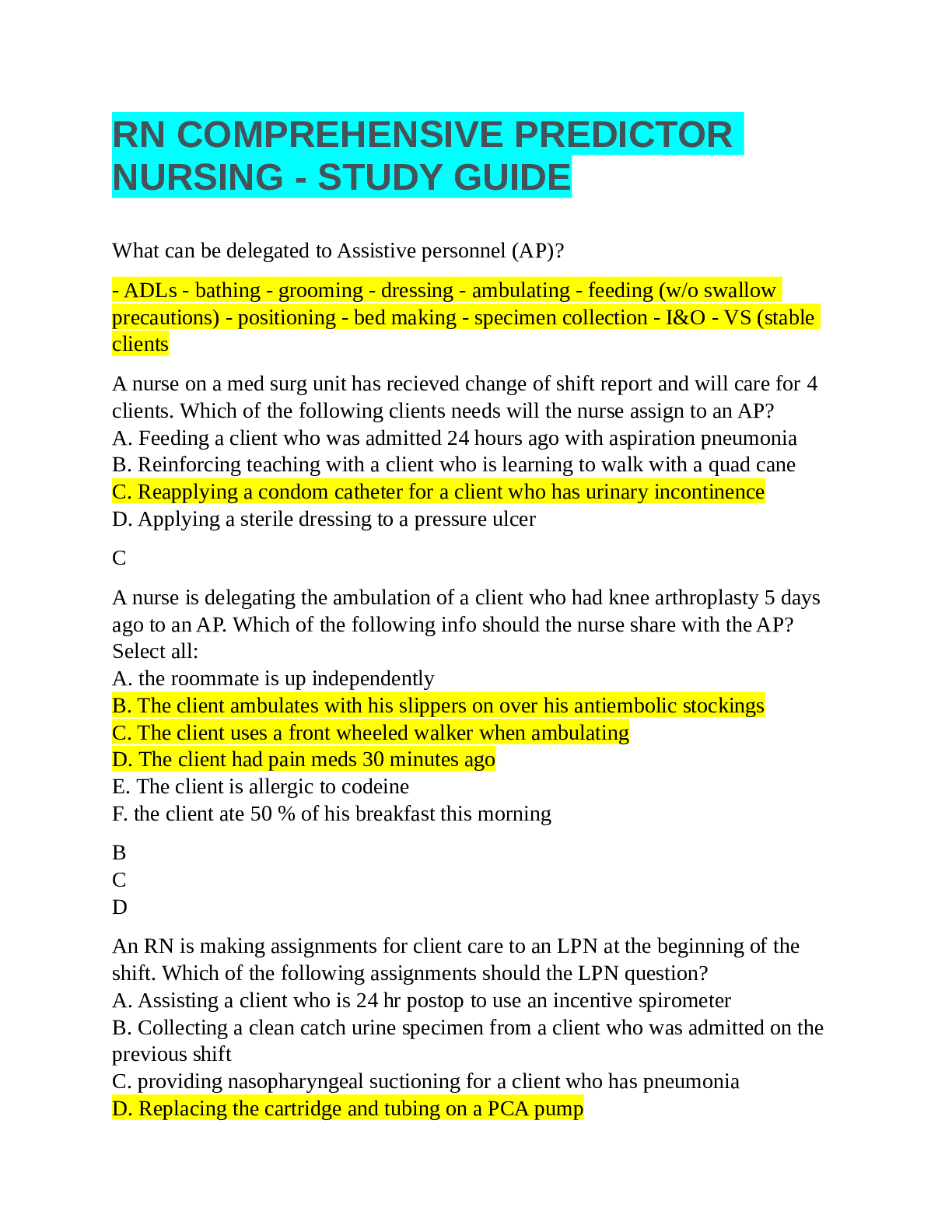
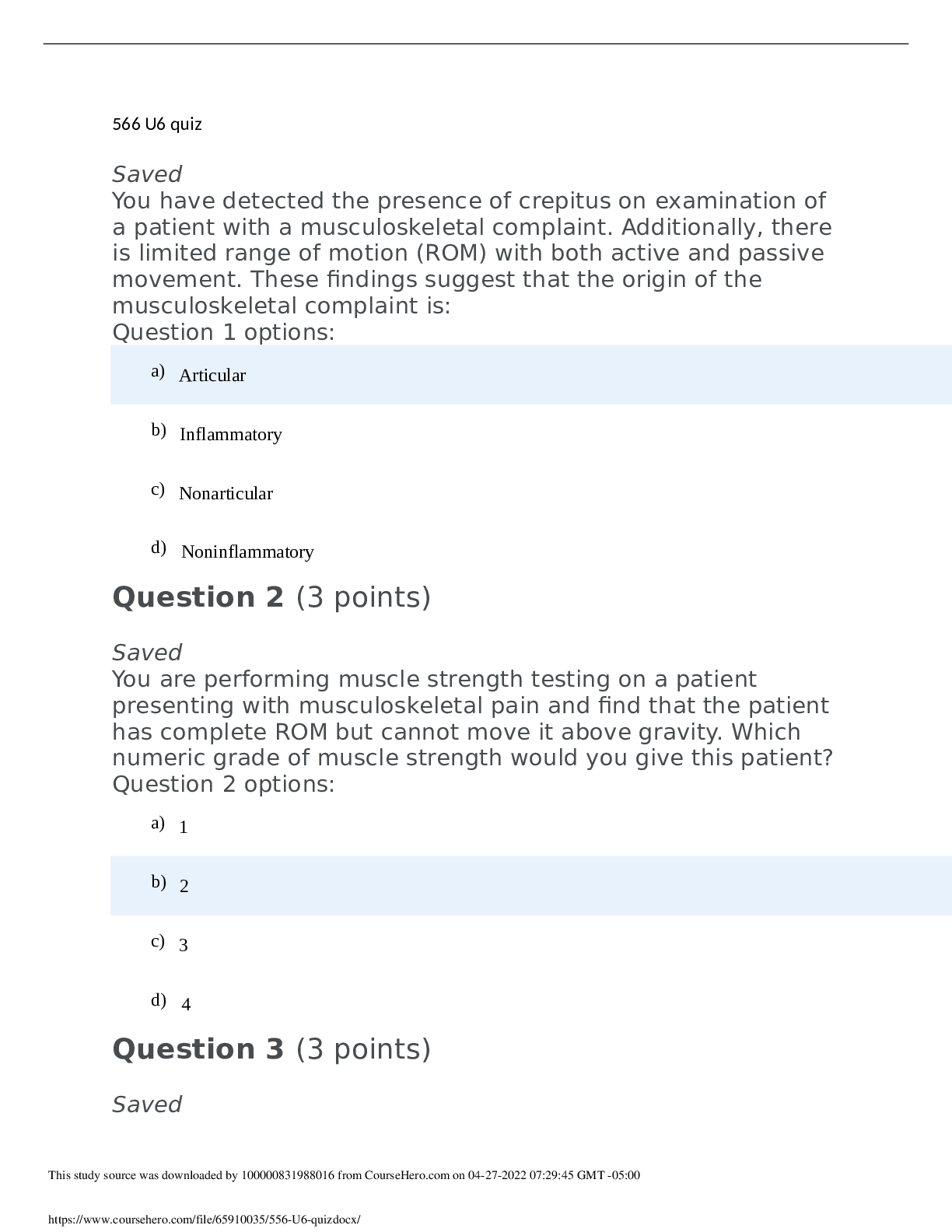






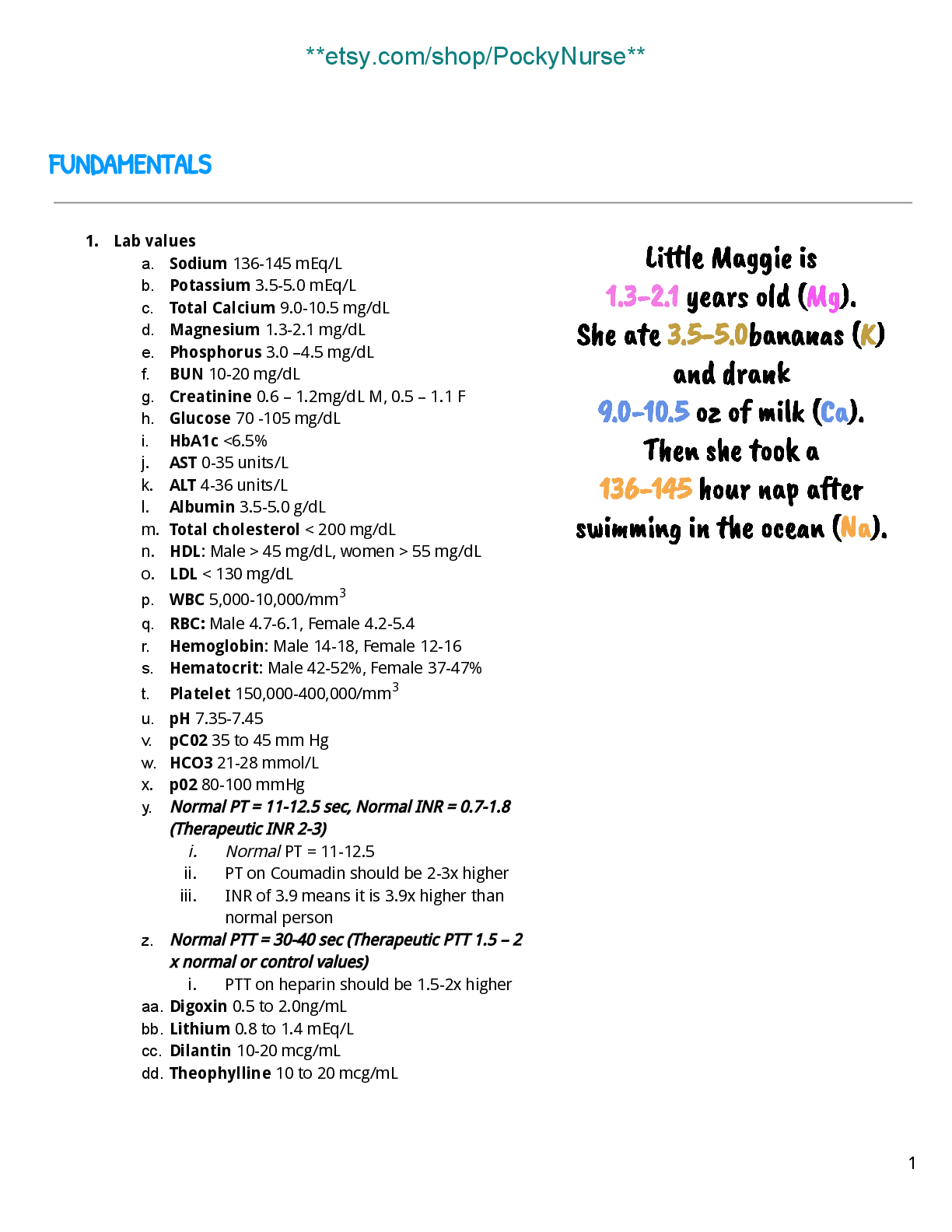
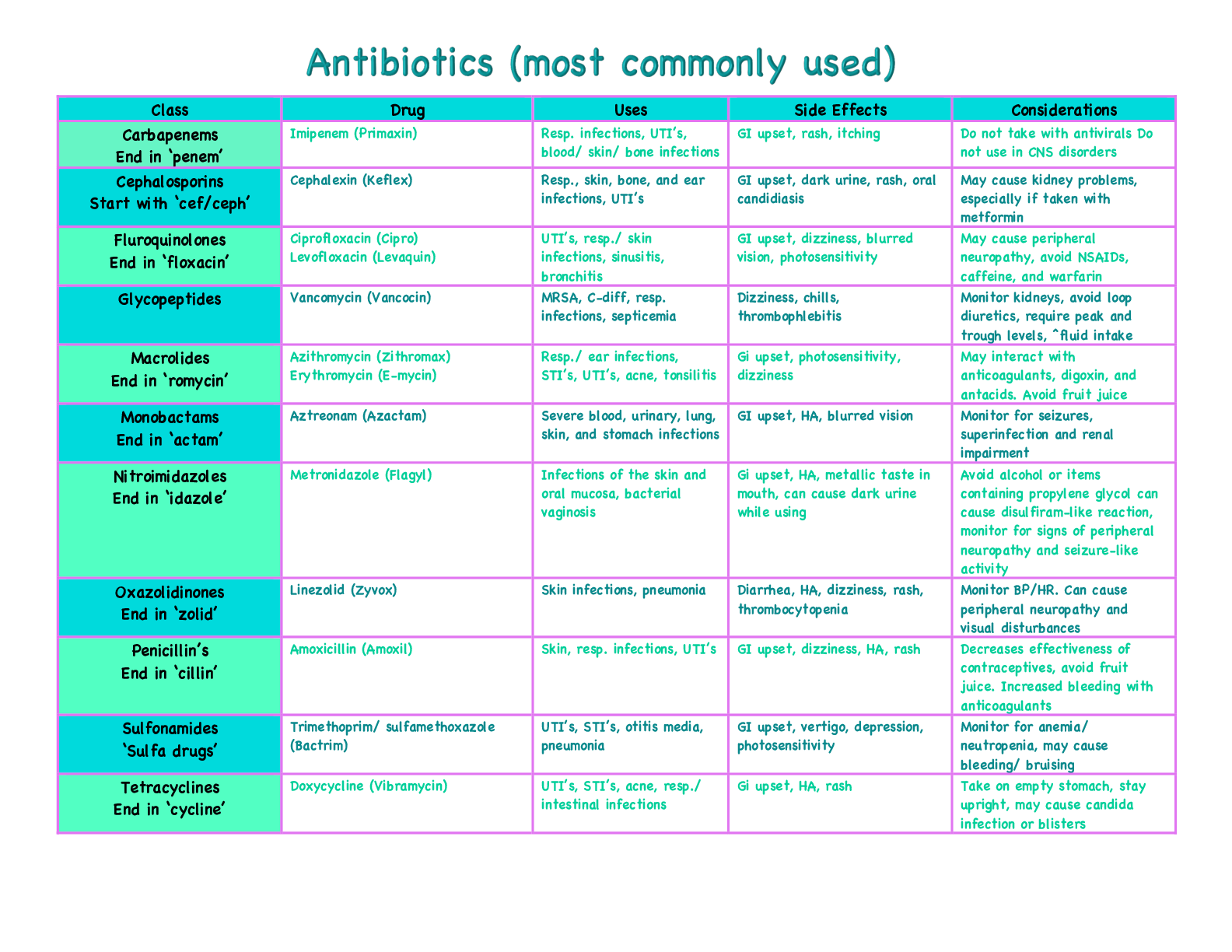


![Preview of NR667 Complete Question Bank with Correct Answers: Final Exam Study Guide [2026 Updated]](https://browseimages.nyc3.digitaloceanspaces.com/paper-images/2026/02/25/AULA53fD2026-02-25-02-58699ee3d811bc7.png)