• Drugs that PRODUCE a response?
• Drugs that PREVENT a response?
• Therapeutic WINDOW is what?
• The time it takes for ½ of the drug concentration to be eliminated from the body is called?
• What is a patien
...
• Drugs that PRODUCE a response?
• Drugs that PREVENT a response?
• Therapeutic WINDOW is what?
• The time it takes for ½ of the drug concentration to be eliminated from the body is called?
• What is a patient on two highly protein bound drugs at risk for
• What is it called for drugs to share many common features
• What makes drugs fit into the same “class”
• Another name for antagonist?
• Who do you not give antagonist or adrenergic blocker to?
• Beta blockers commonly seen in what clients?
• Antagonist suffix
• Antagonist S/S
• Agonist S/S
• Before administering antagonist what do you check
• Cholinergic
o
• Anticholinergic
• What type of drug is Reglan?
• How do you treat cholinergic crisis
• Cholinergic crisis S/S
• Anticholinergic drugs are contraindicated in who?
• CNS stimulant drugs are contraindicated in who?
• Hemorrhagic stroke
• Anorexiants can lead to what?
• Most common side effects of Ritalin
• Benzodiazepines increase activity to what neurotransmitter (PAM & LAM)
• Reversal to benzodiazepines
• Ambien side effects
o Sedative/hypnotic
• Drug choice for treating status epilepticus
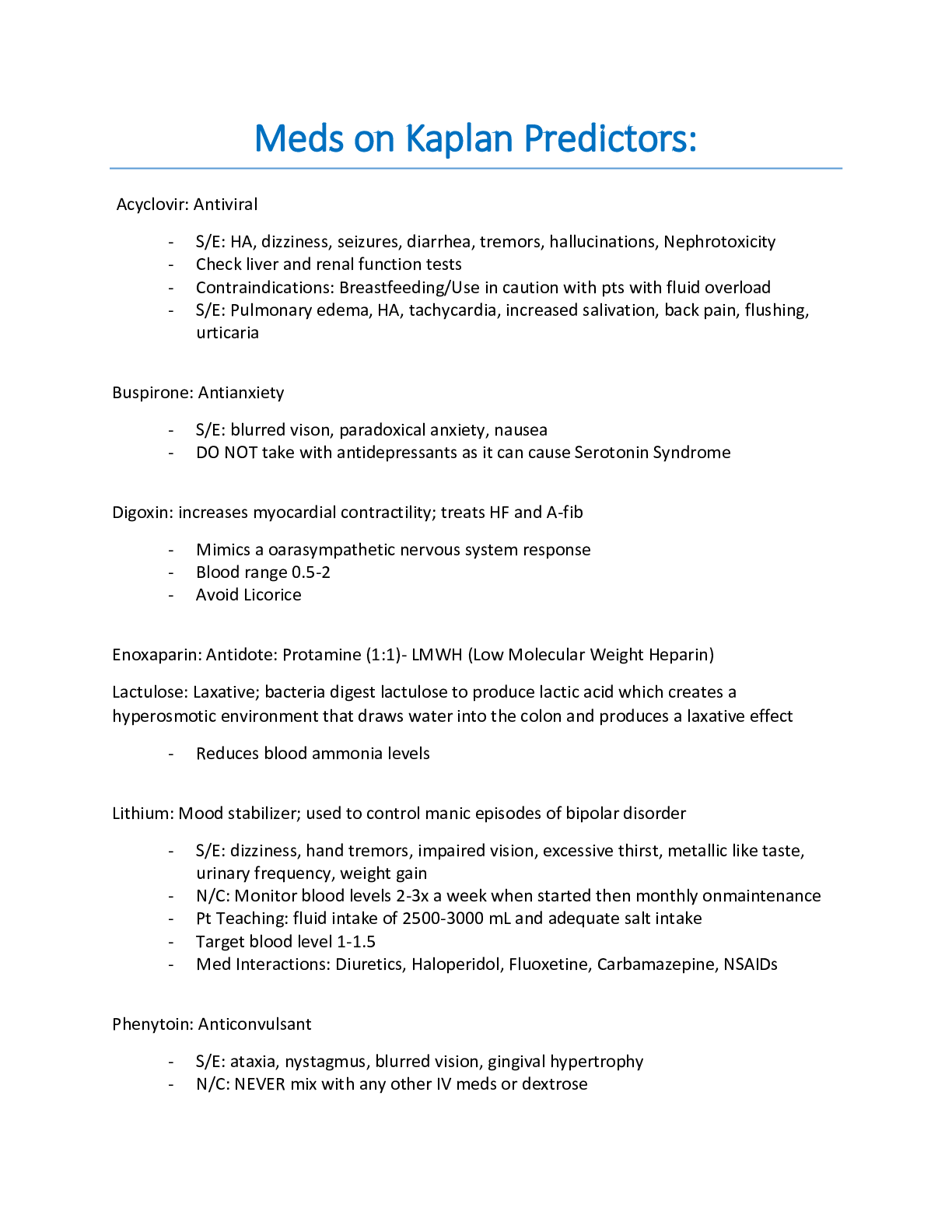
• Dilantin can do what?
o Cause gum disease
• When a client is on Dilantin what are some nursing interventions?
• What is therapeutic level for Depakote?
• If Depakote levels are high (>100) what needs to be done?
• What does Depakote treat?
• Benzodiazepines can lead to what?
• Barbiturates reversal treatment
• Example of barbiturates
• What disease process goes with “dopamine depletion”, rigidity, acetylcholine
• What disease goes with confusion, bradykinesia, memory loss, amyloid plaques, and neurofibrillary tangles
• Aricept improves what?
• What is SLUD
o
• You CANNOT crush CONTIN, POTASSIUM and IRON
• What disease process goes with “lack of Ach receptor sites”?
• What disease process goes with “respirator muscle weakness”?
• What disease process goes with “anticholinesterase inhibitor drugs”?
• What should you avoid while taking cyclobenzaprine (flexeral)?
• A patient is taking an MAOI and eating blue cheese and red wine with dinner, what should you tell them that they are at risk for?
• A patient is taking Lithium, you should advise them to avoid what other drugs?
• Serotonin syndrome S/S
• Extrapyramidal (EPS) effects are most common with which class of antidepressants?
• What to keep in mind with lithium?
• What drugs contain acetaminophen?
• What drugs do not contain acetaminophen?
• What drug should not be given during an acute gout flare up?
• What is an injectable NSAID?
• Ibuprofen should always be taken with?
• All opioids can be reversed by what?
• Max daily dose of acetaminophen for adults?
• Common side effect of opioids are?
• Extra pyramidal symptoms?
• Neuroleptic malignant syndrome?
• The ONLY non-sedating anti-anxiety med is?
• Typical antipsychotics may be prescribed for short term use why?
• Extra pyramidal side effects are most commonly seen in which class of medications?
• How do you know if a neuroleptic is working?
• What do you need to teach with DMARDS?
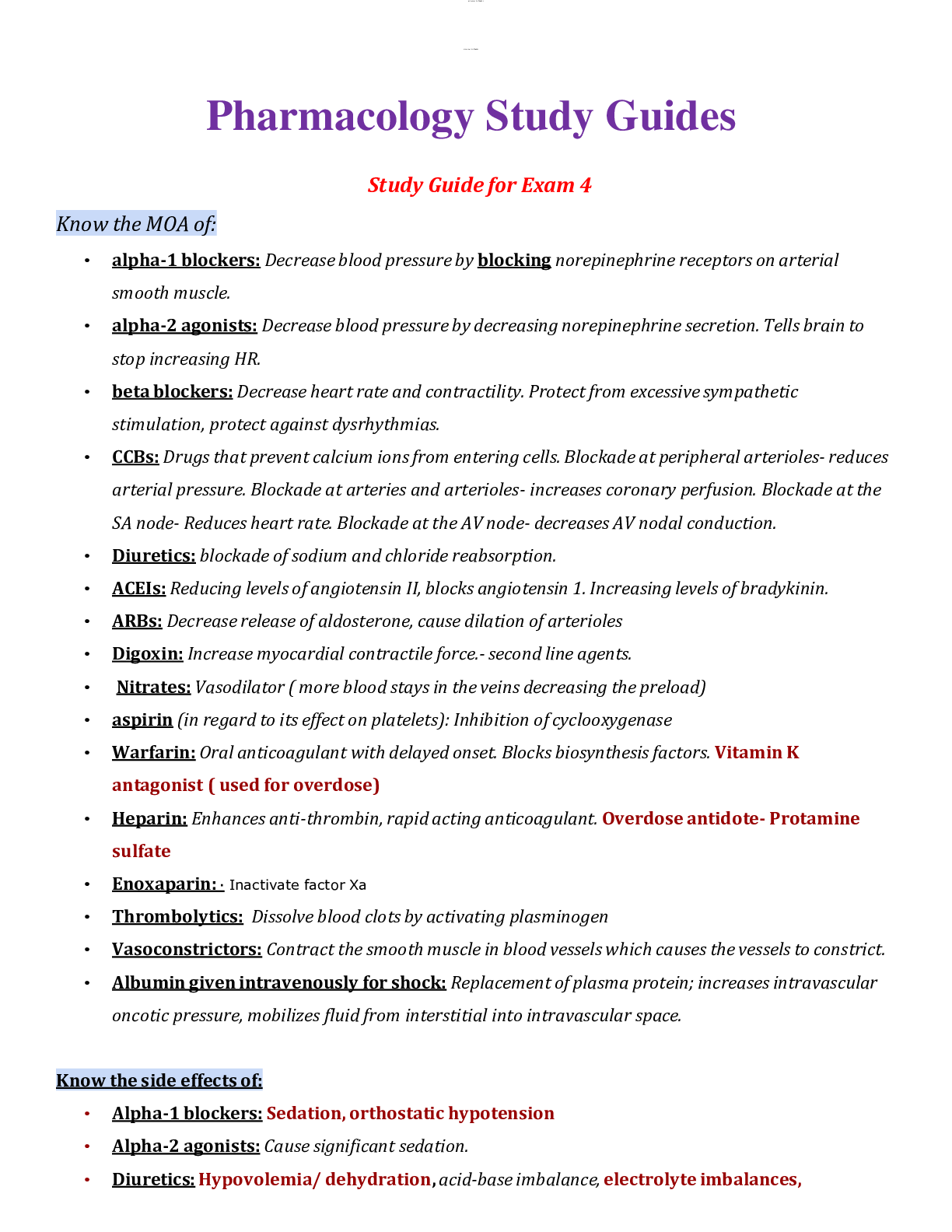
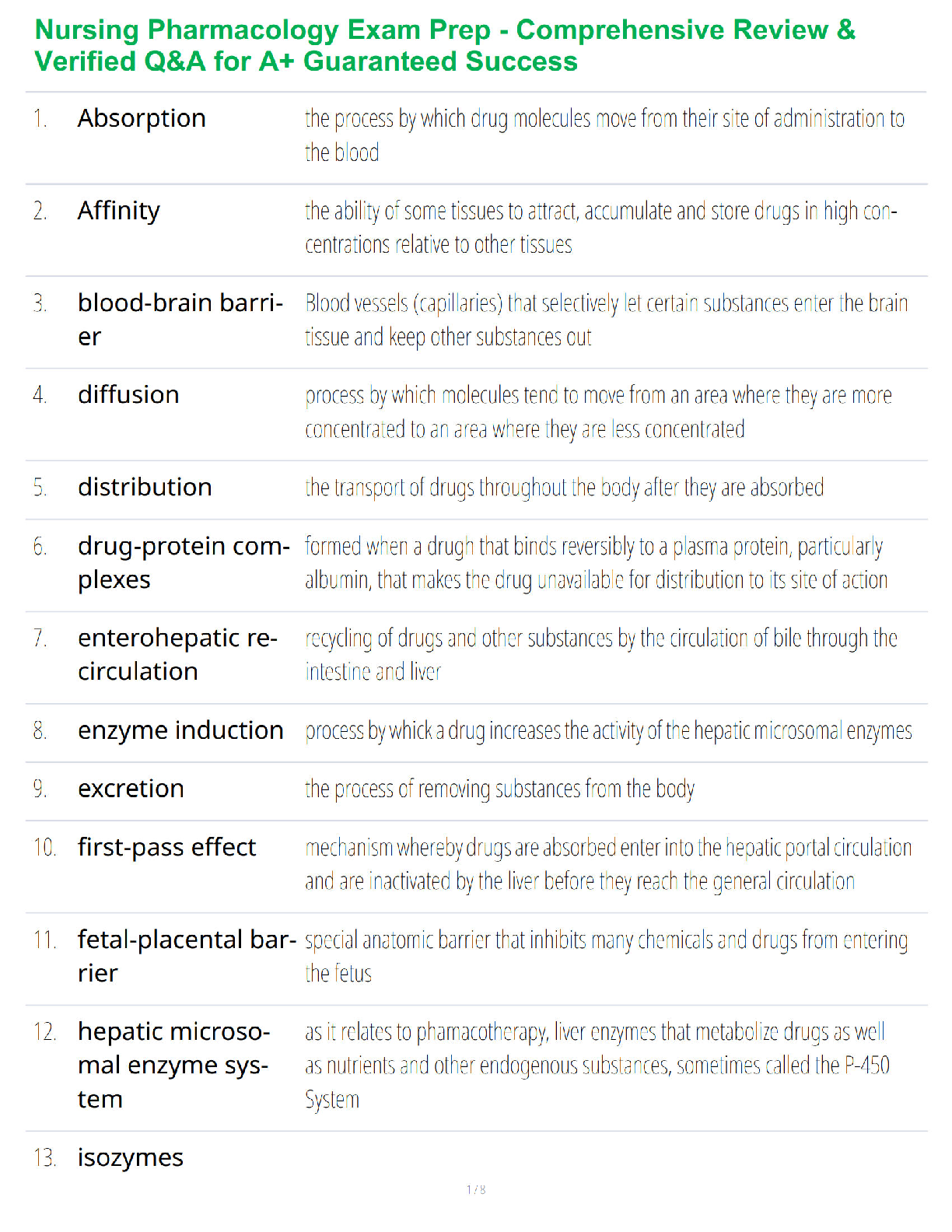
• What is pharmaceutics?
• Drugs generally disintegrate and are absorbed faster in what?
• Very old and very young people have less gastric acidity?
• If a drug is enteric coated and meant to be absorbed in where?
• Pharmacokinetic phase
• 4 processes
• Protein bound drugs are destroyed by?
• Insulin is a protein bound drug, so CANNOT be given by which route?
• Absorption drugs absorbed most easily are?
• What is the first pass effect?
• Bioavailability is what?
• Bioavailability for IV administered drugs is what %?
• After a pill is taken by mouth, what organ has a major impact on its bioavailability?
• High fat foods increase what?
o
• Exercise can decrease drug absorption because?
• Protein binding is what?
• If a patients in on 2 drugs that are both strongly protein bound, what happens?
• The blood brain barrier is what?
• Excretion/elimination are accomplish mainly where?
• Peak is what?
• Pharmacodynamics phase I what?
• Onset is what?
• Duration of action is what?
• Receptor theory is?
• Agonist’s examples?
• Antagonist examples?
• Peak is what?
• Trough is what?
• Loading dose is what?
• Brand names are what?
• Additive effects?
• Additive effect BAD example?
• Additive effect GOOD example
• Synergistic effect
• Synergistic effect BAD example
• Synergistic effect GOOD example
• Antagonistic effect BAD example
• Antagonistic effect GOOD example
• Some drugs like MAOI antidepressants have specific food interactions such as
• OTC cough and cold
• Sleep Aids
• CNS brain and spinal cord
• Somatic vs autonomic
o , acts on smooth muscles and glands, autonomic nervous system, sympathetic (adrenergic) parasympathetic (cholinergic)
• Sympathetic
• Parasympathetic
• Adrenergic agonists
• Adrenergic agonist drugs
• Beta blockers
• Beta blocker effects
• Beta blocker drugs
• Beta blocker side effects
• Indirect aching
• Cholinergic drugs
• Anticholinergics drugs DRY DRY DRY DRY
• Benzotropine for Parkinson’s
• Who to caution giving anticholinergic meds to?
• Amphetamines
• Amphetamines common side effects
• Amphetamine drugs
• Amphetamines drug adverse reactions
• Insomnia treatments
• Insomnia drugs
• Insomnia drugs adverse reactions
• Benzodiazepines do what?
• Benzodiazepines drugs
• Benzodiazepine side effects
• Benzodiazepine reversal agent
• Epilepsy
• Epilepsy drugs
• Hydantoins side effects/adverse reactions
• Benzodiazepines Lorazepam (Ativan treat what
• Diazepam treats what
• Valproate drugs (valproic acid “Depakote) treat what?
• What is Parkinson’s caused by?
• Treatment for Parkinson’s?
• Parkinson’s drug?
• Alzheimer’s disease is what?
• Alzheimer’s disease symptoms
• Alzheimer disease acetylcholinesterase inhibitor
• Myasthenia gravis is what?
• Myasthenia crisis?
• Cholinergic crisis?
• Multiple sclerosis is what?
o , causing lesions called plaques
• Multiple sclerosis treatments
• MS symptom management
• Cyclobenzaprine side effects
• Histamine
• Kinins
• Prostaglandins
• Aspirin
• Ibuprofen-nonsteroidal anti-inflammatory
• Celecoxib-NSAID
• DMARDS (disease modify antirheumatic drugs)
• Rheumatoid arthritis
• Immunomodulators: infiximb (remicade)
• Gout
• Urocosurics, probenecid
• Uric acid inhibitor, allopurinol
• Analgesia
• Mild to moderate pain is usually relieved with the use of nonopiod analgeiscs
• Moderate to severe pain usually requires an opioid
• Non opioid analgesics
• Acetaminophen
o doses, no more than 650mg per dose, max 3,000mg per day
• High purine foods
• Ketorolac (toradol)
• Cox1 inhibitor
• Opioid analgesics
• Morphine sulfate adverse reactions
• Other opioids
• The half-life of naloxone is shorter than the half-life of most opioids meaning what?
• Buprenorphrine/naloxone (suboxone)
• Migraines
• Triptans: sumatriptan (imitrex)
• Mood stabilizers
• Bipolar treatment
• Bipolar affective disorder
• Serotonin syndrome
• GABA
• Serotonins does what?
• Dopamine does what
o
• Norepinephrine does what
• Neuroleptics
• Anxiolytics
• Psychosis
• What nursing education is needed for Dilantin
[Show More]







.png)