Question 1 of 50
What does cardiovascular pertain to?
A. blood vessels surrounding the heart
B. diseases of the heart
C. blood vessels and the heart
D. contraction of the heart
Question 2 of 50
What is ophthalmiti
...
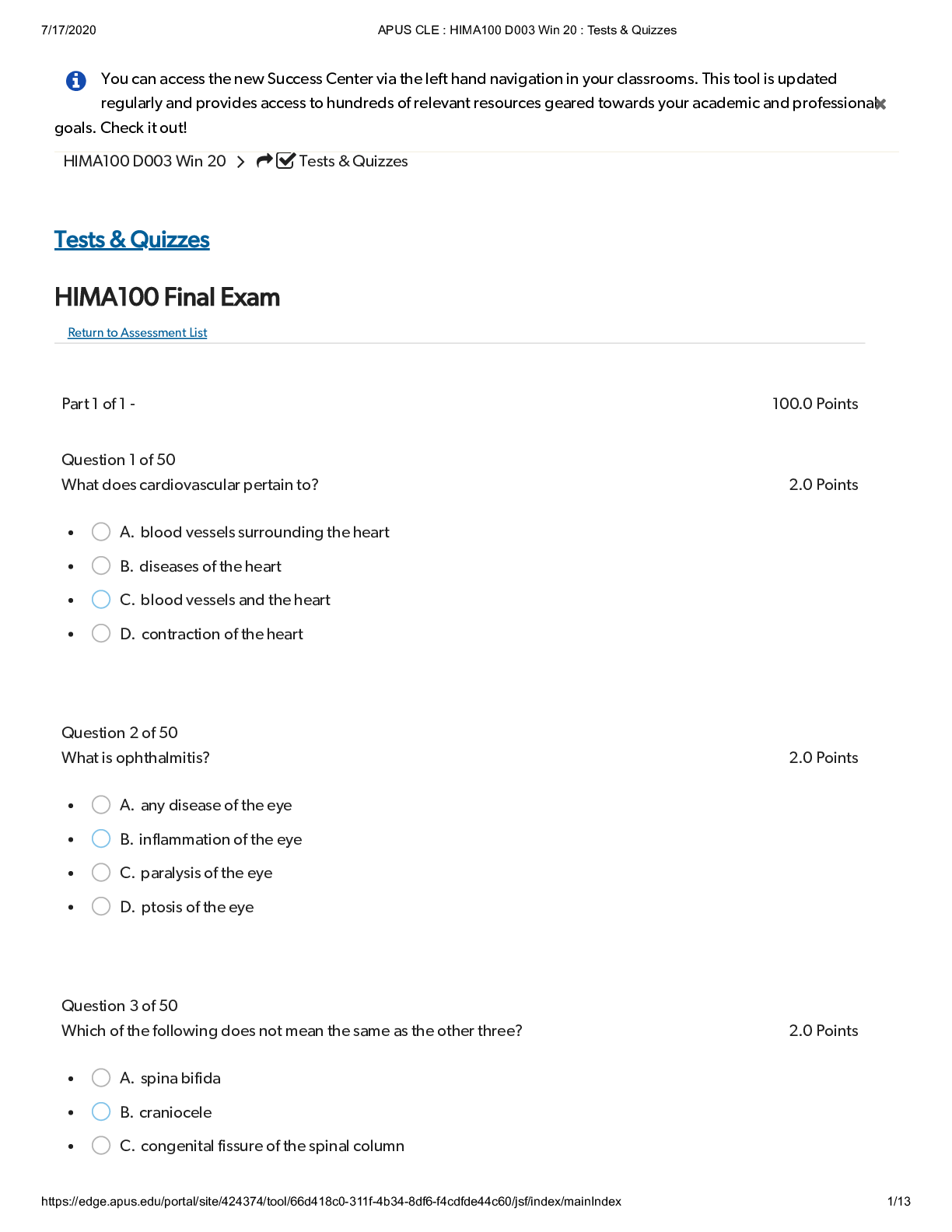
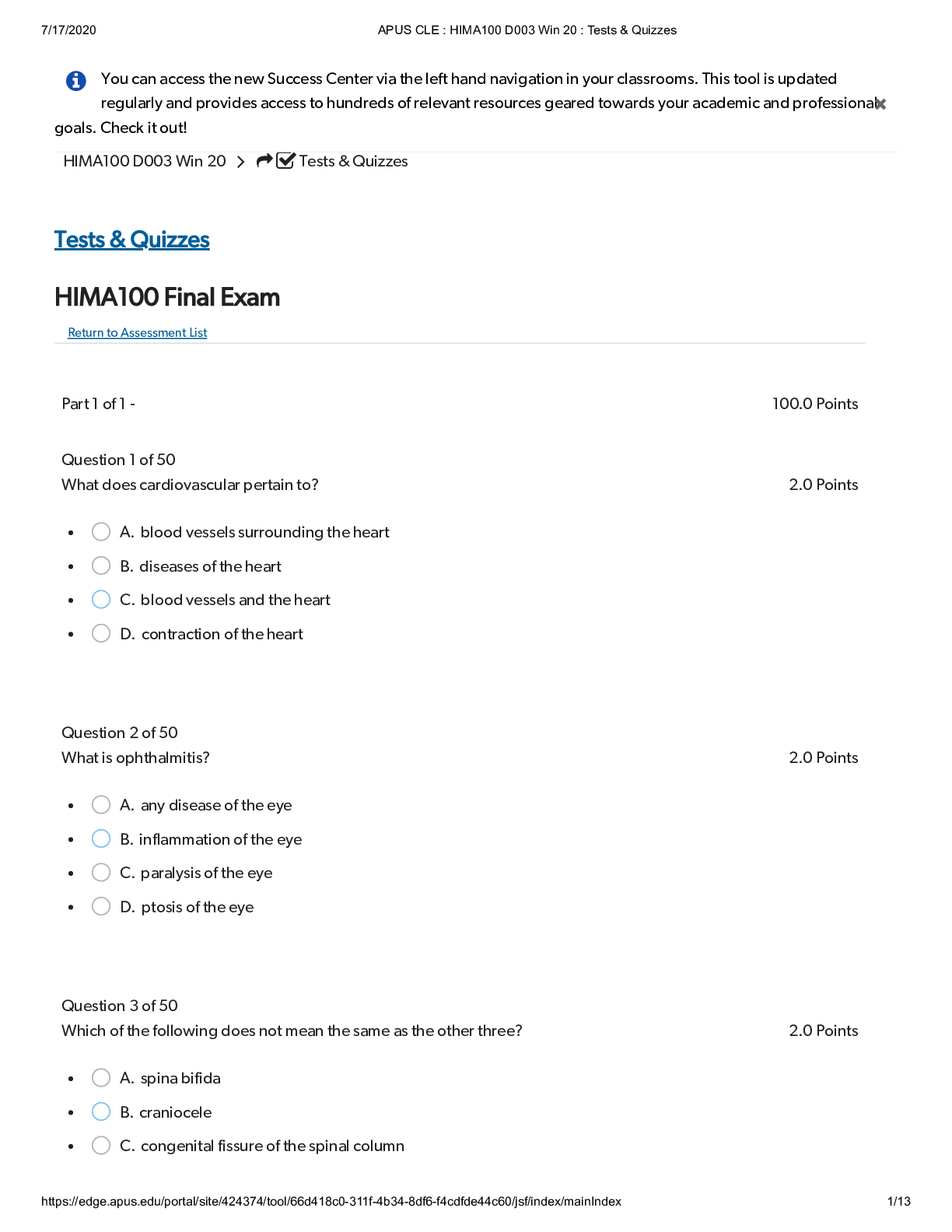
Question 1 of 50
What does cardiovascular pertain to?
A. blood vessels surrounding the heart
B. diseases of the heart
C. blood vessels and the heart
D. contraction of the heart
Question 2 of 50
What is ophthalmitis?
A. any disease of the eye
B. inflammation of the eye
C. paralysis of the eye
D. ptosis of the eye
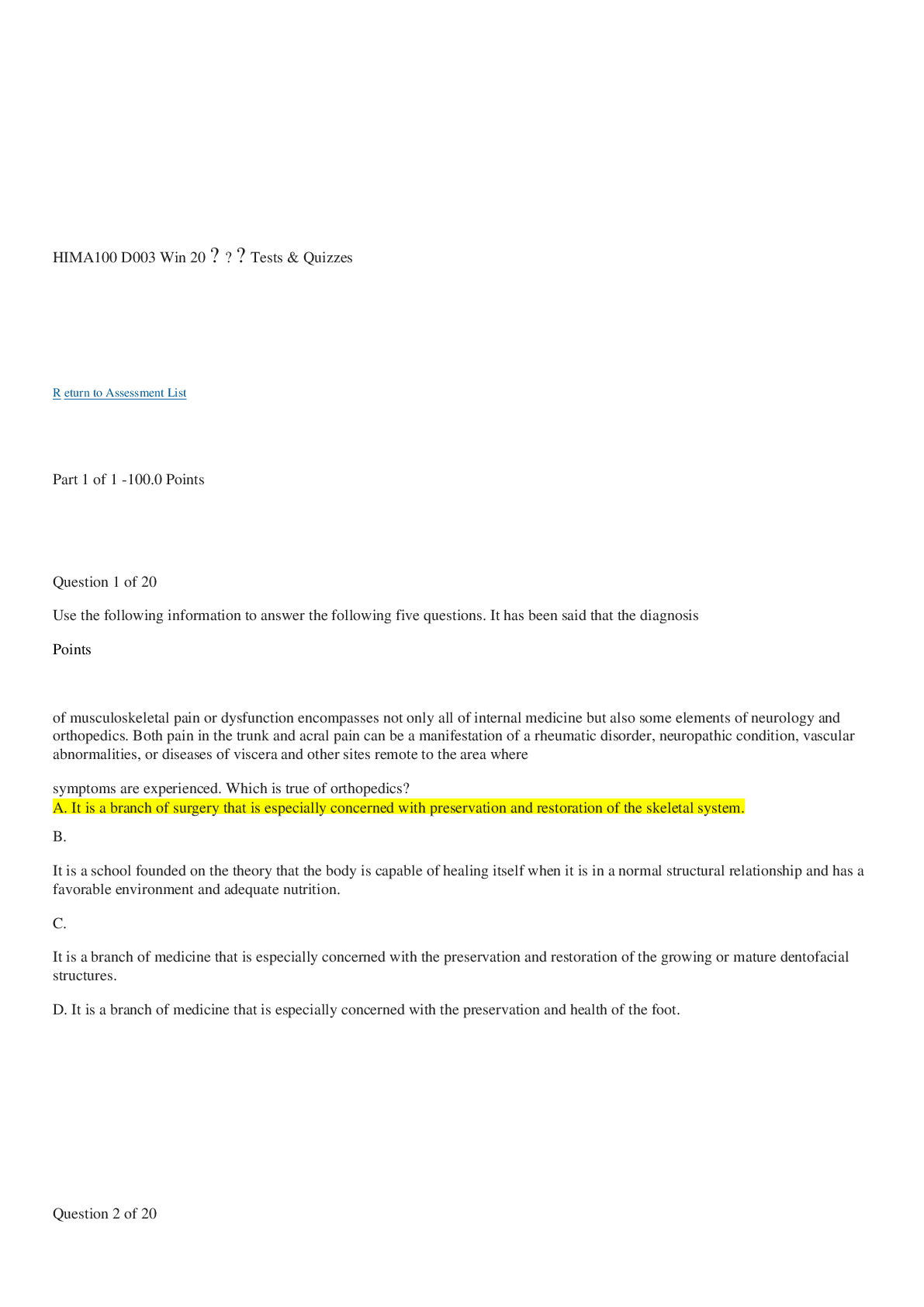
Question 3 of 50
Which of the following does not mean the same as the other three?
A. spina bifida
B. craniocele
C. congenital fissure of the spinal column
D. rachischisis
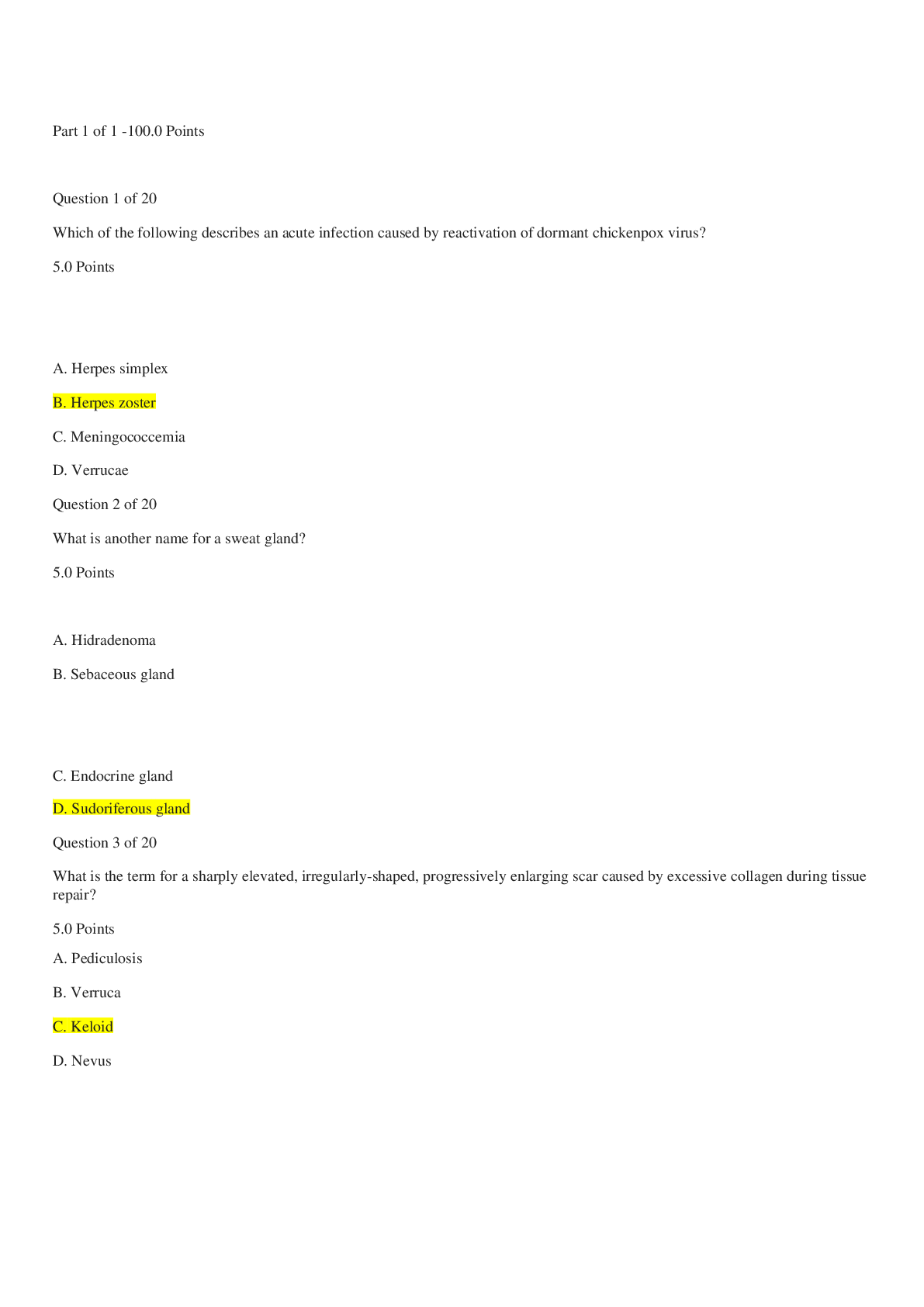
Question 4 of 50
Which term means a set of symptoms that occur together and characterize a particular disease or
condition?
A. dysphoria
B. symptomatic
C. syndrome
D. tachyphasia
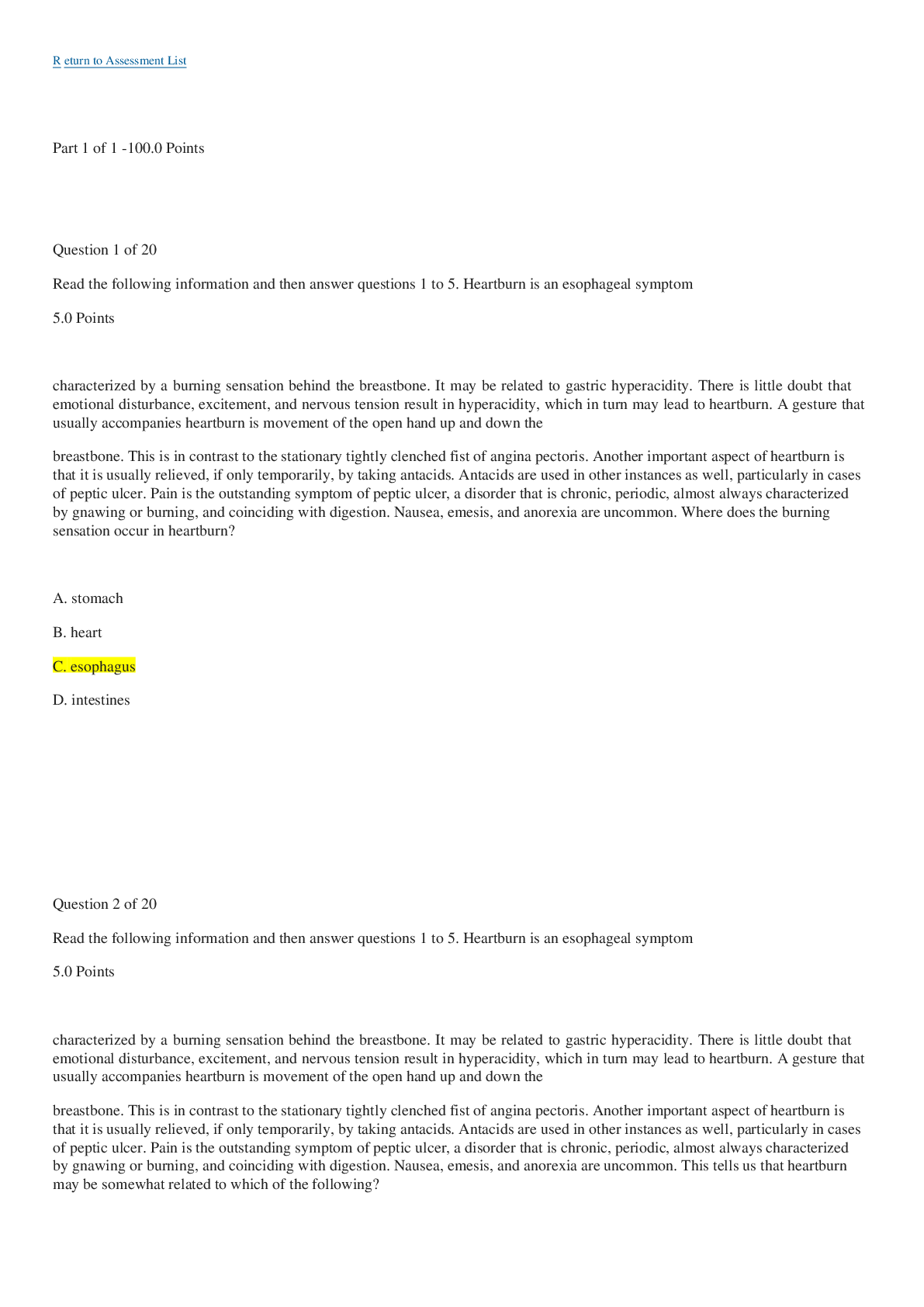
Question 5 of 50
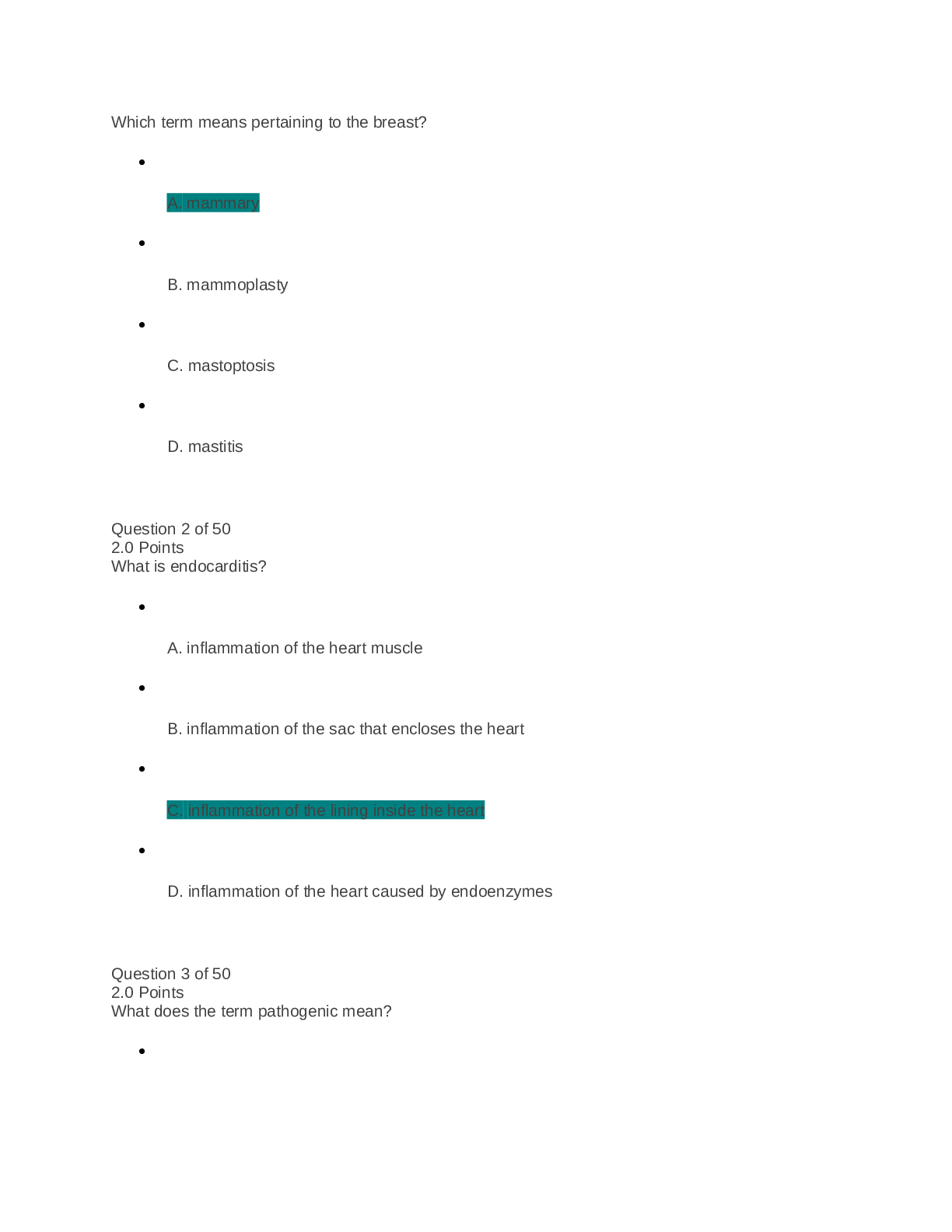
What does the term pathogenic mean?
A. any agent or microorganism that causes disease
B. any disease caused by infectious organisms
C. capable of causing disease
D. the study of disease
Question 6 of 50
Which type of injection deposits medication into a muscular layer?
A. intradermal
B. intramuscular
C. intravenous
D. subcutaneous
Question 7 of 50
Which term means pertaining to the breast?
A. mammary
B. mammoplasty
C. mastoptosis
D. mastitis
Question 8 of 50
What does ptosis mean?
A. enlarged
B. herniation
C. prolapse
D. surgical repair
Question 9 of 50
Which of the following is a physician who specializes in inflammation, degeneration, or other problems of
the connective tissues of the body, especially the joints and related structures?
A. otorhinolaryngologist
B. pathologist
C. rheumatologist
D. toxicologist
Question 10 of 50
What is a lymphangioma?
A. a tumor composed of blood vessels
B. a tumor composed of lymph vessels
C. an echocardiogram
D. computed tomography of the lymphatic system
Question 11 of 50
What is arteriopathy?
A. roentgenography of blood vessels
B. any disease of blood vessels
C. any disease of the arteries
D. any disease of the veins
Question 12 of 50
Which of the following describes the endocrine glands?
A. empty their secretions onto an external body surface
B. empty their secretions onto an internal body surface
C. secrete their hormones into the bloodstream
D. secrete hormones into the bloodstream as well as empty them onto internal body surfaces
Question 13 of 50
What does lactase mean?
A. a hormone that brings about production of milk
B. an enzyme that acts on the main sugar found in milk
C. the main sugar found in milk
D. the production of milk
Question 14 of 50
Which term means a localized dilation or ballooning out of the wall of a blood vessel?
A. aneurysm
B. atrium
C. beta blocker
D. coronary occlusion
Question 15 of 50
What is a phagocyte?
A. a red blood cell
B. a white blood cell
C. any cell that can ingest and destroy particulate substances
D. any substance that can destroy a cell
Question 16 of 50
Which term means suture of the spleen?
A. splenectomy
B. splenorrhagia
C. splenorrhaphy
D. splenorrhexis
Question 17 of 50
What is endocarditis?
A. inflammation of the heart muscle
B. inflammation of the sac that encloses the heart
C. inflammation of the lining inside the heart
D. inflammation of the heart caused by endoenzymes
Question 18 of 50
What is the common name of the larynx?
A. nose
B. throat
C. voice box
D. windpipe
Question 19 of 50
What is the name of the science that studies glands and the hormones they produce?
A. anesthesiology
B. gastroenterology
C. gynecology
D. endocrinology
Question 20 of 50
Margaret works for a physician who specializes in clinical diagnosis using laboratory methods. Which
type of physician does she work for?
A. cellular internist
B. cellular pathologist
C. clinical pathologist
D. surgical pathologist
Question 21 of 50
Which of these is a pituitary hormone that stimulates uterine contractions and milk ejection?
A. adrenalin
B. somatotropin
C. oxytocin
D. gonadotropin
Question 22 of 50
What does the term myoblast mean?
A. great muscular weakness
B. a striated muscle fiber
C. a cell that will become muscle fiber
D. increase in the size of muscle without an increase in the number of muscle fibers
Question 23 of 50
Which term means pertaining to the brain?
A. cerebral
B. cephalometer
C. cephalometry
D. encephalocele
Question 24 of 50
What do semicircle and hemisphere have in common?
A. Their prefixes mean half.
B. Their prefixes mean two.
C. Their suffixes have the same meaning.
D. Their suffixes mean two.
Question 25 of 50
What is the significance of the master gland concept?
A. The master gland is the largest gland in the body.
B. The master gland secretes hormones to which other glands respond.
C. The master gland controls the body by direct nervous stimulation.
D. The master gland has both endocrine and exocrine functions.
Question 26 of 50
What does the term otologist mean?
A. a specialist in eye diseases
B. a specialist who studies the ear
C. study of the ear
D. study of the eye
Question 27 of 50
To what does venular refer?
A. a vein
B. a venule
C. vasodilation
D. vasoconstriction
Question 28 of 50
What does the prefix in preview mean?
A. across
B. after
C. before
D. joined
Question 29 of 50
Which of the following is an exocrine gland?
A. sweat gland
B. pituitary gland
C. adrenal gland
D. testis
Question 30 of 50
Which term means the formation of bone substance?
A. calciuria
B. ossification
C. ostalgia
D. osteolysis
Question 31 of 50
What is thrombophlebitis?
A. any venular inflammation
B. inflammation of a vein associated with a blood clot
C. bacterial invasion of the blood
D. arterial inflammation associated with blood clotting problems
Question 32 of 50
What does kleptomania mean?
A. an uncontrollable impulse to steal unneeded objects
B. excessive fear of fires
C. excessive preoccupation with fires
D. excessive preoccupation with one’s appearance
Question 33 of 50
Which type of injection is used to administer medications directly into the bloodstream?
A. intradermal
B. intramuscular
C. intravenous
D. subcutaneous
Question 34 of 50
Which term means tending to become worse, spread, and cause death?
A. acute
B. benign
C. chronic
D. malignant
Question 35 of 50
Which of the following terms does not mean pertaining to the urine or the urinary tract?
A. urinary
B. urologic
C. urological
D. urology
Question 36 of 50
Which of the following terms means the study of the mind?
A. neurology
B. pathology
C. psychology
D. urology
Question 37 of 50
Where are intercostal muscles located?
A. between the ribs
B. over the ribs
C. between the vertebrae
D. over the vertebrae
Question 38 of 50
Which of the following statements is not true of abduct?
A. It can mean to carry away by force.
B. It can mean to draw away from a given position.
C. It can mean to draw toward something.
D. It means the opposite of adduct.
Question 39 of 50
What does postnasal mean?
A. lying or occurring above the nose
B. lying or occurring behind the nose
C. lying or occurring within the nose
D. the secretion of the sinuses
Question 40 of 50
What is the name of the membrane that surrounds the heart?
A. endocardium
B. pericardium
C. myocardium
D. mediastinum
Question 41 of 50
What is the meaning of peritoneum?
A. a membrane that lines the abdominal and pelvic cavities
B. a muscular structure that surrounds the cerebrum
C. an enzyme that brings about a chemical change in another substance
D. the white outer part of the eyeball
Question 42 of 50
Which of the following results from deficiency in the secretion of adrenocortical hormones?
A. Cushing disease
B. aldosteronism
C. diabetes mellitus
D. Addison disease
Question 43 of 50
Which of the following terms means having no value, nothing, or equal to zero?
A. cerebral
B. null
C. primitive
D. stasis
Question 44 of 50
Which of the following is a break involving a fragmented bone that protrudes through the skin?
A. compound comminuted fracture
B. simple comminuted fracture
C. compound oblique fracture
D. simple oblique fracture
Question 45 of 50
Which term means excision of a segment of the skull?
A. cranioplasty
B. costectomy
C. craniectomy
D. costoplasty
Question 46 of 50
Which term means producing masculine characteristics?
A. cachexia
B. androgenic
C. glycemic
D. myxedema
Question 47 of 50
A 76-year-old man’s heart has stopped beating. Which of the following has the man experienced?
A. cardiac arrest
B. forensic pathology
C. immune response
D. malignancy
Question 48 of 50
What are the chemical secretions of endocrine glands called?
A. gonads
B. hormones
C. colostrum
D. varices
Question 49 of 50
Which of the following means loss of calcium from bone?
A. calcification
B. calciuria
C. decalcification
D. osteogenesis
Question 50 of 50
Roentgenology is an older term that is used to mean which of the following?
A. endocrinology
B. radiology
C. toxicology
D. urology
[Show More]