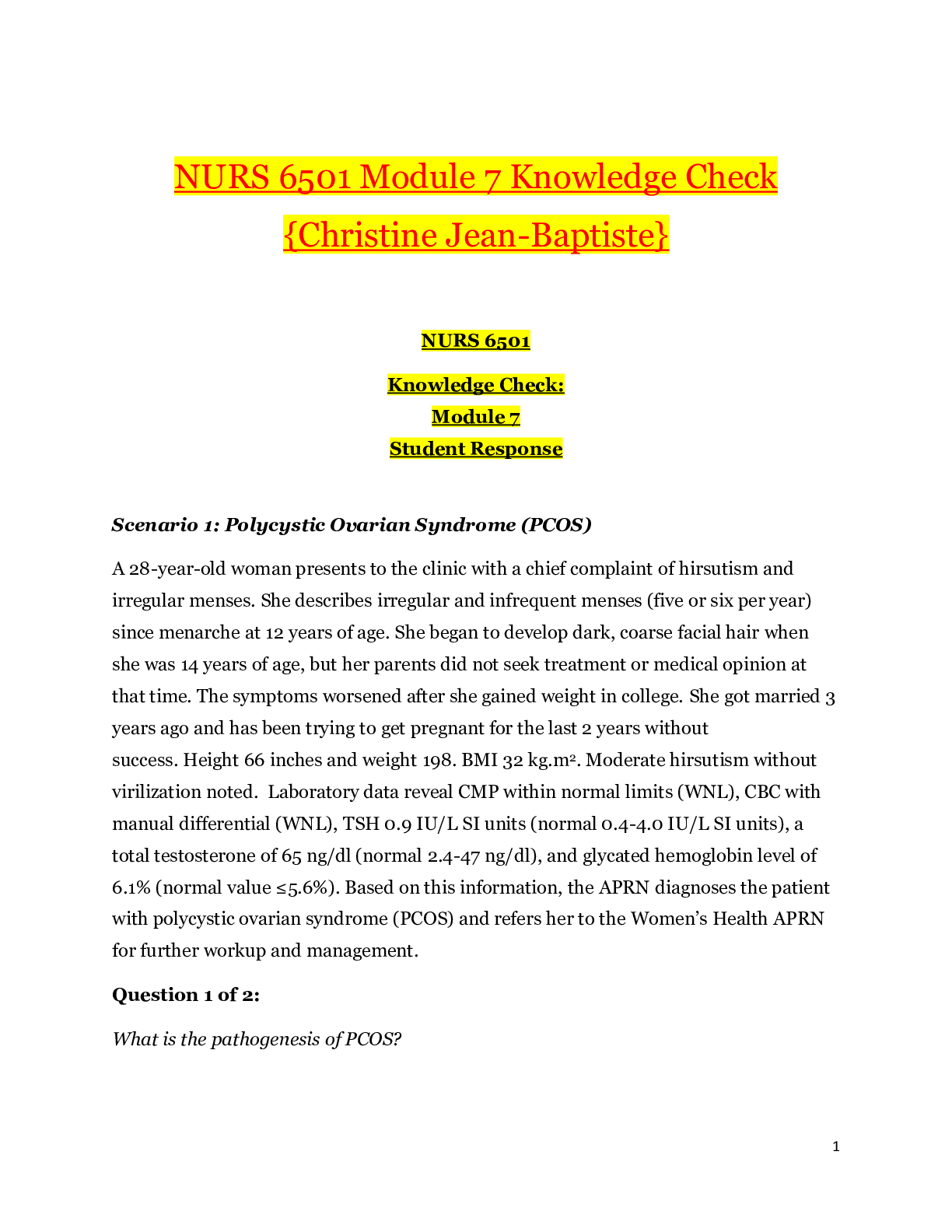
FIN 494 Exam Prepared 1_2020 | FIN494 Exam Prepared 1_Graded A
Document Content and Description Below
FIN 494 Exam Prepared 1_2020
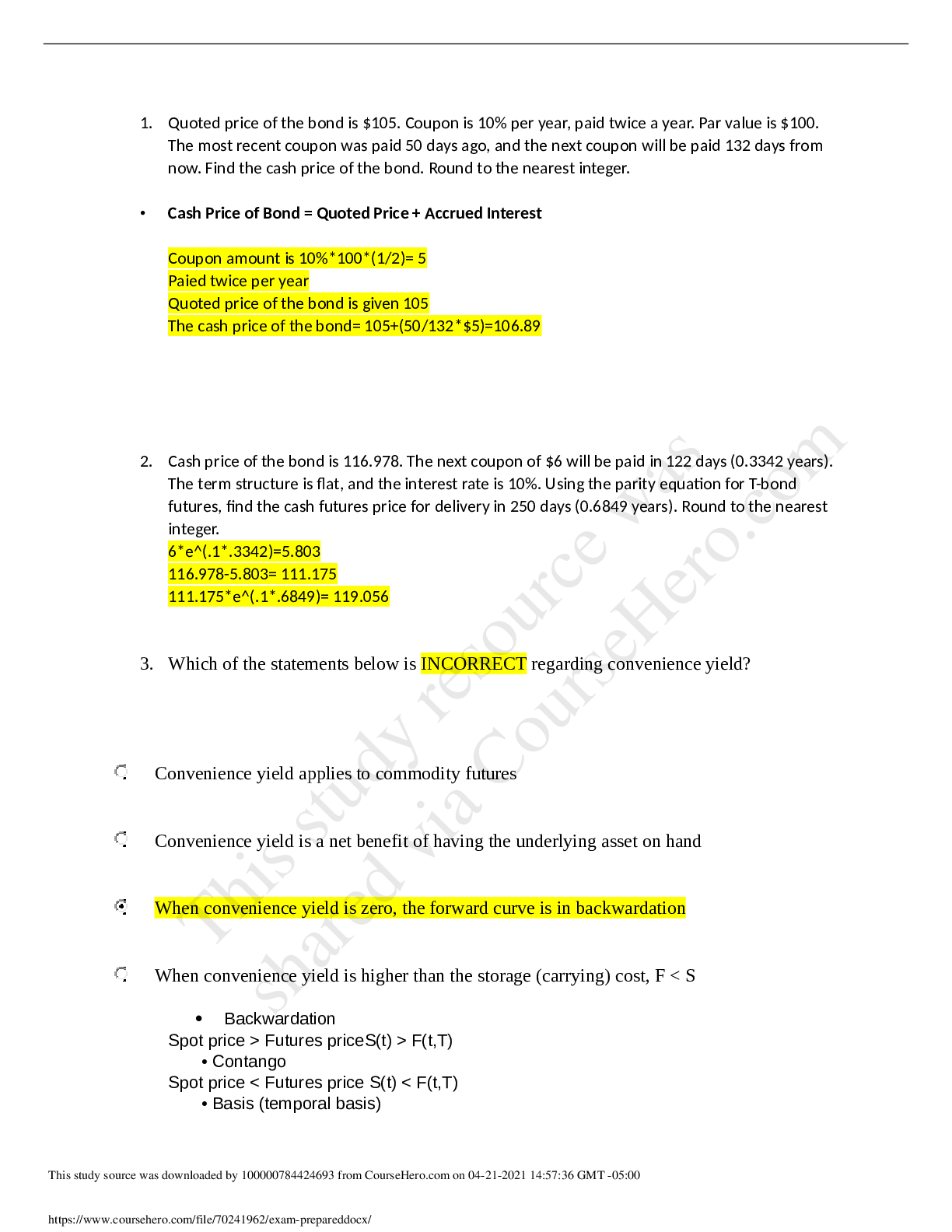
1. Quoted price of the bond is $105. Coupon is 10% per year, paid twice a year. Par value is $100. The most recent coupon was paid 50 days ago, and the next coupon will be paid 132 days fr
...
[Show More]
Last updated: 4 years ago
Preview 1 out of 12 pages
Instant download
Buy this Document to get the Full Access Instantly
Provided by Students Who Aced it
We Verify Document Content to Gurantee Accuracy
Reviews( 0 )
Document information
Connected school, study & course
About the document
Uploaded On
Apr 16, 2021
Number of pages
12
Written in
All

Additional information
This document has been written for:
Uploaded
Apr 16, 2021
Downloads
0
Views
87
Topic Tags
Recommended For You
Get more on EXAM »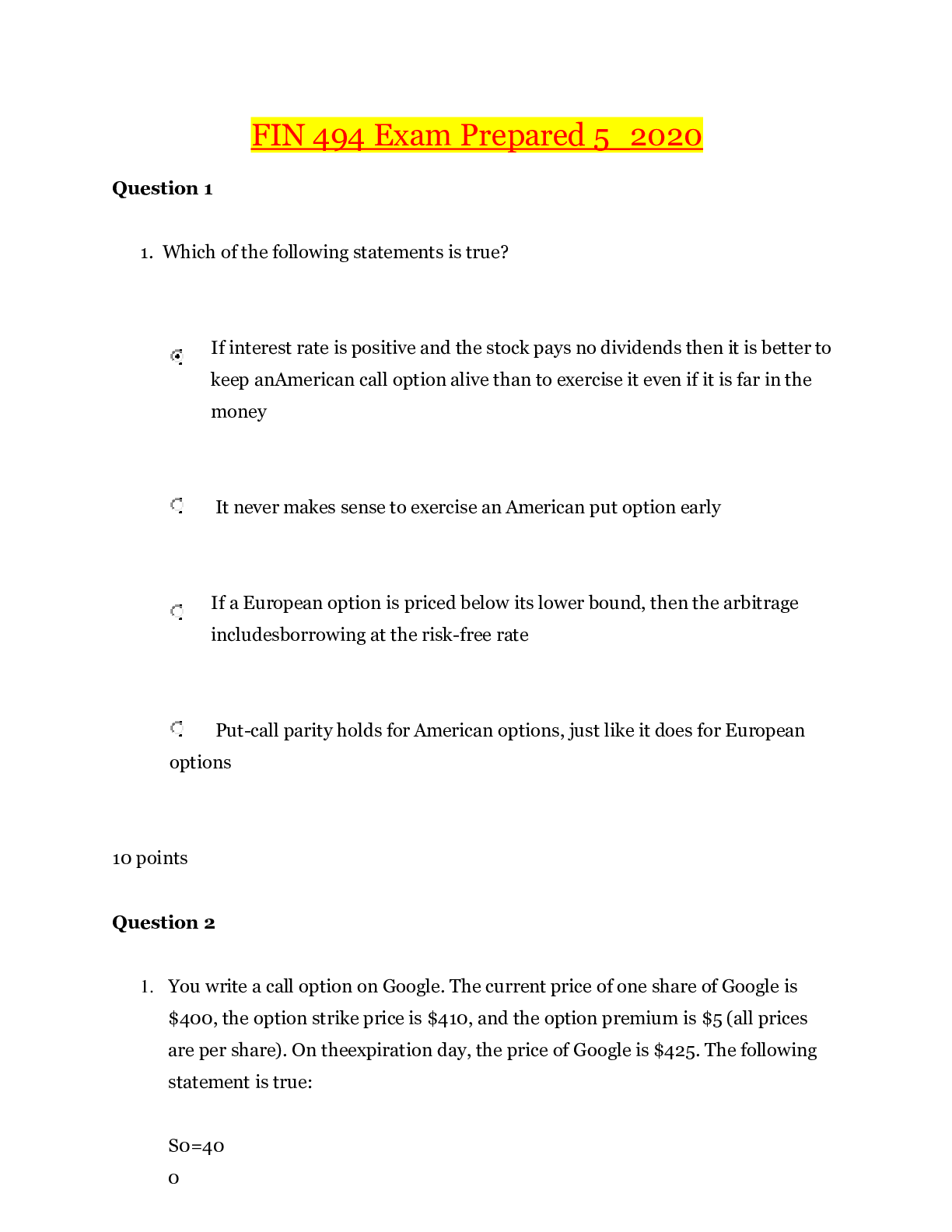
$13.5
27 Pages
FIN 494 Exam Prepared 5_2020 | FIN494 Exam Prepared 5_Graded A
$15
31 Pages
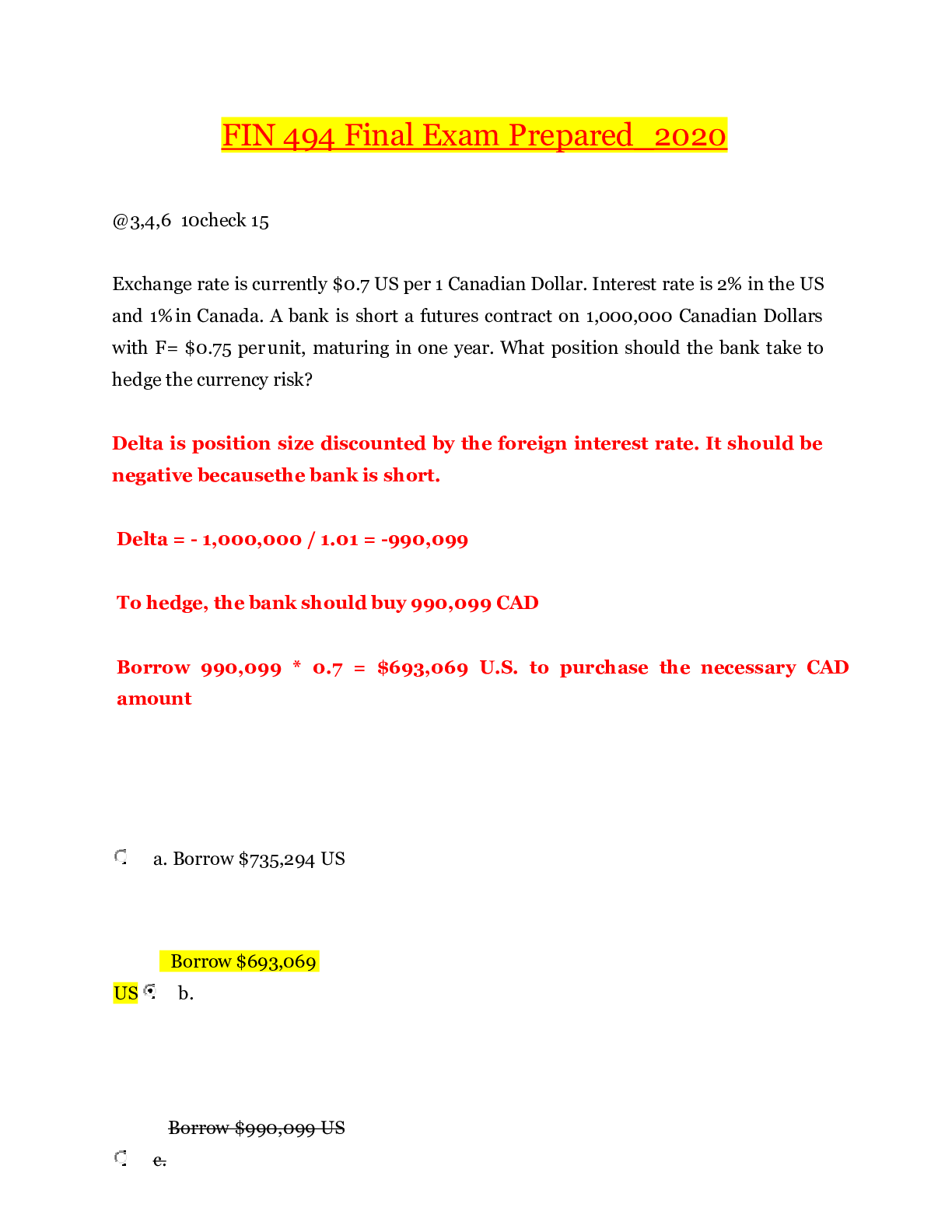
FIN 494 Final Exam Prepared_2020 | FIN494 Final Exam Prepared_...
$13.5
27 Pages
FIN 494 Exam Prepared 7_2020 | FIN494 Exam Prepared 7_Graded A

$7
11 Pages
University of Illinois, Chicago - FIN 494 exam prepared 6 ( A...
$7
16 Pages
University of Illinois, ChicagoFIN 494Final Exam prepared
$12
16 Pages
University of Illinois, Chicago - FIN 494 Final Exam prepared....
$7
14 Pages
TEST BANK FOR FIN 494(FINANCE) PERFECT FOR FINAL EXAM PREPARAT...

$7
14 Pages
University of Illinois, Chicago FIN 494exam with revised answe...
$10
14 Pages
University of Illinois, Chicago - FIN 494exam prepared(5)
$6
2 Pages
University of Illinois, Chicago FIN 494exam prepared(1)-APPROV...

$10
9 Pages
University of Illinois, Chicago - FIN 494Homework 5 solutions
$23
94 Pages
TEST BANK for Financial Statement Analysis A Data Analytics Ap...

$30
614 Pages
Test Bank For Financial Markets and Institutions 2024 Release...
$26
450 Pages
Solution Manual For Corporate Finance (CFIN), 7th Edition By S...

$22
679 Pages
SOLUTIONS MANUAL for Income Tax Fundamentals 2023 41st Edition...

$19
276 Pages
Solution Manual with Appendix For Income Tax Fundamentals 2023...
$19
256 Pages
TEST BANK for Income Tax Fundamentals 2023 41st Edition by Ger...
$24
804 Pages
Test Bank for International Financial Management ISE 10th Edit...
More related documents below
.png)