INSTANT PDF DOWNLOAD—This comprehensive study guide is specifically designed for Chamberlain University nursing students preparing for the Final Exam in BIOS 256 / BIOS256: Anatomy and Physiology IV with Lab for the 2026
...
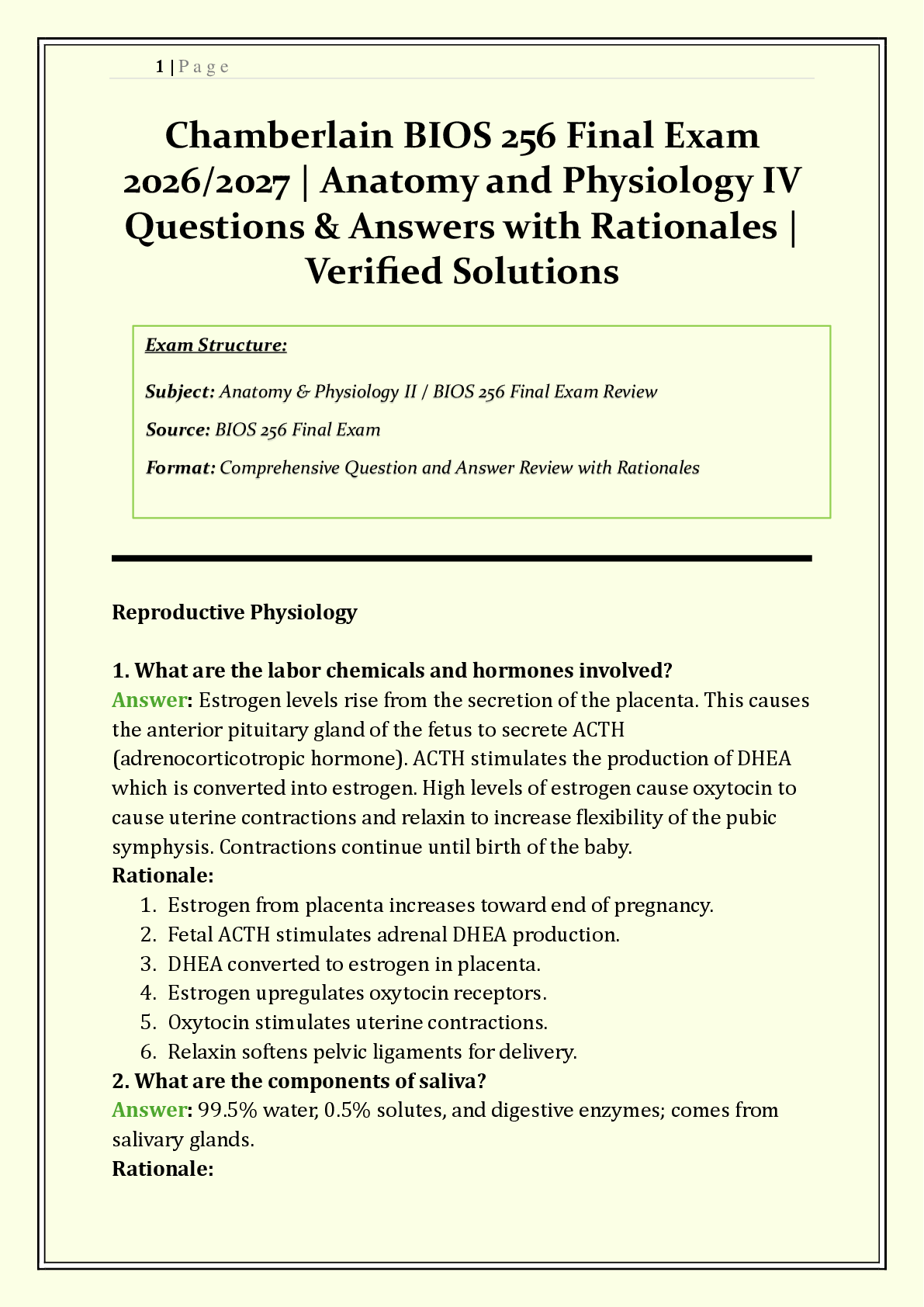
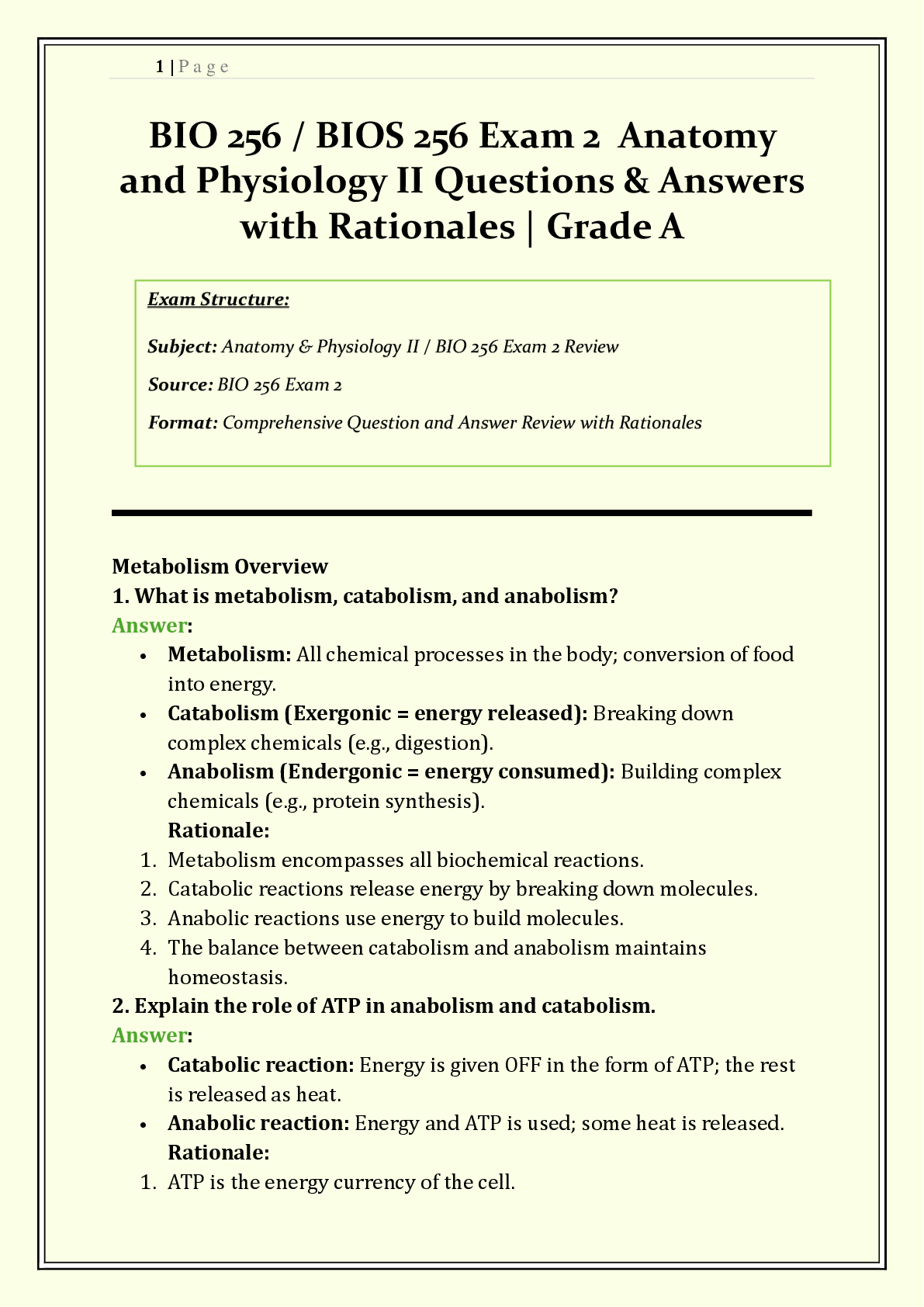
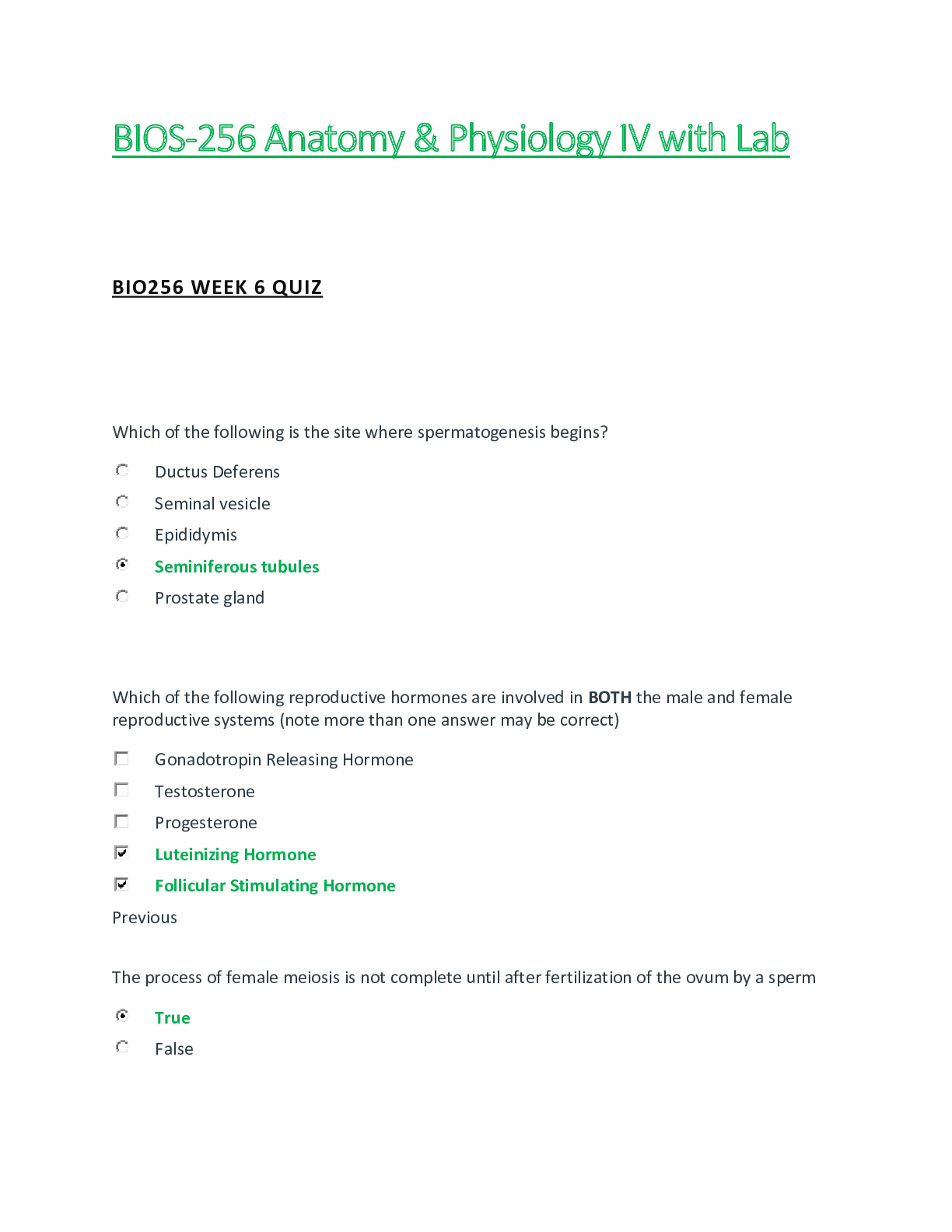
INSTANT PDF DOWNLOAD—This comprehensive study guide is specifically designed for Chamberlain University nursing students preparing for the Final Exam in BIOS 256 / BIOS256: Anatomy and Physiology IV with Lab for the 2026/2027 academic year. This 45+ page resource contains expertly verified practice questions and 100% correct answers with detailed rationales to help you master core anatomy and physiology concepts and achieve a top score (Grade A+) .
This comprehensive guide covers all major topics tested on the Final Exam as outlined in the official Chamberlain University catalog :
Digestive System
Primary Nutrient Absorption: The small intestine is the primary site for nutrient absorption due to its large surface area (villi and microvilli) and enzymes like maltase and peptidase .
Digestive Enzymes & Secretions: Salivary amylase begins starch digestion in the oral cavity . Lingual lipase, activated by stomach acid, breaks down lipids . The pancreas secretes both endocrine (insulin, glucagon) and exocrine (pancreatic juice) products .
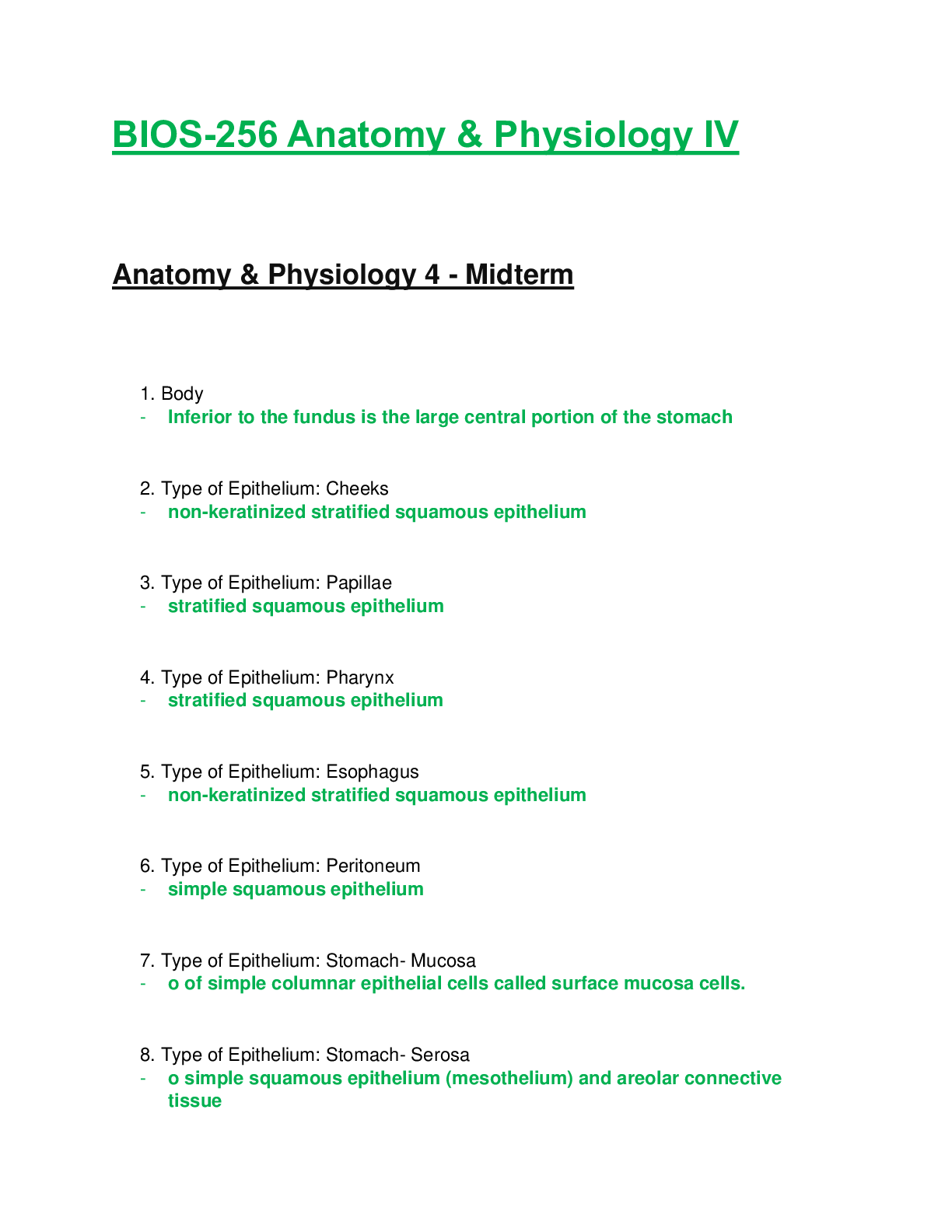
Stomach Cells: Parietal cells secrete HCl and intrinsic factor, which is essential for vitamin B12 absorption in the ileum . Chief cells secrete pepsinogen .
Liver & Gallbladder: Bile, produced in the liver and stored in the gallbladder, emulsifies fats .
GI Motility: Peristalsis moves food through the digestive tract, coordinated by the myenteric plexus .
Metabolism and Nutrition
Catabolic vs. Anabolic Processes: Lipolysis is a catabolic process breaking down triglycerides; lipogenesis is an anabolic process synthesizing lipids .
Gluconeogenesis: The synthesis of glucose from non-carbohydrates (e.g., amino acids, glycerol) occurs primarily in the liver .
ATP Production: The electron transport chain is the primary source of ATP in cellular respiration .
Urinary System
Nephron Function: The nephron is the functional unit of the kidney, responsible for filtration, secretion, and reabsorption .
Glomerular Filtration Rate (GFR) : The amount of filtrate formed per minute; regulated by myogenic mechanisms, tubuloglomerular feedback, and hormones .
Hormonal Regulation: Angiotensin II (released in response to low BP) constricts arterioles and decreases GFR; Atrial Natriuretic Peptide (ANP) increases GFR . ADH increases water permeability in collecting ducts .
Tubular Reabsorption & Secretion: Most reabsorption (glucose, amino acids, water, Na+) occurs in the PCT .
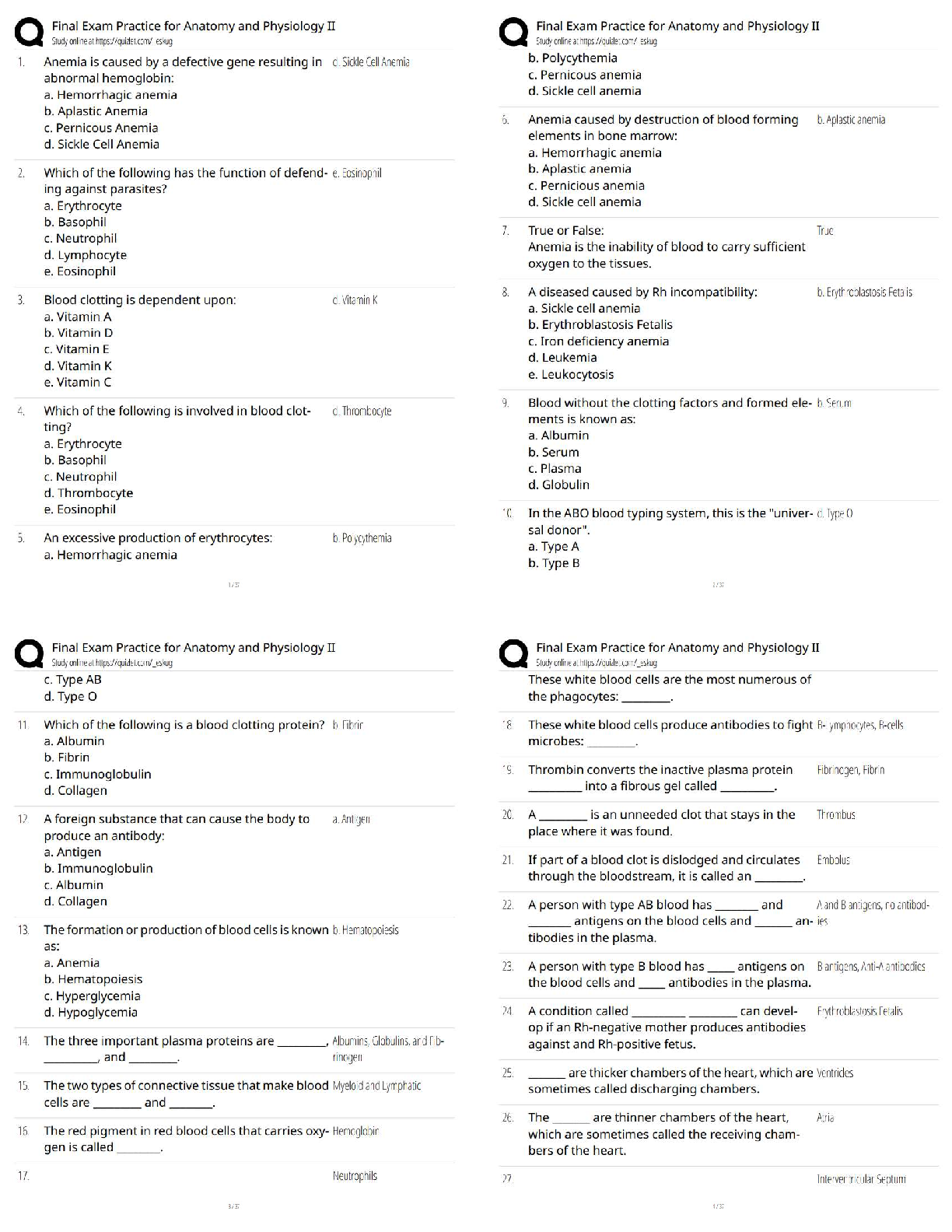
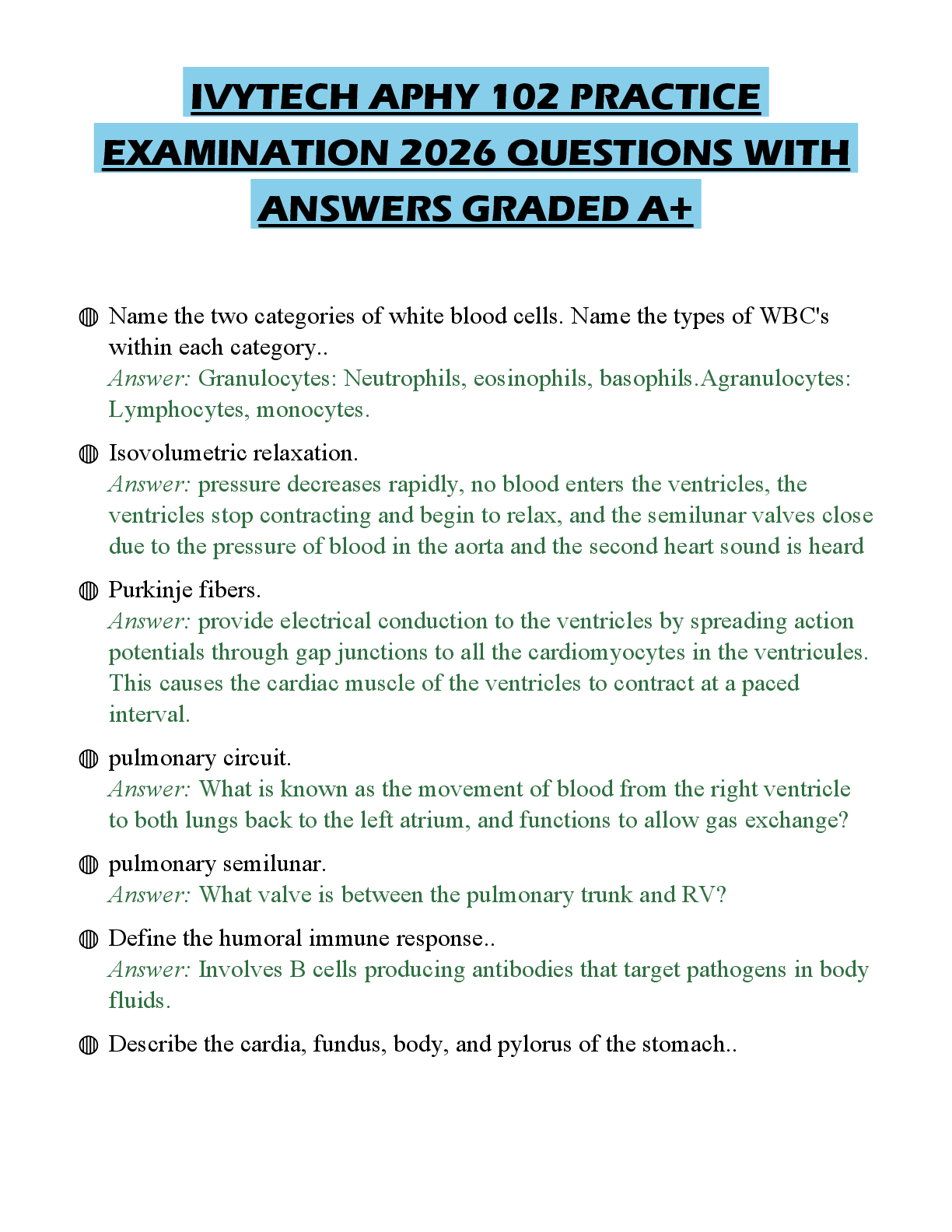
Sample Questions Include:
"What is the primary site of nutrient absorption in the digestive system?" → B) Small intestine (Rationale: The small intestine's large surface area from villi and microvilli maximizes absorption) .
"Which process involves the synthesis of glucose from non-carbohydrates?" → B) Gluconeogenesis (Rationale: This occurs in the liver during periods of fasting) .
"Which hormone increases the permeability of the collecting ducts to water?" → Antidiuretic Hormone (ADH) (Rationale: ADH is secreted in response to increased plasma osmolality or decreased blood volume) .
"What is the function of intrinsic factor?" → B) Facilitates vitamin B12 absorption (Rationale: Secreted by parietal cells, it is essential for RBC production) .
All questions include complete rationales based on current anatomy and physiology standards and Chamberlain University curriculum requirements .
DOCUMENT ACCESS:
This study guide is available as an instant digital download (PDF) immediately upon purchase. Fully text-searchable, printable, and accessible anytime through your user account. 100% satisfaction guarantee. Trusted by thousands of Chamberlain nursing students for final exam preparation and mastering anatomy and physiology competencies .
[Show More]