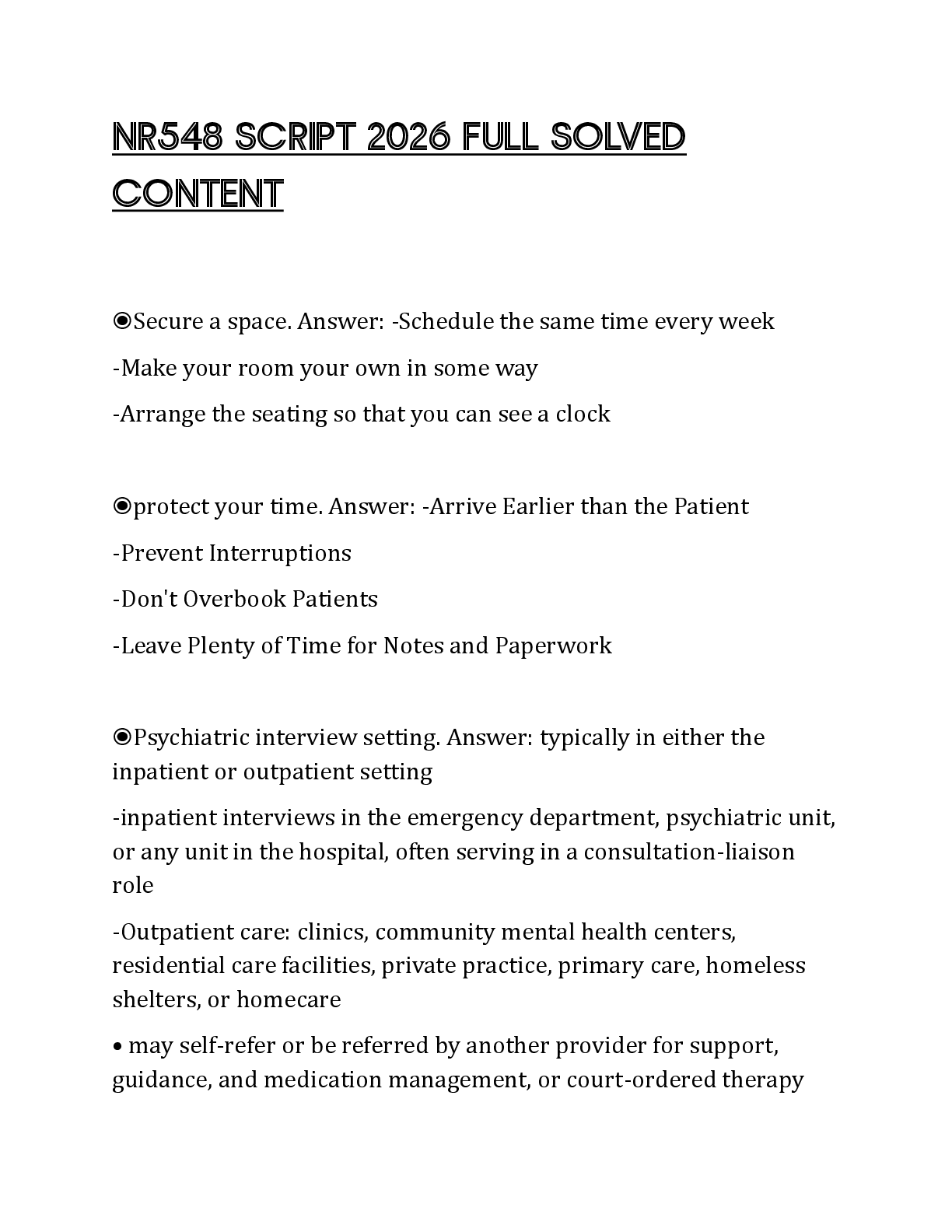
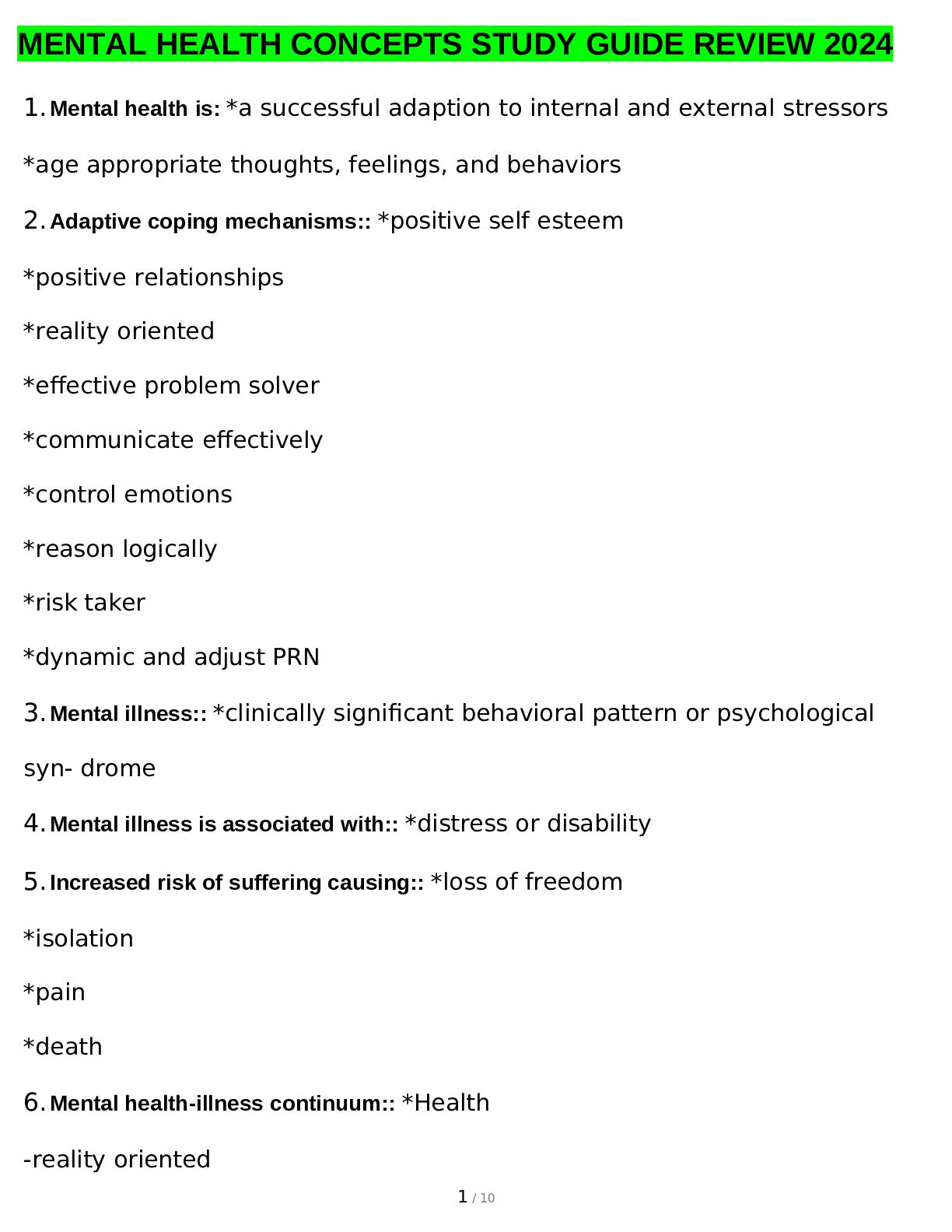
INSTANT PDF DOWNLOAD—This comprehensive study guide is specifically designed for Galen College of Nursing students preparing for Exam 4 (Final Exam) in NU 160 / NU160: Mental Health Concepts for the 2026/2027 academic ye
...
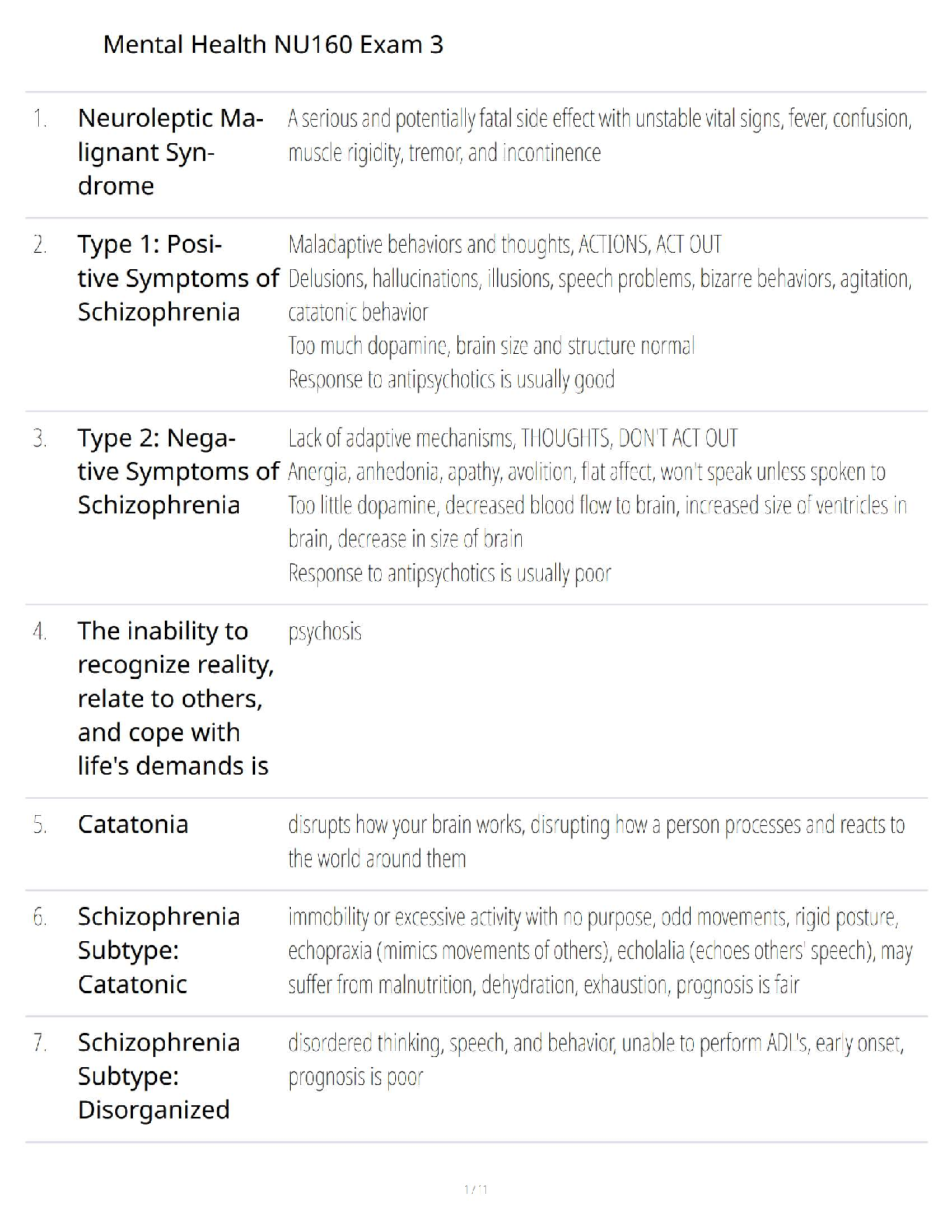
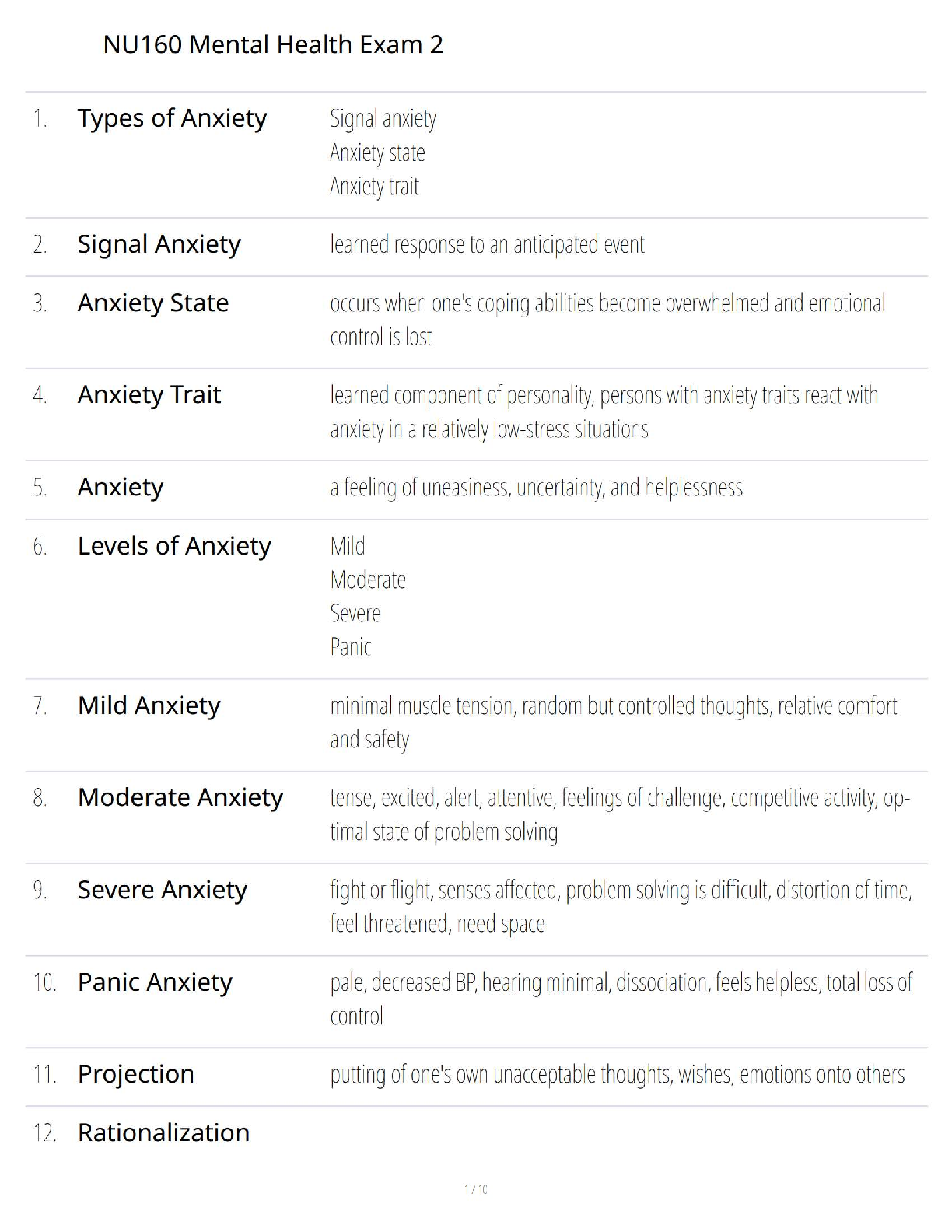
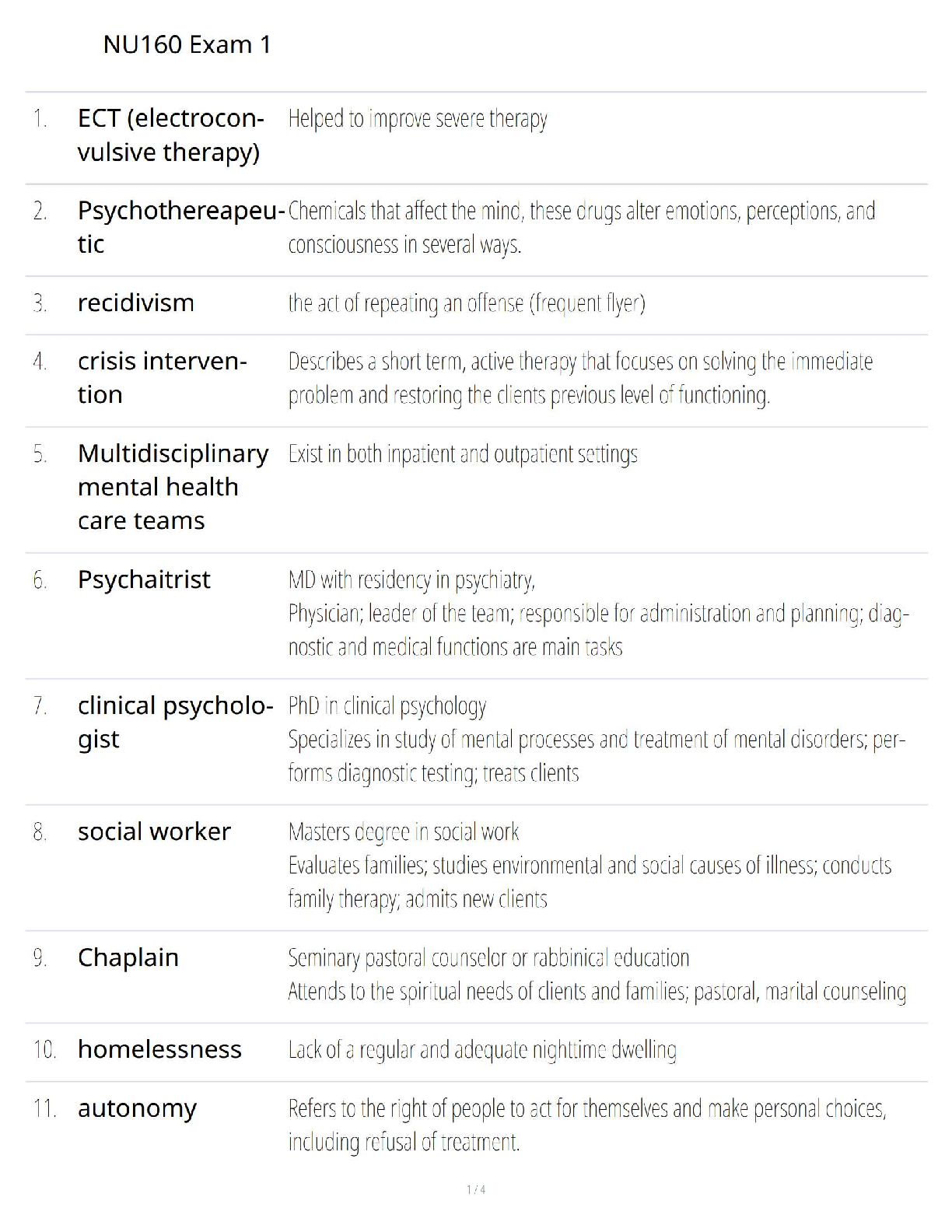
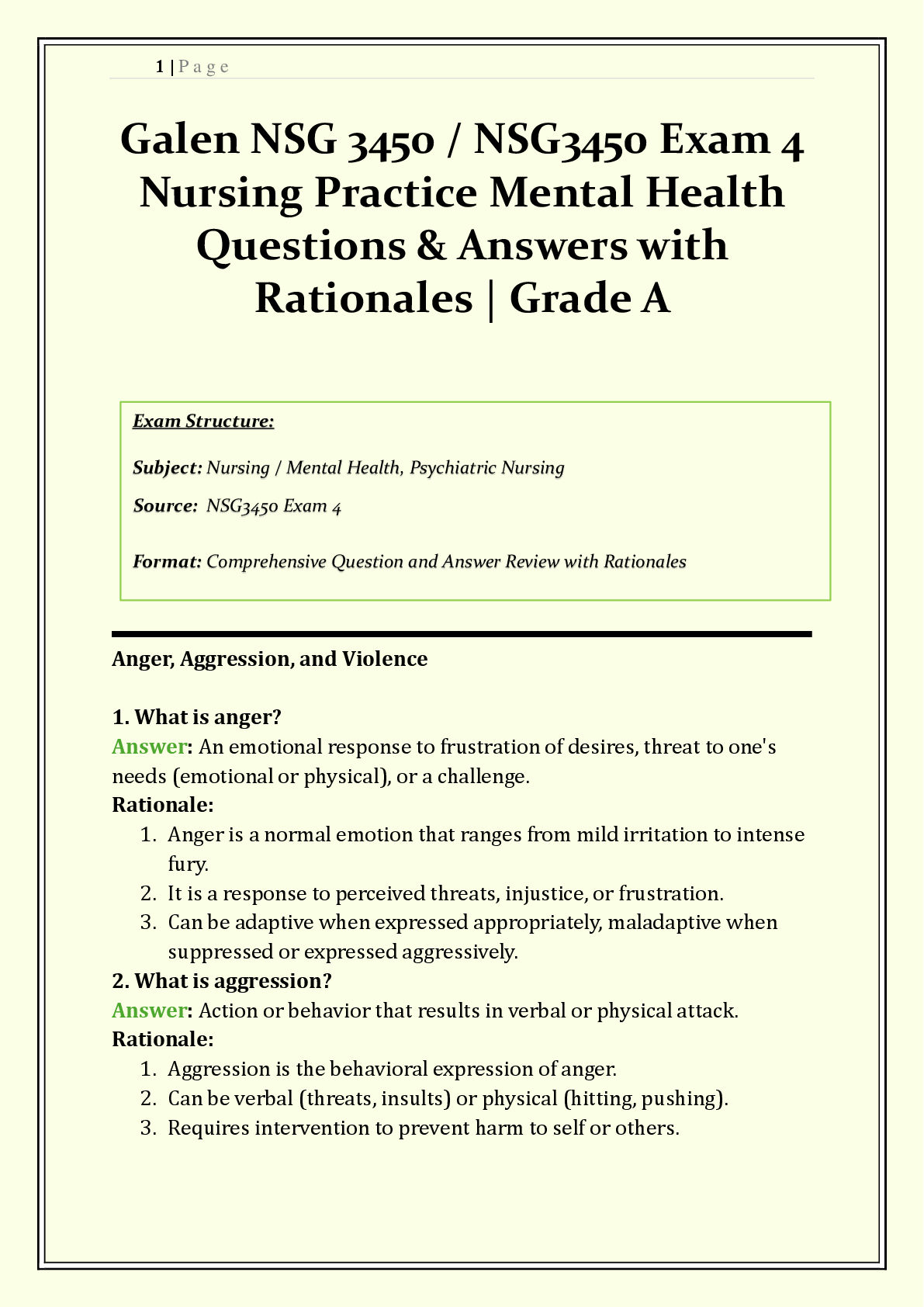
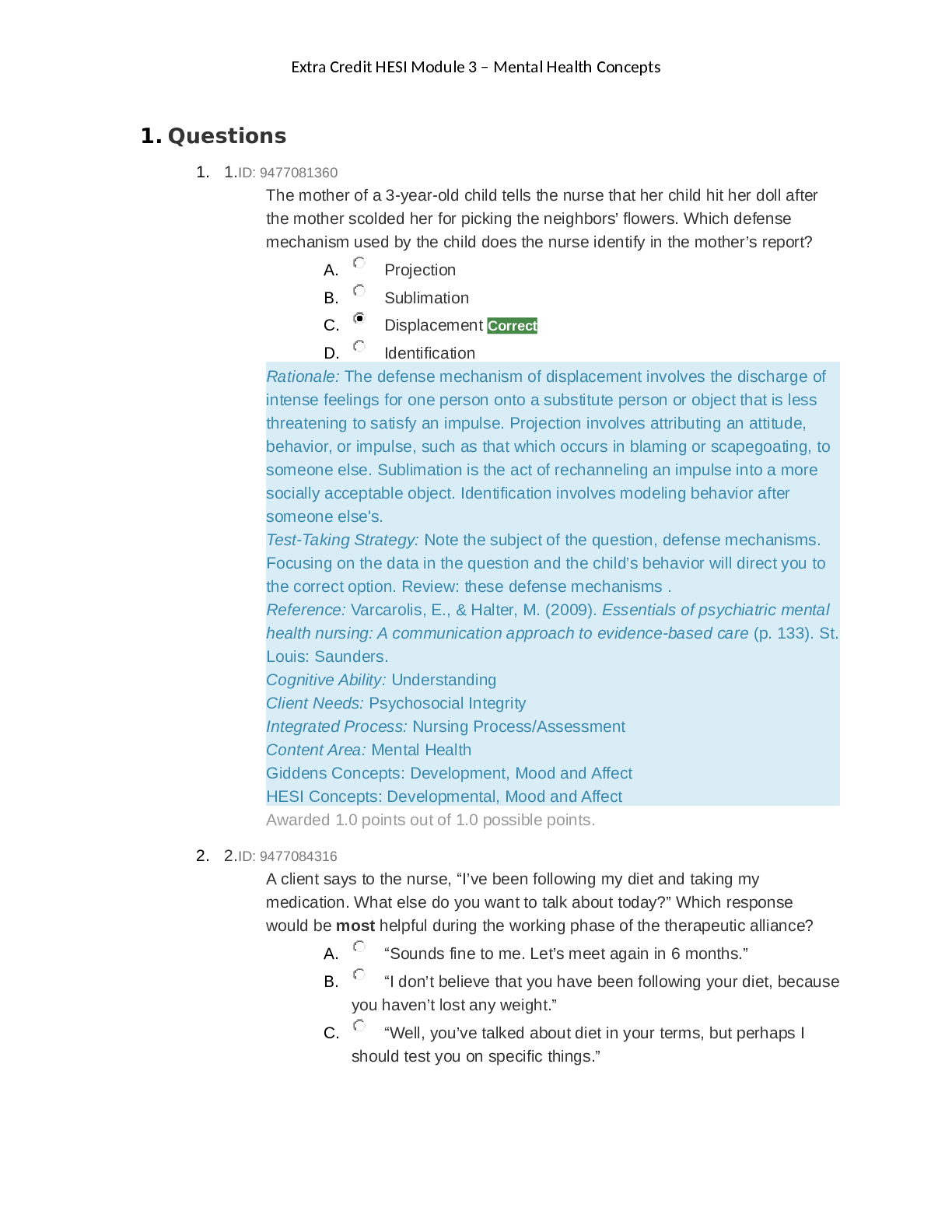
INSTANT PDF DOWNLOAD—This comprehensive study guide is specifically designed for Galen College of Nursing students preparing for Exam 4 (Final Exam) in NU 160 / NU160: Mental Health Concepts for the 2026/2027 academic year. Based on the official course blueprint and verified exam materials from top-selling student resources , this 24+ page resource contains expertly verified practice questions and 100% correct answers with detailed rationales to help you master core mental health concepts and achieve a top score (Grade A+) .
This comprehensive guide covers all major topics tested on Exam 4 (Units 9-11) across 24+ pages of content :
Unit 9: Problems of Childhood
Emotional Developmental Tasks (Erikson's Stages) : Infancy (Birth-1 year) → Trust vs. Mistrust; Early Childhood (1-3 years) → Autonomy vs. Shame and Doubt; Preschool (3-6 years) → Initiative vs. Guilt; School Age (6-12 years) → Industry vs. Inferiority; Puberty (12-18 years) → Identity vs. Diffusion
Common Behavioral Problems: Feeding disorders (overeating/obesity, undereating/malnourishment), sleep problems (night terrors, bedtime rituals helpful), temper tantrums (common ages 1-4, interventions: childproof environment, distraction, praise after), breath holding spells (ages 6 months-5 years, resolves in 30-60 seconds)
Mental Health Problems of Childhood: Most common is problems with parent-child interactions (primary caregiver dysfunction, parent-child conflict). Environmental problems include poverty, homelessness, child abuse/neglect, violence. Emotional problems include anxiety, depression, somatoform disorders (physical symptoms from emotional causes), PTSD
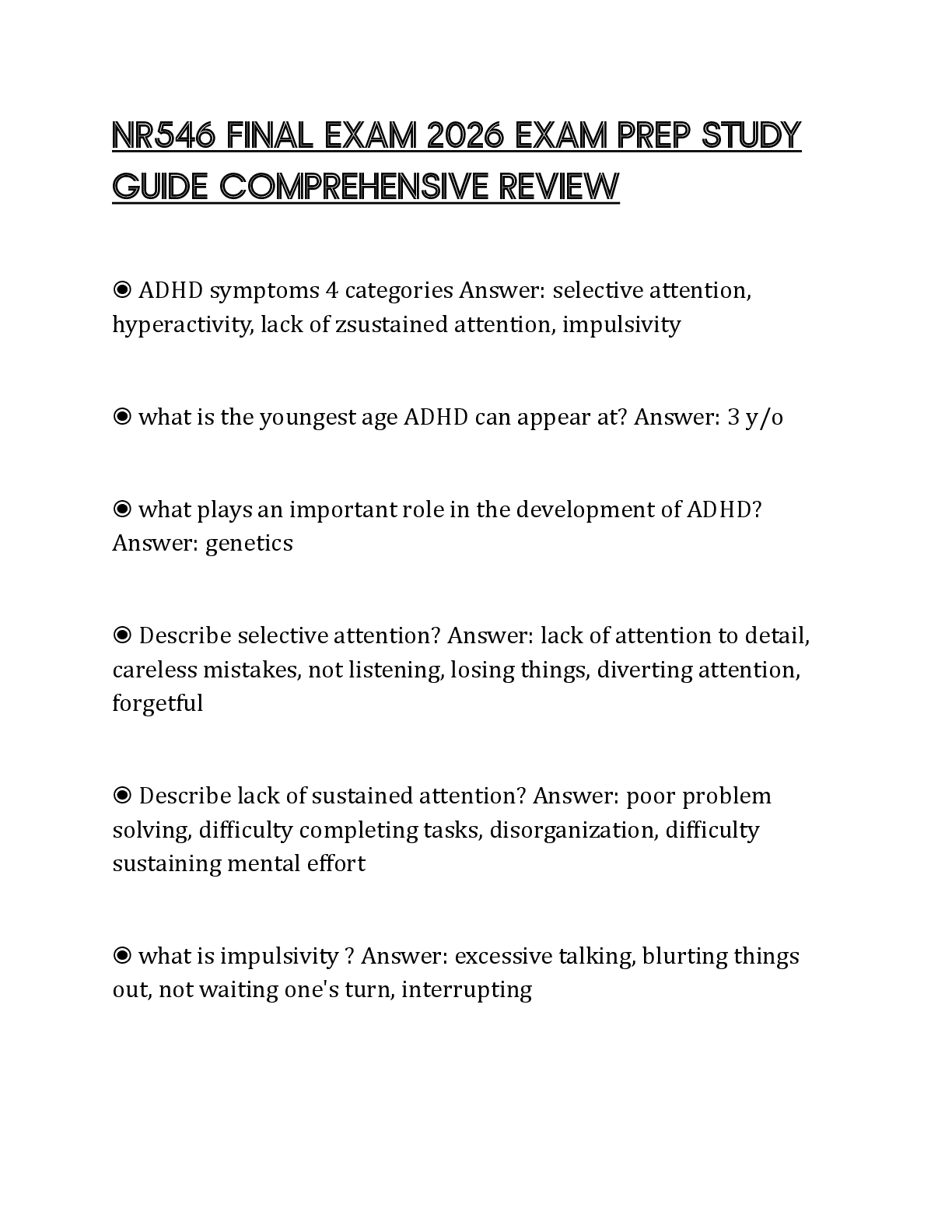
ADHD: Most commonly diagnosed mental health problem in childhood (7:1 boy:girl ratio). Medications include long-acting stimulants (Adderall—avoid caffeine, alcohol, OTC drugs; monitor pulse/BP) and nonstimulants (Strattera, clonidine)
Elimination Disorders: Enuresis (involuntary urination in child ≥5 years)—primary nocturnal enuresis (nighttime wetting), diurnal enuresis (daytime wetting), secondary enuresis (after stress). Encopresis (repeated passage of feces in inappropriate places in child >4 years with no physical abnormalities)
Intellectual Developmental Disorder: Diagnosed by IQ test (repeatedly score below 70), must have problems in intellectual and adaptive functioning
Unit 10: Problems of Adolescence
Internal Developmental Problems: Introspection (process of examining one's own thoughts, emotions, reactions, attitudes, opinions, values, and behaviors by looking at the inner self)
External Environmental Problems: Sleep deprivation (teens require 8-10 hours of sleep each night to function well during the day)
Adolescent Depression: Depressed teens tend to act out rather than withdraw
Stages of Chemical Dependency: Experimentation → Actively Seeking → Preoccupation → Burnout
Suicide Risk Factors: More competition for fewer resources, major characteristic of adolescent psychosis is loss of contact with reality, suicide attempt is a call for help
Unit 11: Loss and Grief
Types of Loss: Maturational loss (predictable life events—moving out, graduation, marriage) vs. Situational loss (no control over event—death of loved one, natural disaster, divorce)
Grief Terminology: Bereavement (behavioral state of thoughts, feelings, and activities that follow a loss); Grief (emotional reaction to loss); Mourning (the process of working through or resolving one's grief)
Stages of Grieving Process: Denial (shock) → Yearning (crying, anger, self-blame, overwhelming) → Depression and Identification (withdraw, unhealthy behaviors, full impact realized) → Acceptance and Recovery (reinvest feelings in others, focus on living)
Complicated Grief: Persistent yearning without signs of depression, can cause social isolation and unhealthy grief reactions
Kubler-Ross Stages of Dying: Denial and isolation, Anger, Bargaining, Depression, Acceptance
Age of Death Concept: Children develop adult concept of loss and death at age 9 or 10 years
Unit 12: Sexual Disorders
Gender Identity Terms: Cisgender (gender identity and expression congruent with natal sex), Transgender (gender identity differs from natal sex), Genderfluid (alternates between genders), Intersex (sexual organs between male and female elements), Pansexual (attracted to all people regardless of gender identity)
Gender Dysphoria: Incongruence between one's physical body and their gender identity
Surgical Interventions: Orchiectomy (removal of one or both testes), Phalloplasty or Metoidioplasty (creation of a penis)
Sexual Dysfunction: Disturbance during one of four stages: desire (libido), arousal (excitement), orgasm, resolution
Paraphilia: Intense, frequent, sexually oriented fantasies or behaviors involving situations, inanimate objects, children, nonconsenting adults, or humiliation/suffering
Sleep-Wake Disorders
Sleep Requirements by Age: Adult (7-9 hours), 10-17yo (8.5-9.25 hours), 5-10yo (10-11 hours), 3-5yo (10-13 hours), 2yo (11-12 hours + 1-2h nap), 1yo (10-12 hours + 4h naps), Newborn (14-17 hours/24h)
Phases of Sleep: NREM (stages 1-4) and REM sleep; sleep cycle: presleep (10-30 min) → NREM stage 1 → stage 2 → stage 3 → stage 4 (deepest) → back through stages 3-2 → REM
Dyssomnias: Insomnia (most common, difficulty falling/staying asleep), Hypersomnolence (excessive sleepiness despite sleeping, begins 15-30 years old)
Polysomnogram: Monitors client's electrophysical responses during sleep
Primary Sleep Disorders: Related to abnormal functioning of sleep-wake or timing mechanisms of the body (dyssomnias and parasomnias)
Eating Disorders
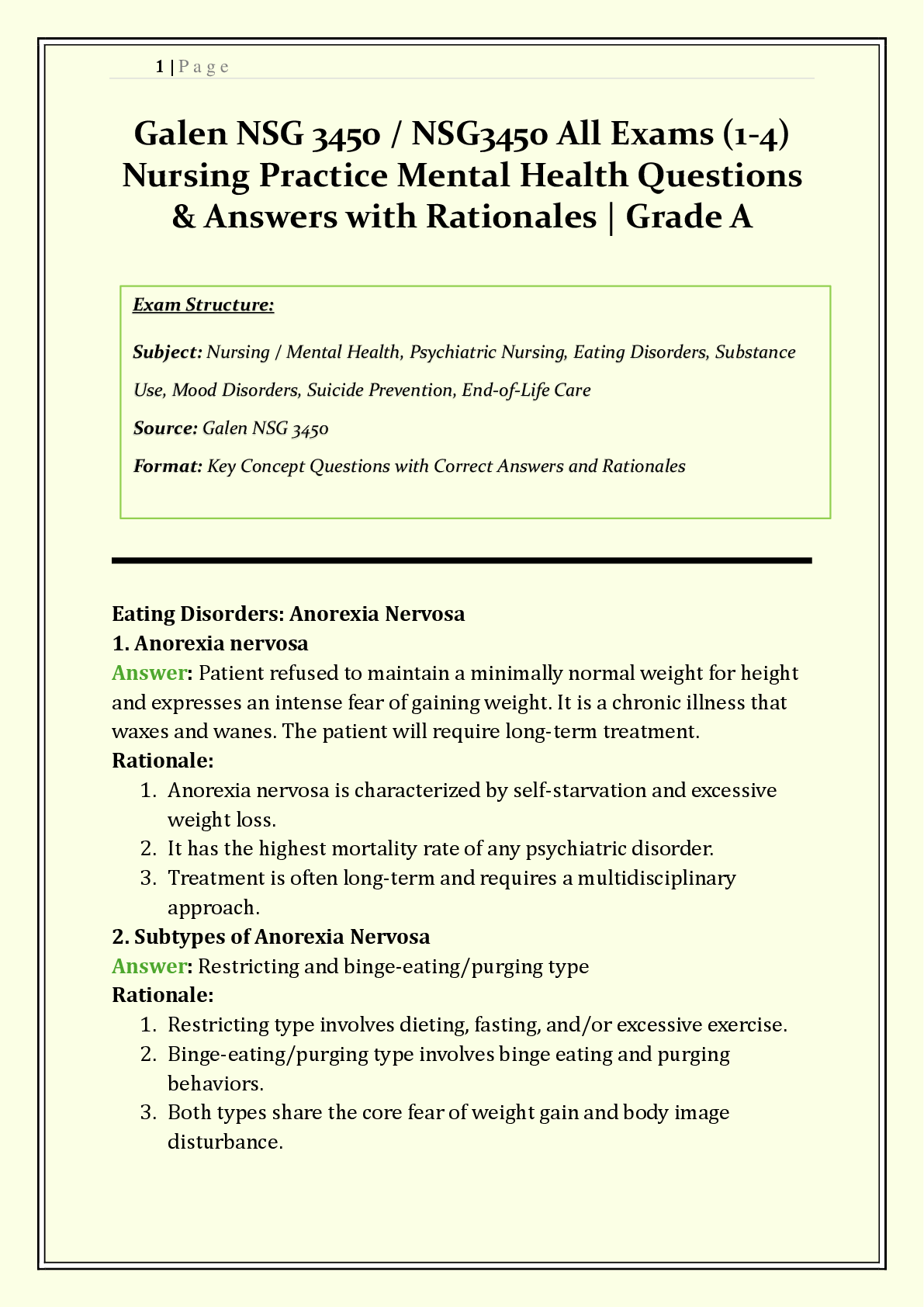
Pica: Persistent eating of nonfood items lasting >1 month, can be traced to vitamin/mineral/calorie deficiency
Rumination Disorder: Most often seen in childhood, regurgitation and rechewing of food, death from malnutrition can occur in infants
Refeeding Syndrome: Imbalance of fluids and electrolytes that can lead to cellular dysfunction and life-threatening complications (heart failure) when severely anorexic individuals resume eating after starvation
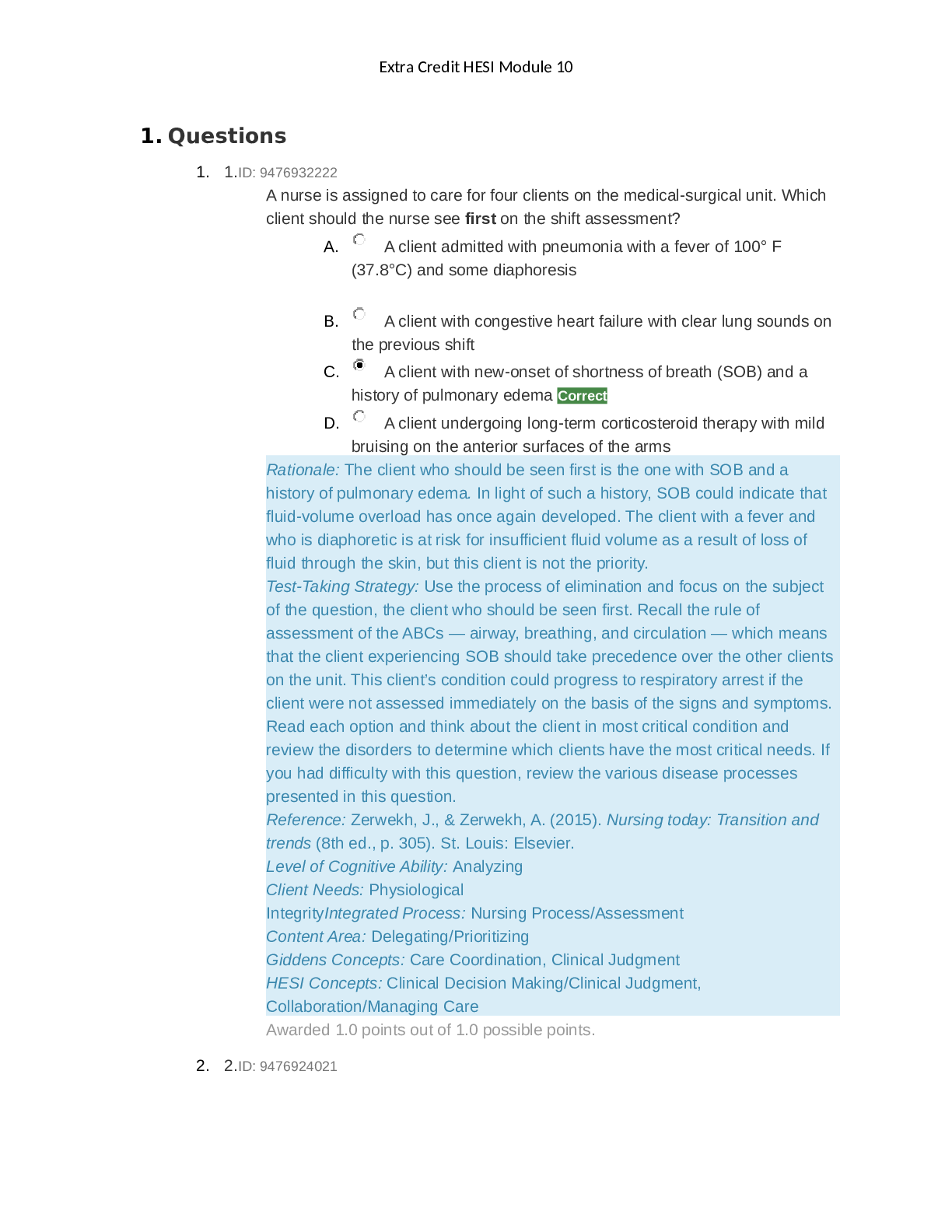
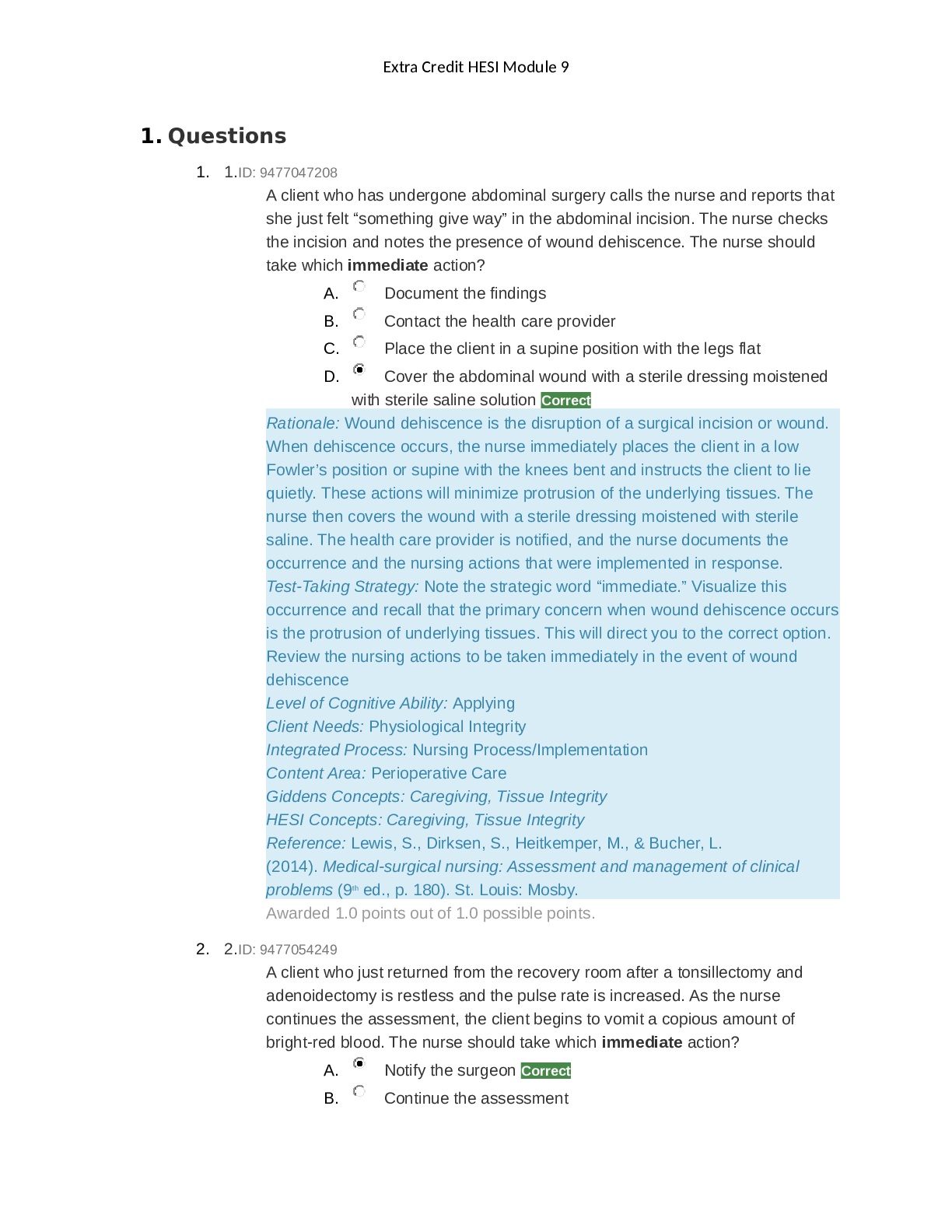
All questions include complete rationales based on current evidence-based practice, mental health nursing standards, and Galen College curriculum requirements .
DOCUMENT ACCESS:
This study guide is available as an instant digital download (PDF) immediately upon purchase. Fully text-searchable, printable, and accessible anytime through your user account. 100% satisfaction guarantee. Trusted by thousands of Galen nursing students for exam preparation and mastering mental health concepts .
[Show More]