DBA module 2
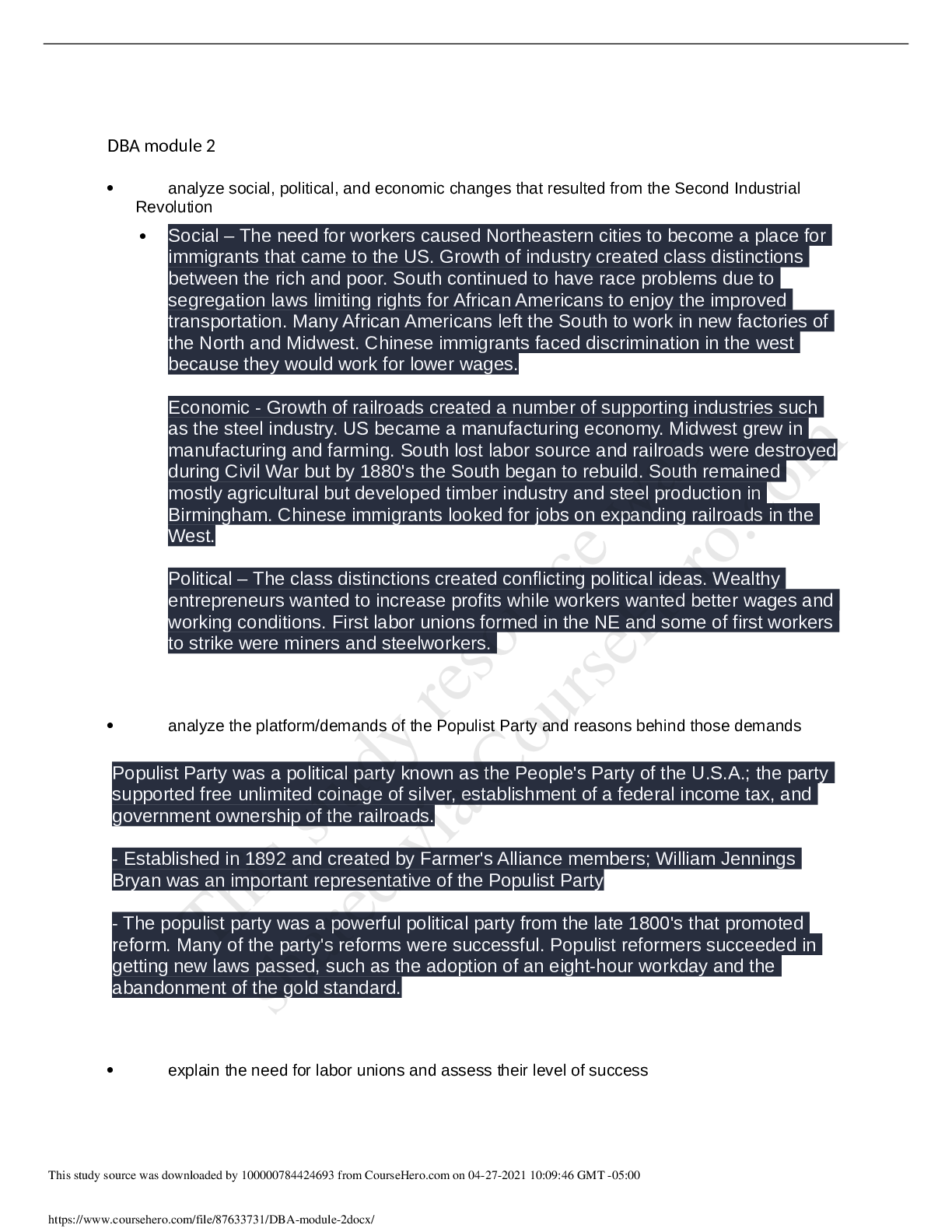
analyze social, political, and economic changes that resulted from the Second Industrial
Revolution
Social – The need for workers caused Northeastern cities to become a place for
immigrants that came
...
DBA module 2
analyze social, political, and economic changes that resulted from the Second Industrial
Revolution
Social – The need for workers caused Northeastern cities to become a place for
immigrants that came to the US. Growth of industry created class distinctions
between the rich and poor. South continued to have race problems due to
segregation laws limiting rights for African Americans to enjoy the improved
transportation. Many African Americans left the South to work in new factories of
the North and Midwest. Chinese immigrants faced discrimination in the west
because they would work for lower wages.
Economic - Growth of railroads created a number of supporting industries such
as the steel industry. US became a manufacturing economy. Midwest grew in
manufacturing and farming. South lost labor source and railroads were destroyed
during Civil War but by 1880's the South began to rebuild. South remained
mostly agricultural but developed timber industry and steel production in
Birmingham. Chinese immigrants looked for jobs on expanding railroads in the
West.
Political – The class distinctions created conflicting political ideas. Wealthy
entrepreneurs wanted to increase profits while workers wanted better wages and
working conditions. First labor unions formed in the NE and some of first workers
to strike were miners and steelworkers.
analyze the platform/demands of the Populist Party and reasons behind those demands
Populist Party was a political party known as the People's Party of the U.S.A.; the party
supported free unlimited coinage of silver, establishment of a federal income tax, and
government ownership of the railroads.
- Established in 1892 and created by Farmer's Alliance members; William Jennings
Bryan was an important representative of the Populist Party
- The populist party was a powerful political party from the late 1800's that promoted
reform. Many of the party's reforms were successful. Populist reformers succeeded in
getting new laws passed, such as the adoption of an eight-hour workday and the
abandonment of the gold standard
[Show More]