501 Study Guides
NURS 501 Advanced Physiology and Pathophysiology
Chapter 1: Cellular Biology Study Guide
1. Which statement best describes the cellular function of metabolic absorption?
a. Cells can produce proteins
...
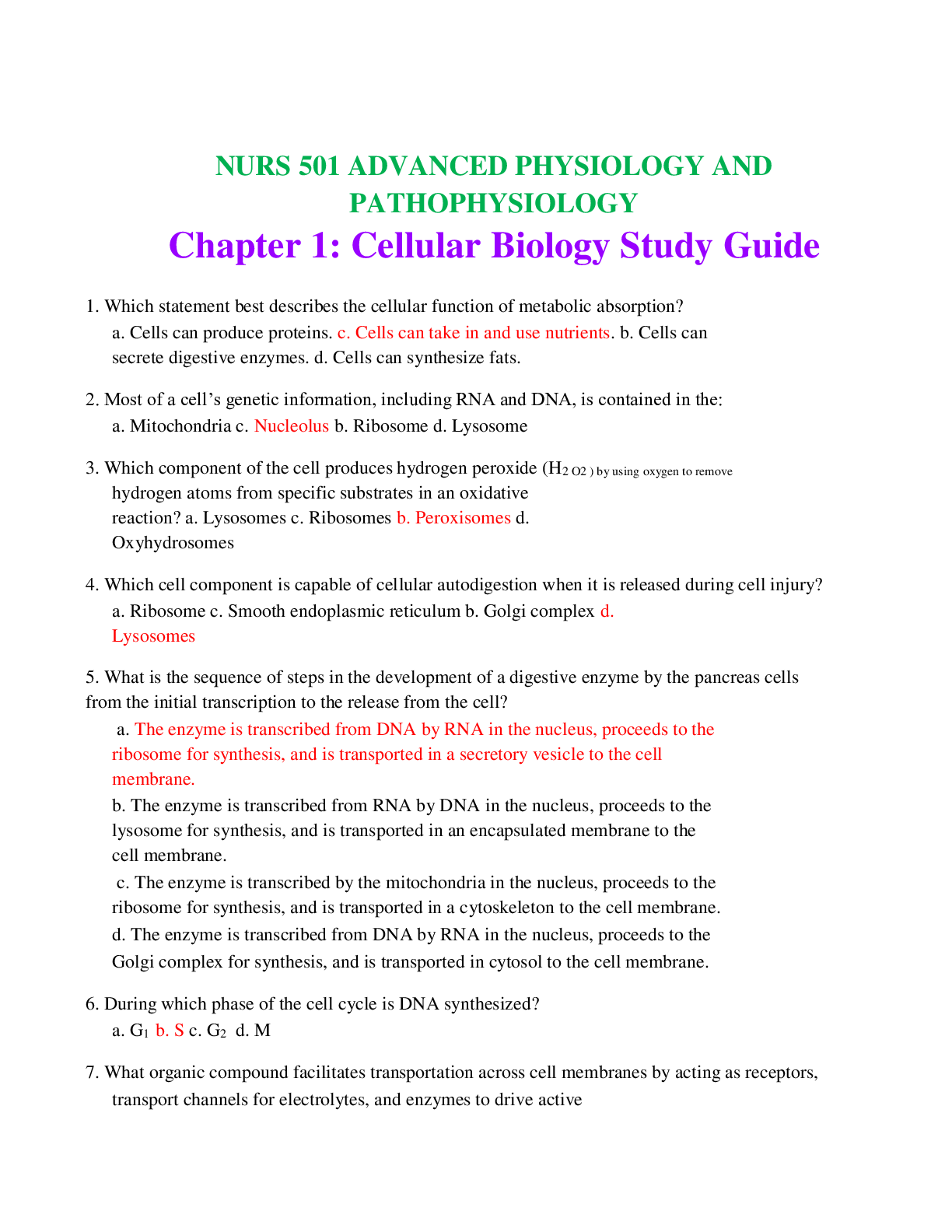
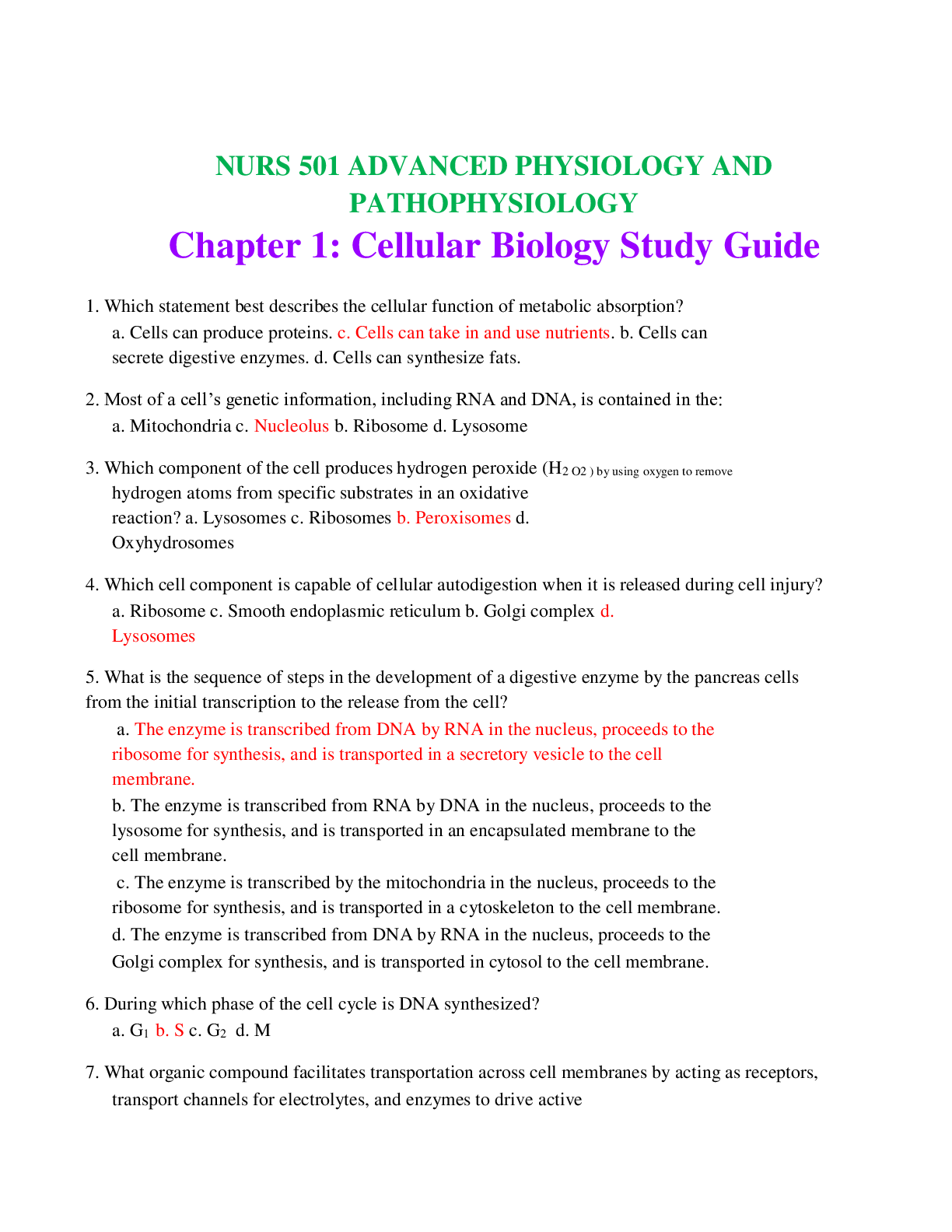
501 Study Guides
NURS 501 Advanced Physiology and Pathophysiology
Chapter 1: Cellular Biology Study Guide
1. Which statement best describes the cellular function of metabolic absorption?
a. Cells can produce proteins. c. Cells can take in and use nutrients. b. Cells can
secrete digestive enzymes. d. Cells can synthesize fats.
2. Most of a cell’s genetic information, including RNA and DNA, is contained in the:
a. Mitochondria c. Nucleolus b. Ribosome d. Lysosome
3. Which component of the cell produces hydrogen peroxide (H2 O2 ) by using oxygen to remove
hydrogen atoms from specific substrates in an oxidative
reaction? a. Lysosomes c. Ribosomes b. Peroxisomes d.
Oxyhydrosomes
4. Which cell component is capable of cellular autodigestion when it is released during cell injury?
a. Ribosome c. Smooth endoplasmic reticulum b. Golgi complex d.
Lysosomes
5. What is the sequence of steps in the development of a digestive enzyme by the pancreas cells
from the initial transcription to the release from the cell?
a. The enzyme is transcribed from DNA by RNA in the nucleus, proceeds to the
ribosome for synthesis, and is transported in a secretory vesicle to the cell
membrane.
b. The enzyme is transcribed from RNA by DNA in the nucleus, proceeds to the
lysosome for synthesis, and is transported in an encapsulated membrane to the
cell membrane.
c. The enzyme is transcribed by the mitochondria in the nucleus, proceeds to the
ribosome for synthesis, and is transported in a cytoskeleton to the cell membrane.
d. The enzyme is transcribed from DNA by RNA in the nucleus, proceeds to the
Golgi complex for synthesis, and is transported in cytosol to the cell membrane.
6. During which phase of the cell cycle is DNA synthesized?
a. G1 b. S c. G2 d. M
7. What organic compound facilitates transportation across cell membranes by acting as receptors,
transport channels for electrolytes, and enzymes to drive activepumps? a. Lipids c. Proteins b. Proteases d. Carbohydrates
8. Understanding the various steps of proteolytic cascades, such as caspase-mediated apoptosis and
complement cascades, may be useful in designing drug therapy for which human diseases?
a. Cardiac and vascular disorders b. Autoimmune and malignant disorders c.
Gastrointestinal and renal disorders d. Endocrine and gastrointestinal disorders
9. Which structure prevents water-soluble molecules from entering cells across the plasma
membrane?
a. Carbohydrate chains.
b. Membrane channel proteins
c. Glycoprotein channels
d. Lipid bilayer (Phospholipids bi-layer)
10. The fluid mosaic model explains:
a. How a cell membrane functions b. Why our bodies appear to be solid c.
How tissue is differentiated d. How fluid moves between the intracellular and
extracellular compartments
11. Which form of cell communication is used to communicate within the cell itself and with other
cells in direct physical contact?
a. Protein channel (gap junction) b. Plasma membrane-bound signaling molecules
(involving receptors) c. Hormone secretion such as neurotransmitters d. Extracellular
chemical messengers such as ligands
12. Which mode of chemical signaling uses blood to transport communication to cells some distance
away?
a. Paracrine c. Neurotransmitter b. Autocrine d. Hormonal
13. Which mode of chemical signaling uses local chemical mediators that are quickly taken up,
destroyed, or immobilized?
a. Paracrine c. Neurotransmitter b. Autocrine d. Hormone
14. Neurotransmitters affect the postsynaptic membrane by binding to:
a. Lipids c. Amphipathic lipids b. Ribosomes d. Receptors
15. How do cells receive communication from the extracellular fluid surrounding them?a. Protein channel (gap junction) b. Plasma membrane-bound signaling
molecules (involving receptors) c. Hormone secretion such as
neurotransmitters d. Chemical messengers such as ligands
16. When a second message is necessary for extracellular communication to be activated, it is
provided by which one?
a. Guanosine triphosphate (GTP) c. Adenosine triphosphate (ATP) b. Adenosine
monophosphate (AMP) d. Guanosine diphosphate (GDP)
17. Under anaerobic conditions, what process provides energy for the cell?
A.. Oxidative phosphorylation
B.. Lactolysis
C. Glycolysis
D. Passive transport
18. What is the mechanism by which the energy produced from carbohydrates, proteins, and lipids is
transferred to adenosine triphosphate (ATP)?
a. Anaerobic glycolysis c. Oxidative phosphorylation b. Oxidative cellular
metabolism d. Tricarboxylic acid phosphorylation
19. Passive transport is best described with which statement?
a. Being driven by osmosis, hydrostatic pressure, and diffusion.
b. Involving receptors that can bind with substances being transported.
c. Being capable of transporting macromolecules.
d. Requiring energy generated by the cell
20. Active transport occurs across which type of membranes?
a. Membranes that have a higher concentration of the solute on the outside of the cell
b. Membranes that are semipermeable to water and small electrically uncharged
molecules
c. Membranes that have receptors that are capable of binding with the substances to
be transported
d. Membranes that have a cell membrane that is hydrophobic rather than hydrophilic
21. Which method of transport uses transmembrane proteins with receptors with a high degree of
specificity for the substance being transported?
a. Active c. Transmembranous b. Mediated d. Passive
22. The movement of fluid across the arterial end of capillary membranes into the interstitial fluid
surrounding the capillary is an example of which fluid movement process?a. Hydrostatic pressure c. Diffusion b. Osmosis d. Active transport
23. Why is osmolality preferred over osmolarity as the measurement of osmotic activity in the
clinical assessment of individuals?
a. Plasma contains sodium and chloride, which influence the volume of solution.
b. Volume affects perfusion more than the weight of solutes.
c. More of the weight of plasma is influenced by solutes, such as protein and glucose,
rather than by water.
d. Osmotic activity depends on the concentration of solutes present in plasma, such as
proteins and glucose.
24. A patient who has diarrhea receives a 3% saline solution intravenously to replace the
sodium and chloride lost in the stool. What effect will this fluid replacement have on cells?
a. Become hydrated c. Shrink b. Swell or burst d. Divide
25. The transport of glucose from the blood to the cell is accomplished by which process?
a. Active-mediated transport (active transport)
b. Active diffusion
c. Passive osmosis
d. Passive-mediated transport (facilitated diffusion)
26. Potassium and sodium are transported across plasma membranes by:
a. Passive electrolyte channels b. Coupled
channels c. Adenosine triphosphatase (ATPase)
enzyme d. Diffusion
27. What occurs during exocytosis?
a. Macromolecules can be secreted across eukaryotic cell membranes.
b. All substances are secreted into the cellular matrix. c. No repairs in
the plasma membrane can take place. d. Solute molecules flow freely
into and out of the cell.
28. Why is it possible for potassium to diffuse easily into and out of cells?
a. Potassium has a greater concentration in the intracellular fluid (ICF).
b. Sodium has a greater concentration in the extracellular fluid (ECF). c.
The resting plasma membrane is more permeable to potassium. d. An
excess of anions are inside the cell.
29. The cellular uptake of the nutrient cholesterol depends on which process?a. Receptor-mediated exocytosis c. Receptor-mediated endocytosis b. Antiport
system d. Passive transport
30. What causes the rapid change in the resting membrane potential to initiate an action potential?
a. Potassium gates open, and potassium rushes into the cell, changing the membrane
potential from negative to positive. b. Sodium gates open, and sodium
rushes into the cell, changing the membrane
potential from negative to positive. c. Sodium gates close, allowing
potassium into the cell to change the membrane
potential from positive to negative. d. Potassium gates close, allowing
sodium into the cell to change the membrane
potential from positive to
negative.
31. The action of platelet-derived growth factor is to stimulate the production of which cells?
a. Platelets c. Connective tissue cells b. Epidermal cells d. Fibroblast
cells
32. The role of cytokines in cell reproduction is that they:
a. Provide growth factor for tissue growth and development.
b. Block progress of cell reproduction through the cell cycle.
c. Restrain cell growth and development. d. Provide nutrients
for cell growth and development.
33. What is the process of cellular reproduction?
a. The process often takes months or years to complete. b.
Cellular reproduction typically has a short interphase. c. Two
diploid cells, called daughter cells, have been formed. d. The
process involves the interaction of male and female cells.
34. Which statement is true about eukaryotic cells?
a. They lack distinct nucleus. b. They contain
compartments called organelles. c. They lack an
encasing nuclear membrane. d. They are smaller
than the typical prokaryote cell.
35. Which statement is true about phagocytosis?
a. Phagocytosis is an example of exocytosis. b.
Phagocytosis is dependent on small vesicles. c.
Phagocytosis involves the ingestion of bacteria. d.
Phagocytosis focuses on solute molecules.36. A muscle cell possesses which specialized function?
a. Movement c. Secretion b. Conductivity d. Respiration
37. When a mucous gland cell creates a new substance from previously absorbed material, this
process is known as which specialized cellular function? a.
Excretion c. Reproduction b. Metabolic absorption d.
Secretion
38. All cells are capable of what process?
a. Excretion c. Metabolic absorption b. Movement d. Continuous
division
Multiple Response Identify one or more choices that best complete the
statement or answer the question.
39. What are the major chemical components of the cell membranes? (Select all that apply.)
a. Lipids.
b. Sodium ions
c. Carbohydrates
d. DNA
e. Proteins
40. Which cells lose their ability to replicate and divide? (Select all that apply.)
a. Intestines b.
Nerves c. Skin d.
Lens of the eye e.
Skeletal muscle
41. Which statements are true concerning the process of facilitated diffusion? (Select all that apply).
a. Facilitated diffusion is also referred to as passive mediated transport. b. This
process expends no metabolic energy. c. Moving solute molecules through cellular
membranes are involved in this process. d. Movement up a concentration gradient is
necessary. e. Facilitated diffusion is the primary means for water transport.
42. Passive transport is dependent on: (Select all that apply.)
a. Semipermeable barrier membrane
b. The process of osmosis
c. Diffusion as a driving force
d. A living host
e. Hydrostatic pressure43. What is the primary function of proteins? (Select all that apply.)
a. Proteins are binding units. b. Proteins are
transport channels. c. Proteins are
ribonucleoproteins. d. Proteins provide cell
surface markers. e. Proteins are chemical
reaction catalysts.
Matching
Match the structure with its function. Answers may be used more than
once. A. Endoplasmic reticulum B. Ribosome C. Secretory vesicle D.
Lysosomes
44. Packages and transports proteins.
Endoplasmic reticulum, Ribosome
45. Fuses with the plasma membrane to release contents from the cell.
Secretory Vesicle
46. Synthesizes and transports lipids.
Endoplasmic reticulum
47. Provides energy to digest proteins into amino acids.
Lysosomes
Match the structure with its function. Answers may be used more than
once. A. Passive-mediated transport B. Active-mediated transport C.
Osmosis
48. Movement of water
Osmosis
49. Protein carrier
Passive-mediated
transport & Activemediated transport
50. Facilitated diffusion
Passive-mediated transport
Thought
Questions
1. With respect to chemical communication and signal transduction, A. Describethree ways in which cells communicate with one another; give an example of
each.
1. protein channels (gap junctions) coordinate activity with adjacent
cells
2. PM-bound signaling molecules (receptors) affect itself and others in
direct contact
3. secrete chemical signals (ligands)
b. five forms of signaling mediated by secreted molecules; give an example of
each.
Intracrine ligands are produced by the target cell itself and bind to a receptor within.
Autocrine ligands are finely distinct in that although they are also made by the target cell,
they are first secreted and then later bind to the cell as well as neighboring cells (ex.
Immune cells).
Juxtacrine ligands target adjacent cells (often called “contact-dependent” signaling).
Paracrine ligands target cells in the vicinity of the original emitting cell (ex.
Neurotransmitters like Acetylcholine).
Endocrine cells produce hormones that have the important task of targeting distant cells
and often travel through our circulatory system.
2. Describe an example of a molecule(s) transported by active mediated transport
(facilitated diffusion); describe active transport and the sodium-potassium pump.
An example of facilitated diffusion is the movement of glucose into the cell,
where it is used to make ATP. Their diffusion is facilitated by membrane
proteins that form sodium channels (or “pores”) so that Na+ ions can move down
their concentration gradient from outside the cells to inside the cells.
3. Describe the steps of the cAMP second messenger pathway and identify several
cell responses to common neurotransmitters and steroids, which are first
messenger molecules to cAMP second messenger pathway.-Second messengers are intracellular signaling molecules released by the cell in
response to exposure to extracellular signaling molecules—the first messengers. First
messengers are extracellular factors, often hormones or neurotransmitters, such as
epinephrine, growth hormone, and serotonin.
-AC Pathway. The AC pathway begins with an outside signal, such as a hormone, that
binds to a receptor on a cell surface. The receptor then activates a G-protein by causing
a change from GDP to GTP. The alpha piece of Gs, when activated, tells the AC to
begin changing ATP to Cyclic adenosine monophosphate (cAMP, cyclic AMP, or 3',5'-
cyclic adenosine monophosphate) .
-cAMP is a second messenger important in many biological processes. cAMP is a
derivative of adenosine triphosphate (ATP) and used for intracellular signal
transduction in many different organisms, conveying the cAMP-dependent pathway
for the activation of specific proteins.Chapter 2: Altered Cellular & Tissue Study
Guide
Multiple Choice
Identify the choice that best completes the statement or answers the question.
1. Which type of cell adaptation occurs when normal columnar ciliated epithelial cells of the bronchial
lining have been replaced by stratified squamous epithelial cells?
a. Hyperplasia c. Dysplasia
b. Metaplasia d. Anaplasia
2. The loss of adenosine triphosphate (ATP) during ischemia causes cells to:
a. Shrink because of the influx of calcium (Ca).
b. Shrink because of the influx of potassium (KCL).
c. Swell because of the influx of sodium chloride (NaCl).
d. Swell because of the influx of nitric oxide (NO).
3. The mammary glands enlarge during pregnancy primarily as a consequence of hormonal:
a. Atrophy c. Hyperplasia
c. Anaplasia d. Dysplasia
4. Free radicals play a major role in the initiation and
progression of which diseases?
a. Cardiovascular diseases such as hypertension and ischemic heart disease
b. Renal diseases such as acute tubular necrosis and glomerulonephritis
c. Gastrointestinal diseases such as peptic ulcer disease and Crohn disease
d. Muscular disease such as muscular dystrophy and fibromyalgia
5. Free radicals cause cell damage by:
a. Stealing the cell’s oxygen to stabilize the electron, thus causing hypoxia
b. Stimulating the release of lysosomal enzymes that digest the cell membranes
c. Transferring one of its charged, stabilized atoms to the cell membrane, which causes lysis
d. Giving up an electron, which causes injury to the chemical bonds of the cell membrane
6. What is a consequence of plasma membrane damage to the mitochondria?
a. Enzymatic digestion halts DNA synthesis.
b. Influx of calcium ions halts ATP production.
c. Edema from an influx in sodium causes a reduction in ATP production.
d. Potassium shifts out of the mitochondria, which destroys the infrastructure.
7. What is a consequence of leakage of lysosomal enzymes during chemical injury?
a. Enzymatic digestion of the nucleus and nucleolus occurs, halting DNA synthesis.
b. Influx of potassium ions into the mitochondria occurs, halting the ATP production.
c. Edema of the Golgi body occurs, preventing the transport of proteins out of the cell.d. Shift of calcium out of the plasma membrane occurs, destroying the cytoskeleton.
8. Lead causes damage within the cell by interfering with the action of:
a. Sodium and chloride b. Calcium
b. Potassium c. ATP
9. Which statement is a description of the characteristics of apoptosis?
a. Programmed cell death of scattered, single cells
b. Characterized by swelling of the nucleus and cytoplasm
c. Unpredictable patterns of cell death
d. Results in benign malignancies
10. Lead poisoning affects the nervous system by:
a. Interfering with the function of neurotransmitters
b. Inhibiting the production of myelin around nerves
c. Increasing the resting membrane potential
d. Altering the transport of potassium into the nerves
11. Carbon monoxide causes tissue damage by:
a. Competing with carbon dioxide so that it cannot be excreted
b. Binding to hemoglobin so that it cannot carry oxygen
c. Destroying the chemical bonds of hemoglobin so it cannot carry oxygen
d. Removing iron from hemoglobin so it cannot carry oxygen
12. Acute alcoholism mainly affects which body system?
a. Hepatic c. Renal
b. Gastrointestinal d. Central nervous
13. During cell injury caused by hypoxia, an increase in the osmotic pressure occurs within the
cell because:
a. Plasma proteins enter the cell.
b. The adenosine triphosphatase (ATPase)–driven pump is stronger during hypoxia.
c. Sodium chloride enters the cell.
d. An influx of glucose occurs through the injured cell membranes.
14. Which statement is true regarding the difference between subdural hematoma and epidural
hematoma?
a. No difference exists, and these terms may be correctly used interchangeably.
b. A subdural hematoma occurs above the dura, whereas an epidural hematoma
occurs under the dura.
c. A subdural hematoma is often the result of shaken baby syndrome, whereas an
epidural hematoma rapidly forms as a result of a skull fracture.
d. A subdural hematoma usually forms from bleeding within the skull, such as an aneurysm
eruption, whereas an epidural hematoma occurs from trauma outside the skull, such as
a blunt force trauma.
15. What physiologic change occurs during heat exhaustion?a. Hemoconcentration occurs because of the loss of salt and water.
b. Cramping of voluntary muscles occurs as a result of salt loss.
c. Thermoregulation fails because of high core temperatures.
d. Subcutaneous layers are damaged because of high core temperatures.
16. In hypoxic injury, sodium enters the cell and causes swelling because:
a. The cell membrane permeability increases for sodium during periods of hypoxia.
b. ATP is insufficient to maintain the pump that keeps sodium out of the cell.
c. The lactic acid produced by the hypoxia binds with sodium in the cell.
d. Sodium cannot be transported to the cell membrane during hypoxia.
17. What is the most common site of lipid accumulation?
a. Coronary arteries c. Liver
b. Kidneys d. Subcutaneous tissue
18. What mechanisms occur in the liver cells as a result of lipid accumulation?
a. Accumulation of lipids that obstruct the common bile duct, preventing flow of bile
from the liver to the gallbladder
b. Increased synthesis of triglycerides from fatty acids and decreased synthesis of apoproteins
c. Increased binding of lipids with apoproteins to form lipoproteins
d. Increased conversion of fatty acids to phospholipids
19. Hemoprotein accumulations are a result of the excessive storage of:
a. Iron, which is transferred from the cells to the bloodstream
b. Hemoglobin, which is transferred from the bloodstream to the cells
c. Albumin, which is transferred from the cells to the bloodstream
d. Amino acids, which are transferred from the cells to the bloodstream
20. Hemosiderosis is a condition that results in the excess of what substance being stored as
hemosiderin in cells of many organs and tissues?
a. Hemoglobin c. Iron
b. Ferritin d. Transferrin
21. What is the cause of free calcium in the cytosol that damages cell membranes by uncontrolled
enzyme activation?
a. Activation of endonuclease interferes with the binding of calcium to protein.
b. Activation of phospholipases, to which calcium normally binds, degrades the proteins.
c. An influx of phosphate ions competes with calcium for binding to proteins.
d. Depletion of ATP normally pumps calcium from the cell.
22. What two types of hearing loss are associated with noise?
a. Acoustic trauma and noise-induced c. High frequency and acoustic trauma
b. High frequency and low frequency d. Noise-induced and low frequency
23. What type of necrosis results from ischemia of neurons and glial cells?
a. Coagulative c. Caseousb. Liquefactive d. Gangrene
24. What type of necrosis is often associated with pulmonary tuberculosis?
a. Bacteriologic c. Liquefactive
b. Caseous d. Gangrenous
25. What type of necrosis is associated with wet gangrene?
a. Coagulative c. Caseous
b. Liquefactive d. Gangrene
26. Current research supports the belief that, after heart muscle injury, the damage:
a. Remains indefinitely because cardiac cells do not reproduce.
b. Is repaired by newly matured cardiomyocytes.
c. Gradually decreases in size as mitotic cell division occurs.
d. Is replaced by hypertrophy of remaining cells.
27. After ovulation, the uterine endometrial cells divide under the influence of
estrogen. This process is an example of hormonal:
a. Hyperplasia c. Hypertrophy
b. Dysplasia d. Anaplasia
28. The abnormal proliferation of cells in response to excessive hormonal
stimulation is called:
a. Dysplasia c. Hyperplasia
b. Pathologic dysplasia d. Pathologic hyperplasia
29. Removal of part of the liver leads to the remaining liver cells undergoing
compensatory:
a. Atrophy c. Hyperplasia
b. Metaplasia d. Dysplasia
30. What is the single most common cause of cellular injury?
a. Hypoxic injury c. Infectious injury
b. Chemical injury d. Genetic injury
31. During cell injury caused by hypoxia, sodium and water move into the cell
because:
a. Potassium moves out of the cell, and potassium and sodium are inversely related.
b. The pump that transports sodium out of the cell cannot function because of a
decrease in ATP levels.
c. The osmotic pressure is increased, which pulls additional sodium across the cell
membrane.d. Oxygen is not available to bind with sodium to maintain it outside of the cell.
32. In decompression sickness, emboli are formed by bubbles of:
a. Oxygen
b. Nitrogen
c. Carbon monoxide
d. Hydrogen
33. Which is an effect of ionizing radiation exposure?
a. Respiratory distress
b.Sun intolerance
c. DNA aberrations
d. Death
34. What is an example of compensatory hyperplasia?
a. Hepatic cells increase cell division after part of the liver is excised.
b. Skeletal muscle cells atrophy as a result of paralysis.
c. The heart muscle enlarges as a result of hypertension.
d. The size of the uterus increases during pregnancy.
35. It is true that nondividing cells are:
a. Found in gastrointestinal lining c. Incapable of synthesizing DNA
b. Affected by hyperplasia d. Affected by only hypertrophy
36.Dysplasia refers to a(n):
a. Abnormal increase in the number of a specific cell type
b. True adaptive process at the cellular level
c. Modification in the shape of a specific cell type
d. Lack of oxygen at the cellular level
37.Current research has determined that chemical-induced cellular injury:
a. Affects the permeability of the plasma membrane.
b. Is often the result of the damage caused by reactive free radicals.
c. Is rarely influenced by lipid peroxidation.
d. Seldom involves the cell’s organelles.
Multiple Response
Identify one or more choices that best complete the statement or answer the question.
38. Which organs are affected by lead consumption? (Select all that apply.)
a. Bones
b. Muscles
c. Pancreasd. Nerves
e. Eyes
39. What effect does fetal alcohol syndrome have on newborns? (Select all that
apply.)
a. Failure of alveoli to open
b. Cognitive impairment
c. Incompetent semilunar values
d. Esophageal stricture
e. Facial anomalies
40. What organs are affected by the type of necrosis that results from either severe
ischemia or chemical injury?
(Select all that apply.)
a. Lungs
b. Brain
c. Kidneys
d. Muscles
e. Heart
41. It is true that melanin is: (Select all that apply.)
a. Rarely found in epithelial cells
b. Found in cells called keratinocytes, which are present in the retina
c. A factor in the prevention of certain types of cancer
d. Most influential in managing the effects of short-term sunlight exposure
e. Accumulated in specific cells found in the skin
42. Examples of adaptive cellular responses include: (Select all that apply.)
a. Atrophy
b. Dysplasia
c. Hypertrophy
d. Hyperplasia
e. Metaplasia
43. Blunt force injuries would include a: (Select all that apply.)
a. Bruise to the upper arm, resulting from a fall
b. Simple tibia fracture sustained in a skiing accident
c. Cut on the finger while slicing vegetables for a salad
d. Spleen laceration caused by a punch during a physical fight
e. Small caliber gunshot wound to the foot while target shooting
44. Which statements are true regarding the effects of marijuana use? (Select allthat apply.)
a. Smoking the drug results in greater absorption that eating it.
b. Heavy use can result in psychomotor impairments.
c. Smoking four “joints” a day equals smoking approximately 20 cigarettes.
d. Research does not support marijuana use as a factor in developing lung cancer.
e. Fetal development appears to be unharmed by marijuana use.
Thought Questions
1. Discuss the pathophysiologic processes of cellular injury from hypoxia.
In hypoxic states, the lack of oxygen causes a decrease in mitochondrial phosphorylation.
To maintain ATP production, the cell switches to anaerobic (glycolytic) metabolism. This
results in rapid depletion of glycogen stores, and an accumulation of lactic acid (byproduct
of anaerobic metabolism), which decreases the pH of the nucleus, and results in chromatin
clumping.
The reduction in ATP levels causes the ATP-reliant ion transport pumps in the plasma
membrane to fail: Failure of the sodium-calcium exchanger results in intracellular calcium
accumulation, while failure of the sodium-potassium pump results in sodium accumulation
within the cell, cellular swelling, and diffusion of potassium out of the cell. The damage to
the cell membrane changes its permeability, allowing rapid diffusion of even more calcium
and water from the extracellular fluid into the cell. The influx of water causes dilation of
the endoplasmic reticulum, subsequent ribosomal detachment, and reduced protein
synthesis. As this cascade continues, the entire cell becomes swollen with increased
concentrations of water, sodium, and chloride, and decreased concentrations of potassium.
If oxygen is restored, these changes can be reversed, however with continued hypoxia,
vacuolation occurs (formation of vacuoles: small cytoplasmic cavities) within the
cytoplasm, there is swelling of the lysosomes and mitochondria, and calcium continues to
accumulate. These processes ultimately result in the death of the cell: Digestive enzymes
that leak from the swollen lysosomes cause autodigestion of intracellular contents, lysis of
the plasma membrane, and cellular death. Alternatively, increased calcium levels activate
multiple enzyme systems (proteases, nitric oxide synthase, phospholipases, endonuclease)
that result in damage to the cytoskeleton, cellular membrane damage, inflammation, ATP
depletion, and DNA and chromatin degradation, leading to cell death.
2. Briefly describe the differences between the various forms of cellular adaptations
to disease (atrophy, hypertrophy, hyperplasia, dysplasia, metaplasia).
Cellular adaptation is a reversible, structural, or functional response both to normal
or physiologic conditions & to adverse or pathologic conditions
1.) Atrophy: decrease or shrinkage in cell size. Most common in skeletal, heart,
secondary sex organs & brain. (Physiologic-occurs with early development such as
when thymus gland undergoes atrophy during childhood. Pathologic-occurs as a
result of decreases in workload, pressure, use, nerve stimulation)
2.) Hypertrophy: increase in size of cells and size of infected organ. Cells of theheart and kidneys are prone to enlargement. Increased size in associated with an
increase in accumulation of protein in cellular components (plasma membrane, ER,
mitochondria) and NOT with an increase in cellular fluid. can be physiologic or
pathologic- caused by specific hormone stimulation or increased functional demand.
Two types of signals- a. mechanical signals- stretch b. trophic signals- growth
factors, hormones, and vasoactive agents. Ex. Kidney is removed, other kidney is
larger. Physiologic- NORMAL, Pathologic- BAD. Pathologic examplehypertension.
3.) Hyperplasia: increase in number of cells resulting from an increased rate of
cellular division. As a response to injury, occurs when injury has been severe and
prolonged long enough to cause cell death. Hyperplasia and hypertrophy go hand in
hand If cells can synthesize DNA. Two types of physiologic- compensatory
(adaptative mechanism that causes cells to regenerate) Ex. Compensatory
hyperplasia is the callus (thickening) of the skin as a result of hyperplasia of
epidermal cells in response to a mechanical stimulus. Removing part of liver leads
remaining cells to regenerate for loss and hormonal (in estrogen dependent organs
such as uterus and breast. Pregnancy occurs- uterus enlarges. Pathologicalabnormal proliferation of normal cells, usually in response to excessive hormonal
stimulation or growth. Ex. Hyperplasia of endometrium= excessive menstrual
bleeding.
4.) Dysplasia: abnormal changes in size, shape, and organization of mature cells.
Not a true adaptive process but related to hyperplasia- called atypical hyperplasia.
Does not indicate cancer and may not progress to cancer.
5.) Metaplasia: reversible replacement of 1 mature cell type by another, sometimes
less differentiated cell type. Develop from a reprogramming of stem cells that exist
on most epithelia or of undifferentiated mesenchymal cells present in connective
tissue. EX cigarette smoke replaces cells. Bronchial tubes are normal ciliated
epithelial cells replaced with stratified squamous epithelial cells. Bronchial
metaplasia can be reversed if the inducing stimulus, usually cigarettes, is removed.
With prolonged exposure to the inducing stimulus, dysplasia and cancerous
transformation can occur
Chapter 3: Fluids, Electrolytes, and AcidBase Balance Study Guide
Multiple Choice
Identify the choice that best completes the statement or answers the question
1. Infants are most susceptible to significant losses in the total body water because of an
infant’s:a. High body surface-to-body size ratio
b. Slow metabolic rate
c. Kidneys are not mature enough to counter fluid losses
d. Inability to communicate adequately when he or she is thirsty
2. Obesity creates a greater risk for dehydration in people because:
a. Adipose cells contain little water because fat is water repelling
b. The metabolic rate of obese adults is slower than the rate of lean adults
c. The rate of urine output of obese adults is higher than the rate of output of lean
adults
d. The thirst receptors of the hypothalamus do not function effectively
3. A patient’s blood gases reveal the following findings: pH 7.3; bicarbonate (HCo3) 27
mEq/L; carbon dioxide (CO2), 59 mmHg. What is the interpretation of these gases?
a. Respiratory alkalosis
b. Metabolic acidosis
c. Respiratory acidosis
d. Metabolic alkalosis
4. Water movement between the intracellular fluid (ICF) compartment and the extracellular
fluid (ECF) compartment is primarily a function of:
a. Osmotic forces
b. Plasma oncotic pressure
c. Antidiuretic hormone
d. Hydrostatic forces
5. In addition to osmosis, what force is involved in the movement of water between the
plasma and interstitial fluid spaces?
a. Oncotic pressure
b. Buffering
c. Net filtration
d. Hydrostatic pressure
6. Venous obstruction is a cause of edema because of an increase in which pressure?
a. Capillary hydrostatic
b. Interstitial hydrostatic
c. Capillary oncotic
d. Interstitial oncotic
7. At the arterial end of the capillaries, fluid moves from the intravascular space into the
interstitial space because the:
a. Interstitial hydrostatic pressure is higher than the capillary hydrostatic pressure
b. Capillary hydrostatic pressure is higher than the capillary oncotic pressure
c. Interstitial oncotic pressure is higher than the interstitial hydrostatic pressure
d. Capillary oncotic pressure is lower than the interstitial hydrostatic pressure
8. Low plasma albumin causes edema as a result of a reduction in which pressure?
a. Capillary hydrostatic
b. Interstitial hydrostatic
c. Plasma oncotic
d. Interstitial oncotic9. Secretion of antidiuretic hormone (ADH) and the perception of thirst are stimulated by a(n):
a. Decrease in serum sodium
b. Increase in plasma osmolality
c. Increase in glomerular filtration rate
d. Decrease in osmoreceptor stimulation
10. Thirst activates osmoreceptors by an increase in which blood plasma?
a. Antidiuretic hormone
b. Aldosterone
c. Hydrostatic pressure
d. Osmotic pressure
11. It is true that natriuretic peptides:
a. Decrease blood pressure and increase sodium and water excretion
b. Increase blood pressure and decrease sodium and water excretion
c. Increase heart rate and decrease potassium excretion
d. Decrease heart rate and increase potassium excretion
12. When changes in total body water are accompanied by proportional changes in
electrolytes, what type of alternation occurs?
a. Isotonic
b. Hypertonic
c. Hypotonic
d. Normotonic
13. Which enzyme is secreted by the juxtaglomerular cells of the kidney when circulating blood
volume is reduced?
a. Angiotensin I
b. Angiotensin II
c. Aldosterone
d. Renin
14. What mechanism can cause hypernatremia?
a. Syndrome of inappropriate antiduretic hormone
b. Hypersecretion of aldosterone
c. Brief bouts of vomiting or diarrhea
d. Excessive diuretic therapy
15. What causes the clinical manifestations of confusion, convulsions, cerebral hemorrhage,
and coma in hypernatremia?
a. High sodium in the blood vessels pulls water out of the brain cells into the blood
vessels, causing brain cells to shrink
b. High sodium in the brain cells pulls water out of the blood vessels into the brain
cells, causing them to swell
c. High sodium in the blood vessels pulls potassium out of the brain cells, which
slows the synapses in the brain
d. High sodium in the blood vessels draw chloride into the brain cells followed by
water, causing the brain cells to swell
16. Vomiting-induced metabolic alkalosis, resulting in the loss of chloride, causes:
a. Retained sodium to bind with the chlorideb. Hydrogen to move into the cell and exchange with potassium to maintain cation
Balance
c. Retention of bicarbonate to maintain the anion balance
d. Hypoventilation to compensate for the metabolic alkalosis
17. The pathophysiologic process of edema is related to which mechanism?
a. Sodium depletion
b. Decreased capillary hydrostatic pressure
c. Increased plasma oncotic pressure
d. Lymphatic obstruction
18. Insulin is used to treat hyperkalemia because it:
a. Stimulates sodium to be removed from the cell in exchange for potassium
b. Binds to potassium to remove it through the kidneys
c. Transports potassium from the blood to the cell along with glucose
d. Breaks down the chemical components of potassium, causing it to be no longer
effective
19. A major determinant of the resting membrane potential necessary for the transmission of
nerve impulses is the ratio between:
a. Intracellular and extracellular Na+
b. Intracellular and extracellular K+
c. Intracellular Na+ and extracellular K+
d. Intracellular K+ and extracellular Na+
20. During acidosis, the body compensates for the increase in serum hydrogen ions by shifting
the hydrogen ions int to the cell in exchange for which electrolyte?
a. Oxygen
b. Sodium
c. Potassium
d. Magnesium
21. Causes of hyperkalemia include:
a. Hyperparathyroidism and malnutrition
b. Vomiting and diarrhea
c. Renal failure and Addison disease
d. Hyperaldosteronism and Cushing disease
22. In hyperkalemia, what change occurs to the cells’ resting membrane potential?
a. Hypopolarization
b. Hyperexcitability
c. Depolarization
d. Repolarization
23. The calcium and phosphate balance is influenced by which three substances?
a. Parathyroid hormone, vasopressin, and vitamin D
b. Parathyroid hormone, calcitonin, and vitamin D
c. Thyroid hormone, vasopressin, and vitamin A
d. Thyroid hormone, calcitonin, vitamin A
24. It is true that Kussmaul respirations indicate:
a. Anxiety is a cause of respiratory acidosisb. A compensatory measure is needed to correct metabolic acidosis
c. Diabetic ketoacidosis is the cause of the metabolic acidosis
d. More oxygen is necessary to compensate for respiratory acidosis
25. Chvostek and Trousseau signs indicate which electrolyte imbalance?
a. Hypokalemia
b. Hyperkalemia
c. Hypocalcemia
d. Hypercalcemia
26. An excessive use of magnesium-containing antacids and aluminum-containing antacids
can result in:
a. Hypomagnesemia
b. Hypophosphatemia
c. Hyponatremia
d. Hypokalemia
27. The most common cause of hypermagnesemia is: a. Hepatitis
b. Renal failure
c. Hyponatremia d. Hypokalemia
c. Trauma to the hypothalamus d. Pancreatitis
28. Physiologic pH is maintained at approximately 7.4 because bicarbonate (HCO3) and
carbonic acid (H2CO3) exist in a ratio of:
a. 20:1
b. 1:20
c. 10:2
d. 10:5
29. Which arterial pH will initiate the formation of ammonium (NH4) from ammonia (NH3),
referred to as academia, in the tubular lumen of the kidney?
a. 7.25
b. 7.35
c. 7.55
d. 7.65
30. Two thirds of the body’s water is found in its:
a. Interstitial fluid spaces
b. Vascular system
c. Intracellular fluid compartments
d. Intraocular fluids
31. It is true that when insulin is administered:
a. The Na+, K+–ATPase pump is turned off.
b. Potassium is moved out of muscle cells.
c. The liver increases its potassium levels.
d. Glucose transport is impaired.
32. Increased capillary hydrostatic pressure results in edema because of:
a. Losses or diminished production of plasma albumin
b. Inflammation resulting from an immune responsec. Blockage within the lymphatic channel system
d. Sodium and water retention
33. The existence of hyperkalemia is likely to result in which changes to a person’s
electrocardiogram (ECG)?
a. Flattened U waves
b. Peaked T waves
c. Depressed ST segments
d. Peaked P waves
Multiple Response
Identify one or more choices that best complete the statement or answer the question.
34. Which groups are at risk for fluid imbalance? (Select all that apply.)
a. Women
b. Infants
c. Men
d. Obese persons
e. Older adults
35. Dehydration can cause which result? (Select all that apply.)
a. Moist mucous membranes
b. Weak pulses
c. Tachycardia
d. Polyuria
e. Weight loss
36. Causes of hypocalcemia include: (Select all that apply.)
a. Repeated blood administration
b. Pancreatitis
c. Decreased reabsorption of calcium
d. Hyperparathyroidism
e. Kidney stones
37. The electrolyte imbalance called hyponatremia exhibits which clinical manifestations?
(Select all that apply.)
a. Headache
b. Seizures
c. Paranoia
d. Confusion
e. Lethargy
38. The electrolyte imbalance hypercalcemia exhibits which clinical manifestations? (Select
all that apply.)
a. Diarrhea
b. Calcium based kidney stones
c. ECG showing narrow T waves
d. Lethargye. Bradycardia
39. The electrolyte imbalance hypokalemia exhibits which clinical manifestations? (Select
all that apply.)
a. Paralytic ileus
b. Sinus bradycardia
c. Atrioventricular block
d. Dry mucous membranes
e. Tetany
40. A third of the body’s fluid is contained in the extracellular interstitial fluid spaces that
include: (Select all that apply.)
a. Urine
b.Intraocular fluids
c.Lymph
d.Blood plasma
e.Sweat
41. An imbalance of potassium can produce which dysfunctions? (Select all that apply.)
a. Weakness skeletal muscles
b. Cardiac dysrhythmias
c. Smooth muscle atony
d. Visual impairment
e. Hearing loss
42. Which statements regarding total body water (TBW) are true? (Select all that apply.)
a. During childhood, TBW slowly decreases in relationship to body weight.
b. Gender has no influence on TBW until old age.
c. Men tend to have greater TBW as a result of their muscle mass.
d. Estrogen plays a role in female TBW.
e. Older adults experience a decrease in TBW as a result of decreased muscle mass.
Matching
Match the electrolytes with the corresponding descriptions. Terms may be used more than once.
A. Sodium B. Chloride C. Potassium
D. Magnesium E. Phosphate
43. Regulates osmolality in the extracellular fluid (ECF) space. A-Sodium
44. Is inversely related to HCO3 concentration. B- Chloride
45. Is a major determinant of resting membrane potential. C- Potassium
46. An intracellular metabolic form is adenosine triphosphate (ATP). E- Phosphate
47. Changes in hydrogen ion concentration affect this electrolyte. C- Potassium
Thought Question
1. Describe edema and the four most common mechanisms of edema formation.
Edema is the excessive accumulation of fluid within the interstitial spaces. The four common
mechanisms are: 1. Increased capillary hydrostatic pressure 2. Decreased capillary oncotic
pressure 3. Increased capillary membrane permeability 4. Lymphatic obstruction2. Describe the three types of alterations in sodium, chloride and water imbalance (isotonic,
hypertonic and hypotonic alterations)
Isotonic: (isoosmolar) Gain or loss of extracellular fluid (ECF) resulting in a concentrated
equivalent to a 0.9% sodium chloride solution (normal saline); no shrinkage or swelling of the
cell.
Hypertonic: (hyperosmolar) Imbalance that results in an ECF concentration >0.9% salt solution;
that is, water loss or solute gain; cells shrink in a hypertonic fluid.
Hypotonic: (hypoosmolar) Imbalance that results in an ECF <0.9% salt solution; that is, water
gain or solute loss; cells swell in a hypotonic fluid.
3. Describe the manifestations of alterations in potassium, calcium, phosphate and magnesium
balance.
Potassium:
Hypokalemia
• Decreased neuromuscular excitability
• Skeletal muscle weakness
• Smooth muscle atony
• Cardiac dysrhythmias
Hyperkalemia
• U wave on electrocardiogram (ECG)
• Increased intake
• Shift of K+ from ICF to ECF
• Decreased renal excretion
• Hypoxia
• Acidosis
• Insulin deficiency
• Cell trauma
• Digitalis overdose
Calcium:
Hypocalcemia
• Increased neuromuscular excitability (partial depolarization)
• Muscle spasms
• Chvostek and Trousseau signs
• Convulsions
• Tetany
Hypercalcemia
• Decreased neuromuscular excitability
• Weakness
• Kidney stones
• Constipation
• Heart block
Phosphate:
Hypophosphatemia
• Diminished release of oxygen
• osteomalacia (soft bones)
• muscle weakness
• bleeding disorders (platelet impairment)• leukocyte alterations
• rickets
Hyperphosphatemia
• Same as hypocalcemia with possible calcification of soft tissue
Magnesium:
Hypomagnesemia
• From malabsorption
• Associated with hypocalcemia and hypokalemia
• Neuromuscular irritability
• Tetany, convulsions
• Increased reflexes
Hypermagnesemia
• From renal failure
• Skeletal muscle depression
• Muscle weakness
• Hypotension
• Respiratory depression
• Bradycardia
Chapter 7: Innate Immunity Study Guide
Multiple Choice
Identify the choice that best completes the statement or answers the question.
Chapter 7
Multiple Choice
Identify the choice that best completes the statement or answers the question.
____ 1. Which action is a purpose of the inflammatory process?
a. To provide specific responses toward antigens
b. To lyse cell membranes of microorganisms
c. To prevent infection of the injured tissue
d. To create immunity against subsequent tissue injury
____ 2. How do surfactant proteins A through D provide innate resistance?
a. Initiate the complement cascade.
b. Promote phagocytosis.
c. Secrete mucus.
d. Synthesize lysosomes.____ 3. Which secretion is a first line of defense against pathogen invasion that involves
antibacterial and antifungal fatty acids, as well as lactic acid?
a. Optic tears
b. Oral saliva
c. Sweat gland perspiration
d. Sebaceous gland sebum
____ 4. Which bacterium grows in the intestines after prolonged antibiotic therapy?
a. Lactobacillus
b. Candida albicans
c. Clostridium difficile
d. Helicobacter pylori
____ 5. What causes the edema that occurs during the inflammatory process?
a. Vasodilation of blood vessels
b. Increased capillary permeability
c. Endothelial cell expansion
d. Emigration of neutrophils
____ 6. What process causes heat and redness to occur during the inflammatory process?
a. Vasodilation of blood vessels
b. Platelet aggregation
c. Decreased capillary permeability
d. Endothelial cell contraction
____ 7. What does activation of the classical pathway begin with?
a. Viruses
b. Antigen-antibody complexes
c. Mast cells
d. Macrophages
____ 8. What plasma protein system forms a fibrinous meshwork at an inflamed site?
a. Complement
b. Coagulation
c. Kinin
d. Fibrinolysis
____ 9. Which component of the plasma protein system tags pathogenic microorganisms for
destruction by neutrophils and macrophages?
a. Complement cascade
b. Coagulation system
c. Kinin system
d. Immune system____ 10. What is the vascular effect of histamine released from mast cells?
a. Platelet adhesion
b. Initiation of the clotting cascade
c. Vasodilation
d. Increased endothelial adhesiveness
____ 11. What is an outcome of the complement cascade?
a. Activation of the clotting cascade
b. Prevention of the spread of infection to adjacent tissues
c. Inactivation of chemical mediators such as histamine
d. Lysis of bacterial cell membranes
____ 12. What is the function of opsonization related to the complement cascade?
a. To tag pathogenic microorganisms for destruction by neutrophils and macrophages
b. To process pathogenic microorganisms so that activated lymphocytes can be created for acquired
immunity
c. To destroy glycoprotein cell membranes of pathogenic microorganisms
d. To promote anaphylatoxic activity, resulting in mast cell degranulation
____ 13. In the coagulation (clotting) cascade, the intrinsic and the extrinsic pathways converge at
which factor?
a. XII
b. VII
c. X
d. V
____ 14. Which chemical interacts among all plasma protein systems by degrading blood clots,
activating complement, and activating the Hageman factor?
a. Kallikrein
b. Histamine
c. Bradykinin
d. Plasmin
____ 15. How does the chemotactic factor affect the inflammatory process?
a. By causing vasodilation around the inflamed area
b. By stimulating smooth muscle contraction in the inflamed area
c. By directing leukocytes to the inflamed area
d. By producing edema around the inflamed area
____ 16. What effect does the process of histamine binding to the histamine-2 (H2) receptor have
on inflammation?
a. Inhibition
b. Activationc. Acceleration
d. Termination
____ 17. Frequently when H1 and H2 receptors are located on the same cells, they act in what
fashion?
a. Synergistically
b. Additively
c. Antagonistically
d. Agonistically
____ 18. Some older adults have impaired inflammation and wound healing because of which
problem?
a. Circulatory system cannot adequately perfuse tissues.
b. Complement and chemotaxis are deficient.
c. Underlying chronic illness(es) exists.
d. Number of mast cells is insufficient.
____ 19. Which chemical mediator derived from mast cells retracts endothelial cells to increase
vascular permeability and to cause leukocyte adhesion to endothelial cells?
a. Chemokines
b. Prostaglandin E
c. Platelet-activating factor
d. Bradykinin
____ 20. What is the inflammatory effect of nitric oxide (NO)?
a. Increases capillary permeability, and causes pain
b. Increases neutrophil chemotaxis and platelet aggregation
c. Causes smooth muscle contraction and fever
d. Decreases mast cell function, and decreases platelet aggregation
____ 21. What is the correct sequence in phagocytosis?
a. Engulfment, recognition, fusion, destruction
b. Fusion, engulfment, recognition, destruction
c. Recognition, engulfment, fusion, destruction
d. Engulfment, fusion, recognition, destruction
____ 22. When considering white blood cell differentials, acute inflammatory reactions are
related to elevations of which leukocyte?
a. Monocytes
b. Eosinophils
c. Neutrophils
d. Basophils
____ 23. In the later stages of an inflammatory response, which phagocytic cell is predominant?a. Neutrophils
b. Monocytes
c. Chemokines
d. Eosinophils
____ 24. In regulating vascular mediators released from mast cells, the role of eosinophils is to
release what?
a. Arylsulfatase B, which stimulates the formation of B lymphocytes
b. Histaminase, which limits the effects of histamine during acute inflammation
c. Lysosomal enzymes, which activate mast cell degranulation during acute inflammation
d. Immunoglobulin E, which defends the body against parasites
____ 25. What is a role of a natural killer (NK) cells?
a. Initiation of the complement cascade
b. Elimination of malignant cells
c. Binding tightly to antigens
d. Proliferation after immunization with antigen
____ 26. Which cytokine is produced and released from virally infected host cells?
a. IL-1
b. IL-10
c. TNF-�
d. IFN-�
____ 27. Which manifestation of inflammation is systemic?
a. Formation of exudates
b. Fever and leukocytosis
c. Redness and heat
d. Pain and edema
____ 28. The acute inflammatory response is characterized by fever that is produced by the
hypothalamus being affected by what?
a. Endogenous pyrogens
b. Bacterial endotoxin
c. Antigen-antibody complexes
d. Exogenous pyrogens
____ 29. What occurs during the process of repair after tissue damage?
a. Nonfunctioning scar tissue replaces destroyed tissue.
b. Regeneration occurs; the original tissue is replaced.
c. Resolution occurs; tissue is regenerated.
d. Epithelialization replaces destroyed tissue.
____ 30. What is the role of fibroblasts during the reconstructive phase of wound healing?a. Generate new capillaries from vascular endothelial cells around the wound.
b. Establish connections between neighboring cells and contract their fibers.
c. Synthesize and secrete collagen and the connective tissue proteins.
d. Provide enzymes that débride the wound bed of dead cells.
____ 31. A keloid is the result of which dysfunctional wound healing response?
a. Epithelialization
b. Contraction
c. Collagen matrix assembly
d. Maturation
____ 32. A student is preparing to irrigate a patient’s wound and gathers supplies, including
hydrogen peroxide. What response by the health care professional is best?
a. Help the student gather the rest of the supplies.
b. Instruct the student to dilute the hydrogen peroxide.
c. Tell the student to get some normal saline instead.
d. Ask the patient if pain medication is needed first.
____ 33. Many neonates have a transient depressed inflammatory response as a result of which
condition?
a. The circulatory system is too immature to perfuse tissues adequately.
b. Complement and chemotaxis are deficient.
c. Mast cells are lacking.
d. The respiratory system is too immature to deliver oxygen to tissues.
____ 34. During phagocytosis, what is occurring during the step referred to as opsonization?
a. Phagocytes recognize and adhere to the bacteria.
b. Microorganisms are ingested.
c. Microorganisms are killed and digested.
d. An intracellular phagocytic vacuole is formed.
____ 35. Fusion is the step of phagocytosis during which what happens?
a. Microorganisms are killed and digested.
b. An intracellular phagocytic vacuole is formed.
c. Lysosomal granules enter the phagocyte.
d. Microorganisms are ingested.
____ 36. What does the phagosome step result in during the process of endocytosis?
a. Microorganisms are ingested.
b. Microorganisms are killed and digested.
c. Phagocytes recognize and adhere to bacteria.
d. An intracellular phagocytic vacuole is formed.
____ 37. When cellular damage occurs and regeneration is minor with no significantcomplications, what is the process of returning the cells to preinjury function referred to as?
a. Restoration
b. Resolution
c. Regrowth
d. Replacement
____ 38. Newborns often have deficiencies in collectin-like proteins, making them more
susceptible to what type of infection?
a. Cardiac
b. Urinary
c. Respiratory
d. Gastrointestinal
____ 39. Which cell is the body’s primary defense against parasite invasion?
a. Eosinophil
b. Neutrophils
c. T lymphocytes
d. B lymphocytes
Multiple Response
Identify one or more choices that best complete the statement or answer the question.
____ 40. Which chemical mediators induce pain during an inflammatory response? (Select all that
apply.)
a. Prostaglandins
b. Leukotrienes
c. Tryptase
d. Phospholipase
e. Bradykinin
____ 41. What do sebaceous glands secrete in order to protect the body from infection? (Select all
that apply.)
a. Antibacterial fatty acids
b. Antifungal fatty acids
c. Ascorbic acid
d. Lactic acid
e. Hydrochloric acid
____ 42. Which body fluids have the ability to attack the cell walls of gram-positive bacteria?
(Select all that apply.)
a. Perspiration
b. Semen
c. Tears
d. Salivae. Urine
____ 43. What do the main functions of NK cells include? (Select all that apply.)
a. Recognizing virus-infected cells
b. Eliminating virus-infected cells
c. Recognizing bacteria-infected cells
d. Eliminating bacteria-infected cells
e. Eliminating previously identified cancer cells
____ 44. An individual’s acquired immunity is dependent on the function of which cells? (Select
all that apply.)
a. T lymphocytes
b. B lymphocytes
c. Macrophages
d. Opsonins
e. Neutrophils
____ 45. Examples of pathogens capable of surviving and even multiplying inside a macrophage
include what? (Select all that apply.)
a. Mycobacterium tuberculosis (tuberculosis)
b. Mycobacterium leprae (leprosy)
c. Salmonella typhi (typhoid fever)
d. Clostridium difficile
e. Brucella abortus (brucellosis)
____ 46. An older adult is particularly susceptible to infections of which body parts? (Select all
that apply.)
a. Lungs
b. Skin
c. Liver
d. Eyes
e. Bladder
Chapter 8: Adaptive Immunity Study Guide
Multiple Choice
Identify the choice that best completes the statement or answers the question.
____ 1. Which primary characteristic is unique for the immune response?
a. The immune response is similar each time it is activated.
b. The immune response is specific to the antigen that initiates it.c. The response to a specific pathogen is short term.
d. The response is innate, rather than acquired.
____ 2. In which structure does B lymphocytes mature and undergo changes that commit
them to becoming B cells?
a. Thymus gland
b. Regional lymph nodes
c. Bone marrow
d. Spleen
____ 3. What is the term for the process during which lymphoid stem cells migrate and
change into either immunocompetent T cells or immunocompetent B cells?
a. Clonal diversity
b. Clonal differentiation
c. Clonal selection
d. Clonal competence
____ 4. Which type of immunity is produced by an individual after either natural exposure to
the antigen or after immunization against the antigen?
a. Passive-acquired immunity
b. Active-acquired immunity
c. Passive-innate immunity
d. Active-innate immunity
____ 5. What type of immunity is produced when an immunoglobulin crosses the placenta?
a. Passive-acquired immunity
b. Active-acquired immunity
c. Passive-innate immunityd. Active-innate immunity
____ 6. The portion of the antigen that is configured for recognition and binding is referred
to as what type of determinant?
a. Immunotope
b. Paratope
c. Epitope
d. Antigenitope
____ 7. Which characteristic is the most important determinant of immunogenicity when
considering the antigen?
a. Size
b. Foreignness
c. Complexity
d. Quantity
____ 8. A student asks why some vaccinations are given orally and some are given by
injection. What response by the professor is best?
a. Different routes allow the speed of onset of the antigen to be varied, with the
intravenous route being the fastest.
b. Some individuals appear to be unable to respond to an antigen by a specific route,
thus requiring the availability of different routes for the same antigen.
c. Antigen-presenting cells are highly specialized and thus require stimulation by
different routes.
d. Each route stimulates a different lymphocyte-containing tissue, resulting in
different types of cellular and humoral immunity.
____ 9. The functions of the major histocompatibility complex (MHC) and CD1 molecules
are alike because both do what?
a. Are antigen-presenting moleculesb. Bind antigens to antibodies
c. Secrete interleukins during the immune process
d. Are capable of activating cytotoxic T lymphocytes
____ 10. Where are antibodies produced?
a. Helper T lymphocytes
b. Thymus gland
c. Plasma cells
d. Bone marrow
____ 11. Which immunoglobulin is present in blood, saliva, breast milk, and respiratory
secretions?
a. IgA
b. IgE
c. IgG
d. IgM
____ 12. Which antibody initially indicates a typical primary immune response?
a. IgG
b. IgM
c. IgA
d. IgE
____ 13. An individual is more susceptible to infections of mucous membranes when he or
she has a seriously low level of which immunoglobulin antibody?
a. IgG
b. IgM
c. IgAd. IgE
____ 14. How does the B-cell receptor (BCR) complex function?
a. Communicating information about the antigen to the helper T cell
b. Secreting chemical signals to communicate between cells
c. Releasing histamine and other vasoactive substances
d. Communicating information about the antigen to the cell nucleus
____ 15. The generation of clonal diversity occurs primarily during which phase of life?
a. Fetal
b. Neonatal
c. Infancy
d. Puberty
____ 16. A student is confused about the process of the generation of clonal diversity. What
description by the professor is best?
a. It involves antigens that select those lymphocytes with compatible receptors.
b. It allows the differentiation of cells into antibody-secreting plasma cells or mature
Peyer patches.
c. It takes place in the primary (central) lymphoid organs.
d. It causes antigens to expand and diversify their populations
[Show More]