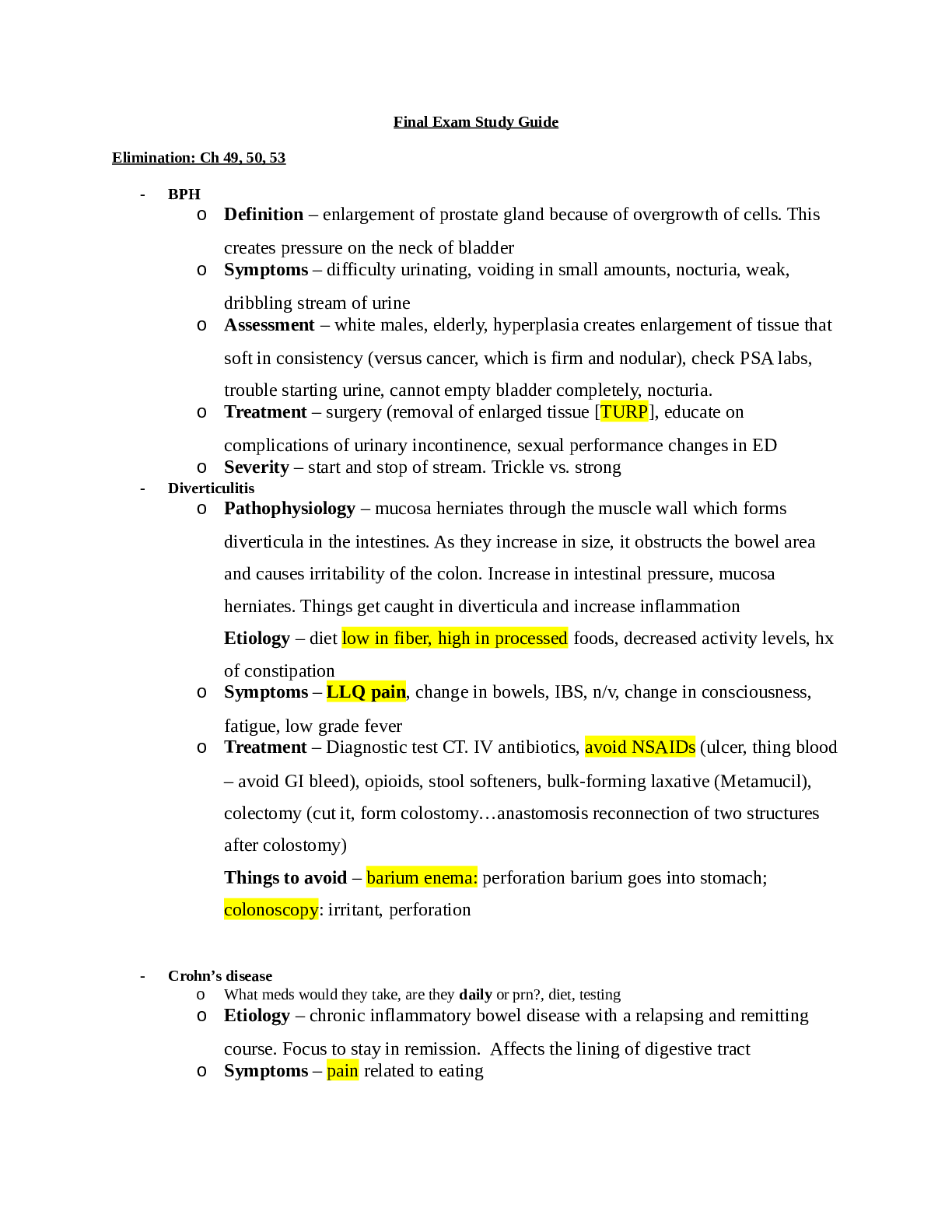
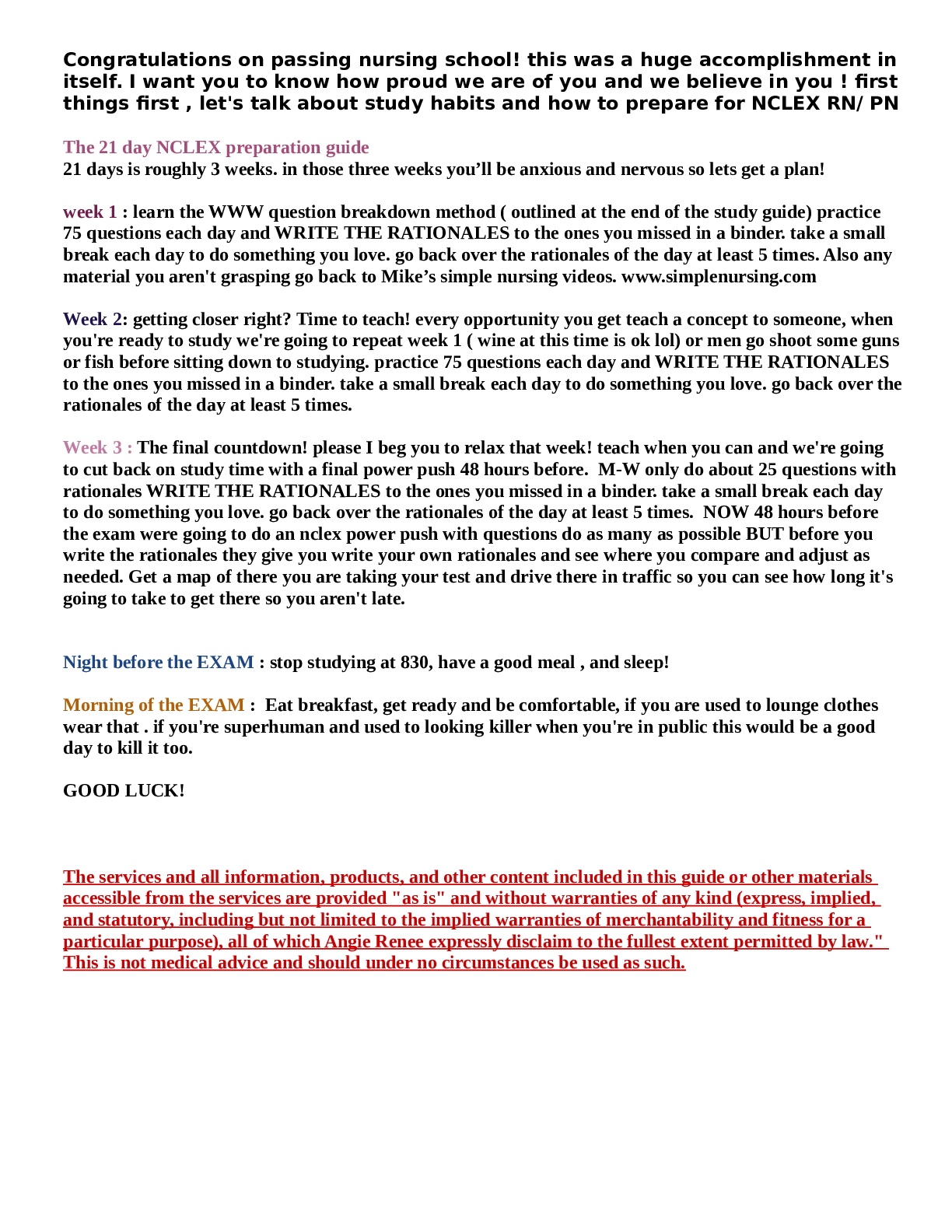
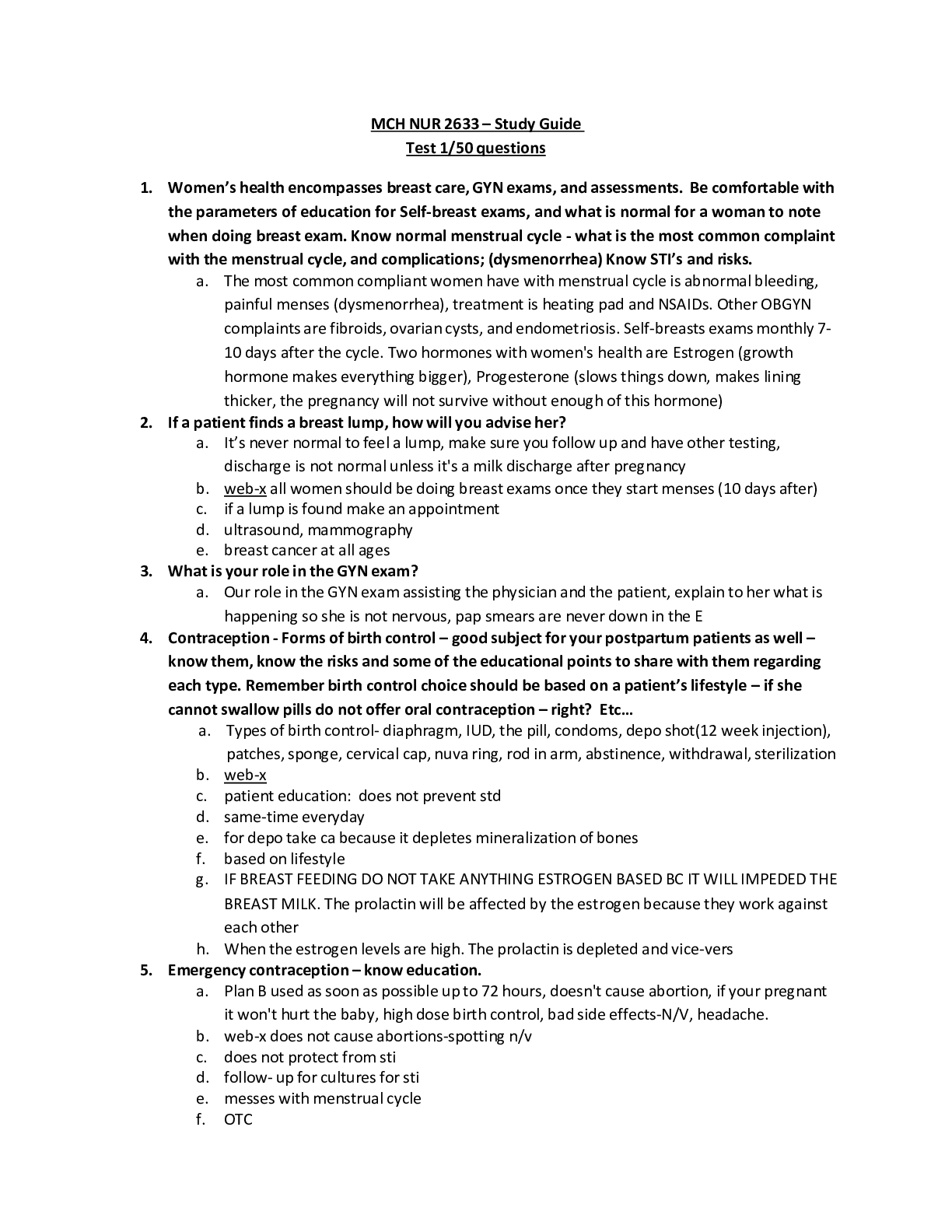
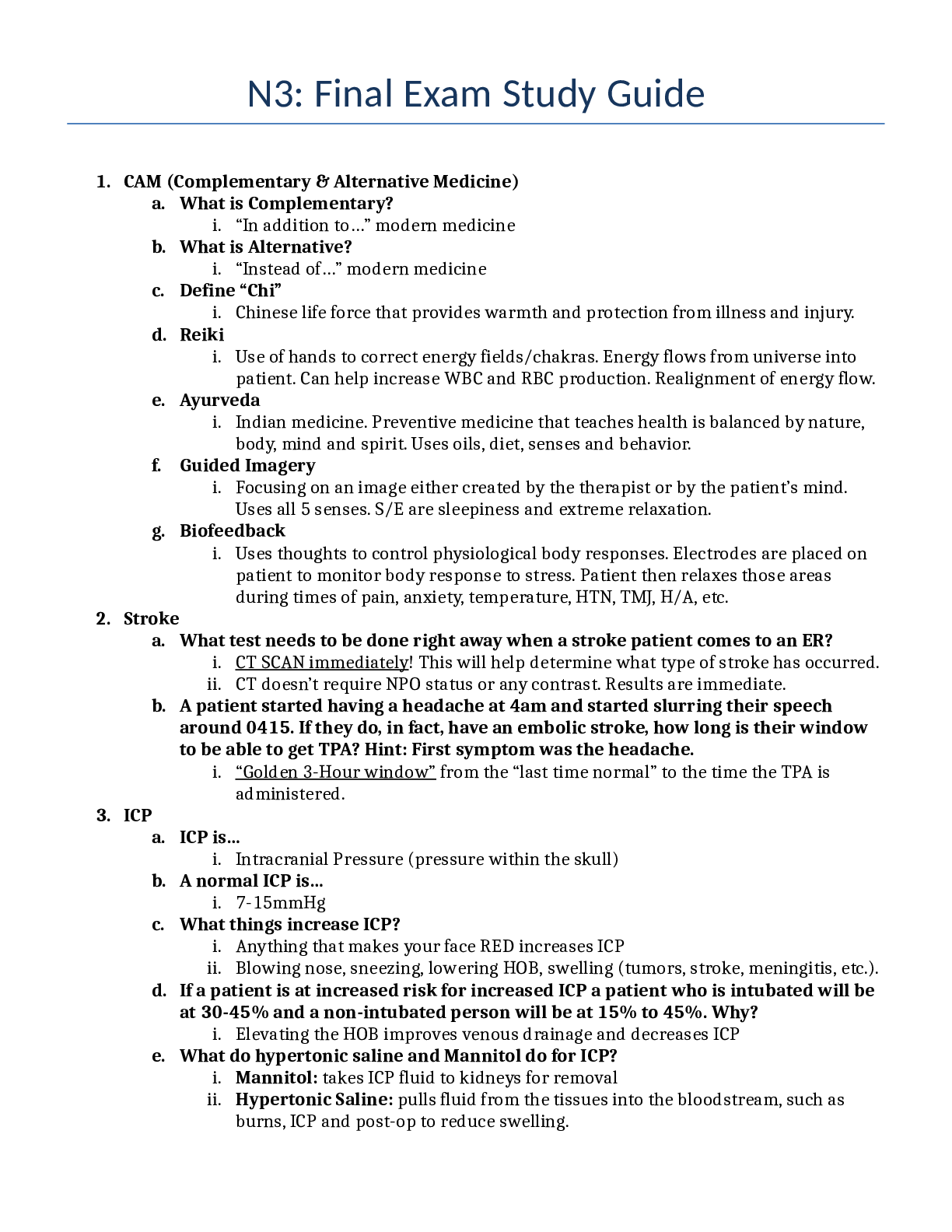
NURSING > STUDY GUIDE > Rasmussen College NURSING NUR280/NURN3 Final Exam Study Guide-REVIEWED AND VERIFIED BY EXPERTS 2021- (All)
Rasmussen College NURSING NUR280/NURN3 Final Exam Study Guide-REVIEWED AND VERIFIED BY EXPERTS 2021-GRADED A+
Document Content and Description Below
Last updated: 4 years ago
Preview 1 out of 19 pages
Instant download
Buy this Document to get the Full Access Instantly
Provided by Students Who Aced it
We Verify Document Content to Gurantee Accuracy
Reviews( 0 )
Document information
Connected school, study & course
About the document
Uploaded On
May 17, 2021
Number of pages
19
Written in
All

Additional information
This document has been written for:
Uploaded
May 17, 2021
Downloads
0
Views
209
Topic Tags
Recommended For You
Get more on STUDY GUIDE »
NR 508 test bank pharmacology-REVIEWED BY EXPERTS 2021-GRADED...

Medical surgical nursing All Chapters TESTBANK-VERIFIED BY EXP...

Perry Maternal Child Nursing Care 5th edition Test Bank-REVIEW...
NR 508 test bank pharmacology-REVIEWED BY EXPERTS 2021-GRADED...

Medical Surgical Nursing10th-Edition Lewis-TestBank--REVIEWED...
NURSING NUR280/NUR N3 Final Exam Study Guide Complete Solution

Rasmussen College NURSING NUR280/NUR: Role and Scope 2 Exam 50...
.png)

Nur280 Comp Review- Comp 1, Comp 2, Comp 3 Latest Updated Upda...
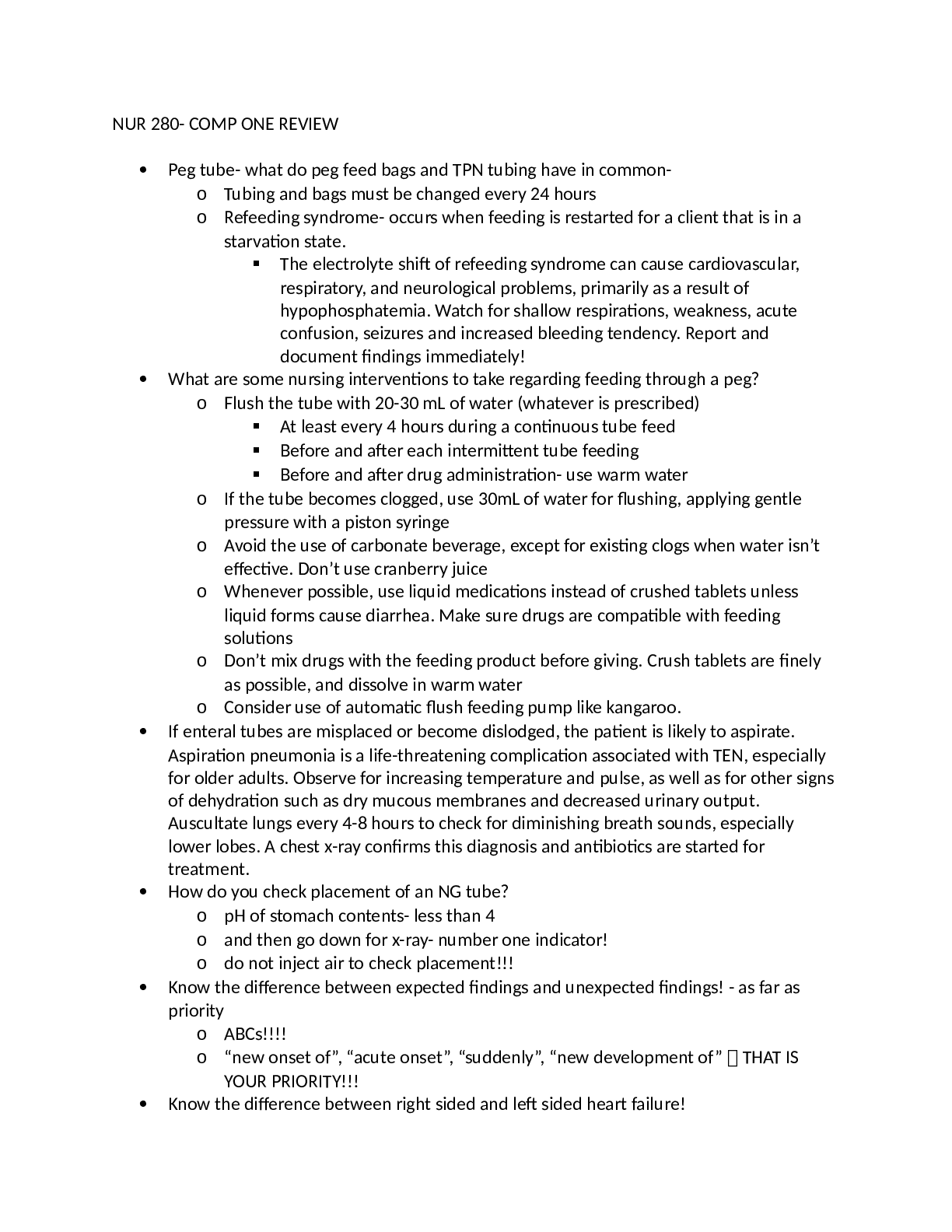
NUR280 COMP 1 REVIEW LATEST UPDATED 2022 ALREADY GRADED A
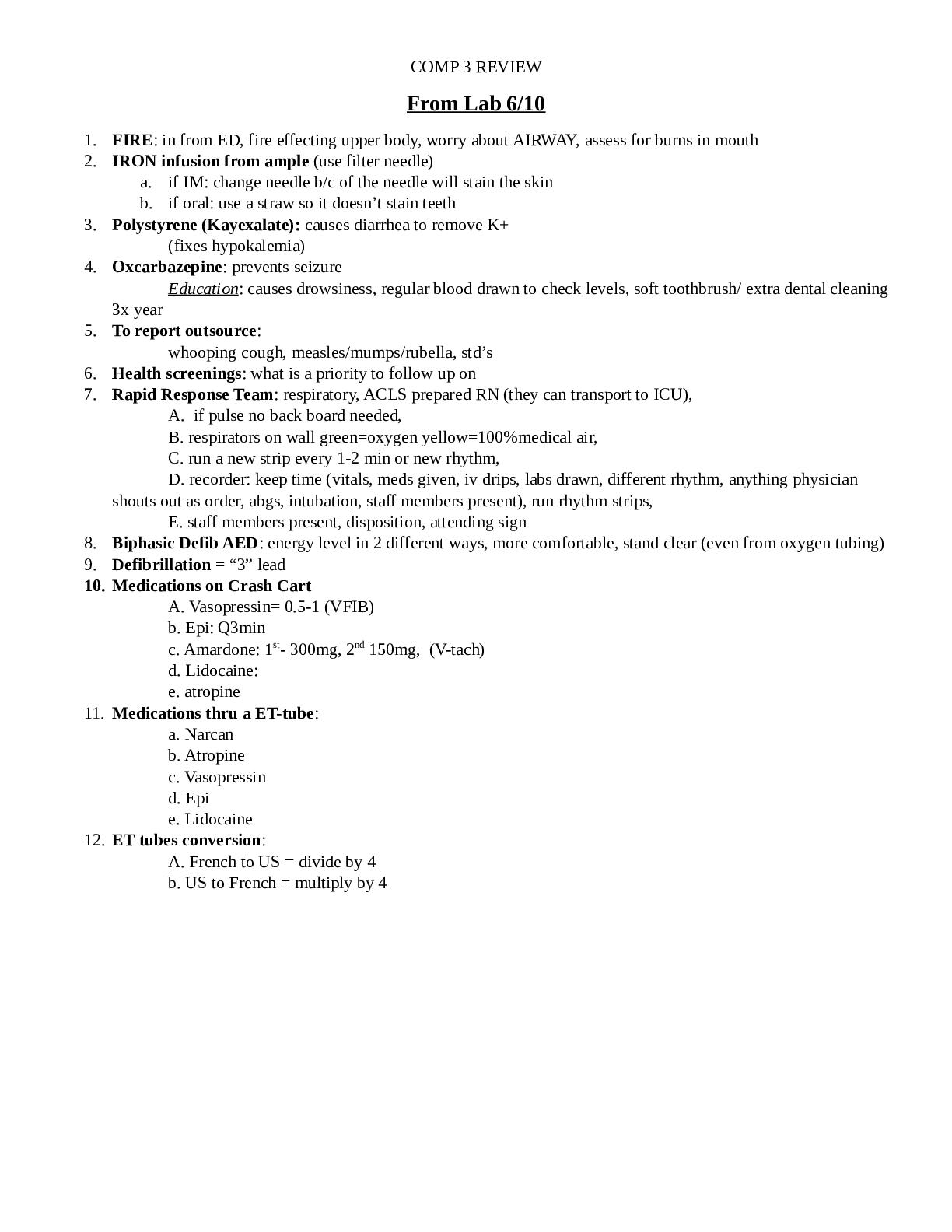
NUR280 COMP 3 REVIEW LATEST UPDATED 2022 ALREADY GRADED A

Rasmussen College NURSING NUR280/NUR: Role and Scope Exam 3. C...

Rasmussen College NURSING NUR280/NUR: Role and Scope Exam 1. C...

NURSING NUR280/NUR Nursing III Final Chapters Questions And An...
NURSING NUR280/NUR Nursing III Final Chapters Questions And An...

NUR 280 GALEN COMP STUDY | GRADED A+ QUESTIONS AND ANSWERS (SO...