Astronomy > Lab Report > Cluster Ages Lab Exercise (All)
Cluster Ages Lab Exercise
Document Content and Description Below
Last updated: 6 months ago
Preview 1 out of 20 pages
Instant download

Buy this Document to get the Full Access Instantly
Provided by Students Who Aced it
We Verify Document Content to Gurantee Accuracy
Reviews( 0 )
Document information
Connected school, study & course
About the document
Uploaded On
May 21, 2021
Number of pages
20
Written in
All

Additional information
This document has been written for:
Uploaded
May 21, 2021
Downloads
0
Views
396
Topic Tags
Recommended For You
Get more on Lab Report »
21st Century Astronomy, 6th Edition By Laura Kay, Stacy Pale...

eBook 21st Century Astronomy, 6e Laura Kay, Stacy Palen, Georg...

Investigating Astronomy, 2nd Edition Timothy Slater, Roger Fre...

INSTRUCTOR'S SOLUTIONS MANUAL for Explorations: Introduction t...

The Cosmic Perspective 7th Edition by Jeffrey O. Bennett, Mega...
SOLUTIONS MANUAL for Interplanetary Astrodynamics 1st Edition...
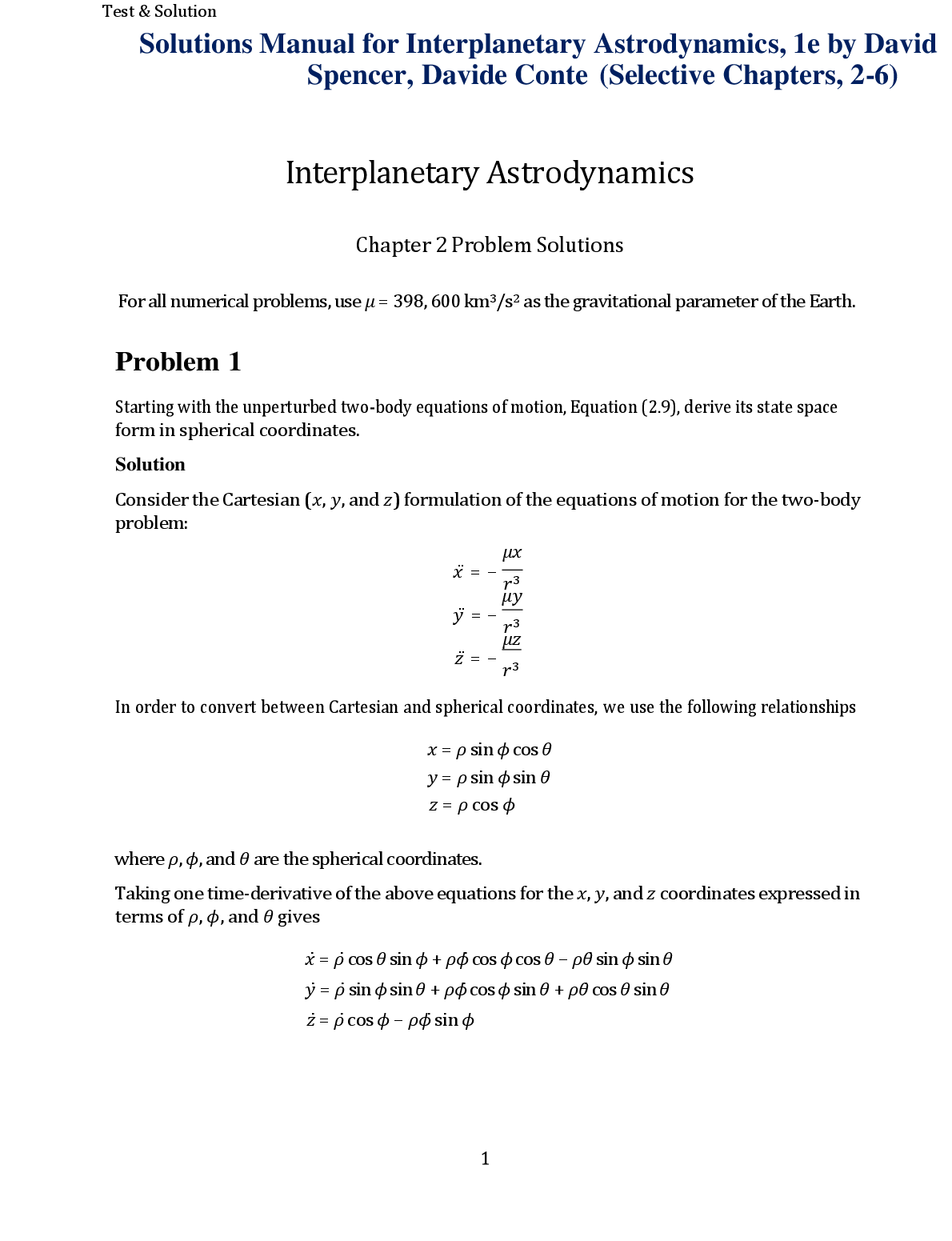
Solutions Manual for Interplanetary Astrodynamics, 1st Edition...

TEST BANK for Explorations: Introduction to Astronomy 9th Edit...

TEST BANK FOR 21ST CENTURY ASTRONOMY 6th Edition By Laura Kay,...
Test Bank for Astronomy: A Beginner’s Guide to the Universe, 8...
Test Bank for Astronomy: A Beginner's Guide to the Universe, 8...

eBook Association of University Programs in Hea Essentials of...

Instructor Solutions Manual for Stars and Stellar Processes 1s...

Student Solutions Manual for Stars and Stellar Processes 1st E...
eBook Observational Astronomy A Very Short Introduction, 2nd E...
eBook The Institutions of Extraterrestrial Liberty 1st Edition...