Psychology > STUDY GUIDE > San Marino High AP PSYCH 101 6.2.2 (All)
San Marino High AP PSYCH 101 6.2.2
Document Content and Description Below
Last updated: 3 years ago
Preview 1 out of 2 pages
Instant download

Buy this Document to get the Full Access Instantly
Provided by Students Who Aced it
We Verify Document Content to Gurantee Accuracy
Reviews( 0 )
Document information
Connected school, study & course
About the document
Uploaded On
May 28, 2021
Number of pages
2
Written in
All

Additional information
This document has been written for:
Uploaded
May 28, 2021
Downloads
0
Views
89
Topic Tags
Related Subjects & Courses
Explore similar study resources and related concepts.
Recommended For You
Get more on STUDY GUIDE »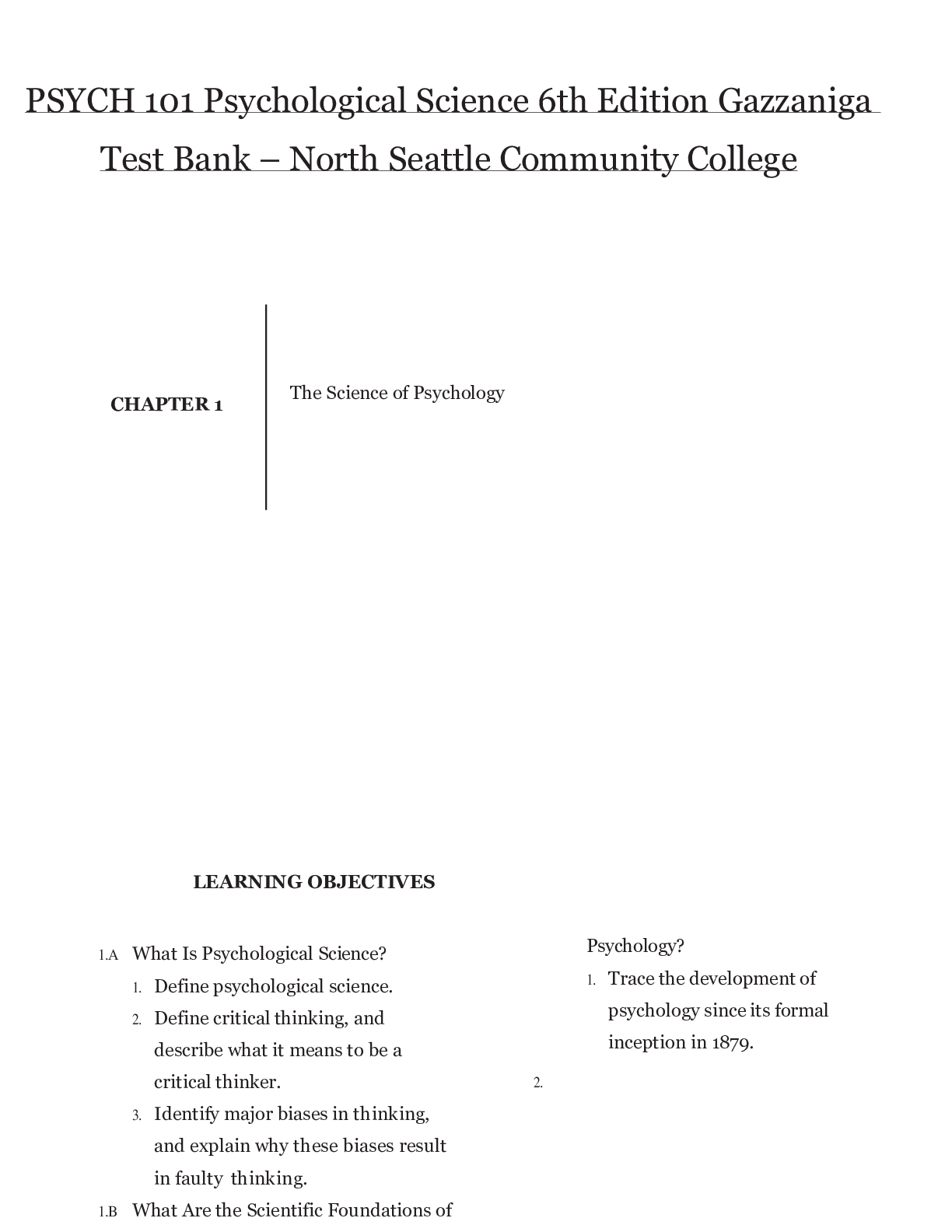
PSYCH 101 Psychological Science 6th Edition Gazzaniga Test Ban...


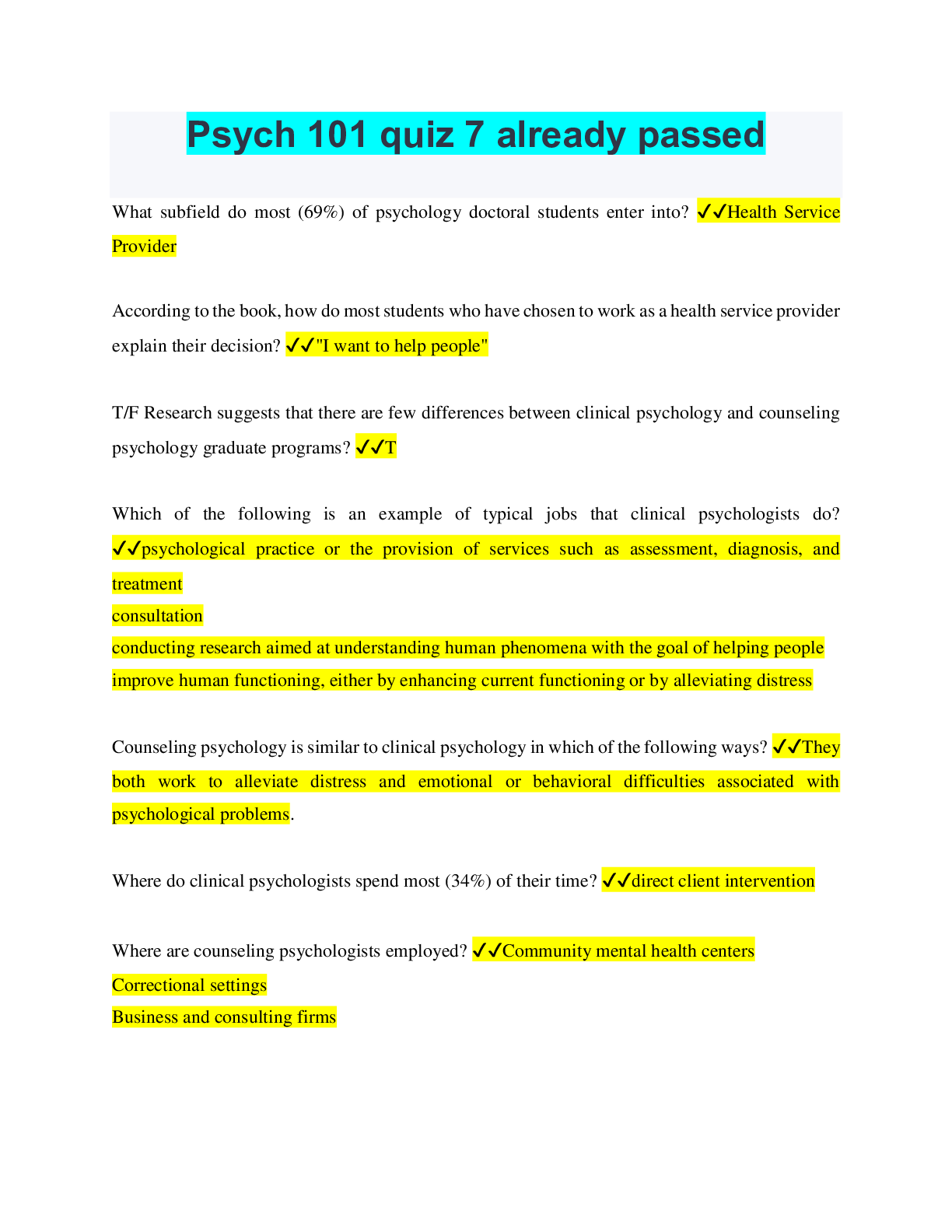

PSYCH 101- General Psychology Chapter 1 Questions with accurat...

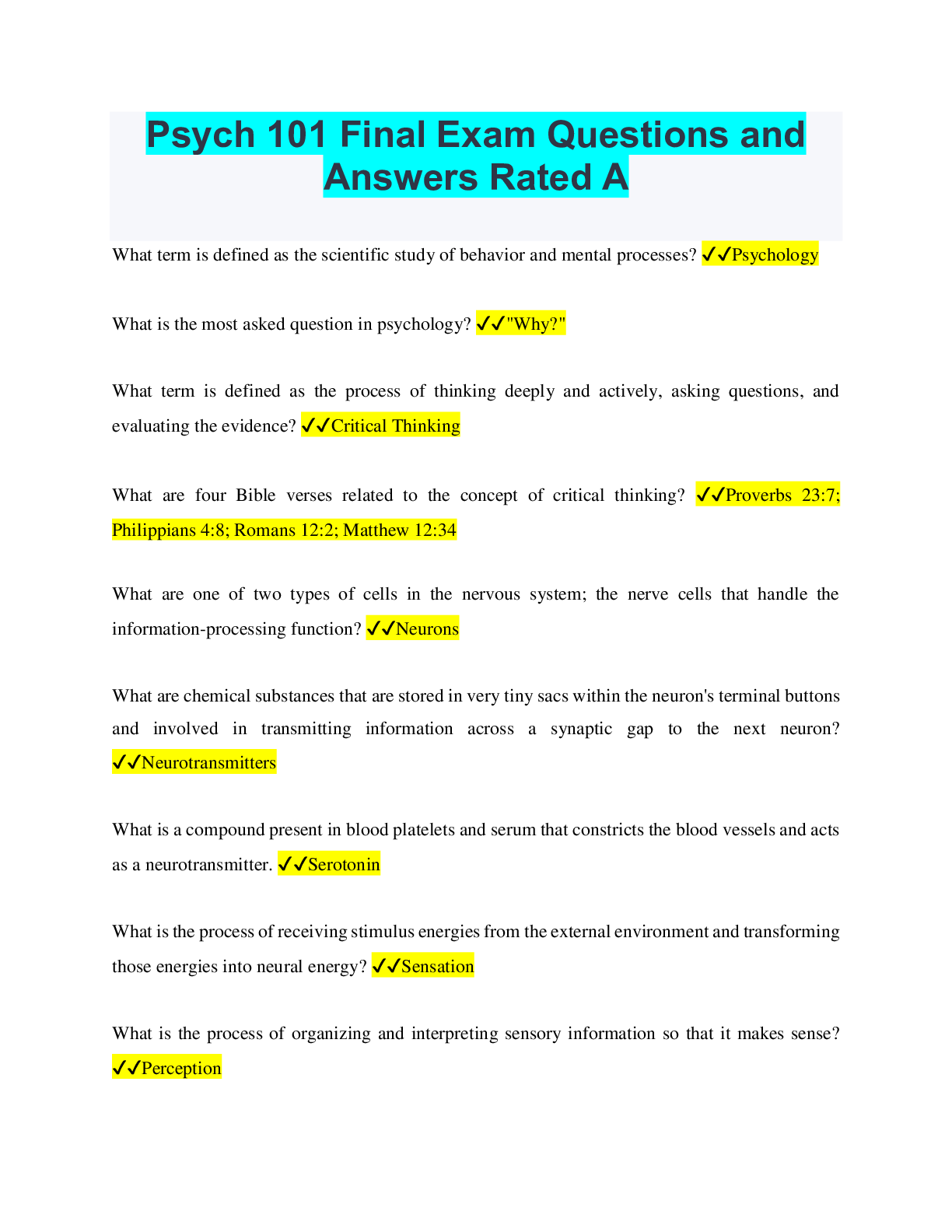

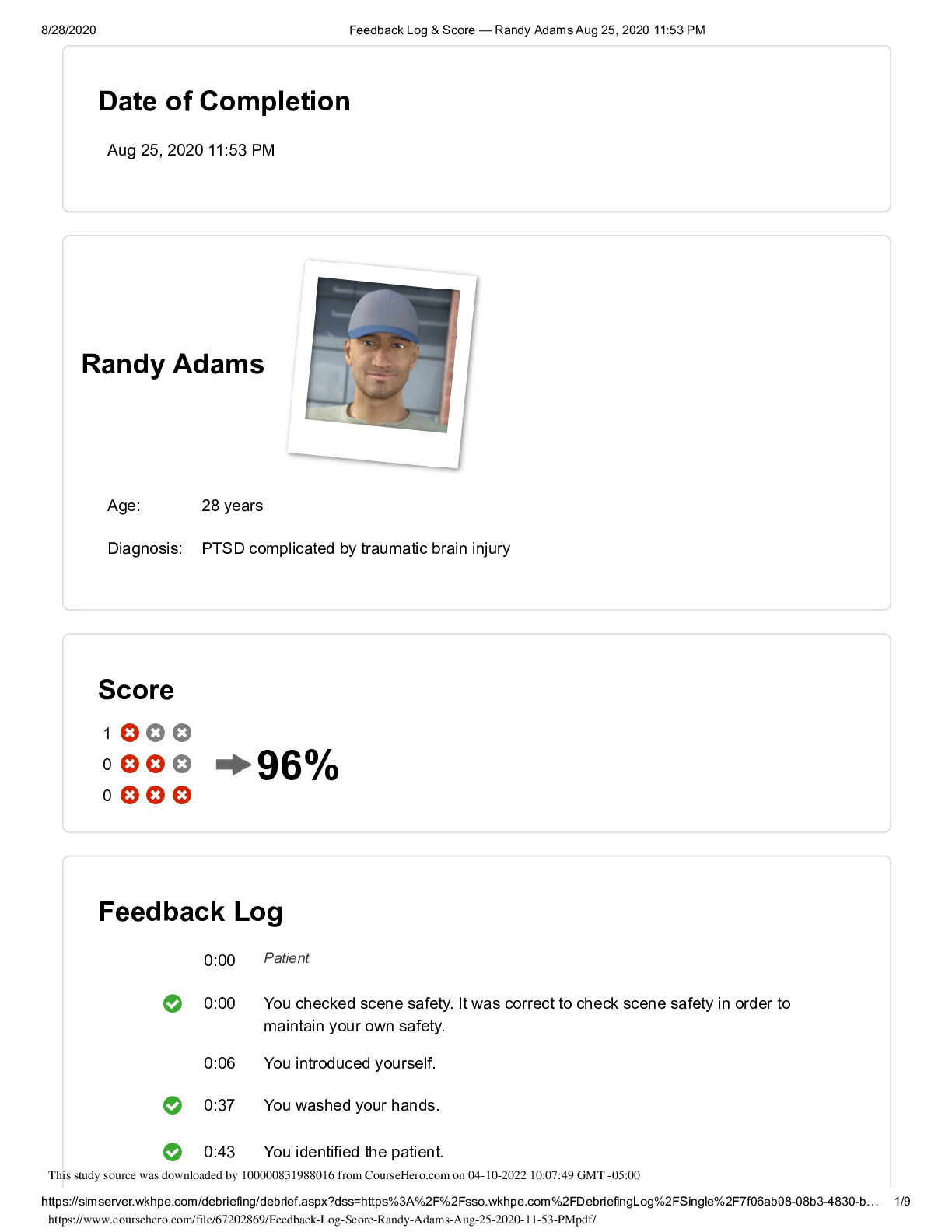
Randy Adams _ Feedback Log & Score _2022 | PSYCh 101 _ Diagnos...
Randy Adams Feedback Log | PSYCH 101 Diagnosis PTSD (Score 96%...
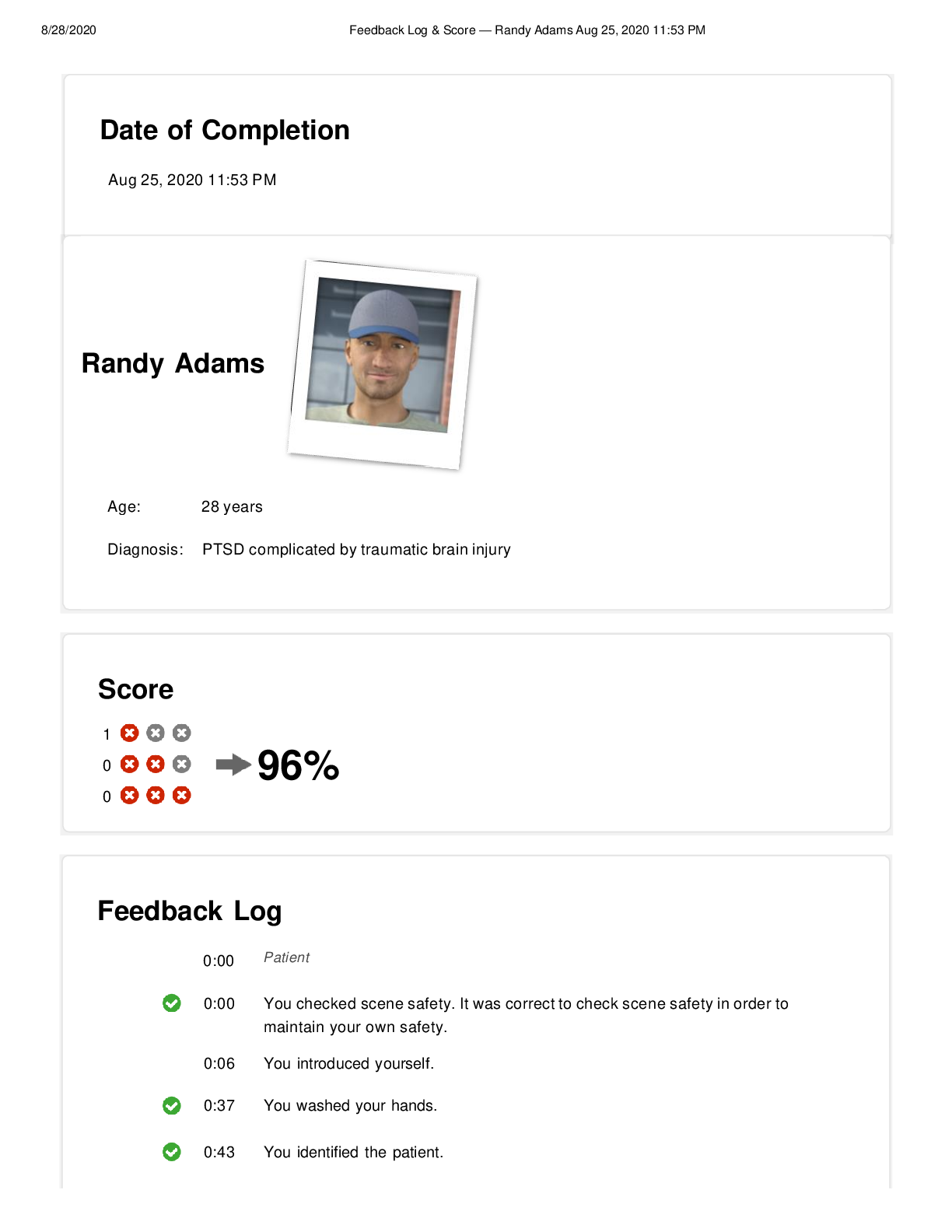
Randy Adams _ Feedback Log & Score _2021 (UPDATED 2022) | PSYC...
.png)
Randy Adams Feedback Log | PSYCH 101 Diagnosis PTSD (Score 96%...
Randy Adams Feedback Log | PSYCH 101 Diagnosis PTSD (Score 96%...

PSYCH101 Wk 5 Paper.docx Psy 101 The Interpretation of Dre...

Test Bank for The Principles of Learning and Behavior, 7th Edi...
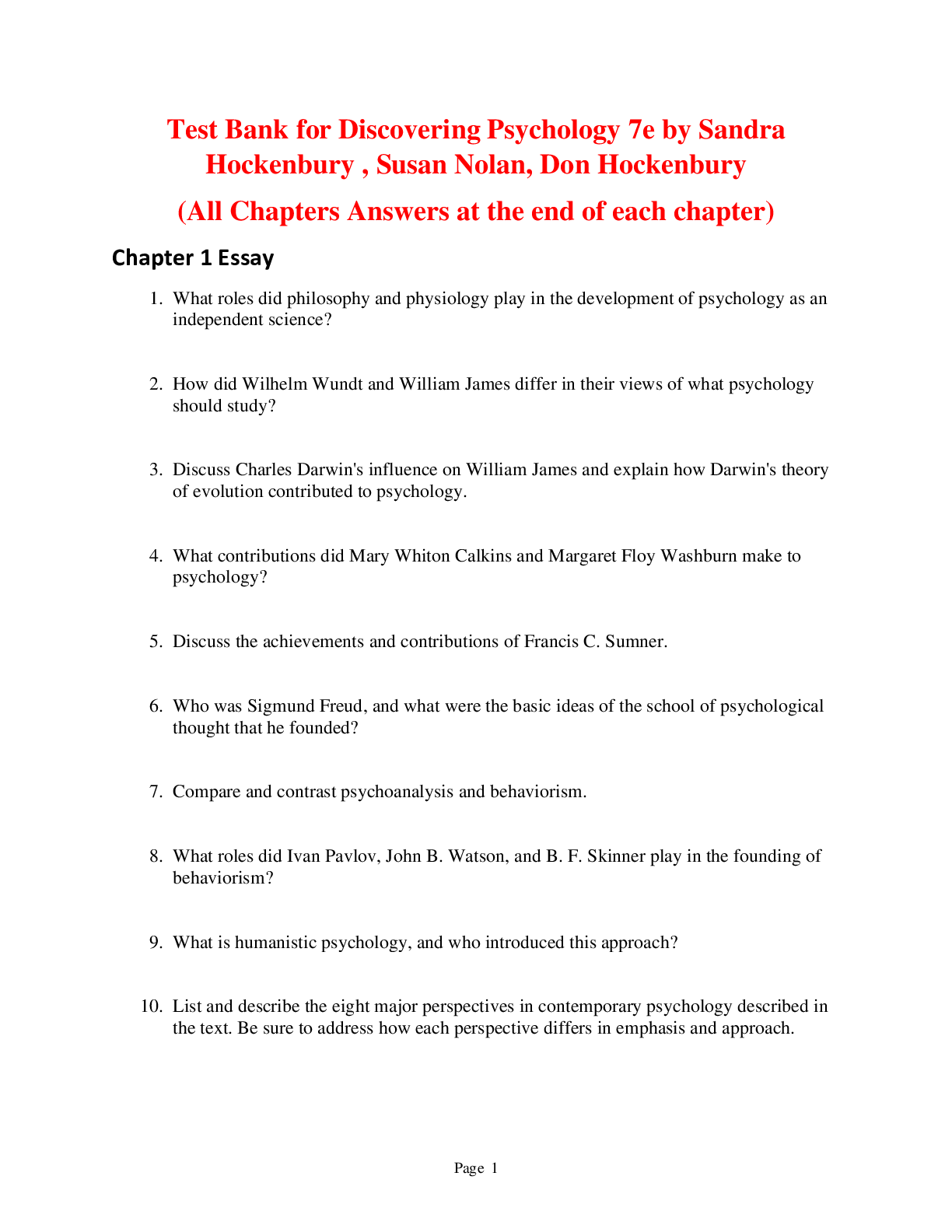
Discovering Psychology 7e by Sandra Hockenbury, Susan Nolan, D...

A History of Psychology in Ten Questions 1st Edition By Michae...
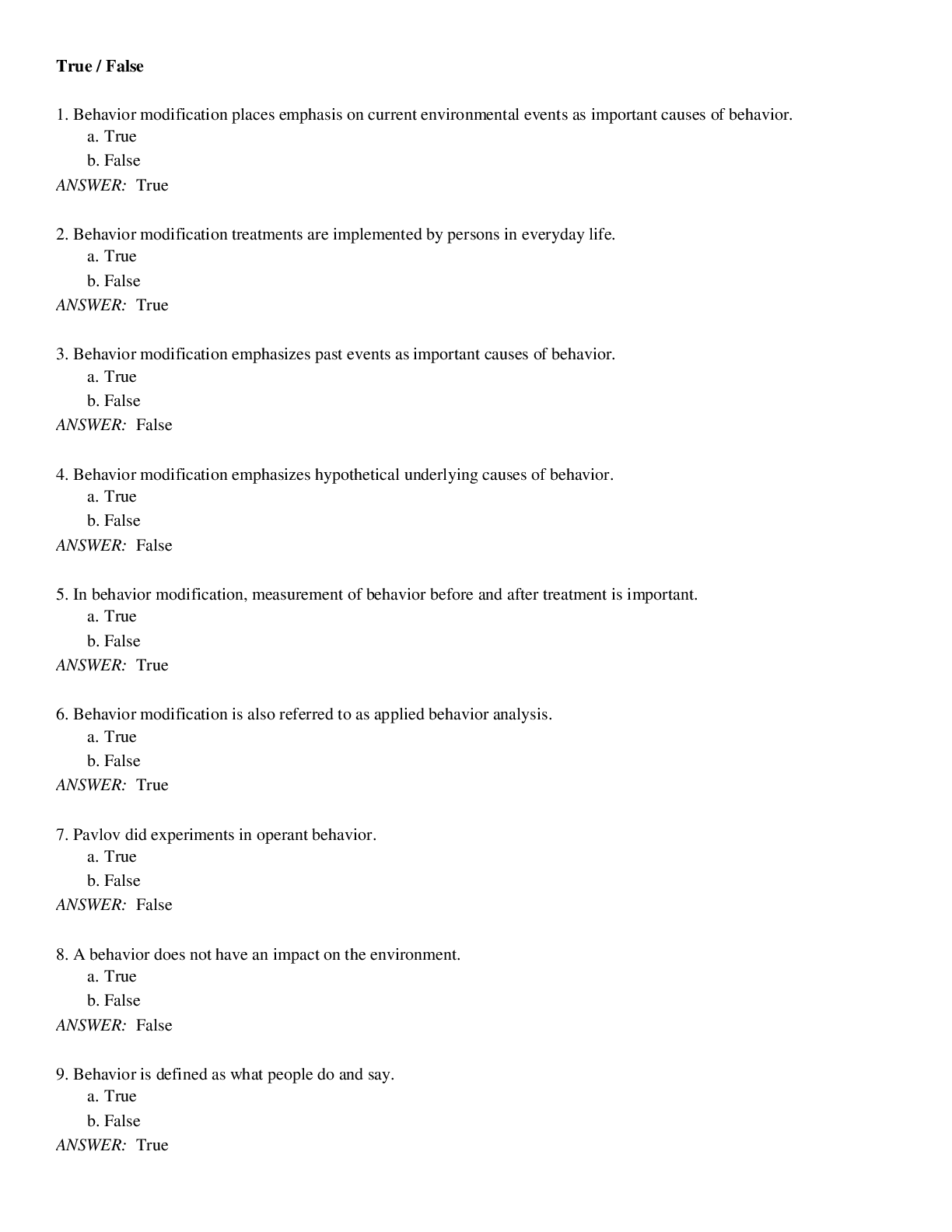
Behavior Modification Principles and Procedures 6th Edition Mi...