BioChemistry > QUESTIONS & ANSWERS > Queens University BCHM 218 PBA#2-QUESTIONS AND ANSWERS VERIFIED BY EXPERTS (All)
Queens University BCHM 218 PBA#2-QUESTIONS AND ANSWERS VERIFIED BY EXPERTS
Document Content and Description Below
Last updated: 4 years ago
Preview 1 out of 6 pages
Instant download

Buy this Document to get the Full Access Instantly
Provided by Students Who Aced it
We Verify Document Content to Gurantee Accuracy
Reviews( 0 )
Document information
Connected school, study & course
About the document
Uploaded On
May 31, 2021
Number of pages
6
Written in
All

Additional information
This document has been written for:
Uploaded
May 31, 2021
Downloads
0
Views
162
Topic Tags
Recommended For You
Get more on QUESTIONS & ANSWERS »
BCHM218 – FALL 2020 – PBA #2 topics in Module 2. There are 5 q...

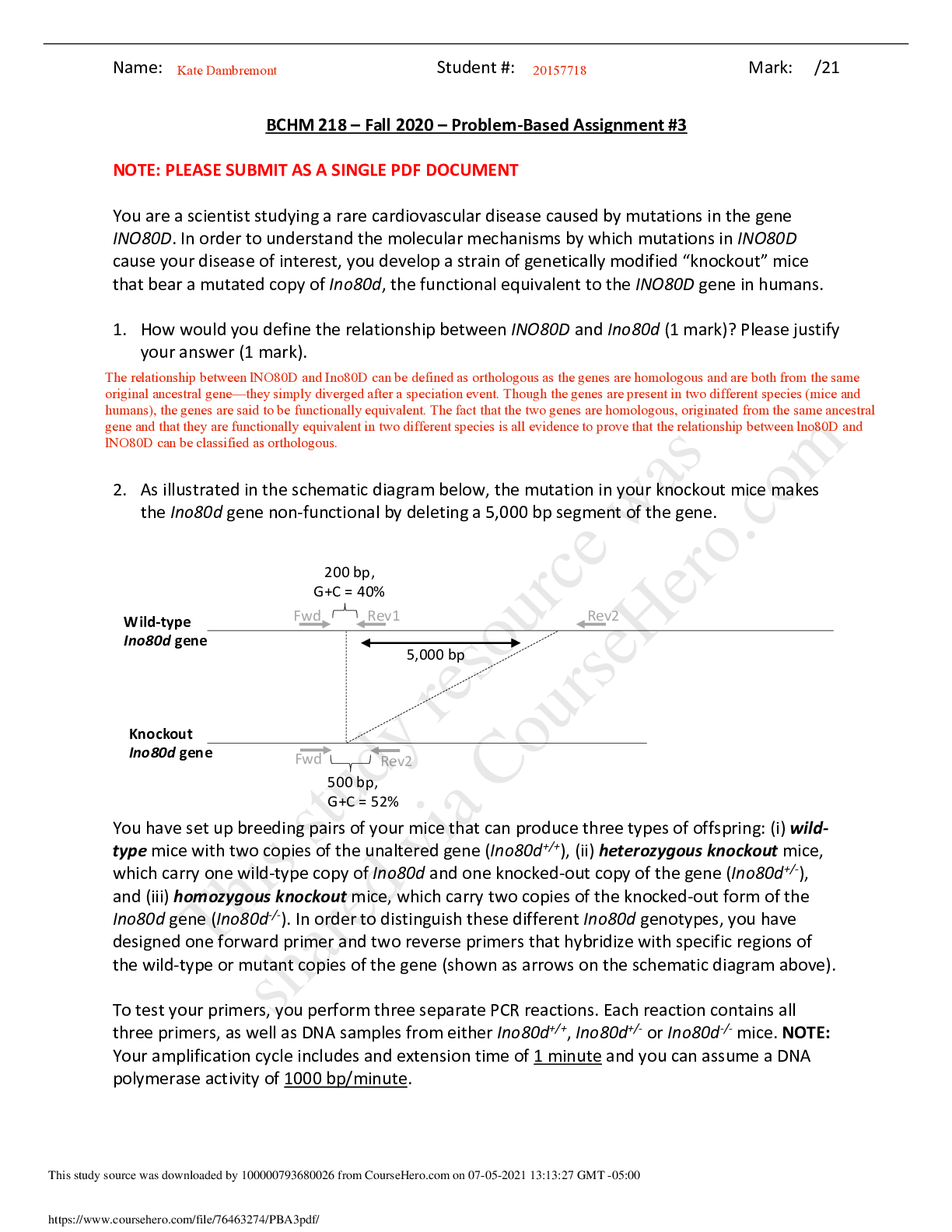
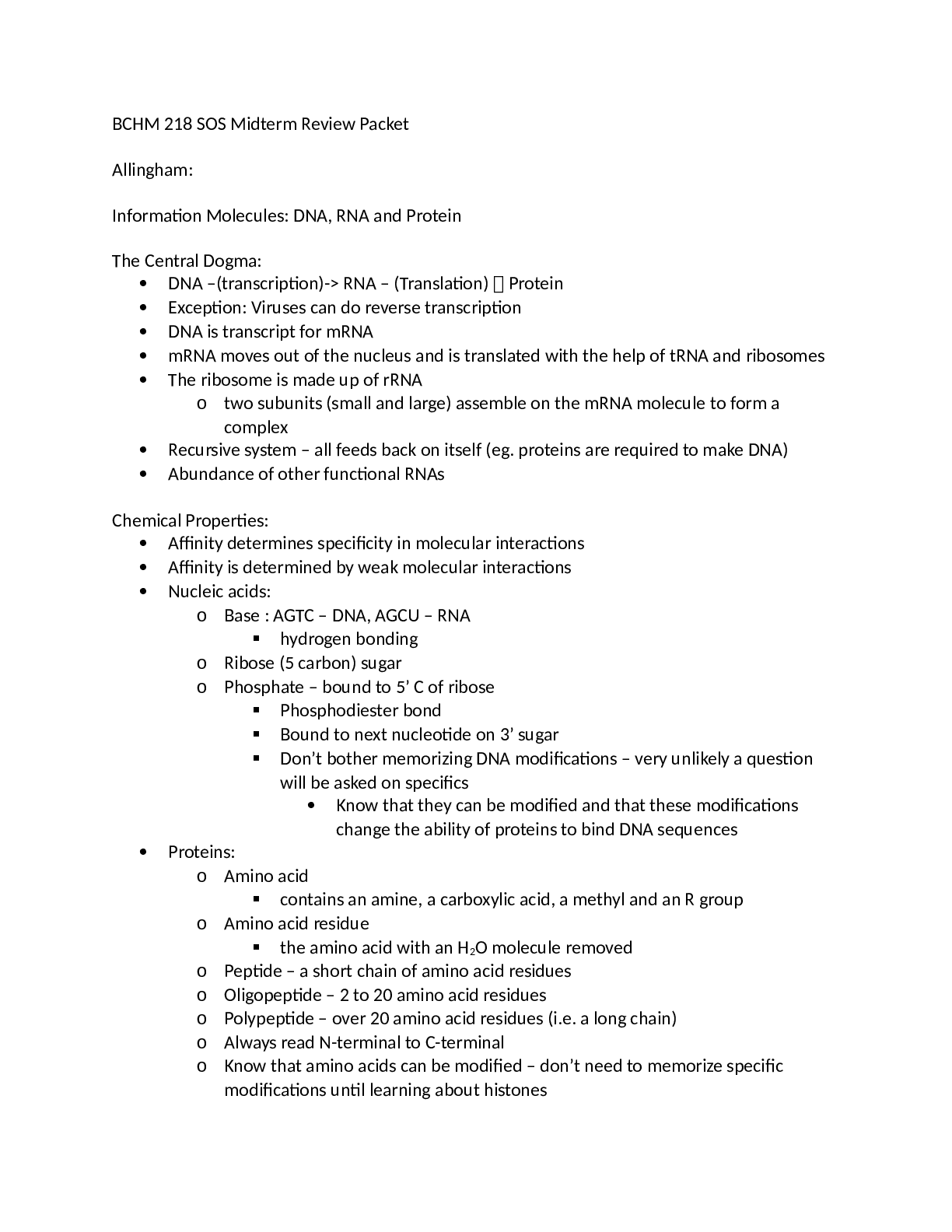
Queens University BCHM-218-SOS-Midterm-Review-Packet-Final-VER...

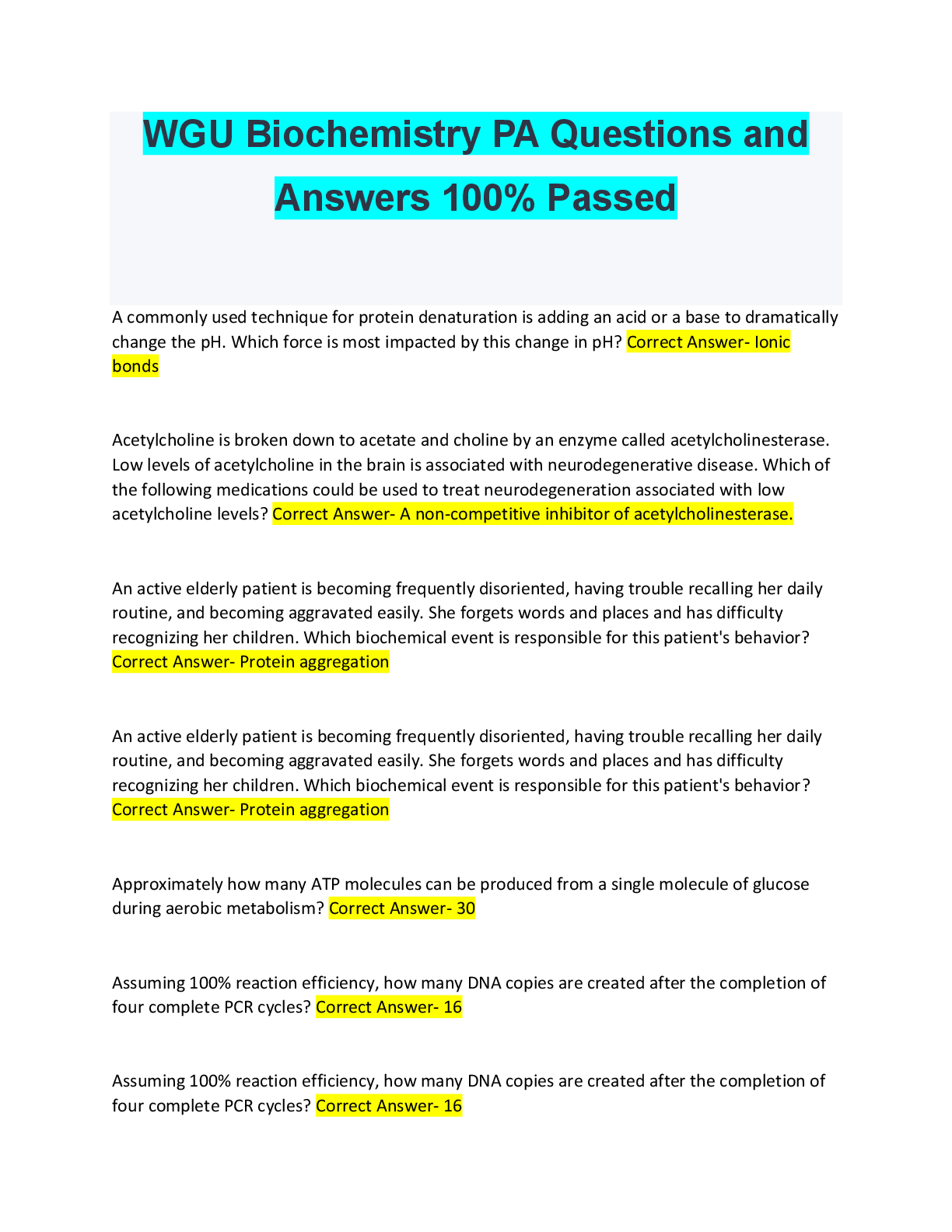
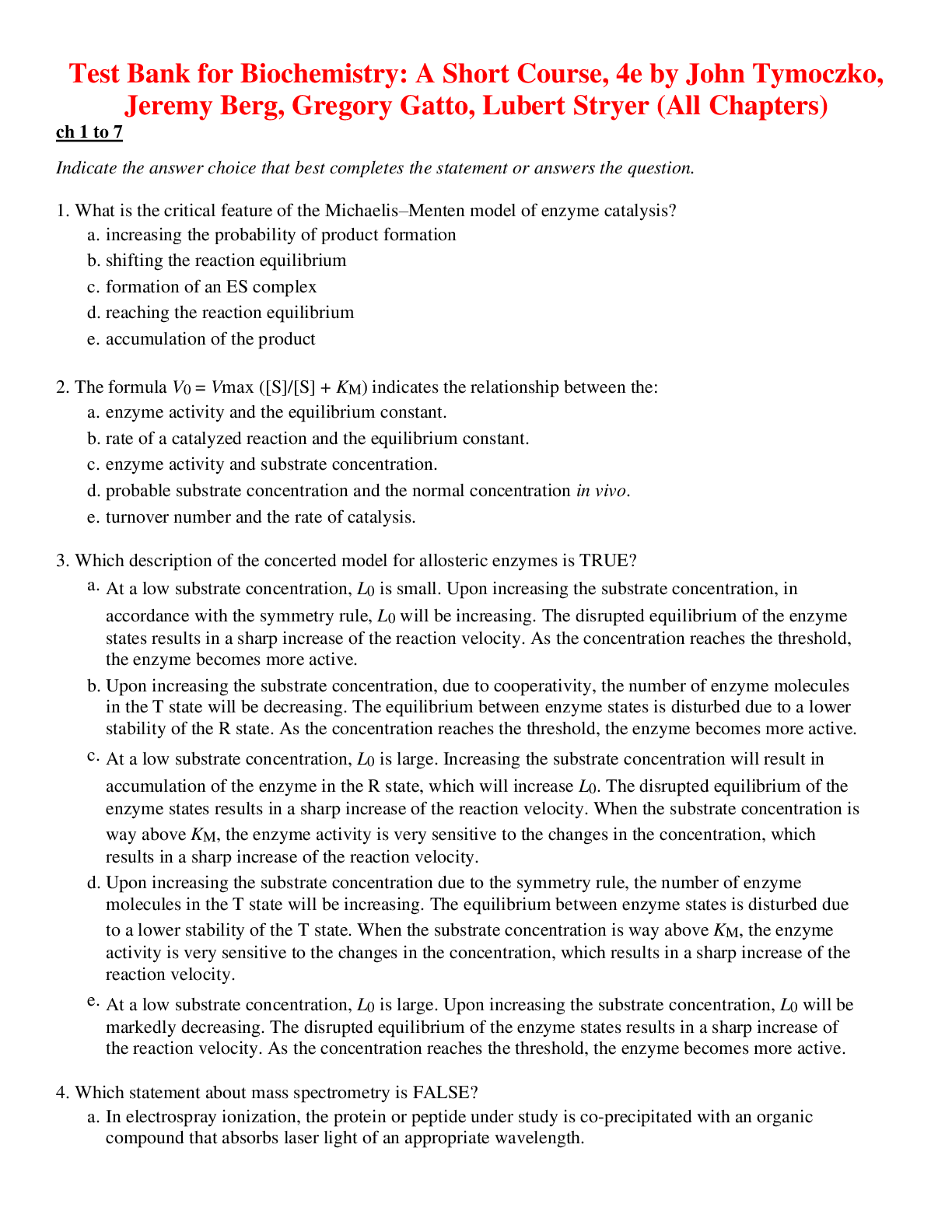
TEST BANK for Biochemistry A Short Course, 4e by John Tymoczko...

Biochemistry 9th Edition By Lubert Stryer, Jeremy Berg, John T...
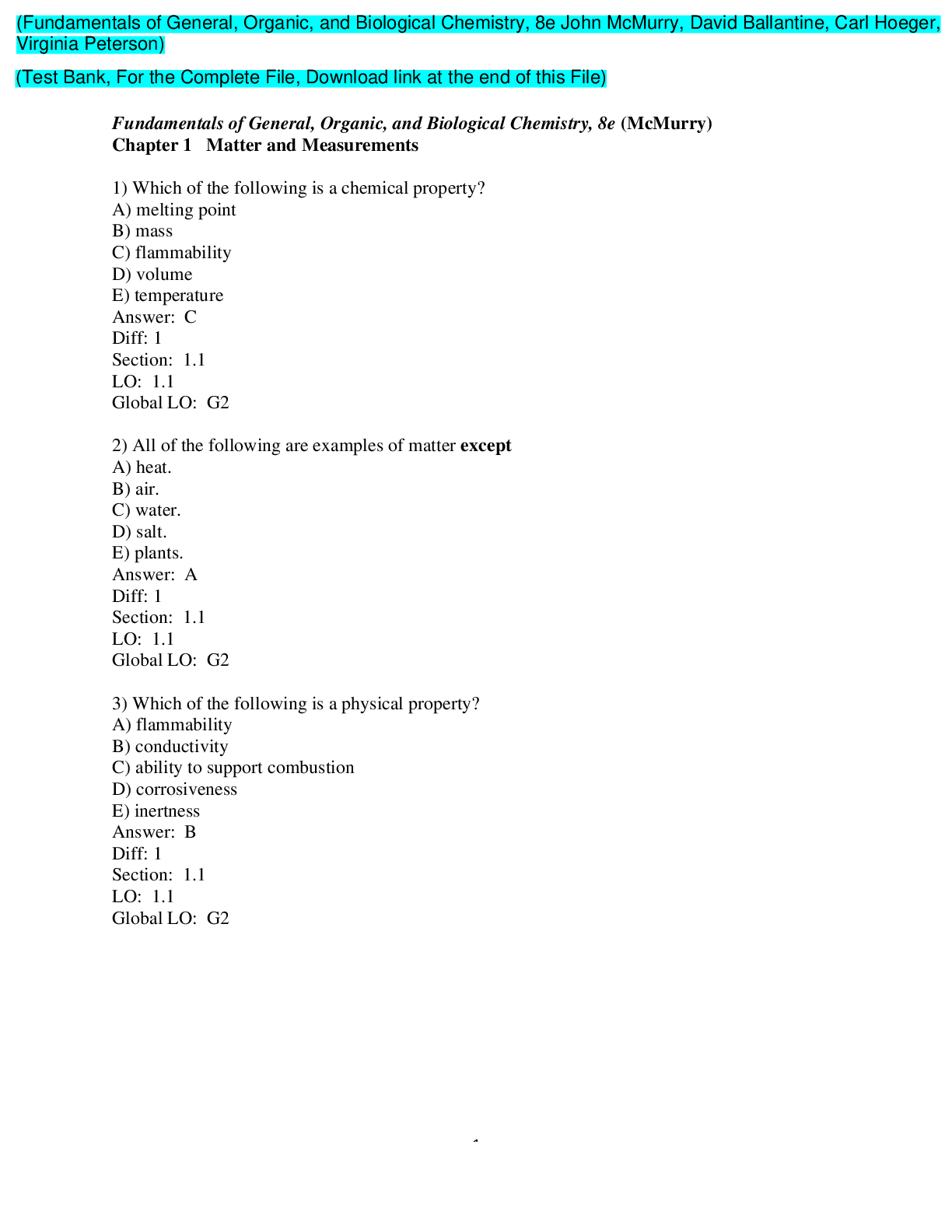
Fundamentals of General, Organic, and Biological Chemistry, 8e...