Define the test, its positive predictive value, reliability and validity. Discuss patient medical or
family history that may alter your recommendation for screening?
Dr. Costello and class,
While the benefits and harm
...
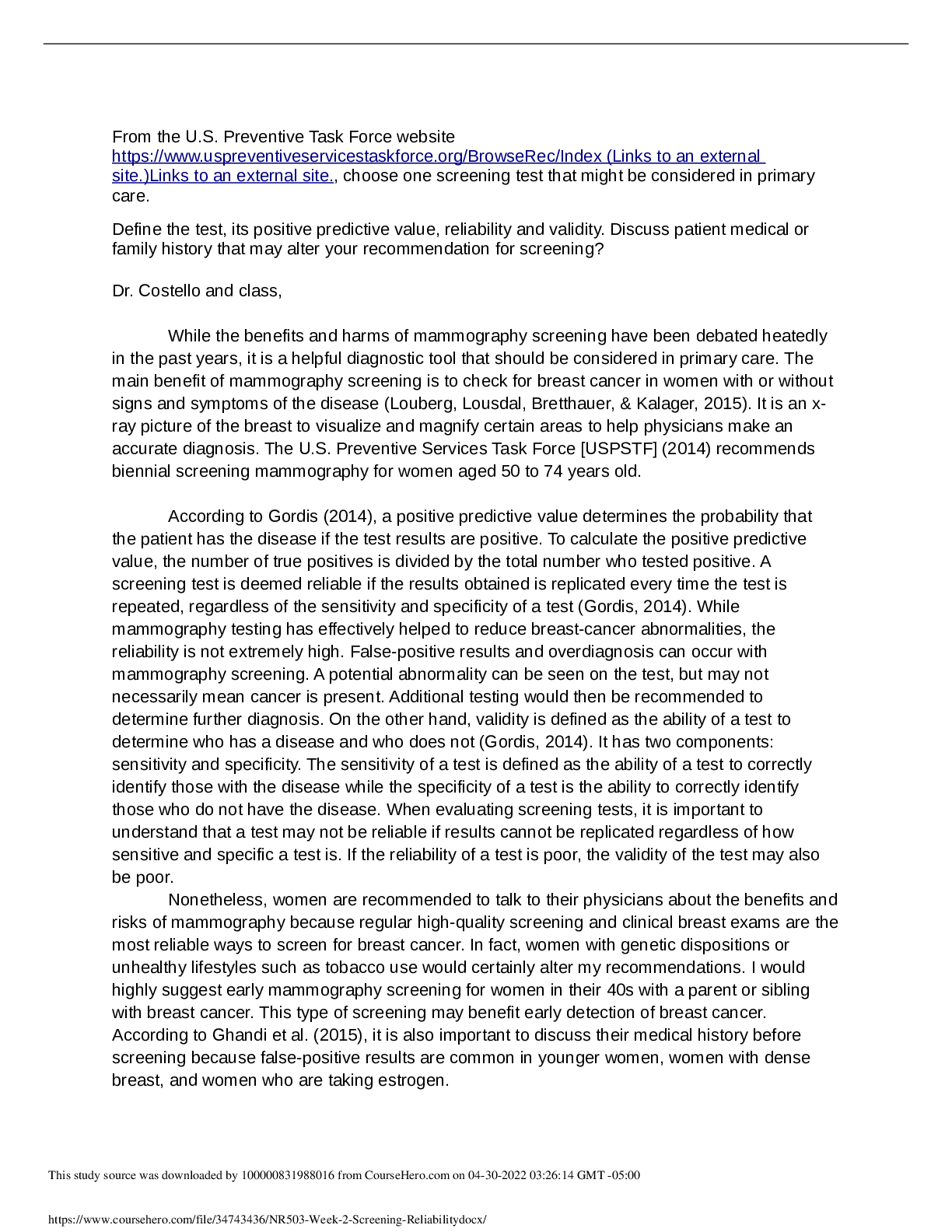
Define the test, its positive predictive value, reliability and validity. Discuss patient medical or
family history that may alter your recommendation for screening?
Dr. Costello and class,
While the benefits and harms of mammography screening have been debated heatedly
in the past years, it is a helpful diagnostic tool that should be considered in primary care. The
main benefit of mammography screening is to check for breast cancer in women with or without
signs and symptoms of the disease (Louberg, Lousdal, Bretthauer, & Kalager, 2015). It is an xray picture of the breast to visualize and magnify certain areas to help physicians make an
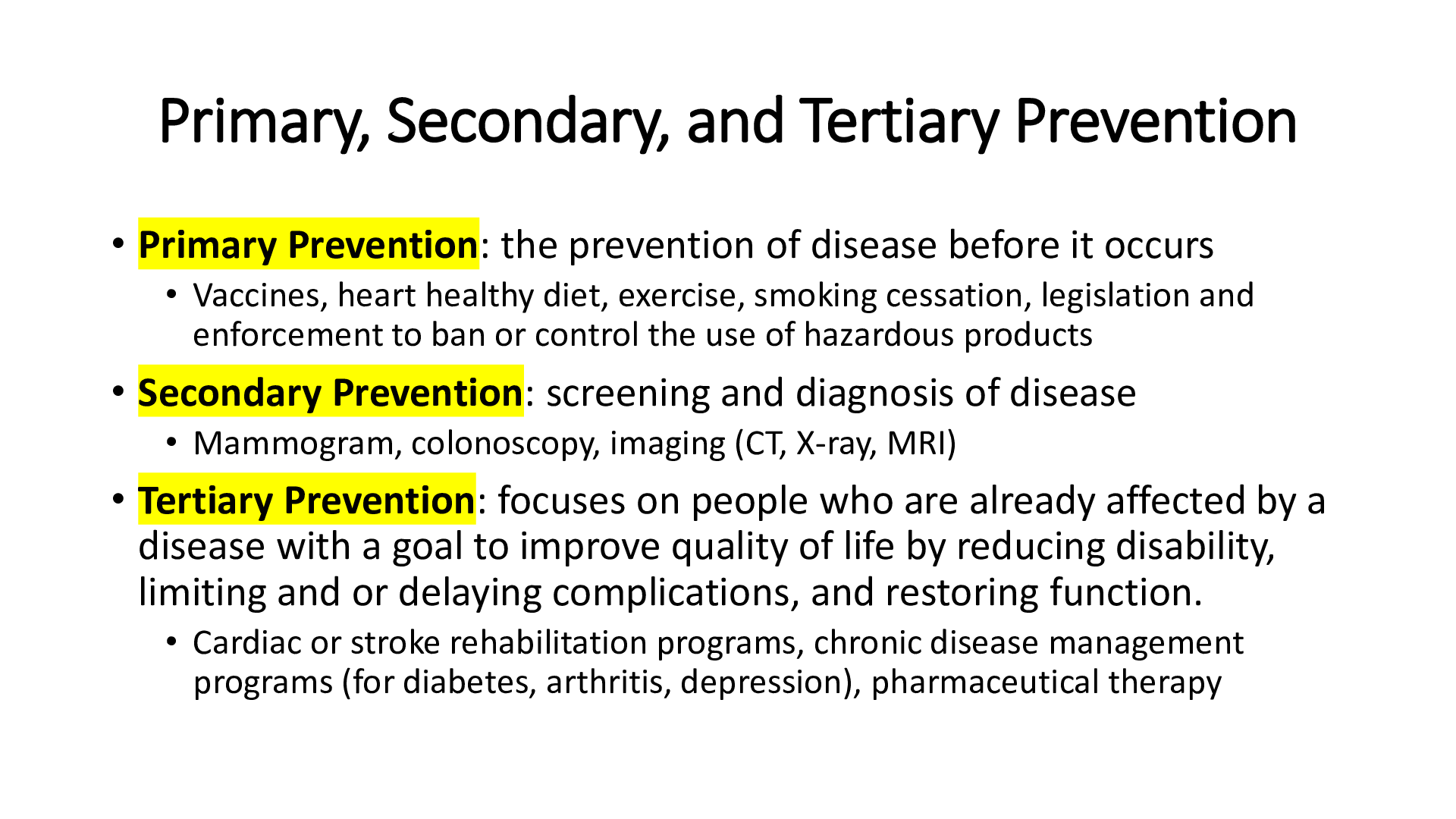
accurate diagnosis. The U.S. Preventive Services Task Force [USPSTF] (2014) recommends
biennial screening mammography for women aged 50 to 74 years old.
According to Gordis (2014), a positive predictive value determines the probability that
the patient has the disease if the test results are positive. To calculate the positive predictive
value, the number of true positives is divided by the total number who tested positive. A
screening test is deemed reliable if the results obtained is replicated every time the test is
repeated, regardless of the sensitivity and specificity of a test (Gordis, 2014). While
mammography testing has effectively helped to reduce breast-cancer abnormalities, the
reliability is not extremely high. False-positive results and overdiagnosis can occur with
mammography screening. A potential abnormality can be seen on the test, but may not
necessarily mean cancer is present. Additional testing would then be recommended to
determine further diagnosis. On the other hand, validity is defined as the ability of a test to
determine who has a disease and who does not (Gordis, 2014). It has two components:
sensitivity and specificity. The sensitivity of a test is defined as the ability of a test to correctly
identify those with the disease while the specificity of a test is the ability to correctly identify
those who do not have the disease. When evaluating screening tests, it is important to
understand that a test may not be reliable if results cannot be replicated regardless of how
sensitive and specific a test is. If the reliability of a test is poor, the validity of the test may also
be poor.
Nonetheless, women are recommended to talk to their physicians about the benefits and
risks of mammography because regular high-quality screening and clinical breast exams are the
most reliable ways to screen for breast cancer. In fact, women with genetic dispositions or
unhealthy lifestyles such as tobacco use would certainly alter my recommendations. I would
highly suggest early mammography screening for women in their 40s with a parent or sibling
with breast cancer. This type of screening may benefit early detection of breast cancer.
According to Ghandi et al. (2015), it is also important to discuss their medical history before
screening because false-positive results are common in younger women, women with dense
breast, and women who are taking estrogen.
[Show More]