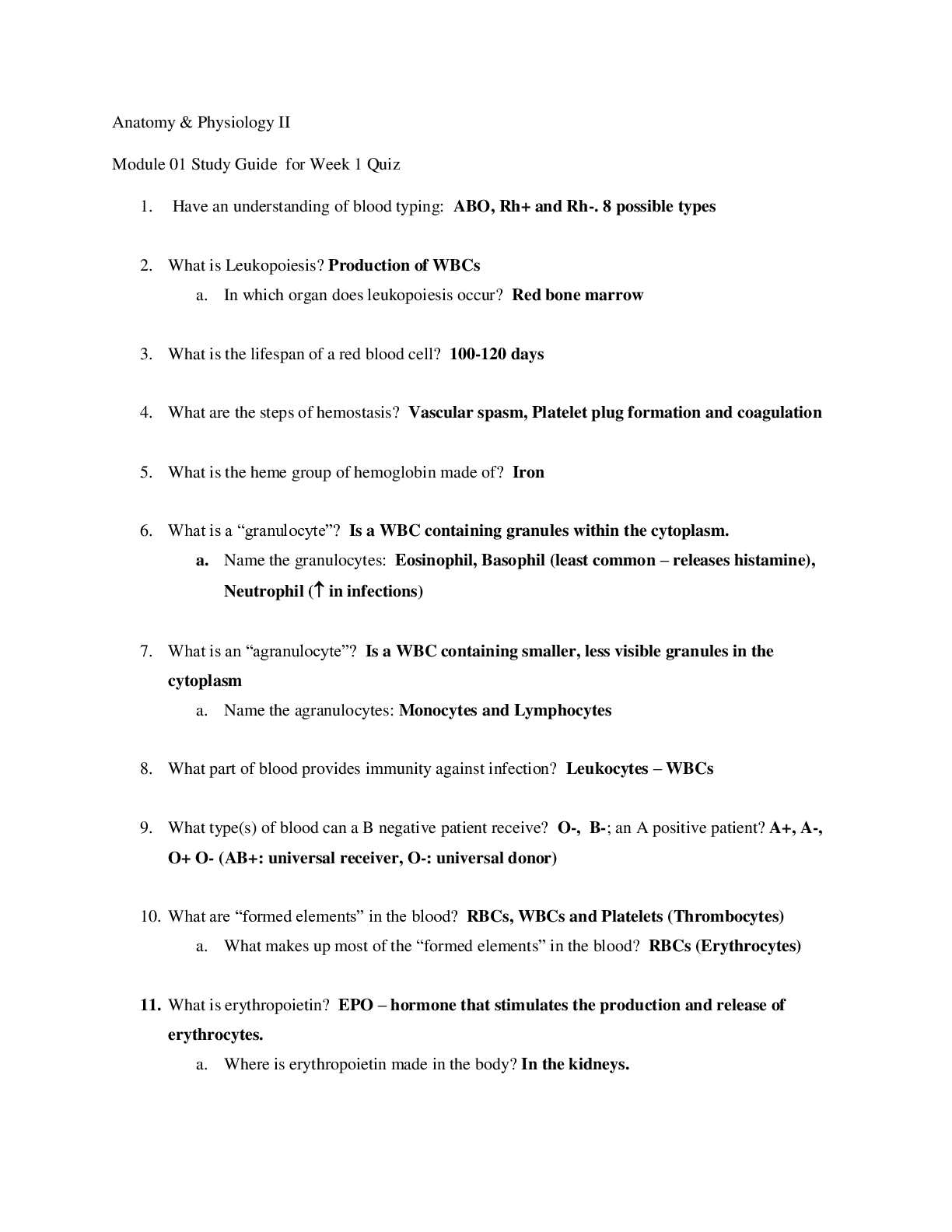
Anatomy & Physiology II
Module 04 Study Guide for Week 4 Quiz
1. What are the main components of Lymph Fluid? Water, plasma proteins, dissolved solutes, pathogens, cancer cells, cellular debris, GI tract lipids.
...
Anatomy & Physiology II
Module 04 Study Guide for Week 4 Quiz
1. What are the main components of Lymph Fluid? Water, plasma proteins, dissolved solutes, pathogens, cancer cells, cellular debris, GI tract lipids.
2. Which Lymph Vessel Carries Lymph AWAY from the Lymph Node? Efferent
3. Which Lymph Vessel Carries Lymph TOWARD the Lymph Node? Afferent
4. Lymph Nodes function to filter Lymph fluid & activate immune system.
5. What function does the Lymphatic System have in relation to the fluid NOT reabsorbed by the capillaries? Reabsorb the fluid not reclaimed by the capillaries
6. Describe the anatomy of the Lymph Vessel in relation to how it allows for the surrounding fluid to pass into the vessels? The lymphatic vessels have flaps, allowing the surrounding fluid to enter the vessels
7. The structure of Lymphatic Vessels is most like which blood vessels of the circulatory system?
Veins
8. Recall the organs of the Lymphatic System: Red bone marrow, thymus, tonsils, spleen, Peyer’s patches, lymph nodes, lymphatic vessels
9. Can Lymph Nodes become inflamed? Yes, they can
10. Recall physical and internal components of the INNATE IMMUNE SYSTEM? Physical: skin, hair & cilia, the mucous membrane and mucous secretions, digestive enzymes, and stomach
acid.
Internal: inflammation, fever, antimicrobial proteins, phagocytes, and NK cells
11. Name a systemic response of the body to a pathogen/infection? Fever
12. Does the number of exposures to a pathogen influence the maximum effective response of the Innate Immune Defenses? No, the Innate Immune System defends against bacteria and virus with the same response, no matter if it is the 1st or 100th exposure.
[Show More]










.png)