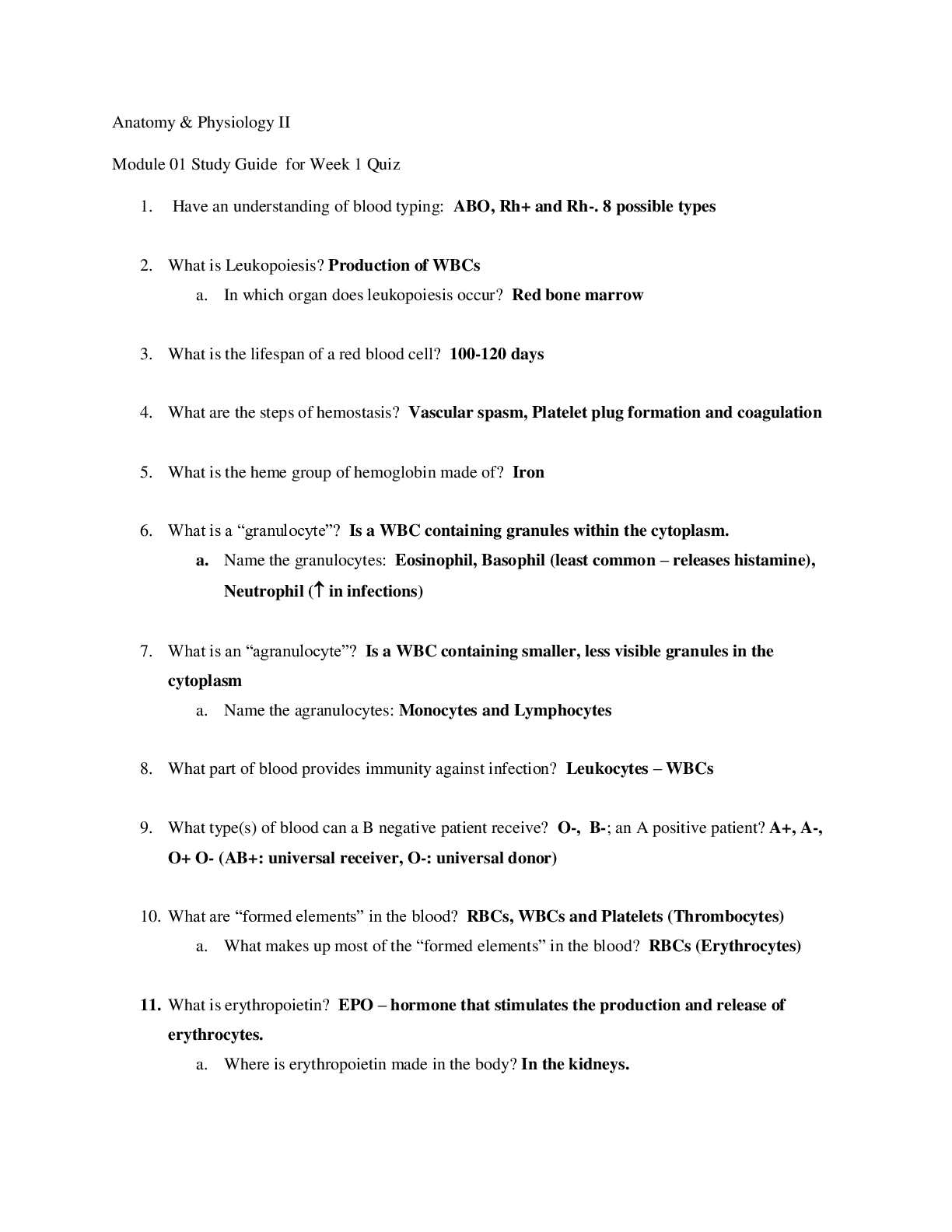
Anatomy & Physiology II
Module 01 Study Guide for Week 1 Quiz
1. Have an understanding of blood typing: ABO, Rh+ and Rh-. 8 possible types
2. What is Leukopoiesis? Production of WBCs
a. In which organ does l
...
Anatomy & Physiology II
Module 01 Study Guide for Week 1 Quiz
1. Have an understanding of blood typing: ABO, Rh+ and Rh-. 8 possible types
2. What is Leukopoiesis? Production of WBCs
a. In which organ does leukopoiesis occur? Red bone marrow
3. What is the lifespan of a red blood cell? 100-120 days
4. What are the steps of hemostasis? Vascular spasm, Platelet plug formation and coagulation
5. What is the heme group of hemoglobin made of? Iron
6. What is a “granulocyte”? Is a WBC containing granules within the cytoplasm.
a. Name the granulocytes: Eosinophil, Basophil (least common – releases histamine), Neutrophil ( in infections)
7. What is an “agranulocyte”? Is a WBC containing smaller, less visible granules in the cytoplasm
a. Name the agranulocytes: Monocytes and Lymphocytes
8. What part of blood provides immunity against infection? Leukocytes – WBCs
9. What type(s) of blood can a B negative patient receive? O-, B-; an A positive patient? A+, A-, O+ O- (AB+: universal receiver, O-: universal donor)
10. What are “formed elements” in the blood? RBCs, WBCs and Platelets (Thrombocytes)
a. What makes up most of the “formed elements” in the blood? RBCs (Erythrocytes)
11. What is erythropoietin? EPO – hormone that stimulates the production and release of erythrocytes.
a. Where is erythropoietin made in the body? In the kidneys.
b. Consider how a person in acute or chronic renal failure might become anemic: Because they do not make enough Erythropoietin (EPO), the hormone that stimulates the production of RBCs.
12. What is the physical appearance of a red blood cell? Small, biconcave discs, no nucleus, nonorganelle
13. What are the functions of blood? Distribution, Regulation and Protection
14. What binds O2 molecules to erythrocytes? Hemoglobin
15. What is the function of blood plasma proteins? Defense, buffer, regulation, transport
16. Which blood type is the universal donor? O-
17. What factors can interfere with hemostasis? Coagulation disorders?!*
18. What is albumin and what is its function? Is the most abundant of plasma protein (about 60%) and serves as a binding protein, is produced by the liver. Functions: transport molecules through blood, assist in the blood buffer system, maintain plasma osmotic pressure
[Show More]