Electrical Engineering > Lab Report > ECE Lab Report: Filters: High-pass, Low-pass, Bandpass, and Notch (All)
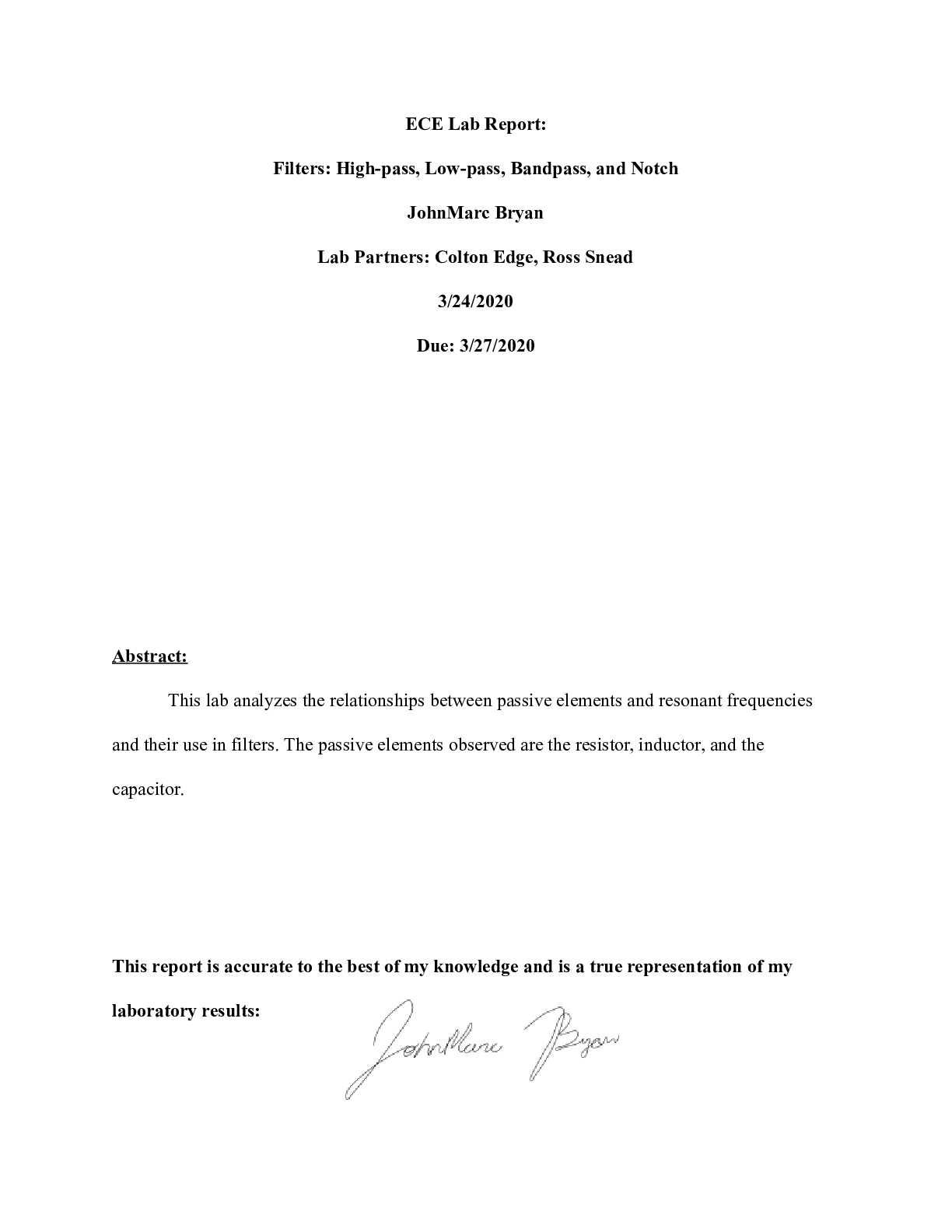
ECE Lab Report: Filters: High-pass, Low-pass, Bandpass, and Notch
Document Content and Description Below
Last updated: 6 months ago
Preview 1 out of 15 pages
Instant download
Buy this Document to get the Full Access Instantly
Provided by Students Who Aced it
We Verify Document Content to Gurantee Accuracy
Reviews( 0 )
Document information
Connected school, study & course
About the document
Uploaded On
Jul 13, 2021
Number of pages
15
Written in
All

Additional information
This document has been written for:
Uploaded
Jul 13, 2021
Downloads
0
Views
247
Topic Tags
Recommended For You
Get more on Lab Report »
University of Nevada, RenoEE 320LLab Report 7 BJT CE Amplifie...

Transmission and Interface Design RS-232 Breakout Box Mini Pro...

Texas A&M University - ECEN 215Daniel Aselin Lab Report 7...

EET 355 Electric Circuits Laboratory Experiment Static Logic...


SERIES AND PARALLEL CAPACITORS Arizona State UniversityEET 113...

Arizona State UniversityEET 113Experiment #16_Peak and RMS AC...


Single-Inductor Multiple-Output Converters Topologies, Impleme...

Advanced Electromagnetic Wave Propagation Methods, 1e by Guill...

An Introduction to Electrical Science, 1e Adrian Waygood (Test...
Delmar's Standard Textbook of Electricity, 6e Stephen Herman (...
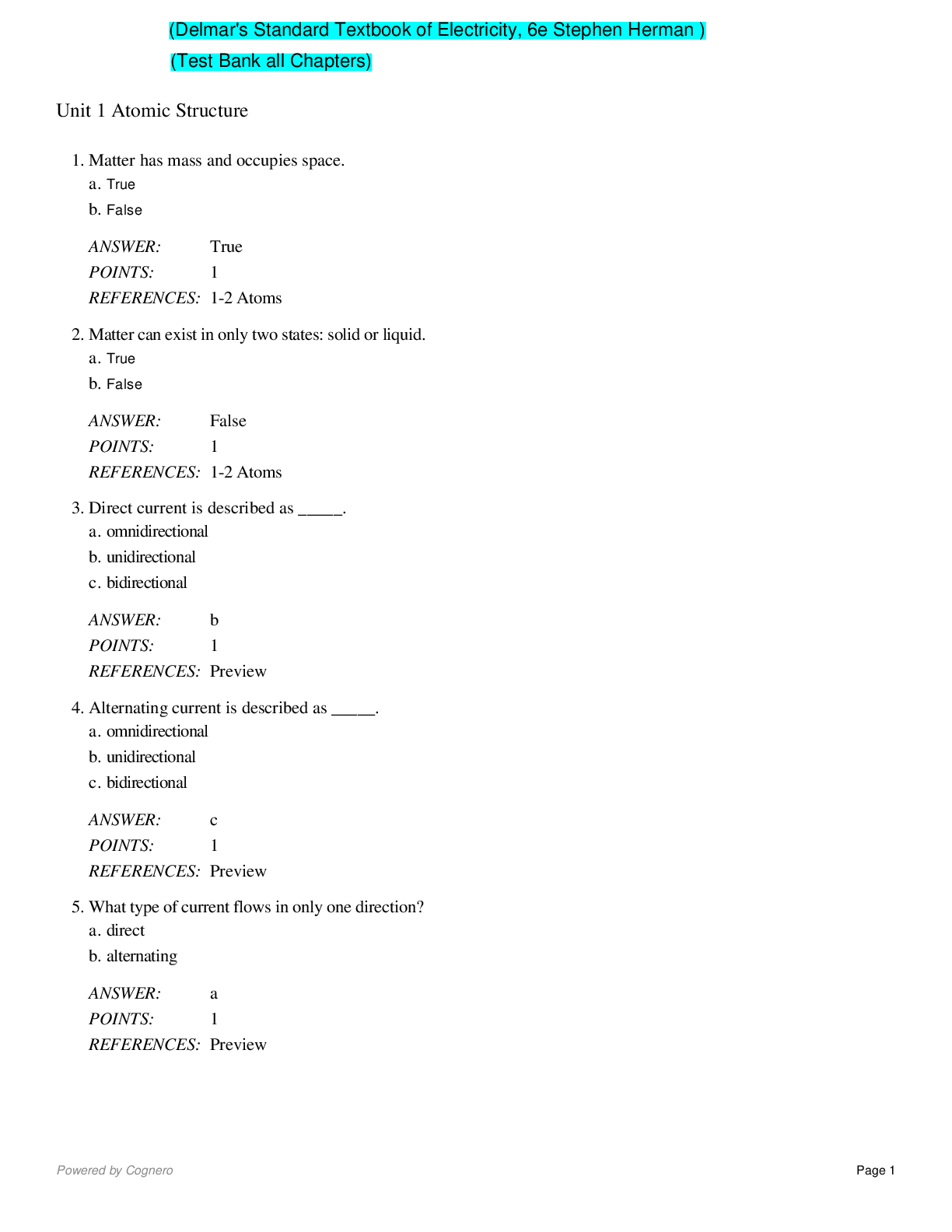
Delmar's Standard Textbook of Electricity, 6e Stephen Herman (...
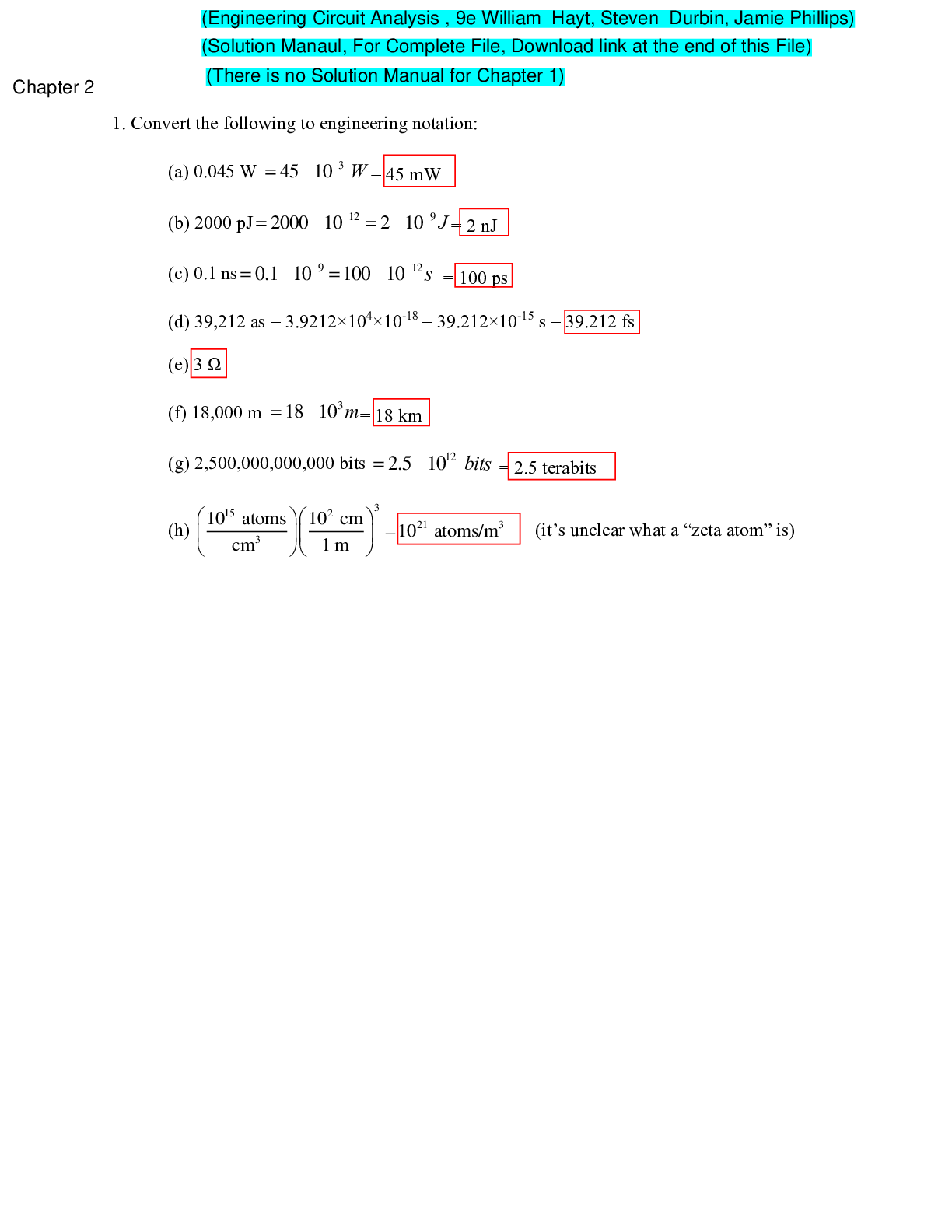
Engineering Circuit Analysis , 9e William Hayt, Steven Durbi...
Energy-Efficient Electrical Systems for Buildings, 1e Moncef K...
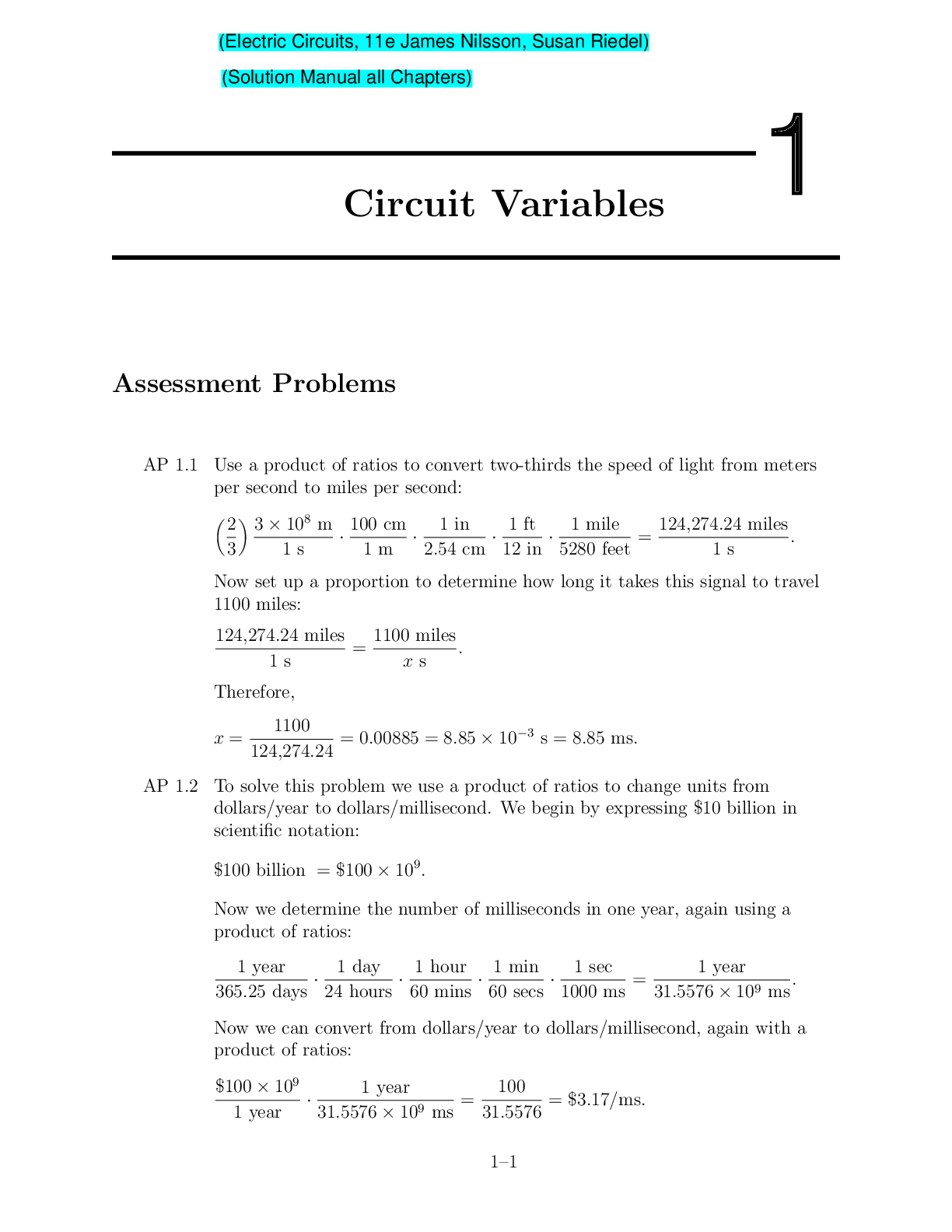
Electric Circuits, 11th Edition by James Nilsson, Susan Riedel...