NURSING > DISCUSSION POST > NURSING 508 Week 5 Discussion (All)
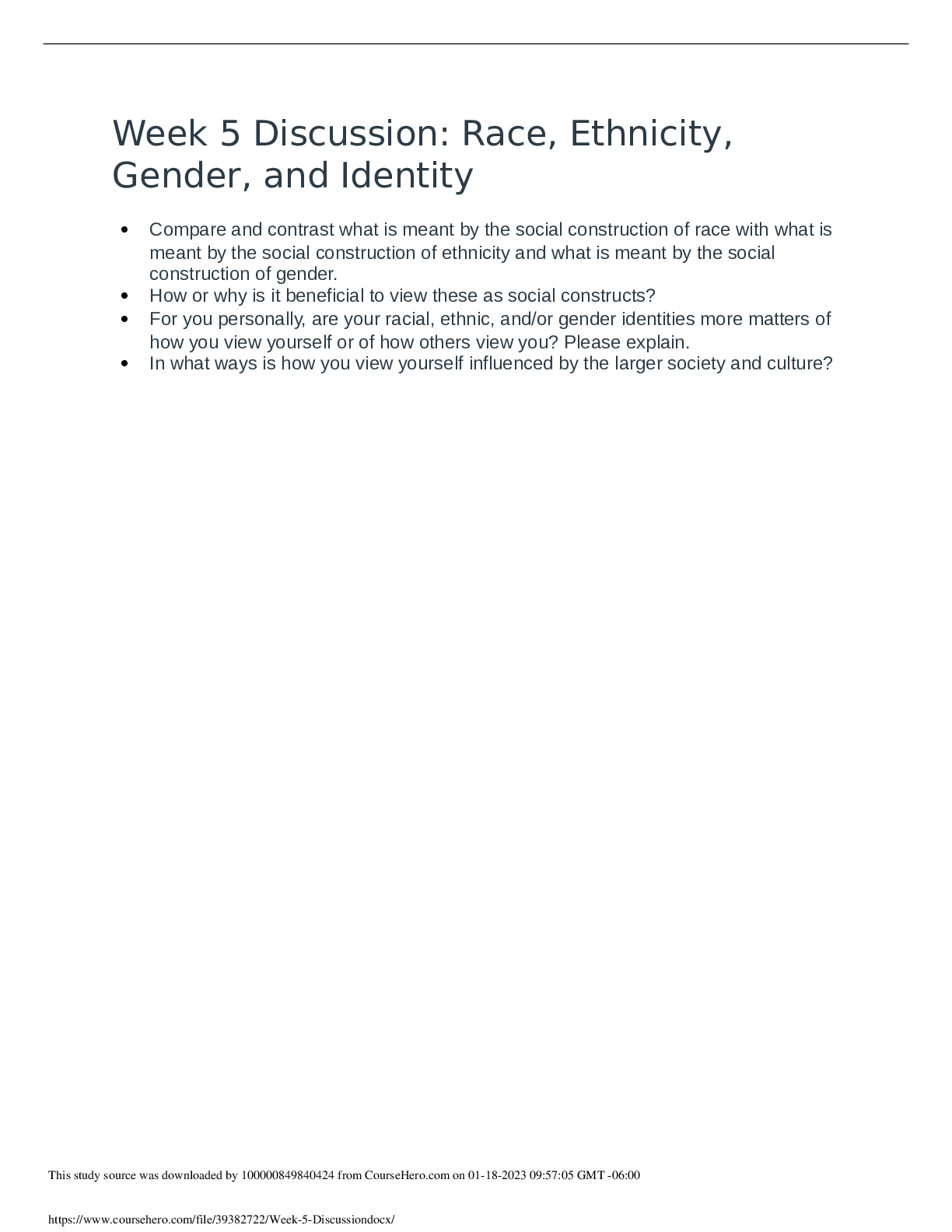
NURSING 508 Week 5 Discussion
Document Content and Description Below
Last updated: 3 years ago
Preview 1 out of 5 pages
Instant download
Buy this Document to get the Full Access Instantly
Provided by Students Who Aced it
We Verify Document Content to Gurantee Accuracy
Reviews( 0 )
Document information
Connected school, study & course
About the document
Uploaded On
Jul 17, 2021
Number of pages
5
Written in
All

Additional information
This document has been written for:
Uploaded
Jul 17, 2021
Downloads
0
Views
75
Topic Tags
Related Subjects & Courses
Explore similar study resources and related concepts.
Recommended For You
Get more on DISCUSSION POST »
Chamberlain College Of Nursing > NURSING 508. NR508 Final Test...
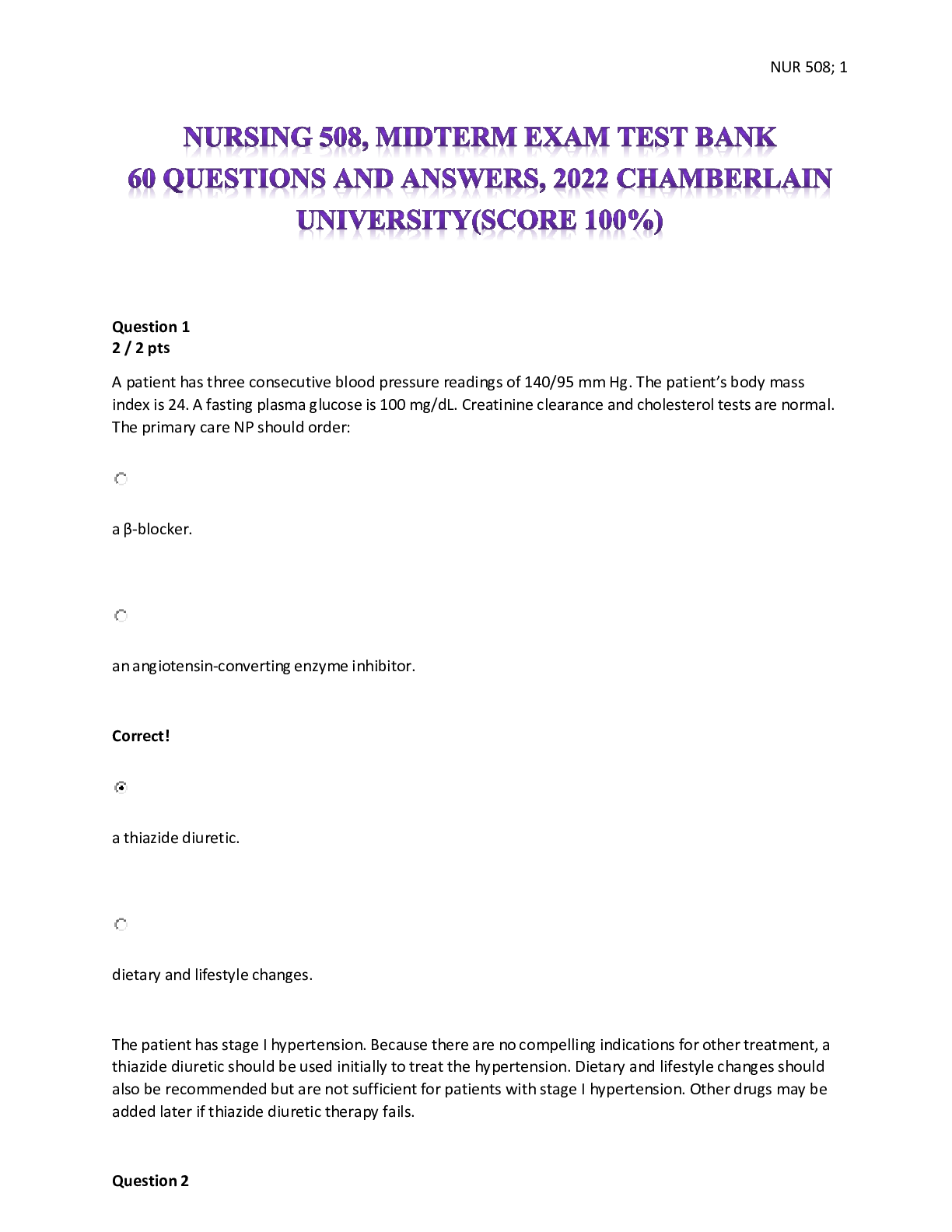
NURSING 508, MIDTERM EXAM TEST BANK 60 QUESTIONS AND ANSWERS...
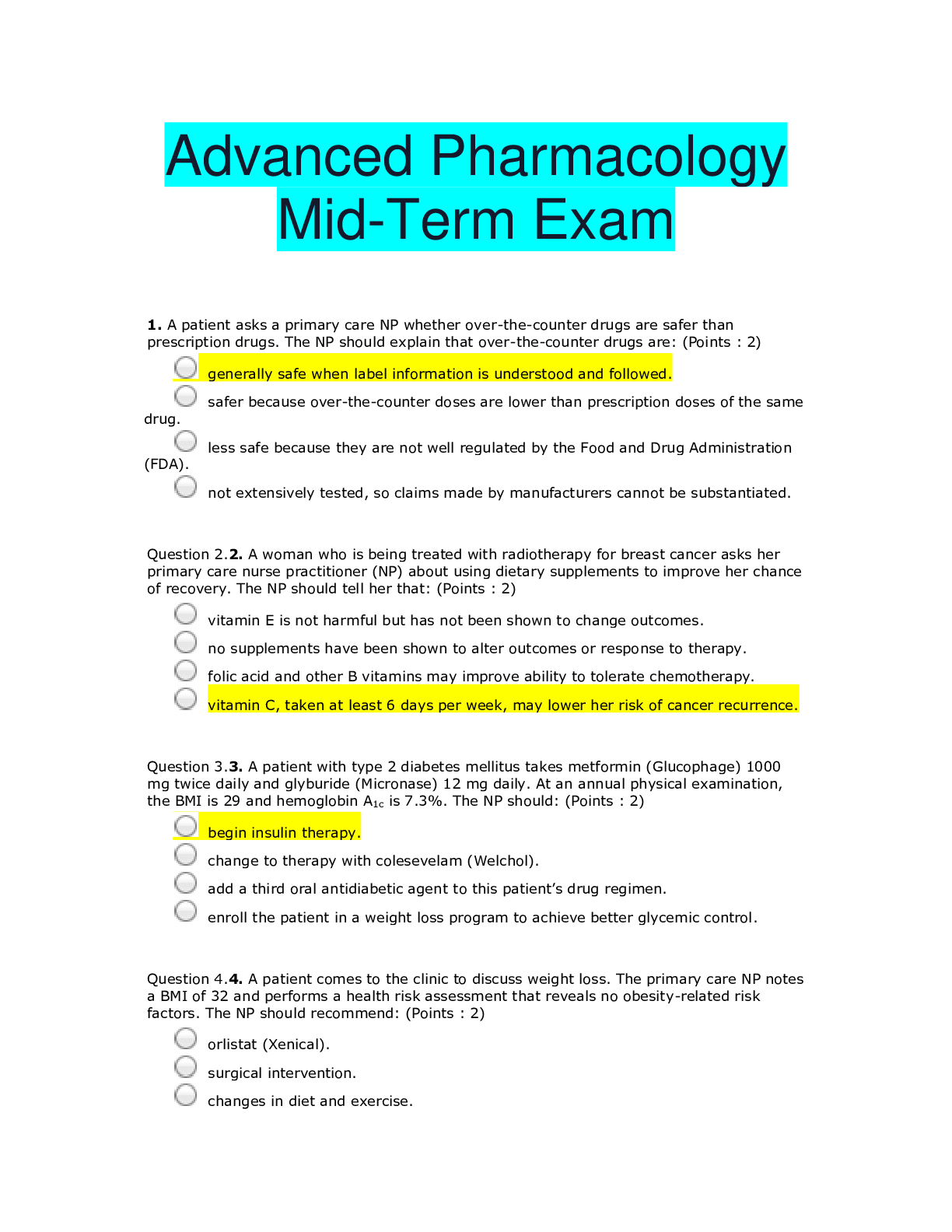
nursing 508 Advanced Pharmacology Mid-Term Exam (ALREADY GRADE...
NR565 / NR 565 Advanced Pharmacology Of Nursing Discussion. Q...

Chamberlain College of Nursing - NR 508 NR 508Discussion week...

Chamberlain College of Nursing - NR 508 NR 508NR-508-Week 5 Ph...
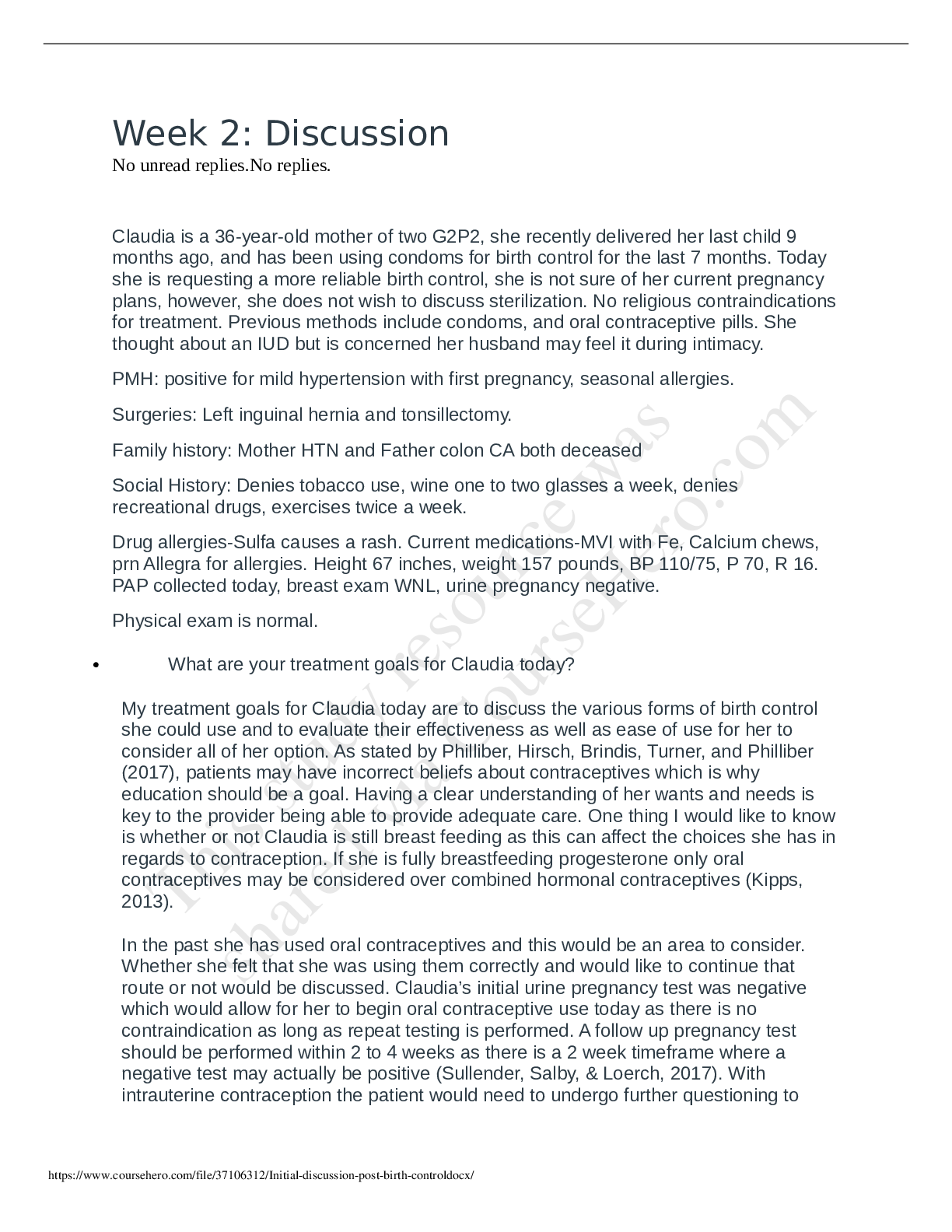
Chamberlain College of Nursing - NR 508 NR 508Initial discussi...
NR565 / NR 565: Advanced Pharmacology Week 6 & 7 Discussion Bo...

United States UniversityFNP- MSN 590Week 1 DQ 1 Discussion pro...
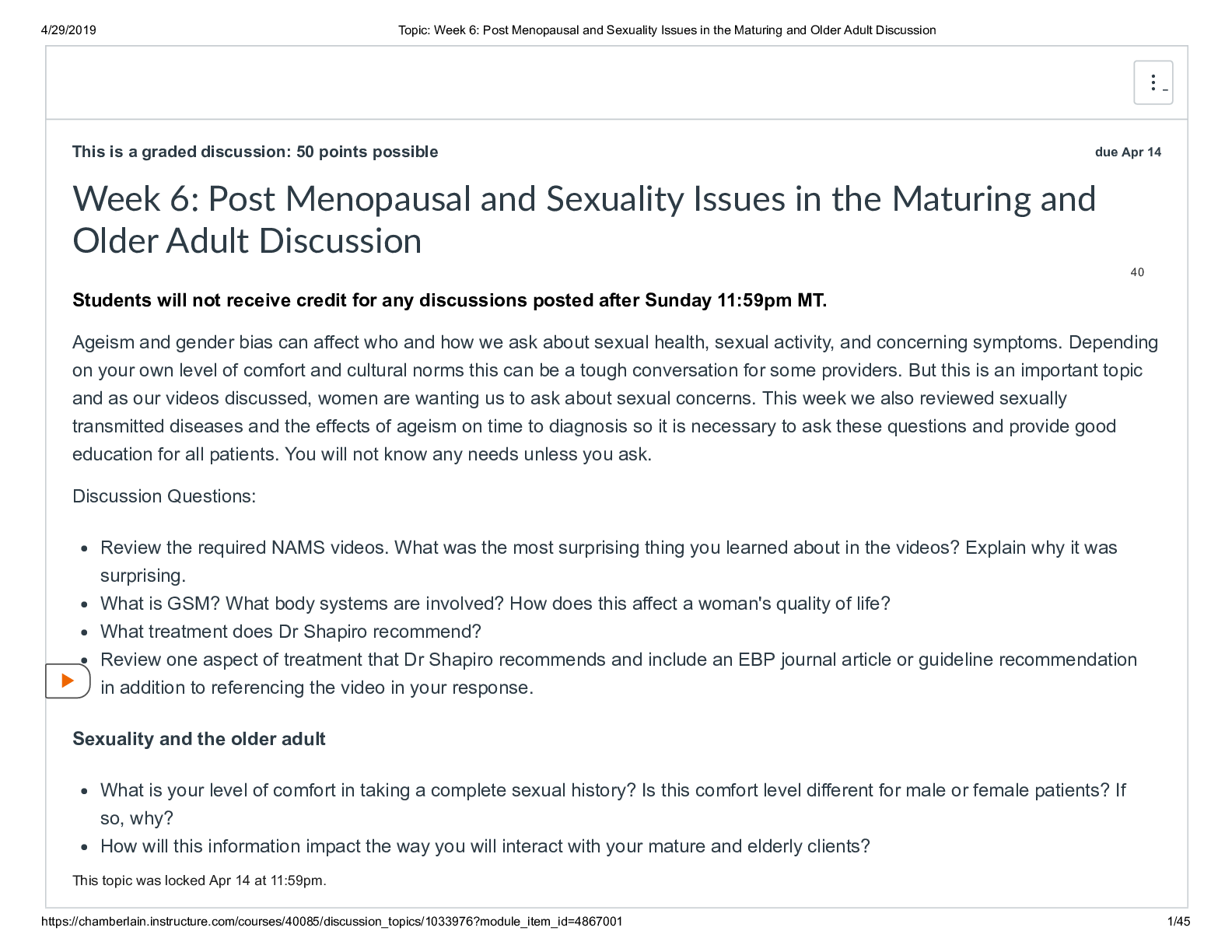
Complete_Week6_Post Menopausal and Sexuality Issues in the Mat...
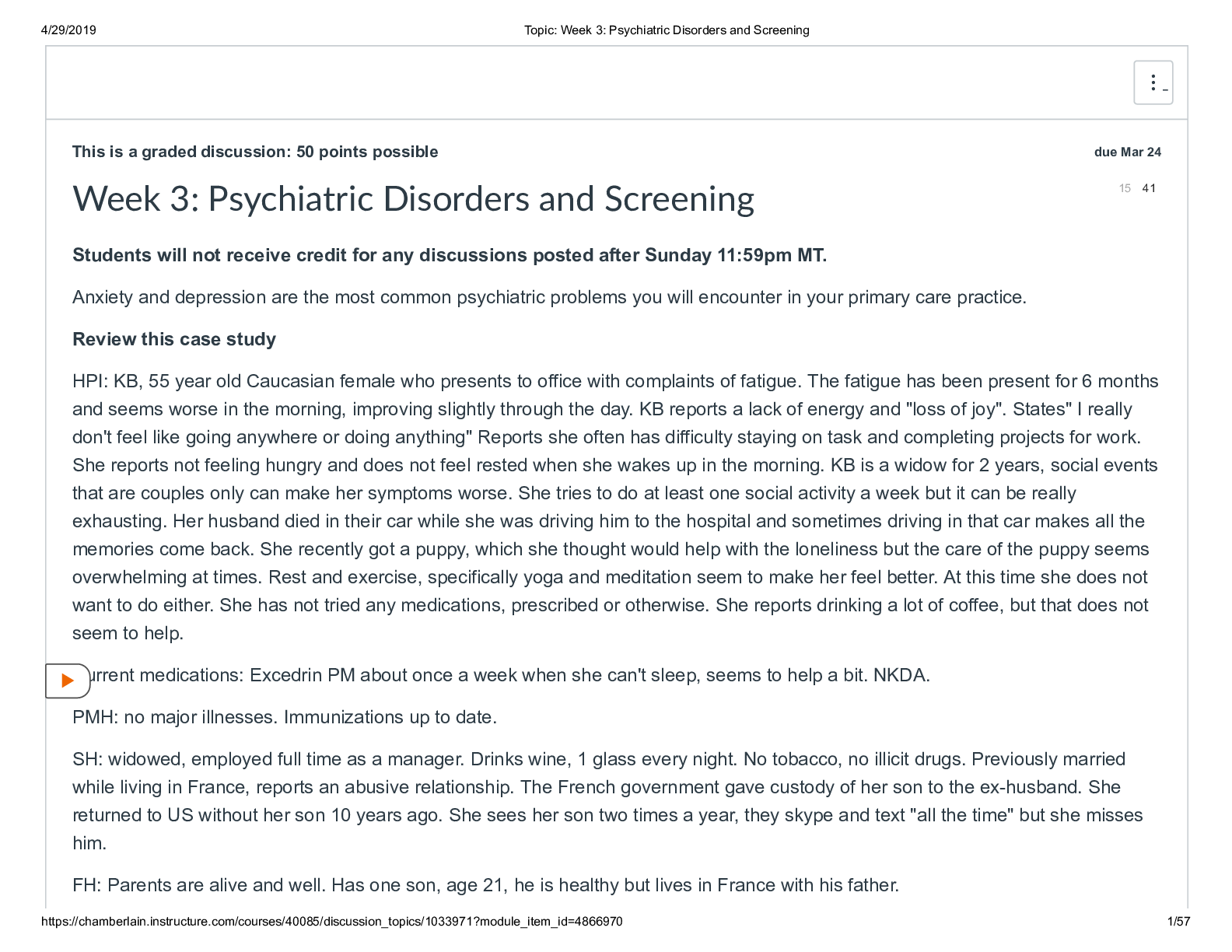
Chamberlain College of Nursing NURSING NR 601 Complete_ Week 3...


Chamberlain College of NursingNUR 601Week 2 Polypharmacy Discu...
.png)
Chamberlain College of NursingNR 511NR511 Week 3 discussion 1...
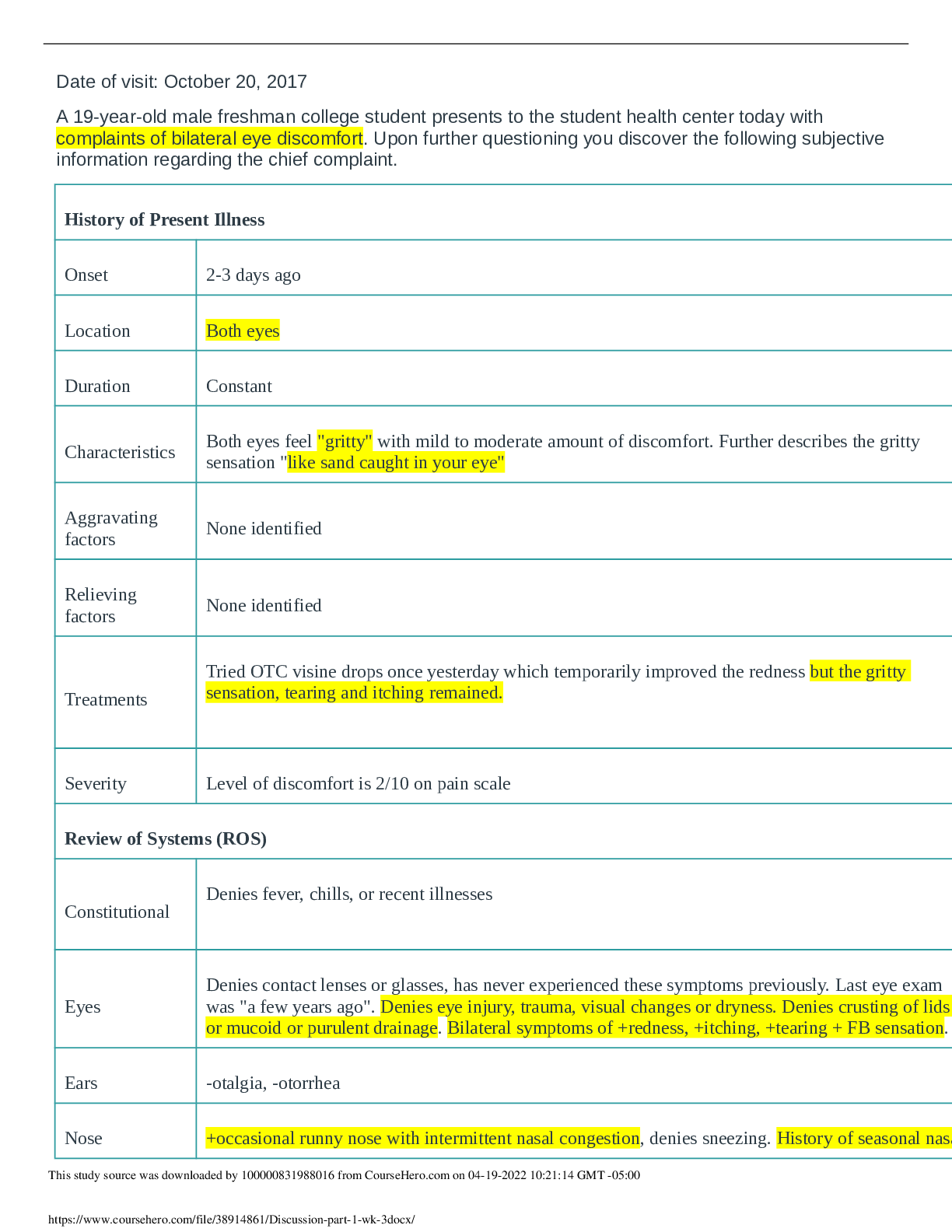
.png)
Chamberlain College of Nursing NR511 week 2 discussion 2 Mary,...

Chamberlain College of Nursing - NR 449NR 449 Week 1 Discussio...
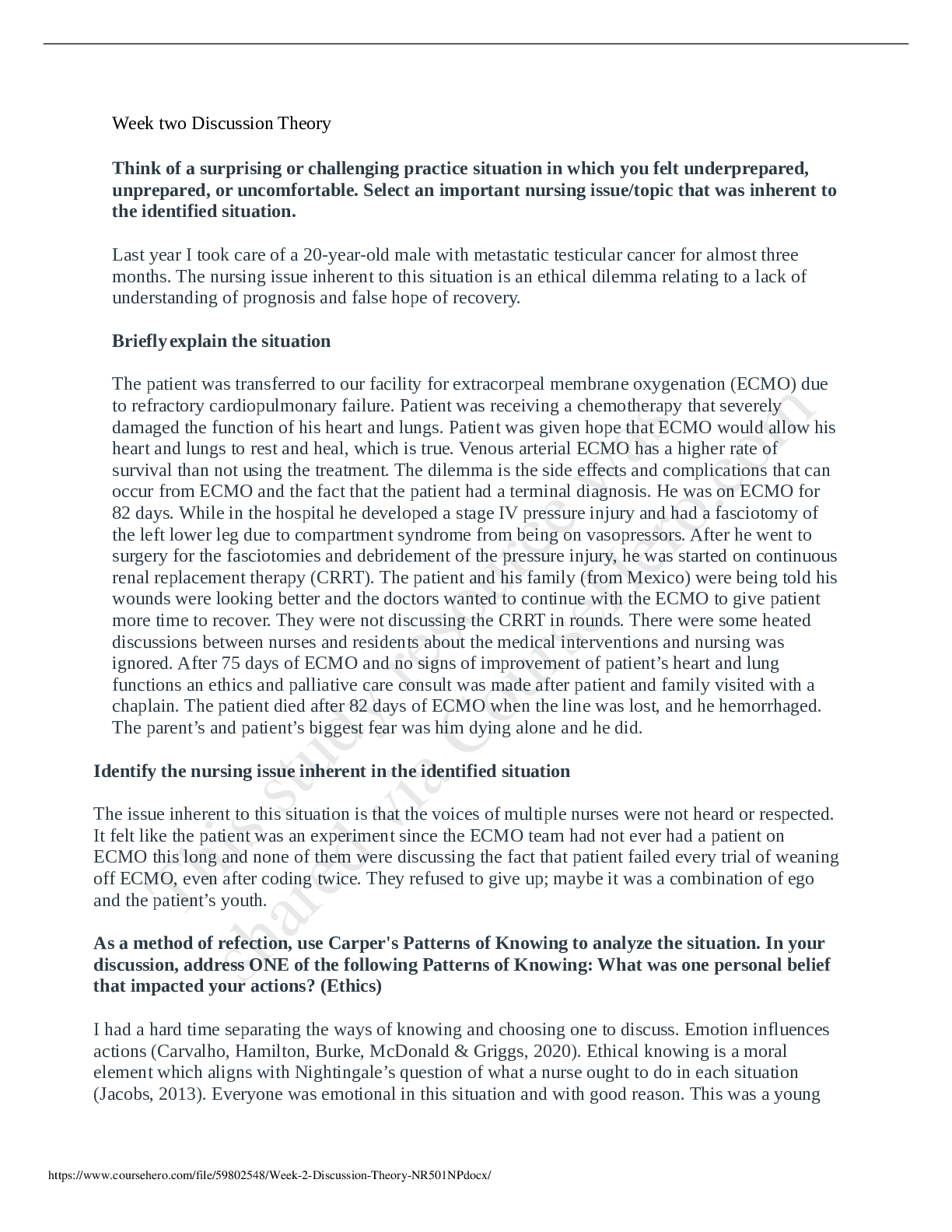
Chamberlain College of Nursing - NR 501Week 2 Discussion Theor...
U.png)