NR224 Exam 2 Study Guide Revised
CH40: Oxygenation
1. What is atelectasis and how do we prevent it?
- A collapse of the alveoli that prevents normal exchange of oxygen and carbon
dioxide.
-
2. Respiratory wise, wha
...
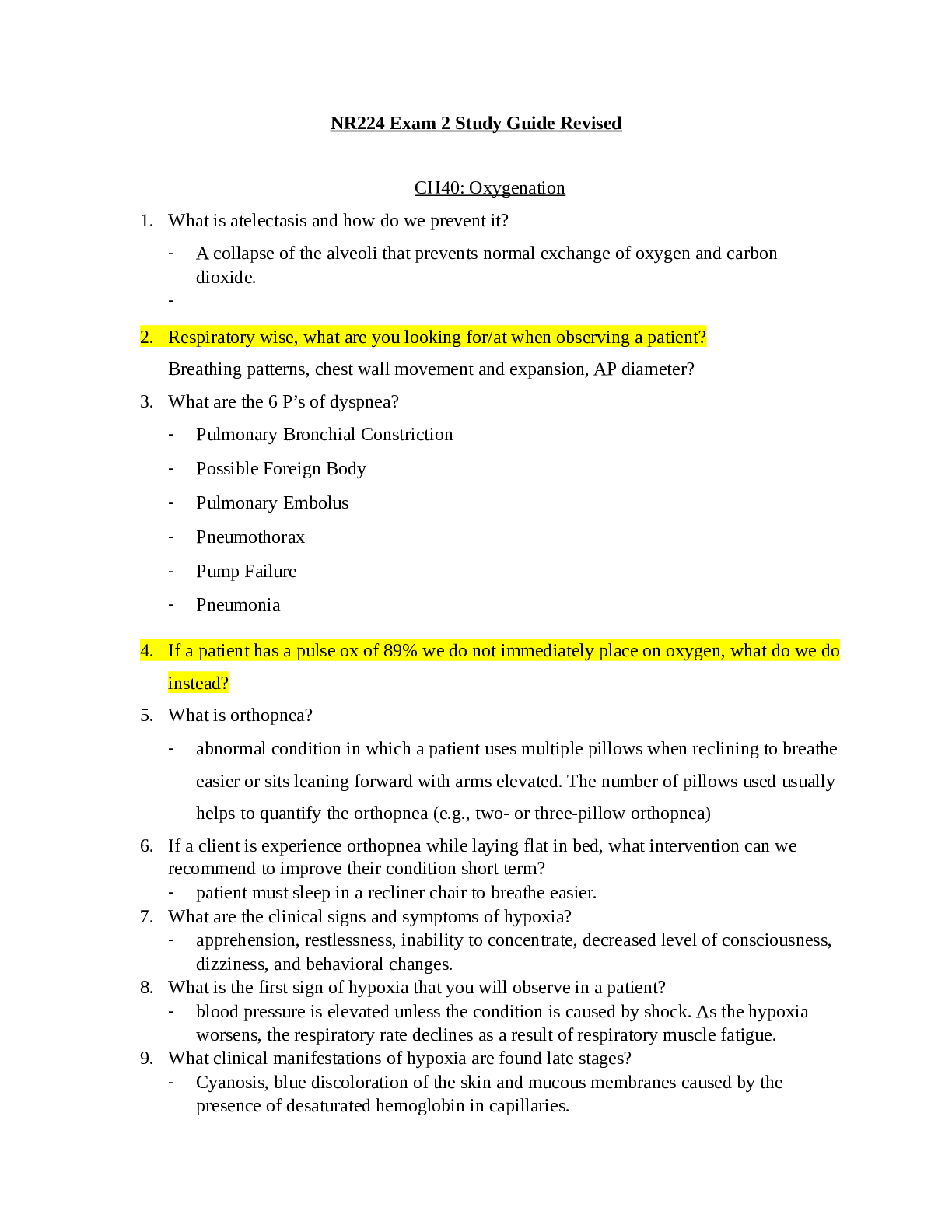
NR224 Exam 2 Study Guide Revised
CH40: Oxygenation
1. What is atelectasis and how do we prevent it?
- A collapse of the alveoli that prevents normal exchange of oxygen and carbon
dioxide.
-
2. Respiratory wise, what are you looking for/at when observing a patient?
Breathing patterns, chest wall movement and expansion, AP diameter?
3. What are the 6 P’s of dyspnea?
- Pulmonary Bronchial Constriction
- Possible Foreign Body
- Pulmonary Embolus
- Pneumothorax
- Pump Failure
- Pneumonia
4. If a patient has a pulse ox of 89% we do not immediately place on oxygen, what do we do
instead?
5. What is orthopnea?
- abnormal condition in which a patient uses multiple pillows when reclining to breathe
easier or sits leaning forward with arms elevated. The number of pillows used usually
helps to quantify the orthopnea (e.g., two- or three-pillow orthopnea)
6. If a client is experience orthopnea while laying flat in bed, what intervention can we
recommend to improve their condition short term?
- patient must sleep in a recliner chair to breathe easier.
7. What are the clinical signs and symptoms of hypoxia?
- apprehension, restlessness, inability to concentrate, decreased level of consciousness,
dizziness, and behavioral changes.
8. What is the first sign of hypoxia that you will observe in a patient?
- blood pressure is elevated unless the condition is caused by shock. As the hypoxia
worsens, the respiratory rate declines as a result of respiratory muscle fatigue.
9. What clinical manifestations of hypoxia are found late stages?
- Cyanosis, blue discoloration of the skin and mucous membranes caused by the
presence of desaturated hemoglobin in capillaries.10. What do you do if you get an abnormal pulse ox reading that does not match your
physical assessment?
Retake it???
- Example: a SPO2 reading of 76% for a client who’s breathing is unlabored at a
rate of 12 without evidence of hypoxia
11. Who should receive a flu vaccine?
- Annual flu vaccines are recommended for all people 6 months and older; patients
with chronic illnesses (heart, lung, kidney, or immunocompromised), infants, older
adults, and pregnant women can get very sick; thus they should be immunized. Close
contacts of infants under 6 months should also be immunized. Seasonal flu vaccine
protects against influenza viruses that research indicates will be the most common
during that year.
12. Who should receive the pneumonia vaccine?
- Pneumococcal vaccine (PCV13) is routinely given to infants in a series of four doses
and is recommended for patients at increased risk of developing pneumonia. This
includes all adults over 65 years of age, those with chronic illnesses or who are
immunocompromised (such as HIV/AIDS), any adult who smokes or has asthma, and
those living in special environments such as nursing homes or long-term care
facilities
13. What are the different oxygen devices? What liters per minute do they require?
- Nasal cannula: 1-6 L/min
- Oxygen Mask: partial rebreather mask = 6-10 L/min; nonrebreather mask =
minimum of 10 L/min; Venturi mask = 4-12 L/min
14. Which ones are used for oxygen support, which ones are used for oxygen and ventilation
support?
15. What is the purpose of percussion?
- Percussion detects the presence of abnormal fluid or air in the lungs. It also
determines diaphragmatic excursion
[Show More]