NR507_Week_8_Final_Exam_Study_Guide (A GUARANTEED)
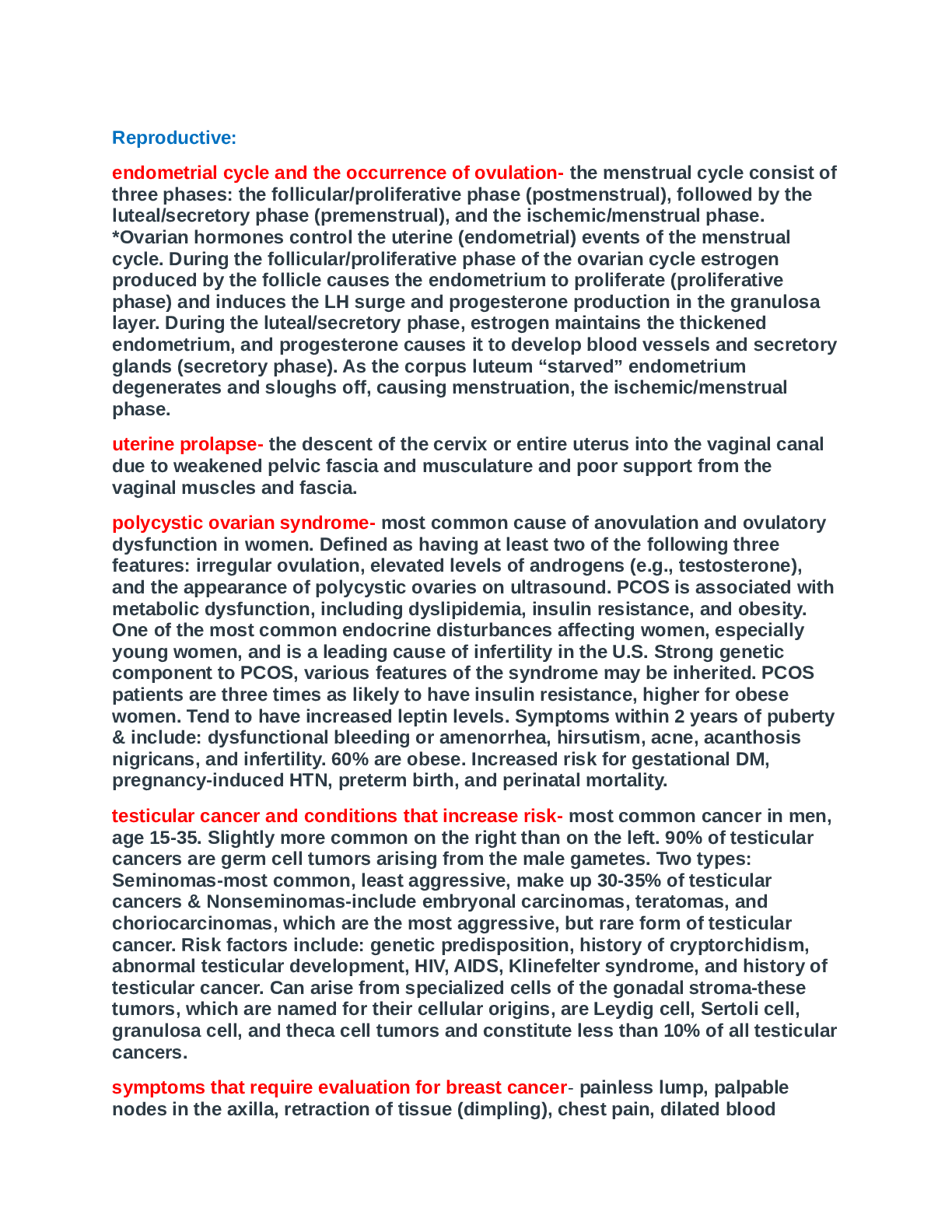
endometrial cycle and the occurrence of ovulation- the menstrual cycle consist of
three phases: the follicular/proliferative phase (postmenstrual), followed by the
...
NR507_Week_8_Final_Exam_Study_Guide (A GUARANTEED)
endometrial cycle and the occurrence of ovulation- the menstrual cycle consist of
three phases: the follicular/proliferative phase (postmenstrual), followed by the
luteal/secretory phase (premenstrual), and the ischemic/menstrual phase.
*Ovarian hormones control the uterine (endometrial) events of the menstrual
cycle. During the follicular/proliferative phase of the ovarian cycle estrogen
produced by the follicle causes the endometrium to proliferate (proliferative
phase) and induces the LH surge and progesterone production in the granulosa
layer. During the luteal/secretory phase, estrogen maintains the thickened
endometrium, and progesterone causes it to develop blood vessels and secretory
glands (secretory phase). As the corpus luteum “starved” endometrium
degenerates and sloughs off, causing menstruation, the ischemic/menstrual
phase.
uterine prolapse- the descent of the cervix or entire uterus into the vaginal canal
due to weakened pelvic fascia and musculature and poor support from the
vaginal muscles and fascia.
polycystic ovarian syndrome- most common cause of anovulation and ovulatory
dysfunction in women. Defined as having at least two of the following three
features: irregular ovulation, elevated levels of androgens (e.g., testosterone),
and the appearance of polycystic ovaries on ultrasound. PCOS is associated with
metabolic dysfunction, including dyslipidemia, insulin resistance, and obesity.
One of the most common endocrine disturbances affecting women, especially
young women, and is a leading cause of infertility in the U.S. Strong genetic
component to PCOS, various features of the syndrome may be inherited. PCOS
patients are three times as likely to have insulin resistance, higher for obese
women. Tend to have increased leptin levels. Symptoms within 2 years of puberty
& include: dysfunctional bleeding or amenorrhea, hirsutism, acne, acanthosis
nigricans, and infertility. 60% are obese. Increased risk for gestational DM,
pregnancy-induced HTN, preterm birth, and perinatal mortality.
testicular cancer and conditions that increase risk- most common cancer in men,
age 15-35. Slightly more common on the right than on the left. 90% of testicular
cancers are germ cell tumors arising from the male gametes. Two types:
Seminomas-most common, least aggressive, make up 30-35% of testicular
cancers & Nonseminomas-include embryonal carcinomas, teratomas, and
choriocarcinomas, which are the most aggressive, but rare form of testicular
cancer. Risk factors include: genetic predisposition, history of cryptorchidism,
abnormal testicular development, HIV, AIDS, Klinefelter syndrome, and history of
testicular cancer. Can arise from specialized cells of the gonadal stroma-these
tumors, which are named for their cellular origins, are Leydig cell, Sertoli cell,
granulosa cell, and theca cell tumors and constitute less than 10% of all testicular
cancers.
symptoms that require evaluation for breast cancer- painless lump, palpable
nodes in the axilla, retraction of tissue (dimpling), chest pain, dilated blood
vessels, edema, edema of the arm, hemorrhage, local pain, nipple/areolar eczema,
nipple discharge in non-lacting woman, pitting of the skin (like surface of an
orange peel), reddened skin, local tenderness and warmth, skin retraction,
ulceration.
signs of premenstrual dysphoric disorder- One of these symptoms must be
present for a diagnosis: marked affective lability, marked irritability or anger or
increased interpersonal conflicts, marked anxiety, tension. One of these must
also be present: decreased interest, difficulty concentrating, easy fatigability, low
energy, increase or decrease in sleep, feelings of being overwhelmed, physical
symptoms, such as: breast tenderness, muscle or joint aches, bloating or weight
gain. (Greater than 5 of these symptoms occur during the week before menses
onset, improve within a few days after menses onset, and diminish in the week
postmenses).
dysfunctional uterine bleeding- bleeding that is abnormal in duration, volume,
frequency, or regularity; and has been present for the majority of the previous 6
months. May be acute or chronic. PALM-COEIN System for classification of
abnormal uterine bleeding: PALM-structural causes: Polyp, Adenomyosis,
Leiomyoma, Malignancy. COEIN-nonstructural causes: coagulopathy, ovulatory
dysfunction, endometrial, iatrogenic, not yet classified. Increased endometrial
bleeding is correlated with a change from ovulatory to anovulatory cycles due to
high estrogen levels.
[Show More]