Leadership > QUESTIONS & ANSWERS > COUN 5832 UNIT 10 QUIZ (2019/20) Already Graded A (All)
COUN 5832 UNIT 10 QUIZ (2019/20) Already Graded A
Document Content and Description Below
Last updated: 3 years ago
Preview 1 out of 10 pages
Instant download

Buy this Document to get the Full Access Instantly
Provided by Students Who Aced it
We Verify Document Content to Gurantee Accuracy
Reviews( 0 )
Document information
Connected school, study & course
About the document
Uploaded On
Sep 27, 2021
Number of pages
10
Written in
All

Additional information
This document has been written for:
Uploaded
Sep 27, 2021
Downloads
0
Views
177
Topic Tags
Recommended For You
Get more on QUESTIONS & ANSWERS »
COUN 5832 UNIT 10 QUIZ (2019/20) Already Graded A. Questions a...
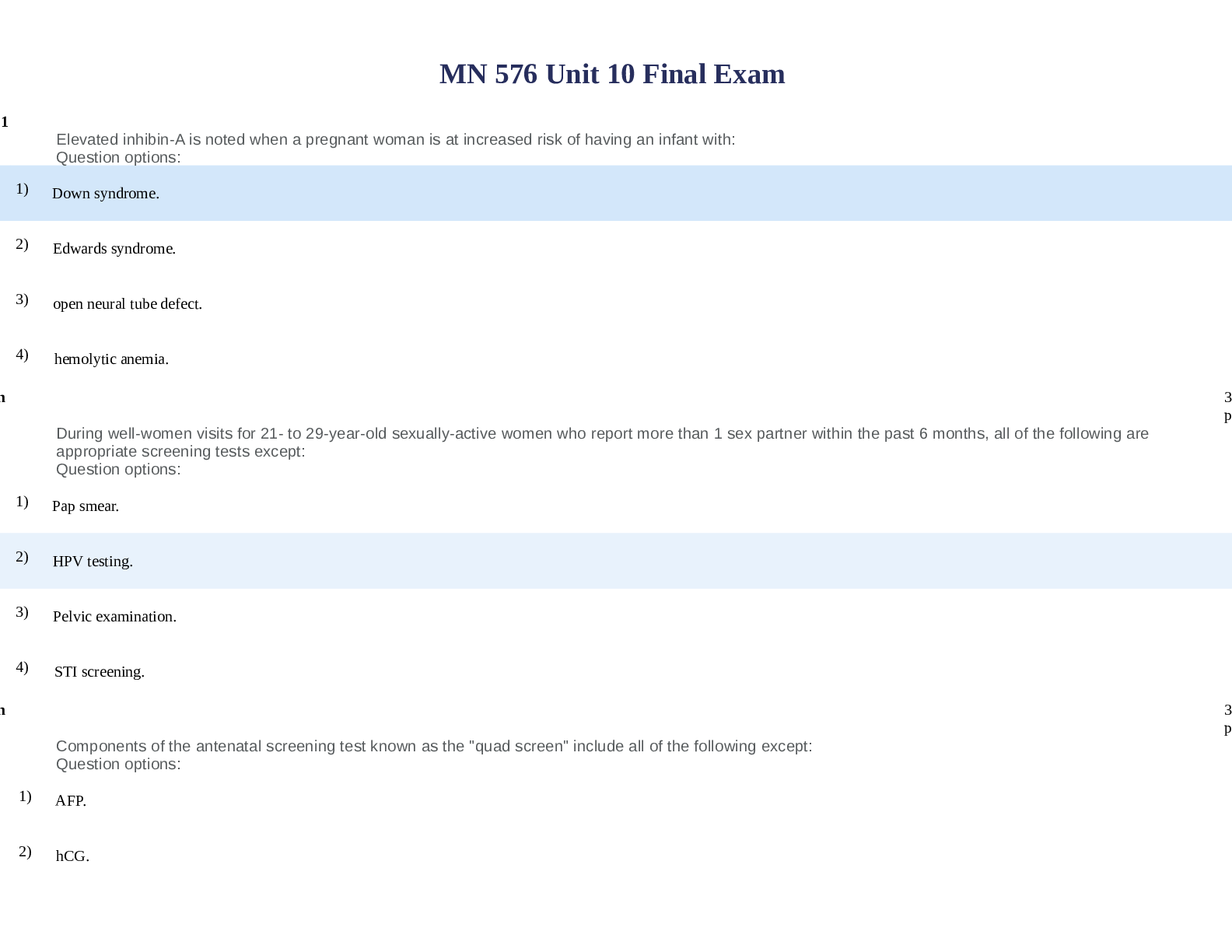
MN 576 UNIT 10 FINAL EXAM / MN576 UNIT 10 FINAL EXAM (2022): K...

MAT2051 Unit 10 Quiz 5 Latest 2020 ; Complete solution guide,...
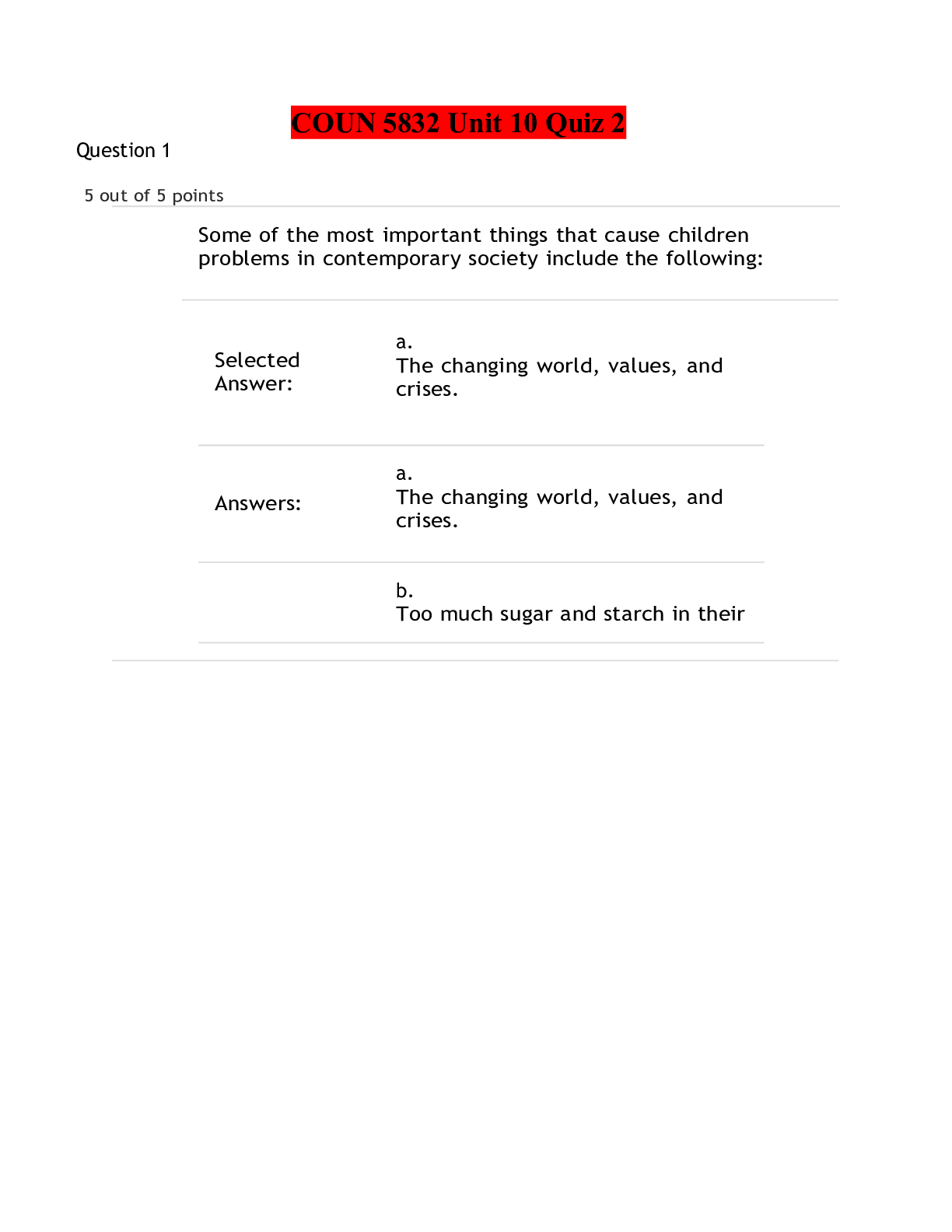
COUN 5832 Unit 10 Quiz 2 - Questions and Answers, Latest Versi...
University of Windsor - ASTRONOMY 64-190unit-10-assignment-sol...
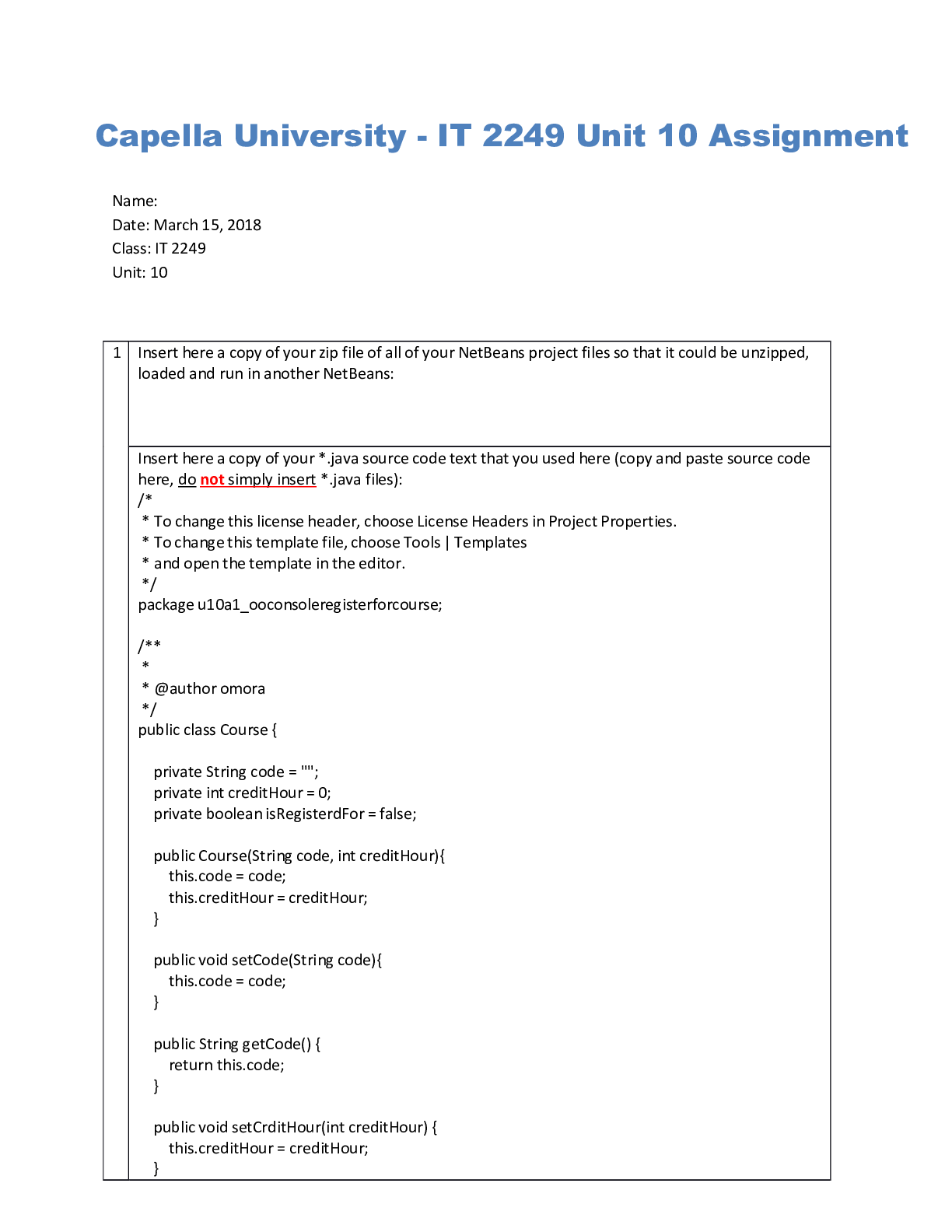

Kaplan University - MN 568 - MN568 unit 10 final. A+ Guide.


2024 Pathfinder Certification / 2025 Updated Review / Score 10...

Elementary Linear Algebra Applications Version 11th Edition By...
.png)
Leadership Leaders, Followers, and Environments, 1e Art Padill...
.png)
Leadership Leaders, Followers, and Environments, 1e Art Padill...














