*NURSING > DISCUSSION POST > NURSING-NR 503-CLASS RESPONSE Topic-Week 3-Discussion-Current Event-Effectiveness of Influenza Vacci (All)
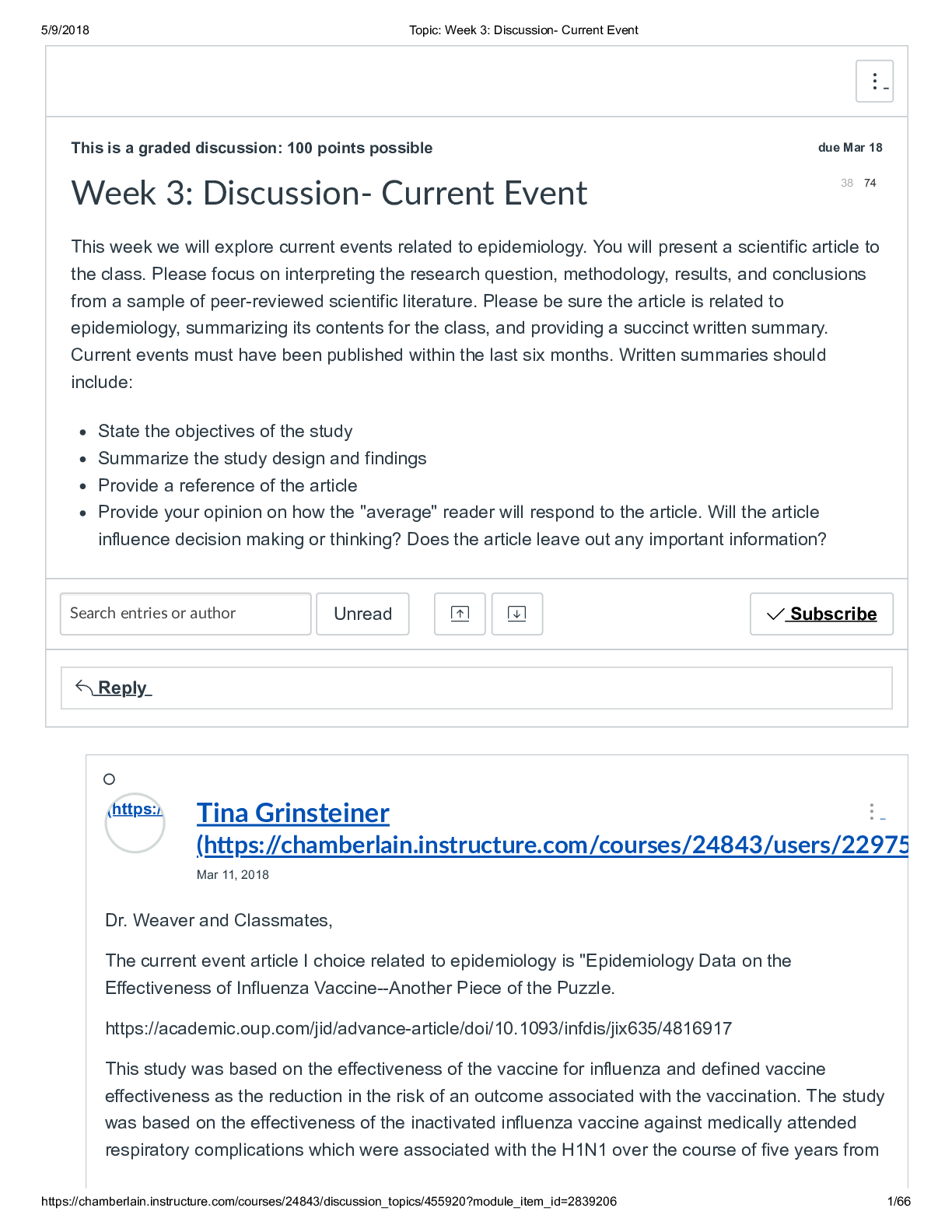
This study was based on the effectiveness of the vaccine for influenza and defined vaccine effectiveness as the reduction in the risk of an outcome associated with the vaccination. The study was bas ... ed on the effectiveness of the inactivated influenza vaccine against medically attended respiratory complications which were associated with the H1N1 over the course of five years from 5/9/2018 Topic: Week 3: Discussion- Current Event https://chamberlain.instructure.com/courses/24843/discussion_topics/455920?module_item_id=2839206 2/66 Reply seven US centers using an observational study based on the test-negative results. The findings resulting from the study showed that the vaccine effectiveness between 2010 to 2014 and 2015 to 2016 were 69%, 56% and 47% respectively. However with the 2015 to 2016, the study analyzed the observed reduction on vaccine effectiveness by also using the difference age categories which found that the estimated vaccine effectiveness was 22% for those born between 1958 and 1979 (Cheng & Subbarao, 2018). It was believed that influenza strains that were encountered early in life had a long-lasting effect on the immune response as well as vaccinations. However, the study showed that 60% of the serological responses to the inactivated influenza vaccines are actually due to the boost of pre-existing antibodies instead of the new vaccine antibodies and the degree of protection will continue to vary from season to season and may be lower in certain population groups and that current vaccines are at the most moderately effective against influenza and need improvement (Cheng & Subbarao, 2018). Unfortunately, the data presented would be difficult for the average individual to understand and comprehend, leaving them to focus only on the conclusion of the study leading the average individual to believe that the influenza vaccine is ineffective in protecting them against the virus and would opt not to receive the vaccine without understanding the risks and complications associated with the influenza virus that they are placing themselves in and those around. Unfortunately, as we have seen over the course of the last couple of years, less and less individuals are receiving the influenza vaccine due to the decrease in the vaccines effectiveness which have lead to an increase in hospitalization and even death related to complications associated with the influenza virus, specifically H1N1 and sub-types of the viruses. What the average individual fails to recognize or understand, is the influenza viruses gradually evolve from year to year making it more difficult to produce an effective influenza vaccine. [Show More]
Last updated: 3 years ago
Preview 1 out of 66 pages
Buy this document to get the full access instantly
Instant Download Access after purchase
Buy NowInstant download
We Accept:
Can't find what you want? Try our AI powered Search
Connected school, study & course
About the document
Uploaded On
Oct 23, 2020
Number of pages
66
Written in
All
This document has been written for:
Uploaded
Oct 23, 2020
Downloads
0
Views
129
Scholarfriends.com Online Platform by Browsegrades Inc. 651N South Broad St, Middletown DE. United States.
We're available through e-mail, Twitter, Facebook, and live chat.
FAQ
Questions? Leave a message!
Copyright © Scholarfriends · High quality services·