NURSING > QUESTIONS & ANSWERS > American Public University - HIMA 100 / HIMA100 - WEEK 4 - QUIZ (All)
American Public University - HIMA 100 / HIMA100 - WEEK 4 - QUIZ
Document Content and Description Below
Last updated: 8 months ago
Preview 1 out of 16 pages
Instant download

Buy this Document to get the Full Access Instantly
Provided by Students Who Aced it
We Verify Document Content to Gurantee Accuracy
Reviews( 0 )
Document information
Connected school, study & course
About the document
Uploaded On
Mar 18, 2022
Number of pages
16
Written in
All

Additional information
This document has been written for:
Uploaded
Mar 18, 2022
Downloads
0
Views
224
Topic Tags
Recommended For You
Get more on QUESTIONS & ANSWERS »
American Public University - HIMA 100 / HIMA100 - WEEK 4 - QUI...
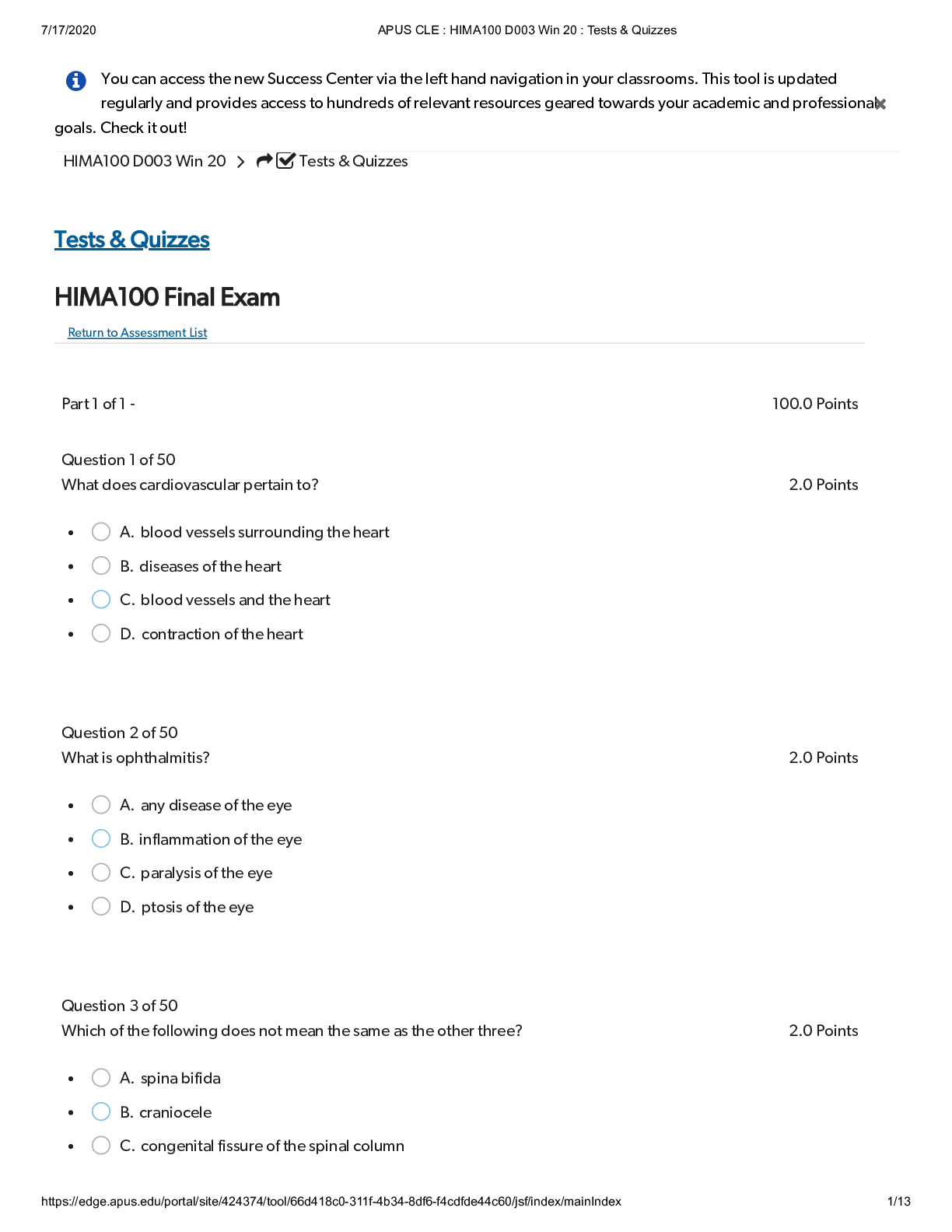
American Public University - HIMA 100 / HIMA100 - FINAL EXAM (...
American Public University - HIMA 100 / HIMA100 - FINAL EXAM (...
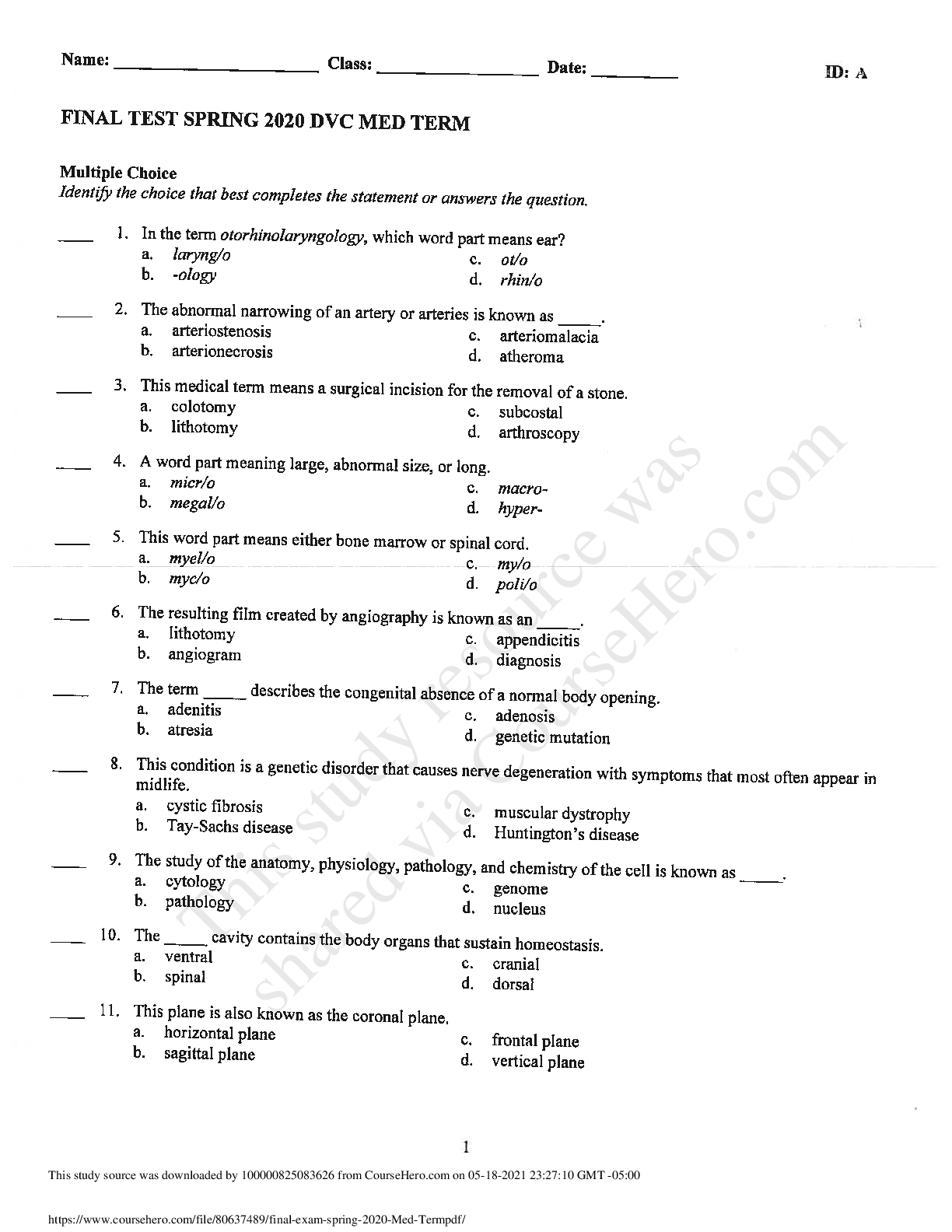
HIMA 100 final exam spring 2020 Med Term {multiple choices Ans...

HIMA 100 questions with correct answers to booste your grades,...

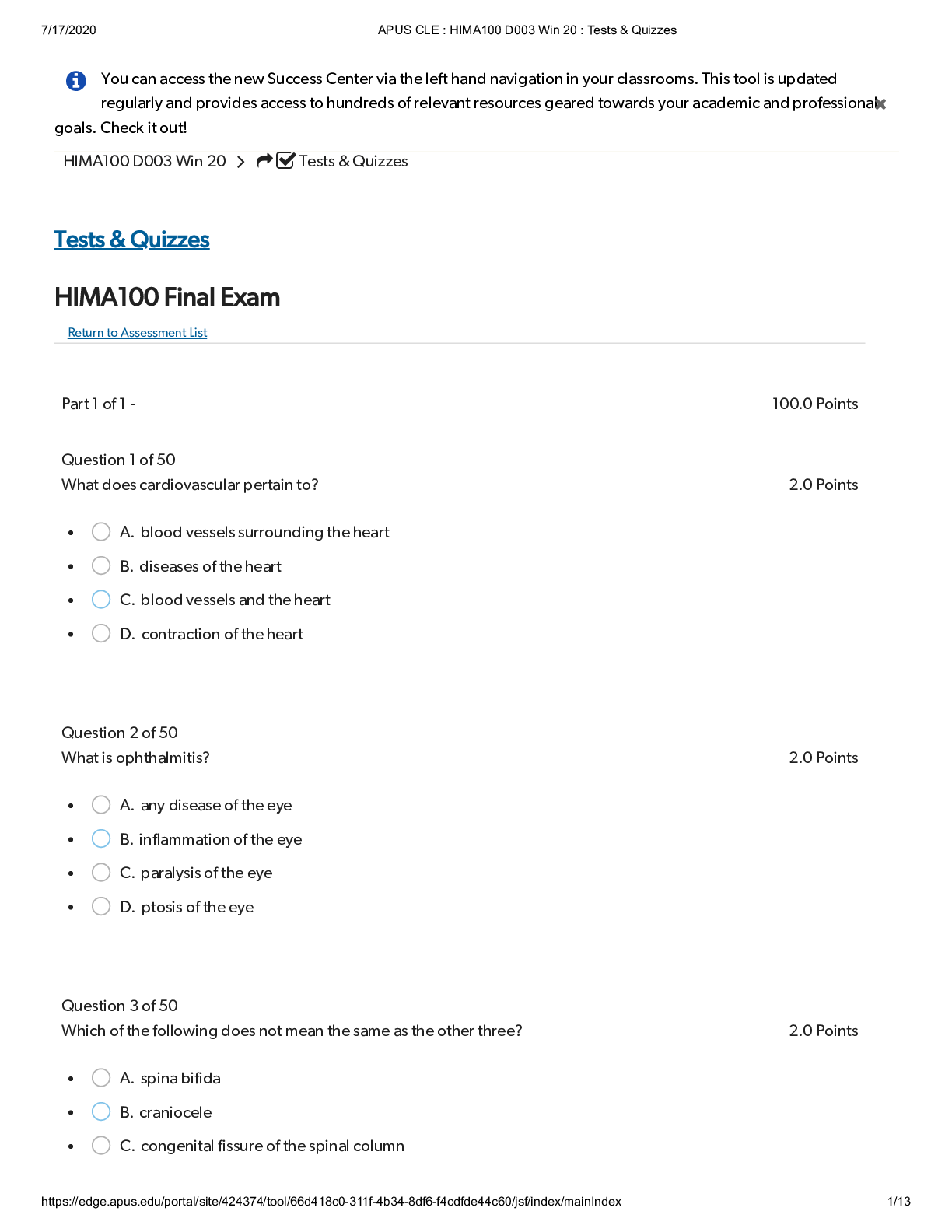
HIMA100_Final Exam_APUS with correct answers to booste your gr...

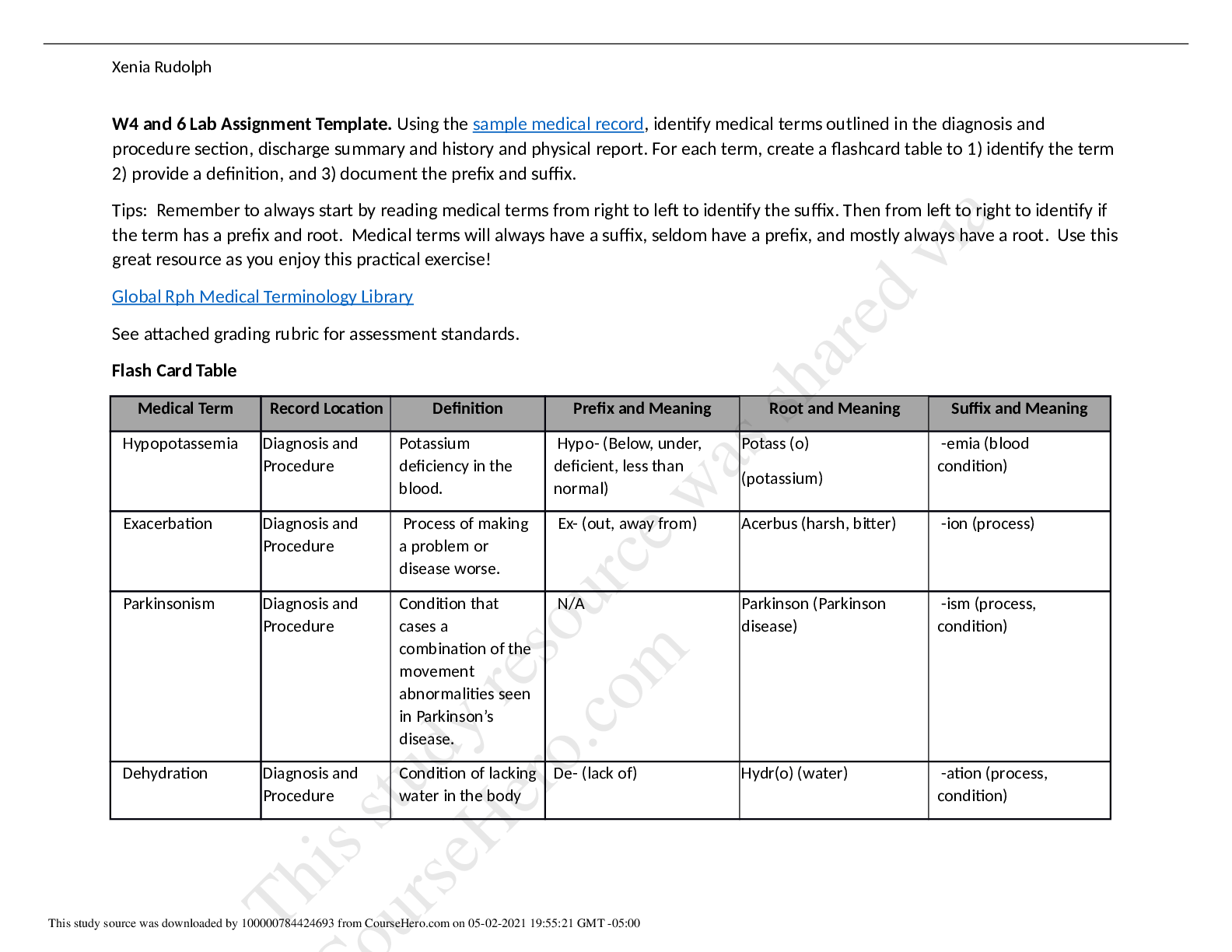
American Public University - HIMA 100 WEEK 4 and 6 Lab Assignm...
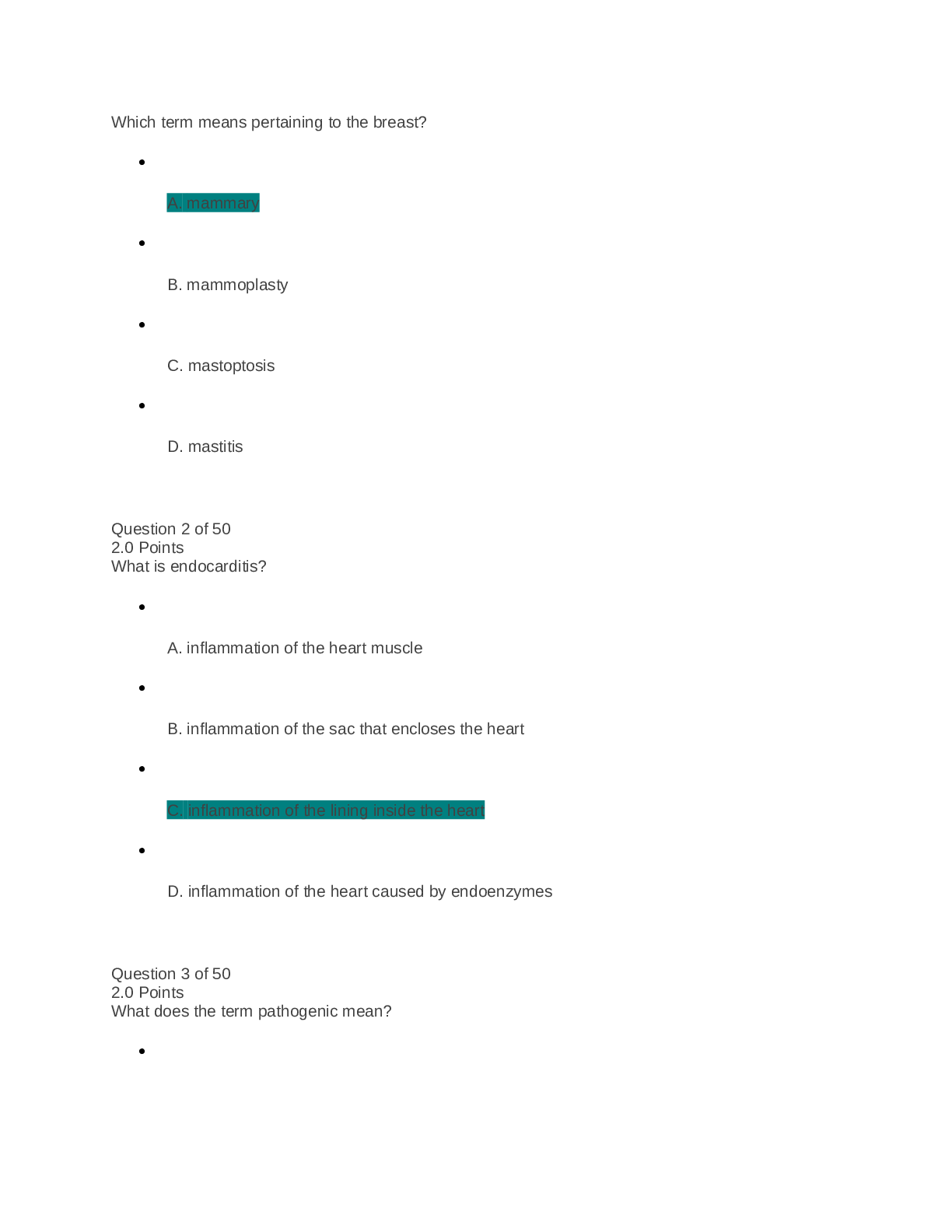
HIMA100_Medical_Terminology_Final_Test_Preps.docx..pdf
Test Bank For Community Public Health Nursing Promoting the He...