NURSING > QUESTIONS & ANSWERS > American Public University - HIMA 100 / HIMA100 - WEEK 4 - QUIZ (2021) (All)
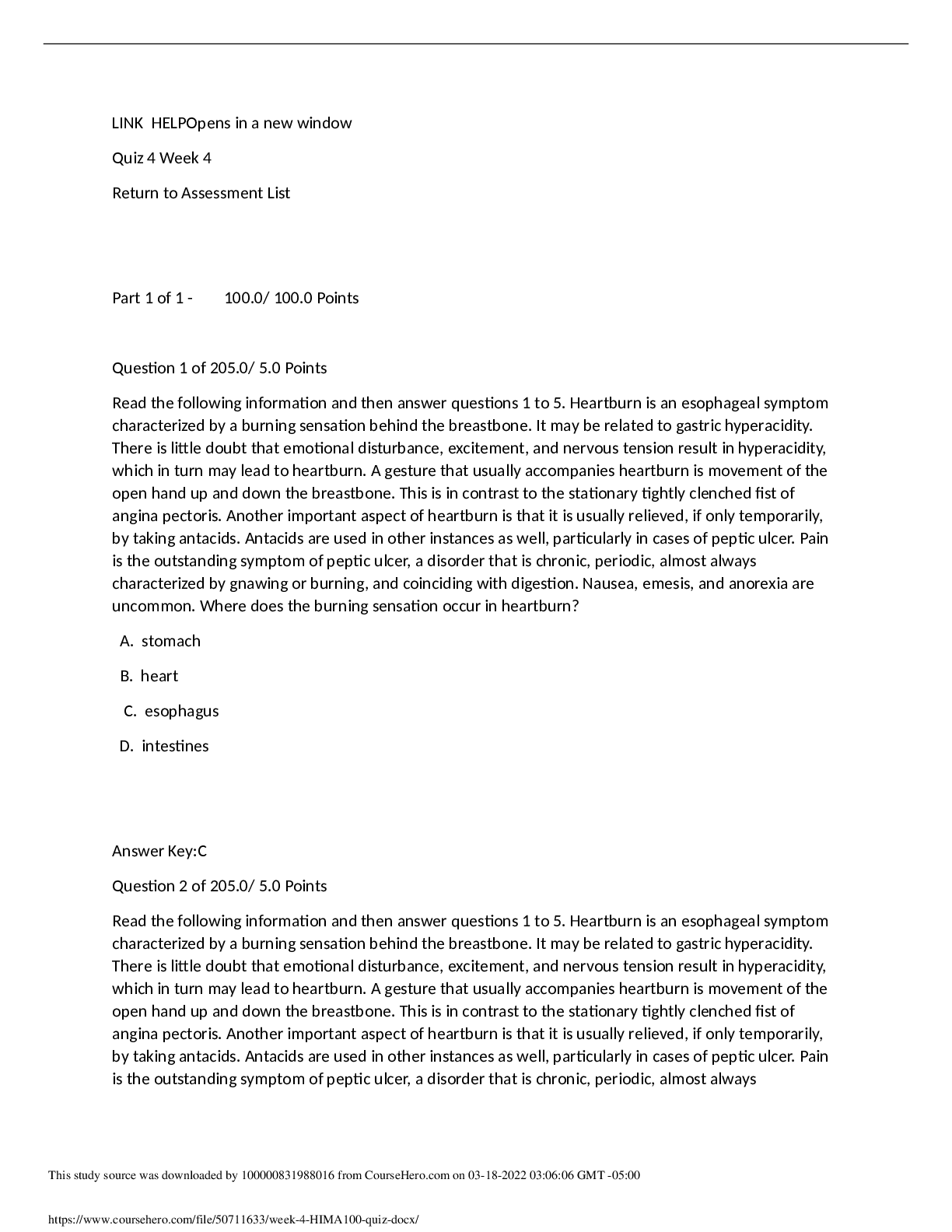
American Public University - HIMA 100 / HIMA100 - WEEK 4 - QUIZ (2021)
Document Content and Description Below
Last updated: 8 months ago
Preview 1 out of 8 pages
Instant download
Buy this Document to get the Full Access Instantly
Provided by Students Who Aced it
We Verify Document Content to Gurantee Accuracy
Also available in bundle (1)
Click Below to Access Bundle(s)
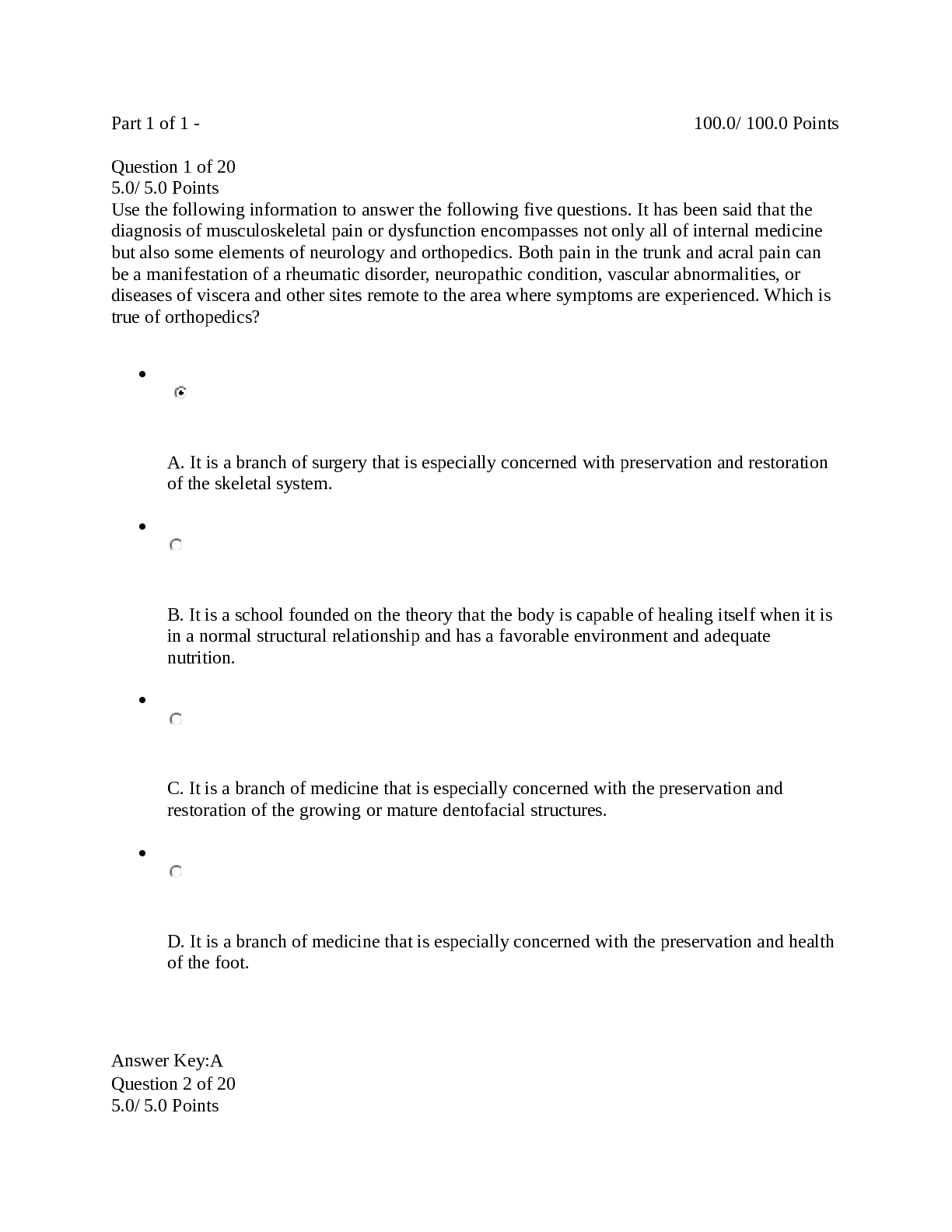
American Public University - HIMA 100 / HIMA100 - WEEK 1 - 7 and final exam Latest 2021 All Graded A
Part 1 of 1 - 100.0 Points Question 1 of 20 Use the following information to answer the following five questions. It has been said that the diagnosis 5.0 Points of musculoskeletal pain or dysfunction...
By Nutmegs 4 years ago
$30
8
Reviews( 0 )
Document information
Connected school, study & course
About the document
Uploaded On
Mar 18, 2022
Number of pages
8
Written in
All

Additional information
This document has been written for:
Uploaded
Mar 18, 2022
Downloads
0
Views
253
Topic Tags
Recommended For You
Get more on QUESTIONS & ANSWERS »
American Public University - HIMA 100 / HIMA100 - WEEK 4 - QUI...
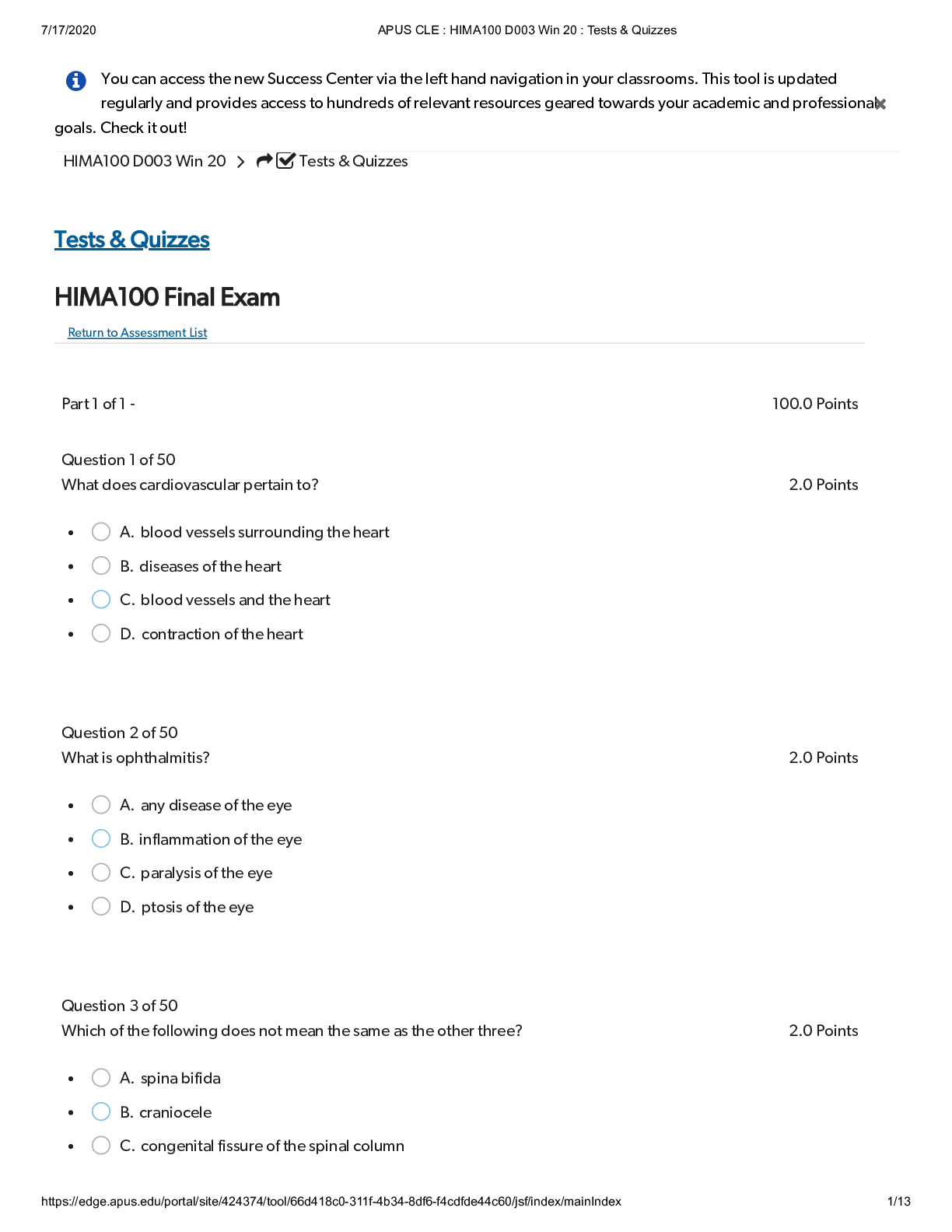
American Public University - HIMA 100 / HIMA100 - FINAL EXAM (...
American Public University - HIMA 100 / HIMA100 - FINAL EXAM (...
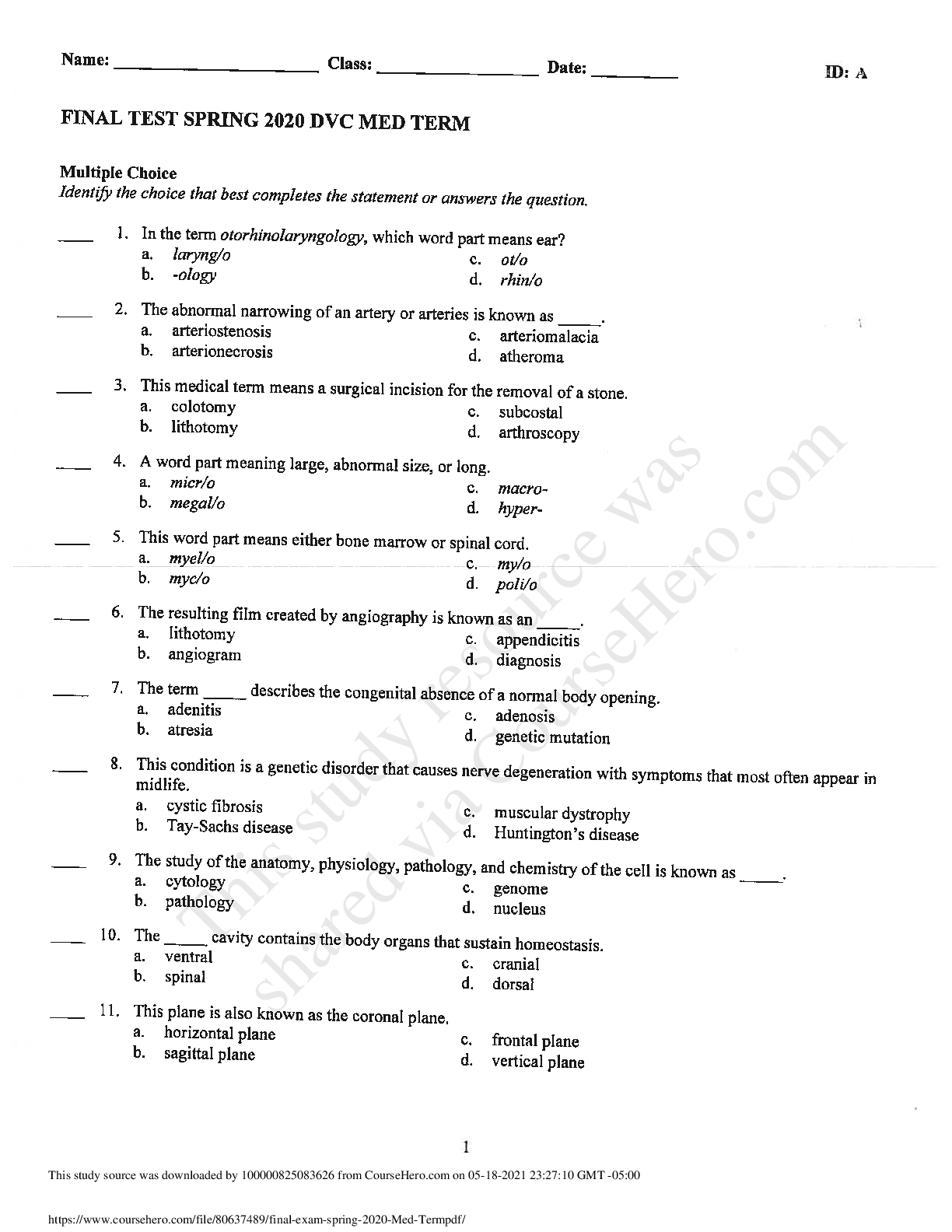
HIMA 100 final exam spring 2020 Med Term {multiple choices Ans...
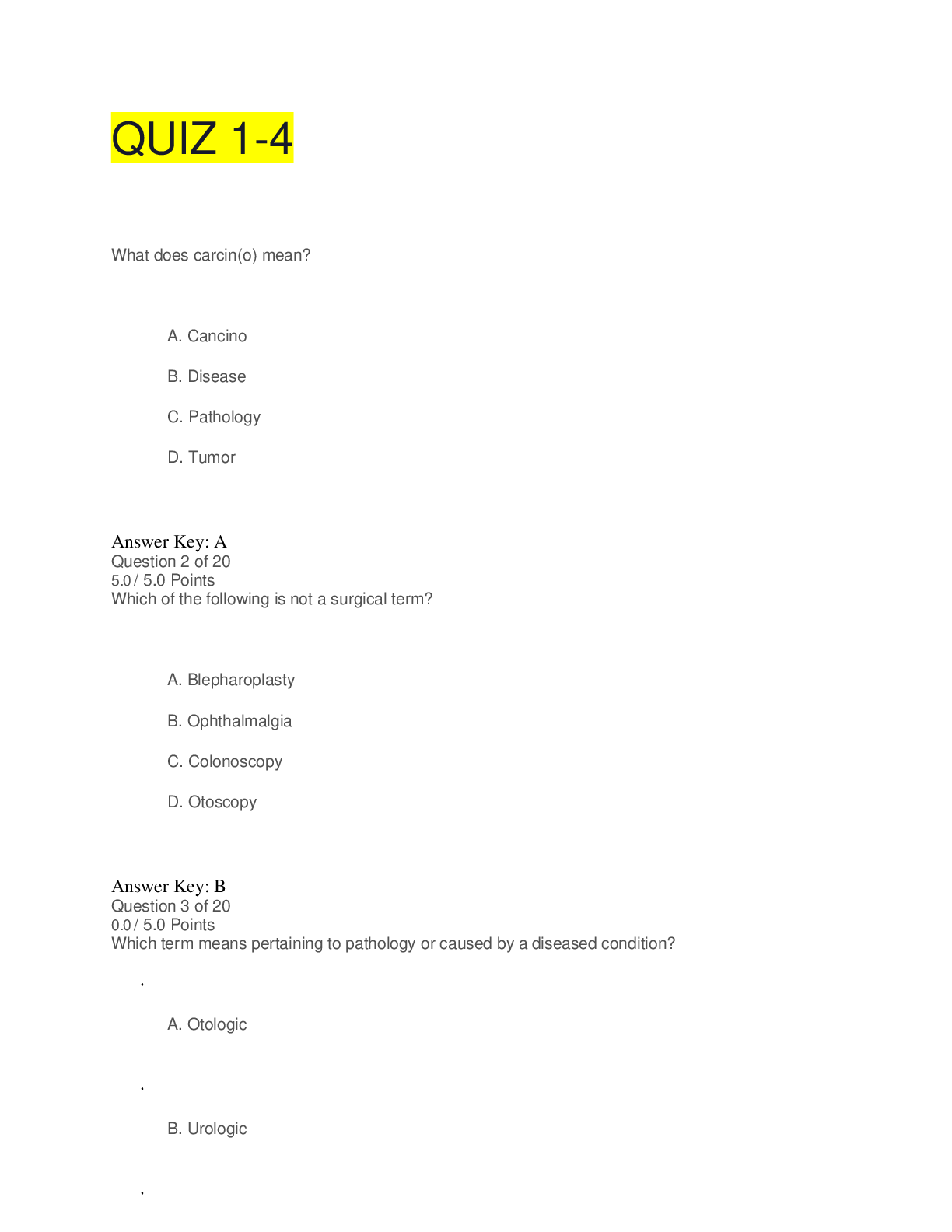
HIMA 100 questions with correct answers to booste your grades,...

HIMA100_Final Exam_APUS with correct answers to booste your gr...

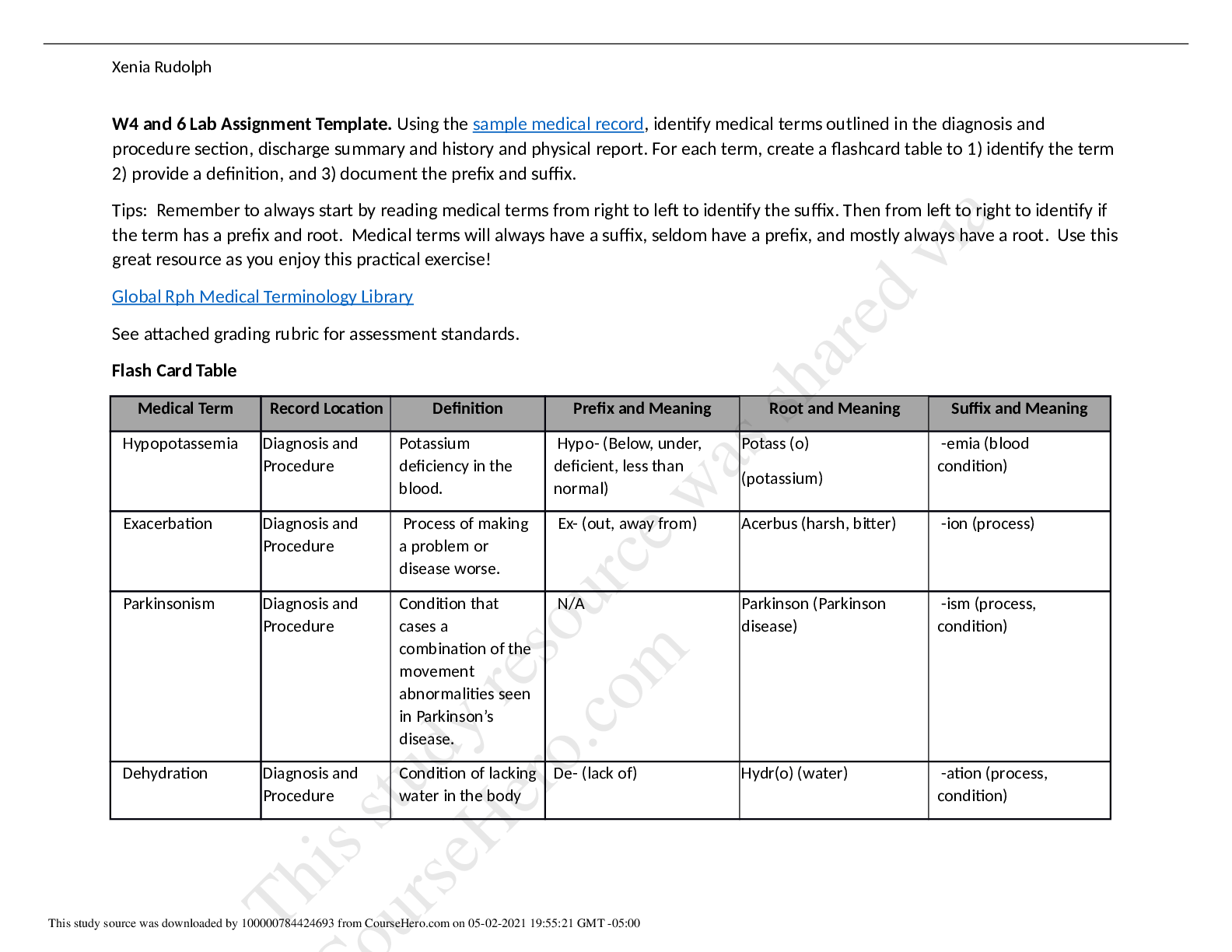
American Public University - HIMA 100 WEEK 4 and 6 Lab Assignm...
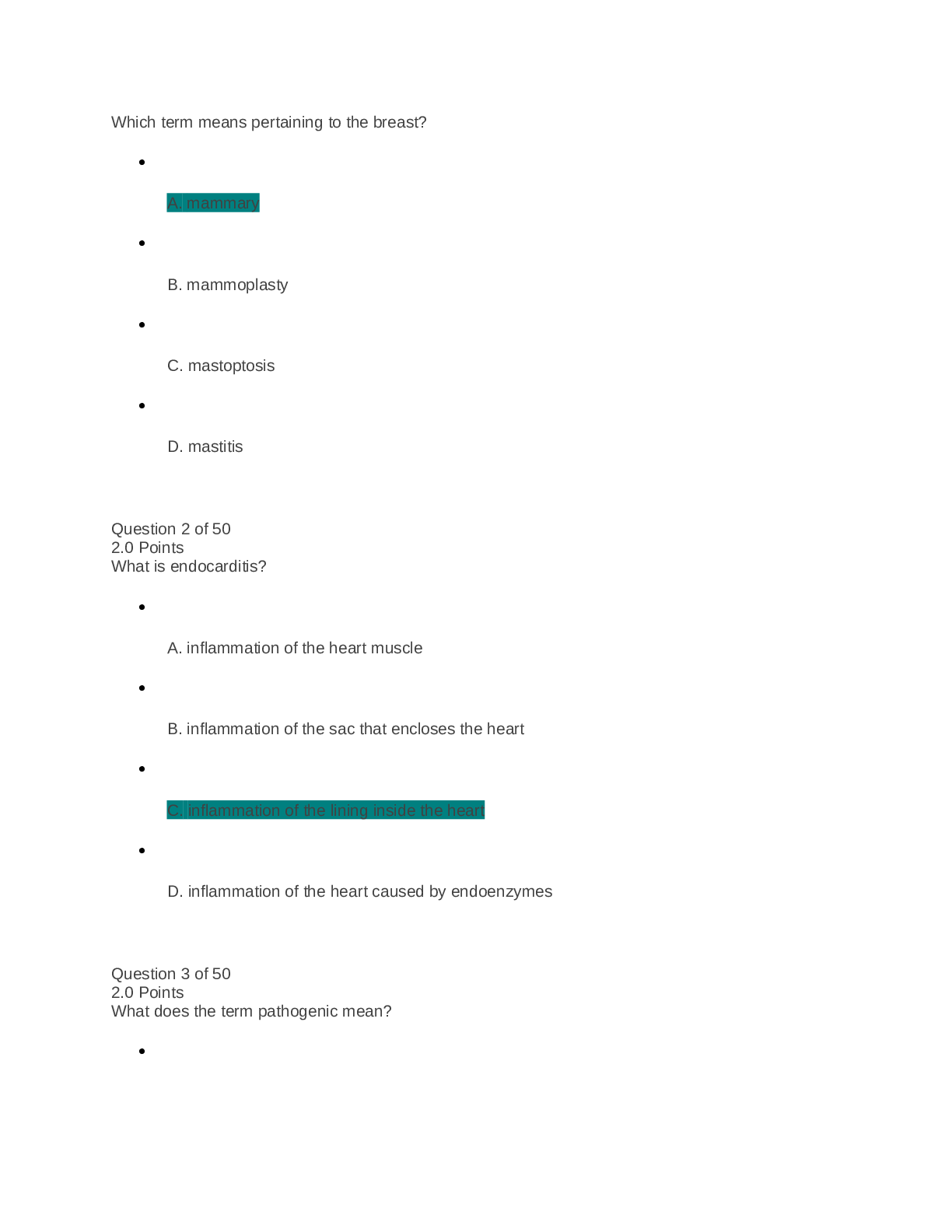
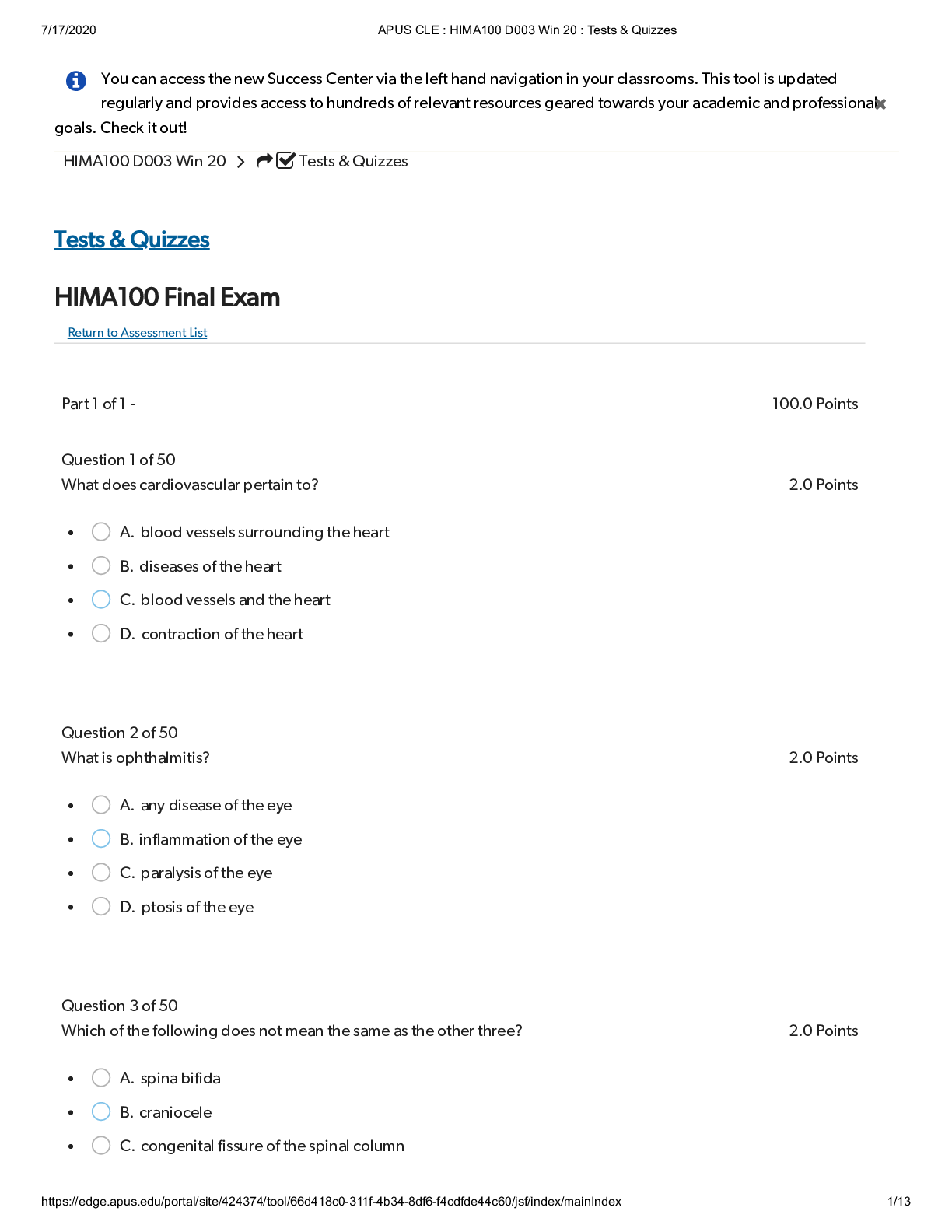
HIMA100_Medical_Terminology_Final_Test_Preps.docx..pdf
TEST BANK for Davis Advantage for Psychiatric Mental Health Nu...
Test Bank For Fundamentals of Nursing 11th Edition Potter Perr...
TEST BANK for Essentials of Psychiatric Mental Health Nursing:...
Essentials of Psychiatric Nursing 2nd Edition Boyd TEST BANK
TEST BANK for Essentials of Psychiatric Nursing 2nd Edition by...
Test Bank for Essentials of Psychiatric Nursing 2nd Edition by...
NUR 321 VCE #5 Fluid and Electrolyte Balance QUESTIONS AND ANS...
NUR 321 VCE # 1 Lesson 3- Critical Thinking in Nursing Practic...